when, if, before, after: Time Words for Simple Sentences

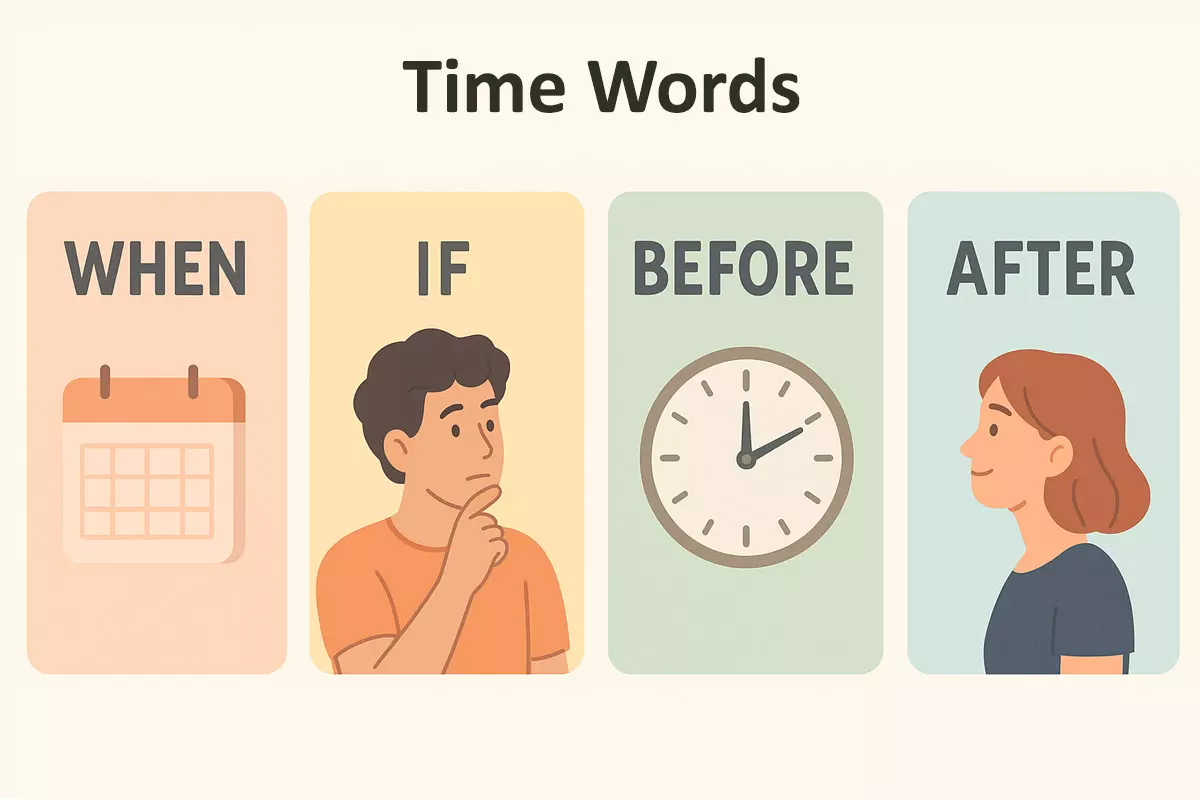 Here we the use of time clauses, explains how to use the present simple for future plans, and details correct comma placement. It also provides everyday planning examples, points out common errors, and includes practice exercises.
Understanding how to connect events within a sentence is essential for clear communication, particularly when explaining the timing of actions. Time-related words, such as before, after, and during, help indicate the sequence and relationship between events, allowing readers or listeners to easily follow the flow of ideas. By using these time markers effectively, we can organize our thoughts logically and ensure that our message is both coherent and easy to understand, which is important in both writing and speaking.
What Time Clauses Do
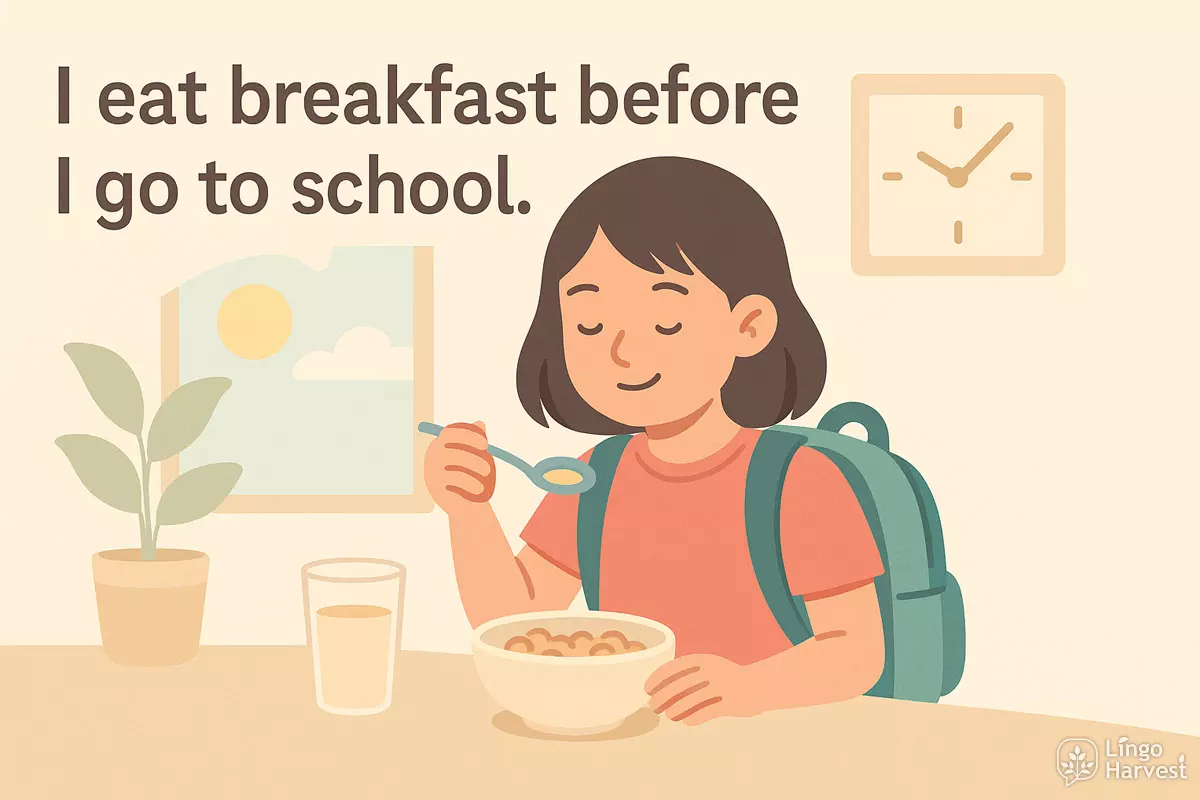
Time clauses help connect actions to specific moments or sequences. By using words like when, if, before, and after, these parts of a sentence clarify when something happens, or under which condition it happens. This makes your meaning clearer and your writing more precise. For example, instead of two short sentences, you can join them: “I eat breakfast. I go to school.” becomes “I eat breakfast before I go to school.”
How Time Clauses Work in Simple Sentences
A time clause usually has its own subject and verb, and it can come at the start or end of a sentence. The main action and the timing detail are joined, so the reader understands the relationship between events. For instance, “When the bell rings, class begins.” This tells us the exact point class starts.
Common Purposes of Time Clauses
- Show sequence: Tell which event happens first, next, or last.
- Express conditions: Describe what must happen for something else to occur.
- Indicate duration: Explain how long something lasts, or when it ends.
- Clarify cause and effect: Link results to the time or condition that caused them.
Typical Time Words and Their Use
Some connectors are more common in everyday speech and writing. Here are examples of how these words help form time clauses:
| Time Word | Sample Use in a Simple Sentence |
|---|---|
| when | Call me when you arrive. |
| if | You can go out if you finish your homework. |
| before | Wash your hands before you eat. |
| after | We’ll play after lunch. |
| until | Wait here until I come back. |
| while | Don’t talk while I’m speaking. |
| as soon as | Text me as soon as you get home. |
| since | I haven’t seen her since last week. |
| once | You can leave once you finish. |
| whenever | Come over whenever you like. |
Summary
Using time clauses lets speakers and writers build more natural, connected sentences. They make it easier to show relationships between actions and moments, which is essential for clear communication. Whether you’re describing routines, plans, or possibilities, these structures keep your ideas organized and easy to understand.
Using Present Simple for Future Plans
English often uses the present simple tense to talk about the future, especially with time words like when, if, before, and after. This structure is common when describing schedules, routines, and events that are fixed or certain. Instead of using "will" or "going to" after these words, the present simple is preferred.
How Time Words Work with Present Simple
When you want to express something that will happen in the future, and you use a time word, the verb following it usually stays in the present simple form. This is true even if the overall meaning is about the future. For example:
- When the meeting starts, please turn off your phone.
- If it rains tomorrow, we stay inside.
- Before you leave, check your bag.
- After she finishes work, we go for coffee.
Common Patterns and Examples
Here are sentence patterns and examples showing how these time words are used with the present simple to talk about future actions:
- Call me when you arrive.
- If I see her, I will say hello.
- We will eat after Dad comes home.
- Don't forget your keys before you go out.
- If it snows, school closes.
- I will help you when I finish this.
- Let's talk after the movie ends.
- Before the train leaves, buy a ticket.
- If you forget, call me.
- Text me when you get home.
- We will go after the rain stops.
- Wash your hands before you eat.
- If he calls, let me know.
- When the bell rings, class begins.
Quick Reference: Time Words and Present Simple for Future
| Time Word | Example (Present Simple for Future) |
|---|---|
| when | Call me when you arrive. |
| if | If it rains, we stay inside. |
| before | Wash your hands before you eat. |
| after | We will go after the rain stops. |
Remember: after when, if, before, and after, use the present simple—even if you are talking about a future event. This rule helps your sentences sound natural and clear.
Correct Comma Placement
Understanding when to use a comma with time words like "when," "if," "before," and "after" helps your sentences stay clear. The position of these words in a sentence often determines whether you need a comma.
Commas with Time Words at the Start
When a sentence begins with a time word or clause, you usually place a comma after the introductory phrase. This helps separate the dependent time clause from the main action. For example:
- If you finish early, you can go home.
- When the bell rings, class will begin.
- Before you eat, wash your hands.
- After the movie ends, we'll get ice cream.
The comma sets off the introductory time idea, making the meaning clearer.
No Comma When the Time Word Is in the Middle
If the time word appears in the middle of the sentence (not at the beginning), a comma is usually not needed. The clause naturally follows the main idea without requiring separation:
- You can go home if you finish early.
- Class will begin when the bell rings.
- Wash your hands before you eat.
- We'll get ice cream after the movie ends.
Notice that these sentences flow smoothly without extra punctuation.
Quick Reference: Comma Use with Time Words
The following table summarizes the pattern for comma placement with these common time words:
| Time Word Position | Comma Needed? |
|---|---|
| At the start of the sentence | ✅ Yes, place a comma after the time clause. Example: If it rains, we’ll stay inside. |
| In the middle/end of the sentence | ❌ No comma needed. Example: We’ll stay inside if it rains. |
| Single-word time adverbs (e.g., "afterward") | ❌ Usually no comma unless for emphasis. Example: We left afterward. |
| Multiple time clauses in one sentence | ✅ Use commas to separate each clause. Example: When I finish, if you’re ready, we can go. |
Common Time Words and Their Patterns
Here's a list of typical words and phrases that introduce time clauses. They often follow the same punctuation rules:
- when
- if
- before
- after
- as soon as
- until
- while
- once
- since
- whenever
- by the time
- the moment
- every time
- immediately after
- as long as
Practice placing these at the beginning and within sentences to master the correct punctuation.
Summary
Place a comma after introductory time clauses, but skip it when the time word follows the main clause. Always check the flow and clarity of your sentence to decide if punctuation is necessary. Proper comma use makes your writing easier to understand.
Everyday Planning Examples
Understanding how to use time words like "when," "if," "before," and "after" makes daily organization clearer and more efficient. These words help us sequence actions, set conditions, and describe routines. Let’s look at how these terms guide simple scheduling and coordination in regular life.
Common Ways to Organize Tasks
Many people use time expressions to plan their day or explain what needs to happen first. Here are some practical ways these words appear in ordinary conversation:
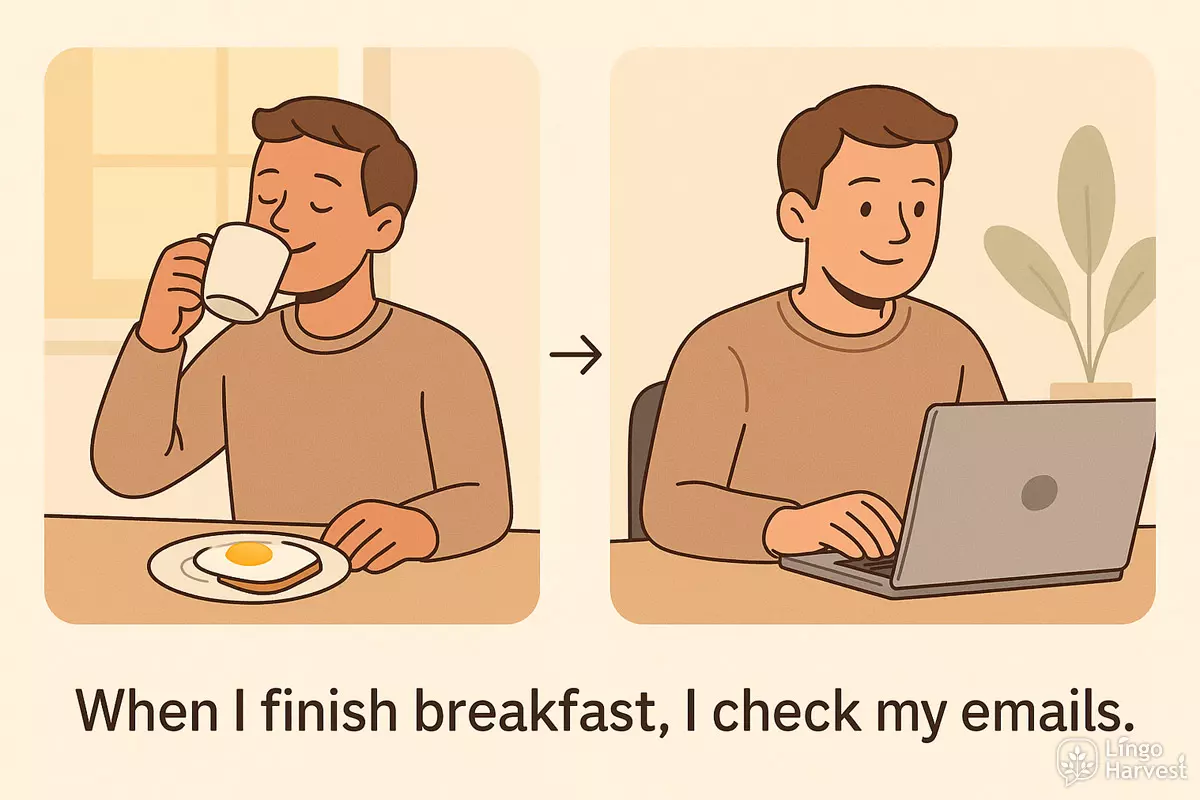
- When I finish breakfast, I check my emails.
- If it rains, we will stay indoors.
- Before you leave, turn off the lights.
- After class, let's meet in the library.
- When you get home, call me.
- If you are free later, we can go for a walk.
- Before starting the meeting, please prepare the documents.
- After dinner, we usually watch TV together.
- When the bell rings, students return to class.
- If you finish early, help your classmates.
- Before going to bed, I brush my teeth.
- After you submit the form, wait for a confirmation email.
- When the movie ends, let's get some ice cream.
- If you need help, ask your teacher.
- Before the guests arrive, set the table.
- After you read this, try writing your own examples.
Comparing Time Words in Context
Different time words express different relationships between actions. The table below shows how "when," "if," "before," and "after" change the meaning and flow of a sentence.
| Time Word | Example & Use |
|---|---|
| When | Describes a certain time or event: ✅ When I arrive, I'll call you. |
| If | Sets a condition: ✅ If you are ready, we can start. |
| Before | Shows something happens earlier: ✅ Before you eat, wash your hands. |
| After | Marks a later action: ✅ After the meeting, let's have lunch. |
Tips for Using Time Words in Daily Life
- Use "when" for routines or events you expect to happen. - Choose "if" for possibilities or uncertain situations. - "Before" helps organize steps that must come first. - "After" signals what comes next, making instructions clearer. By practicing these patterns, it becomes easier to communicate plans, give directions, or describe habits in English. Try making your own sentences using these structures for more confidence in everyday situations.
Common Mistakes to Avoid
When using time words like "when," "if," "before," and "after" in simple sentences, learners often fall into predictable traps. Understanding these pitfalls can help you build clearer, more accurate statements.
Mixing Up Tenses
One frequent error is mismatching verb tenses, especially in clauses with time markers. For example, after "when" or "before," students sometimes use the future tense, which is incorrect in English.
- Incorrect: I will call you when I will arrive.
- Correct: I will call you when I arrive.
Confusing "If" and "When"
Learners may use "if" and "when" interchangeably, but their meanings differ. "If" expresses a condition (something uncertain), while "when" is used for definite events.
- Incorrect: When it rains, we will cancel the trip. (if the rain is uncertain)
- Correct: If it rains, we will cancel the trip.
Incorrect Word Order
Placing time clauses incorrectly can cause confusion. Both orders are possible, but punctuation matters.
- When the time word starts the sentence, use a comma: After I finish my homework, I will watch TV.
- When the time word is in the middle, no comma: I will watch TV after I finish my homework.
Omitting the Subject or Verb
Sometimes, learners forget to include a subject or verb in either clause, making the sentence incomplete.
- Incorrect: Before going to bed, brush teeth. (missing subject for "going")
- Correct: Before you go to bed, brush your teeth.
Overusing Future Tense After Time Words
After "before," "after," "when," and "if," English usually uses the present tense, even for future meaning.
| ❌ Incorrect | ✅ Correct |
|---|---|
| Call me after you will arrive. | Call me after you arrive. |
| If it will rain, we will stay home. | If it rains, we will stay home. |
| Before she will leave, tell her. | Before she leaves, tell her. |
| When he will call, answer quickly. | When he calls, answer quickly. |
Summary List: Key Pitfalls
- Using future tense after time markers
- Confusing "if" (condition) and "when" (certainty)
- Forgetting commas after introductory time clauses
- Leaving out subjects or verbs in clauses
- Using "will" in both clauses unnecessarily
- Applying "before" and "after" in the wrong order
- Writing run-on sentences without proper punctuation
- Misplacing adverbs, leading to awkward phrasing
- Using "then" instead of a time word for sequence
- Assuming time words can always be swapped
Paying attention to these details will help you communicate more clearly and avoid confusion when using time expressions in English.
Practice: Complete and Build Sentences
Understanding how time words like when, if, before, and after work in simple sentences helps you communicate events clearly. Try these practical activities to reinforce your skills. Focus on the order of actions and how each word changes the meaning.
Complete the Sentences
Fill in each blank with the correct time word (when, if, before, after):
- ______ you finish your homework, you can watch TV.
- I always brush my teeth ______ I go to bed.
- Call me ______ you arrive at the station.
- ______ it rains tomorrow, we will stay home.
- Wash your hands ______ eating.
Show answers
- After
- Before
- When
- If
- Before
Build Your Own Sentences
Use the prompts to make complete sentences. Choose the best time word for each idea:
- (study / go to bed) → ________________________________
- (rain / take an umbrella) → ________________________________
- (arrive / call me) → ________________________________
- (eat breakfast / leave the house) → ________________________________
Show answers
- I study before I go to bed.
- If it rains, take an umbrella.
- Call me when you arrive.
- Eat breakfast before you leave the house.
Compare Sentence Patterns
See how different time words change the relationship between actions. Use this table to compare their use in simple sentences:
| Time Word | Example Sentence |
|---|---|
| when | I call you when I finish work. |
| if | If you are late, send a message. |
| before | Wash your hands before you eat. |
| after | We can play after dinner. |
Expand Your Practice
Here are more sentence starters for extra practice. Choose a time word to complete each:
- ______ you see Anna, say hello.
- We will leave ______ the movie ends.
- ______ you have a question, raise your hand.
- Finish your work ______ the break.
- ______ the bell rings, class will start.
Show answers
- If you see Anna, say hello.
- We will leave after the movie ends.
- If you have a question, raise your hand.
- Finish your work before the break.
- When the bell rings, class will start.
Practice regularly with these examples and prompts to become more confident using time words in your own sentences.