although vs but: Easy Differences for A2 Learners

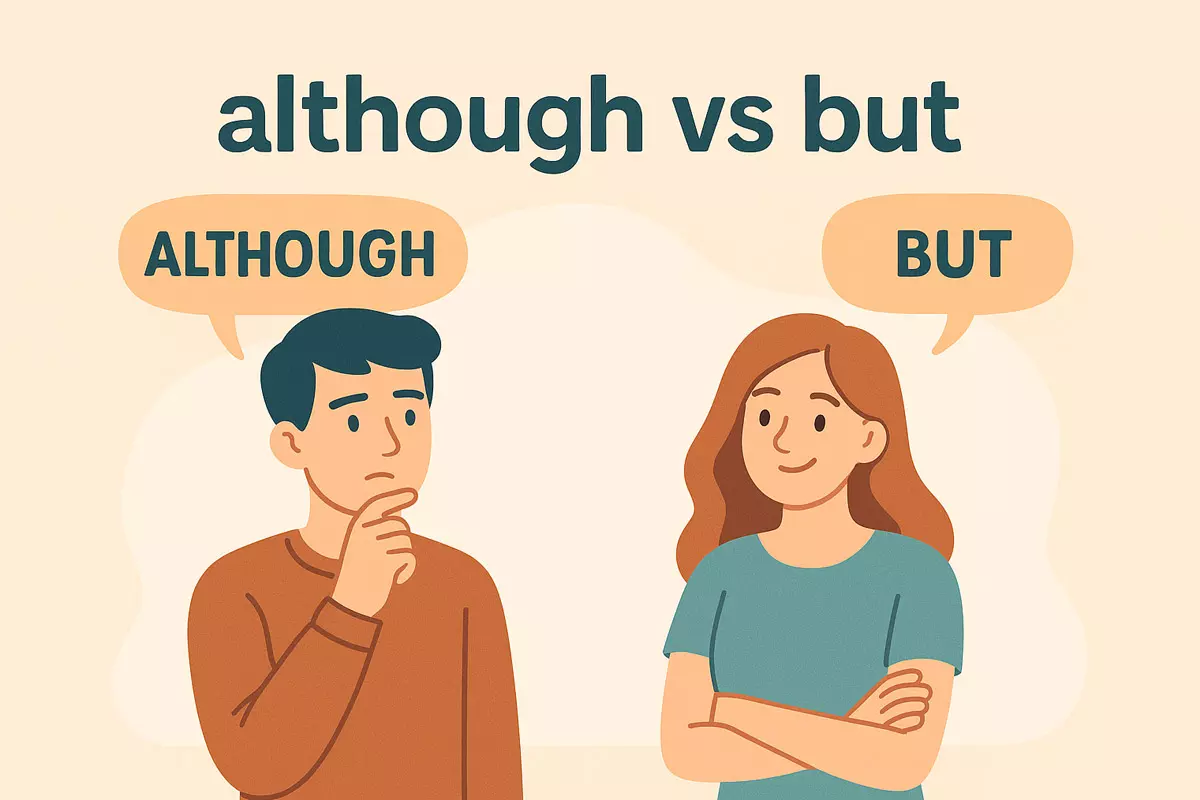 The article compares contrast in clauses and simple links, explains their sentence positions, and discusses formal and informal tones. It also covers intonation, pauses, frequent mistakes, and includes practice with replacing and comparing contrast words.
Choosing between words like although and but can be challenging for English learners, but understanding their differences will help you communicate more clearly. Although is typically used to introduce a subordinate clause that contrasts with the main idea, while but connects two independent clauses or ideas that contrast with each other. For example, you might say, Although it was raining, we went for a walk, or It was raining, but we went for a walk. Practicing these words in different sentences will make your English sound more natural and fluent.
Contrast in Clauses vs Contrast in Simple Links
Understanding how "although" and "but" work is important for expressing differences or unexpected results in English. While both are used to show contrast, they function differently in sentences. "Although" is a conjunction that joins two clauses, making a complex sentence. "But" is a coordinating conjunction that simply links two ideas, often in two separate clauses or sentences.
How "Although" Works
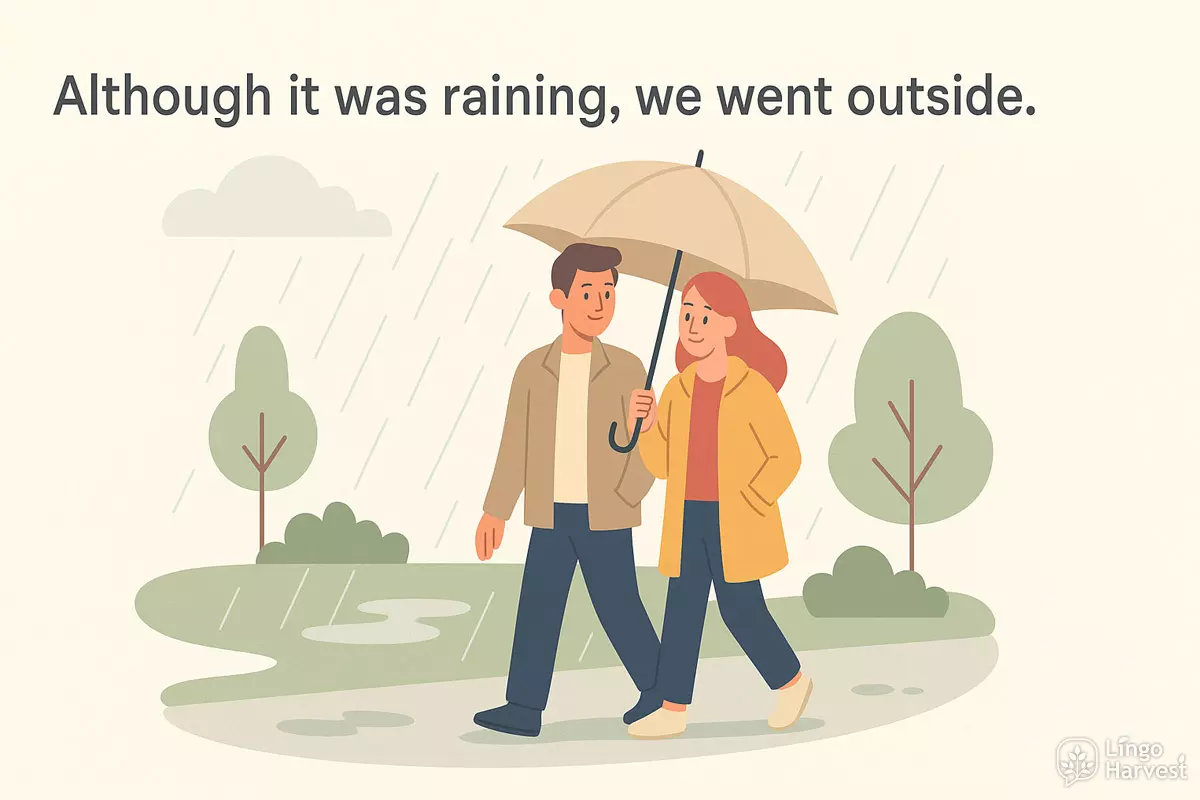
"Although" introduces a dependent clause (a part of a sentence that cannot stand alone). It is commonly used at the beginning or in the middle of a sentence to show a surprising contrast. For example:
- Although it was raining, we went outside.
- We went outside although it was raining.
Notice that the clause with "although" gives extra information about the main clause, and a comma is usually used if "although" starts the sentence.
How "But" Works
"But" connects two independent clauses or simple statements. It is more direct, and both sides of "but" can stand alone as sentences. For instance:
- It was raining, but we went outside.
- I like coffee, but I don't like tea.
"But" is never used at the start of a clause that cannot stand alone.
Key Differences at a Glance
| Form | Example | Usage Note |
|---|---|---|
| Although + clause, main clause | Although he was tired, he finished the work. | Complex sentence; "although" at start, comma after clause |
| Main clause + although + clause | He finished the work although he was tired. | "Although" in the middle; no comma before "although" |
| Main clause, but main clause | He was tired, but he finished the work. | Both clauses are independent; comma before "but" |
| But joining short ideas | I wanted pizza, but they had pasta. | Simple link between two ideas |
Quick Reference: When to Use Each
- Use although to join a reason or background with a main idea.
- Use but to connect two main ideas that contrast each other.
- "Although" can start a sentence; "but" usually cannot.
- Both show contrast, but "although" adds more structure and formality.
By recognizing these patterns, you can choose the right word for expressing contrast in different sentence types, making your English clearer and more natural.
Where They Appear in Sentences
When learning how to use "although" and "but," it's helpful to know their usual spots in a sentence. These words both show contrast, but their positions and the way they connect ideas are different.
Position of "although"
"Although" is a conjunction that introduces a subordinate (dependent) clause. This means it often comes at the start of a clause that gives extra information. You can use it at the beginning or in the middle of a sentence, but not between two independent sentences.
- Although it was raining, we went for a walk.
- We went for a walk although it was raining.
Notice that "although" is usually followed by a subject and a verb.
Position of "but"
"But" is a coordinating conjunction. It joins two independent clauses (complete sentences). It normally comes between the two ideas you want to contrast. You can't use "but" at the start of a sentence in formal writing, and it is never used to begin a dependent clause.
- It was raining, but we went for a walk.
- She is tired, but she will finish her homework.
"But" is placed after a comma when it connects two sentences.
Comparison Table: Placement and Structure
| Word | Common Sentence Structure | Example |
|---|---|---|
| although | Although + clause, main clause Main clause + although + clause |
Although it was cold, he went outside. He went outside although it was cold. |
| but | Main clause, but + main clause | He was tired, but he finished his work. |
Quick Tips for Placement
- Use "although" to start a contrasting idea, often at the beginning of a sentence.
- Use "but" to join two main ideas, placing it after a comma.
- Never use "although" alone between two sentences.
- Don't use "but" at the start of a sentence in formal writing.
- Remember: "although" introduces a dependent clause; "but" connects two independent clauses.
Understanding where to put these words helps your sentences sound natural and clear. Practice with different examples to build confidence!
Formal vs Informal Feeling
When choosing between “although” and “but,” it’s useful to know how each word sounds to English speakers. “Although” is often seen as more polite or academic, while “but” feels friendlier and more casual. This difference can help you decide which word to use in emails, conversations, or even exams.
When to Use “Although” for a Formal Tone
“Although” is common in writing and situations where you want to sound serious or official. For example, it often appears in essays, reports, and polite letters. Using “although” can make your sentences longer and a bit more complex, but also more precise.
- Business emails: “Although I am busy, I will try to help.”
- School assignments: “Although the weather was bad, the event continued.”
- Presentations: “Although sales increased, costs also went up.”
- Formal invitations: “Although we cannot meet in person, we invite you to join online.”
Using “But” for Everyday Communication
“But” is direct and easy to use in daily talk or informal writing. It connects ideas simply, making sentences sound natural and friendly. You’ll hear “but” in conversations, text messages, and casual notes.
- Chatting with friends: “I wanted to go, but I was tired.”
- Quick notes: “We tried, but it didn’t work.”
- Social media: “Nice weather, but too windy.”
- Phone calls: “I called, but no one answered.”
| Usage Situation | Preferred Word | Example Sentence |
|---|---|---|
| Formal letter | Although | Although we regret the delay, your order will arrive soon. |
| Friendly chat | But | I wanted pizza, but they were closed. |
| Report writing | Although | Although numbers fell, profits stayed strong. |
| Everyday conversation | But | She’s nice, but a bit shy. |
| Academic essay | Although | Although many people agree, some disagree. |
Quick Tips for Learners
- Use “although” if you want to sound more serious or polite.
- Pick “but” for casual talk or simple writing.
- Both words can show contrast, but the mood and style change.
- Try swapping them in sentences to feel the difference.
Intonation and Pause Differences
Understanding how your voice rises, falls, or pauses when using "although" and "but" can help you sound more natural in English. These small changes often signal to listeners whether you are adding contrast, surprising information, or shifting direction in a sentence.
How "Although" Sounds in Sentences
When you use "although," your voice usually goes up a little at the end of the "although" clause, and there is a small pause before the next part. This pause shows that two ideas are being connected, but you want to highlight a contrast in a softer way. Example: Although it was raining, (slight pause) we went outside.
- Voice rises slightly at the end of the first part.
- Short pause after the "although" clause.
- Main point often comes after the pause.
How "But" Is Spoken
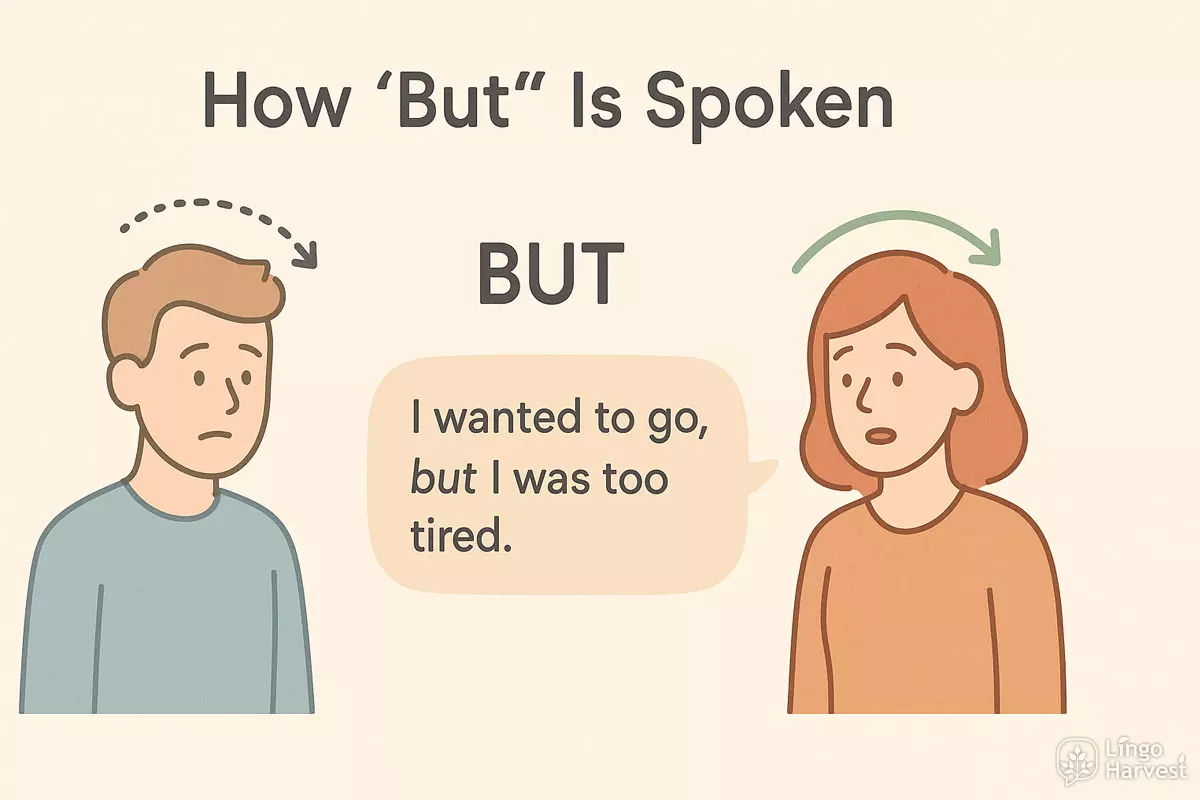
With "but," the tone is often more direct. The pause before "but" is usually longer and stronger, and the voice may fall a little before saying "but." This makes the contrast feel sharper. Example: I wanted to go, (clear pause) but I was too tired.
- Longer, clearer pause before "but."
- Voice may drop before and after "but."
- Second idea often feels more important or surprising.
| Connector | Typical Intonation & Pause |
|---|---|
| "although" | Gentle rise at the end of the first clause, short pause, softer contrast |
| "but" | Clear pause before "but," possible drop in pitch, stronger contrast |
Quick Tips for Learners
- Practice reading sentences out loud, noticing how your voice changes.
- Record yourself and listen for pauses and pitch changes.
- Try to make the pause after "although" short, but the pause before "but" longer.
- Listen to native speakers and copy their rhythm.
Becoming aware of these patterns will help you communicate contrasts more effectively and sound more natural in English conversations.
Common Errors
Learners at the A2 level often mix up “although” and “but” because both words are used to show contrast. However, their positions in sentences and the way they connect ideas are different. Misunderstanding these differences can lead to sentences that sound unnatural or are grammatically incorrect.
Typical Mistakes with “although” and “but”
- Placing both words in the same sentence: Although it was raining, but we went outside. ❌ (Only one is needed.)
- Using “but” at the beginning of a sentence in formal writing: But I was tired, I finished my homework. ❌
- Forgetting to use a comma with “but”: I wanted to go out but it was late. (Comma is needed before “but” in compound sentences.)
- Using “although” without a full clause: Although tired, I finished my work. (This is advanced; beginners should use a full clause: Although I was tired, I finished my work.)
- Placing “although” in the wrong position: I finished my work, although I was tired. (Correct, but sometimes learners place it awkwardly.)
- Using “but” to start a dependent clause: I finished my work but I was tired. (Correct, but “but” cannot start a dependent clause.)
- Confusing meaning: Sometimes “although” and “but” are swapped, changing the meaning or making the sentence unclear.
Correct Usage: “although” vs “but”
Below is a comparison to help you see the differences in structure and use:
| Pattern | Example Sentence |
|---|---|
| although + subject + verb, main clause | ✅ Although it was cold, we went swimming. |
| main clause, but + subject + verb | ✅ We went swimming, but it was cold. |
| Incorrect: although ..., but ... | ❌ Although it was cold, but we went swimming. |
| Incorrect: but at the start of a sentence (formal) | ❌ But it was cold. We went swimming. (Use “However,” in formal writing.) |
Quick Tips to Avoid Problems
- Use only one connector (“although” or “but”) to show contrast in a sentence, not both together.
- “Although” usually begins a clause and is followed by a subject and verb.
- “But” connects two main clauses and needs a comma before it.
- Practice by rewriting sentences: change “although” to “but” and vice versa to see the correct structure.
Remember, with practice, these mistakes become easier to spot and correct. Focus on the position and role of each word to improve your writing and speaking.
Practice: Replace and Compare
Understanding when to use "although" or "but" can be tricky at first. To help you, let's try replacing these words in sentences and see how the meaning or structure changes. This will make it easier to spot the difference in real conversations or writing.
Task 1: Choose the Right Word
Read each sentence and decide if "although" or "but" fits best. Write your answer in the blank.
- ______ it was raining, we went outside.
- I wanted to go swimming, ______ the pool was closed.
- She is very tired, ______ she finished her homework.
- ______ he is young, he is very smart.
- I called my friend, ______ she did not answer.
Show answers
- Although
- but
- but
- Although
- but
Task 2: Replace the Word
Some sentences use "but" and others use "although." Try to rewrite each sentence using the other word. Change the sentence if you need to.
- Although it was late, he kept working.
- I like ice cream, but I don't eat it every day.
- Although she was sick, she went to school.
- I studied hard, but I didn't pass the test.
Show answers
- It was late, but he kept working.
- Although I like ice cream, I don't eat it every day.
- She was sick, but she went to school.
- Although I studied hard, I didn't pass the test.
Comparison Table: "Although" vs "But"
| "Although" | "But" |
|---|---|
| Used at the start or middle of a sentence | Connects two clauses, often after a comma |
| Shows contrast by introducing a dependent clause | Shows contrast between two main clauses |
| Example: Although he was tired, he went out. |
Example: He was tired, but he went out. |
| Often followed by a subject and verb | Placed between two full sentences |
Spot the Difference
Decide if the sentences below use "although" or "but" correctly. If not, correct them.
- He finished the race, although he was very tired.
- Although the weather was bad, but we still had fun.
- I wanted to buy the shirt, but it was too expensive.
- Although she likes pizza, she doesn’t eat it often.
Show answers
- Correct
- Incorrect: Remove "but" — "Although the weather was bad, we still had fun."
- Correct
- Correct
Practicing with real sentences will help you feel more confident about choosing the right word. Remember: "although" usually starts a clause to show contrast, while "but" joins two main ideas that are different or surprising.