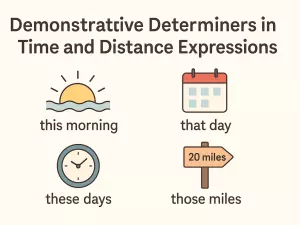
this/that/these/those: Pointing at Things Correctly

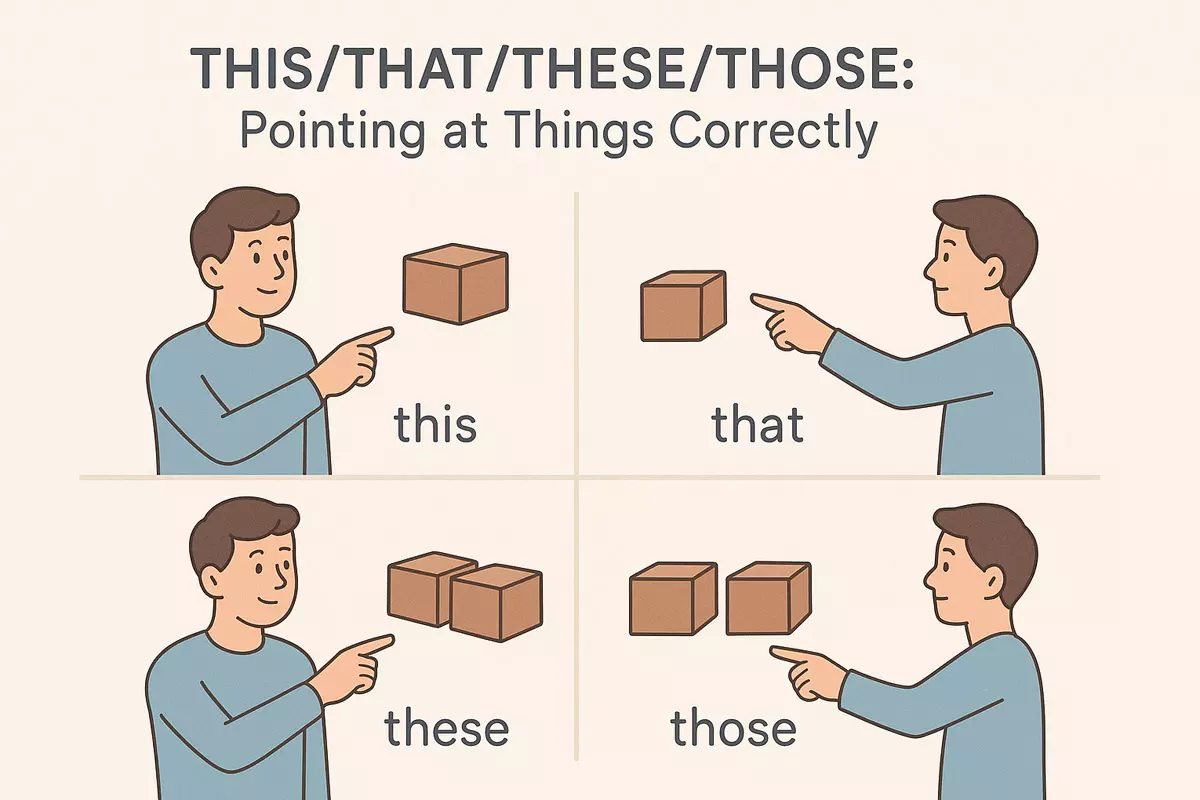 Here we how to use this, that, these, and those. It explains near versus far concepts, singular and plural forms, usage with nouns or alone, spoken gestures, common mistakes, and offers practice for identifying and producing correct phrases.
Choosing between words like this or those can be confusing when referring to objects, but understanding the difference is essential for clear communication in English. Use this to talk about a single item that is close to you, while those refers to multiple items that are farther away. Paying attention to the number and proximity of the objects you are describing will help you select the correct word and express your ideas more accurately, both in speaking and writing.
Near vs Far Concepts
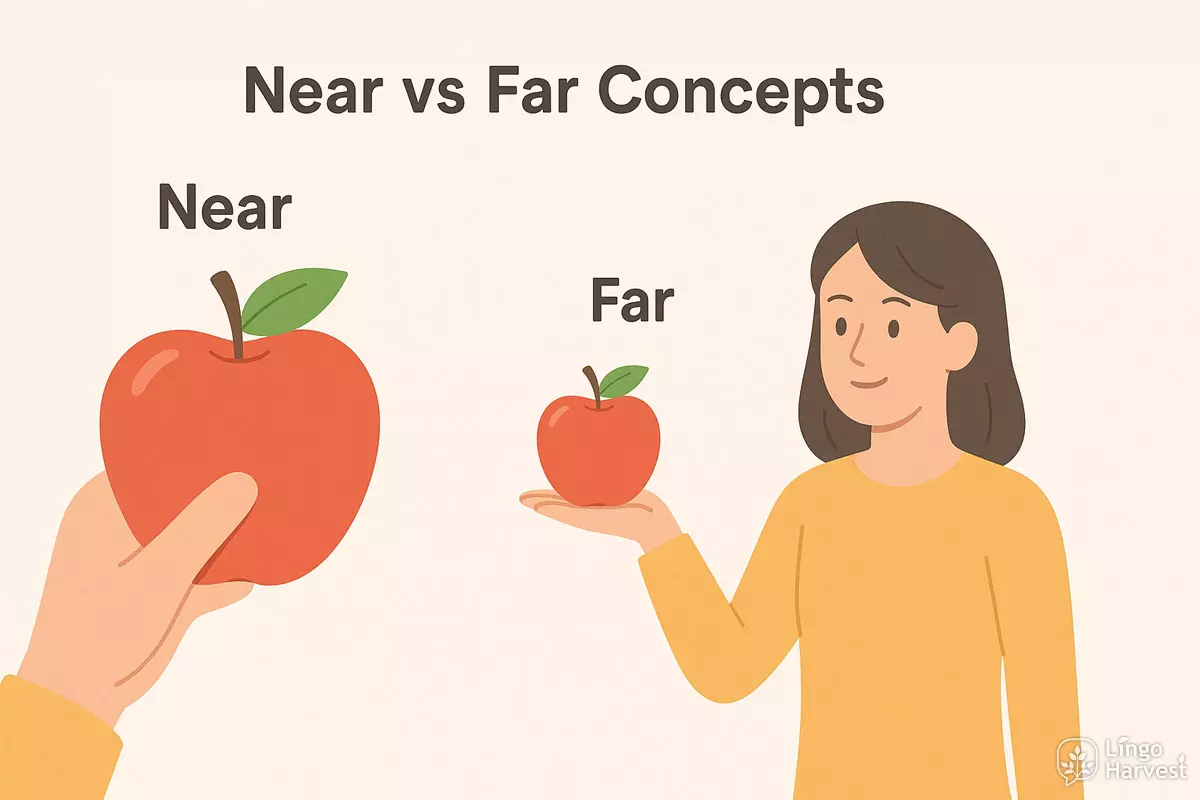
Understanding how English distinguishes between objects that are close and those that are farther away is crucial for using demonstratives like "this," "that," "these," and "those" correctly. These words help listeners visualize exactly which item or group you’re referring to, based on their physical or metaphorical distance from the speaker.
How English Signals Proximity
English uses two main categories:
- Near the speaker: Use "this" for singular items and "these" for plural items that are close by.
- Far from the speaker: Use "that" for one item and "those" for more than one, when they are farther away.
Everyday Examples
Here are some quick scenarios to illustrate the distinction:
- This pen (pen in your hand or on your desk)
- That chair (chair across the room)
- These cookies (cookies on the plate in front of you)
- Those books (books on a distant shelf)
Quick Reference Table
| Word | Number | Distance | Example |
|---|---|---|---|
| This | Singular | Near | This apple is sweet. |
| These | Plural | Near | These shoes are new. |
| That | Singular | Far | That mountain looks tall. |
| Those | Plural | Far | Those cars are fast. |
Tips for Choosing the Right Word
When deciding which demonstrative to use, ask yourself:
- Is the object physically close or further away?
- Are you talking about one thing, or several?
- Is the distance literal, or could it be metaphorical (like time or emotional closeness)?
Choosing the correct word makes your meaning clearer, whether you’re pointing at something on your desk or recalling a distant memory.
Singular vs Plural Forms
When choosing the right demonstrative word in English, it's crucial to pay attention to whether you're talking about one thing or more than one. The language uses different forms to point at single objects versus multiple items. "This" and "that" are for individual items, while "these" and "those" refer to more than one. The distinction isn’t just about number, but also about the distance or nearness of what you’re talking about.
How to Choose the Right Form
Use "this" for a single thing that is close to you, and "that" for a single thing farther away. For groups of items, "these" is for things nearby, and "those" is for things farther away. This pattern helps listeners understand both how many things you mean and how far away they are.
| Word | Number & Distance | Example |
|---|---|---|
| This | One, Near | This book is interesting. |
| That | One, Far | That chair looks comfortable. |
| These | Many, Near | These apples are fresh. |
| Those | Many, Far | Those cars are fast. |
Quick Reference Examples
The following list offers more examples for each form, helping you spot the difference in real sentences:
- This pen writes smoothly.
- That mountain is tall.
- These cookies are delicious.
- Those clouds look dark.
- This is my favorite mug.
- That was a great movie.
- These tickets are for tonight.
- Those shoes belong to her.
- This answer is correct. ✅
- These instructions are easy to follow.
- That painting was expensive.
- Those children are playing outside.
- This phone is new.
- These chairs are comfortable.
- That street is busy.
- Those restaurants are popular.
Key Points to Remember
- Use "this" and "that" for single nouns (singular).
- Use "these" and "those" for multiple nouns (plural).
- Consider how close or far the object is from you.
- Check the noun's number to avoid common mistakes (e.g., saying "this books" ❌ instead of "these books" ✅).
Accuracy in choosing between these words helps your listener know exactly what and how many things you mean, as well as where they are in relation to you.
With Nouns vs Standalone Pronouns
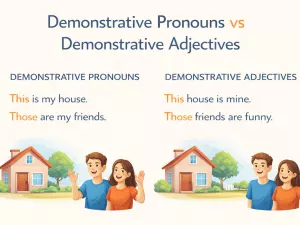
In English, "this," "that," "these," and "those" can work in two main ways: together with a noun, or standing alone as pronouns. Understanding when to use each form helps you point at things more clearly and naturally. When these words come before a noun, they act as determiners, helping you specify which object or objects you mean. For example, saying "this book" or "those chairs" makes it clear exactly what you're talking about. On the other hand, using "this," "that," "these," or "those" without a noun—such as just "this is mine" or "those are new"—means they function as pronouns, standing in for the thing or things already known or visible.
Examples With and Without Nouns
- This pen writes smoothly. → (With noun: "pen")
- This is my favorite. → (Pronoun, no noun)
- These cookies are fresh. → (With noun: "cookies")
- These are delicious. → (Pronoun, no noun)
- That car is fast. → (With noun: "car")
- That was amazing. → (Pronoun, no noun)
- Those shoes don't fit. → (With noun: "shoes")
- Those look comfortable. → (Pronoun, no noun)
- This idea makes sense. → (With noun: "idea")
- This is better than before. → (Pronoun, no noun)
- These problems are difficult. → (With noun: "problems")
- These are hard to solve. → (Pronoun, no noun)
- That movie was boring. → (With noun: "movie")
- That wasn't my choice. → (Pronoun, no noun)
- Those books belong to Sam. → (With noun: "books")
- Those are on the table. → (Pronoun, no noun)
Quick Reference: Using "this/that/these/those"
| With Nouns | Standalone (Pronoun) |
|---|---|
| This phone is new. | This is new. |
| Those apples are sour. | Those are sour. |
| That question is hard. | That is hard. |
| These students are late. | These are late. |
Common Pitfalls
Mixing up these forms can cause confusion. For instance, saying "this is book" ❌ instead of "this is a book" or "this book" is incorrect. If you use the determiner form, always follow it with a noun; if you use the pronoun form, don't add a noun after it. Get comfortable switching between both structures to make your speech more fluent and precise.
Spoken Pointing: Gesture + Intonation
When we use words like “this,” “that,” “these,” and “those,” we rarely rely on the words alone. Our voices and body language fill in the gaps, making it clear what or who we mean. Intonation—the rise and fall of our voice—adds clarity, while gestures such as pointing, nodding, or even eye movement help listeners follow our focus.
How Gestures and Voice Work Together
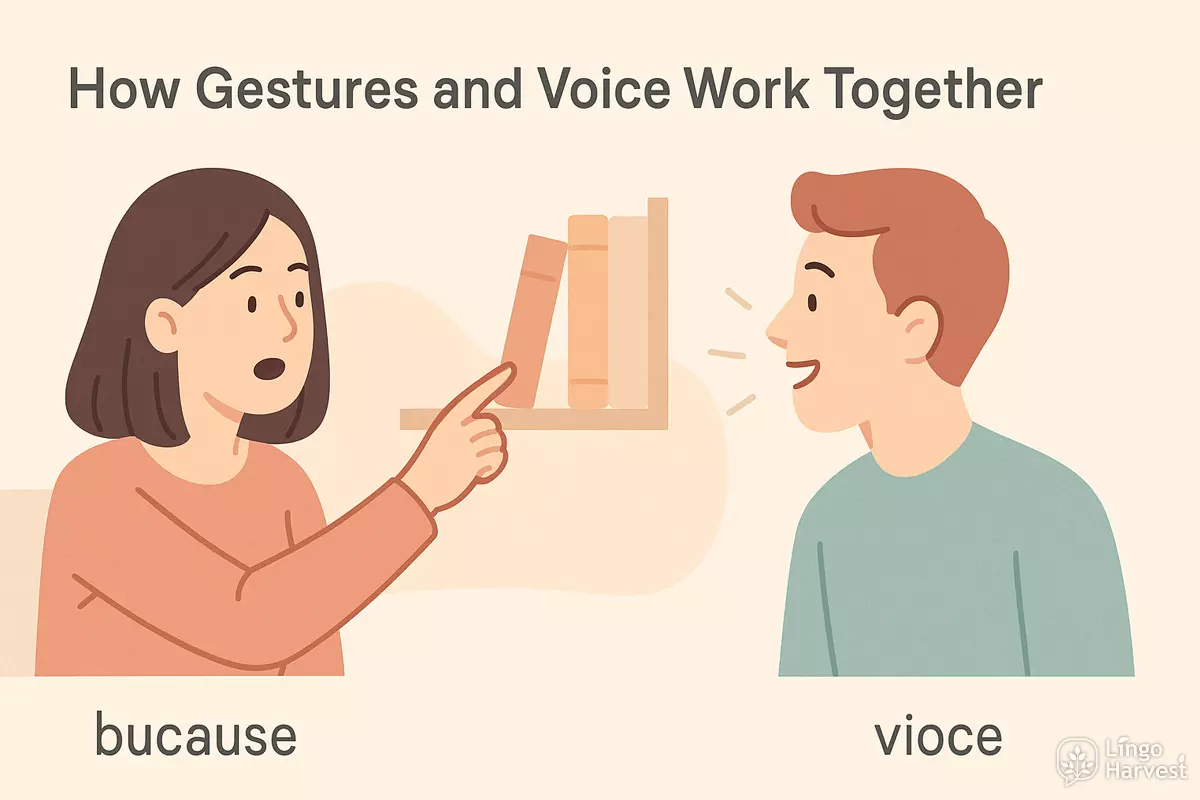
Imagine you’re in a room with a friend and say, “Can you pass me that book?” If you just say the words, your friend might not know which book you mean. But if you point at the shelf or glance toward the object, your intention is obvious. Raising your voice slightly on “that” or pausing before the noun can make your meaning even clearer.
- Pointing directly at an object signals specificity: “That chair.”
- Waving a hand can indicate a group: “Those people over there.”
- Holding something up while saying “this” draws attention to what you’re holding.
- Eye movement can signal referencing items close by: “These keys.”
- Emphasizing the demonstrative (“THIS one!”) often signals a contrast.
- Leaning forward with “this” suggests proximity and involvement.
- Leaning back or gesturing away with “that” implies distance.
- Pointing while speaking “those” often adds a sense of separation.
- Using a flat palm can indicate a general area: “That area.”
- Quick head nods can reinforce which item is meant in a group.
Common Intonation Patterns
Our speech patterns shift to highlight the item being discussed. For example, a rising pitch on “this” typically expresses excitement or immediacy, while a falling pitch on “that” can sound more final or detached. Stressing the demonstrative word itself can signal contrast, urgency, or even annoyance (“No, those shoes, not these!”).
| Gesture/Intonation | Effect |
|---|---|
| Point + “this/these” + rising pitch | Highlights something near; signals involvement or excitement |
| Point + “that/those” + falling pitch | Indicates distance; can sound more neutral or final |
| Emphasis on demonstrative (“THIS one!”) | Shows contrast, correction, or urgency |
| Glance + subtle gesture + soft intonation | Suggests politeness, hesitation, or indirect reference |
Everyday Examples
In conversation, these combinations are everywhere:
- At a restaurant: “I’ll have that salad, please.” (pointing at menu)
- Shopping: “Are these on sale?” (holding up items)
- Giving directions: “Go down that street.” (pointing to the left)
- In meetings: “Let’s discuss this issue first.” (gesturing to a document)
- With children: “Don’t touch those!” (waving hand at dangerous objects)
Understanding how speech and gesture work together makes your meaning clear and avoids confusion. Even fluent speakers rely on these subtle cues to communicate precisely in daily situations.
Common Mistakes and Easy Fixes
Understanding when to use "this," "that," "these," and "those" can be tricky, especially for English learners. It's easy to mix up which word points to something near or far, or to confuse singular and plural forms. Below are frequent pitfalls and practical ways to avoid them.
Mixing Up Distance: Near vs. Far
People often use "this" or "these" for objects that are not close, or "that" and "those" for things within arm's reach. Remember:
- This (singular) and these (plural) refer to things close to you.
- That (singular) and those (plural) refer to things farther away.
Singular vs. Plural Confusion
A common error is pairing the wrong demonstrative with the noun’s number. For example, saying "this books" or "those apple." Here’s a quick guide:
| Word | Use With |
|---|---|
| This | One thing, close to you (e.g., this pen) |
| That | One thing, far from you (e.g., that chair) |
| These | More than one thing, close to you (e.g., these apples) |
| Those | More than one thing, far from you (e.g., those cars) |
Forgetting Agreement
Make sure the demonstrative matches the noun in number. If you’re talking about multiple objects, don’t use "this" or "that"—switch to "these" or "those."
Examples of Common Errors and How to Fix Them
- ❌ This books are mine. → ✅ These books are mine.
- ❌ Those cat is sleeping. → ✅ That cat is sleeping.
- ❌ I like that shoes. → ✅ I like those shoes.
- ❌ These is my friend. → ✅ This is my friend.
- ❌ That are my keys. → ✅ Those are my keys.
- ❌ This are my parents. → ✅ These are my parents.
- ❌ These car is new. → ✅ This car is new.
- ❌ Those dog is barking. → ✅ That dog is barking.
- ❌ I want this oranges. → ✅ I want these oranges.
- ❌ These is interesting. → ✅ This is interesting.
Quick Fixes
If you’re unsure, check both distance (near/far) and number (one/more than one). Practice with real objects around you—point and say the correct word aloud. Over time, this will become automatic.
Practice: Identify and Produce Phrases
Working with demonstratives—words like this, that, these, and those—helps you point to objects and ideas clearly. Let's try some practical exercises to spot and use these phrases correctly in context. Pay attention to distance (near/far) and number (singular/plural) when choosing the right word.
Task 1: Identify the Correct Phrase
Choose the demonstrative phrase that fits each situation best:
- I like ______ book here on the table. (near, singular)
- ______ shoes over there are mine. (far, plural)
- Can you hand me ______ pencil, please? (near, singular)
- ______ apples in the basket look fresh. (near, plural)
- Who owns ______ umbrella by the door? (far, singular)
Show answers
- this
- those
- this
- these
- that
Task 2: Produce Your Own Examples
Write your own short phrases using each demonstrative. Try to make the noun and context clear:
- this ______ (something you are holding)
- that ______ (something you can see but not touch)
- these ______ (a group of things close to you)
- those ______ (a group far away from you)
Show answers
- this pen
- that mountain
- these cookies
- those cars
Task 3: Spot the Mistake
Read each sentence and decide if the demonstrative is correct. If not, write the correct word.
- These chair is broken.
- I want that apples.
- Those books are interesting.
- This dogs are barking.
Show answers
- Should be "This chair is broken."
- Should be "those apples."
- Correct as is.
- Should be "These dogs are barking."
Task 4: Demonstrative Phrases in Context
Match the situation to the best phrase:
| Situation | Phrase |
|---|---|
| Pointing to a group of flowers in your hand | these flowers |
| Looking at a distant mountain | that mountain |
| Discussing several books on a shelf across the room | those books |
| Showing a cup you are holding | this cup |
| Referring to pictures on the wall next to you | these pictures |
| Talking about a hat on a faraway chair | that hat |
| Describing cars parked across the street | those cars |
| Handing someone a document | this document |
Task 5: Expand the List
Try writing at least five more demonstrative phrases with different nouns and contexts. For example:
- this idea (something just mentioned)
- that answer (someone else gave it)
- these children (near you)
- those birds (in the sky)
- this opportunity (right now)
Show answers
- this seat
- that building
- these questions
- those shoes
- this phone