Possessive Determiners: my, your, his, her, its, our, their

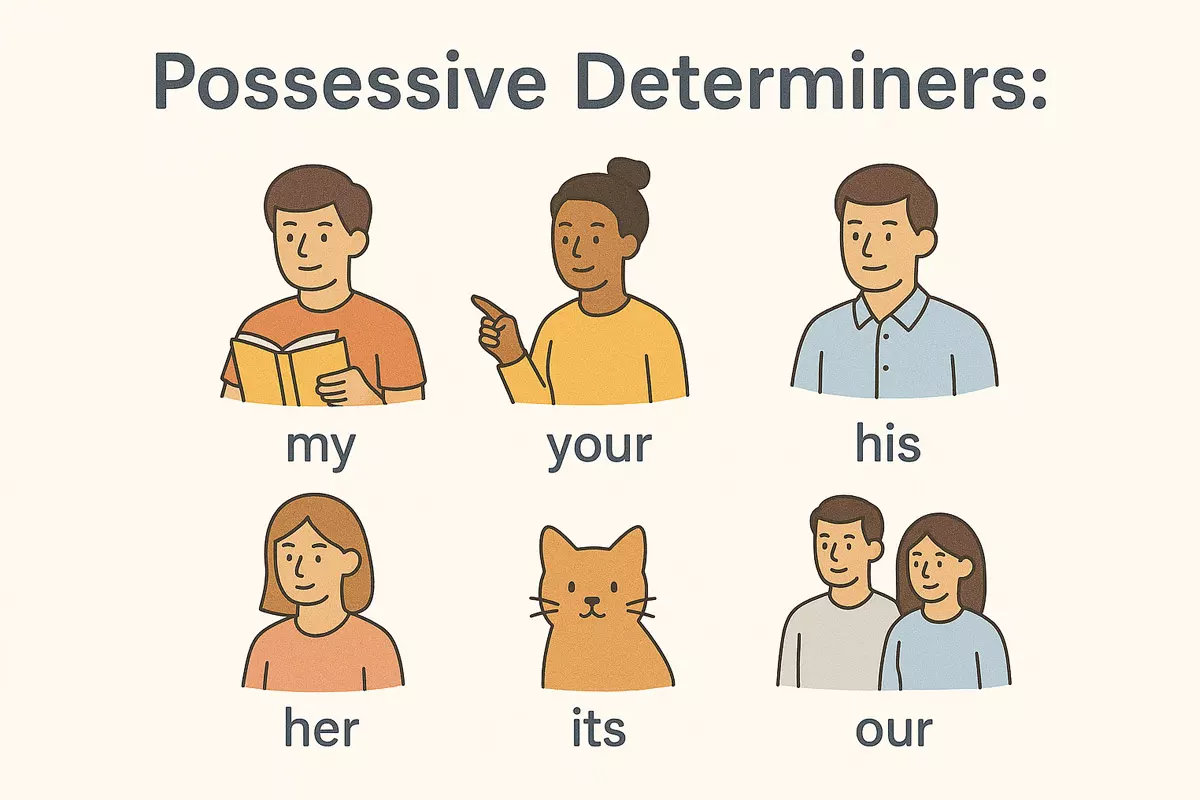 The article explains how to use possessive determiners before nouns, focusing on agreement with the noun, not the speaker. It covers the difference between its and it's, common gender word confusions, real-life examples, and practice exercises.
Possessive adjectives such as my, your, his, her, its, our, and their are essential in English for showing ownership or relationships between people and things. By using these words, you can clearly indicate who something belongs to, making your sentences more precise and easier to understand. Mastering possessive adjectives not only improves your grammar but also helps you communicate more effectively in both written and spoken English, whether you are describing your own belongings or talking about others.
Before-Noun Position: Key Rule
Possessive determiners—like "my," "your," "his," "her," "its," "our," and "their"—always appear directly before the noun they modify. You cannot place adjectives or other modifiers between the possessive word and the noun. This rule distinguishes possessive determiners from possessive pronouns, which stand alone.
Usage Patterns
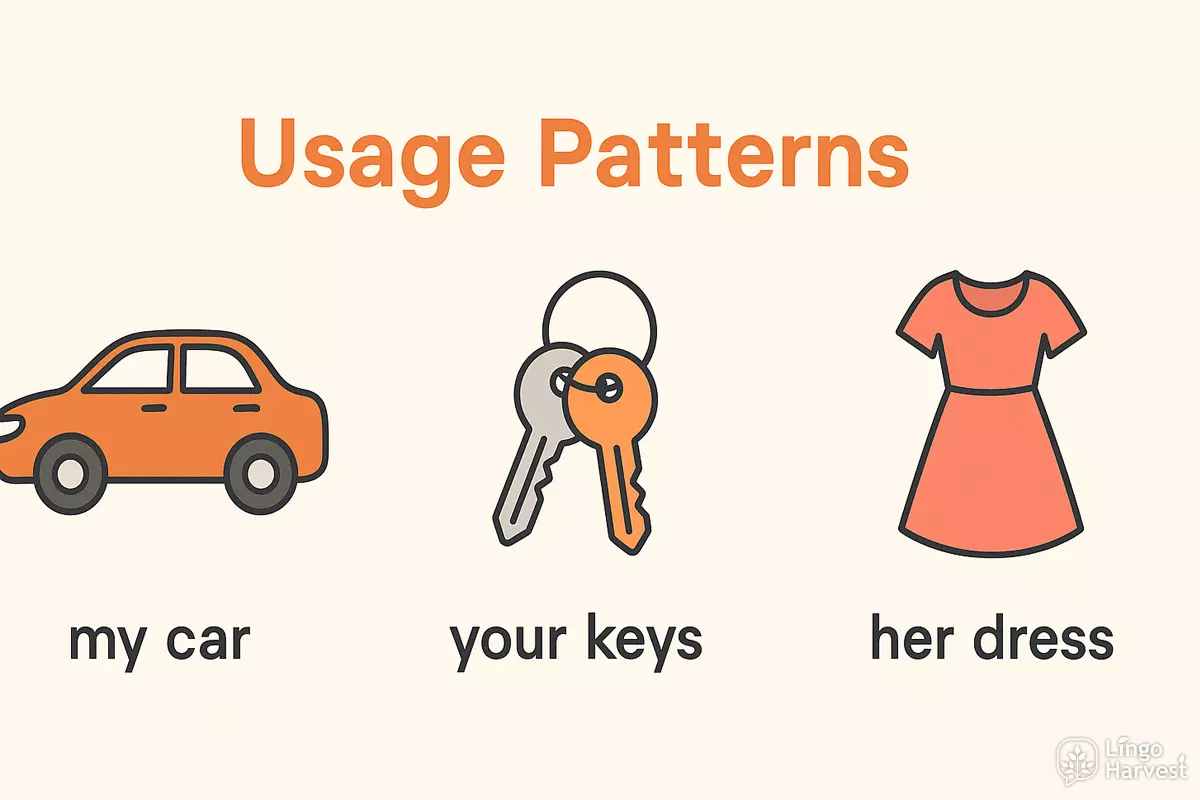
Whenever you want to show ownership or a relationship to something, use one of these determiners right before the noun. For example: "my book," "your idea," "her phone," or "their house."
- my car
- your keys
- his plan
- her dress
- its color
- our team
- their advice
- my friends
- your solution
- their opinions
- our results
- his story
- her family
- its purpose
- your backpack
- my answer
- their project
- her decision
- our classroom
- his shoes
Incorrect vs. Correct Placement
In English, it is incorrect to separate the possessive determiner from the noun with adjectives or other words. For instance:
- ❌ my beautiful red car is correct (all adjectives come after the determiner, before the noun)
- ❌ beautiful my red car is incorrect
- ❌ the your idea is incorrect
- ✅ your great idea is correct
Summary Table: Possessive Determiners and Example Nouns
| Possessive Determiner | Example Phrase |
|---|---|
| my | my phone, my friends |
| your | your bag, your answer |
| his | his shoes, his story |
| her | her idea, her decision |
| its | its color, its purpose |
| our | our team, our classroom |
| their | their advice, their opinions |
Key Takeaway
To show possession or belonging, always put words like "my" or "their" immediately before the noun. This rule helps make your meaning clear and your English natural.
Agreement with the Noun, Not the Speaker
When using possessive determiners like my, your, his, her, its, our, and their, it's essential to match the determiner with the owner, not with the person talking about the owner. This means the form you choose depends on who possesses the object, not who is speaking or writing. For example, if you are describing a book that belongs to Sarah, you say her book regardless of who Sarah is to you.
Choosing the Correct Form
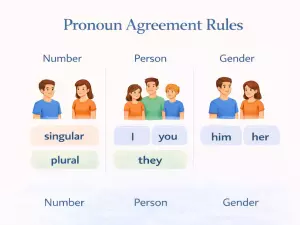
The relationship between the possessor and the noun is what matters. If the subject is a group, use our or their; for a single male, use his; for a single female, use her; for things or animals, its is appropriate. The determiner never changes to reflect the speaker's identity, only the possessor's.
- my: for something belonging to the speaker (I)
- your: for something belonging to the listener (you)
- his: for a male owner (he)
- her: for a female owner (she)
- its: for a non-human or thing (it)
- our: for something belonging to us (we)
- their: for something belonging to them (they)
Examples: Owner Determines the Form
Notice how the possessive word changes with the owner. Here are several situations:
- This is my phone. (spoken by the owner)
- Is that your bag? (addressing the listener)
- John forgot his keys. (about John, a male)
- Anna finished her homework. (about Anna, a female)
- The cat licked its paw. (the cat—an animal)
- We brought our tickets. (several speakers, group ownership)
- The students handed in their assignments. (students as the owners)
- Each dog has its collar. (non-human owner, singular)
- Mark and Lisa sold their house. (joint ownership)
- You and I will take our car. (shared between speaker and listener)
- The company updated its policy. (company = it)
- The twins wore their new shoes. (the twins = they)
Common Mistakes ❌
Mixing up the determiner with the speaker's identity leads to errors. For example, saying "She lost my bag" when you mean "She lost her bag" confuses ownership. Always consider who the real owner is in the sentence.
Summary Table: Possessive Determiners by Owner
| Owner | Possessive Determiner |
|---|---|
| I | my |
| You | your |
| He | his |
| She | her |
| It | its |
| We | our |
| They | their |
By focusing on the actual possessor, you'll avoid confusion and communicate more clearly. The speaker's role is to describe whose item it is, not to influence the form of the determiner.
its vs it's — The Critical Difference
Understanding when to use its and when to use it's is a stumbling block for many English learners. These two forms look almost identical, but their meanings and grammatical roles are entirely different. Mixing them up can lead to confusion, so let's clarify how each is used in sentences.
Possessive or Contraction?
Its is a possessive determiner, just like my, your, or her. It shows that something belongs to or is related to "it." For example, "The cat licked its paw." Here, its tells us the paw belongs to the cat. Notice there’s no apostrophe. On the other hand, it's is a contraction of "it is" or "it has." For example, "It's raining outside," or "It's been a long day." The apostrophe replaces the missing letters.
Quick Ways to Tell Them Apart
If you can replace the word with "it is" or "it has," then the form with the apostrophe (it's) is correct. If not, use its. This trick works most of the time and helps avoid common mistakes.
| Form | Usage & Example |
|---|---|
| its | Possessive determiner (shows ownership) Example: "The dog wagged its tail." |
| it's | Contraction of "it is" or "it has" Example: "It's going to snow today." |
Common Mistakes and Examples
Here are some typical sentences to illustrate the difference:
- ✅ The company changed its logo last year.
- ❌ The company changed it’s logo last year. (incorrect)
- ✅ It's important to check your work.
- ❌ Its important to check your work. (incorrect)
- ✅ The tree lost its leaves in autumn.
- ✅ It's been a pleasure meeting you.
- ✅ The robot completed its task efficiently.
- ✅ It's time to go home.
- ✅ The phone lost its signal.
- ✅ It's ready for pickup.
Summary Tips
- Use its for ownership or belonging.
- Use it's if you mean "it is" or "it has."
- If in doubt, expand "it's" to "it is" or "it has" and see if the sentence still makes sense.
Being able to spot the difference quickly will help make your writing clearer and more professional. Remember: the apostrophe in it's always stands in for missing letters, never for possession.
Real-Life Context Sentences
Understanding how to use possessive determiners naturally in daily situations is essential for clear communication. These words (my, your, his, her, its, our, their) help us show ownership or relationships in countless everyday contexts. Below are practical examples and patterns for each, so you can see how these determiners fit into real conversations and writing.
Everyday Examples Using Possessive Determiners
- Can you pass me my keys?
- Is this your umbrella?
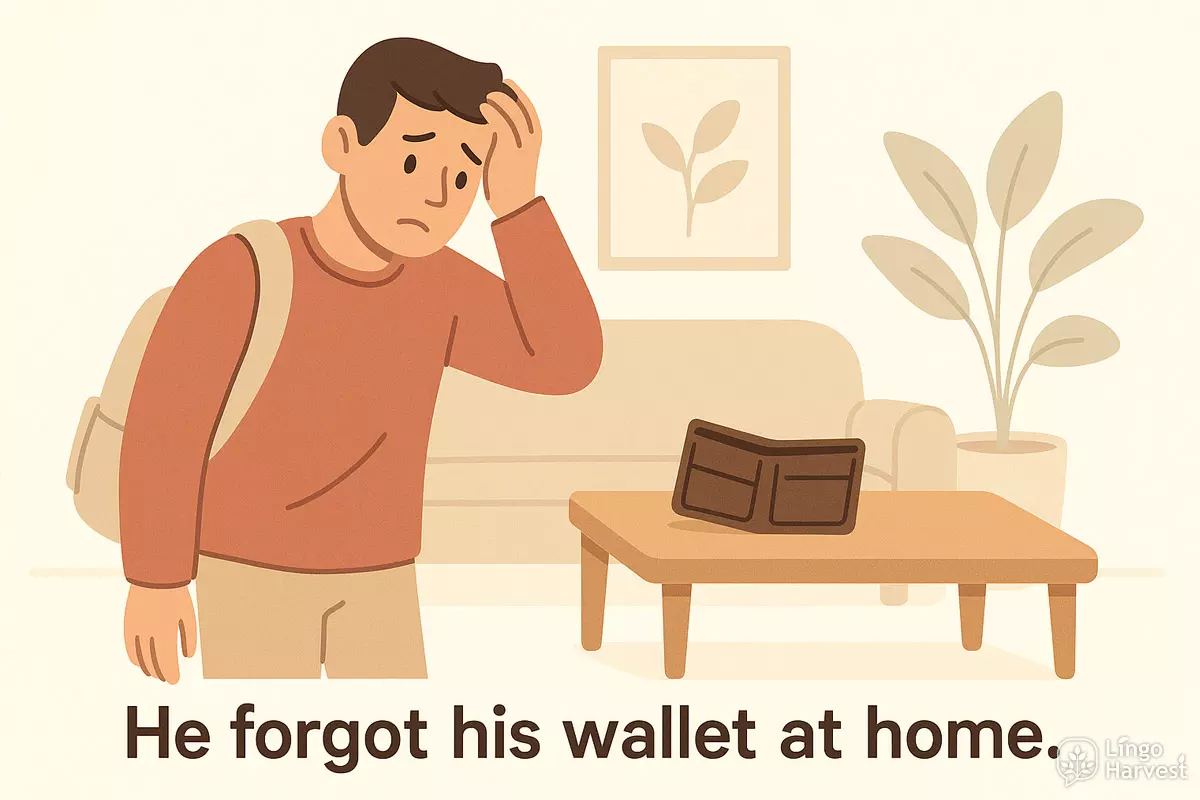
- He forgot his wallet at home.
- She lost her phone yesterday.
- The cat licked its paw.
- We should finish our project by Friday.
- They brought their children to the park.
- I love my new shoes.
- How was your weekend?
- The dog wagged its tail happily.
- Our teacher gave us extra homework.
- The students handed in their assignments.
- She invited me to her birthday party.
- He always parks his car here.
- We forgot to bring our tickets.
- They sold their house last year.
- I can't find my glasses.
- Is this your notebook or mine?
Comparing Possessive Determiners in Context
| Determiner | Sample Sentence |
|---|---|
| my | I left my lunch at home. |
| your | Is this your pen? |
| his | He finished his homework early. |
| her | She brought her laptop to work. |
| its | The company changed its logo. |
| our | This is our favorite restaurant. |
| their | They forgot their passports. |
Tips for Natural Usage
When using these words, always place them directly before the noun they modify. For example, say “her car” rather than “the car of her.” This structure is typical in spoken and written English, making your speech sound more fluent and natural. Notice how each determiner agrees with the subject: “his” for a man, “her” for a woman, “its” for animals or things, and “their” for plural owners.
Common Confusions with Gender Words
Misusing possessive determiners related to gender is a frequent stumbling block for English learners. The main issue arises with “his,” “her,” and “its,” as these words depend on the gender or type of the noun they refer to. Understanding the correct match is crucial for clarity and accuracy.
When to Use “His” vs “Her” vs “Its”
“His” is used for males, “her” for females, and “its” for things, animals (when gender is unknown or irrelevant), or organizations. People often mix these up, especially when translating from languages where possessive words do not reflect gender.
- His: for a man or boy (e.g., his book)
- Her: for a woman or girl (e.g., her bag)
- Its: for a thing, animal, or entity (e.g., its color)
Common Mistakes with Gendered Possessives
Learners might:
- Use “his” for a female (❌ his mother when referring to a woman)
- Use “her” for a male (❌ her father when referring to a man)
- Use “its” for people (❌ its teacher when talking about a person)
- Use “his” or “her” for objects (❌ her company unless the company is metaphorically female)
Quick Reference for Gendered Possessive Determiners
| Who or What? | Use This Possessive | Example |
|---|---|---|
| Man / Boy | his | his jacket |
| Woman / Girl | her | her shoes |
| Thing / Animal (unknown gender) | its | its fur |
| Company / Organization | its | its policy |
| Group of people (plural) | their | their ideas |
Special Cases and Tips
Sometimes, animals are called “he” or “she” if the gender is known or if the animal is a pet. Objects and countries can sometimes be referred to as “she” or “her” in poetic or traditional contexts, but this is rare in modern usage. To avoid confusion, always identify the gender or type of noun before choosing the possessive word. If unsure, “their” is a safe option for plural or when gender is not specified (especially for people). Remember:
- Never use “its” for people.
- Don’t use “his” or “her” for things or animals unless the gender is clear and relevant.
- Use “their” for groups, regardless of gender.
Practice: Rewrite for Correct Possession
Understanding how to use possessive determiners correctly is essential for expressing ownership or relationships in English. Let’s practice by rewriting sentences to show the correct form of possession. Read each sentence and replace the underlined word with the appropriate possessive determiner.
Rewrite These Sentences
For each item, rewrite the sentence using my, your, his, her, its, our, or their as needed:
- Anna forgot Anna's keys at home.
- The dog chased the dog's tail in the yard.
- We should finish we's project before Friday.
- Michael can't find Michael's phone.
- Did you bring you's umbrella?
- The children played with the children's toys.
- The cat licked the cat's paw.
- I forgot I's notebook at school.
- Lisa and Tom invited me to Lisa and Tom's house.
- Is this it is collar?
- Our teacher graded our teacher's papers quickly.
- Can you help me with me's homework?
- Sarah found Sarah's glasses under the sofa.
- The birds built the birds' nest in the tree.
- Did John see John's friend at the park?
Common Possessive Determiners: Quick Reference
| Subject | Possessive Determiner | Example |
|---|---|---|
| I | my | my book |
| you | your | your pen |
| he | his | his shoes |
| she | her | her bag |
| it | its | its tail |
| we | our | our house |
| they | their | their car |
Tips for Choosing the Right Word
- Use my for things belonging to yourself.
- Use your when speaking directly to someone.
- Use his or her for a single male or female, respectively.
- Its is used for things or animals (not people).
- Use our for things shared by you and others.
- Use their for things belonging to multiple people or animals.
Show answers
- Anna forgot her keys at home.
- The dog chased its tail in the yard.
- We should finish our project before Friday.
- Michael can't find his phone.
- Did you bring your umbrella?
- The children played with their toys.
- The cat licked its paw.
- I forgot my notebook at school.
- Lisa and Tom invited me to their house.
- Is this its collar?
- Our teacher graded his/her papers quickly. (Depending on the teacher's gender.)
- Can you help me with my homework?
- Sarah found her glasses under the sofa.
- The birds built their nest in the tree.
- Did John see his friend at the park?