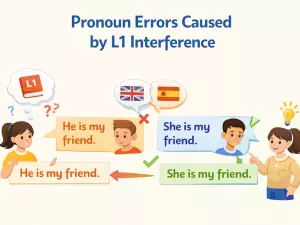
Pronoun Agreement Rules: Number, Person, and Gender

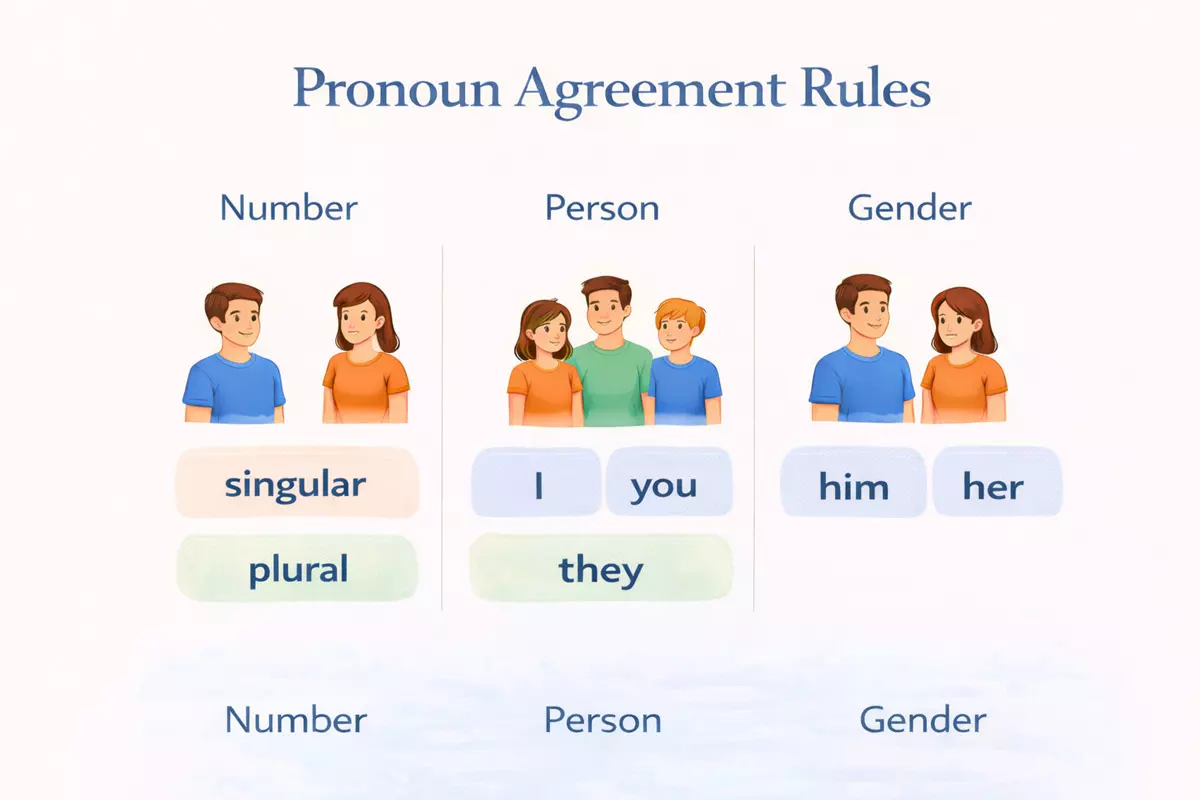 Here we pronoun agreement in English, focusing on number, person, and gender, including modern trends. It also discusses challenges with indefinite and collective nouns, common mistakes, editing tips, and provides practice correcting errors.
- What pronoun agreement means in English
- Agreement by number: singular vs plural pronouns
- Agreement by person: first, second, and third person
- Gender agreement and modern usage
- Indefinite pronouns and agreement challenges
- Collective nouns and pronoun agreement
- Common agreement mistakes learners make
- Editing tips to check agreement quickly
- Practice: fix agreement errors in sentences
Ensuring that pronouns agree with the words they refer to in number, perspective, and gender can be more challenging than it appears at first. Paying close attention to these important rules of pronoun agreement is key to producing writing that is both clear and grammatically accurate. By mastering these guidelines, you can communicate your ideas more effectively and avoid common errors that may confuse your readers or weaken your message. Consistency in pronoun usage not only strengthens your writing but also demonstrates your command of language conventions.
What pronoun agreement means in English
When writing or speaking, it’s important that pronouns match the words they refer to in number, person, and gender. This matching process is called pronoun agreement. For example, if the subject is singular, the pronoun should also be singular. If the subject is a group, then a plural pronoun is needed. Agreement helps sentences stay clear and avoid confusion about who or what is being discussed.
Key Aspects of Pronoun Agreement
- Number: Pronouns must be singular or plural to match the noun they replace. For instance, “The student lost her book,” versus “The students lost their books.”
- Person: The pronoun should reflect whether it refers to the speaker (first person), the listener (second person), or someone else (third person).
- Gender: When a noun has a clear gender, the pronoun should reflect that (he, she); otherwise, neutral options like “they” are used.
Why Agreement Matters
Proper agreement ensures clarity. If pronouns don’t align with their nouns, sentences can become ambiguous or misleading. For example, “Everyone forgot their ticket” is clear, while “Everyone forgot his ticket” could sound awkward or exclude some people.
Common Pronoun Agreement Patterns
| Antecedent | Correct Pronoun |
|---|---|
| Each student | he or she / they |
| The children | they |
| My friend | he or she / they |
| People | they |
| The dog | it |
| Sarah | she |
| The team (as a unit) | it |
| The team (as individuals) | they |
Examples of Agreement in Action

- “The teacher explained her lesson.”
- “The boys forgot their lunches.”
- “If anyone calls, tell them I’ll call back.”
- “Neither of the answers is correct, is it?”
- “My friends said they would arrive soon.”
- “A person should know his or her rights.”
- “The committee made its decision.”
- “The dogs wagged their tails.”
In short, matching pronouns to their nouns in number, person, and gender keeps your writing smooth and understandable. Noticing these patterns helps you avoid common mistakes and communicate with precision.
Agreement by number: singular vs plural pronouns
One of the most important rules in English grammar is that a pronoun must correspond in number with its antecedent—that is, whether the noun it replaces is singular or plural. Getting this right helps your sentences remain clear and grammatically correct. Using the wrong form can confuse readers or even change the meaning of a sentence.
Why number agreement matters
When you use a singular noun, you need a singular pronoun; for plural nouns, a plural pronoun is required. This rule applies whether the antecedent comes before or after the pronoun. Consider the difference:
- Singular: The dog lost its collar.
- Plural: The dogs lost their collars.
Using the wrong pronoun form can create confusion: “The dog lost their collar” suggests more than one dog, while “The dogs lost its collar” incorrectly treats the group as a single animal.
Common singular and plural pronouns
Here’s a quick look at the most frequently used pronouns in both singular and plural forms:
| Singular Pronoun | Plural Pronoun |
|---|---|
| he / she / it | they |
| him / her / it | them |
| his / her / its | their |
| himself / herself / itself | themselves |
| I | we |
| me | us |
| my / mine | our / ours |
| you (singular) | you (plural) |
Tricky situations and special cases
Some sentences can be challenging, especially with collective nouns, indefinite pronouns, or when gender-neutral language is used. Here are several cases to watch for:
- Collective nouns: “The team won its game.” (Team = one group)
- Indefinite pronouns: “Everyone should bring his or her ticket.” (Formal) / “Everyone should bring their ticket.” (Common informal usage)
- Compound subjects: “Jack and Jill forgot their pails.”
- Each/every: “Each student must submit his or her work.”
- Neither/nor, either/or: “Neither the manager nor the employees remembered their keys.” (Follows the noun closest to the pronoun)
Quick tips for correct number agreement
- Identify the antecedent and check if it’s singular or plural.
- Use singular pronouns for singular nouns; plural pronouns for plural nouns.
- Be aware of exceptions, especially with collective nouns and indefinite pronouns.
- In modern English, singular “they” is widely accepted for gender neutrality.
Mastering pronoun number agreement will make your writing clearer and more precise. When in doubt, double-check your subject and match it with the correct pronoun form.
Agreement by person: first, second, and third person
Understanding how pronouns agree with the person they refer to is crucial for clear and accurate communication. In English, this means choosing pronouns that match the subject's perspective: whether the speaker is talking about themselves (first person), the listener (second person), or someone else (third person). Selecting the correct form helps avoid confusion and ensures sentences make sense to the reader or listener.
Person Categories in English Pronouns
English pronouns shift based on the point of view. Here’s a breakdown of how pronouns change depending on whether you are speaking about yourself, directly to someone, or about others:
| Person | Subject Pronoun | Object Pronoun | Possessive Adjective | Possessive Pronoun | Reflexive |
|---|---|---|---|---|---|
| First (singular) | I | me | my | mine | myself |
| First (plural) | we | us | our | ours | ourselves |
| Second (singular/plural) | you | you | your | yours | yourself / yourselves |
| Third (singular, masculine) | he | him | his | his | himself |
| Third (singular, feminine) | she | her | her | hers | herself |
| Third (singular, neutral) | it | it | its | its | itself |
| Third (plural) | they | them | their | theirs | themselves |
Notice how each row shifts the pronoun forms to match the perspective and number of the antecedent. Using the wrong form can cause ambiguity, so attention to detail is important.
Common Agreement Patterns and Errors
- First person: Always use "I" or "we" when referring to yourself or your group. Example: I am going to the store. We are ready.
- Second person: "You" works for both singular and plural, but in some dialects, "you all" or "y'all" appears for clarity. Example: Are you coming?
- Third person: "He," "she," "it," and "they" are used for people, animals, or things not directly involved in the conversation. Example: She likes music. They finished early.
- Mixing up person agreement (e.g., "Me and you is going") is a typical mistake. Correct: You and I are going.
- Switching perspective mid-sentence can confuse the reader: If one studies hard, you will succeed ❌. Correct: If you study hard, you will succeed ✅.
Expanded Examples of Person Agreement
- I forgot my keys. (First person singular)
- We finished our homework. (First person plural)
- You are invited to the meeting. (Second person singular/plural)
- He brought his lunch. (Third person singular, masculine)
- She lost her phone. (Third person singular, feminine)
- It needs its battery replaced. (Third person singular, neutral)
- They cleaned their room. (Third person plural)
- Did you see them at the park? (Second person addressing third person plural)
- Ours is the blue car. (First person plural possessive pronoun)
- Is this yours? (Second person possessive pronoun)
- She did it herself. (Third person singular reflexive)
- We made it ourselves. (First person plural reflexive)
Matching pronouns to the correct person is fundamental for grammatical accuracy. When in doubt, double-check the subject of your sentence and select the pronoun form that fits the perspective. This attention to detail makes your writing and speech more precise and easier to follow.
Gender agreement and modern usage
When choosing pronouns, matching grammatical gender with the noun or antecedent is a traditional rule in English. Historically, gender was simple: "he" for males, "she" for females, and "it" for things or animals of unknown gender. However, the landscape has evolved. Today, writers and speakers select pronouns not only for grammatical accuracy but also to show respect for individuals' identities and to avoid gender bias.
Traditional gendered pronouns
English offers a limited set of gendered pronouns. These are:
- He/him/his – for male individuals
- She/her/hers – for female individuals
- It/its – for objects, animals (unless gender is known), or abstract concepts
Modern developments and singular "they"
To avoid assumptions and to include nonbinary people, English increasingly uses "they" as a singular pronoun. This usage is now widely accepted in both spoken and written forms, especially when the gender of a person is unknown or unspecified. For example, "Someone left their umbrella" treats "someone" as a singular noun but uses "their" to avoid gender specification.
Common pronoun choices and examples
Writers and speakers today may encounter several pronoun options, especially in contexts emphasizing inclusivity. Here are some common forms and their uses:
| Pronoun | Example Sentence | When Used |
|---|---|---|
| He/him | He forgot his keys. | Referring to a male individual |
| She/her | She brought her book. | Referring to a female individual |
| They/them (singular) | Someone left their bag. | Gender unknown or nonbinary person |
| Ze/hir | Ze finished hir assignment. | Some nonbinary individuals |
| It/its | The cat drank its milk. | Objects, animals (gender unknown) |
Guidelines for inclusive language
- When in doubt, ask someone their pronouns rather than assuming.
- Use "they/them" when referring to people whose gender is unknown or unspecified.
- Respect personal pronoun choices, even if they are unfamiliar.
- Avoid defaulting to "he" or "she" in generic statements; opt for inclusive language instead.
- Be mindful of gender-neutral job titles and descriptions (e.g., "chairperson" instead of "chairman").
English continues to adapt its pronoun usage to reflect changing social attitudes and the need for respectful, accurate reference. While traditional forms remain correct in many contexts, awareness and flexibility are vital in modern communication.
Indefinite pronouns and agreement challenges
Indefinite pronouns—such as everyone, someone, each, and none—present unique problems when matching pronouns with verbs, or when choosing the right personal pronoun for reference. These words often look plural or ambiguous, but many are actually grammatically singular, which can be confusing for writers and speakers alike. Getting agreement right requires knowing which indefinite pronouns take singular verbs and pronouns, which take plural, and which can be either depending on context.
Common indefinite pronouns: Singular, plural, or both?
Some indefinite pronouns are always singular, others are always plural, and a few can be both, depending on what they refer to. Here’s a breakdown to clarify their typical usage:
| Indefinite Pronoun | Agreement | Example |
|---|---|---|
| Everyone, Everybody, Someone, Somebody, Anyone, Anybody, No one, Nobody, Each, Either, Neither | Singular | Everyone has finished his or her work. |
| Several, Few, Both, Many | Plural | Many are bringing their own lunch. |
| All, Any, None, Some, Most | Singular or Plural (Context-dependent) | Some of the pie is missing. / Some of the cookies are missing. |
Gender-neutral reference: A modern challenge
English style guides often recommend using his or her with singular indefinite pronouns, but this can feel awkward or exclusionary. Increasingly, singular they is accepted as a neutral alternative: Everyone should bring their own lunch. While some traditionalists still prefer “he or she,” most modern writing embraces singular “they” for clarity and inclusivity.
Typical agreement pitfalls
- Confusing plural-looking words: Words like everyone and nobody refer to groups, but require singular agreement: Everybody wants to share their ideas.
- Context-dependent cases: Pronouns like all and none change agreement based on what they refer to: All of the water is gone (singular); All of the bottles are gone (plural).
- Ambiguous gender: Using his or her can be clunky. Singular they helps avoid awkwardness.
Quick reference: Indefinite pronouns in action
- Each of the students has finished their work.
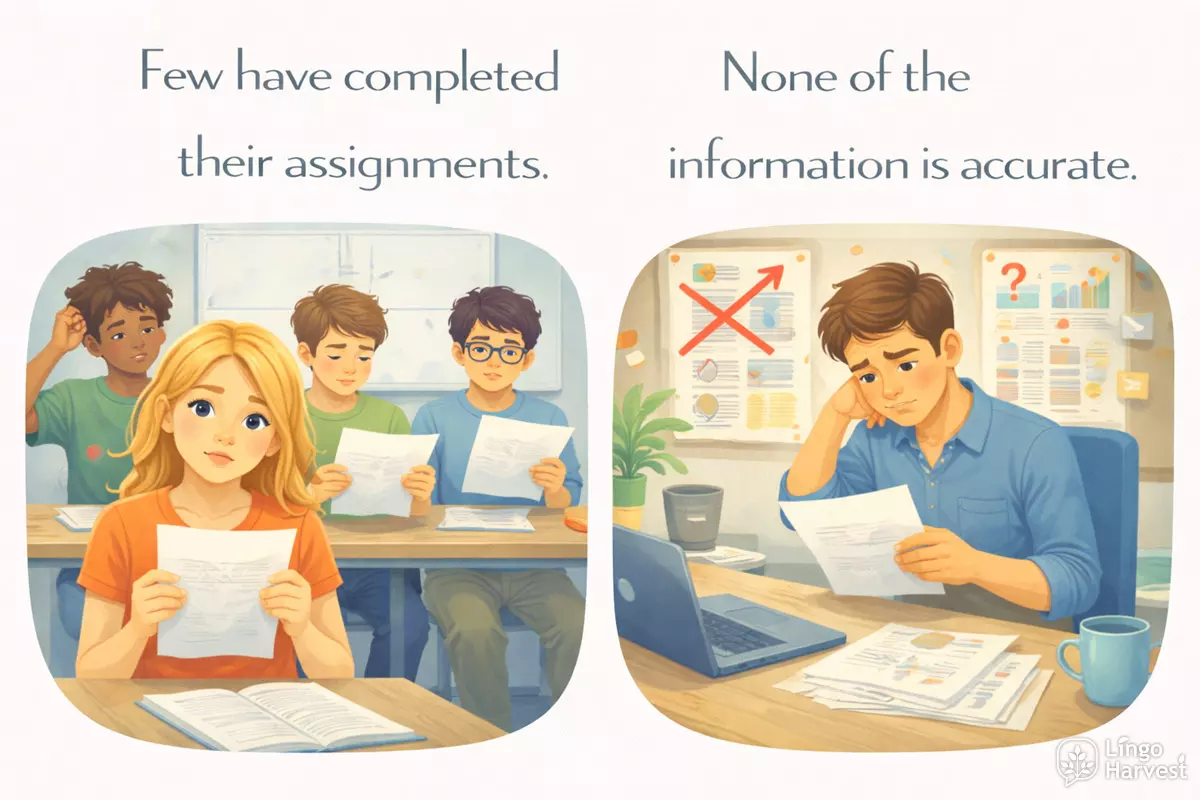
- Few have completed their assignments.
- None of the information is accurate.
- Many of the children are ready.
- Someone forgot their umbrella.
- Everyone must do his or her best. (Or: their best.)
- Neither of the answers is correct.
- Some of the cake is left. / Some of the cookies are left.
- Both are invited to bring their friends.
- Anybody can submit their application.
Mastering agreement with indefinite pronouns means paying close attention to their number and the context in which they appear. When in doubt, check if the pronoun refers to something countable or uncountable, and consider using singular they for natural, inclusive language.
Collective nouns and pronoun agreement
When dealing with words like team, committee, audience, or family, choosing the right pronoun can be tricky. These nouns refer to groups but are grammatically singular in American English. The key is to consider whether the group acts as a single unit or as individuals. This determines whether you use singular or plural pronouns.
Understanding the context
If the group acts collectively, use a singular pronoun. If the individuals in the group are acting separately, a plural pronoun fits better. British English often treats collective nouns as plural, but American English usually prefers the singular.
- Singular action: The committee has made its decision. (The group acts as one.)
- Plural action: The committee are discussing their opinions. (The members act individually.)
- The jury reached its verdict. ✅
- The jury argued among themselves. ✅
- The audience showed its appreciation with applause. ✅
- The audience returned to their seats after intermission. ✅
- The team celebrated its victory. ✅
- The team changed their uniforms. ✅
- The staff is proud of its work. ✅
- The staff have gone to their offices. ✅
Common collective nouns and pronoun choices
Here are some examples of group nouns and how their pronouns may change depending on context. Notice how the verb form and pronoun shift together.
| Collective Noun | Singular Example | Plural Example |
|---|---|---|
| Team | The team won its game. | The team changed their shoes. |
| Family | My family is selling its house. | My family are preparing their favorite dishes. |
| Class | The class finished its project. | The class turned in their assignments. |
| Government | The government announced its policy. | The government are arguing among themselves. |
| Staff | The staff enjoys its new office. | The staff are taking their lunch breaks. |
When writing, always check whether you’re referring to the group as a single entity or to the individuals within it. This subtle distinction helps maintain clarity and grammatical accuracy in your sentences.
Common agreement mistakes learners make
Many English learners struggle with matching pronouns to their antecedents correctly in terms of number, person, and gender. These issues often stem from confusing sentence structures, unclear antecedents, or the irregularities of English itself. Recognizing these pitfalls is the first step toward more accurate and natural writing.
Typical areas where errors occur
- Number mismatches: Using a singular pronoun for a plural noun (or vice versa), such as “Each of the boys brought their lunch” instead of “his lunch.”
- Unclear antecedents: When it’s not clear which noun the pronoun refers to, as in “When Jane met Sarah, she smiled.” (Who smiled?)
- Person inconsistency: Switching between “you,” “he/she,” and “they” without a clear reason, which can confuse the reader.
- Gender assumptions: Using “he” as a default when the gender is unknown or mixed, instead of a more neutral option.
- Collective nouns: Mistakenly using plural pronouns for collective nouns considered singular in English (“The team lost their game” instead of “its game”).
- Indefinite pronouns: Phrases like “Everyone must bring their book” can be tricky, since “everyone” is singular but “their” is plural.
- Compound subjects: Failing to use the correct plural pronoun for subjects joined by “and,” e.g., “Jack and Jill forgot his bucket.”
- Compound antecedents with ‘or’/‘nor’: Choosing the pronoun based on the nearest noun, as in “Neither the manager nor the employees brought their lunch.”
- Ambiguous references: Using “it,” “this,” or “that” without a clear noun to refer to.
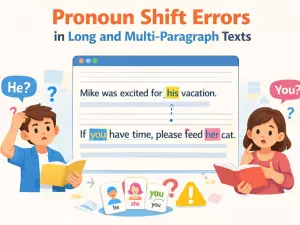
- Switching tenses or persons mid-sentence: For example, “If a person wants to succeed, you must work hard.”
Common incorrect and corrected forms
| Incorrect Example | Corrected Form |
|---|---|
| Each student must hand in their paper. | Each student must hand in his or her paper. Or (informal): Each student must hand in their paper. (increasingly accepted) |
| The company lost their assets. | The company lost its assets. |
| If a person wants to be healthy, you need to exercise. | If a person wants to be healthy, he or she needs to exercise. Or: If you want to be healthy, you need to exercise. |
| Neither the dog nor the cats has lost their collar. | Neither the dog nor the cats have lost their collars. |
| When Sam and Tom arrived, he sat down. | When Sam and Tom arrived, they sat down. |
| Anyone can do what they wants. | Anyone can do what they want. |
Tips to avoid agreement confusion
- Identify the true antecedent before choosing a pronoun.
- Be consistent with person (first, second, third) throughout a sentence or paragraph.
- Use singular “they” when gender is unknown, but be aware of your audience’s expectations.
- Double-check sentences with compound subjects or objects.
- Read aloud to catch awkward or mismatched references.
Mastering pronoun agreement takes practice and attention, but being aware of these frequent slip-ups can make your writing clearer and more accurate.
Editing tips to check agreement quickly
When proofreading for pronoun agreement, a methodical approach helps you spot inconsistencies in number, person, and gender. Instead of reading passively, pause at each pronoun and ask: Does this pronoun match the noun it replaces? Focusing on this question as you edit can reveal mismatches that might otherwise slip by.
Step-by-step checklist for fast agreement review
- Circle or highlight every pronoun as you read. This visual cue makes it easier to track their usage across sentences.
- Identify the antecedent for each pronoun. If you can’t find a clear noun that the pronoun refers to, there may be an agreement or clarity issue.
- Check number consistency: Singular antecedents need singular pronouns (he, she, it), and plural antecedents require plural pronouns (they, them).
- Verify person consistency: First person (I/we), second person (you), and third person (he/she/they/it) shouldn’t switch unexpectedly in a sentence or paragraph unless intentional.
- Confirm gender alignment: Make sure the pronoun’s gender matches the noun, or use gender-neutral forms when needed.
- Watch for indefinite pronouns like everyone, each, or someone. These are singular, so use singular pronouns (everyone brought his or her lunch, not their lunch).
- Look for compound subjects. If two nouns are joined by “and,” use plural pronouns. If joined by “or” or “nor,” match the pronoun to the closest noun.
- Scan for collective nouns (team, group, jury). In American English, these are usually treated as singular unless the individuals are acting separately.
- Read sentences aloud. Sometimes, errors in agreement are easier to hear than to see.
- Check for shifts in point of view. Stay consistent unless there’s a clear reason to change from, say, “you” to “he/she.”
Common pronoun agreement errors and quick fixes
| Problem | How to Fix |
|---|---|
| “Each student must bring their book.” ❌ | Change to “Each student must bring his or her book.” ✅ |
| “Neither the coach nor the players forgot their whistle.” ❌ | Match pronoun to the closest noun: “Neither the coach nor the players forgot their whistles.” ✅ |
| “The team celebrated their win.” (when acting as one unit) ❌ | Use singular: “The team celebrated its win.” ✅ |
| “If anyone calls, tell them I’m out.” ❌ | Use singular or rewrite: “If anyone calls, tell him or her I’m out.” Or: “Tell the caller I’m out.” ✅ |
Quick scan: pronouns and their proper forms
- I, me, my, mine (singular, first person)
- We, us, our, ours (plural, first person)
- You, your, yours (second person, both singular and plural)
- He, him, his; she, her, hers; it, its (third person singular)
- They, them, their, theirs (third person plural)
- Who (subject), whom (object), whose (possessive)
- This/that (singular), these/those (plural demonstratives)
By systematically reviewing these elements, editors can catch most pronoun agreement errors in a single pass. Remember, consistency is the key to clarity in any piece of writing.
Practice: fix agreement errors in sentences
Correct pronoun agreement is essential for clarity and grammatical accuracy. Below, you'll find a variety of sentences that contain mistakes related to pronoun number, person, or gender. Your task is to identify and correct these errors. This exercise will help you internalize the rules for matching pronouns with their antecedents.
Identify and correct the agreement errors
Read each sentence and decide which pronoun does not agree with its antecedent in number, person, or gender. Rewrite the sentence correctly.
- Each student must bring their own pencil to the exam.
- Neither of the boys brought their lunch.
- If anyone wants to join the club, they should sign up by Friday.
- The committee made their decision late last night.
- Every dog and cat needs to have their vaccinations updated.
- When a person studies hard, they usually succeed.
- My brother and sister said she would help me with my homework.
- Neither Tom nor Jerry said they was ready to leave.
- Each of the girls finished their test early.
- Somebody left their umbrella in the lobby.
- All of the teachers shared his favorite lesson plan.
- The jury reached its verdict after they deliberated for hours.
- Every employee should submit their timesheet before noon.
- The team lost their final game of the season.
- One of the boys forgot to bring their shoes.
- Each of the actors performed their scene beautifully.
Quick reference: Common pronoun agreement mistakes
- Using plural pronouns for singular indefinite pronouns (e.g., anyone, each, neither).
- Mismatching pronoun gender with a specific antecedent.
- Switching between singular and plural forms in the same sentence.
- Confusing collective nouns (e.g., team, committee) with plural nouns.
- Using the wrong person (e.g., switching from “you” to “they”).
Pronoun agreement at a glance
Here’s a comparison of correct and incorrect pronoun usage for different types of antecedents:
| Antecedent | Incorrect Pronoun | Correct Pronoun |
|---|---|---|
| Each student | their | his or her / their (informal) |
| The team | their | its |
| My friend | they | he or she |
| All of the teachers | his | their |
| Somebody | their | his or her / their (informal) |
Show answers
- Each student must bring his or her own pencil to the exam. (“Their” is plural; “student” is singular.)
- Neither of the boys brought his lunch. (“Neither” is singular.)
- If anyone wants to join the club, he or she should sign up by Friday. (“Anyone” is singular.)
- The committee made its decision late last night. (“Committee” is a collective noun, usually singular in American English.)
- Every dog and cat needs to have its vaccinations updated. (“Every dog and cat” treated as singular.)
- When a person studies hard, he or she usually succeeds. (“Person” is singular.)
- My brother and sister said they would help me with my homework. (“Brother and sister” is plural, so “they.”)
- Neither Tom nor Jerry said he was ready to leave. (“Neither” is singular.)
- Each of the girls finished her test early. (“Each” is singular.)
- Somebody left his or her umbrella in the lobby. (“Somebody” is singular.)
- All of the teachers shared their favorite lesson plan. (“Teachers” is plural, so “their.”)
- The jury reached its verdict after it deliberated for hours. (“Jury” is collective, usually singular in American English.)
- Every employee should submit his or her timesheet before noon. (“Every employee” is singular.)
- The team lost its final game of the season. (“Team” is a collective noun, singular.)
- One of the boys forgot to bring his shoes. (“One” is singular.)
- Each of the actors performed his or her scene beautifully. (“Each” is singular.)