Using Quantifiers: some, any, a few, a little, several, plenty

 Here we the use of quantifiers in English, explains the difference between some and any, how to use a few, few, a little, and little, when to use several and plenty, rules for countable and uncountable nouns, common beginner mistakes, and includes practice.
- What quantifiers are and why we use them in English
- Difference between some and any in positive, negative, and questions
- How to use a few vs few and a little vs little
- Using several and plenty to talk about quantity
- Quantifiers with countable vs uncountable nouns
- Typical mistakes with quantifiers at beginner level
- Practice: complete sentences with the correct quantifier
Understanding the subtle differences between words such as some, any, a few, a little, several, and plenty can significantly improve your English by making your speech and writing sound more natural and precise. Using these expressions correctly allows you to communicate quantity more clearly, whether you are referring to countable or uncountable nouns. For example, a few and several are used with countable nouns, while a little is used with uncountable nouns. Mastery of these terms helps you avoid common mistakes and express yourself more effectively in various situations.
What quantifiers are and why we use them in English
Quantifiers are words or phrases that give us information about the amount or quantity of something, without needing to specify an exact number. They help speakers and writers express “how much” or “how many” of a noun they are talking about, which is essential for clarity and natural communication. Instead of saying exactly “three apples” or “ten liters of water,” we often use terms like “some,” “a few,” or “plenty” to be more general or polite.
How quantifiers function in sentences
Quantifiers come before nouns and adjust the meaning by indicating quantity. They are used with both countable nouns (e.g., books, apples) and uncountable nouns (e.g., water, information). Choosing the right quantifier depends on whether you are talking about things you can count or things you cannot.
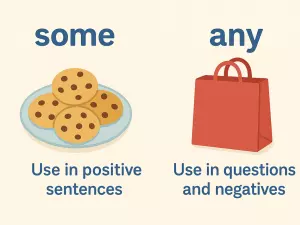
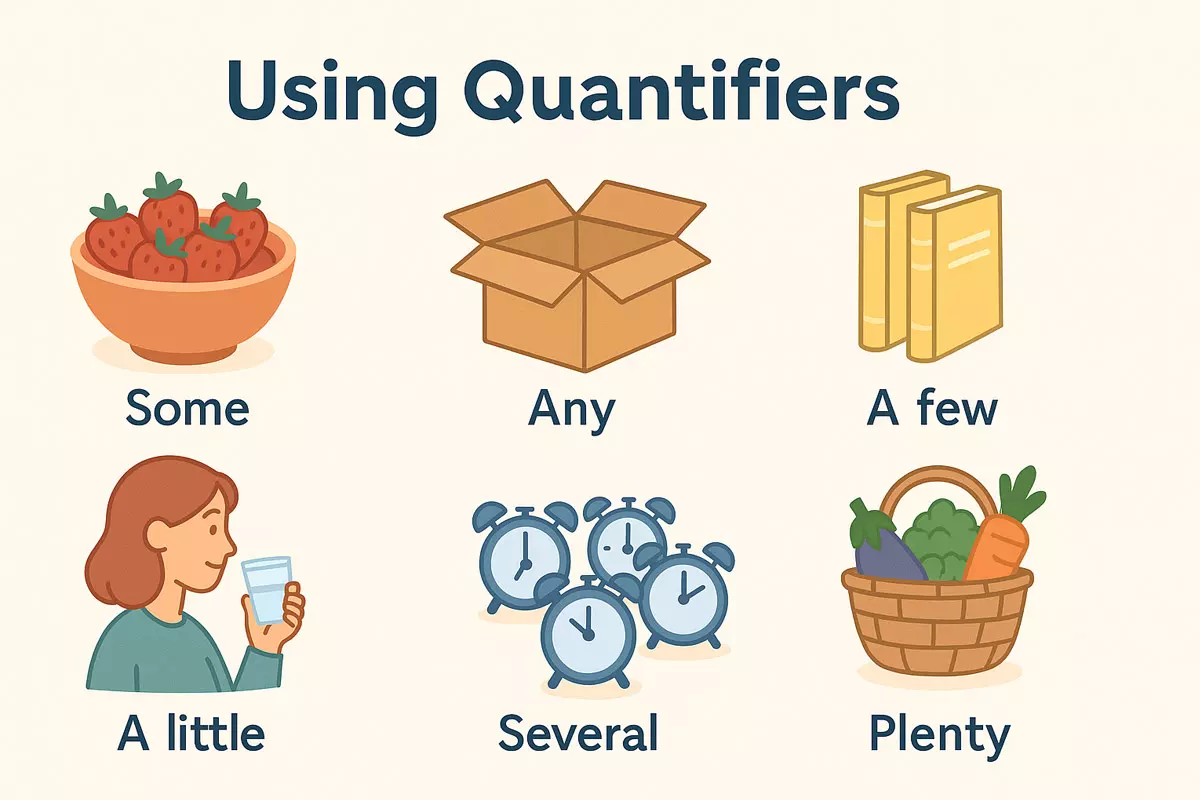
- Some — used with both countable and uncountable nouns in positive statements (e.g., some apples, some water)
- Any — often used in questions and negatives (e.g., any friends, any money)
- A few — for small quantities of countable nouns (e.g., a few coins)
- A little — for small amounts of uncountable nouns (e.g., a little time)
- Several — for more than two, but not a large number (e.g., several days)
- Plenty — to show a large or sufficient quantity (e.g., plenty of food)
Why English needs quantifiers
Using quantifiers allows us to communicate efficiently when exact numbers are unnecessary or unknown. They also make our language more flexible and natural, which is especially important in everyday conversation. For example, saying “I have some questions” is often more appropriate than listing the exact number, especially in casual or polite contexts.
Common quantifiers and usage patterns
Here is a selection of commonly used quantifiers and their typical contexts:
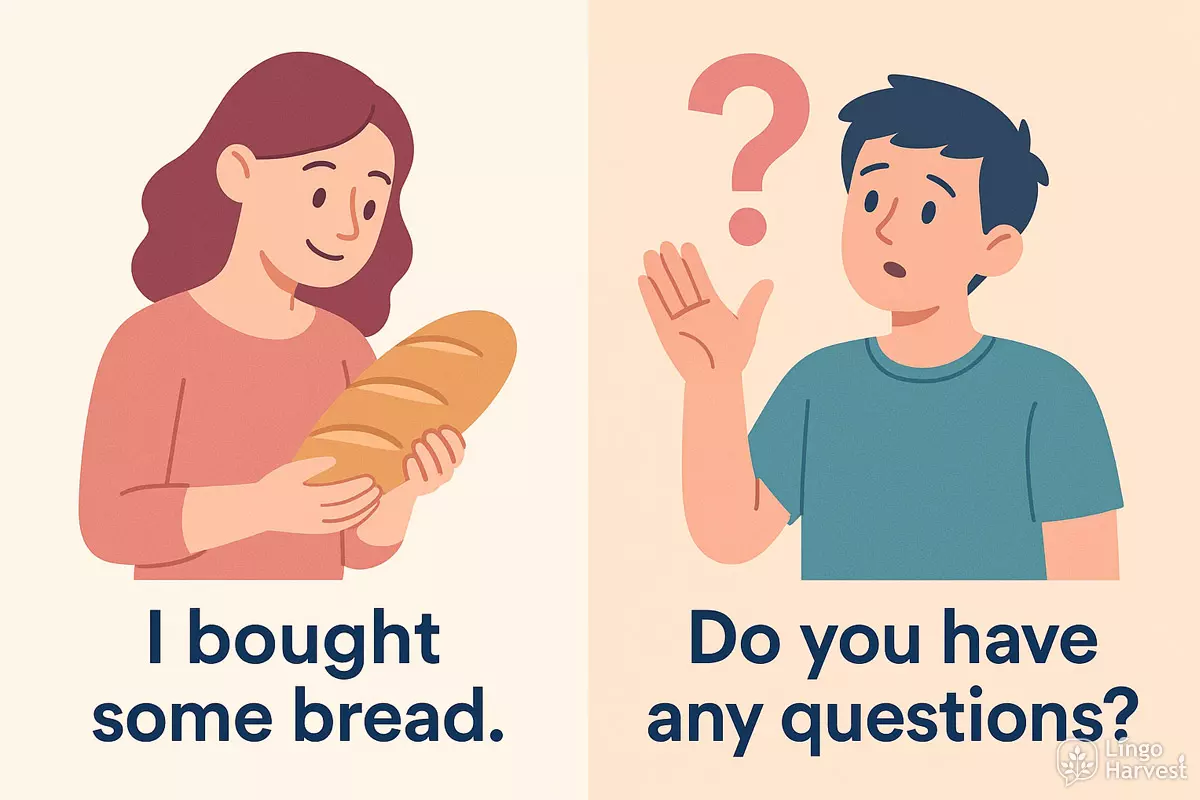
- Some — I bought some bread.
- Any — Do you have any questions?
- A few — We saw a few movies last week.
- A little — She put a little sugar in her tea.
- Several — He visited several countries last year.
- Plenty — There’s plenty of time to finish.
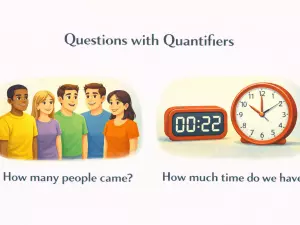
- Much — How much time do we have?
- Many — Many people like chocolate.
- Enough — We have enough chairs for everyone.
- No — There are no tickets left.
- Lots of — She has lots of friends.
- Few — Few students understood the problem.
- Little — There’s little hope of success.
- Most — Most children like sweets.
- All — All the cookies are gone.
- None — None of the answers are correct.
- Each — Each student has a book.
- Every — Every house on this street is new.
- Both — Both ideas are interesting.
- Half — Half the cake is left.
Summary
Quantifiers enrich our language by letting us talk about quantity without always being exact. They make conversation smoother and help us express ourselves more naturally, whether we are talking about a large group, a small amount, or something in between.
Difference between some and any in positive, negative, and questions
Understanding when to use some and any is important for expressing quantity in English. Both are used with countable and uncountable nouns, but the choice depends on the sentence type—affirmative, negative, or interrogative—and sometimes on the speaker’s intention.
General Usage Rules
- Some is most often used in positive (affirmative) sentences to talk about an unspecified quantity.
- Any is typically used in negative sentences and questions.
- There are exceptions, especially in offers and requests, where some appears in questions.
Examples in Different Sentences
| Sentence Type | Using "some" | Using "any" |
|---|---|---|
| Positive (affirmative) | She has some friends in Paris. There is some milk left. |
Not usually used |
| Negative | Not usually used | He doesn’t have any money. We don’t need any help. |
| Questions | Would you like some tea? Can I have some water? |
Do you have any questions? Is there any bread? |
| Special Cases | Used in polite offers/requests (e.g. “Could I have some?”) |
Used in negative questions (e.g. “Aren’t there any apples?”) |
Key Patterns and Examples
- Some for positive statements: “I need some information.”
- Any for negatives: “There isn’t any juice.”
- Any for general questions: “Do you need any help?”
- Some for offers/requests: “Would you like some coffee?”
- “Some” in questions implies the answer is yes or the speaker expects agreement: “Could I borrow some money?”
- “Any” in questions is open-ended: “Are there any messages for me?”
- “Any” is used in phrases like “at any time,” “anywhere,” or “anyone.”
- “Some” can suggest a limited but unknown amount: “She bought some apples.”
- “Any” can refer to an unlimited choice: “Take any seat.”
- “Some” is more common in invitations: “Would you like some cake?”
- “Any” is common with negatives: “We didn’t see any mistakes.”
- “Some” is not used after “not”: “There isn’t any sugar.”
- “Any” is not usually used in positive statements unless the meaning is “it doesn’t matter which”: “You can take any book.”
Summary
The choice between some and any depends on sentence structure and nuance. Some is standard in positive statements and polite offers or requests, while any fits naturally in negatives and most questions. Recognizing these patterns will help you communicate with greater accuracy and confidence.
How to use a few vs few and a little vs little
Understanding the subtle differences between “a few” vs “few” and “a little” vs “little” can make your English sound more natural and precise. Both sets of expressions relate to quantity, but their meanings and the feeling they give to a sentence are not quite the same.
“A few” and “few” (for countable nouns)
Use “a few” when you want to say that there is a small number, but enough for your purpose. It has a positive tone, suggesting sufficiency. In contrast, “few” means not many—almost none—and often carries a negative feeling, highlighting scarcity.
- a few friends → You have some friends (enough for company).
- few friends → You don’t have many friends (almost none).
- She brought a few cookies to the party. (Some cookies, enough to share)
- There are few cookies left. (Almost no cookies remain)
- I have a few questions. (Some questions, enough to discuss)
- I have few questions. (Hardly any questions)
“A little” and “little” (for uncountable nouns)
With uncountable nouns, “a little” suggests a small amount, but enough to be useful or appreciated. “Little” means a very small amount, often so little that it’s almost not enough.
- a little time → Some time (enough to do something)
- little time → Almost no time (not enough)
- There is a little milk in the fridge. (Enough for a cup of coffee)
- There is little milk left. (Not enough for anything)
- He showed a little interest. (Some interest, positive)
- He showed little interest. (Almost no interest, negative)
Quick Comparison Table
| Expression | Meaning / Feeling | Example |
|---|---|---|
| a few | Some, a small but sufficient number (countable) | I have a few books. (Enough to read) |
| few | Not many, almost none (countable) | Few people came to the meeting. (Disappointingly small number) |
| a little | Some, a small but enough amount (uncountable) | There is a little hope. (Still possible) |
| little | Hardly any, almost none (uncountable) | Little water was found in the desert. (Very small amount) |
Key Points to Remember
- “A few” and “a little” are generally positive; “few” and “little” are negative or insufficient.
- Use “a few”/“few” with countable nouns; “a little”/“little” with uncountable nouns.
- The choice affects not just the amount, but also the attitude or feeling in your message.
Using several and plenty to talk about quantity
When describing amounts in English, "several" and "plenty" each serve distinct purposes. "Several" is used to refer to a small but not specific number, usually more than two but fewer than many. It's common in both spoken and written English when you want to indicate more than a couple, but not a large group. In contrast, "plenty" signals a large or sufficient amount of something—often enough to meet (or exceed) needs. "Plenty" suggests abundance, and can be used with both countable and uncountable nouns.
How to use "several"

"Several" always goes before plural countable nouns. It doesn’t work with things you can’t count (like water or information). Here are some examples:
- She has several books on her desk.
- We visited several countries last summer.
- There are several options to choose from.
- I called her several times, but she didn’t answer.
- They made several mistakes during the test.
How to use "plenty"
"Plenty" is more flexible. It can describe both countable and uncountable nouns, always implying that the quantity is more than enough. It’s often used with "of" to introduce what there is a lot of. Some key patterns include:
- There’s plenty of food for everyone.
- We have plenty of chairs in the room.
- Don’t worry, there’s plenty of time left.
- They gave us plenty of advice before the trip.
- You’ll find plenty of parking spaces outside.
- She has plenty of experience for the job.
- There are plenty of reasons to celebrate.
- We took plenty of photos at the event.
- He drank plenty of water after running.
- The store has plenty of options to choose from.
Comparing "several" and "plenty"
| Usage | Example |
|---|---|
| Refers to a small, indefinite number (countable only) | She bought several apples. |
| Means a large or more than enough quantity (countable/uncountable) | We have plenty of apples for everyone. |
| Implies not enough for everyone, but more than a few | Only several people arrived early. |
| Suggests abundance or no shortage | There’s plenty of time to finish. |
Remember, "several" always indicates a limited number, while "plenty" emphasizes sufficiency or excess. Choose based on whether you want to highlight scarcity or abundance in your sentence.
Quantifiers with countable vs uncountable nouns
Understanding which quantifiers pair with countable and uncountable nouns is key for clear English. Some words work only with things you can count individually, such as apples or cars, while others pair with things you measure by amount, like water or advice. Using the right quantifier helps your meaning stay precise.
Common quantifiers for countable nouns
Words that refer to items you can count often include:
- a few (e.g., a few pencils)
- several (e.g., several chairs)
- many (e.g., many ideas)
- a number of (e.g., a number of students)
- few (e.g., few mistakes)
- any (in questions/negatives: Do you have any books?)
- some (in positives: I have some coins.)
- plenty of (e.g., plenty of friends)
- each (e.g., each ticket)
- every (e.g., every day)
Typical quantifiers for uncountable nouns
For substances, concepts, or categories you can’t count individually, use:
- a little (e.g., a little sugar)
- much (e.g., much information)
- little (e.g., little hope)
- some (e.g., some milk)
- any (e.g., any advice?)
- plenty of (e.g., plenty of time)
- a bit of (e.g., a bit of luck)
- an amount of (e.g., an amount of patience)
- enough (e.g., enough water)
- no (e.g., no news)
Examples: pairing quantifiers and nouns
Here’s a comparison of how these words are used with both noun types:
| Quantifier | Example (Countable / Uncountable) |
|---|---|
| a few / a little | a few apples → a little juice |
| many / much | many chairs → much traffic |
| several / a bit of | several emails → a bit of advice |
| plenty of | plenty of books → plenty of water |
| some / any | some cookies / any questions? → some cheese / any money? |
Tips for choosing the right quantifier
- If you can add an “s” to make the word plural, it’s likely countable—use quantifiers like “many” or “a few.”
- For substances or abstract ideas, stick to “much,” “a little,” or “a bit of.”
- Some quantifiers, such as “some,” “any,” and “plenty of,” work with both types.
- Practice by matching quantifiers to nouns in real sentences to build intuition.
Choosing quantifiers based on whether a noun is countable or uncountable will make your English more natural and accurate.
Typical mistakes with quantifiers at beginner level
Learners often mix up quantifiers because English makes subtle distinctions between them. Using the wrong quantifier can lead to confusion or awkward sentences, especially for beginners who may not yet recognize which words go with countable or uncountable nouns. Below are some of the most frequent slip-ups and misunderstandings:
Confusing "some" and "any"
Many people starting out with English use "some" and "any" interchangeably, but their usage depends on whether the sentence is positive, negative, or a question. For example:
- Incorrect: I don't have some money. ❌
- Correct: I don't have any money. ✅
- Incorrect: Do you have some friends here? ❌
- Correct: Do you have any friends here? ✅
Mixing up "a few" and "a little"
"A few" is used with countable nouns, while "a little" goes with uncountable nouns. Beginners often use them incorrectly:
- I have a few sugar. ❌ (should be a little sugar)
- She needs a little apples. ❌ (should be a few apples)
Incorrect use of "several", "plenty", and "much/many"
Some quantifiers are only for countable or uncountable nouns, and this can be confusing. Here’s a breakdown:
| Quantifier | Common Mistake ❌ | Correct Usage ✅ |
|---|---|---|
| several | He has several water. | He has several bottles. |
| plenty | There is plenty apples. | There are plenty of apples. |
| much | I have much friends. | I have many friends. |
| many | There aren’t many water. | There isn’t much water. |
Other typical errors
- Forgetting to use "of" after "plenty": “plenty apples” → “plenty of apples”
- Using "any" in positive statements: “I have any questions” ❌
- Applying "a few" or "a little" to negative sentences incorrectly: “I don’t have a few friends” ❌
- Overusing "much" in positive sentences: “I have much time” (should be “a lot of time”)
- Confusing "some" for offers or requests: “Would you like any tea?” (should be “some tea”)
- Using "several" with uncountable nouns: “several information” ❌
- Mixing "much" and "many" without checking noun type: “much books” ❌, “many water” ❌
Understanding which quantifiers pair with countable or uncountable nouns—and when to use each form—helps avoid these mistakes and leads to clearer, more natural English.
Practice: complete sentences with the correct quantifier
Choosing the right quantifier—such as some, any, a few, a little, several, or plenty—is essential for clear communication. Below you’ll find a range of exercises to help you practice using each one in context. Try to fill in the blanks with the most appropriate option for each sentence. This will help you develop a natural feel for when and how to use different quantifiers in English.
Fill in the blanks
Read each sentence. Decide which quantifier best completes it: some, any, a few, a little, several, or plenty.
- There are ________ apples in the basket. Please take one.
- Do you have ________ questions about the homework?
- She drank ________ water before leaving the house.
- We need ________ eggs to make the cake, but not too many.
- He didn’t buy ________ bread at the store.
- I have ________ friends coming over tonight.
- There isn’t ________ sugar left in the jar.
- We have ________ time before the movie starts, so let’s relax.
- Could you lend me ________ money until tomorrow?
- After the meeting, ________ people stayed to ask questions.
- Don’t worry, there’s ________ of food for everyone.
- Are there ________ good restaurants near here?
- I only have ________ minutes before my next class.
- He always brings ________ snacks to share.
- They haven’t made ________ progress on the project.
Show answers
- some
- any
- a little
- a few
- any
- several
- any
- plenty
- some
- a few
- plenty
- any
- a few
- some
- any
Usage tips: quantifiers at a glance
- Some: used in positive sentences, offers, and requests.
- Any: used in negative sentences and questions.
- A few / several: both mean a small number, but several is usually more than a few.
- A little: used for small amounts of uncountable nouns.
- Plenty: emphasizes more than enough.
Choose the correct quantifier
Pick the best option for each sentence:
- There are ________ chairs in the room. (a few / a little / several)
- We have ________ milk left. (some / any / plenty)
- She didn’t make ________ mistakes on the test. (some / any / several)
- ________ students forgot their homework. (A little / A few / Plenty)
- There is ________ sugar in the jar. (many / much / several)
- We invited ________ friends to the party. (a little / a few / much)
- Do you have ________ questions? (some / any / plenty)
- He has ________ experience in this field. (few / little / several)
- They bought ________ apples at the market. (much / many / a little)
- There was ________ traffic this morning. (many / much / several)
Show answers
- several
- plenty
- any
- A few
- much
- a few
- any
- little
- many
- much
Practicing with a variety of examples helps build confidence and accuracy in using quantifiers. Review the sentences above, check your answers, and notice how each option changes the meaning or tone of the sentence. This approach will help you use quantifiers naturally in conversation and writing.