some vs any: The Beginner's Short Guide

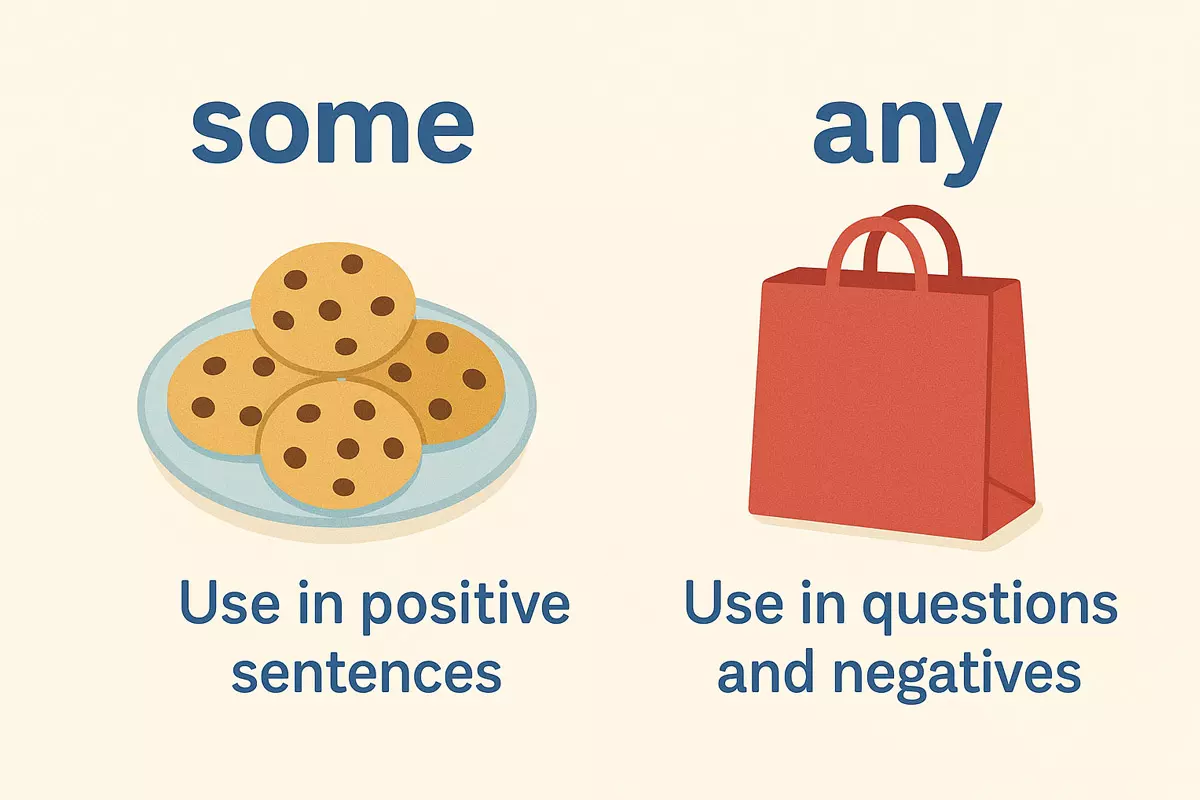 The article reviews countable and uncountable nouns, how to use some and any in statements, questions, and negatives, when some is natural in offers and requests, fixed expressions, common mistakes, and includes practice exercises for rewriting.
Understanding when to use a few and any at all can be tricky for English learners, but mastering these basic words is essential for clear and natural communication. A few is typically used with countable nouns to indicate a small number, as in I have a few friends. Any at all is often used in negative sentences or questions to emphasize the complete absence or possibility, as in I don't have any friends at all. By learning the specific contexts where each phrase is appropriate, you can improve both your confidence and accuracy when speaking or writing in English.
Countable vs Uncountable: Quick Review
Understanding the difference between nouns you can count and those you can't is essential for using words like "some" and "any" correctly. Countable nouns refer to items that can be separated and counted individually, while uncountable nouns are seen as a whole or mass and can't be counted one by one.
What Are Countable Nouns?
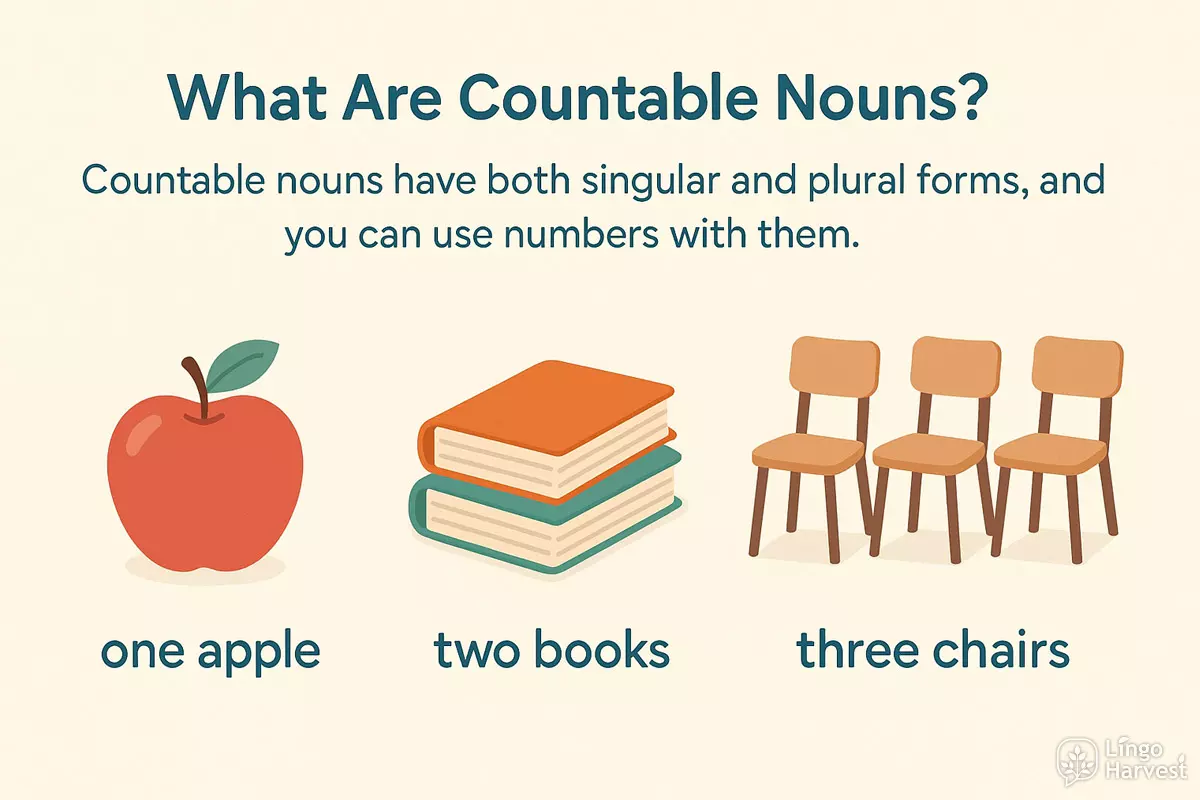
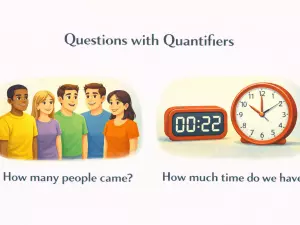
Countable nouns have both singular and plural forms, and you can use numbers with them. For example, you can say "one apple," "two books," or "three chairs." These nouns often answer the question "How many?"
- apple, apples
- car, cars
- dog, dogs
- idea, ideas
- pen, pens
- student, students
- cup, cups
- table, tables
- friend, friends
- child, children
What Are Uncountable Nouns?
Uncountable nouns represent things we can’t count individually. They have only one form (no plural) and usually refer to abstract ideas, materials, or substances. We use them to talk about "How much?" instead of "How many?"
- water
- milk
- information
- advice
- rice
- music
- knowledge
- money
- furniture
- bread
Key Differences at a Glance
| Countable Nouns | Uncountable Nouns |
|---|---|
| Can use numbers: "three apples" | Cannot use numbers directly: ❌ "three rice" |
| Have singular and plural forms: "car/cars" | No plural form: "milk" (not "milks") |
| Use "a/an" in singular: "an egg" | Do not use "a/an": ❌ "a water" |
| Ask: "How many...?" | Ask: "How much...?" |
Why Does This Matter for "Some" and "Any"?
The rules for choosing between "some" and "any" depend on whether the noun is countable or not. For example, you say "some apples" (countable) or "some water" (uncountable), but you can't use them in exactly the same way with every noun. Knowing which group a noun belongs to helps you form correct sentences.
Test your understanding below:
- Which of these nouns are countable?
rice, chair, advice, banana, music - Choose the correct option:
"I have (some/any) information for you." - Fill in the blank:
"How ___ oranges do you want?"
Show answers
- 1. Countable: chair, banana. Uncountable: rice, advice, music.
- 2. "some"
- 3. "many"
Positive Statements with some
In English, “some” is commonly used when we talk about an unspecified quantity in affirmative sentences. It’s ideal for situations where the exact number or amount isn’t important, but we know that there is more than one or a little of something. This word fits naturally into both spoken and written language, especially when offering or requesting things in a friendly way.
Typical Uses of “some” in Positive Sentences
- Describing a portion or a number of countable items: “There are some apples in the basket.”
- Talking about an amount of uncountable nouns: “She has some information for you.”
- Making polite offers: “Would you like some tea?”
- Making polite requests: “Could I have some water, please?”
- Referring to a part of a whole: “Some people prefer coffee over tea.”
- Introducing a topic or example: “Some students find grammar challenging.”
- Expressing generalization: “Some days are better than others.”
- Giving positive news: “We made some progress today.”
- Emphasizing partial success: “I solved some of the problems.”
- Highlighting existence: “There is some hope for improvement.”
- Talking about possessions: “He owns some rare books.”
- Describing a limited selection: “I bought some bread and cheese.”
- Reporting findings: “Scientists discovered some new species.”
- Making general statements: “Some animals are nocturnal.”
- Stating availability: “We have some tickets left.”
- Referring to part of a group: “Some of my friends will come.”
- Indicating uncertainty: “I need some time to think.”
When is “some” Preferred?
“Some” is natural in sentences where the speaker expects the answer to be positive or when the item is assumed to exist. It softens requests and makes offers sound more polite and less direct. This small word is also used to avoid sounding too precise or formal in everyday interactions.
| Sentence Type | Example with “some” |
|---|---|
| Countable (plural) | She bought some flowers. |
| Uncountable | There is some milk in the fridge. |
| Offer | Would you like some juice? |
| Request | Can I have some help? |
| Generalization | Some students arrived late. |
| Unspecified amount | I need some advice. |
Understanding how “some” functions in positive statements helps learners form natural, polite, and accurate sentences in English. Using it appropriately communicates both the existence and the non-specific amount of things, making your speech and writing sound more fluent and friendly.
Questions and Negatives with any
When forming questions or negative statements in English, any is the word you’ll usually need. This is a key difference from some, which is more common in positive sentences or when offering or requesting. Using any helps make your questions and negatives sound natural, and it is especially useful for talking about an unspecified quantity or number.
How we use "any" in questions
In questions, any suggests you don’t know if something exists or is available. It’s common in both spoken and written English. Here are some typical patterns:
- Do you have any brothers or sisters?
- Is there any milk left?
- Are there any messages for me?
- Did you find any mistakes?
- Have you read any good books lately?
- Can I get you any water?
- Is any help needed?
- Are any of your friends coming?
- Do you know any good restaurants?
- Will there be any problems?
Negatives with "any"
In negative sentences, any replaces some to indicate the absence of something. You’ll see this with negative verbs like don’t, isn’t, or can’t. Here are some examples:
- I don’t have any money.
- There isn’t any coffee left.
- She doesn’t want any dessert.
- We can’t see any stars tonight.
- They haven’t got any children.
- He didn’t find any errors.
- There aren’t any buses at this hour.
- You won’t get any help from them.
- I haven’t received any emails.
- We never have any time!
Quick Comparison: "Some" vs "Any"
Here’s a simple overview to help you remember when to use each word:
| Usage | Example |
|---|---|
| Positive sentences (usually "some") | There are some apples on the table. |
| Questions (usually "any") | Are there any apples? |
| Negative sentences (usually "any") | There aren’t any apples. |
| Offers/requests (sometimes "some") | Would you like some tea? |
Tips and Common Errors
- Don’t use some with negatives: ❌ I don’t have some money. → ✅ I don’t have any money.
- In polite questions, some can be used for offers or requests: ✅ Could I have some water?
- Any is the safe choice for most other questions and negatives.
Understanding how to use any in questions and negatives helps you sound more fluent and clear in English conversations.
Offers and Requests: when some is natural
When making offers or requests in English, the word “some” often sounds more natural and friendly than “any.” This is especially true in spoken English, where politeness and a sense of willingness are important. Using “some” in these situations signals a positive expectation—that the answer will likely be “yes” or that the action is possible.
Why "some" feels natural in offers and requests
Using “some” in questions doesn’t just follow grammar rules; it also reflects the speaker’s attitude. If you ask, “Would you like some tea?” you’re assuming your guest might say yes. In contrast, “any” in these contexts can sound a bit distant or uncertain, and is more common in negative questions or when you truly don’t know what the answer will be.
Common patterns with “some”
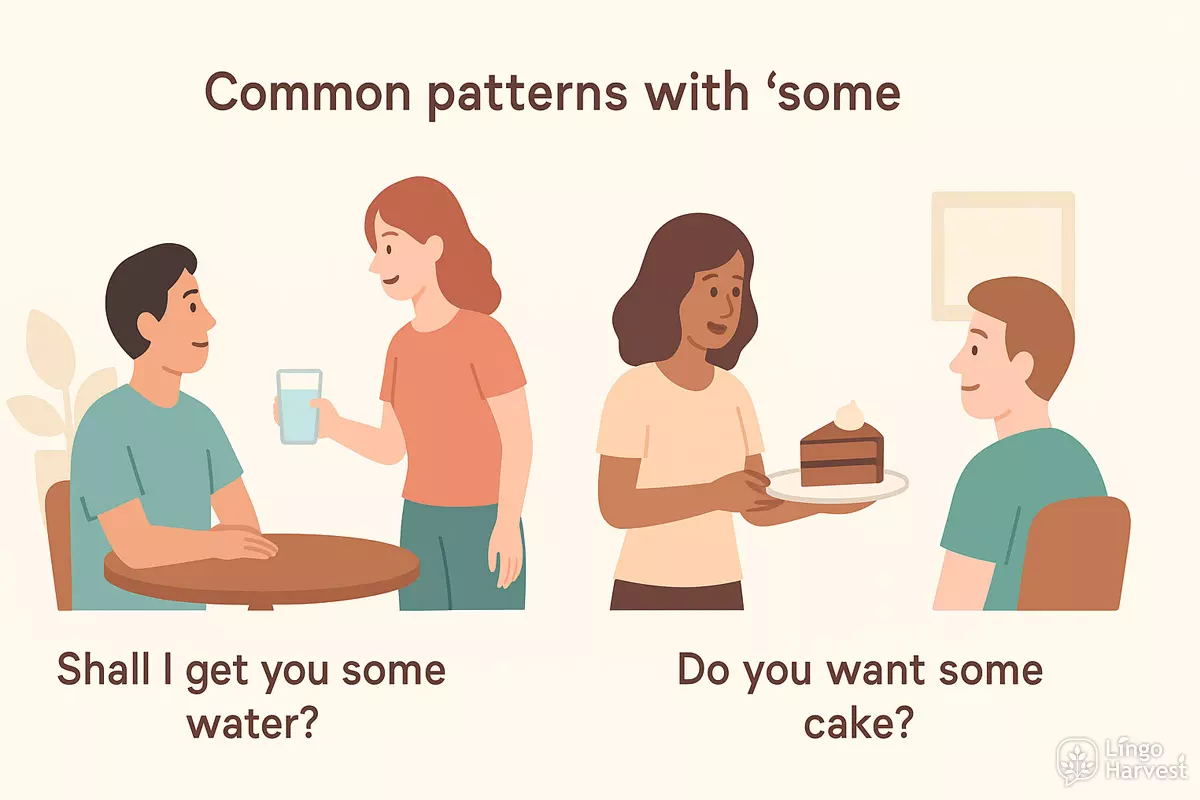
Here are typical sentences where “some” fits naturally in offers and polite requests:
- Would you like some coffee?
- Can I offer you some help?
- Shall I get you some water?
- Could I have some information?
- Do you want some cake?
- Would you like some more bread?
- Can you lend me some money?
- May I borrow some sugar?
- Will you pass me some salt?
- Could you give me some advice?
- Would you like some time to think?
- Can I get you some tea?
- Shall we order some pizza?
- Would you bring some chairs?
- Can I show you some options?
- Could you bring some documents?
- May I ask you some questions?
- Would you like some help with that?
Comparing "some" and "any" in requests and offers
The subtle difference between “some” and “any” in these situations can be tricky for learners. “Some” is inviting and expects a positive outcome, while “any” feels more neutral or uncertain. For example:
- Would you like some juice? ✅ (friendly, natural)
- Would you like any juice? ❌ (unusual, can sound awkward)
Summary
In everyday English, choosing “some” when offering or asking for things helps your language sound open, polite, and natural. Remember that “any” is usually better for negative questions or when you’re not sure if something exists or will happen. By using “some” in these positive and polite situations, you’ll communicate more smoothly and sound more like a native speaker.
Fixed Expressions and Exceptions
While "some" and "any" generally follow clear rules, there are set expressions and unusual cases where these words are used differently. Recognizing these patterns can help you sound more natural and avoid confusion when you hear or read them. Below, you'll find some of the most common phrases and exceptions, along with tips for remembering them.
Common Phrases with "Some"
- Somebody/Someone — used for a person when you don’t know who: Somebody left their bag here.
- Something — for an unknown thing: I heard something outside.
- Somewhere — for an unspecified place: Let’s go somewhere warm.
- Some other time — to suggest a different occasion: Maybe we can meet some other time.
- Some day — for an indefinite future: Some day I’ll travel the world.
- Somehow — in an unknown way: He managed to fix it somehow.
Common Phrases with "Any"
- Anybody/Anyone — for any person: Does anyone know the answer?
- Anything — for any object or idea: Is there anything I can do?
- Anywhere — for any place: You can sit anywhere.
- Any time — at any moment: Call me any time.
- Anyhow — in any way: Finish it anyhow you like.
- Any longer/any more — to talk about the end of something: I don’t live there any more.
Exceptions to the Usual Rules
There are certain situations where "some" and "any" appear in positive, negative, or question forms that break the normal patterns. Some of these include:
- Using "some" in polite offers and requests: Would you like some tea? ✅
- Using "any" in positive sentences to mean "it doesn’t matter which": Take any seat you like.
- Using "some" with numbers to mean "about": There were some 50 people at the event.
- Using "any" for emphasis: He refused any help.
Quick Comparison: Indefinite Pronouns with "Some" and "Any"
| "Some" Expressions | "Any" Expressions |
|---|---|
| Somebody/Someone | Anybody/Anyone |
| Something | Anything |
| Somewhere | Anywhere |
| Somehow | Anyhow |
| Some day | Any day |
Learning these set expressions and exceptions will help you use "some" and "any" more flexibly and naturally in real conversations. When in doubt, listen for these patterns in everyday speech or reading; they’re often used without strict grammar logic but are instantly recognized by native speakers.
Common Mistakes and Fast Fixes
Mixing up “some” and “any” is a frequent stumbling block for English learners, especially when forming questions and negatives. Understanding the most typical errors—and knowing how to correct them—can help you sound more natural and confident.
Typical Errors with “Some” and “Any”
Learners often confuse these words because their uses can seem similar. Here are common slip-ups and how to spot them:
- ❌ Using “some” in negative sentences: I don’t have some friends here. → Correct: I don’t have any friends here.
- ❌ Using “any” in standard offers: Would you like any tea? → Correct: Would you like some tea?
- ❌ Mixing “some” in questions where “any” is needed: Do you have some money? → Correct: Do you have any money?
- ❌ Forgetting “some” is possible in requests: Can I have any water? → Correct: Can I have some water?
- ❌ Using “any” in positive statements: I have any apples. → Correct: I have some apples.
- ❌ Overusing “some” in all questions: Are there some problems? → Correct: Are there any problems?
- ❌ Using “any” in offers: Would you like any help? → Correct: Would you like some help?
- ❌ Incorrect with uncountable nouns: Do you have some information? → Correct (neutral): Do you have any information?
- ❌ Using “some” in negative questions: Don’t you have some time? → Correct: Don’t you have any time?
- ❌ Forgetting “some” can show expectation: Did you buy any bread? (expecting yes) → Better: Did you buy some bread?
Quick Reference Table: When to Use “Some” or “Any”
| Situation | Correct Form & Example |
|---|---|
| Affirmative statements | Use some: She has some advice for you. |
| Negative sentences | Use any: He doesn’t have any questions. |
| Standard questions | Use any: Are there any apples left? |
| Offers/Requests | Use some: Can I get some help? |
| Questions expecting “yes” | “Some” can show expectation: Did you bring some snacks? |
| “Any” for emphasis (positive) | “Any” for free choice: You can take any seat. |
Practical Tips for Avoiding Errors
- Remember: “Some” is typical for positive statements and friendly offers. - Use “any” in negatives and most questions. - In polite requests, “some” sounds more inviting. - For “any” meaning “it doesn’t matter which,” use it in positive sentences with a sense of freedom or choice. Mastering these patterns takes practice, but focusing on context and intent will help you choose the right word naturally.
Practice: Choose and Rewrite
Let’s solidify your understanding of when to use “some” and “any” by working through practical exercises. These tasks will help you recognize the correct contexts and rewrite sentences to improve your accuracy and confidence.
Task 1: Fill in the Blank
Insert “some” or “any” in the blanks below. Think about whether the sentence is positive, negative, or a question, and whether it’s an offer or a request.
- Do you have ____ brothers or sisters?
- There isn’t ____ milk left in the fridge.
- I bought ____ apples at the market yesterday.
- Would you like ____ tea?
- We don’t need ____ help right now.
- Can I have ____ water, please?
- She didn’t find ____ interesting books at the library.
- I have ____ questions about the lesson.
- Are there ____ biscuits in the cupboard?
- He brought ____ friends to the party.
Show answers
- any
- any
- some
- some
- any
- some
- any
- some
- any
- some
Task 2: Rewrite the Sentences
Below are sentences using “some” or “any.” Rewrite them by changing the statement to a question or negative, and swap “some” for “any” or vice versa as needed.
- She has some money. (Make it negative)
- Is there any bread? (Make it positive)
- We didn’t eat any cake. (Make it positive)
- I would like some advice. (Make it a general question)
- They bought some souvenirs. (Make it a negative)
Show answers
- She doesn’t have any money.
- There is some bread.
- We ate some cake.
- Would you like any advice?
- They didn’t buy any souvenirs.
Patterns: When to Use Each Word
Here’s a summary of typical situations for “some” and “any.” Refer to these patterns when deciding which word fits best.
| Situation | Word to Use |
|---|---|
| Positive statements (offers, requests) | some |
| Negative statements | any |
| General questions | any |
| Offers and polite requests (questions) | some |
Quick Practice List
- Can I have some sugar?
- There aren’t any pencils in my bag.
- Would you like some more juice?
- Are there any students in the classroom?
- I have some free time tomorrow.
- He doesn’t have any pets.
- We need some information.
- Did you get any emails?
- They brought some snacks.
- She didn’t find any mistakes.