Using Determiners with Abstract Nouns: rules and exceptions

 Here we how abstract nouns differ from concrete nouns, rules for using articles and determiners with abstract ideas, fixed expressions, and common mistakes with words like love and information. It also includes practice on adding or removing determiners.
- What abstract nouns are and how they differ from concrete nouns
- When to use a, an, or the with abstract ideas
- Zero article with abstract nouns in general statements
- Fixed expressions with the and abstract nouns
- How determiners change the meaning of abstract nouns
- Typical mistakes with love, happiness, information, and similar words
- Practice: add or remove determiners with abstract nouns correctly
Mastering the use of words such as "a," "the," or "some" with abstract concepts can be surprisingly challenging, since typical grammar rules often change when referring to ideas instead of physical objects. Knowing when to include or omit these small but important words is essential for making your language sound natural and accurate, particularly because there are many exceptions. Developing this skill not only enhances clarity but also makes your communication feel more fluent and confident in a variety of contexts.
What abstract nouns are and how they differ from concrete nouns
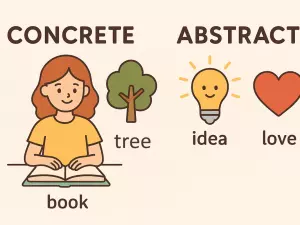
Understanding the distinction between abstract and concrete nouns is crucial for mastering the use of determiners in English. Abstract nouns refer to ideas, qualities, or states that cannot be experienced directly through the five senses. These include concepts like happiness, freedom, or intelligence—things you cannot touch, see, hear, smell, or taste. In contrast, concrete nouns represent physical objects or substances that you can perceive, such as apple, chair, or music.
Defining Abstract Nouns
Abstract nouns often describe emotions, conditions, characteristics, or general notions. They are intangible and typically do not have a physical form. Here are some common examples:
- Love → Love makes people stronger.
- Justice → Justice must be served fairly.
- Bravery → His bravery saved many lives.
- Knowledge → Knowledge is power.
- Hope → Hope kept them going during hard times.
- Childhood → Childhood is often filled with happy memories.
- Peace → Peace is what everyone desires.
- Anger → Anger can lead to poor decisions.
- Growth → Personal growth takes time.
- Wisdom → Wisdom comes with experience.
- Truth → The truth eventually came out.
- Courage → She showed great courage in speaking out.
- Friendship → Friendship can last a lifetime.
- Luck → Luck played a big role in his success.
- Patience → Patience is essential when learning new skills.
Concrete Nouns Explained

On the other hand, concrete nouns denote things that have a physical presence. If you can interact with it physically, it’s considered concrete. For example:
- Table → The table is set for dinner.
- Dog → The dog is sleeping near the door.
- Book → I borrowed a book from the library.
- Mountain → They climbed the mountain at sunrise.
- Perfume → She bought a new perfume yesterday.
- Water → Please drink some water.
- Car → His car is parked outside.
- Pen → I can’t find my pen.
- Tree → A tall tree grows in the garden.
- Phone → My phone needs charging.
- Flower → She picked a beautiful flower from the garden.
- Rain → The rain stopped in the evening.
- Cup → He spilled tea from the cup.
- Computer → The computer is running slowly.
- Desk → My desk is covered with papers.
Comparing Abstract and Concrete Nouns
To make the difference clearer, here’s a side-by-side comparison:
| Abstract Nouns (Intangible concepts) |
Concrete Nouns (Physical objects) |
|---|---|
| Happiness | Apple |
| Strength | Chair |
| Freedom | Dog |
| Sadness | Book |
| Beauty | Tree |
| Intelligence | Phone |
Why the Difference Matters
This distinction affects how determiners are used. Abstract nouns often behave differently from concrete nouns when it comes to articles and quantifiers. For instance, we rarely say “a love” or “an honesty,” but we might say “an apple” or “the book.” Understanding whether a noun is abstract or concrete helps you choose the right determiner and construct natural-sounding sentences.
When to use a, an, or the with abstract ideas
Understanding how to combine articles with abstract nouns can be confusing, since these concepts often lack clear physical boundaries or countable forms. However, there are some practical guidelines and common exceptions that can help clarify usage.
Using "a" and "an" with abstract nouns
The indefinite articles "a" and "an" are typically used with abstract ideas when you refer to a single instance or type of the concept, rather than the concept in general. This happens most often when describing a specific example or manifestation:
- a hope for the future (one specific hope)
- an idea that changed everything (one particular idea)
- a fear of heights (one kind of fear)
- an understanding of the rules
- a belief in justice
Notice that the article signals you are not talking about the entire concept of "hope" or "understanding," but rather a single occurrence or type.
When to use "the" with abstract concepts
The definite article "the" is used when the abstract noun is specific—either already mentioned, known to the listener, or unique in context. For example:
- the courage to speak out (a specific instance of courage)
- the truth about the incident (a particular truth)
- the love they shared (a specific love)
- the knowledge required for the job
- the freedom to choose
Here, the article "the" singles out a definite, identifiable form of the idea.
Cases where no article is used
Abstract nouns are often uncountable and general, so they frequently appear without an article when talking about the idea as a whole or in a general sense:
- Love is important.
- Happiness can't be bought.
- Justice must be served.
- Wisdom comes with experience.
- Patience is a virtue.
In these cases, the absence of an article signals generality.
Summary of article use with abstract nouns
| Form | When to Use | Example |
|---|---|---|
| Zero article | General, uncountable idea | Hope is powerful. |
| a / an | One instance or kind | A hope for peace exists. |
| the | Specific, identifiable instance | The hope you gave me lasts. |
Common pitfalls and exceptions
Be cautious: some abstract nouns can take an article in idiomatic phrases or when modified by an adjective, while others almost never do. For example:
- make a decision (correct)
- give advice (not "an advice," since "advice" is uncountable)
- a good education (correct)
- the information (when referring to specific details)
Always check if the abstract noun is commonly used as countable or uncountable in the given context. Knowing these patterns will make your use of articles with intangible ideas more precise and natural.
Zero article with abstract nouns in general statements
When talking about abstract ideas, concepts, or qualities in a broad sense, English typically omits articles altogether. This means that words such as "happiness," "information," and "justice" appear without "a," "an," or "the" in most general statements. The zero article signals that the noun is being discussed in an unrestricted, universal way, not as a specific instance or example.
Common cases: when no article is used
Abstract nouns often appear with no article when you refer to:
- Universal concepts (e.g., Love is important.)
- Fields of study or activities (Knowledge is power.)
- General feelings or states (Fear can be paralyzing.)
- Qualities or virtues (Honesty matters.)
- Processes or phenomena (Change is inevitable.)
- Abstract objects of discussion (Freedom should be protected.)
- Mass information or advice (Information travels fast.)
- Generalized experiences (Experience teaches us.)
- Social constructs (Democracy requires participation.)
- Philosophical concepts (Truth is subjective.)
- Emotional states (Anger is a normal feeling.)
- Uncountable mental activities (Research takes time.)
- Abstract achievements (Success is hard to define.)
- Ethical principles (Justice should be impartial.)
- General advice (Advice is easy to give.)
Examples: zero article vs. definite/indefinite article
Compare the use of abstract nouns in general and specific contexts:
| Zero Article (General) | With Article (Specific/Instance) |
|---|---|
| Patience is a virtue. | The patience he showed was remarkable. |
| Knowledge is valuable. | A knowledge of French is useful here. |
| Happiness comes from within. | The happiness of the children was obvious. |
| Experience teaches us many things. | An experience like that changes a person. |
| Freedom is essential. | The freedom you enjoy is not universal. |
| Success requires hard work. | A success like that is rare. |
| Justice must be served. | The justice of the decision was questioned. |
| Advice is always welcome. | The advice you gave helped me. |
Quick tips for correct usage
- Use zero article when discussing a concept in its most general, unrestricted sense.
- Add "the" or "a/an" if you are referring to a particular instance, example, or subset of the concept.
- Some abstract nouns can be both countable and uncountable, depending on context; check meaning before choosing an article.
- Remember: using an article where it isn’t needed can change the meaning or sound unnatural.
Fixed expressions with the and abstract nouns
Some abstract nouns are frequently used in set expressions with “the.” These combinations have become standard in English, often carrying a specific or idiomatic meaning that goes beyond the literal sense of the words. Rather than following general rules about articles and abstract concepts, these phrases are simply memorized as fixed forms.
Common Patterns and Examples

You’ll find that certain abstract nouns almost always appear with “the” in particular phrases, especially when talking about unique experiences, general concepts made specific, or widely recognized phenomena. Here’s a list of frequent examples:
- the truth → Everyone deserves to know the truth.
- the future → The future depends on our actions today.
- the past → We should learn from the past.
- the present → Try to focus on the present moment.
- the environment → We must protect the environment.
- the unknown → Humans have always feared the unknown.
- the human condition → Art often reflects the human condition.
- the mind → The mind is capable of incredible things.
- the law → No one is above the law.
- the economy → The economy is slowly recovering.
- the news → I heard the news this morning.
- the public → The decision shocked the public.
- the government → The government announced new reforms.
- the universe → Scientists continue to explore the universe.
- the weather → The weather changed suddenly.
- the meaning → He searched for the meaning of life.
- the best → She always tries to do the best she can.
- the worst → We prepared for the worst.
- the answer → Finally, she found the answer.
- the importance → He explained the importance of teamwork.
Why “the” Is Used in These Expressions
Generally, “the” is included because the noun is being treated as unique, universally understood, or contextually specific. For example, “the truth” refers to a specific, often universal, idea of truth, while “the future” points to the unique period of time ahead for everyone. These phrases have become idiomatic, so omitting “the” would sound unnatural to native speakers.
Comparing Abstract Nouns With and Without “the”
Sometimes, the presence or absence of “the” changes the meaning or naturalness of a phrase. Here’s a structured comparison:
| With “the” | Without “the” |
|---|---|
| the future (the time ahead for everyone) | future (as an adjective: future plans) |
| the law (the legal system as a whole) | law (the subject or concept in general) |
| the news (information broadcast or published) | news (rarely used without “the” in standard English) |
| the environment (the natural world as a whole) | environment (can mean any surroundings, not just nature) |
Key Takeaways
When learning English, it’s helpful to memorize these established combinations. They don’t always fit the basic rules for using articles with abstract nouns. Instead, think of them as exceptions that reflect common usage. This approach will make your English sound more natural and idiomatic.
How determiners change the meaning of abstract nouns
The presence or absence of a determiner can significantly affect how we interpret abstract nouns—words like “happiness,” “beauty,” or “courage.” While these nouns often refer to qualities or ideas that are not directly countable, the use of determiners can shift their meaning, specify context, or even change their grammatical behavior.
Specifying vs. Generalizing
When used with abstract nouns, determiners can move the meaning from a broad, general sense to something more specific. For example:
- Patience (general quality)
- The patience (a specific instance or type of patience, often previously mentioned)
- Her patience (patience belonging to or shown by a particular person)
- Some patience (an unspecified amount, but less general than the bare noun)
Shifting Countability and Emphasis
Abstract nouns are usually uncountable, but determiners sometimes make them behave more like countable nouns, especially when talking about types, instances, or examples. Consider these cases:
- A beauty – refers to a beautiful person or thing, rather than the concept of beauty
- A kindness – a specific act of being kind
- A hope – a particular wish or expectation
- The courage – a specific demonstration of bravery
Adding a determiner can also highlight or restrict the meaning to something known or previously discussed, rather than an abstract, universal sense.
Comparing Meaning Changes with and without Determiners
Here is a comparison of abstract nouns with and without determiners and how their meanings shift:
| Without Determiner | With Determiner |
|---|---|
| Freedom is important. | The freedom we fought for was hard-won. His freedom matters to him. |
| Love can change people. | A love like theirs is rare. That love faded over time. |
| Justice should be fair. | The justice of the decision was questioned. Some justice was finally done. |
| Beauty inspires artists. | A beauty walked into the room. The beauty of the sunset amazed us. |
| Hope keeps us going. | A hope for peace remains. Her hope was shattered. |
Key Takeaways
- Abstract nouns without determiners usually refer to general qualities or concepts.
- Adding a determiner can specify, personalize, or countify the noun, sometimes changing its meaning.
- Not all abstract nouns accept all determiners; some combinations are ungrammatical or rare.
- Context and intent often guide whether and which determiner is used.
Typical mistakes with love, happiness, information, and similar words
Many English learners struggle with abstract nouns such as "love," "happiness," or "information," especially when deciding whether or not to use determiners like "a," "an," "the," or quantifiers. These words often behave differently from concrete nouns, leading to frequent errors in both writing and speech.
Common pitfalls with determiners and abstract nouns
Abstract nouns are typically uncountable in English, so using them with articles like "a" or "an" is usually incorrect. For example, saying "a love" or "an information" is not standard. The confusion arises because in some languages, abstract nouns can be countable or used with articles.
- ❌ a love for music
- ✅ love for music
- ❌ an information about the event
- ✅ information about the event
When to use "the" with abstract nouns
"The" can be used with an abstract noun if you are referring to something specific or previously mentioned. For example, "the happiness I felt" refers to a particular instance or type of happiness.
- ✅ She was grateful for the advice you gave her.
- ✅ He remembered the love of his childhood.
Incorrect plural forms
Another frequent issue is making these nouns plural, which is generally not allowed unless the noun has a special meaning in the plural form (like "loves" meaning romantic partners, or "informations" in very rare technical contexts, which is almost always wrong).
- ❌ informations (incorrect; use "pieces of information" instead)
- ❌ happinesses
- ✅ pieces of advice
Summary of correct vs. incorrect usage
| Incorrect Usage | Correct Usage |
|---|---|
| a happiness | happiness |
| an advice | some advice |
| the informations | the information |
| loves (meaning emotions) | love |
| advices | pieces of advice |
| a knowledge | knowledge |
| an experience (for general) | experience |
| happinesses | happiness |
Useful patterns and alternatives
To express quantity or specificity with abstract nouns, use quantifiers or descriptive phrases:
- some information → I received some information about the course.
- a piece of advice → She gave me a piece of advice before the interview.
- a bit of knowledge → He has a bit of knowledge about programming.
- a feeling of happiness → Winning the award brought a feeling of happiness.
- lots of love → She sent lots of love in her message.
- a sense of freedom → Traveling alone gave him a sense of freedom.
- an act of kindness → Helping a stranger was an act of kindness.
- a moment of hope → The rescue was a moment of hope for everyone.
- a wave of excitement → A wave of excitement swept through the crowd.
- many experiences (when referring to individual events) → She has had many experiences while working abroad.
- types of information → Different types of information are stored in the system.
- sources of inspiration → Nature is one of her main sources of inspiration.
By understanding these patterns, you can avoid the most common errors and make your English sound more natural and accurate when talking about emotions, feelings, and other abstract ideas.
Practice: add or remove determiners with abstract nouns correctly
Understanding when to use determiners like "the," "a," or "some" with abstract nouns can be tricky, as rules often depend on whether the noun is being referred to in a general or specific sense. Let's work through targeted exercises to refine your intuition for articles and determiners with words like "advice," "happiness," "information," and similar concepts.
Task 1: Insert or Remove Determiners
For each sentence below, decide if a determiner is needed before the abstract noun. If so, add it; if not, remove the existing one.
- She gave me the advice that changed my life.
- We all seek a happiness in our own way.
- Can you provide the information about the meeting?
- He showed an honesty I had never seen before.
- They hope for a justice in the world.
- He has the knowledge to solve this problem.
- She demonstrated a courage during the crisis.
- I need the permission to enter the building.
- We discussed a love in literature class.
- He lacks the experience for this job.
Show answers
- Correct as is: "the advice" (specific advice)
- Remove "a": "happiness" (general, uncountable)
- Correct as is: "the information" (specific information)
- Remove "an": "honesty" (general, uncountable)
- Remove "a": "justice" (general concept)
- Correct as is: "the knowledge" (specific knowledge)
- Remove "a": "courage" (general, uncountable)
- Correct as is: "the permission" (specific permission)
- Remove "a": "love" (general, uncountable)
- Correct as is: "the experience" (specific experience)
Common Patterns: When to Use Determiners
Abstract nouns are usually uncountable and do not take "a/an." However, "the" is used when referring to something specific or previously mentioned, and some abstract nouns can take "a/an" when used in a countable sense (e.g. "a love of music"). Here are common scenarios:
- General concepts: no determiner ("Freedom is important.")
- Specific instance: use "the" ("The freedom we have today is precious.")
- Countable use (rare): use "a/an" ("She has a kindness I admire.")
- With modifiers: sometimes use "a/an" or "the" ("A deep understanding is needed.")
Task 2: Choose the Correct Option
Select the correct version in each sentence:
- He has (patience / a patience) with children.
- She gave me (an advice / advice).
- (The love / Love) he shows is inspiring.
- They are fighting for (a justice / justice).
- (The information / Information) you gave is helpful.
- We need (a research / research) before making a decision.
- She showed great (a courage / courage) during the crisis.
- He is full of (a anger / anger) today.
- (The knowledge / Knowledge) gained in school is valuable.
- They finally achieved (a peace / peace).
Show answers
- patience
- advice
- The love
- justice
- The information
- research
- courage
- anger
- Knowledge
- peace
Quick Reference: Abstract Nouns and Determiners
Here's a handy guide to typical patterns for some common abstract nouns:
| Abstract Noun | Typical Determiner Usage |
|---|---|
| Advice | Usually no article ("advice"), but "the advice" for specific advice |
| Information | Usually no article, "the information" for specific context |
| Happiness | General: no article, Possible: "the happiness" (specific) |
| Experience | General: no article, "an experience" (countable event), "the experience" (specific) |
| Permission | "Permission" (general), "the permission" (specific) |
| Justice | General: no article, "the justice" (specific case) |
| Courage | General: no article, "the courage" (specific act), "a courage" (rare, with modifier) |
| Love | General: no article, "the love" (specific), "a love of music" (countable, with modifier) |
| Knowledge | General: no article, "the knowledge" (specific) |
| Patience | General: no article, "the patience" (specific) |
Practice recognizing these patterns in authentic texts, and you'll soon develop a natural sense for when to use determiners with abstract nouns.