Determiners in Headlines and Short-Form Content

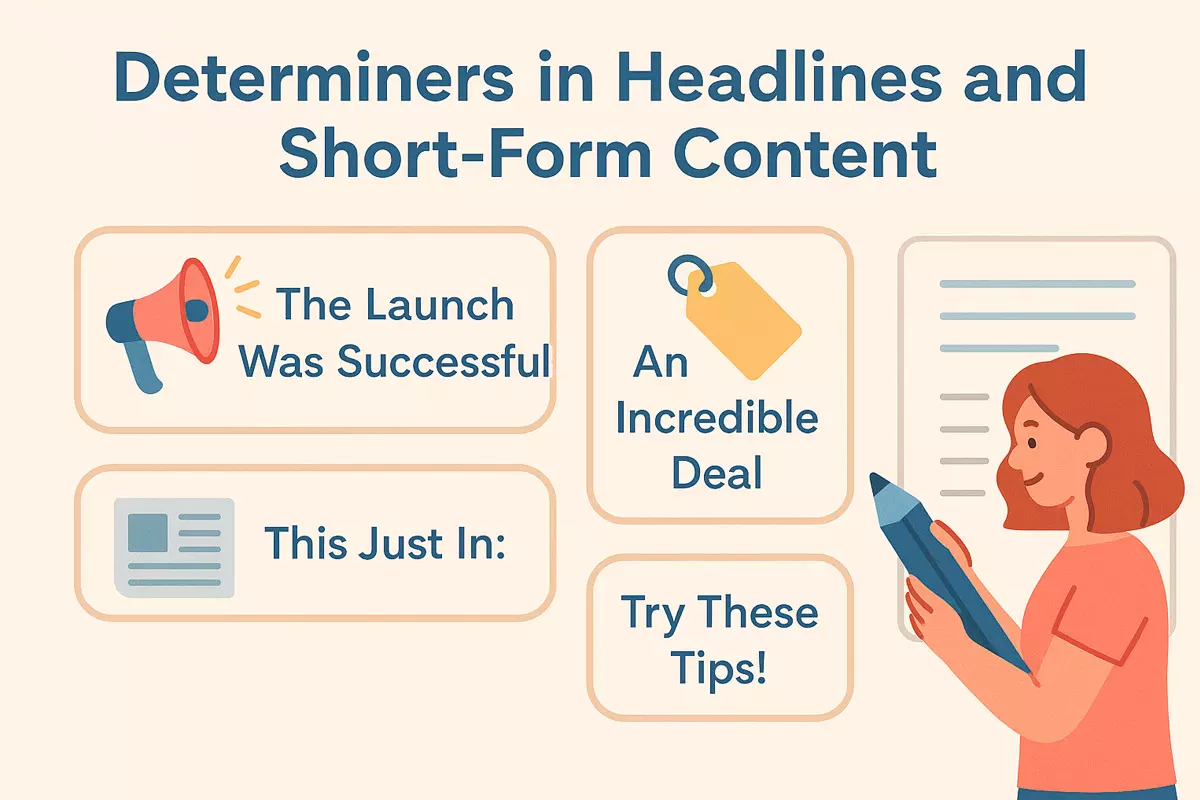 Here we why determiners are often left out of headlines, when they are necessary for clarity, how news headlines differ from social content, the use of the for emphasis, risks of ambiguity, media examples, and headline editing practice.
- Why headlines often omit determiners
- When determiners are essential for clarity
- Differences between news headlines and social content
- Using the for emphasis or contrast
- Reader interpretation and ambiguity risks
- Examples from media, blogs, and announcements
- Practice: refine headlines by adding or removing determiners
Crafting compelling headlines or concise online updates requires skillful use of language, especially when it comes to articles and quantifiers. These small words can significantly influence the tone, clarity, and impact of a message. By choosing the right wording, writers can make their content more direct and engaging, or sometimes intentionally leave it open to interpretation. Mastering these nuances helps ensure that brief communications capture attention and convey the intended message effectively.
Why headlines often omit determiners
Editors and writers frequently drop words like "the," "a," and "an" from news headlines and short-form content to keep things concise. Space is at a premium, especially in print formats and digital platforms with strict character limits. Omitting these small function words helps pack more information into a limited area, making titles punchier and more direct.
Efficiency and Impact
Leaving out articles and similar words allows for headlines that are faster to scan and more visually striking. The omission encourages brevity and immediacy, which is especially valuable when readers are skimming for key information. In many cases, the meaning remains clear without these grammatical elements, so their absence rarely causes confusion.
Common Patterns Without Determiners
Writers rely on certain headline structures where determiners are usually dropped. Here are some typical examples:
- Government Approves New Policy
- Researchers Discover Ancient Fossil
- Company Reports Record Profits
- Storm Causes Power Outages
- City Launches Recycling Program
- Actor Wins Major Award
- Market Hits All-Time High
- Scientists Warn of Rising Temperatures
- Coach Resigns After Loss
- Students Protest Tuition Increase
- Police Investigate Robbery
- Team Clinches Playoff Spot
- Experts Debate Education Reform
- Fire Destroys Historic Building
- Mayor Announces New Initiative
- Judge Issues Ruling
- Lawmakers Pass Bill
- Hospital Expands Services
Comparing Full Sentences and Headlines
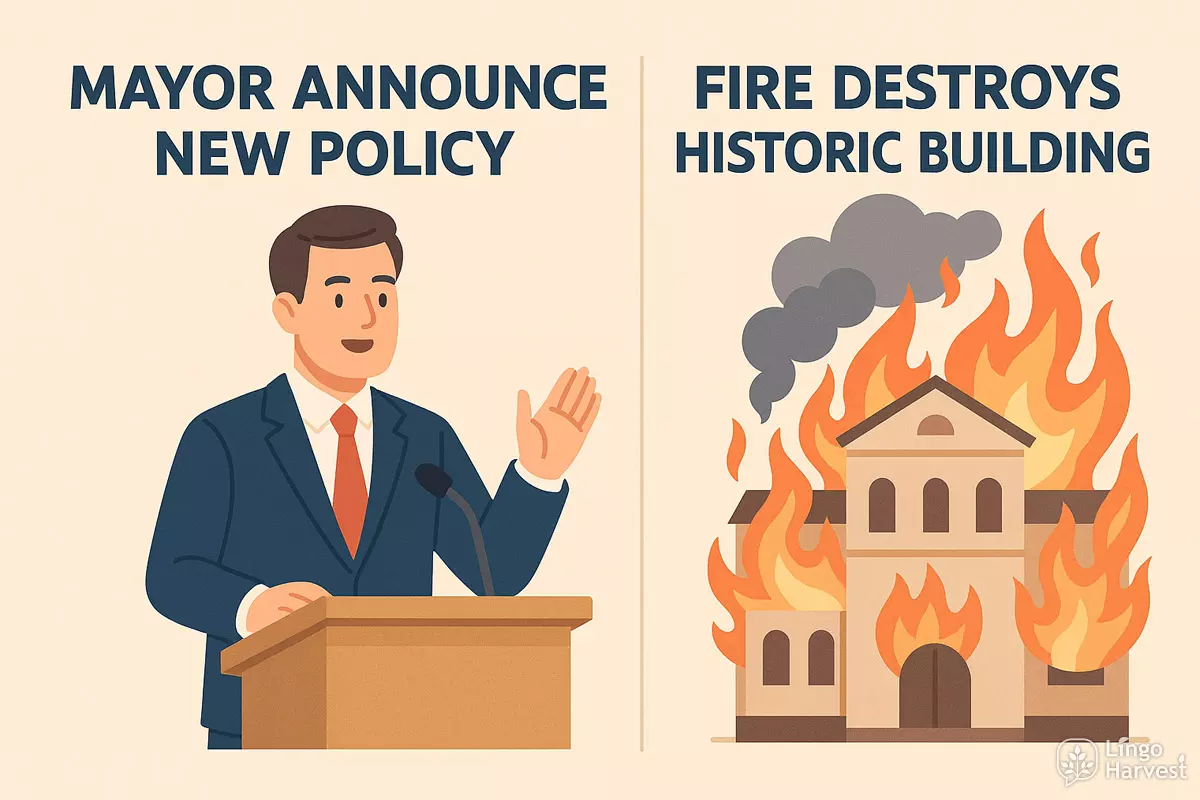
To see how this works in practice, compare standard sentences with their headline counterparts:
| Full Sentence | Headline Style |
|---|---|
| The mayor announces a new policy. | Mayor Announces New Policy |
| A fire destroyed the historic building. | Fire Destroys Historic Building |
| The company reports record profits. | Company Reports Record Profits |
| Scientists warn of the rising temperatures. | Scientists Warn of Rising Temperatures |
This streamlined approach saves space and delivers the main message quickly. In headline writing, clarity and brevity outweigh strict grammatical completeness, especially when context fills in the missing pieces.
When determiners are essential for clarity
In headlines and short-form writing, omitting articles or other determiners can make text punchier, but sometimes clarity suffers without them. Determiners like "the," "a," "an," "this," or "those" help readers understand exactly which person, object, or idea is being referenced. Especially in contexts where ambiguity could confuse or mislead, these words are not just optional—they're necessary for clear communication.
Situations where determiners prevent confusion
- Distinguishing between general and specific: "Dog rescued from river" vs. "A dog rescued from river"
- Clarifying ownership or relationship: "Company CEO resigns" vs. "The company CEO resigns"
- Identifying unique entities: "President addresses nation" vs. "The president addresses the nation"
- Referencing previously mentioned items: "Storm damages houses; repairs underway"
- Highlighting new versus known information: "A study reveals..." vs. "The study reveals..."
- Indicating quantity or limitation: "Few options remain" vs. "A few options remain"
- Expressing contrasts: "Difference between solution and the solution"
- Specifying time, place, or manner: "The morning commute" vs. "Morning commute"
- Directing attention: "This policy changes everything"
- Making comparisons: "A better way" vs. "The better way"
Common mistakes when omitting determiners
Writers sometimes drop determiners to save space, but this can result in headlines that feel abrupt or hard to understand. Here are frequent errors:
- Leaving out articles that distinguish countable from uncountable nouns
- Omitting necessary demonstratives ("this," "those") leading to vagueness
- Skipping possessives when context is unclear
- Confusing readers about which subject is being discussed
Examples: Headlines with and without determiners
| Without Determiner | With Determiner |
|---|---|
| Minister visits school | The minister visits a school |
| Virus spreads rapidly | The virus spreads rapidly |
| Plan approved by board | The plan approved by the board |
| Cat found in park | A cat found in the park |
| Students win competition | The students win the competition |
In summary, while brevity is often prized in headlines, omitting determiners should be a conscious stylistic choice, not a default. If precision or reader understanding would suffer, include the necessary words to anchor your message.
Differences between news headlines and social content
News headlines and short-form social posts often look similar at a glance, but they differ in language, structure, and the use of determiners. Headlines for traditional news outlets tend to strip away unnecessary words for brevity and impact, often omitting articles like “the,” “a,” or “an.” Social content, on the other hand, may favor a more conversational tone and flexible grammar, sometimes including or omitting determiners for effect or informality.
Use of Determiners
Headlines usually drop articles to save space and create a sense of urgency or importance. For instance, “President Visits City” instead of “The President Visits the City.” In contrast, social posts might say, “A quick update from the President’s visit to the city today!” The choice reflects both platform conventions and the intended relationship with the audience.
Formality and Tone
News headlines maintain a neutral, objective tone, focusing on delivering facts efficiently. Social content often prioritizes engagement and relatability, using more casual language, emojis, and even slang. This difference influences determiner use: formal headlines omit them, while social writers may keep them for a friendlier feel.
Structural Comparison
| Feature | News Headlines | Social Content |
|---|---|---|
| Determiner Usage | Frequently omitted for brevity | Included or omitted for style |
| Sentence Structure | Fragmented, noun-heavy | Conversational, complete sentences |
| Tone | Neutral, objective | Personal, informal |
| Purpose | Inform quickly | Engage, share perspectives |
| Visual Elements | Rarely used | Emojis, hashtags common |
Common Patterns and Examples
- Headline: “Mayor Opens Park” → Social: “The mayor just opened a new park!”
- Headline: “Storm Hits Coast” → Social: “A big storm hit the coast last night.”
- Headline: “Economy Sees Growth” → Social: “The economy is growing again!”
- Headline: “Team Wins Championship” → Social: “Our team just won the championship!”
- Headline: “Fire Damages Building” → Social: “A fire damaged the building downtown.”
- Headline: “Scientists Discover Cure” → Social: “Scientists have found a cure!”
- Headline: “Election Results Announced” → Social: “The election results are out!”
- Headline: “Company Launches App” → Social: “Our company launched a new app today.”
- Headline: “Actor Wins Award” → Social: “An actor just won a big award.”
- Headline: “Budget Approved by Council” → Social: “The council approved the new budget.”
The contrast between these formats highlights not just grammar but also the intended audience and context. News headlines favor efficiency; social posts invite interaction and personality, shaping how and when determiners appear.
Using the for emphasis or contrast
In headlines and short-form writing, "the" often appears where it might not be strictly necessary in full sentences. Writers use this definite article to highlight a particular element, differentiate one item from others, or add a sense of uniqueness or authority. This stylistic choice can subtly shift the reader’s focus or signal importance, especially in condensed formats where every word counts.
Highlighting Uniqueness or Specificity
In brief content, inserting "the" can single out a person, place, or thing as uniquely important or instantly recognizable. For example, "The Interview That Changed Everything" implies one standout event, not just any interview. This approach works well when readers are expected to understand the reference or when the writer wants to create a sense of drama or exclusivity.
- The Solution Revealed
- Not Just Any App: The App
- Meet The Expert
- The One You’ve Been Waiting For
- From The Archives
- Inside The Deal
- Facing The Truth
- After The Storm
- Remember The Titans?
- The Secret Behind Success
- Not Just a Trend: The Trend
- Discover The Difference
- Unlocking The Mystery
- The Final Word
- Beyond The Numbers
- Breaking The Silence
- Understanding The Risk
- The Choice Is Yours
Emphasizing Contrast
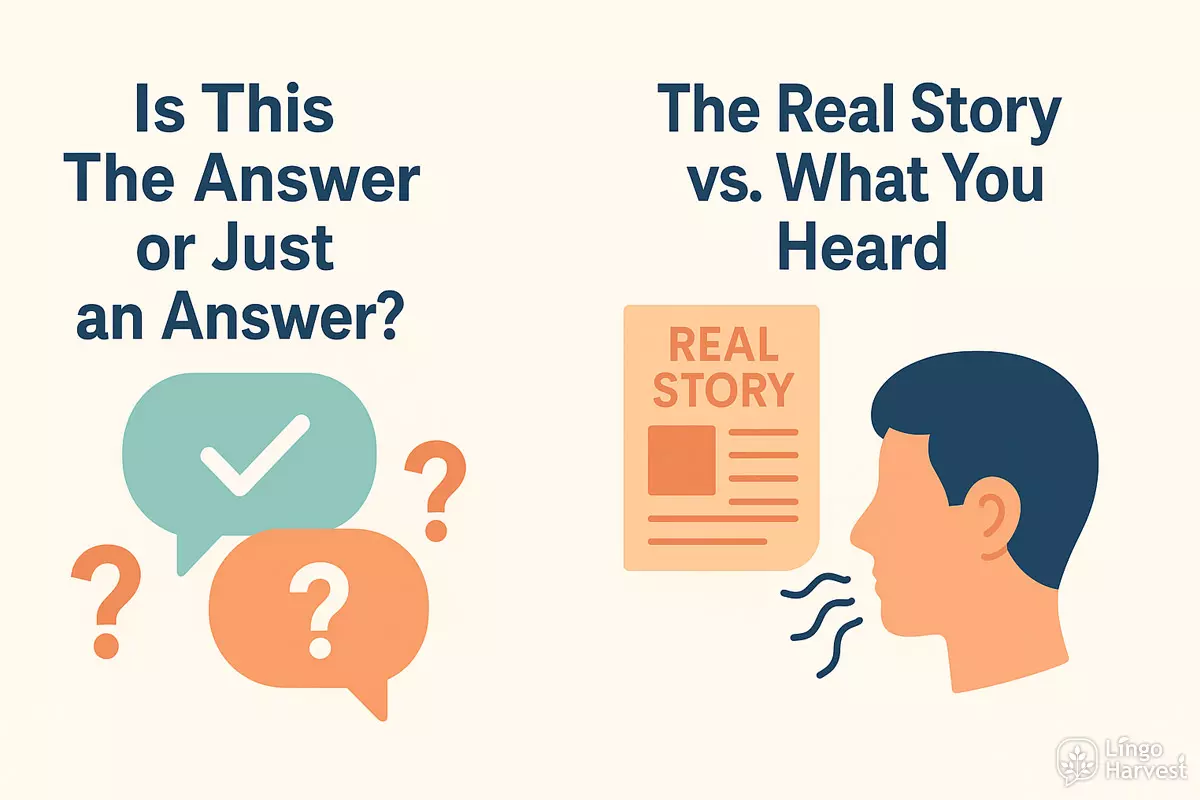
Sometimes, using "the" in headlines or snippets sets up a contrast between two options or ideas. This can make one item appear definitive or superior in comparison.
- Is This The Answer or Just an Answer?
- The Real Story vs. What You Heard
- Not Just a Winner: The Winner
- From The Best to the Rest
Comparative Examples
The impact of including or omitting "the" becomes clear in side-by-side comparisons. Note how the presence of the definite article changes tone and focus.
| Without "the" | With "the" |
|---|---|
| Biggest Mistake Leaders Make | The Biggest Mistake Leaders Make |
| Truth About Remote Work | The Truth About Remote Work |
| Future of AI | The Future of AI |
| Power of Habit | The Power of Habit |
| Final Countdown | The Final Countdown |
Writers and editors can use this technique to guide interpretation, add gravitas, or create memorable headlines. In summary, the definite article isn’t just a grammatical nicety—it’s a tool for shaping meaning and nuance in concise formats.
Reader interpretation and ambiguity risks
Headlines and short-form content often minimize or omit determiners, aiming for brevity and punch. However, this stylistic choice can introduce interpretive uncertainty for readers, since determiners like "the," "a," and "some" provide critical context about specificity, quantity, and reference. When these words are missing, the intended meaning can become less clear, potentially leading to multiple plausible readings.
Common sources of confusion
- Omission of articles: Leaving out "the" or "a" can obscure whether the subject is specific or general.
- Ambiguous reference: Without clear determiners, a headline may not clarify which person, place, or thing is meant.
- Unexpected pluralization: Plural nouns without a determiner can make it unclear if the statement is about all, some, or a single instance.
- Unclear scope: Lack of determiners may cause uncertainty about whether a statement applies broadly or narrowly.
Examples of ambiguous headlines
- Mayor Announces Plan — Is it a specific plan or any plan?
- Scientists Discover Solution — Which scientists? Which solution?
- Dog Bites Man — Is it a known dog, or any dog?
- Teachers Strike Looms — Are all teachers involved, or just a group?
- Woman Wins Prize — Which woman? What prize?
- City Approves Project — Which city? Which project?
- Students Protest Policy — Are these all students, or a subset?
- President Meets Leader — Which president? Which leader?
- Judge Blocks Law — Is it a single judge or a court?
- Chef Creates Dish — Is the dish new, or just prepared?
- Police Investigate Incident — Which police force? What incident?
- Actor Joins Cast — Which actor? What cast?
- Company Launches Service — Which company? What service?
- Lawmakers Debate Bill — Which lawmakers? Which bill?
- Coach Resigns — Which coach?
- Family Seeks Justice — Which family? For what?
- Fire Destroys Building — Which building?
- Writer Publishes Book — Which writer? Which book?
Comparing determiner use and clarity
| With Determiner | Without Determiner |
|---|---|
| The mayor announces the plan | Mayor announces plan |
| A scientist discovers a solution | Scientist discovers solution |
| The judge blocks the law | Judge blocks law |
| The company launches a service | Company launches service |
When determiners are omitted, the audience must infer specificity, sometimes relying on prior knowledge or context clues. For international readers or those less familiar with the subject, this can increase the risk of misinterpretation. Content creators should weigh the trade-off between brevity and clarity, especially in headlines where every word shapes understanding.
Examples from media, blogs, and announcements
Writers and editors often adapt their use of determiners in headlines and short-form formats to fit space constraints and stylistic conventions. In many cases, articles like “the,” “a,” or “an” are omitted to create a sense of immediacy or to save space, while other times they are retained for clarity or grammatical necessity. Below are typical patterns and real-world samples illustrating how determiners are handled in various types of concise content.
Common headline patterns omitting determiners
- “Mayor Launches New Initiative” (instead of “The Mayor Launches a New Initiative”)
- “Scientists Discover Exoplanet”
- “City Council Approves Budget”
- “Company Unveils Product Line”
- “Experts Warn of Rising Costs”
When determiners are retained
- “A New Hope for Patients” (emphasis on novelty or contrast)
- “The Best Apps of 2023” (superlatives, specificity)
- “An Unlikely Hero Emerges” (phonetic clarity)
- “The Future of Electric Cars” (defining a specific topic)
Blog post titles and announcement styles
- “How to Choose Right Tool for Job” ❌ (missing determiner, less natural)
- “How to Choose the Right Tool for the Job” ✅ (fully specified, preferred in blogs)
- “Launching Beta Program Next Week” (omitted for brevity)
- “The Results Are In!” (determiner present for effect and clarity)
Comparing forms in news, blogs, and announcements
| Format | Typical Determiner Use | Example |
|---|---|---|
| News Headline | Omitted unless needed for clarity | “Court Upholds Ruling” |
| Blog Title | Usually included for natural phrasing | “The Ultimate Guide to Home Brewing” |
| Announcement | Mixed; omitted for urgency, included for specifics | “A New Policy Takes Effect July 1” |
| Social Media Post | Frequently omitted for brevity | “Tickets On Sale Now” |
Summary of trends
In summary, short-form content favors brevity, often at the expense of determiners, especially in headlines and quick announcements. However, blogs and more conversational formats tend to include them for readability and grammatical completeness. The choice depends on context, target audience, and the desired tone.
Practice: refine headlines by adding or removing determiners
When crafting headlines, the choice to add or omit determiners (such as "a," "an," "the," "this," "those," etc.) can subtly change tone, clarity, and focus. In concise formats like headlines, determiners are often dropped for brevity, but sometimes including them clarifies meaning or adds emphasis.
Examples: How Determiners Affect Headlines
Consider how the presence or absence of determiners can shift the nuance or specificity:
- With determiner: The Future of AI
- Without determiner: Future of AI
- With determiner: A Guide to Mindful Eating
- Without determiner: Guide to Mindful Eating
Dropping "the" or "a" can make the headline feel more general, while using them can highlight uniqueness or specificity. The right choice depends on the intended message and context.
Exercise: Enhance or Streamline Headlines
Below are headlines that can be either clarified or tightened by adding or removing determiners. For each, decide which version is more effective in context.
- ___ Benefits of Meditation
- How to Build ___ Strong Team
- ___ Rise of Remote Work
- Tips for ___ Productive Day
- ___ Art of Negotiation
- ___ Apple a Day: Myth or Fact?
- ___ Impact of Social Media
- Five Steps to ___ Healthier Life
- ___ Ultimate Guide to Freelancing
- ___ Power of Small Habits
Show answers
- The Benefits of Meditation
- How to Build a Strong Team
- The Rise of Remote Work
- Tips for a Productive Day
- The Art of Negotiation
- An Apple a Day: Myth or Fact?
- The Impact of Social Media
- Five Steps to a Healthier Life
- The Ultimate Guide to Freelancing
- The Power of Small Habits
Common Patterns: Determiner Use in Headlines
Writers often follow certain patterns when deciding whether to use determiners in headlines. Here are some typical scenarios:
- General topics: Usually drop determiners ("Technology Trends")
- Specific guides or lists: Often use "the" or "a" ("The Beginner’s Guide")
- Idioms or set phrases: Keep determiners if part of the phrase ("An Apple a Day")
- Lists with numbers: May drop determiners for brevity ("10 Ways to Save Energy")
- Questions: Typically keep ("Is a Plant-Based Diet Right for You?")
Quick Reference: Determiner Choices in Headlines
Below is a structured comparison to illustrate how determiner use impacts meaning and style.
| Headline Without Determiner | Headline With Determiner |
|---|---|
| Guide to Time Management | The Guide to Time Management |
| Benefits of Yoga | The Benefits of Yoga |
| Path to Success | The Path to Success |
| Role of AI in Healthcare | The Role of AI in Healthcare |
| Plan for Better Sleep | A Plan for Better Sleep |
| Keys to Productivity | The Keys to Productivity |
Reviewing and adjusting determiners in your headlines can help you achieve the right balance between clarity, brevity, and impact. Experiment with both forms to see which best suits your message and audience.