Using Determiners in Data Analysis and Reports: precise reference

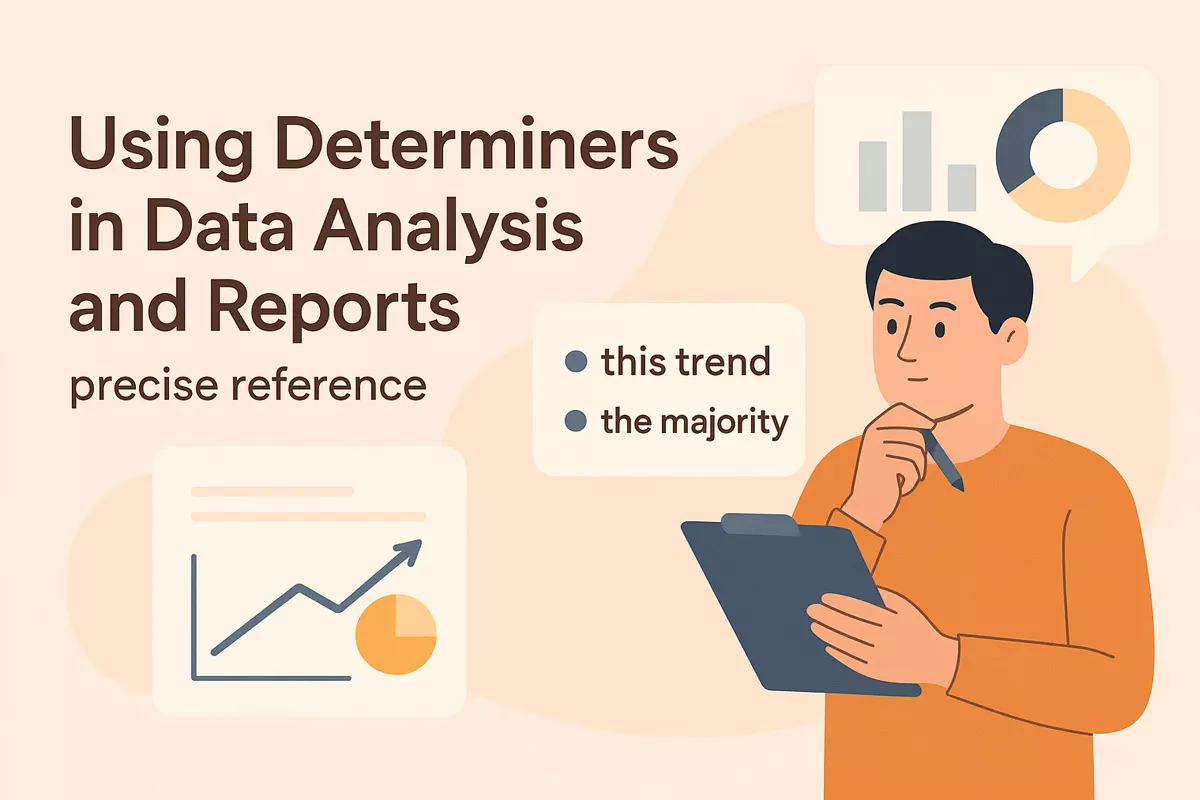 This article explains how to use determiners precisely in data-heavy writing. It covers referencing specific datasets, using a/an for examples, choosing exact quantifiers, avoiding vague words, and includes practical examples and exercises.
- Reference problems in data-heavy writing
- Using the for specific datasets and variables
- Using a/an for hypothetical or example scenarios
- Precise quantifiers for measurements and results
- Avoiding vague determiners in analytical statements
- Examples from reports, briefs, and dashboards
- Practice: refine determiner use in analytic summaries
Clear communication in data analysis relies on selecting precise language to convey information effectively. Accurately naming and referencing findings or variables is crucial for minimizing misunderstandings and making sure your audience interprets your reports as you intend. Being specific with terminology not only clarifies your analysis but also helps others replicate your work or draw meaningful conclusions from your data. Inconsistent or vague wording can lead to errors, misinterpretation, or a lack of trust in your results, so careful attention to language is a key part of sound analytical practice.
Reference problems in data-heavy writing
Precision in referencing is crucial when working with dense datasets, technical reports, or analytical writing. Ambiguous or poorly chosen determiners can cause readers to misinterpret which data points, variables, or findings are being discussed. This is especially problematic when several similar items, tables, or groups are mentioned close together in the text.
Common issues with determiners in analytical contexts
- Using "this" or "these" without a clear antecedent, leaving readers unsure what is being referenced.
- Switching between singular and plural forms inconsistently (e.g., "the dataset" vs. "these datasets").
- Referencing "the figure" or "the table" when multiple figures or tables are present, which can create confusion.
- Employing "some," "many," or "few" without specifying quantities, leading to vague interpretations.
- Overusing pronouns like "it" or "they" without clarifying which item is meant.
- Failing to distinguish between "all," "each," and "every," which impacts the scope of statements.
- Reference chains that become too long, making it hard to track what each determiner refers back to.
- Neglecting to restate or summarize groups before referring to them as "these" or "such."
- Using "another" or "other" for multiple items, which can be ambiguous in complex lists.
- Generalizing with "the data" when specific subsets are intended.
- Relying on context that is clear to the writer but not to the reader, especially when sections are lengthy.
- Inconsistent naming conventions for variables or categories, which undermines reference clarity.
Examples of ambiguous versus precise referencing
Below is a comparison of imprecise and improved determiner use in data-centric writing:
| Imprecise Reference | Precise Reference |
|---|---|
| This shows a significant increase. | This increase in Group A’s median score shows a significant trend. |
| The table indicates a difference. | Table 2 indicates a difference between 2019 and 2020 revenue. |
| They performed better than others. | Respondents from Region 1 performed better than those from Regions 2 and 3. |
| Some results were unexpected. | Results from the control group in Phase II were unexpected. |
| It increased significantly. | Average processing time increased significantly after the update. |
Tips for improving reference clarity in reports
- Always specify which item, figure, or group you are discussing—do not assume the reader knows.
- Repeat the noun when there is any risk of confusion, especially after complex information.
- Use explicit labels (“Table 1,” “Dataset B,” “the red group”) when referring to multiple similar items.
- Limit the use of pronouns and demonstratives unless their meaning is unmistakable.
- Clarify the scope of statements with quantifiers (“all participants,” “each variable,” “every sample”).
- When summarizing, briefly restate the group or data subset before using “these” or “such.”
Clear, specific reference choices help readers follow complex arguments and avoid misinterpretations, especially when your writing is packed with data and multiple entities. Thoughtful determiner use is essential for transparent, reliable reporting.
Using the for specific datasets and variables
Referring to particular datasets or variables with “the” is essential for clarity in data analysis and reporting. This definite article signals to your audience that you mean a specific, previously mentioned, or contextually unique item within your study or report. It helps avoid ambiguity, especially when multiple datasets or variables might be discussed or compared.
When to Use "the" with Datasets and Variables
Precision is key: use “the” when pointing to a dataset or variable that has already been introduced, or when only one such item exists in the context. For example, “the dataset collected in 2022” makes it clear which data you are referencing, as opposed to “a dataset,” which could be any dataset. Common scenarios include:
- Referring back to a previously introduced dataset (“the training set performed better than the test set”)
- Describing a unique variable (“the dependent variable in this model is income”)
- Comparing elements within a set (“the first cluster shows higher variance than the second”)
- Summarizing results or findings (“the results support the initial hypothesis”)
- Highlighting a specific subset (“the respondents aged over 60”)
- Clarifying a particular method or procedure (“the regression analysis revealed…”)
- Referring to unique features (“the main predictor was age”)
- Discussing defined groups (“the control group outperformed the experimental group”)
- Describing unique measurements (“the mean value exceeded expectations”)
- Identifying unique models or algorithms (“the random forest model achieved 95% accuracy”)
Examples: Definite vs. Indefinite Reference
Choosing between “the” and “a/an” changes the meaning. Here are some practical examples:
- “The sample size was 500.” → Refers to a specific, known sample.
- “A sample size of 500 is sufficient.” → Refers to any sample of that size, in general.
- “The variable of interest is temperature.” → Specifies which variable is being discussed.
- “A variable can be continuous or categorical.” → Discusses variables in general.
Patterns for Using "the" in Technical Writing
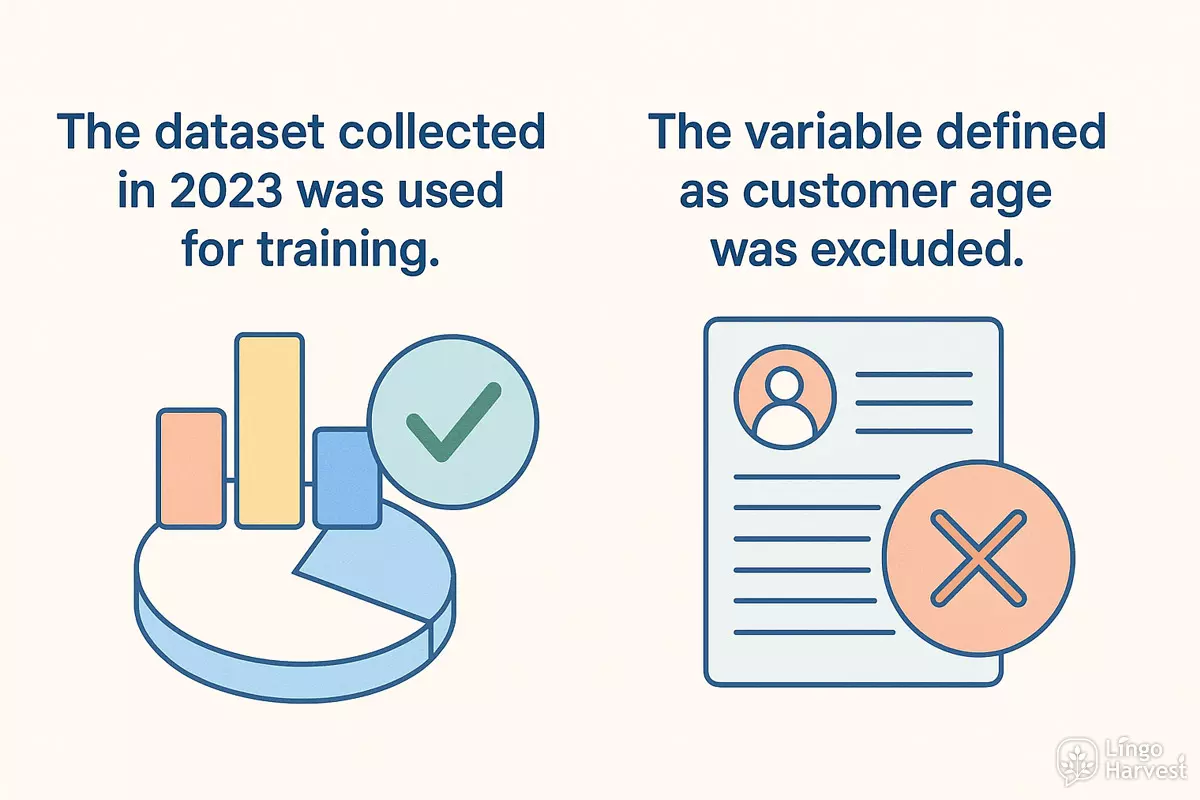
Writers often use certain phrases to make their references precise. Here is a list of typical patterns that help clarify which dataset, variable, or group is meant:
- the dataset collected in [year/location] → The dataset collected in 2023 was used for training.
- the variable defined as [description] → The variable defined as customer age was excluded.
- the group assigned to [treatment/control] → The group assigned to treatment showed faster recovery.
- the mean/median/mode of [variable] → The mean of income increased significantly.
- the results of the analysis → The results of the analysis confirmed our hypothesis.
- the model trained on [data] → The model trained on survey data achieved high accuracy.
- the observations with [condition] → The observations with missing values were removed.
- the sample from [source] → The sample from the hospital database was limited.
- the feature with the highest importance → The feature with the highest importance was price.
- the outcome variable → The outcome variable was customer satisfaction.
- the following table/chart/figure → The following table shows the final results.
- the hypothesis tested → The hypothesis tested focused on growth trends.
- the next section/chapter → The next section explains the methodology.
- the previous study → The previous study reported similar findings.
- the selected participants → The selected participants completed the survey.
- the calculated statistic → The calculated statistic exceeded expectations.
- the missing values → The missing values were replaced with averages.
- the distribution of [variable] → The distribution of scores was slightly skewed.
- the error rate → The error rate dropped after optimization.
- the significant difference → The significant difference appeared in the final group.
Summary: Why Definite Reference Matters
Using “the” for particular datasets and variables streamlines communication and avoids confusion. It ensures that readers or collaborators know exactly which item, value, or group you are referencing, which is especially important in technical writing and data-driven discussions. Consistent and precise use of definite articles can greatly improve the clarity of your analysis and reporting.
Using a/an for hypothetical or example scenarios
When discussing data, reports, or analytical models, indefinite articles like a and an are often used to introduce hypothetical cases or to illustrate a general principle. This approach helps avoid referencing a specific, real-world item and instead shifts the focus onto typical or imagined examples, making the explanation more accessible and generalizable.
How indefinite articles guide the reader
Using a or an signals that the scenario is not tied to a particular dataset or case. For example, when explaining a formula or a process, saying "an analyst might encounter..." or "a dataset could include..." invites the reader to consider a possibility rather than a known fact. This is effective in tutorials, training, and when outlining steps that apply broadly.
- If a report discusses "a variable," it means any variable, not one previously defined.
- Introducing "an outlier" in a chart refers to any unusual data point, not a specific one.
- Describing "a scenario where the mean increases" illustrates a possible case, regardless of actual data.
Common example patterns for hypothetical usage
Writers and analysts use these structures to clarify ideas and avoid ambiguity:
- a typical user
- an unexpected result
- a potential error in the data
- an alternative method
- a scenario where values are missing
- an analyst reviewing results
- a possible cause for variance
- an insight derived from the chart
- a model predicting sales
- a limitation of the sample
- an example of skewness
- a step in the process
- an assumption about trends
- a summary statistic
- an observation from the data
Clarifying hypothetical vs. specific reference
Using indefinite articles helps distinguish between a general example and a specific item already mentioned. Consider these contrasts:
- General: "A report may include an appendix." (any report, any appendix)
- Specific: "The report includes the appendix." (a known report and a known appendix)
This distinction is especially important in data analysis writing, where precision and clarity are essential. By choosing a or an thoughtfully, you ensure your examples are understood as illustrative, not definitive.
Precise quantifiers for measurements and results
Accurate quantification is essential when presenting data or analytical findings. Using clear and specific determiners helps readers understand the scope and scale of your results. Instead of vague words like “some” or “many,” opt for expressions that indicate exact amounts, proportions, or limits. This practice not only improves clarity but also strengthens the reliability of your report.
Common quantifiers for data analysis
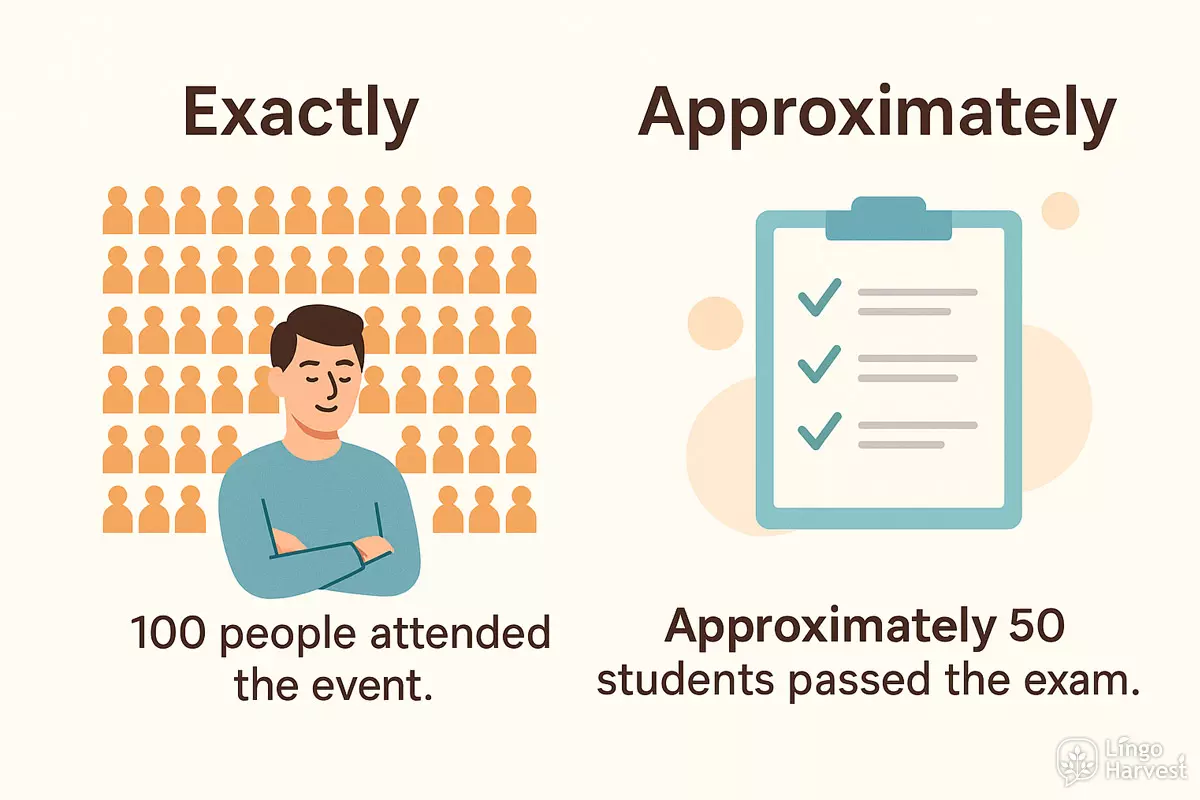
Writers often need to communicate different types of quantities—exact, approximate, minimums, or ranges. Choosing the right determiner or quantifier depends on the measurement context and the intended message. Here are some typical options:
- Exactly → Exactly 100 people attended the event.
- Approximately → Approximately 50 students passed the exam.
- At least → You need at least three signatures.
- No more than → The task will take no more than two hours.
- Nearly → Nearly everyone agreed with the proposal.
- Just over → Just over 1,000 tickets were sold.
- Roughly → The project will take roughly six months.
- More than → More than half of the participants voted yes.
- Less than → Less than ten minutes remained.
- About → About twenty guests arrived early.
- Up to → You can invite up to five people.
- Between (X and Y) → The price is between $20 and $30.
- Almost → Almost all students completed the task.
- Only → Only two seats are still available.
- As few as → As few as five errors can cause failure.
- As many as → As many as 5,000 users joined in one day.
- Each → Each student received a certificate.
- Every → Every employee must wear an ID badge.
- Per → The car travels 10 kilometers per liter.
- Majority of / Minority of → The majority of voters supported the change, but a minority of them opposed it.
Choosing quantifiers for different result types
The context determines which quantifier works best. For instance, use “exactly” or “all” when every item in a set meets a criterion. For estimates, “approximately” or “about” are more appropriate. When discussing limits or thresholds, phrases like “no more than” or “at least” convey boundaries clearly.
Examples of quantifier usage in reporting
Below is a table showing common quantifiers and their typical use in research and data summaries.
| Quantifier | Example in Context |
|---|---|
| Exactly | Exactly 50 participants completed the survey. |
| Approximately | Approximately 30% of respondents agreed. |
| At least | At least 10 samples were tested in each group. |
| No more than | No more than 5 errors were observed. |
| Between | Between 20 and 40 cases were identified monthly. |
| Majority of | The majority of users preferred option B. |
| As few as | As few as 2% of samples failed the test. |
| Per | 5 incidents per 1,000 units were recorded. |
Selecting the most suitable quantifier for your dataset ensures that readers interpret your findings as intended. Consistency in this area builds trust in your analysis, making your conclusions more persuasive and transparent.
Avoiding vague determiners in analytical statements
Precise language is essential when presenting data findings or writing analytical reports. Using unclear determiners like "some," "many," or "several" can lead to misinterpretation or weaken the credibility of your conclusions. Instead, favor determiners that provide specific, measurable information whenever possible.
Why specificity matters in data analysis
Unclear references make it difficult for readers to grasp the scale or significance of your results. For instance, stating that "many respondents preferred option A" does not communicate how widespread the preference is. By specifying "68% of respondents preferred option A," you convey a concrete, actionable insight.
Common vague determiners to avoid
Wording that lacks precision can obscure the true meaning of your data. Here are some determiners that often introduce ambiguity in analytical writing:
- some → Some students stayed after class.
- many → Many people attended the conference.
- several → Several options are available.
- few → Few employees supported the idea.
- much → There isn’t much time left.
- most → Most customers prefer online payments.
- various → Various methods were tested.
- numerous → Numerous studies confirm this result.
- certain → Certain details must remain confidential.
- others → Some students agreed, while others disagreed.
- another → I need another copy of this document.
- any → Do you have any questions?
- either → You can choose either option.
- each → Each participant received a badge.
- a lot of → We have a lot of work to do.
- plenty of → There is plenty of food for everyone.
- lots of → She has lots of experience in marketing.
- majority/minority (when not quantified) → The majority supported the decision, while the minority opposed it.
Replacing imprecise determiners with specific references
Whenever possible, substitute vague terms with exact numbers, percentages, or defined groups. This approach clarifies your statements and strengthens your arguments. For example:
- Instead of "a few participants," use "3 out of 20 participants."
- Replace "most cases" with "in 85% of cases."
- Swap "several departments" for "five departments."
Comparing vague and precise determiners
The difference between ambiguous and specific references is illustrated below:
| Vague Determiner Example | Precise Alternative |
|---|---|
| Many respondents agreed. | 42 respondents (60%) agreed. |
| Several issues were reported. | Four issues were reported. |
| A few teams improved performance. | Two teams improved performance. |
| Most users found the interface helpful. | 78% of users found the interface helpful. |
| Numerous errors occurred. | 12 errors occurred. |
Tips for greater precision in analytical writing
- Use exact figures whenever available.
- Define groups clearly (e.g., "all survey participants aged 18–25").
- Include percentages or proportions to contextualize numbers.
- Clarify time frames when referencing data (e.g., "in Q2 2024").
- State criteria for inclusion if referencing a subset (e.g., "employees with over 5 years’ experience").
Choosing specific determiners and quantifiers enhances clarity, supports your interpretations, and ensures your analytical statements are both transparent and reliable.
Examples from reports, briefs, and dashboards
Determiners—such as “the,” “a,” “some,” and “each”—play a subtle but critical role in making data analysis and written findings precise and unambiguous. In practice, the way you frame numerical results, trends, or recommendations often hinges on which determiner you choose. Let’s look at how different forms are used in practical business and research contexts to specify references, clarify scope, and avoid misinterpretation.
Common Determiner Patterns in Analytical Writing
- The average revenue per client increased by 5% last quarter. (refers to a specific metric)
- A significant number of participants reported improved satisfaction. (introduces generalization)
- Some regions experienced a decline in sales. (unspecified subset)
- Each department met its annual target. (emphasizes individual performance)
- Every respondent completed the survey. (universal inclusion)
- This chart illustrates monthly growth. (points to a specific item)
- These findings suggest further investigation is needed. (refers to a group just presented)
- Another factor affecting results is seasonality. (introduces an additional point)
- Few customers reported dissatisfaction. (small proportion)
- All metrics improved compared to last year. (totality)
- Most users prefer the new interface. (majority, but not all)
- Any deviation from protocol was recorded. (no restriction)
- No significant outliers were detected. (zero instances)
- Such anomalies require immediate attention. (refers to a type just described)
- That conclusion is based on preliminary data. (distance in thought or sequence)
Comparing Determiner Use in Data Communication
| Formulation | Implication |
|---|---|
| “The increase was substantial.” | Refers to a specific, previously mentioned increase—readers know exactly which one. |
| “An increase was observed.” | Introduces a new, unspecified increase—less context, more general. |
| “Some increases were unexpected.” | Highlights an unspecified subset—suggests not all increases were surprising. |
| “Each increase was analyzed separately.” | Emphasizes individual examination of every case in the set. |
| “All increases were within expectation.” | Asserts that every instance in the group met expectations—no exceptions. |
Application Tips
To make your data narratives clear, choose determiners that match your intended scope. For example, use the for data points already introduced, some when referring to a subset, and all or each when you mean every item. This attention to detail helps readers interpret findings correctly and supports more actionable conclusions.
Practice: refine determiner use in analytic summaries
Clear and precise references are essential in analytic summaries, particularly when describing data, trends, or conclusions. Determiners—such as "the," "a," "this," "each," and "some"—help readers understand exactly which items or groups are being discussed. Below, you'll find guidance, common patterns, and practical exercises designed to help you strengthen your use of determiners in analytic contexts.
Common Determiner Patterns in Data Analysis
- The (definite): Refers to a specific group or item already mentioned or implied.
Example: The results indicate a significant increase. - A/An (indefinite): Introduces a non-specific item or instance.
Example: A new variable was introduced. - Each/Every: Emphasizes all individual items in a group.
Example: Each sample was tested twice. - Some: Refers to an unspecified subset.
Example: Some participants did not complete the survey. - All: Refers to the entire group.
Example: All respondents provided feedback. - These/Those: Points to data or findings just mentioned.
Example: These figures support the hypothesis. - Most/Many/Few/Several: Quantifies the subset.
Example: Most cases were resolved quickly. - Another: Refers to an additional item.
Example: Another factor was considered. - Much/Little: Used with uncountable nouns.
Example: Little evidence supports this claim. - No/Any: Indicates absence or non-specificity.
Example: No errors were found.
Refining Determiner Choice: Quick Tasks
Choose the most precise determiner for each sentence. Consider the context and specificity required.
- ___ analysis revealed a trend not seen in previous studies.
- ___ participants completed the questionnaire in full.
- ___ factors may have contributed to the unexpected results.
- ___ data set includes responses from 500 individuals.
- ___ of the variables showed a significant correlation.
- ___ evidence supports the original hypothesis.
- ___ researchers agreed on the final conclusion.
- ___ observations were recorded during the experiment.
- ___ subject failed to meet the required criteria.
- ___ results were consistent across all trials.
Show answers
- The analysis revealed a trend not seen in previous studies.
- All participants completed the questionnaire in full.
- Several factors may have contributed to the unexpected results.
- The data set includes responses from 500 individuals.
- None of the variables showed a significant correlation.
- The evidence supports the original hypothesis.
- All researchers agreed on the final conclusion.
- Several observations were recorded during the experiment.
- No subject failed to meet the required criteria.
- The results were consistent across all trials.
Common Determiner Errors in Reports
- Omitting "the" when referencing a specific data set already introduced.
- Using "a" instead of "the" for unique findings.
- Choosing "all" when only "some" or "most" is accurate.
- Overusing "this/these" without clear antecedents.
Determiner Usage in Analytic Summaries: Examples
Compare how different determiners affect meaning and precision in analytic writing:
| Sentence | Effect of Determiner |
|---|---|
| The results suggest a positive trend. | Specific results previously discussed; precise reference. |
| A result suggests a positive trend. | One result among many; less specific. |
| Some variables were excluded. | Unspecified subset; not all variables. |
| All variables were included. | Entire set; comprehensive inclusion. |
| Each group demonstrated improvement. | Every individual group improved; distributive focus. |
| These findings align with previous research. | Specific findings just mentioned; clear reference. |
Self-Check: Rewriting Practice
Rewrite these sentences to clarify reference using suitable determiners:
- Participants reported increase in satisfaction.
- Variables were analyzed for correlation.
- Study found improvement in outcomes.
Show answers
- The participants reported an increase in satisfaction.
- The variables were analyzed for correlation.
- The study found an improvement in outcomes.
Consistent, accurate determiner use ensures your analytic summaries are both precise and easy to interpret. Regular practice and awareness of common patterns help you communicate findings with clarity and authority.