Determiners vs Classifiers: key differences across varieties of English

 Here we what classifiers are, how they differ from determiners, and their use in Asian and African English. It discusses nouns acting as classifiers, how determiners interact with them, cross-dialect differences, and provides practical sentence comparisons.
- What classifiers are and how they differ from determiners
- Classifier use in Asian and African English varieties
- English nouns that act like classifiers in context
- How determiners interact with classifier-like nouns
- Cross-dialect differences in structure and meaning
- Examples from world Englishes
- Practice: compare determiner and classifier use in sentences
Words such as some, many, or wooden influence meaning in English and highlight intriguing differences across dialects. Examining how these modifiers are used in various regions reveals the language’s rich diversity and nuance. For instance, the word some might indicate a small amount in one dialect but suggest a notable quantity in another. Similarly, adjectives like wooden may carry specific connotations depending on local speech patterns. By studying these subtle variations, we gain a deeper appreciation for the complexity and adaptability of English as it evolves in different communities.
What classifiers are and how they differ from determiners
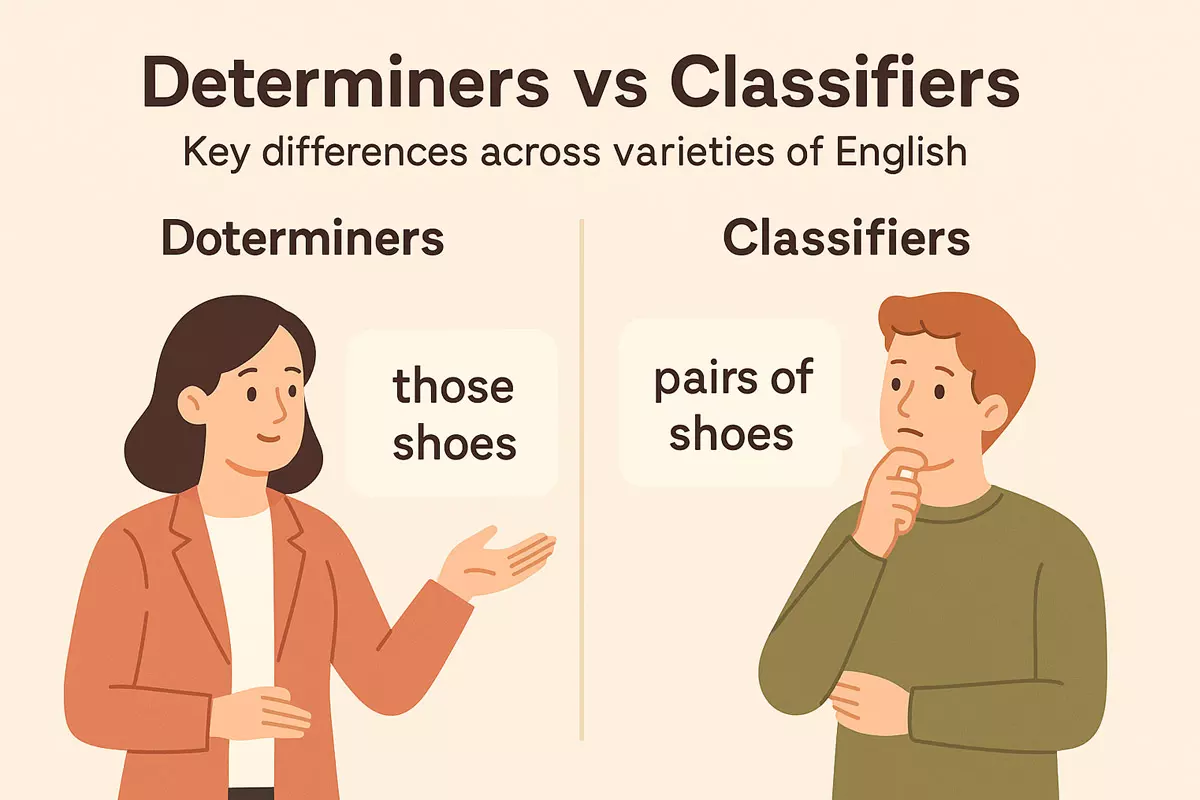
In English grammar, classifiers and determiners both appear before nouns, but they play distinct roles and are distributed differently across varieties of English. Classifiers are words or morphemes that help specify what kind of thing the noun refers to, often by grouping or categorizing according to type, function, or shape. Determiners, by contrast, mainly indicate reference—such as definiteness, quantity, or possession—and help clarify which noun is meant.
Classifiers: Function and Examples
Classifiers are especially prominent in some Asian languages, but also appear in certain English dialects, especially when describing units or types of things. They are often used when counting or specifying objects in terms of their category. In English, classifiers are less systematic, but they do appear in set phrases and in contexts such as measurement or food service.
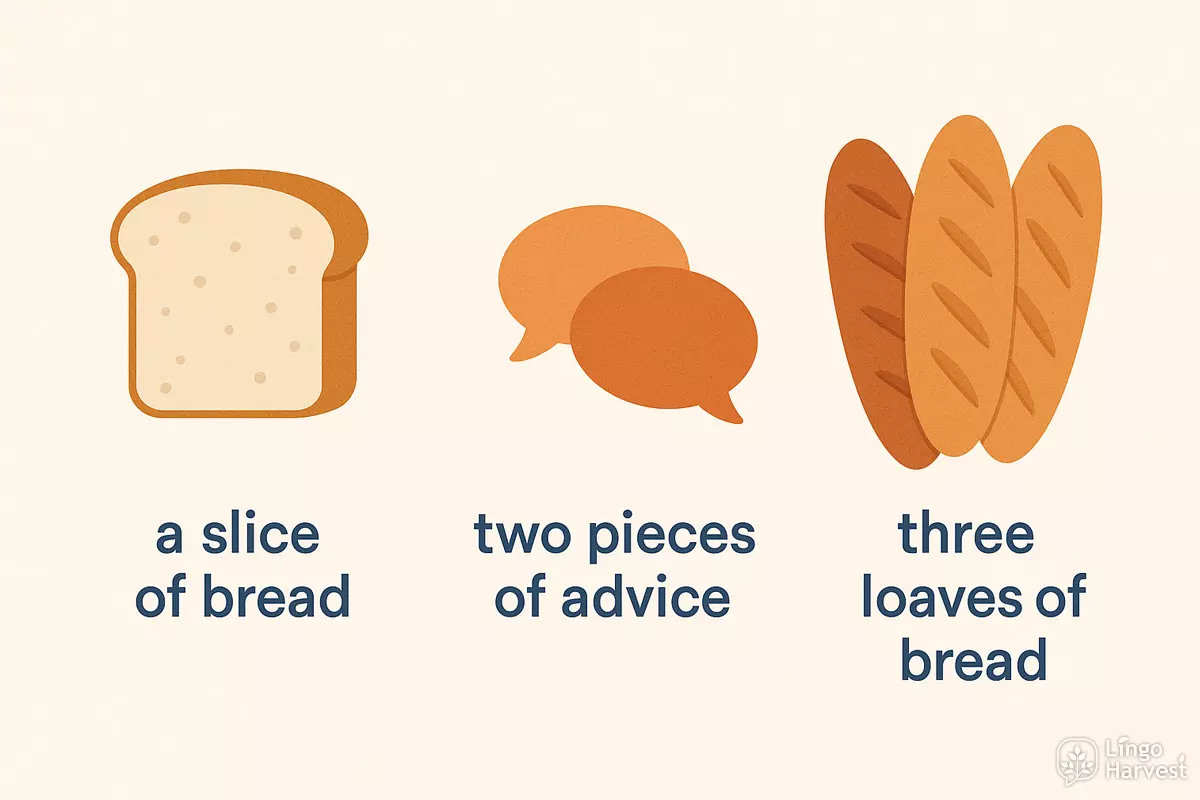
- a slice of bread
- two pieces of advice
- three loaves of bread
- a sheet of paper
- four cups of coffee
- five bars of chocolate
- six strips of bacon
- a drop of water
- ten heads of cattle
- a bottle of wine
- two sets of keys
- several types of cheese
- a grain of rice
- three pairs of socks
- a bundle of sticks
- four kinds of fruit
- a group of students
- eight boxes of crayons
How Determiners Differ
Determiners are a closed class of words that mark definiteness, quantity, or possession. Common determiners include the, a/an, some, this/that, my/your, each, and every. They indicate which particular noun is being talked about, or how many. Examples:
- The book on the table
- Some people
- Every student
- That car
- My house
Key Contrasts Between Classifiers and Determiners
The main distinction is that classifiers categorize or measure the noun, while determiners clarify which or how many. In many English varieties, classifiers are optional or only used for mass/count nouns, whereas determiners are required to form grammatical noun phrases.
| Classifier | Determiner | Example Phrase |
|---|---|---|
| Unit or type (e.g. slice, piece, sheet) | Reference (e.g. the, a, some) | a slice of bread / some bread |
| Used for grouping/counting mass nouns | Used for specifying definiteness or possession | three pieces of advice / my advice |
| Not obligatory in most English noun phrases | Often required for grammaticality | a bottle of wine / the wine |
| Varies by dialect and domain | Relatively stable across varieties | two types of cheese / that cheese |
Summary
While both classifiers and determiners appear before nouns, their grammatical jobs are different. Classifiers specify kind or quantity in terms of category, while determiners anchor the noun in the discourse. Understanding these differences helps explain why English speakers sometimes use both ("a bottle of wine") and why some international varieties of English may introduce classifier-like structures into English noun phrases.
Classifier use in Asian and African English varieties
In several Asian and African contexts, English speakers sometimes use noun classifiers that reflect the influence of local languages. These classifiers are not a standard feature of native English, but in contact varieties, speakers may insert an extra word before a noun to indicate its shape, animacy, or function, similar to how Mandarin or Yoruba mark nouns. This practice often arises in bilingual or multilingual environments where speakers transfer grammatical patterns from their first languages.
Common Patterns and Examples
Speakers may add a word such as "piece," "stick," or "head" before a noun, especially when counting or specifying items. These insertions help clarify meaning or match the grammatical expectations of their mother tongues. Examples include:
- a piece of bread → Could I have a piece of bread?
- three head of cattle → The farmer owns three head of cattle.
- two sticks of chalk → The teacher used two sticks of chalk.
- a slice of mango → She ate a slice of mango for dessert.
- five sheets of paper → I printed the report on five sheets of paper.
- four bottles of water → We bought four bottles of water.
- a grain of rice → Not a single grain of rice was left.
- six rolls of tissue → We ordered six rolls of tissue.
- a bunch of plantains → He carried a bunch of plantains home.
- ten bars of soap → The store received ten bars of soap.
- one blade of grass → A single blade of grass grew through the crack.
- two sets of keys → She lost two sets of keys.
- three drops of oil → Add three drops of oil to the mixture.
- a bundle of firewood → They gathered a bundle of firewood.
- four pairs of shoes → She owns four pairs of shoes.
- seven packets of biscuits → We bought seven packets of biscuits.
These patterns are especially noticeable in classroom English, market interactions, and daily conversation.
Comparing Classifiers and Determiners in Regional Varieties
While determiners such as "a," "the," "some," or "this" are used in all Englishes, classifier-like words often serve a different function in Asian and African English. Instead of simply marking definiteness or quantity, these words specify the kind or unit of the noun in question. For instance, "two stick of chalk" points to the individual, countable items, echoing local language structures.
| Expression | Notes/Influence |
|---|---|
| three head of cattle | Common in West African English; mirrors local counting words for livestock. |
| two stick of chalk | Reflects classroom English in Nigeria and Ghana, influenced by indigenous syntax. |
| five sheet of paper | Popular in South Asian English; aligns with Hindi and Tamil classifier usage. |
| one blade of grass | Seen in Southeast Asian English; similar to classifiers in Malay and Chinese. |
Pragmatic and Sociolinguistic Factors
The use of classifier-like structures is often a marker of local identity and linguistic creativity. In some cases, these forms are used intentionally to signal solidarity or shared background. However, they may be marked as "non-standard" in formal writing or international communication. Still, these features enrich the regional varieties and demonstrate how English adapts to different linguistic ecologies.
Summary of Classifier Influence
To sum up, the presence of classifiers in these Englishes is a direct result of language contact and transfer, not an intrinsic feature of English grammar. Their use helps convey specificity, quantity, and sometimes respect, especially for culturally significant items. Understanding these patterns is key to appreciating the diverse ways English functions around the world.
English nouns that act like classifiers in context
In many varieties of English, certain nouns often function as informal classifiers, filling a role similar to the more formal classifier systems found in languages like Chinese or Thai. While English does not have a grammaticalized classifier system, speakers frequently use countable nouns to help specify or quantify otherwise uncountable or ambiguous items. These "classifier-like" nouns emerge naturally in context, especially when describing portions, containers, or categories of things.
How nouns serve as classifiers in English
Instead of using a dedicated grammatical marker, English relies on regular nouns to break down mass nouns or abstract concepts into countable units. This is especially common with food, drink, and collective items. For example, rather than saying "three breads," English speakers clarify with "three loaves of bread." These intermediary nouns help structure meaning and avoid ambiguity.
Common examples of classifier-like nouns
Below is a list of nouns frequently used in this way. Each helps clarify quantity or type, especially when the main noun cannot be directly counted:
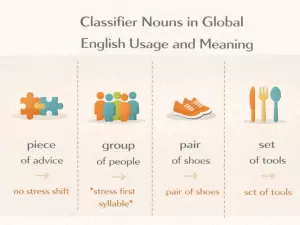
- Piece (a piece of cake, a piece of advice)
- Slice (a slice of cheese, a slice of pizza)
- Loaf (a loaf of bread)
- Bottle (a bottle of water, a bottle of wine)
- Glass (a glass of milk, a glass of juice)
- Sheet (a sheet of paper)
- Drop (a drop of rain, a drop of oil)
- Bar (a bar of chocolate, a bar of soap)
- Pack (a pack of cards, a pack of gum)
- Box (a box of cereal, a box of crayons)
- Grain (a grain of rice, a grain of sand)
- Bunch (a bunch of grapes, a bunch of flowers)
- Stick (a stick of gum, a stick of butter)
- Cup (a cup of tea, a cup of coffee)
- Tube (a tube of toothpaste)
- Can (a can of soda, a can of beans)
- Blade (a blade of grass)
- Row (a row of seats, a row of houses)
- Set (a set of tools, a set of keys)
- Pair (a pair of shoes, a pair of scissors)
Comparison: Classifier-like nouns across varieties
Some Englishes, especially in regions influenced by classifier-heavy languages, may use these nouns more systematically. For example, Singapore English often features "piece" or "packet" in ways that mirror local languages. In contrast, British and American English may prefer different terms depending on context or register.
| Classifier-like noun | Typical usage example |
|---|---|
| Piece | I’d like a piece of chicken. |
| Packet | She bought a packet of tissues. (Common in Singapore/Malaysia) |
| Bar | He ate a bar of chocolate. |
| Slice | Can I have a slice of pizza? |
| Can | They opened a can of beans. |
| Bottle | Please pass me a bottle of water. |
| Bunch | We picked a bunch of bananas. |
| Set | She bought a set of dishes. |
Why these nouns matter
How determiners interact with classifier-like nouns
In many varieties of English, especially those influenced by contact with Asian languages or by creole and dialectal varieties, nouns that function as classifiers sometimes appear between determiners and the main noun. This can cause subtle shifts in meaning or emphasis, and the way these elements combine can differ from standard patterns. Instead of the determiner attaching directly to the noun, it may be followed by a classifier-like word that narrows or specifies the noun’s referent.
Placement and Order
Determiners (like "a," "the," "some," "those") generally precede classifier-like nouns, which in turn precede the main noun. For example, in some dialects, one might say "a piece of cake" or "three head of cattle," where "piece" and "head" serve as classifier-like elements. The determiner always comes first, but the presence of a classifier can shift the structure, especially in non-standard varieties.
Examples of Classifier-Like Nouns in English
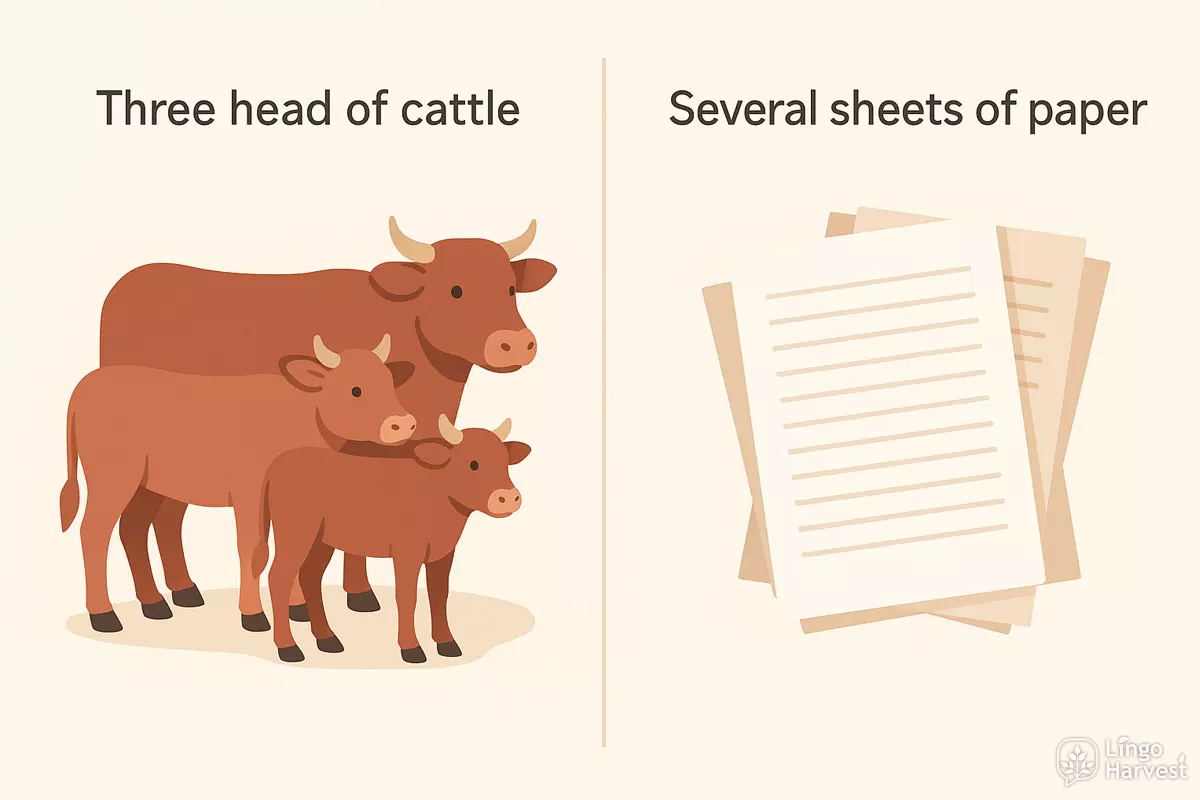
Classifiers are not as common or obligatory in standard English as in languages like Mandarin or Thai, but certain expressions use them regularly. Here are some common examples:
- a piece of advice
- two slices of bread
- three head of cattle
- several sheets of paper
- a grain of rice
- four pairs of shoes
- a herd of sheep
- five bottles of water
- a bunch of grapes
- six bars of chocolate
- a set of keys
- ten blades of grass
- a loaf of bread
- three cups of tea
- a flock of birds
- two packs of cards
- a row of houses
- seven pieces of luggage
Standard vs Non-Standard Patterns
While standard English typically restricts classifiers to certain "mass" or "collective" nouns, some regional and world Englishes have expanded their use. For instance, Singapore English and other contact varieties may allow structures like "a piece chicken" (for "a piece of chicken") or "two stick ice cream" (for "two sticks of ice cream"), omitting the "of" preposition.
| Variety | Typical Structure | Example |
|---|---|---|
| Standard English | Determiner + Classifier + of + Noun | a slice of bread |
| Singapore English | Determiner + Classifier + Noun | a slice bread |
| Caribbean English Creole | Determiner + Classifier + Noun | two head cattle |
| Indian English | Determiner + Classifier + Noun | a piece chicken |
Semantic Implications
Using a classifier-like noun often highlights a specific unit or quantity, making the reference more precise. For example, saying "a bar of soap" is more specific than just "soap." In some varieties, omitting the classifier would result in ungrammatical or ambiguous sentences.
Summary
To sum up, determiners in English typically precede classifier-like nouns, which serve to specify quantity or type before the main noun. The presence, absence, or structure of these classifiers can vary significantly across different forms of English, often reflecting contact with other languages or local grammar innovations.
Cross-dialect differences in structure and meaning
English varieties diverge in how they use determiners and classifiers, both in structure and in the nuances they convey. While Standard British and American English typically use articles ("a," "an," "the") as determiners, other forms of English—especially those influenced by contact with languages like Chinese or Malay—sometimes employ classifier-like words or constructions, particularly in spoken or colloquial contexts.
Structural variation across Englishes
Some regional Englishes, such as Singapore English, West African English, and Caribbean varieties, demonstrate unique patterns. For instance, speakers may use forms like "one piece of bread" or "that two people" in ways that echo classifier systems from other languages. In contrast, mainstream Englishes prefer "a slice of bread" or "those two people," relying more on determiners and measure nouns.
- Use of "piece," "slice," "drop," "sheet," etc., as classifiers in some varieties.
- Omission of articles in certain dialects ("I have car" instead of "I have a car").
- Preference for plural forms without determiners ("Children are playing outside").
- Insertion of numeral-classifier units ("two head of cattle") in rural or older Englishes.
- Use of demonstratives as primary determiners ("this book" vs. "the book").
- Reduplication or repetition for emphasis ("big big house" in some English Creoles).
- Borrowed classifier patterns from indigenous or heritage languages.
- Mixing quantifiers and classifiers ("a few stick of gum").
- Variation in mass/count noun treatment ("furnitures" in some nonstandard forms).
- Use of "them" as a determiner ("them boys" in African American Vernacular English).
- Alternative word orders ("one bread slice" vs. "one slice of bread").
- Classifier-like uses in spoken, informal registers ("that five people" in Singapore English).
Meaning shifts and interpretation
Differences in structure often lead to subtle shifts in meaning. For example, inserting a classifier can highlight quantity, shape, or type, as in "three pieces of advice" versus "some advice." In some dialects, omitting articles or using nonstandard classifiers may not sound odd to speakers but can signal social or regional identity.
| Variety | Typical Usage Example |
|---|---|
| Standard British/American English | "A glass of water", "Three books", "The car" |
| Singapore English | "One piece chicken", "That five people", "She got car" |
| West African English | "Two head of cattle", "Those children", "Bring me water" |
| Caribbean English | "Them mangoes sweet", "One breadfruit", "She have car" |
| Rural/Older English | "A dozen eggs", "Three score years", "Five head of sheep" |
Summary of patterns
These cross-variety differences illustrate that English is not monolithic in its treatment of determiners and classifier-like elements. They reflect local histories, contact with other languages, and evolving communication needs. For language learners and researchers, recognizing these patterns helps in understanding both the diversity and adaptability of English grammar.
Examples from world Englishes
Across different English varieties, the use of determiners and classifiers can reveal subtle but important distinctions. While Standard English relies heavily on determiners like "the," "a," and "some," other Englishes—especially those influenced by languages with classifier systems—may innovate or modify how these elements function.
Determinatives in diverse Englishes
Speakers from regions such as Singapore, Nigeria, and India sometimes adapt or extend the use of determiners based on patterns from their local languages. For instance, in Singapore English, it’s common to hear sentences like "I want one chicken rice," where "one" acts similarly to a classifier, specifying the order, rather than simply quantifying. In West African Englishes, determiners may be omitted in contexts where Standard English would require them, as in "I have car" instead of "I have a car."
Classifier-like patterns in contact varieties
Some world Englishes show classifier-like phrases, especially in contexts influenced by local languages with classifier systems. This often appears in ways of counting or specifying objects:
- Singapore English: "two piece chicken" (for "two pieces of chicken")
- Hong Kong English: "three set lunch" (for "three set lunches")
- Indian English: "one packet chips" (for "a packet of chips")
- Malaysian English: "five ringgit note" (for "a five-ringgit note")
- Philippine English: "one kilo mango" (for "a kilo of mangoes")
- Nigerian English: "ten naira note" (for "a ten-naira note")
- Caribbean English: "two bottle rum" (for "two bottles of rum")
- Kenyan English: "three piece suit" (for "a three-piece suit")
- South African English: "four slice bread" (for "four slices of bread")
- Pakistani English: "one glass water" (for "a glass of water")
Comparing determiners and classifiers in context
To clarify the differences and overlaps between determiners and classifier-like constructions in global Englishes, consider the following structured comparison:
| Standard English | World Englishes Variant | Type (Determiner/Classifer) |
|---|---|---|
| a piece of cake | one piece cake | Classifier-like |
| some water | one glass water | Classifier-like |
| a five-dollar bill | five dollar note | Classifier-like |
| a car | car | Determiner omitted |
| the book | book | Determiner omitted |
Observations on usage and influence
In summary, contact with local languages often leads to unique blends of determiners and classifier-like expressions in regional Englishes. These patterns reflect both the grammatical influence of substrate languages and the communicative needs of multilingual speakers. While Standard English maintains a clear line between determiners and classifiers, world Englishes frequently blur this boundary, resulting in creative and context-dependent usage.
Practice: compare determiner and classifier use in sentences
Understanding how determiners and classifiers function in different varieties of English can help you interpret meaning and nuance more precisely. Below, you'll find sentence-based tasks and a structured comparison to help you distinguish these two types of noun modifiers.
First, consider the following sentences. Decide whether the bolded word is a determiner or a classifier:
- These apples are fresh.
- I bought a chicken soup for lunch.
- Several students missed the exam.
- She collects porcelain dolls.
- My sister loves jazz music.
- He ordered a vegetable curry.
- That car is expensive.
- She wore her gold bracelet.
- Some people prefer tea to coffee.
- They built a stone wall.
Show answers
- 1. Determiner
- 2. Classifier
- 3. Determiner
- 4. Classifier
- 5. Determiner
- 6. Classifier
- 7. Determiner
- 8. Classifier
- 9. Determiner
- 10. Classifier
Common Patterns: Determiners vs. Classifiers
To further clarify, examine the typical usage patterns. Determiners often come at the start of a noun phrase and indicate reference or quantity, while classifiers generally specify a subtype or material of the noun.
| Determiner Example | Classifier Example |
|---|---|
| This book | Science book |
| Any solution | Math solution |
| Many students | Exchange students |
| Her shoes | Leather shoes |
| Each answer | Multiple-choice answer |
| Some friends | Childhood friends |
| Our house | Stone house |
| No reason | Medical reason |
| Every child | Gifted child |
| The problem | Technical problem |
Task: Rewrite Sentences
Transform the following sentences by replacing the determiner with a classifier or vice versa, where possible. Pay attention to how the meaning changes:
- Those cookies are delicious.
- She owns a sports car.
- Many houses were built last year.
- He gave me a wooden box.
- My friend sent a letter.
Show answers
- Delicious chocolate cookies are on the table. / That cookie is delicious.
- She owns a red car. / Her car is a sports car.
- Modern houses were built last year. / Several houses were built last year.
- He gave me a small box. / The wooden box was a gift.
- A childhood friend sent a letter. / My letter arrived yesterday.
By practicing with these examples, you can strengthen your ability to spot determiners and classifiers and understand their influence on meaning across English varieties.