Historical and Dialectal Uses of Determiners (advanced topic)

 The article traces how English determiners changed from Old to Modern English, explores regional and sociolinguistic differences, discusses forms that have vanished or appeared, and gives examples and practice for identifying historical and dialectal patterns.
- How determiner systems changed across English history
- Old English vs Modern English determiner forms
- Regional dialect variations in article and determiner use
- Determinants disappearing or emerging over time
- Sociolinguistic factors influencing determiner choice
- Examples from literature and dialect samples
- Practice: identify historical or dialectal determiner patterns
Throughout history and across different regions, the small words that precede nouns—such as articles and other determiners—have undergone remarkable changes, reflecting broader shifts in language and regional speech patterns. By examining how these linguistic markers have evolved, we gain valuable insight into the development of languages and the influence of local dialects. Such exploration not only uncovers patterns of linguistic change but also sheds light on the cultural and historical contexts that shape the way people communicate.
How determiner systems changed across English history
The landscape of determiners in English has shifted dramatically from Old English through to the present. Early forms of the language featured a much richer set of articles, demonstratives, and possessive adjectives, with more complex inflectional endings and agreement patterns. Over centuries, these forms were gradually simplified, and the functions of determiners narrowed and changed.
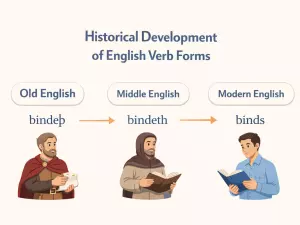
Old English: Inflection and Variety
Old English determiner usage was highly inflected, with forms changing based on case, gender, and number. For instance, the definite article had different shapes depending on grammatical context, and demonstratives like “se,” “seo,” and “þæt” also varied widely. Possessive adjectives behaved almost like pronouns, inflecting for case and number. Indefinite articles, as we know them, did not really exist; instead, the numeral “ān” sometimes filled that role.
- Definite articles: se (masc.), seo (fem.), þæt (neut.)
- Demonstratives: þes/þēos/þis (this/these)
- Possessives: mīn (my), þīn (your), ūre (our)
- Indefinites: ān (a/an), sum (some)
Middle English: Loss of Inflection
During Middle English, the case and gender system eroded, leading to fewer forms for determiners. The definite article settled on “the” for all contexts, and “a/an” emerged more clearly as the indefinite article. Demonstratives started to standardize as “this/these” and “that/those.”
Modern English: Fixed Forms and New Functions
Modern usage features fixed determiner forms, with almost no inflection. Articles (“the,” “a/an”), demonstratives (“this,” “these,” “that,” “those”), possessives (“my,” “your,” etc.), and quantifiers (“some,” “any,” “every,” “no,” “all,” “many,” “few,” etc.) are invariant and serve as essential noun phrase markers. The range of determiners expanded, including more quantifiers and partitives.
| Stage | Key Determiner Features | Examples |
|---|---|---|
| Old English (c. 450–1100) | Fully inflected for case, gender, and number; no true indefinite article yet; demonstratives function as definite articles | se, seo, þæt, mīn, þīn, ān (as numeral “one”) |
| Middle English (c. 1100–1500) | Loss of most inflections; definite article becomes fixed; emergence of true indefinite article from “ān” | the, a, an, this, that, my, thy |
| Early Modern English (c. 1500–1700) | System stabilizes; articles and demonstratives used similarly to modern usage; frequent variation in usage in literature | the, a/an, this, that, these, those, my, thy, his, her, our |
| Modern English (1700–present) | Fixed determiner system; wide use of quantifiers, possessives, and demonstriners; strict word order | the, a/an, these, those, some, any, every, many, much, my, your, their |
Dialectal Variation
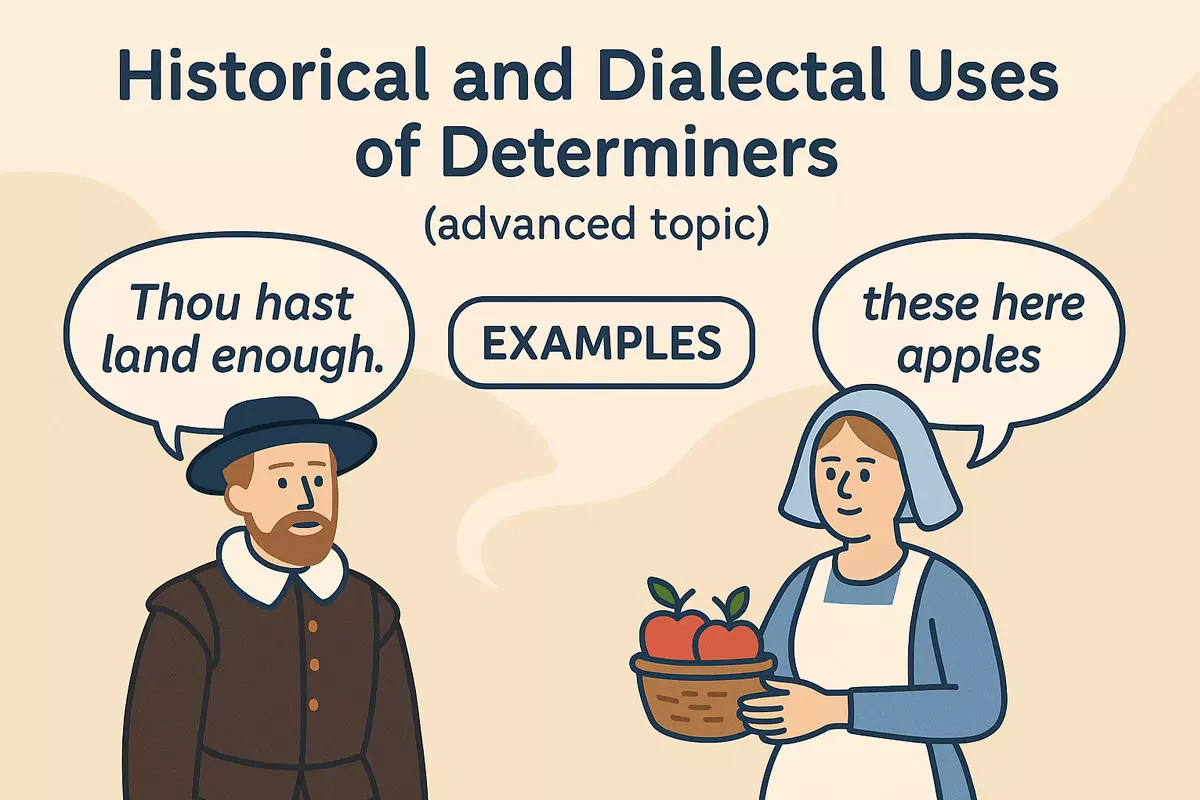
Across English dialects, determiners have followed unique paths. Some Northern English varieties retain “them” for “those,” while certain Caribbean dialects use “dem” as a plural marker. In some Irish English varieties, double marking (e.g., “that there book”) is common. Such features reflect how local speech communities innovate with determiners, often preserving or reimagining older patterns.
Key Patterns and Examples
Here are some notable developments and forms across periods and dialects:
- Loss of gender and case in articles
- Expansion of quantifiers (e.g., “several,” “plenty of,” “loads of”)
- Emergence of “a/an” as a true article
- Use of double determiners (“those ones”)
- Dialectal forms: “yon,” “yonder,” “them” (for “those”)
- Pronominal possessives: “mine,” “thine” (archaic/poetic)
- Partitive constructions: “some of the,” “many of these”
- Zero article in some varieties (“I went home”)
- Use of “dem” as plural in Caribbean English
- Demonstrative reinforcement (“that there dog”)
- Non-standard quantifiers (“heaps of,” “loads of”)
- Retention of “yonder” in some rural dialects
- Double marking in Irish and Scots English
- Variation in article use with proper names
- Optional use of articles in regional varieties
The evolution of determiners in English exemplifies both simplification and innovation, with dialects preserving traces of earlier forms or developing new structures altogether.
Old English vs Modern English determiner forms
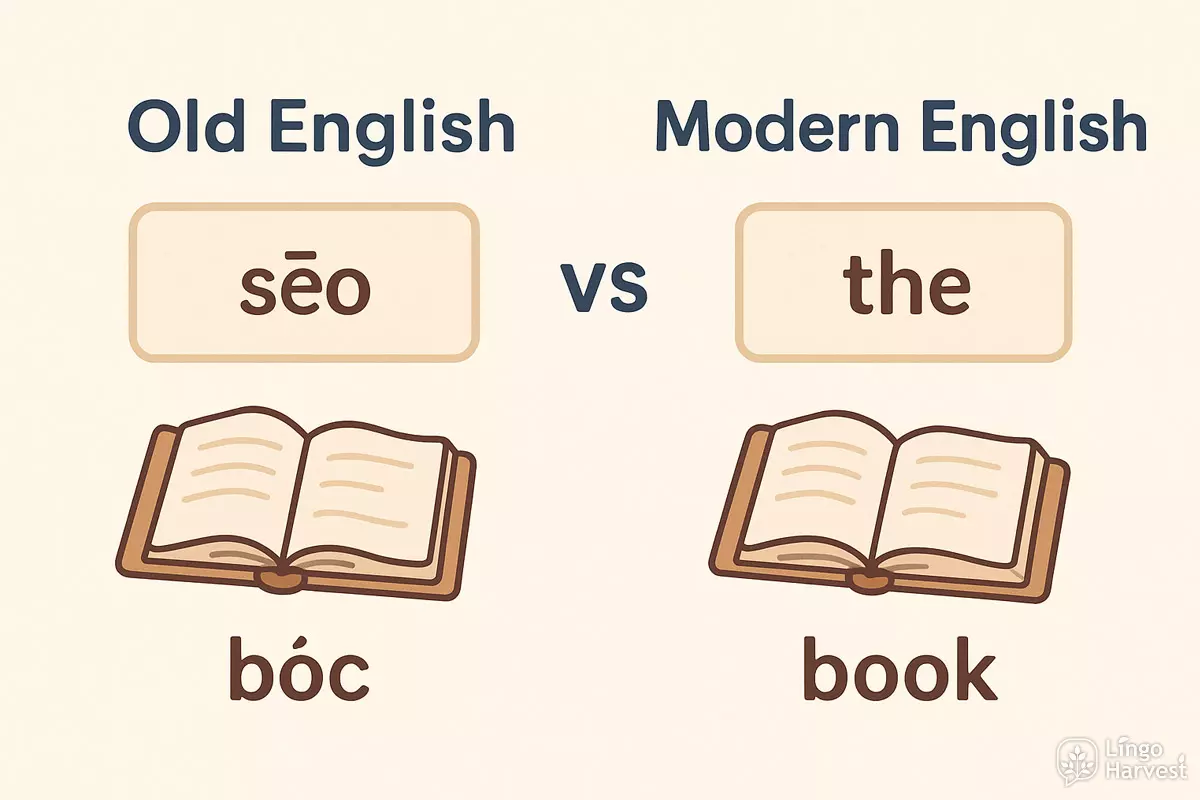
The evolution of determiners in English shows a striking transformation from a richly inflected Old English system to the streamlined forms of today. In the early medieval period, determiners were highly sensitive to grammatical gender, case, and number, resulting in a complex array of endings. Modern usage, by contrast, relies on fixed forms that do not change for these grammatical categories.
Key Differences in Determiner Systems
Old English determiners included definite articles, demonstratives, and possessives, all of which agreed with their nouns in gender (masculine, feminine, neuter), number (singular, plural), and case (nominative, accusative, genitive, dative, instrumental). Modern English, however, has shed these distinctions almost entirely, using invariant forms like "the," "this," or "my" regardless of the noun’s characteristics.
Comparative Determiner Paradigms
The following table highlights how select determiners functioned in Old English compared to their modern equivalents. Note the range of forms in the earlier period versus the singular forms used today.
| Old English | Modern English | Notes |
|---|---|---|
| se (masc. nom. sg.) seo (fem. nom. sg.) þæt (neut. nom./acc. sg.) þā (pl. nom./acc.) |
the | Definite article; Old English forms varied by gender/number/case |
| þes (masc. nom. sg.) þēos (fem. nom. sg.) þis (neut. nom. sg.) þās (pl. nom.) |
this / these | Demonstrative ‘this’; Modern English uses only two forms (singular/plural) |
| min (before vowel), mīn (elsewhere) | my | Possessive; Old English showed minor variation, Modern English is invariant |
| ænig (any), sum (some), ælc (each), swilc (such) | any, some, each, such | Indefinite determiners; forms now fixed, previously inflected |
Examples of Old English Determiner Usage
- se cyning (the king) → the king
- seo sunne (the sun, feminine) → the sun
- þæt hus (the house, neuter) → the house
- þās stanas (these stones, plural) → these stones
- min fæder (my father) → my father
- ænig mann (any man) → any man
- ælc wīf (each woman) → each woman
- sum dæg (some day) → some day
- swilc beorhtnes (such brightness) → such brightness
- þis cild (this child, neuter) → this child
Summary of Grammatical Simplification
Where Old English required speakers to learn a range of endings for each determiner, contemporary English opts for simplicity. This change reflects a broader shift in the language toward analytic structures and away from inflection. While some regional dialects preserved old forms for centuries, standard usage now relies on a much-reduced inventory of determiners—making the system far less daunting for learners today.
Regional dialect variations in article and determiner use
Patterns of article and determiner use often differ substantially across dialects of English and other languages, reflecting local history, contact, and linguistic innovation. Speakers from different regions may omit, modify, or substitute articles and determiners in ways that can sound unusual to outsiders but have deep roots in local grammar.
Examples of Dialectal Article Usage
Some English dialects, such as those in Northern England and parts of Ireland, are known for distinctive article patterns:
- Omission of the definite article: "I'm going to shop" instead of "I'm going to the shop".
- Use of the definite article with proper nouns: "I'm going down the Morrisons".
- Insertion of articles in unexpected places: "He has the flu" (where other dialects might just say "He has flu").
- Zero article with institutions: "She’s in hospital" (British) vs. "She’s in the hospital" (American).
- Double definiteness: Some Scandinavian-influenced dialects, e.g., "the my house".
- Use of "them" as a demonstrative: "Look at them books" (Northern English, Irish).
- Preference for "this here/that there": "This here car is mine."
- Overt plural definite articles: "the apples" vs. dialectal "them apples".
- Omission in idioms: "Go to bed" vs. "Go to the bed".
- Unique forms: Scottish English "the now" (meaning "right now").
Comparative Table: Article Patterns in Selected Dialects
| Dialect/Region | Characteristic Example | Standard English Equivalent |
|---|---|---|
| Northern English | "I'm going to shop" | "I'm going to the shop" |
| Yorkshire | "T’pub" (reduced 'the') | "The pub" |
| Irish English | "He's gone to the town" | "He's gone to town" |
| Scots | "the now" (meaning 'at present') | "right now" |
| Southern American | "That there dog" | "That dog" |
| Caribbean English | "She gone hospital" | "She has gone to the hospital" |
Determinative Innovations and Regional Syntax
Beyond articles, determiners such as "these", "those", and possessives also show regional quirks:
- Reduplication: "this here", "that there" for emphasis.
- Use of "yon" or "yonder" in some rural dialects: "Yon house is mine".
- Demonstrative stacking: "them there books".
- Possessive doubling: "my own house".
- Use of "me" for "my": "me book" (Irish, Scots).
- Preference for overt determiners even with mass nouns: "the bread" (vs. just "bread").
Implications and Social Meaning
Local determiner patterns carry social weight. They can signal belonging and solidarity, or mark a speaker as an outsider. Understanding these variations offers insight into both the history of a language and the identities of its speakers. For linguists, such forms provide valuable evidence of contact, change, and the persistence of tradition within communities.
Determinants disappearing or emerging over time
The inventory of determiners in a language is never static. Shifts in usage, sound changes, grammaticalization, and contact with other languages can all cause certain forms to vanish while new ones take their place. This dynamic process is especially visible in the history of Indo-European and Romance languages, where articles and demonstratives have undergone significant change.
Historical Disappearance of Determiners
Older stages of languages often possessed determiners that are now obsolete. For example, Old English had several demonstrative forms that merged or disappeared over centuries. Latin, lacking a definite article, relied on demonstratives that later evolved into articles in Romance languages. Reasons for loss include phonetic erosion, redundancy, or replacement by newer forms.
- Old English "þes" (this) → replaced by "this"
- Old French "cil" (that) ❌
- Proto-Germanic *sa (the, that) → lost in Modern English
- Latin "ille" (that) → became definite article in Italian/Spanish
- Middle English "yon" (yonder) → archaic today
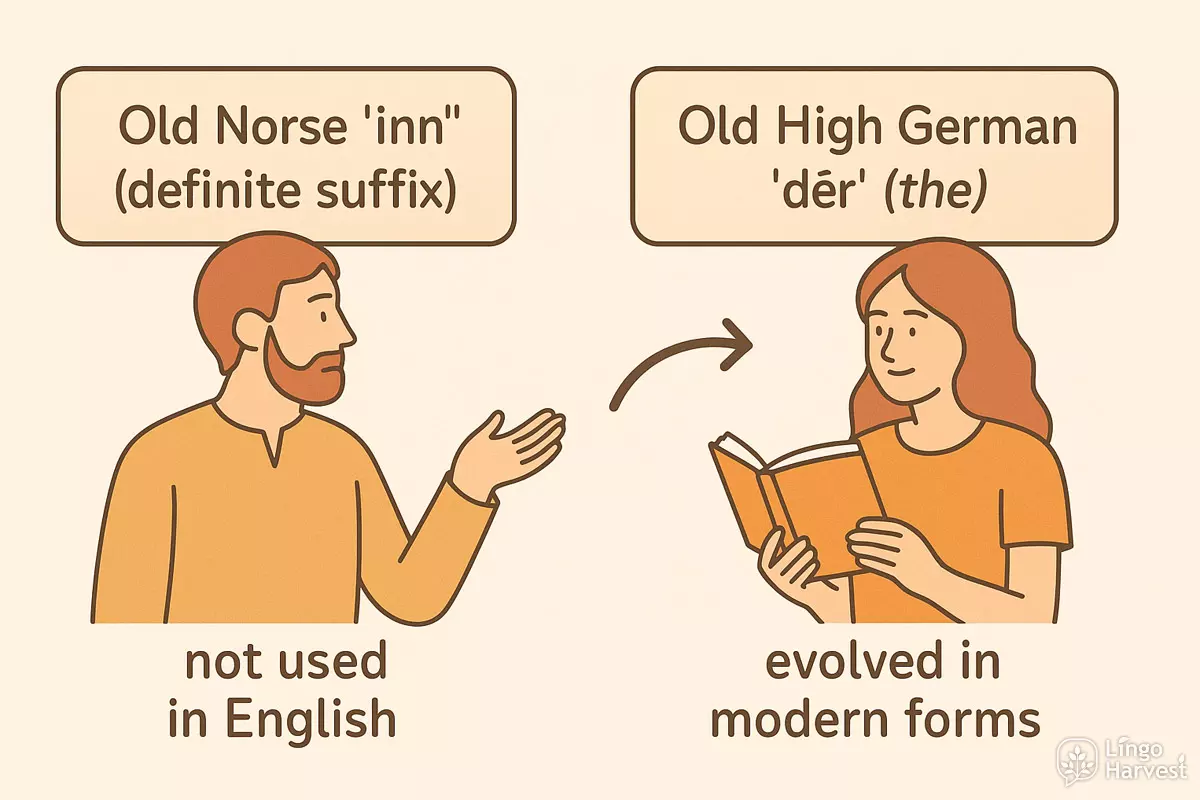
- Old Norse "inn" (definite suffix) → not used in English
- Old High German "dēr" (the) → evolved in modern forms
- Old Spanish "el otro" (the other) → now "otro"
- Old French "cestui" (this one) ❌
- Medieval Latin "ipse" (himself, that) → rarely used now
Emergence of New Determiner Forms
Languages frequently develop new determiners through grammaticalization or borrowing. Demonstratives, possessives, and even numerals can be reanalyzed as articles or quantifiers. In English, the definite article "the" arose from a demonstrative, while Romance languages created articles from Latin demonstratives like "ille" and "una".
| Stage/Language | Determiner Forms | Notes |
|---|---|---|
| Latin | ille, hic, iste | Demonstratives, no definite article |
| Old French | li, la, les, cil, cist | Early articles and demonstratives |
| Modern French | le, la, les, ce, cette | Articles from demonstratives; new forms |
| Modern English | the, a, this, that, these, those | "the" from demonstrative; "a" from "an" |
| Spanish | el, la, los, las, este, ese, aquel | Articles and demonstratives; from Latin roots |
Dialectal Innovation and Loss
Regional varieties often retain archaic determiners or innovate new ones. For instance, some English dialects still use "yon" or "them" for demonstratives. In certain varieties of Catalan, both "lo" and "el" serve as definite articles, reflecting older forms.
Summary
The history of determiners shows a continual cycle of loss and renewal. Older forms fade, new ones appear, and dialects preserve unique patterns. Examining these changes sheds light on broader patterns of grammatical evolution and language contact.
Sociolinguistic factors influencing determiner choice
Patterns of determiner usage are shaped by a range of social and linguistic variables. Speakers tend to select articles, demonstratives, and possessives differently depending on context, audience, and regional or social identity. These choices often signal group membership, formality, or dialectal tradition, reflecting both conscious and unconscious adaptation to social norms.
Regional variation and dialects
Geographical factors can lead to distinctive determiner systems. For example, Northern English dialects sometimes omit definite articles ("She went to shop" vs. "She went to the shop"), while varieties of Scottish English might use "yon" for distant reference. In some Southern US English areas, double determiners ("that there car") are common. These forms persist as markers of local identity and can be consciously maintained or stigmatized.
Social class and formality
Socioeconomic background and perceived formality influence determiner selection. More formal registers typically adhere to prescriptive norms, whereas informal speech may feature reduction or omission. In some communities, non-standard article use is a feature of in-group speech, serving a solidarity function.
- Omission of articles in colloquial speech: "Went to hospital" (British English, formal/informal distinction)
- Use of double determiners: "this my book" (found in some dialects and learner varieties)
- Hypercorrection in formal settings: "the both of them"
- Retention of archaic forms: "thine" and "thy" in some religious or poetic contexts
- Preference for demonstratives over articles in certain Caribbean Englishes
- Variable use of "a" vs. "an" before vowels in dialectal speech ("a apple")
- Article drop in headlines: "Prime Minister visits city"
- Use of "them" as a demonstrative: "them shoes" (Southern US, African American Vernacular English)
- Insertion of "the" before personal names: "the John" (found in some Irish English dialects)
- Overuse of definite article in learner English: "the life is beautiful"
- Switching determiners for emphasis: "that darn cat"
- Use of "those ones" as a plural demonstrative ("I'll take those ones")
- Fusion of determiner and noun: "t'other" for "the other" (archaic/regional)
- Article use with abstract nouns: "the justice" vs. "justice" (varies by dialect and register)
- Redundant possessive: "my own self"
- Creole patterns: "di" as a universal determiner in Jamaican Creole
- Absence of articles in some pidgins and creoles
- Gendered determiners in languages with grammatical gender (not English, but relevant cross-linguistically)
Age, gender, and peer group influence
Younger speakers may innovate with determiners, either simplifying or creating new forms that later spread. Gendered patterns also emerge, with some studies noting slight differences in article use between men and women, often tied to broader stylistic preferences. Peer groups reinforce local norms, so determiner usage can signal alignment with particular communities or subcultures.
Code-switching and contact varieties
In multilingual settings, contact between languages often leads to transfer effects or hybrid determiner systems. Speakers might borrow article patterns from a dominant language, or apply native rules to a second language. This phenomenon is widely observed in immigrant communities and in regions with a history of language contact.
Summary table: Selected dialectal determiner patterns
| Dialect/Variety | Characteristic Determiner Use |
|---|---|
| Northern English | Definite article reduction or omission ("I'm going t'shop") |
| African American Vernacular English | Demonstrative "them" as a plural article ("them books") |
| Jamaican Creole | Universal determiner "di" for definite reference ("di man") |
| Irish English | Use of definite article with first names ("the Mary") |
| Southern US English | Double determiners ("that there house") |
These sociolinguistic considerations reveal that determiners are not only grammatical items but also subtle carriers of social meaning, showing how language users navigate identity, group membership, and context through even the smallest words.
Examples from literature and dialect samples
Usage of determiners has varied widely across historical periods and regional dialects, providing a rich set of forms and functions. Examining real sentences from older texts and dialect recordings reveals shifts in both the form and meaning of articles, demonstratives, and related words.
Notable occurrences in historical texts
Writers from earlier centuries often used determiners in ways that differ from modern norms. For instance, Middle English texts exhibit forms like "the" for both definite and demonstrative uses, and Old English included demonstratives that later evolved into articles. Some illustrative cases:
- Beowulf: "þaet wæs god cyning" (that was a good king) — "þaet" functioning as both demonstrative and article.
- Chaucer’s Canterbury Tales: "the yonge sonne" — definite article "the" paired with an adjective, a precursor to current usage.
- Shakespeare: "this night’s revels" — demonstrative "this" with a possessive construction, showing flexibility in word order and emphasis.
Variation in regional speech
Dialectal varieties often preserve archaic forms or develop unique patterns for determiners. Some regional Englishes, for example, use "them" as a demonstrative, while others drop articles entirely. Here are several prominent patterns:
- Northern English: "Give us them books" (using "them" as a demonstrative instead of "those").
- Yorkshire: "T’house" (article reduced or elided, often written as "t’").
- Irish English: "I have the cold" (definite article with illnesses, unlike standard usage).
- Scots: "Yon man" (using "yon" for distant demonstrative, where most use "that" or "those").
- Appalachian English: "a-doing" (retaining the "a-" prefix, which originated as a reduced form of the preposition "on" with a definite article).
- Southern US: "That there dog" (doubling of demonstratives for emphasis).
- East Anglian: "She give me one apple" (often omitting definite articles in certain contexts).
- Caribbean English: "De man come" (using "de" as a generalized definite article, derived from "the").
- Welsh English: "I’m going to the school" (definite article used where standard English often omits it).
- Australian Aboriginal English: "This mob" (using "mob" as a collective determiner for groups of people or things).
Comparative forms in select dialects
For a clearer view of how determiner forms diverge, the following table compares standard usage with variants from different dialects. This highlights the persistence and innovation of determiner systems.
| Standard English | Dialectal Variant | Context/Region |
|---|---|---|
| This house | Yon hoose | Scots |
| Those apples | Them apples | Northern English |
| The teacher | T’teacher | Yorkshire |
| The man | De man | Caribbean English |
| (no article) I have flu | I have the flu | Irish English |
These examples demonstrate how determiners have evolved and diversified, both in written records and living dialects. The dynamic nature of these small but crucial words continues to reflect broader linguistic change.
Practice: identify historical or dialectal determiner patterns
Exploring how determiners have changed or diverged across dialects and historical periods can deepen your understanding of grammatical variation. Below, you'll find practice activities designed to help you spot and analyze these patterns in context.
Task 1: Spot the Determiner Variation
Read each sentence and identify the determiner that reflects a historical or dialectal usage. For each, note whether it is:
- Obsolete (no longer used in modern standard English)
- Regional (found in a specific dialect or region)
- Archaic but still occasionally seen in literature or formal settings
- Yon hill is covered in mist.
- Thy book lies upon the table.
- That there dog keeps barking all night.
- Them apples are ripe for picking.
- Mine eyes have seen the glory.
- This here chair is broken.
- Each one of ye must attend.
- Theirselves went to market.
- Thilk house was once a tavern.
- All y'all are invited to supper.
- Whosever coat this is, please claim it.
- These ones are better than those.
- Her'n is the red coat.
- Our'n was lost in the storm.
- Thine enemies approach.
Show answers
- 1. "Yon" – archaic/regional (mainly Northern England/Scotland)
- 2. "Thy" – archaic
- 3. "That there" – regional (Southern US, some UK dialects)
- 4. "Them" (as determiner) – regional (nonstandard, US/UK dialects)
- 5. "Mine" (before noun) – archaic
- 6. "This here" – regional (US Southern, some UK dialects)
- 7. "Ye" – archaic/regional (Irish, Scottish English)
- 8. "Theirselves" – regional (nonstandard, US/UK dialects)
- 9. "Thilk" – obsolete/archaic (Middle English, rare dialectal)
- 10. "All y'all" – regional (Southern US)
- 11. "Whosever" – archaic/regional
- 12. "These ones" – regional (common in Irish, Scottish, Canadian English)
- 13. "Her'n" – regional (Southern US, Appalachian English)
- 14. "Our'n" – regional (Southern US, Appalachian English)
- 15. "Thine" – archaic (before vowel/‘h’ sounds)
Task 2: Compare Standard and Nonstandard Determiner Forms
Consider the following pairs. For each row, identify which form is historical, which is dialectal, and which is standard.
| Form 1 | Form 2 | Notes |
|---|---|---|
| Thy house | Your house | Archaic vs. standard |
| Yon tree | That tree | Dialectal/archaic vs. standard |
| Them books | Those books | Nonstandard regional vs. standard |
| Her'n coat | Her coat | Regional (Appalachian) vs. standard |
| Mine eyes | My eyes | Archaic vs. standard |
| All y'all | All of you | Southern US regional vs. standard |
Show answers
- Thy house – archaic; Your house – standard
- Yon tree – dialectal/archaic; That tree – standard
- Them books – nonstandard regional; Those books – standard
- Her'n coat – regional; Her coat – standard
- Mine eyes – archaic; My eyes – standard
- All y'all – regional; All of you – standard
Task 3: Identify the Pattern
Match the determiner to its historical period or dialectal region:
- Yon – Scots/Northern English
- Thilk – Middle English, West Country
- All y'all – Southern US
- Ye – Early Modern English, Irish/Scottish dialects
- Her'n – Appalachian/Southern US
- These ones – Irish/Scottish/Canadian English
Show answers
- Yon – Scots/Northern English
- Thilk – Middle English, West Country
- All y'all – Southern US
- Ye – Early Modern English, Irish/Scottish dialects
- Her'n – Appalachian/Southern US
- These ones – Irish/Scottish/Canadian English
By working through these tasks, you’ll become more attuned to both subtle and obvious differences in determiner usage across time and regions. Noticing such variants is essential for advanced study of historical linguistics and dialectology.