Determiners for Beginners: this, that, some, any, much, many

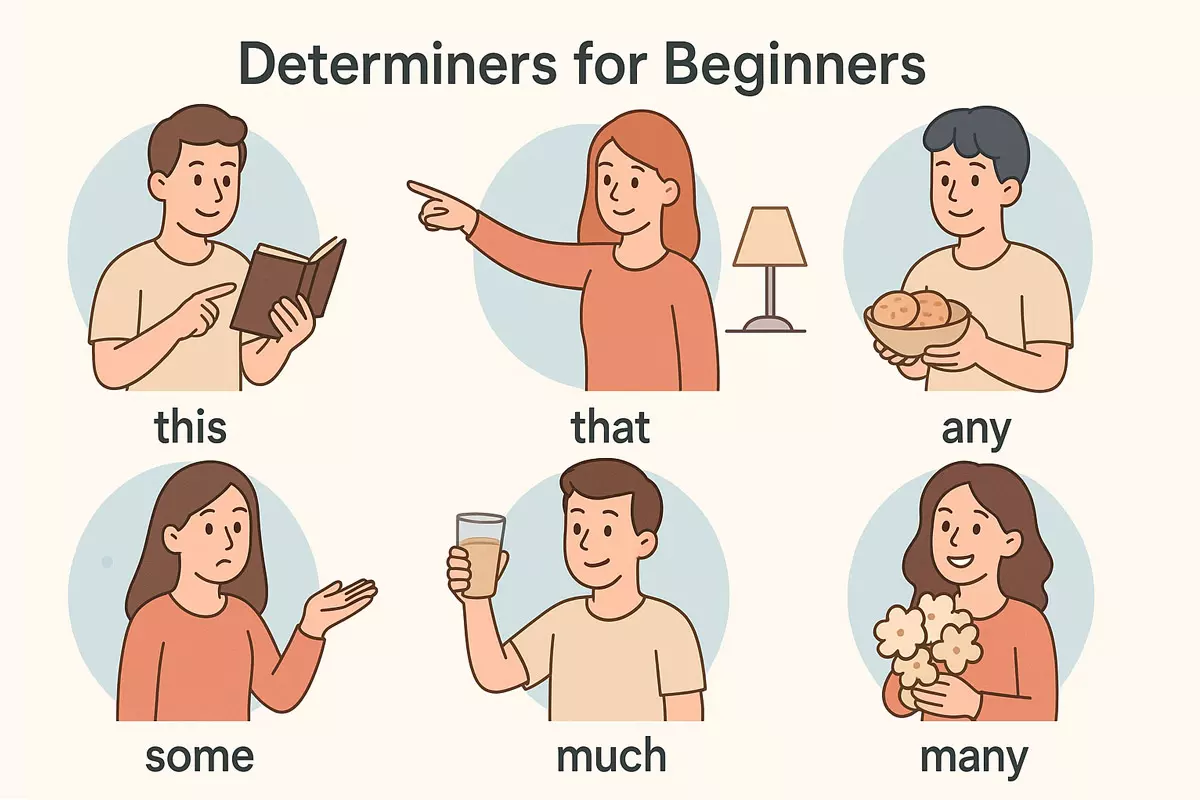 This article explains how determiners like this, that, some, any, much, and many work in sentences. It covers their use for distance, positivity or negativity, countable and uncountable nouns, and includes dialogues and practice exercises.
Becoming familiar with words like these, those, several, or a little can make using English much easier and more natural. For beginners, learning how these small words help to clarify meaning is a straightforward way to improve both confidence and communication skills. By practicing with them in everyday conversations, you’ll notice that expressing ideas becomes simpler and more precise, allowing you to connect better with others and understand English more clearly as you continue to learn.
What Determiners Do in Sentences
Determiners are words placed before nouns to give more information about which or how many things are meant. They help the listener or reader understand whether you’re talking about something specific or general, one or many, or if the noun is known or unknown. Without these words, sentences can sound incomplete or unclear.
Clarifying Which or How Many
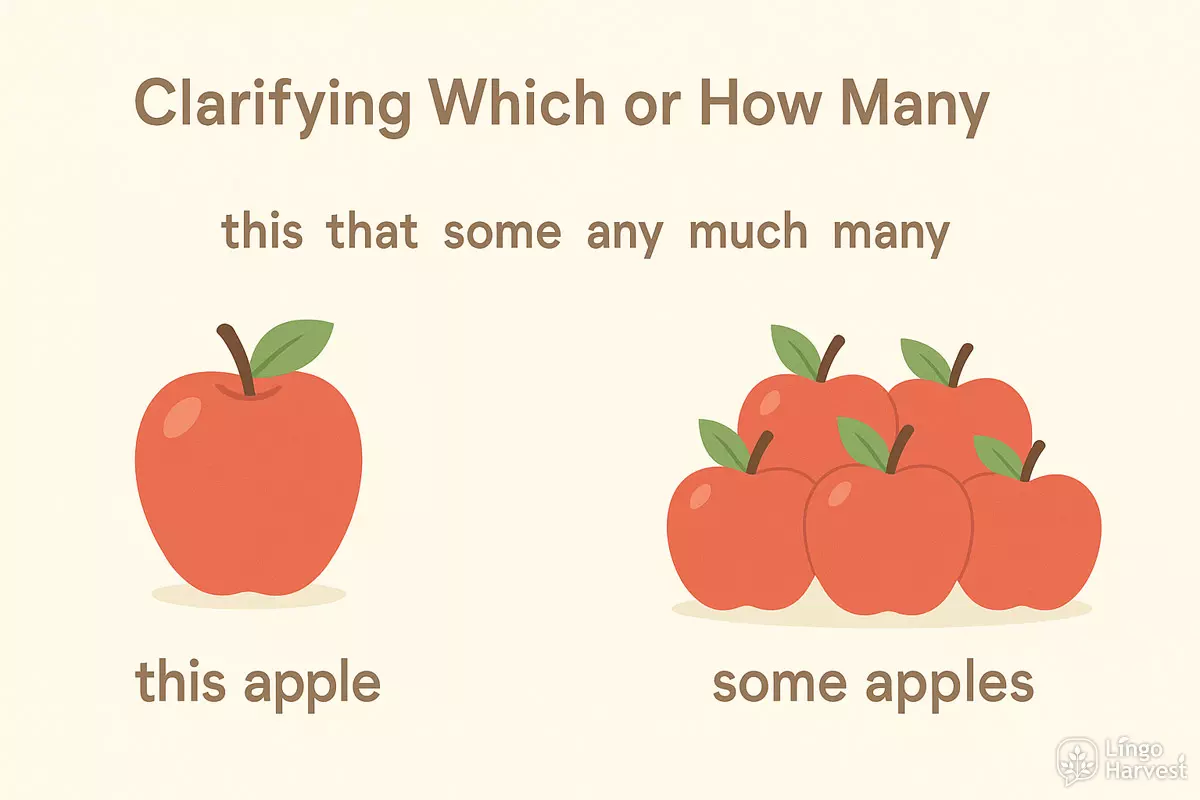
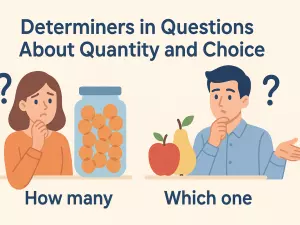
Words like this, that, some, any, much, and many set the context for nouns. For example, “this apple” points to one specific fruit, while “some apples” refers to an unspecified number. These small words answer questions such as: Which one? How much? How many?
- this book (a specific book close by)
- that chair (a particular chair farther away)
- some water (an unspecified amount)
- any questions (questions in general, not specific ones)
- much time (a large amount, usually with uncountable nouns)
- many people (a large number, used with countable nouns)
Types of Information Determiners Provide
Determiners can show:
- Quantity: many books, much sugar
- Specificity: this pen, that tree
- Uncertainty or generality: some advice, any bread
- Ownership or relation (though not covered in this section): my car, your idea
Examples in Everyday Contexts
Notice how these words change the meaning of sentences:
- Can I have some milk? → The amount is not specified.
- Do you have any brothers? → Asking about existence, not number.
- There isn’t much time left. → Time is running out.
- Many students passed the test. → A large number succeeded.
- I like this song. → Referring to a particular song.
- Who owns that house? → A specific house, not nearby.
Summary Table: How Common Determiners Function
| Determiner | Usual Use and Example |
|---|---|
| this | Specific, near in space or time Example: this car (the one here) |
| that | Specific, farther away Example: that mountain (not close) |
| some | Unspecified amount or number Example: some cookies (not all, not counted) |
| any | Used in questions/negatives for indefinite amount Example: any advice? (is there advice at all?) |
| much | Large quantity, uncountable nouns Example: much information |
| many | Large number, countable nouns Example: many ideas |
These words are essential for accurate and natural communication, guiding the listener to understand the amount, identity, or existence of what you’re talking about. With practice, using them becomes automatic, making your English clearer and more precise.
Near vs Far (this/that)
Understanding when to use "this" and "that" is all about distance—both physical and sometimes metaphorical. "This" points to something close to the speaker, while "that" refers to something farther away. These words are called demonstrative determiners, and they're used to clarify which object or idea someone is talking about in a sentence.
How to Decide: Proximity Matters
Use "this" for objects, people, or ideas that are near you, either physically or in conversation. "That" is chosen for things that are further away, or not immediately present. Sometimes, "this" can also mean something happening now, while "that" refers to something in the past.
- This book (the one I’m holding)
- That chair (the one across the room)
- This idea (the one we’re discussing now)
- That story (the one you told yesterday)
- This is delicious! (food in your hand)
- That was amazing! (event already finished)
- This car (the one next to you)
- That mountain (the one in the distance)
- This problem (the one we’re solving now)
- That solution (the one you suggested earlier)
- This room (where we are)
- That city (not here)
Simple Comparison Table
| Word | When to Use |
|---|---|
| this | For one thing/person close to you (or current topic) |
| that | For one thing/person farther away (or previous topic) |
Quick Tips
- If you can touch it or it’s happening now, use "this".
- If you need to point or it’s not present, use "that".
- In conversation, "this" often introduces a new subject; "that" refers back to something already mentioned.
Both words help listeners understand exactly what or whom you mean. Practice by looking around and describing objects with "this" or "that" based on their location.
Positive vs Negative (some/any)
Understanding when to use some and any can make conversation and writing in English much clearer. These words are both used to talk about an indefinite quantity, but their usage depends on whether the sentence is positive, negative, or a question.
When to Use some
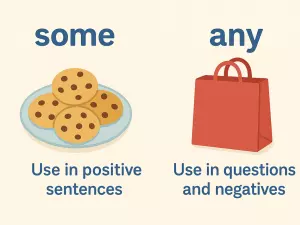
Some is most often used in positive statements, especially when offering or requesting things, or when the exact number is not important. It suggests a certain amount, but not all.
- There is some milk in the fridge.
- She bought some apples at the market.
- Can I have some water?
- We need some help with this project.
- He found some interesting books.
When to Use any
Any appears mostly in negative sentences and questions. It refers to one, some, or all, but usually in a more general or uncertain way. In questions, it asks if even a small amount exists; in negatives, it means none at all.
- There isn’t any bread left. ❌
- Do you have any questions?
- She didn’t bring any money.
- Are there any seats available?
- We don’t need any more paper.
Quick Comparison
| Sentence Type | Typical Word | Example |
|---|---|---|
| Positive statement | some | We have some juice. |
| Negative statement | any | We don’t have any juice. |
| Question | any (usually) | Do you have any juice? |
| Offers/requests | some (often) | Would you like some coffee? |
Special Cases
Sometimes, some can also be used in questions, especially when the speaker expects the answer to be “yes” or is making an offer or request. For example:
- Could I have some more tea?
- Would you like some cake?
Remember: any is rarely used in positive statements, except with words like “hardly” or “without.” By choosing the right word, you help your listener understand exactly what you mean.
Countable vs Uncountable (much/many)
Understanding when to use "much" or "many" depends on the type of noun you are describing. In English, nouns are either countable (things you can count individually) or uncountable (things you cannot count separately). This distinction is important for choosing the correct determiner.
When to Use "Many"
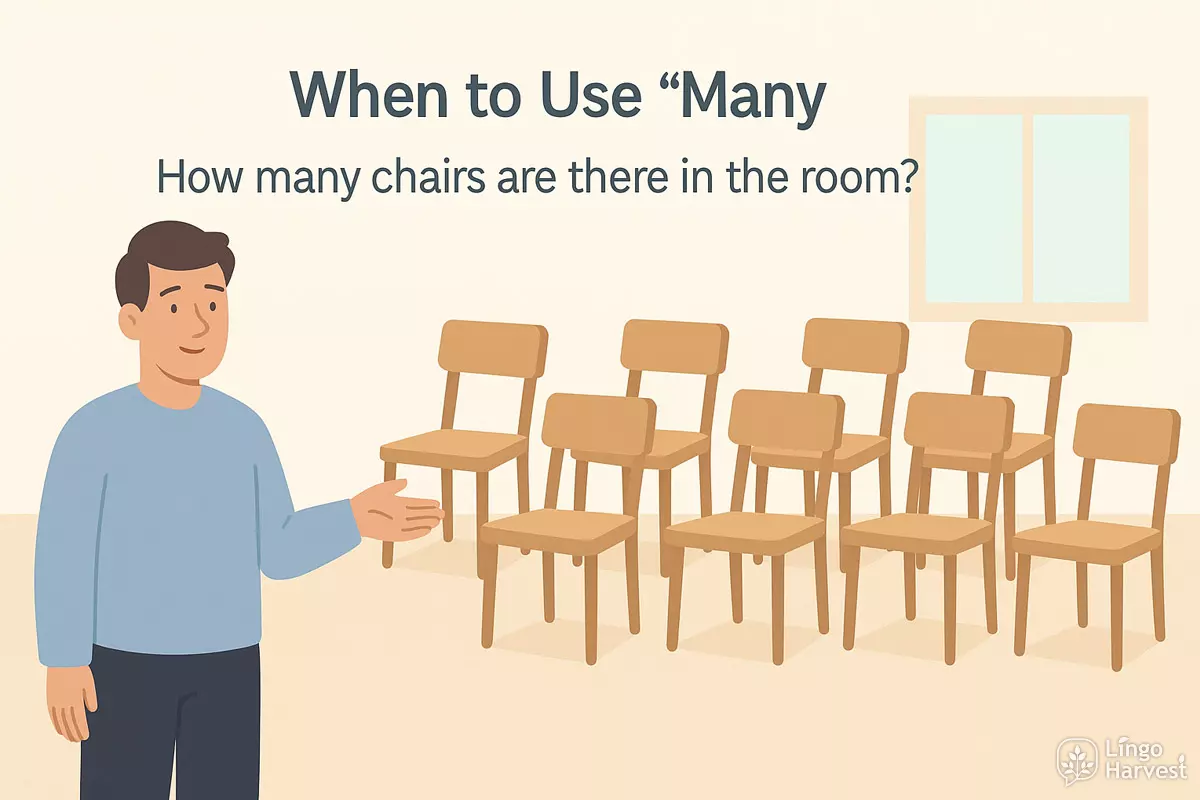
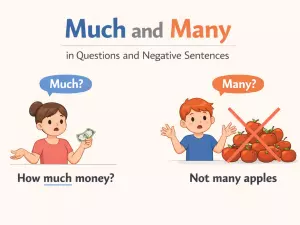
"Many" is used with plural countable nouns. If you can count the items one by one, "many" is the right choice. For example, you can say "many apples," "many books," or "many cars" because apples, books, and cars are all things you can count.
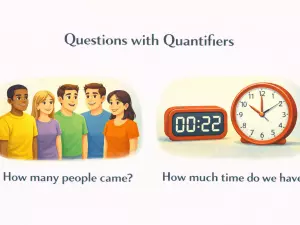
- How many chairs are there in the room?
- She has many friends at school.
- There are many reasons to visit the museum.
- Do you have many questions?
- Many students enjoy learning English.
- They bought many gifts for the holiday.
- We saw many birds in the park.
- How many pencils do you need?
- He knows many languages.
- Many people like chocolate.
When to Use "Much"
"Much" is used with uncountable nouns. These are things you cannot count individually, such as liquids, ideas, or abstract concepts. For example, "much water," "much information," or "much time."
- How much sugar do you want in your tea?
- She doesn’t have much patience.
- There isn’t much milk left.
- Do you have much experience with computers?
- He hasn’t got much money.
- We don’t have much time.
- Is there much traffic today?
- How much homework do you have?
- There isn’t much hope.
- Much effort is needed to succeed.
Quick Comparison Table
| Countable Nouns (Use "many") |
Uncountable Nouns (Use "much") |
|---|---|
| cars, apples, pens, ideas | water, money, rice, information |
| How many chairs? | How much time? |
| Do you have many friends? | Do you have much homework? |
| There aren’t many problems. | There isn’t much noise. |
Tips to Remember
- If you can add "s" or use a number before the noun (two apples, five books), use "many".
- If the noun is something you measure (milk, air, advice), use "much".
- For positive sentences, "much" is less common; use "a lot of" instead: "There is a lot of water."
- Both "much" and "many" are common in questions and negatives.
Choosing between "much" and "many" becomes easier with practice. Focus on whether you can count the noun or not, and the correct determiner will usually be clear.
Short Dialogues for Daily Use
Understanding how to use words like this, that, some, any, much, and many is essential in everyday conversation. Below are practical exchanges showing how these words appear in common situations, making it easier to recognize and practice them in context.
Examples of Everyday Exchanges
- A: Is this your pen?
B: No, that one is mine. - A: Do you have any milk left?
B: Yes, there is some in the fridge. - A: How many apples do we need?
B: We need five. - A: Is there much water in the bottle?
B: No, just a little. - A: Can I borrow some sugar?
B: Sure, take what you need. - A: Are these your keys?
B: No, those belong to Anna. - A: Did you see any good movies lately?
B: Yes, I watched some last weekend. - A: How much time do we have?
B: Only ten minutes. - A: Do you need any help with your homework?
B: Yes, I need some help with math. - A: Are there many people at the party?
B: No, only a few.
Quick Reference: Determiners in Action
| Question | Sample Answer |
|---|---|
| Is this your bag? | No, that is mine. |
| Do you want some tea? | Yes, please. |
| Are there any cookies left? | No, there aren’t any left. |
| How much money do you have? | Not much. |
| How many books did you buy? | I bought many books. |
These sample exchanges and reference patterns cover real-life situations, helping you get comfortable using basic determiners naturally. Practice using these structures to build confidence in your day-to-day conversations.
Practice: Fill and Create Sentences
Working with determiners like "this," "that," "some," "any," "much," and "many" helps you build clearer, more natural English sentences. Below, you’ll find a variety of practice activities to reinforce how and when to use each word correctly.
1. Complete the Sentences
Fill in the blanks with the correct determiner. Choose from: this, that, some, any, much, many.
- ______ apple is delicious. (You are holding the apple.)
- Do you have ______ questions?
- There isn’t ______ milk left in the fridge.
- ______ people like chocolate, but ______ people prefer vanilla.
- Can I have ______ water, please?
- I don’t see ______ cars on the street today.
- ______ book on the table is mine. (The book is near you.)
- She didn’t buy ______ bread at the store.
- ______ is my favorite song. (You are playing a song now.)
- Have you seen ______ good movies lately?
Show answers
- This apple is delicious.
- any
- much
- Many people like chocolate, but some people prefer vanilla.
- some
- many
- This book on the table is mine.
- any
- This is my favorite song.
- any
2. Create Your Own Sentences
Make sentences using each determiner below. Try to use different topics (food, school, hobbies, etc.).
- this
- that
- some
- any
- much
- many
Show answers
- This cake is homemade.
- That movie was interesting.
- I need some help with my homework.
- Do you have any brothers or sisters?
- There isn’t much time left before the test.
- Many students enjoy reading.
3. Quick Reference Table: When to Use Each Word
| Determiner | When to Use | Example Sentence |
|---|---|---|
| this | Singular, near you (time/place) | This chair is comfortable. |
| that | Singular, far from you (time/place) | That mountain looks high. |
| some | Positive/neutral, quantity, uncountable or plural | She bought some apples. |
| any | Negative or question, uncountable or plural | Do you have any sugar? |
| much | Uncountable, usually negative/question | Is there much rain today? |
| many | Countable plural, usually negative/question | Are there many students in the class? |
4. Spot the Mistake
Each sentence below has a mistake. Find and correct it.
- I don’t have much friends.
- Can I have any water?
- That apples are fresh.
- Do you see much birds in the park?
Show answers
- I don’t have many friends.
- Can I have some water?
- Those apples are fresh.
- Do you see many birds in the park?
Regular practice with these words makes your English clearer and more precise. Try to use each one naturally in your daily speech or writing.