Passive Gerunds and Passive Infinitives Explained

 This article explains what passive gerunds and passive infinitives mean, how to form being done and to be done, and when English prefers passive over active. It shows patterns after verbs and prepositions, plus after nouns and adjectives, clears up common mix-ups, and ends with practice converting active sentences into passive forms.
- What passive gerunds and passive infinitives mean in English grammar
- How to form 'being done' and 'to be done' structures correctly
- When English uses passive forms instead of active forms
- Sentence patterns where passive gerunds follow verbs and prepositions
- Situations where passive infinitives appear after nouns and adjectives
- Common learner confusion between active and passive verb forms
- Practice exercises: convert active sentences into passive gerunds and infinitives
To show that an action happens to someone or something, use passive gerunds and infinitives for clear, natural English. This lets you emphasize the result instead of the doer, as in wanting to be invited or disliking being interrupted. Recognizing these patterns helps you see why some sentences sound smoother and choose the right form without overthinking grammar.
What passive gerunds and passive infinitives mean in English grammar
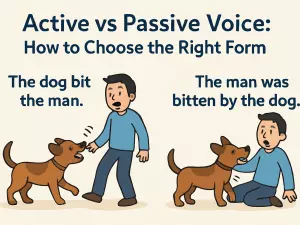
Passive gerunds and passive infinitives are verb forms that keep the -ing or to-form, but shift the focus to the receiver of an action (the thing or person affected), not the doer. They are useful when the agent is unknown, unimportant, obvious from context, or intentionally omitted.
Core idea: form + meaning
A passive non-finite form combines being or to be with a past participle. The meaning stays “the subject is acted on,” even though the verb is not fully conjugated for tense like a normal finite verb.
- Passive gerund form:
being + past participle(e.g.,being invited,being repaired) - Passive infinitive form:
to be + past participle(e.g.,to be invited,to be repaired) - Meaning shift: the grammatical subject (or implied subject) is the receiver of the action, not the performer.
When English chooses the passive -ing form
A passive gerund behaves like a noun phrase, so it often appears where English normally uses an -ing form: after prepositions, as the object of certain verbs, or as the subject of a clause. It answers “the act of being done to.”
- After prepositions:
She apologized for being late./He left without being seen. - After verbs that take -ing:
She dislikes being interrupted./They avoided being photographed. - As a subject (more formal):
Being selected for the team is an honor. - With possessives (more formal):
I resented his being promoted so quickly. - Typical meaning: the experience or event matters more than who caused it.
When English chooses the passive to-form
A passive infinitive often expresses purpose, expectation, obligation, or plans. It commonly follows adjectives, certain verbs, and nouns that point forward to an action that will happen to someone or something.
- After adjectives:
The report is ready to be submitted./She is likely to be promoted. - After verbs with an object:
They want the issue to be resolved./We need the form to be signed. - After nouns:
He has a lot of work to be done./There are rules to be followed. - With “too/enough” patterns:
The box is too heavy to be lifted./The file is small enough to be emailed. - Typical meaning: a future or intended action affecting the subject.
Common patterns and example set
These examples show how the passive versions keep the same structure as active gerunds/infinitives, but reverse the focus onto the receiver of the action.
He hates being ignored.She remembers being praised by her teacher.They complained about being overcharged.I’m tired of being blamed for everything.He left without being noticed.Being told the truth helped.The package needs to be delivered today.She expects to be contacted soon.The meeting is scheduled to be postponed.We’d like the room to be cleaned before noon.There’s nothing to be done.The form is ready to be printed.He is the next candidate to be interviewed.This issue deserves to be discussed.The device is designed to be used outdoors.
Quick accuracy notes (common learner errors)
- ✅
He dislikes being criticized.→ not ❌He dislikes to be criticized.(becausedislikenormally takes -ing) - ✅
The document needs to be signed.→ not ❌The document needs being signed.(possible in some dialects, but less common and more limited) - ✅
She hopes to be invited.→ not ❌She hopes being invited.(becausehopetakes an infinitive)
How to form 'being done' and 'to be done' structures correctly

Use the passive gerund and passive infinitive when the subject (or the implied subject) receives the action rather than doing it. The choice depends on whether the verb pattern requires a gerund (-ing) or an infinitive (to + base verb), and on whether you are talking about an action in progress, a general fact, or an expected/required action.
Core building blocks
- Passive gerund form: being + past participle (V3) → being asked / being repaired / being chosen
- Passive infinitive form: to be + past participle (V3) → to be asked / to be repaired / to be chosen
- Pick V3 (past participle) carefully: write → written, take → taken, make → made, see → seen.
When to use the passive gerund (being + V3)
Choose being + V3 when the grammar calls for a gerund (after certain verbs, prepositions, and set expressions). It often highlights the experience of receiving the action.
- After verbs that take a gerund: avoid / dislike / hate / love / enjoy / consider / suggest (when the meaning is passive).
- After prepositions: in / on / at / for / about / of / without / before / after.
- After set phrases like be worth and there’s no point (passive meaning).
- When you want to emphasize an ongoing or repeated process: being monitored, being questioned.
When to use the passive infinitive (to be + V3)
Choose to be + V3 when the grammar calls for an infinitive, especially for plans, requirements, expectations, or purpose. It often sounds more formal and common in instructions and reporting.
- After adjectives: expected / required / likely / ready / happy / surprised (with passive meaning).
- After nouns expressing plans or duties: a decision / a plan / a request / a duty.
- After verbs that take an infinitive: need / want / hope / expect / plan / agree / decide (when the receiver of the action is the subject).
- To express purpose: to be used, to be displayed, to be delivered.
Common patterns with examples (correct vs. incorrect)
- ✅ She avoided being seen. ❌ She avoided to be seen.
- ✅ He insisted on being paid on time. ❌ He insisted on to be paid on time.
- ✅ The report needs to be checked. ❌ The report needs being checked. (possible in some contexts, but not the usual pattern with need)
- ✅ These forms are required to be signed. ❌ These forms are required being signed.
- ✅ I’m looking forward to being invited. ❌ I’m looking forward to be invited.
- ✅ It’s important to be informed. ❌ It’s important being informed.
Expanded example bank (useful verb + pattern combinations)
- apologize for being late → apologize for being misunderstood
- complain about being ignored
- be interested in being offered a role
- be responsible for being supervised (rare; usually rephrase) / be responsible for being supervised properly
- approve of being filmed
- object to being treated unfairly
- admit to being mistaken → admit to being misled
- there’s no point in being upset → there’s no point in being blamed
- be worth being discussed (also common: worth discussing)
- expect to be promoted
- need to be repaired
- want to be included
- hope to be chosen
- plan to be interviewed
- be scheduled to be delivered
- be likely to be delayed
Quick accuracy checks
- If there is a preposition right before the verb form, it almost always needs a gerund: about / for / of / to / in → being + V3.
- If the structure is adjective + infinitive (e.g., ready, likely, expected), use to be + V3 for a passive meaning.
- Don’t drop being in the passive gerund: ❌ He denied punished. ✅ He denied being punished.
- Don’t use to be after verbs that require a gerund: ❌ She suggested to be helped. ✅ She suggested being helped.
When English uses passive forms instead of active forms
English often chooses a passive gerund or passive infinitive when the focus is on the receiver of an action (the thing or person affected), or when the doer is unknown, unimportant, or deliberately left out. This is common after certain verbs, adjectives, and fixed patterns where the subject is not the agent.
Common situations and patterns
- When the subject is the “victim” or receiver of the action (you care more about what happens to someone/something than who does it):
✅ She hates being interrupted.
✅ The files need to be backed up. - When the agent is unknown or irrelevant (you don’t know or don’t need to say who does it):
✅ He expects to be contacted soon.
✅ I remember being told about the change. - When the agent is obvious from context (so naming it would be repetitive):
✅ She wants to be promoted this year. (by her employer) - After verbs that describe likes/dislikes about experiences (gerund focus on what happens to the subject):
✅ I don’t like being rushed.
✅ They enjoy being praised. - After verbs of avoiding and risk (gerund is common; passive highlights the consequence):
✅ He avoided being seen.
✅ She risked being blamed. - After “need / want / deserve / require” when the meaning is “someone should do this to it” (passive infinitive is explicit and formal):
✅ The car needs to be repaired.
✅ These rules deserve to be explained clearly. - With “need + -ing” as an alternative to a passive infinitive (common in everyday English; same meaning):
✅ The car needs repairing = needs to be repaired.
✅ The report needs checking = needs to be checked. - After adjectives that describe feelings about treatment (passive infinitive describes what should happen to the subject):
✅ I’m happy to be included.
✅ She was shocked to be ignored. - After “be + adjective + to-infinitive” when the subject is the target (common with evaluative adjectives):
✅ The candidate is likely to be rejected.
✅ The package is ready to be shipped. - With reporting and perception verbs when the subject is what people say/think/see happening (often in formal style):
✅ The minister is believed to be involved.
✅ The suspect was seen to be taken into the building. (more formal than “seen being taken”) - When you want to avoid blaming someone (passive helps keep the tone neutral):
✅ Mistakes should be admitted rather than being hidden.
✅ The issue needs to be addressed. - In instructions, rules, and formal requirements (passive infinitive sounds impersonal and procedural):
✅ All visitors are required to be registered.
✅ Forms must be completed before being submitted. - When the active version would create an unnatural or unclear subject (passive keeps the sentence logical):
✅ I hope to be invited.
❌ I hope to invite. (different meaning: I invite others) - When contrasting two possible meanings (active vs. passive changes who does the action):
✅ She wants to hire a designer. (she will hire someone)
✅ She wants to be hired as a designer. (someone will hire her)
Quick accuracy checks
- If the subject is receiving the action, choose being + past participle (gerund) or to be + past participle (infinitive).
- If switching to an active form changes the meaning (who does the action), the passive form is probably the intended one.
- If you can add “by someone” naturally (even if you won’t), a passive structure is usually a good fit: “to be approved (by the manager)”, “being watched (by security)”.
Sentence patterns where passive gerunds follow verbs and prepositions

Use a passive gerund (being + past participle) when the -ing form is required by the grammar, but the meaning is passive: the subject experiences the action rather than doing it. This often happens after certain verbs, after prepositions, and in fixed expressions where an -ing clause functions like a noun.
1) After verbs that take a gerund object
Many verbs are followed by an -ing form. When the action is done to the person/thing in the -ing clause, choose the passive gerund.
- avoid: She avoided being recognized in the crowd.
- dislike: He dislikes being interrupted during meetings.
- enjoy: They enjoyed being invited to the opening.
- hate: I hate being told what to do.
- love: She loves being praised for her work.
- mind: Do you mind being asked a few questions?
- miss: He misses being consulted on decisions.
- prefer: We prefer being informed in advance.
- regret: She regrets being seen with him.
- resist: The team resisted being blamed for the delay.
- risk: You risk being fined if you park there.
- suggest: They suggested being given more time.
- tolerate: He won’t tolerate being spoken to like that.
2) After prepositions (including verb + preposition combinations)
After a preposition, English uses a gerund, not an infinitive. If the meaning is passive, use being + past participle.
- apologize for: She apologized for being late, but she also apologized for being misunderstood.
- complain about: He complained about being overcharged.
- insist on: They insisted on being paid immediately.
- object to: I object to being treated unfairly.
- think about: She thought about being promoted.
- worry about: He worries about being replaced.
- be responsible for: The manager is responsible for being informed of any changes.
- be used to: I’m used to being asked to explain my choices.
- be afraid of: She’s afraid of being judged.
- be tired of: They’re tired of being ignored.
- by: He improved his chances by being prepared.
- without: She left without being noticed.
3) After “there’s no point (in) …”, “it’s worth …”, and similar frames
These patterns require an -ing clause. When the focus is on receiving the action, the passive gerund is the natural choice.
- There’s no point (in): There’s no point in being upset about it now.
- It’s worth: It’s worth being checked by a professional.
- It’s no use / It’s useless: It’s no use being angry after the decision is made.
- It’s (not) worth: It’s not worth being criticized over a minor mistake.
- What’s the use of: What’s the use of being chosen if you can’t attend?
4) Passive gerunds with possessives and object forms
When the -ing clause has its own “subject,” it can appear with a possessive (more formal) or an object pronoun (more common in speech). Both can be used with passive gerunds.
- More formal: I resented his being promoted so quickly.
- More common: I resented him being promoted so quickly.
- More formal: We were surprised by their being invited at the last minute.
- More common: We were surprised by them being invited at the last minute.
5) Quick accuracy checks (common errors)
- ✅ I’m tired of being blamed. ❌ I’m tired of to be blamed. (Preposition + gerund, not infinitive.)
- ✅ She avoided being seen. ❌ She avoided to be seen. (Avoid + gerund pattern.)
- ✅ They insisted on being paid. ❌ They insisted on to be paid. (On + gerund pattern.)
- ✅ He dislikes being told what to do. ❌ He dislikes to be told what to do. (Dislike + gerund pattern.)
Situations where passive infinitives appear after nouns and adjectives
Passive infinitives (to be + past participle) are common after certain nouns and adjectives when the focus is on what should happen to something or someone, rather than who will do it. This pattern often expresses requirements, expectations, or readiness, and it frequently appears in formal instructions and careful descriptions.
Noun + passive infinitive: common patterns
After many abstract nouns, the passive infinitive describes an action that is expected, required, planned, or requested to happen to the noun. This is especially natural when the agent is unknown, unimportant, or obvious from context.
- plan + to be + past participle: The plan is to be approved by the board.
- decision: The decision is to be announced tomorrow.
- proposal: The proposal is to be reviewed next week.
- request: We received a request for the document to be translated.
- order: There was an order for the building to be evacuated.
- instruction: The instructions say the form is to be completed in black ink.
- requirement: One requirement is for ID to be shown at reception.
- expectation: The expectation is for all devices to be switched off during the exam.
- arrangement: The arrangement is for the goods to be delivered on Friday.
- agreement: The agreement states the data is to be stored securely.
- condition: A condition of entry is for bags to be checked.
- aim/goal: The goal is for the process to be simplified.
- schedule/timetable: The schedule indicates the road is to be closed overnight.
- notice: The notice said the area was to be kept clear.
Adjective + passive infinitive: typical meanings
After adjectives, the passive infinitive often signals that something is ready, due, intended, or suitable to receive an action. This is useful when you want to highlight a state or condition rather than an actor.
- due: The report is due to be submitted by noon.
- scheduled: The patient is scheduled to be discharged today.
- expected: Prices are expected to be reduced soon.
- likely: The application is likely to be rejected without supporting documents.
- set: The rules are set to be updated in April.
- ready: The files are ready to be uploaded.
- prepared: The room is prepared to be inspected.
- available: The results will be available to be viewed online.
- eligible: The item is eligible to be returned within 30 days.
- safe: The water is safe to be consumed after boiling.
- fit: The machine is fit to be used once the guard is replaced.
- easy/difficult: The form is easy to be misunderstood without examples (often improved by rephrasing; see note below).
When the passive infinitive is preferred (and when it sounds heavy)
- Prefer the passive infinitive when the doer is unknown or irrelevant: The documents are due to be signed today.
- Prefer it in formal notices and procedures: The equipment is to be returned after use.
- Prefer it when you want the noun to stay the subject: The samples are expected to be tested twice.
- Consider rephrasing with common “easy/hard” adjectives, which often sound more natural in an active meaning: ✅ The form is easy to misunderstand (meaning “people can misunderstand it”). ❌ The form is easy to be misunderstood (grammatical, but often wordy).
Quick pattern reminders
- Structure: noun/adjective + to be + past participle (to be reviewed, to be completed, to be delivered).
- Meaning: focus on what should happen to the subject, not who does it.
- Common contexts: policies, schedules, instructions, announcements, and administrative writing.
Common learner confusion between active and passive verb forms
Learners often mix up who is doing the action (the agent) and who receives it (the object) when a verb is turned into a gerund or infinitive. A quick check helps: if the subject receives the action, you usually need a passive form (being + past participle / to be + past participle). If the subject does the action, an active form is usually correct.
Frequent mix-ups and how to fix them
- ❌ I don’t like to criticize. (meaning: other people criticize me) → ✅ I don’t like to be criticized.
- ❌ She hates being interrupting. → ✅ She hates being interrupted. (passive gerund: she receives the action)
- ❌ He expects being invited. → ✅ He expects to be invited. (expect + infinitive is the common pattern)
- ❌ They suggested to be postponed. → ✅ They suggested being postponed. (suggest + gerund; passive if it receives the action)
- ❌ I remember to be told the news. (meaning: I remember the past event) → ✅ I remember being told the news.
- ❌ He forgot being invited. (meaning: he didn’t remember to do an action) → ✅ He forgot to be invited is not logical; better: He forgot to invite me (active meaning changes the structure).
- ❌ The car needs to repair. → ✅ The car needs to be repaired. (or: The car needs repairing.)
- ❌ This form requires to sign. → ✅ This form requires you to sign. (active with an object) / This form requires being signed. (passive gerund, less common and more formal)
- ❌ I’m looking forward to meet you. → ✅ I’m looking forward to meeting you. (to = preposition here, so use a gerund)
- ❌ I’m looking forward to being meet by the team. → ✅ I’m looking forward to being met by the team.
- ❌ She insisted to be paid. → ✅ She insisted on being paid. (insist on + gerund; passive if she receives payment)
- ❌ He apologized to be late. → ✅ He apologized for being late.
- ❌ I’m happy being chosen. (possible but often not the intended structure) → ✅ I’m happy to be chosen. (common adjective + infinitive pattern)
- ❌ It’s important being informed. → ✅ It’s important to be informed. (common: it + be + adjective + infinitive)
- ❌ He denied to be involved. → ✅ He denied being involved. (deny + gerund)
- ❌ She agreed being promoted. → ✅ She agreed to be promoted. (agree + infinitive; passive if she receives promotion)
Two quick tests that prevent most errors
- Receiver test: If the subject is the receiver of the action, choose a passive form.
- He enjoyed being praised. (he receives praise)
- He enjoyed praising his team. (he gives praise)
- Verb-pattern test: Some verbs strongly prefer a gerund or an infinitive; the passive choice comes after you pick the right pattern.
- suggest / deny / avoid → gerund: avoided being seen
- expect / agree / hope → infinitive: expected to be seen
- look forward to / insist on (preposition + -ing) → insisted on being paid
Meaning changes that look like “grammar mistakes”
- remember / forget: remember doing = recall a past event; remember to do = don’t forget a duty. Passive forms follow the same meaning:
- I remember being warned. (past event)
- Remember to be seated by 7. (instruction; passive infinitive)
- stop: stop doing = quit an activity; stop to do = pause in order to do something else.
- He stopped being interviewed. (the interviews ended)
- He stopped to be interviewed is usually unnatural; more natural: He stopped to give an interview.
Practice exercises: convert active sentences into passive gerunds and infinitives
Use these items to practice changing an active idea into a passive form with a gerund (being + past participle) or an infinitive (to be + past participle). Decide which structure fits the context: gerunds often follow prepositions and certain verbs, while infinitives often follow adjectives, nouns, and verbs like want/need/expect.
Exercises
- Rewrite using a passive gerund: “I dislike people interrupting me.”
- Rewrite using a passive gerund: “She apologized for the staff ignoring the email.”
- Rewrite using a passive gerund: “They talked about the manager changing the schedule.”
- Rewrite using a passive gerund: “He insisted on the team finishing the report today.”
- Rewrite using a passive gerund: “We’re worried about someone stealing the data.”
- Rewrite using a passive gerund: “I’m tired of the neighbors playing loud music.”
- Rewrite using a passive gerund: “She’s proud of the committee selecting her proposal.”
- Rewrite using a passive gerund: “They were accused of the police planting evidence.”
- Rewrite using a passive gerund: “He left without anyone noticing him.”
- Rewrite using a passive gerund: “I remember someone telling me the news.”
- Rewrite using a passive infinitive: “The company expects the auditors to review the accounts.”
- Rewrite using a passive infinitive: “She wants the mechanic to fix the brakes today.”
- Rewrite using a passive infinitive: “We need someone to update the website.”
- Rewrite using a passive infinitive: “He hopes the editor will publish his article.”
- Rewrite using a passive infinitive: “They arranged for the courier to deliver the package by noon.”
- Rewrite using a passive infinitive: “The teacher told the students to submit the forms.”
- Rewrite using a passive infinitive: “It’s important that people follow the instructions.”
- Rewrite using a passive infinitive: “The report is likely to convince the board.”
- Rewrite using a passive infinitive: “There are too many tasks for one person to complete.”
- Rewrite using a passive infinitive: “This issue requires the team to address it immediately.”
Show answers
- I dislike being interrupted.
- She apologized for the email being ignored (by the staff).
- They talked about the schedule being changed (by the manager).
- He insisted on the report being finished today.
- We’re worried about the data being stolen.
- I’m tired of loud music being played (by the neighbors).
- She’s proud of her proposal being selected (by the committee).
- They were accused of evidence being planted (by the police).
- He left without being noticed.
- I remember being told the news.
- The company expects the accounts to be reviewed (by the auditors).
- She wants the brakes to be fixed today.
- We need the website to be updated.
- He hopes his article to be published. ❌ → He hopes his article will be published / He hopes to have his article published.
- They arranged for the package to be delivered by noon.
- The teacher told the students for the forms to be submitted. ❌ → The teacher told the students to submit the forms / The teacher told the students that the forms had to be submitted.
- It’s important for the instructions to be followed.
- The board is likely to be convinced by the report.
- There are too many tasks to be completed by one person.
- This issue requires immediate attention. ❌ → This issue requires being addressed immediately / This issue needs to be addressed immediately.
Quick pattern reminders (to check your work)
- After a preposition, use a gerund: “about,” “for,” “without,” “instead of” → “about being + past participle.”
- Common triggers for the gerund pattern: “apologize for,” “insist on,” “be tired of,” “be worried about,” “be accused of.”
- Infinitives often follow adjectives/nouns: “important,” “necessary,” “likely,” “a chance” → “to be + past participle.”
- If the original active sentence uses “someone/people” as a vague subject, passive forms help focus on the action and the receiver.
- Not every sentence can be turned into a passive infinitive naturally; sometimes you need “will be” or a different structure (as shown in items 14, 16, and 20).