How to Ask Permission in English Using Modal Verbs

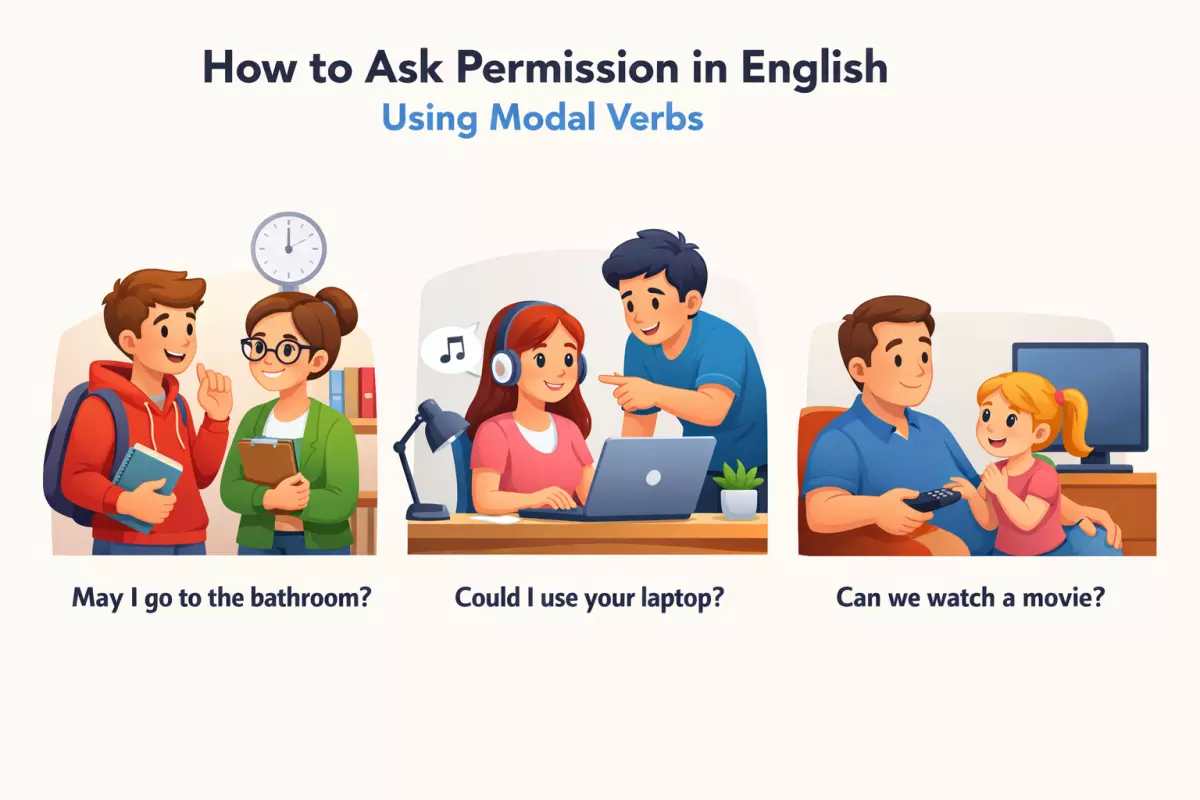 Here we the modal verbs used to ask permission in English, focusing on how can, could, and may differ in politeness and formality, and when may sounds more formal. It also explains how tone affects these questions, with everyday examples, common learner mistakes, and practice exercises.
- The modal verbs most often used to ask for permission in English
- How can, could, and may differ in politeness and formality
- Situations where may sounds more formal than can or could
- How tone and intonation influence permission questions
- Examples of permission requests in everyday conversation
- Typical learner mistakes when forming permission questions
- Exercises and practice activities for asking permission with modal verbs
Polite permission in English often comes down to choosing the right modal verb, which can make you sound friendly, respectful, or too direct. In everyday moments like borrowing a phone, opening a window, or asking a teacher, small wording changes matter. This article shows how to shape requests to fit the relationship and setting, so your English sounds natural and confident.
The modal verbs most often used to ask for permission in English
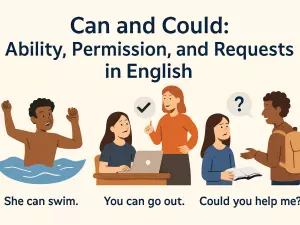
English uses a small set of modal verbs to make permission questions sound natural. The choice mainly depends on formality (casual vs. polite) and on whether you are asking for permission now or talking about permission in general.
-
Can (common and direct)
Pattern: Can + subject + base verb…?
Use can for everyday situations with friends, classmates, coworkers you know well, or informal service interactions.
- Can I borrow your pen?
- Can we sit here?
- Can I open the window?
- Can I use your phone for a minute?
- Can I leave a bit early today?
Notes: In very formal contexts, can may sound too direct. It is still correct; it just sets a casual tone.
-
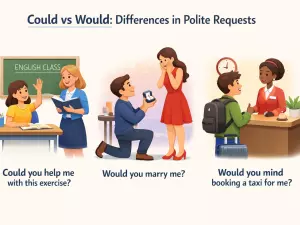
Could (polite and slightly more formal)
Pattern: Could + subject + base verb…?
Could is a standard way to soften a request. It is common in workplaces, with strangers, and in customer service.
- Could I ask you a quick question?
- Could we reschedule the meeting?
- Could I take tomorrow off?
- Could I use this seat?
- Could we have a look at the menu?
Notes: could does not mean “past” here; it signals extra politeness.
-
May (formal and respectful)
Pattern: May + subject + base verb…?
May is often used in formal writing, official situations, or when you want to sound especially respectful.
- May I come in?
- May I speak with you privately?
- May we begin the presentation?
- May I have your permission to record this call?
- May I take a day of leave next week?
Notes: In casual conversation, may can sound stiff or old-fashioned, but it is still widely understood.
-
Might (very tentative, extra soft)
Pattern: Might + subject + base verb…?
Might makes the request feel very careful or hesitant. It is less common than could for permission, but useful when you want to minimize pressure.
- Might I make a suggestion?
- Might I step out for a moment?
- Might we discuss this after the meeting?
- Might I ask for an extension?
Notes: might is often used in formal speech or when you are being especially diplomatic.
-
Must (asking for permission by asking about rules)
Pattern: Must + subject + base verb…? / Do I have to…?
Must is not a typical “permission” modal, but it appears when you ask whether something is required before you are allowed to do it. This is common in instructions, procedures, and regulations.
- Must I sign in before entering?
- Must we wear safety goggles in this area?
- Do I have to fill out this form to access the building?
- Do we have to book in advance to attend?
Notes: If you want a straightforward permission request, prefer can/could/may. Use must when the real question is about requirements.
In most real-life situations, can and could cover almost everything. Choose may when the setting is formal, and use might when you want the request to sound especially gentle.
How can, could, and may differ in politeness and formality
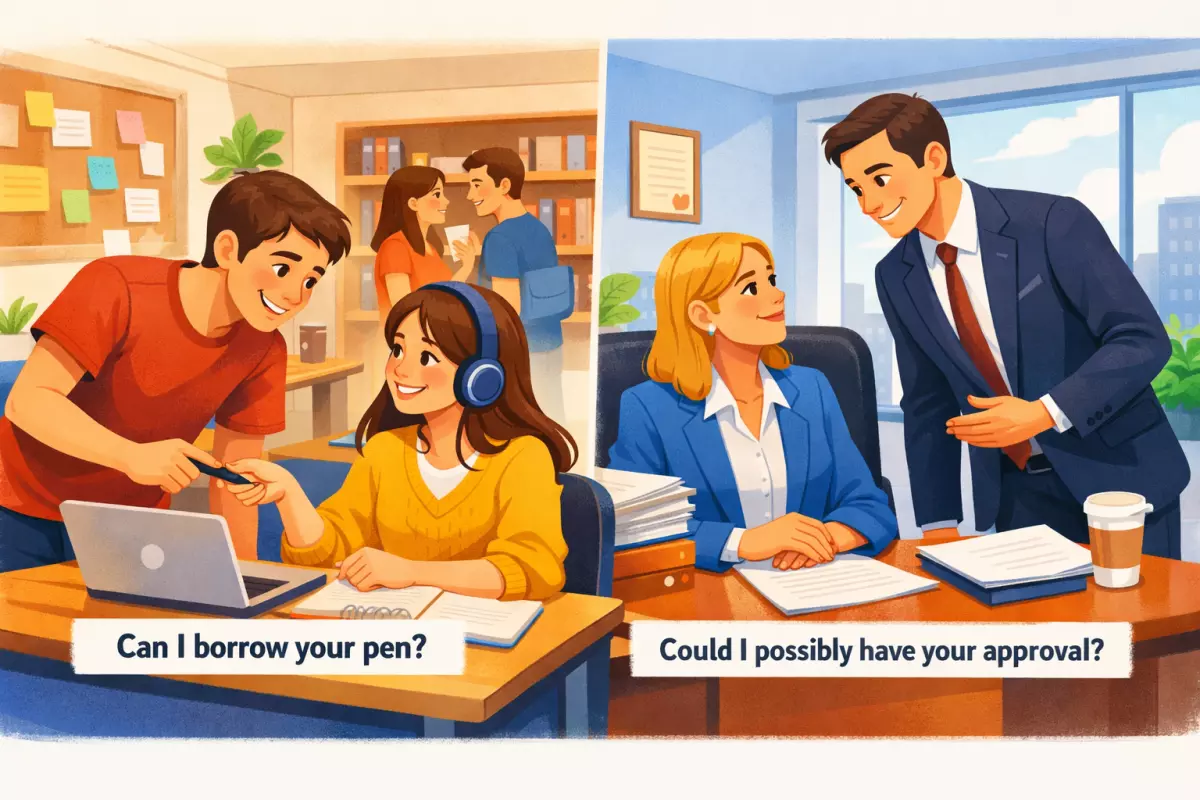
When you ask for permission in English, the modal verb you choose signals how direct you want to sound and how formal the situation is. Can is the most neutral and everyday option, could adds distance and softens the request, and may is more formal and traditional (and can sound strict in some contexts).
| Modal | Typical tone | Best for | Example permission request |
|---|---|---|---|
| can | Direct, neutral, everyday | Friends, classmates, informal workplace moments | Can I borrow your pen? |
| could | Polite, softer, less pushy | Customer service, colleagues, first-time requests | Could I leave a little early today? |
| may | Formal, traditional, sometimes “rule-based” | Formal emails, official settings, asking a superior | May I speak with the manager? |
| may (giving permission) | Formal approval | Rules, announcements, written policies | You may begin the exam now. |
Common patterns and what they imply
- Can I + base verb? Direct request; friendly and efficient in casual situations.
- Can we + base verb? Inclusive request; often used to check group permission: “Can we start?”
- Could I + base verb? Softer than can; good when you want to sound respectful or cautious.
- Could we + base verb? Polite group request, often used in meetings: “Could we move to the next slide?”
- May I + base verb? Formal request; can sound old-fashioned in relaxed conversation.
- May we + base verb? Formal group request, often in ceremonies or formal events.
- Can I please + base verb? Adds warmth; still fairly direct.
- Could I please + base verb? Very common “safe” choice for polite requests.
- May I please + base verb? Extra formal; best in writing or official situations.
- Can I just + base verb? Minimizes the request; can sound casual: “Can I just ask one question?”
- Could I just + base verb? Soft minimizer; useful when interrupting: “Could I just add something?”
- May I ask + question? Formal way to request permission to ask something: “May I ask a quick question?”
Choosing the right level for the situation
- Everyday conversation: Prefer can for simple, low-stakes permission. It sounds natural and not overly careful.
- Workplace with colleagues: could often fits best because it’s polite without sounding stiff.
- Speaking to a customer, client, or someone senior: could is usually the safest spoken option; may can work when the context is clearly formal.
- Formal writing (emails, requests to institutions): may can signal formality, but many modern workplaces still prefer could because it sounds professional and natural.
- Rules and official permission: may is common when stating what is allowed: “Employees may park here.”
Notes on common learner issues
- ✅ May I come in? / ✅ Could I come in? / ✅ Can I come in? (all possible; tone differs)
- ❌ May I to come in? → ✅ May I come in? (modals take the base verb, not “to”)
- “Can” is not rude by itself: It can sound too blunt mainly when the situation is sensitive, the request is big, or the listener expects more formality.
- “May” can sound strict: In casual speech, it may feel like you are quoting rules or being overly formal, even if you intend to be polite.
- Intonation matters: A friendly tone can make can sound polite; a flat tone can make any modal sound demanding.
Situations where may sounds more formal than can or could
May is often chosen when you want your request to sound more official, careful, or rule-based. It’s common in writing, in institutional settings, and in situations where the speaker wants to avoid sounding too direct. In many everyday conversations, can or could feels more natural, but may still appears in specific contexts.
Common contexts where “may” fits best
- Official or institutional communication (schools, workplaces, government, customer service): “May I speak with the manager?”
- Requests to people you don’t know (especially in more formal cultures or settings): “May I ask you a question?”
- When you want to sound especially respectful (ceremonial or polite phrasing): “May I offer you a seat?”
- Written requests (emails, letters, forms): “May I request an extension?”
- Public-facing announcements (signs, notices, scripted messages): “You may begin boarding now.”
- Professional service interactions (reception desks, hotels, clinics): “May I see your ID, please?”
- When asking permission to do something that affects rules or procedures: “May I leave early today?”
- When asking permission in a meeting (turn-taking, interruptions): “May I add something here?”
- When requesting access to restricted spaces or materials: “May I enter the lab?”
- When you want to reduce pressure by sounding less casual and more measured: “May I suggest an alternative?”
- When addressing seniority or rank (formal workplace hierarchies): “May I have your approval?”
- When the request is sensitive (privacy, personal topics): “May I ask how you’re feeling?”
Useful patterns with “may” (and what they signal)
- May I + base verb…? → classic formal permission request: “May I come in?”
- May I please + base verb…? → extra politeness without sounding casual: “May I please speak to Dr. Lee?”
- May we + base verb…? → group permission in formal settings: “May we begin?”
- May I ask + question word…? → polite lead-in before a question: “May I ask why?”
- May I have + noun…? → formal request for an item or document: “May I have your signature?”
- May I speak to + person/title…? → common in reception/customer service: “May I speak to the supervisor?”
- May I confirm + noun/clause…? → careful, professional checking: “May I confirm your appointment time?”
- May I request + noun…? → formal, often written: “May I request a copy of the report?”
- May I inquire about + noun…? → very formal, typical in emails: “May I inquire about the status of my application?”
- If I may + base verb… → polite interruption or addition: “If I may add one point…”
Examples: “may” vs. “can/could” in tone
- ✅ “May I use the restroom?” → more formal; often taught as “polite permission.”
- ✅ “Could I use the restroom?” → polite and common in everyday speech.
- ✅ “Can I use the restroom?” → casual and direct; fine with friends or in relaxed settings.
- ✅ “May I take a moment of your time?” → formal, respectful phrasing.
- ✅ “Could I take a moment of your time?” → polite, slightly less formal.
- ✅ “May I see your passport?” → standard in official checks.
- ✅ “Can I see your passport?” → can sound too casual in that context.
In modern English, may is rarely required for correctness, but it remains a strong choice when you want your permission request to match a formal setting, a scripted interaction, or a professional written style.
How tone and intonation influence permission questions
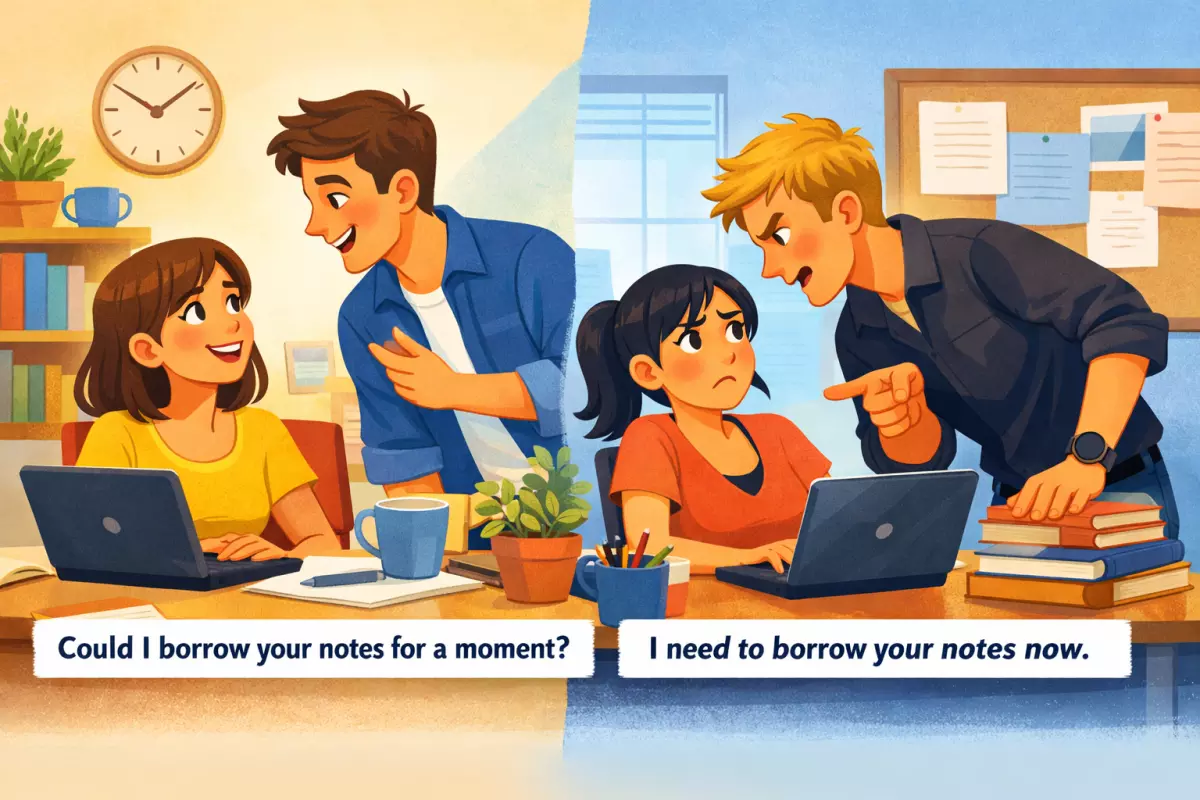
In spoken English, the same modal verb can sound polite, pushy, uncertain, or confident depending on pitch movement, stress, and pace. Because permission requests are sensitive, listeners often react more to delivery than to the grammar itself. Using a friendly tone, moderate volume, and a smooth question intonation helps your request sound respectful rather than demanding.
Common intonation patterns and what they signal
- Rising intonation (voice goes up at the end) often sounds more tentative or deferential: “Could I borrow your pen?”
- Falling intonation (voice goes down at the end) can sound more certain; with permission questions it may feel firm or even abrupt if overdone: “Can I leave now.”
- Rise-fall (up then down) can sound confident yet polite, especially when paired with softening words: “Could I just step out for a minute?”
- Flat intonation may sound bored, impatient, or transactional, even with polite words: “May I use your phone.”
- Tag questions usually keep the main clause fairly steady, then rise on the tag to invite agreement: “I can open the window, can’t I?”
Stress: which word you emphasize changes the meaning
- Stress on the modal can sound like you’re challenging the rules: “Can I park here?”
- Stress on I can imply comparison with others: “Can I use the printer?”
- Stress on the action makes the request clearer and often more natural: “Could I borrow your charger?”
- Stress on now can add urgency and reduce politeness: “Could I leave now?”
- Stress on just can soften the size of the request: “Could I just ask a quick question?”
- Stress on please can sound sincere, but heavy stress may sound annoyed: “Could you help me, please?”
Pace, volume, and pauses that make requests sound more natural
- Slow down slightly on the modal phrase (“could I…”, “would it be okay if…”) to sound considerate.
- Keep volume moderate; speaking louder than necessary can make a permission question feel like a demand.
- Use a short pause before the request when interrupting: “Sorry—could I ask something?”
- Avoid rushing the last words; rushed endings often sound impatient.
- Don’t over-pause between words (“Can… I…”) unless you truly want to sound hesitant.
Softening language that pairs well with polite intonation
- “Could I possibly…?” (adds extra politeness; keep the tone warm, not dramatic)
- “Would it be okay if I…?” (naturally invites a yes/no response)
- “Do you mind if I…?” (keep a gentle rise at the end to avoid sounding accusatory)
- “Is it all right if I…?” (neutral and common in everyday speech)
- “Can I just…?” (signals a small request; avoid stressing “just” too sharply)
- “When you have a moment, could I…?” (reduces pressure by removing urgency)
Quick delivery fixes (common problems and better options)
- ❌ “Can I use this.” (flat, falling) → ✅ “Can I use this?” (light rise; friendly tone)
- ❌ “Could I leave NOW?” (strong stress on “now”) → ✅ “Could I leave now?” (softer stress; calmer pace)
- ❌ “Do you mind if I sit here.” (falling, clipped) → ✅ “Do you mind if I sit here?” (gentle rise; relaxed)
- ❌ “May I?” (sharp, abrupt) → ✅ “May I?” (slower, warmer; slight rise)
- ❌ “Can I…?” (loud, impatient) → ✅ “Can I…?” (moderate volume; steady pace)
Examples of permission requests in everyday conversation
Permission questions change depending on the relationship, the setting, and how “big” the request is. In casual situations, can is common. For polite everyday requests, could and may sound more respectful. For formal or rule-based contexts, longer forms like Would it be possible…? help you sound careful and professional.
Quick patterns to copy
- Can I + verb…? (casual, friendly)
- Could I + verb…? (polite, a bit softer)
- May I + verb…? (more formal, respectful)
- Is it okay if I + present…? (checks if something is acceptable)
- Do you mind if I + present…? (polite; often used when you expect “no problem”)
- Would you mind if I + past…? (more formal; “past” here signals politeness, not past time)
- Would it be possible to + verb…? (formal, careful)
Everyday examples (home, friends, and casual settings)
- Can I borrow your charger for a minute?
- Could I use your phone to make a quick call?
- Is it okay if I open the window?
- Can we turn the music down a bit?
- Could we sit here, or is this seat taken?
- Do you mind if I invite Sam too?
- Can I try a bite of that?
- Could I leave my bag here while I grab a coffee?
- Is it alright if I change the channel?
- Can I take a photo of this to remember it?
- Do you mind if I step out for a second?
- Could I ask you a quick question?
Work and school situations (more polite and careful)
- Could I take tomorrow morning off for an appointment?
- May I leave a little early today?
- Would it be possible to work from home on Friday?
- Could I reschedule our meeting to 3 p.m.?
- Is it okay if I send you the draft by end of day?
- Do you mind if I record this meeting for my notes?
- May I ask a question about the assignment instructions?
- Could we extend the deadline by one day?
- Would you mind if I joined the call a few minutes late?
- Is it alright if I share this file with the team?
Common usage notes (to avoid misunderstandings)
- “Do you mind if…?” usually expects permission. A typical positive answer is “No, go ahead.” A negative answer is “Yes, I do mind,” which can sound strong.
- “Would you mind if I + past…?” is a politeness pattern: “Would you mind if I left early?” (The action is still in the future.)
- When rules matter (office policy, school rules), may and longer forms often sound more appropriate than can.
- If you want to sound less direct, add a softener: “Could I possibly…?” or “Would it be possible to…?”
Typical learner mistakes when forming permission questions
Many errors come from mixing up question word order, choosing a modal that sounds too strong, or using the wrong verb form after the modal. The patterns are simple once you notice what stays the same: modal + subject + base verb (or “Do you mind if…?” + clause).
Common form and word-order problems
- ❌ “Can I to leave early?” → ✅ “Can I leave early?” (use the base verb after a modal; no “to”)
- ❌ “May you help me?” (when you mean permission for yourself) → ✅ “May I…?” / “Could you…?” (choose the subject that matches your goal)
- ❌ “I can open the window?” → ✅ “Can I open the window?” (invert modal and subject for questions)
- ❌ “Could I open the window, please you?” → ✅ “Could I open the window, please?” (place “please” naturally; don’t add an extra object)
- ❌ “Can I open the window or not?” (too blunt in many situations) → ✅ “Could I open the window?” / “Would it be okay if I opened the window?”
- ❌ “May I can go now?” → ✅ “May I go now?” / “Can I go now?” (don’t stack modals)
- ❌ “Could you mind if I open the window?” → ✅ “Do you mind if I open the window?” (use the fixed expression)
- ❌ “Do you mind if I will open the window?” → ✅ “Do you mind if I open the window?” (avoid “will” after “Do you mind if…?” for immediate permission)
Choosing a modal that matches politeness and context
- Overusing can in formal settings: “Can I speak to the manager?” may sound too casual; “Could I speak to the manager?” or “May I speak to the manager?” is often smoother.
- Using may in very casual talk can sound stiff: with friends, “Can I borrow your charger?” is usually more natural than “May I…?”
- Using must or have to when asking: “Must I…?” often sounds like complaining or seeking obligation, not permission. Prefer “Do I have to…?” (obligation) vs. “Can I…?” (permission).
- Confusing requests with permission: “Could you open the window?” asks someone else to do it; “Could I open the window?” asks to do it yourself.
Verb tense and structure mistakes after common permission patterns
- ❌ “Would it be okay if I open the window?” → ✅ “Would it be okay if I opened the window?” (past form for politeness in the “Would it be okay if…” pattern)
- ❌ “Is it okay if I would leave early?” → ✅ “Is it okay if I leave early?” (use present simple for a near-future plan)
- ❌ “Can I opening the window?” → ✅ “Can I open the window?” (no -ing after modals)
- ❌ “Could I to use your phone?” → ✅ “Could I use your phone?” (base verb only)
- ❌ “Do you mind to open the window?” (meaning “Is it okay if I open it?”) → ✅ “Do you mind if I open the window?” (different structure and meaning)
- ❌ “Do you mind if I don’t open the window?” (often confusing) → ✅ “Do you mind if I leave the window closed?” (state the intended action clearly)
Answering mistakes that create the wrong meaning
- Misinterpreting “Do you mind if…?” answers: “Yes” often means “Yes, I mind” (so it’s not okay). Safer replies are “No, go ahead” (permission) or “Yes, I do mind” (no permission).
- Replying with only “Yes” to “Can/Could I…?” can be unclear in tone. Clear options are “Yes, of course,” “Sure,” or “I’m afraid not.”
When checking your own sentences, look for three quick fixes: invert the modal and subject for questions, use the base verb after the modal, and pick a form that matches the situation (casual, neutral, or formal). These small adjustments make permission requests sound natural and appropriately polite.
Exercises and practice activities for asking permission with modal verbs
Use these activities to build accuracy with permission questions, short answers, and polite refusals. Focus on the pattern first (modal + subject + base verb), then adjust formality by choosing the right modal (can/could/may) and adding softeners like “please,” “Do you mind…,” or “Would it be OK if…”.
1) Choose the best modal (can / could / may)
Select the most natural option for each situation. Write the full question.
- (You’re speaking to a teacher.) ______ I hand in the assignment tomorrow?
- (To a friend.) ______ I borrow your charger for a minute?
- (At a hotel reception.) ______ I have a late checkout?
- (In a meeting with a client.) ______ we start five minutes later?
- (To a coworker you don’t know well.) ______ I use your desk for an hour?
- (To your manager.) ______ I take Friday off?
- (To a stranger.) ______ I sit here?
- (To a classmate.) ______ I copy your notes?
- (At a library desk.) ______ I renew this book online?
- (To a neighbor.) ______ I park in front of your house today?
Show answers
- May I hand in the assignment tomorrow?
- Can I borrow your charger for a minute?
- May I have a late checkout?
- Could we start five minutes later?
- Could I use your desk for an hour?
- Could I take Friday off?
- Can I sit here?
- Can I copy your notes?
- Can I renew this book online?
- Could I park in front of your house today?
2) Fix the form (common permission errors)
Rewrite each sentence so it follows standard permission patterns.
- ❌ Can I to leave early today?
- ❌ May you open the window?
- ❌ Could I borrowing your pen?
- ❌ I can use your phone?
- ❌ Do you mind if I will sit here?
- ❌ Would it be OK if I take your seat?
- ❌ Could you please to help me print this?
- ❌ May I asking a question?
Show answers
- ✅ Can I leave early today?
- ✅ May I open the window? (or: Could you open the window?)
- ✅ Could I borrow your pen?
- ✅ Can I use your phone?
- ✅ Do you mind if I sit here?
- ✅ Would it be OK if I took your seat?
- ✅ Could you please help me print this?
- ✅ May I ask a question?
3) Match the request to the level of formality
Write one version for each level. Keep the meaning the same, but change the wording.
- Casual: use “can” and simple phrasing.
- Polite: use “could” and a softener (please / a moment / if that’s okay).
- Formal: use “may” or “Would it be OK if… / Would you mind if…”.
- Borrow someone’s laptop for 10 minutes.
- Leave a meeting early.
- Take a photo in a museum.
- Use the restroom.
- Reschedule an appointment.
Show answers
- Casual: Can I borrow your laptop for 10 minutes?
Polite: Could I borrow your laptop for 10 minutes, please?
Formal: Would it be OK if I borrowed your laptop for 10 minutes? - Casual: Can I leave early?
Polite: Could I leave a little early, please?
Formal: Would you mind if I left the meeting a bit early? - Casual: Can I take a photo?
Polite: Could I take a photo, please?
Formal: May I take a photo in here? - Casual: Can I use the restroom?
Polite: Could I use the restroom, please?
Formal: May I use the restroom? - Casual: Can I reschedule?
Polite: Could I reschedule my appointment, please?
Formal: Would it be possible to reschedule my appointment?
4) Short answers and polite refusals
Practice responding naturally. For “Do you mind if…,” remember that “No” usually means permission is granted (No, I don’t mind → go ahead).
- A: Could I open the window? B: ______ (yes)
- A: May I join you? B: ______ (yes)
- A: Can I use your phone? B: ______ (no, polite)
- A: Do you mind if I sit here? B: ______ (permission granted)
- A: Would it be OK if I left early today? B: ______ (no, polite)
- A: Could we start later? B: ______ (yes)
- A: Would you mind if I recorded this? B: ______ (no, polite)
- A: May I ask a quick question? B: ______ (yes)
Show answers
- Yes, of course. / Sure.
- Yes, please do. / Certainly.
- Sorry, I’m using it right now. / I’m afraid not.
- No, not at all. Go ahead.
- I’m sorry, but we really need you to stay until the end.
- Yes, that works for me.
- I’m sorry, but I’d prefer you didn’t.
- Yes, go ahead.
5) Build longer requests (add a reason + a time limit)
Turn each prompt into a complete permission question using one of these frames: “Could I…,” “Would it be OK if I…,” or “Do you mind if I…”. Include a brief reason.
- leave early / appointment
- borrow your notes / missed class
- use the printer / one page
- switch seats / can’t see the screen
- call you later / in a meeting
- open the door / it’s hot
Show answers
- Could I leave early today? I have a doctor’s appointment.
- Would it be OK if I borrowed your notes? I missed class yesterday.
- Do you mind if I use the printer? It’s just one page.
- Could I switch seats? I can’t see the screen very well.
- Would it be OK if I called you later? I’m in a meeting right now.
- Do you mind if I open the door? It’s really hot in here.