Modal Verbs in Everyday American English Conversations

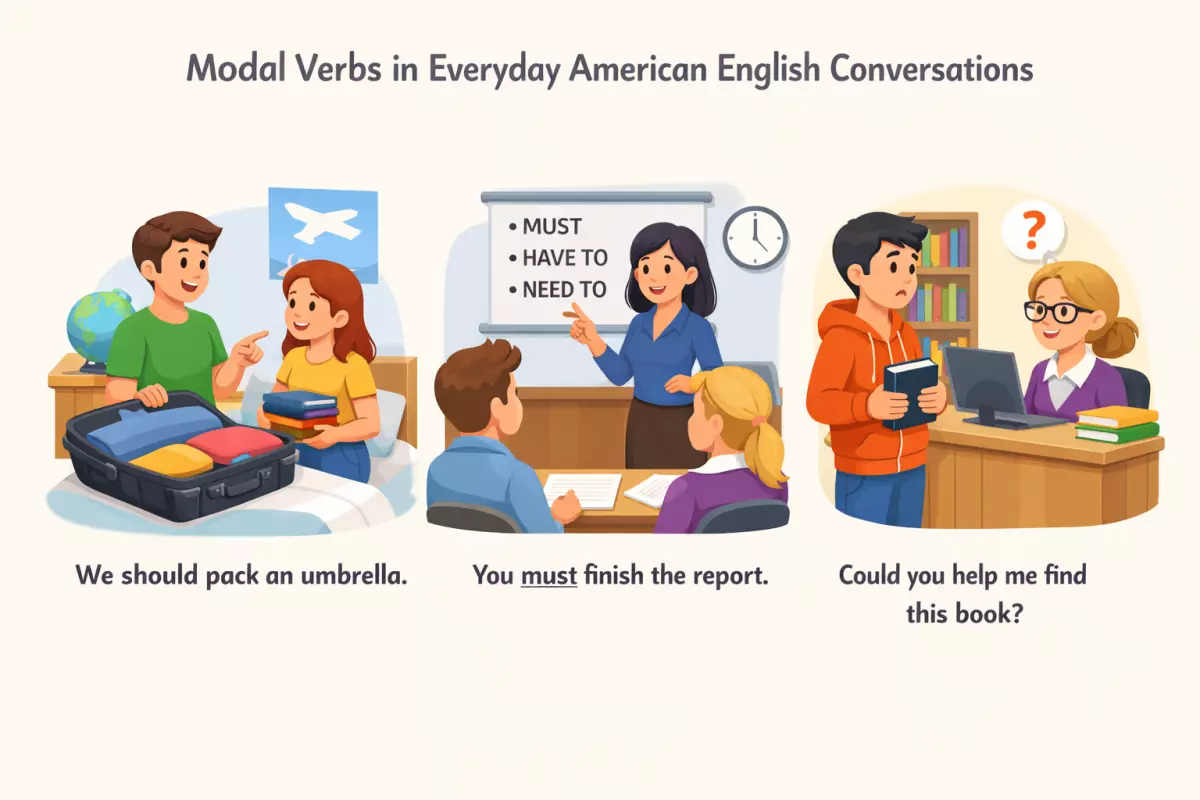 This article explains how modal verbs show up in casual American conversations, including common expressions, contractions, and patterns you hear in daily dialogue. It also compares textbook examples with real speech, gives short exchange examples, and includes practice exercises.
- How modal verbs appear in casual American conversations
- Common modal expressions used in everyday speech
- Differences between textbook examples and real spoken usage
- How contractions make modal verbs sound more natural
- Examples of modal verbs in short spoken exchanges
- Situations where modal verbs soften requests or opinions
- Typical patterns heard in daily American English dialogue
- Exercises and practice activities with modal verbs in conversation
In everyday conversations across the United States, small helper verbs like can, might, and should shape meaning and tone. They help you ask politely, offer advice, show uncertainty, or make a clear promise without sounding pushy. This article will help you spot these patterns in real speech and choose the form that fits each situation, so your English sounds natural and confident.
How modal verbs appear in casual American conversations
In everyday U.S. speech, modals show up as quick tools for managing tone: making a request softer, giving advice without sounding bossy, or signaling uncertainty. They also cluster in short, reusable patterns that speakers lean on in texting, small talk, and informal planning.
Common conversational functions and the patterns that go with them
- Polite requests: Could you + base verb / Can you + base verb (often with a softener like “real quick”). Example: “Could you send that over?”
- Offering help: Can I + base verb / Should I + base verb. Example: “Can I grab you anything?”
- Permission (informal): Can I is more common than May I. Example: “Can I sit here?”
- Advice that sounds friendly: You should + base verb (often softened with “maybe” or “probably”). Example: “You should probably call them.”
- Gentle suggestions: We could + base verb / You could + base verb. Example: “We could just order in.”
- Obligation with a casual tone: We have to + base verb is frequent in speech even though it is not a modal auxiliary. Example: “I have to head out.”
- Rules and requirements: You have to (strong) vs. You should (softer). Example: “You have to show ID.”
- Ability and practicality: I can’t + base verb often means “it isn’t possible for me,” not just lack of skill. Example: “I can’t make it tonight.”
- Uncertainty and hedging: might and may reduce commitment. Example: “I might be a little late.”
- Predictions and expectations: should can mean “likely.” Example: “It should be fine.”
- Quick reassurance: That should + base verb / It should + base verb. Example: “That should work.”
- Making plans less rigid: We can + base verb often means “that’s an option.” Example: “We can meet after work.”
- Invitations: Do you want to plus a modal follow-up for flexibility. Example: “Do you want to grab coffee? We could go near your place.”
- Refusals that stay polite: I can’t or I won’t plus a brief reason. Example: “I can’t—I’ve got a meeting.”
- Firm decisions: won’t sounds more decisive than can’t. Example: “I won’t do that.”
- Requests for clarification: Could you + base verb as a repeat/repair strategy. Example: “Could you say that again?”
- Light pressure: Can you just + base verb can sound impatient depending on tone. Example: “Can you just text me when you’re outside?”
- Conditional politeness: Could you and would you are common in service settings and among strangers. Example: “Would you mind holding the door?”
- Preferences framed as requests: Would you rather + base verb / Should we + base verb. Example: “Should we eat now or later?”
Small but important usage habits
- Base verb after a true modal: ✅ “She can drive.” ❌ “She can drives.”
- Negatives are usually contracted in casual talk: “can’t,” “won’t,” “shouldn’t,” “couldn’t,” “might not.”
- Questions often use rising intonation more than extra words: “We could leave now?” can function like a suggestion plus a check.
- Softening words frequently travel with modals: “maybe,” “just,” “kind of,” “a bit,” “real quick,” which can change how direct the sentence feels.
- Past forms often signal politeness, not past time: “Could you help me?” is usually about the present request, not the past.
- Stacking is limited: speakers rarely place two modals together (❌ “might could”), though it may appear in some regional varieties; in mainstream casual American English, one modal is the norm.
Common modal expressions used in everyday speech
In everyday American English, modal verbs show what a speaker thinks is possible, necessary, allowed, or likely. Many of the most frequent patterns are short, flexible, and tied to politeness: speakers often choose softer forms (like could or would) when requesting, suggesting, or disagreeing.
High-frequency patterns and what they typically do
- can + base verb (ability/permission): “I can drive.” / “Can I use your phone?”
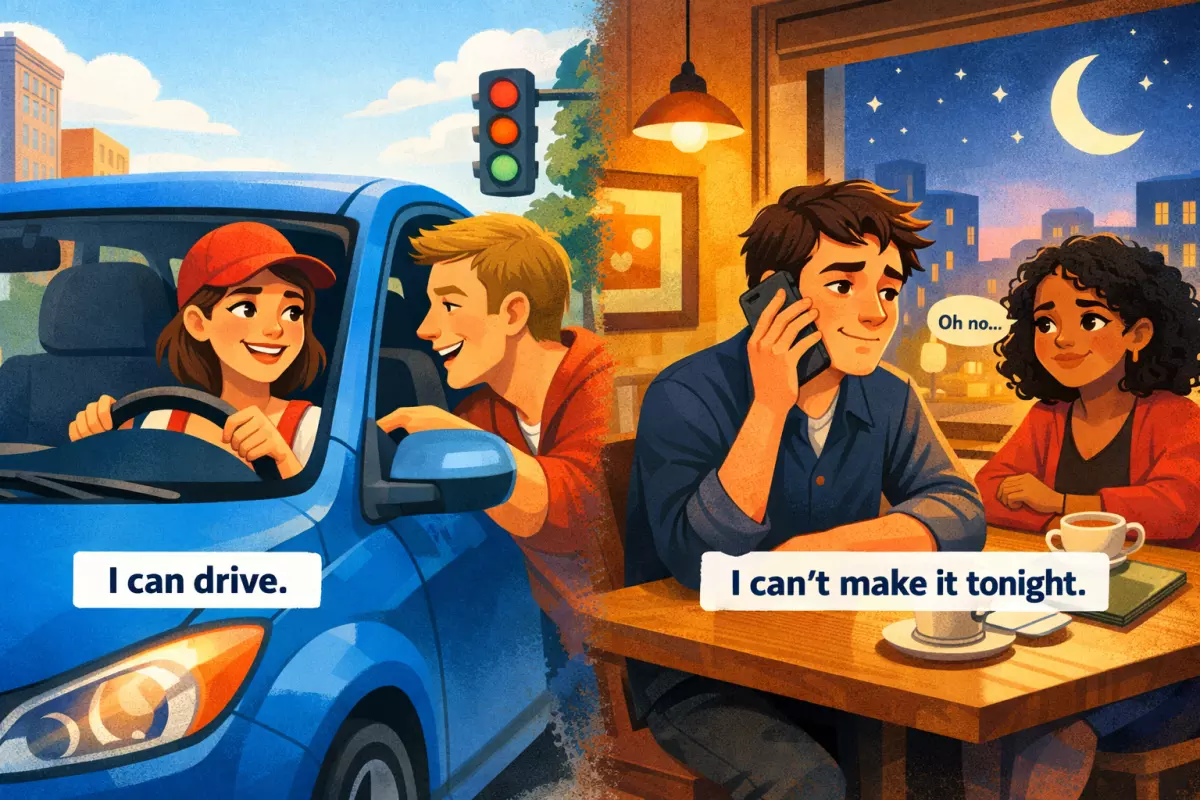
- can’t + base verb (inability/strong impossibility): “I can’t make it tonight.”
- could + base verb (polite request/less direct possibility): “Could you send that to me?” / “It could rain later.”
- couldn’t + base verb (past inability/strong negative): “I couldn’t find parking.”
- may + base verb (formal permission/possibility): “May I come in?” / “It may take a while.”
- might + base verb (weaker possibility): “I might be a few minutes late.”
- will + base verb (future/decision/promise): “I’ll call you after work.”
- won’t + base verb (refusal/negative prediction): “My laptop won’t turn on.”
- would + base verb (polite request/hypothetical): “Would you mind closing the door?” / “I’d take the earlier flight.”
- wouldn’t + base verb (refusal/hypothetical negative): “He wouldn’t answer.” / “I wouldn’t do that.”
- should + base verb (advice/expectation): “You should get some rest.” / “It should be ready soon.”
- shouldn’t + base verb (negative advice): “You shouldn’t text while driving.”
- must + base verb (strong necessity/strong conclusion): “We must leave now.” / “You must be tired.”
- have to + base verb (practical obligation): “I have to pick up my kids.”
- don’t have to + base verb (no obligation): “You don’t have to explain.”
- need to + base verb (necessity, often personal/practical): “I need to stop by the bank.”
- be supposed to + base verb (expectation/rule/plan): “We’re supposed to meet at 6.”
- be allowed to + base verb (permission, often rules): “Are we allowed to park here?”
- be able to + base verb (ability, often for other tenses): “I’ll be able to help tomorrow.”
Useful conversation frames (questions, requests, and suggestions)
- Can you…? (direct request): “Can you email me the file?”
- Could you…? (more polite/softer): “Could you hold my place?”
- Would you…? (polite request, often formal): “Would you check this for me?”
- Would you mind + -ing…? (very common polite form): “Would you mind waiting a minute?”
- ✅ “Would you mind closing the window?” ❌ “Would you mind close the window?”
- Should we…? (suggestion): “Should we order now?”
- Could we…? (tentative suggestion/negotiation): “Could we meet a little earlier?”
- Do you want to…? (casual invitation): “Do you want to grab coffee?”
- Do you think you could…? (extra-soft request): “Do you think you could take a look?”
Common reductions in casual speech
- I’ll = I will: “I’ll text you.”
- we’ll / you’ll / they’ll = will contractions: “We’ll be there soon.”
- I’d = I would (sometimes I had, depending on context): “I’d rather stay home.”
- can’t (often pronounced like “cant”): “I can’t today.”
- should’ve / could’ve / would’ve: “You should’ve called.” / “I could’ve helped.”
- ✅ “I should’ve told you.” ❌ “I should of told you.”
As a pattern, modals are followed by the base form of the verb (“can go,” “should try,” “might help”). When you need a past meaning, everyday speech often uses a perfect form like “could have,” “should have,” or “might have” to show earlier possibility, advice, or uncertainty.
Differences between textbook examples and real spoken usage
Everyday conversation uses modal verbs in shorter, softer, and more flexible ways than many classroom sentences. Speakers often choose modals to manage politeness, uncertainty, and negotiation in real time, so the “perfect” form on the page may sound too formal, too direct, or simply uncommon out loud.
Common gaps between classroom sentences and natural conversation
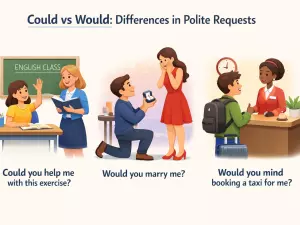
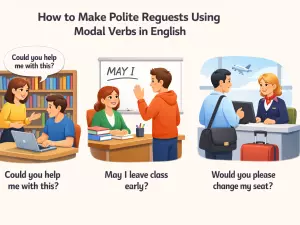
- Requests are often softened: Instead of direct “Can you…?”, people frequently use “Could you…?” or “Would you…?” to sound less demanding.
- Questions are shortened: “Could you possibly help me?” may become “Could you help me?” or just “Could you?” when the context is clear.
- Permission is negotiated, not declared: Textbooks may show “May I…?” often, but casual speech leans toward “Can I…?” or “Is it okay if I…?”
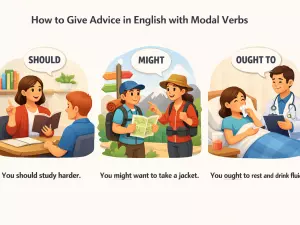
- Advice uses hedging: “You should…” can sound pushy; speakers often choose “You might want to…” or “You could…” to reduce pressure.
- “Must” is rare for obligations: In daily American English, “must” often sounds formal or dramatic; “have to” and “need to” are more typical for real requirements.
- Obligation is framed as personal: “I have to…” and “I need to…” are common because they sound like circumstances, not commands.
- Possibility is expressed with “might” and “could”: “It may rain” is grammatical, but “It might rain” is more conversational.
- Certainty is downgraded: Speakers avoid sounding overly sure; “It must be…” is often replaced by “It’s probably…” or “It’s gotta be…” in casual contexts.
- Modals pair with discourse markers: Real talk adds “well,” “so,” “I mean,” “actually,” and “maybe” around modals to manage tone and pacing.
- Negative forms are frequently contracted: “can’t, won’t, shouldn’t, couldn’t” dominate in speech; full forms can sound emphatic or formal.
- “Would” shows politeness and distance: Beyond conditionals, “would” often signals a gentle request (“Would you mind…?”) or a tentative plan (“I’d probably…”).
- Conditional meaning is simplified: Instead of long “If I were you, I would…,” people often say “I’d…” or “I would just…” with the “if” understood.
- Offers use “can” and “could” strategically: “I can…” can sound like ability; “I could…” often sounds like a flexible offer or option.
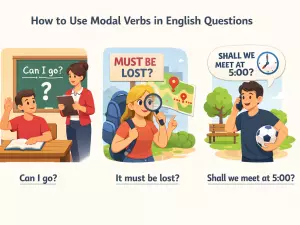
- “Shall” is uncommon: Many learners see it in textbooks, but in American conversation it’s limited (often joking, very formal, or set phrases).
- Quick repairs are normal: Speakers adjust mid-sentence: “I can—actually, I could do it tomorrow” to recalibrate confidence or politeness.
Side-by-side examples: textbook-style vs. typical spoken patterns
| Textbook-style example | More typical in everyday American speech |
|---|---|
| May I use your phone? | Can I use your phone? / Is it okay if I use your phone? |
| You must finish this today. | You have to finish this today. / We need to get this done today. |
| It may be true. | It might be true. / Could be true. |
| Would you be so kind as to open the window? | Could you open the window? / Do you mind opening the window? |
| I will assist you. | I can help. / I’ll help you out. |
| Should I speak with the manager? | Do you think I should talk to the manager? / Should I talk to the manager? |
Practical pattern notes to sound more natural
- Use “could” to reduce pressure: “Could you send that today?” often feels more polite than “Can you send that today?”
- Use “might” when you’re not committing: “I might stop by later” signals flexibility without promising.
- Prefer “have to” for real obligations: “I have to leave at five” sounds neutral; “I must leave at five” sounds formal or intense.
- Use “should” carefully: For sensitive advice, “You could…” or “You might want to…” often lands better than a strong “You should…”
- Let context carry meaning: In conversation, “Could you?” or “Can you?” can be complete requests when everyone knows the task.
- Match the relationship: With friends, “Can you…?” is fine; with strangers or at work, “Could you…?” and “Would you…?” are safer defaults.
How contractions make modal verbs sound more natural
In everyday American speech, modal verbs often get reduced in fast pronunciation, especially when they combine with not or with a following verb phrase. Using common contracted forms helps your sentences match the rhythm of real conversation and avoids sounding overly formal or “read aloud.”
Most common modal + not contractions
- can’t = cannot / can not: “I can’t make it tonight.”
- won’t = will not: “She won’t answer unknown numbers.”
- shouldn’t = should not: “You shouldn’t skip breakfast.”
- wouldn’t = would not: “I wouldn’t do that without a backup.”
- couldn’t = could not: “We couldn’t find parking.”
- mustn’t = must not (less common in American conversation): “You mustn’t touch that.”
- mightn’t = might not (rare in American conversation): “I mightn’t be able to come.”
- shan’t = shall not (very rare in American conversation): “I shan’t be long.”
Usage patterns that sound natural
- Default to contractions in casual negatives. In friendly conversation, “I can’t” and “we won’t” are more typical than “I cannot” and “we will not.”
- Use the full form for emphasis or contrast. “I can’t lend it to you—no, I cannot lend it to anyone.” Full forms can sound more forceful or more careful.
- Place stress carefully with “can’t.” In speech, “can” is often reduced (“I can go”), but “can’t” usually stays clear. Many misunderstandings come from not pronouncing the final -t clearly.
- Know the special case: “won’t.” It does not follow the expected pattern “willn’t.” Treat it as its own standard form.
- Avoid double negatives in standard English. ❌ “I can’t do nothing.” ✅ “I can’t do anything.” (Some dialects use double negatives, but they change the grammar style.)
- Don’t contract in very formal writing or careful announcements. In presentations, policies, or instructions, full forms may be preferred: “Employees must not…”
Common mistakes to avoid
- ❌ “cann’t” → ✅ “can’t” (spelling)
- ❌ “willn’t” → ✅ “won’t” (irregular form)
- ❌ “mayn’t” → ✅ “may not” (standard American usage usually keeps it uncontracted)
- ❌ “might of” → ✅ “might’ve” / “might have” (sound-based confusion)
- ❌ “should of” → ✅ “should’ve” / “should have”
- ❌ “could of” → ✅ “could’ve” / “could have”
- ❌ “would of” → ✅ “would’ve” / “would have”
Quick practice patterns for conversation
- Request + refusal: “Can you help?” → “Sorry, I can’t right now.”
- Advice: “What should I do?” → “You shouldn’t wait too long.”
- Prediction: “Will it rain?” → “It won’t last all day.”
- Polite disagreement: “Would you do it?” → “I wouldn’t, personally.”
- Past ability: “Could you find it?” → “We couldn’t.”
- Soft possibility: “Is she coming?” → “She might not.”
Examples of modal verbs in short spoken exchanges

In quick American English conversations, modal verbs often do two jobs at once: they show the speaker’s attitude (polite, unsure, firm) and they signal how likely or necessary an action is. The same base verb can sound like a request, a suggestion, a rule, or a guess depending on the modal and the context.
Common patterns you’ll hear
- Modal + base verb: “I can help.” / “We should leave.” (no to)
- Question form: “Can you…?” “Would you…?” “Should we…?”
- Negative: “I can’t.” “You shouldn’t.” “We don’t have to.”
- Softening with “maybe / just / a second”: “Could you just hold this?”
- Short answers: “Sure, I can.” “No, you don’t have to.” “Yeah, we should.”
Short exchanges (request, offer, permission, advice, possibility)
-
A: Can you send that today?
B: Yeah, I can.Pattern: can for ability/availability; direct but neutral.
-
A: Could you email me the address?
B: Sure. I’ll send it now.Pattern: could for a more polite request than can.
-
A: Would you mind closing the window?
B: Not at all.Pattern: would for polite requests; “Not at all” means yes, I’ll do it.
-
A: May I sit here?
B: Of course.Pattern: may for formal permission; less common in casual talk than can.
-
A: Can I borrow your charger?
B: Yeah, go ahead.Pattern: can for permission in everyday speech.
-
A: Should we order now?
B: Yeah, we should.Pattern: should for a suggestion or the “best” choice.
-
A: You should text her first.
B: Good idea.Pattern: advice; friendly and common.
-
A: Do I have to sign this?
B: No, you don’t have to.Pattern: have to for obligation; negative means “not necessary” (not “not allowed”).
-
A: Must I fill out all of it?
B: Not really—just the first page.Pattern: must sounds strict or formal; often replaced by have to in casual speech.
-
A: I might be late.
B: Okay, just let me know.Pattern: might for uncertainty; softer than “I will be late.”
-
A: It could rain later.
B: Then we should bring umbrellas.Pattern: could for possibility; often followed by a practical suggestion.
-
A: That can’t be right.
B: Yeah, the numbers look off.Pattern: can’t for strong disbelief (logical impossibility).
-
A: He must be stuck in traffic.
B: Probably.Pattern: must for a strong guess based on evidence.
-
A: Would you like some coffee?
B: I’d love some, thanks.Pattern: would for offers and preferences; “I’d” = “I would.”
-
A: Can I help with anything?
B: Could you set the table?Pattern: offer with can; polite request with could.
-
A: Shouldn’t we call ahead?
B: Yeah, we probably should.Pattern: negative question with should suggests the speaker expects agreement.
-
A: You don’t have to wait.
B: It’s okay—I can.Pattern: removing obligation; the reply uses can to show willingness/ability.
Quick form notes (what sounds natural)
- ✅ “Could you help me?” → polite request. ❌ “Could you to help me?” (modals don’t take to.)
- ✅ “I might go.” (uncertain plan) vs. “I should go.” (responsibility or best choice)
- ✅ “You must be tired.” (strong guess) vs. “You have to be tired.” (can sound like a rule, so it’s less common for guessing)
Situations where modal verbs soften requests or opinions
In everyday American English, speakers often choose modal verbs to make a request sound less direct or to present an opinion with less force. The most common pattern is using a modal + base verb (could help, might work, would you) to add distance, politeness, or uncertainty.
Common contexts and the modal patterns that fit
- Asking for help (low pressure): Use could or would to reduce the “do this now” feeling.
- “Could you help me carry this?”
- “Would you mind giving me a hand?”
- Making a request to a stranger or in customer service: could and would are standard for polite, neutral requests.
- “Could I get a receipt, please?”
- “Would you be able to check the back?”
- Asking permission (more formal or careful): may sounds more formal; can is common and casual.
- “May I come in?”
- “Can I step out for a minute?”
- Requesting a small favor from a friend: can works, but could often sounds gentler.
- “Can you text me the address?”
- “Could you text me the address when you get a chance?”
- Making suggestions without sounding bossy: could and might present options rather than commands.
- “We could try a different route.”
- “You might want to back up that file.”
- Giving advice carefully (respecting the listener’s choice): might want to and could soften advice; should is stronger.
- ✅ “You might want to talk to HR.” → gentle
- ❌ “You should talk to HR.” → more direct/forceful
- Disagreeing politely: might and could reduce confrontation by framing disagreement as possibility.
- “That might be true, but I’m not sure it applies here.”
- “I could be wrong, but I read it differently.”
- Sharing an opinion as a tentative view: would and might help opinions sound less absolute.
- “I would say the second option is safer.”
- “It might be better to wait until Monday.”
- Making a request in a meeting: Use could we / would it be possible to sound collaborative.
- “Could we revisit the timeline?”
- “Would it be possible to move this to next week?”
- Asking someone to repeat or clarify: could is a polite default; adding “please” increases softness.
- “Could you say that again?”
- “Could you clarify what you mean by ‘done’?”
- Negotiating or bargaining gently: could and would help you ask without demanding.
- “Could you do $20 for it?”
- “Would you consider extending the deadline?”
- Turning down a request without sounding harsh: Modals help you refuse indirectly or conditionally.
- “I can’t today, but I could tomorrow.”
- “I’d love to help, but I might not have time.”
- Making plans without overcommitting: might signals uncertainty; should signals expectation.
- “I might stop by later.”
- “We should be there around 7.”
- Offering help without assuming it’s needed: can and could make offers feel optional.
- “I can help if you want.”
- “I could take a look, if that helps.”
Useful softening frames to reuse
- Could you + base verb: “Could you email me the file?”
- Would you + base verb: “Would you check this for typos?”
- Would you mind + -ing: “Would you mind waiting a minute?”
- Could I / May I + base verb: “Could I ask a quick question?”
- Would it be possible to + base verb: “Would it be possible to reschedule?”
- We could + base verb: “We could start with the easiest part.”
- You might want to + base verb: “You might want to save your work.”
- I might be wrong, but…: “I might be wrong, but the totals don’t match.”
- I would say…: “I would say it’s more of a timing issue.”
- Could we + base verb: “Could we talk about this after the meeting?”
In general, could, would, and might are the most reliable choices for sounding less demanding. Can is common and friendly but can feel more direct, while may is more formal and is used less in casual conversation.
Typical patterns heard in daily American English dialogue
In everyday U.S. conversations, modal verbs show up in repeatable “frames” that signal politeness, uncertainty, advice, rules, and quick decisions. Listening for these frames helps you choose the right modal and match the level of directness people expect.
Common modal frames and what they usually mean
- Can you…? / Could you…? (requests) — “Can you send that over?” / “Could you hold on a second?”
- Can I…? / Could I…? (asking permission) — “Can I grab this chair?” / “Could I leave a little early?”
- Would you…? (polite request, often service/work) — “Would you mind checking this?”
- Would you like…? (offering) — “Would you like some water?”
- I can… (ability/offer) — “I can pick you up after work.”
- I could… (soft suggestion/possible plan) — “I could swing by later.”
- We can… (proposal) — “We can meet at 3.”
- We could… (more tentative proposal) — “We could try that new place.”
- Should I…? (asking for advice) — “Should I email them or call?”
- You should… (advice) — “You should back up your files.”
- You shouldn’t… (warning) — “You shouldn’t drive if you’re that tired.”
- Have to… (strong necessity, common in speech) — “I have to run.” / “Do we have to sign this?”
- Need to… (necessity, often practical) — “I need to stop by the bank.”
- Don’t have to… (no necessity) — “You don’t have to pay me back today.”
- Must… (rule/strong conclusion; less common for obligation in casual talk) — “Visitors must sign in.” / “You must be exhausted.”
- Might… / May… (possibility; “might” is more common in casual speech) — “I might be late.”
- Could be… (uncertain guess) — “That could be the issue.”
- Can’t be… (strong disbelief) — “That can’t be right.”
- Would… (hypothetical/softening) — “I’d call first.” / “That would help.”
- Will… (quick decision/promise) — “I’ll do it.” / “I’ll text you.”
Politeness shifts: choosing the “softer” option
- ✅ “Can you email me the file?” (neutral) → “Could you email me the file?” (more polite/less direct)
- ✅ “I want you to…” (very direct) → “Could you…” / “Would you…” (more standard for requests)
- ✅ “We have to talk.” (serious/urgent) → “We should talk.” (less intense, more advisory)
- ✅ “You must…” (sounds formal/strict) → “You need to…” / “You have to…” (more natural in many daily situations)
Short answers and follow-ups that sound natural
- Sure, I can. / Yeah, I can. (agreeing to a request)
- Sorry, I can’t. / I can’t right now. (declining)
- You could, but… (acknowledging an option, then adding a caution)
- We might have to… (introducing a possible requirement)
- Do we need to…? (checking necessity)
- Should we…? (inviting joint decision)
- That should work. (moderate confidence, common in planning)
- It might be… / It could be… (careful guessing)
Exercises and practice activities with modal verbs in conversation
Build fluency by practicing modals in short, realistic turns: a request, a response, a follow-up, and a softener. Focus on patterns (modal + base verb, modal questions, negatives, and polite add-ons like “please,” “maybe,” or “I was wondering if…”).
1) Quick pattern drills (say them out loud)
- Request: “Can you + base verb…?” → “Can you send me the address?”
- More polite: “Could you + base verb…?” → “Could you hold the door?”
- Permission: “Can I + base verb…?” → “Can I sit here?”
- More formal permission: “May I + base verb…?” → “May I ask a question?”
- Offer: “Can I + base verb…?” → “Can I help you carry that?”
- Suggestion: “Should we + base verb…?” → “Should we leave now?”
- Advice: “You should + base verb…” → “You should call them back.”
- Strong advice: “You might want to + base verb…” → “You might want to save that receipt.”
- Ability (present): “I can + base verb…” → “I can meet at 3.”
- Ability (past): “I could + base verb…” → “I could read by age four.”
- Possibility: “It might/may + base verb…” → “It might rain later.”
- Expectation: “It should + base verb…” → “It should be ready soon.”
- Obligation: “I have to + base verb…” → “I have to run.”
- No obligation: “I don’t have to + base verb…” → “I don’t have to work tomorrow.”
- Prohibition: “You can’t + base verb…” → “You can’t park here.”
- Requirement (strong): “You must + base verb…” → “You must show ID.”
2) Choose the best modal (10 mini-dialogues)
Pick the most natural option for everyday American English. Write the full sentence.
- You want a coworker to lower their voice: “_____ you speak a little more quietly?” (Can / Must)
- You’re not sure about the weather: “It _____ snow tonight.” (might / must)
- A friend looks lost; you offer help: “_____ I help you find it?” (Can / Should)
- You’re giving mild advice: “You _____ try restarting your phone.” (should / may)
- You’re asking permission in a casual setting: “_____ I use your charger?” (Can / Must)
- You’re making a suggestion for the group: “_____ we order pizza?” (Should / May)
- You’re stating a rule: “You _____ smoke in here.” (can’t / might)
- You’re describing a past ability: “When I was a kid, I _____ run really fast.” (could / must)
- You’re explaining necessity: “I _____ leave by five.” (have to / may)
- You expect something is true: “That _____ be the right address.” (should / can’t)
Show answers
- “Can you speak a little more quietly?”
- “It might snow tonight.”
- “Can I help you find it?”
- “You should try restarting your phone.”
- “Can I use your charger?”
- “Should we order pizza?”
- “You can’t smoke in here.”
- “When I was a kid, I could run really fast.”
- “I have to leave by five.”
- “That should be the right address.”
3) Rewrite to change tone (same meaning, different softness)
Rewrite each line twice: (A) more direct, (B) more polite/indirect. Keep the meaning.
- “Close the window.”
- “Give me a minute.”
- “I need your help.”
- “Move your car.”
- “Tell me what happened.”
- “I want to leave early.”
Show answers
- A: “Can you close the window?” B: “Could you close the window, please?”
- A: “Can you give me a minute?” B: “Could you give me a minute, if you don’t mind?”
- A: “Can you help me?” B: “Could you help me for a second?”
- A: “Can you move your car?” B: “Could you move your car when you get a chance?”
- A: “Can you tell me what happened?” B: “Could you tell me what happened, if that’s okay?”
- A: “Can I leave early?” B: “Could I leave a little early today?”
4) Spot the pattern mistake (and fix it)
Correct the modal structure. Watch for “to” after modals and the base verb form.
- ❌ “I can to drive you.”
- ❌ “She musts leave now.”
- ❌ “Do you can help me?”
- ❌ “He should to call his mom.”
- ❌ “We might going later.”
- ❌ “You don’t must pay today.”
- ❌ “Can you to send it?”
- ❌ “I have to can finish this.”
Show answers
- ✅ “I can drive you.”
- ✅ “She must leave now.”
- ✅ “Can you help me?”
- ✅ “He should call his mom.”
- ✅ “We might go later.”
- ✅ “You don’t have to pay today.”
- ✅ “Can you send it?”
- ✅ “I have to finish this.”
5) Role-play prompts (2 turns each)
- Coffee shop: Ask for a change to your order (request) + respond politely (accept/refuse).
- Neighbor: Ask them to turn down music (soft request) + negotiate a time (suggestion).
- Work chat: Ask for an update (polite question) + explain a delay (possibility/expectation).
- Friend plans: Suggest an activity (should/we could) + express uncertainty (might).
- Travel: Ask about rules (can/can’t) + explain requirements (have to/must).
- Family: Give advice about health (should/might want to) + respond with willingness (can/could).
- Apartment: Ask permission to borrow something (can I/could I) + set a condition (you can, but…).
- Car ride: Offer help (can I) + decline politely (I’m good, but thanks).
6) Self-check: modal meaning in context
- Can often sounds casual; could adds distance and politeness.
- Must can sound strong in conversation; many speakers prefer have to for everyday necessity.
- Should is advice/expectation, not a strict rule.
- Might is weaker than may in some formal contexts, but both commonly signal uncertainty.
- After a modal, use the base verb: “can go,” “should call,” “might be.”