Will vs Would: Future, Requests, and Hypothetical Uses

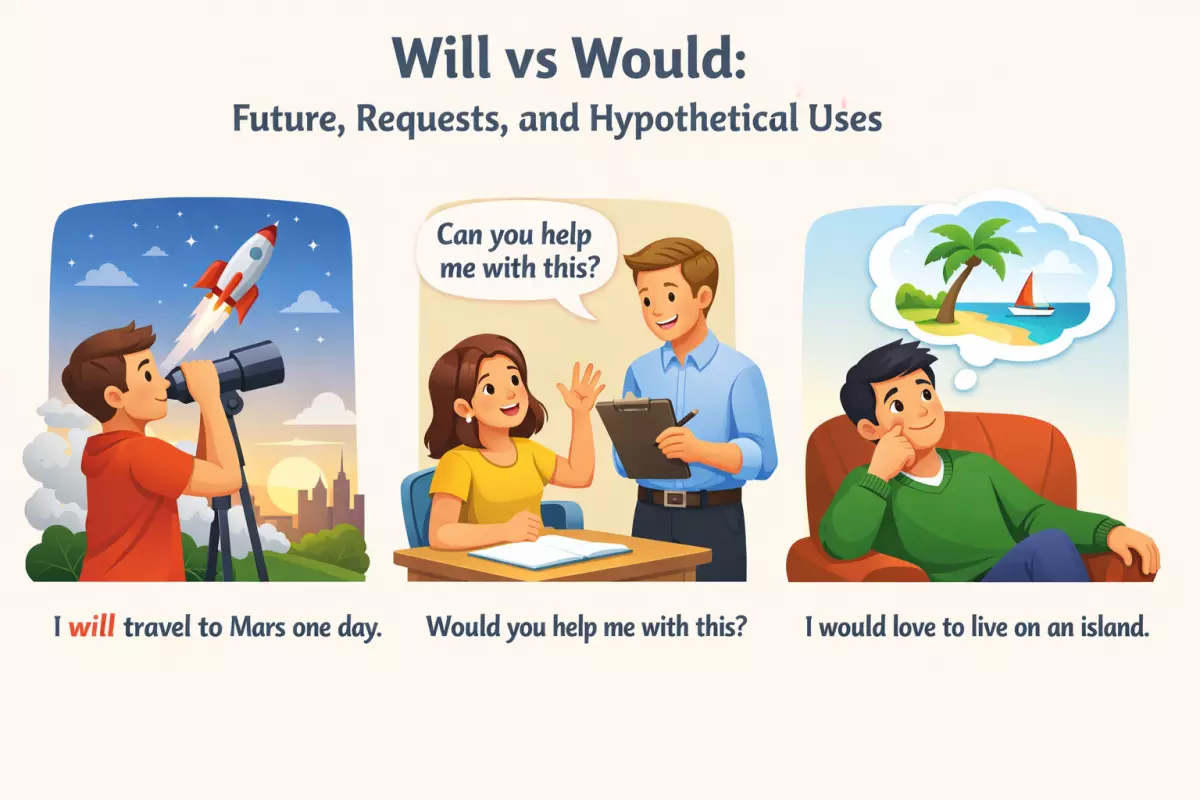 This article explains how will shows future intentions and snap decisions, while would introduces hypothetical situations. It covers requests and offers, conditionals that need would, tone shifts and softening, common mix-ups, plus exercises to practice the difference.
- How will expresses future intentions and immediate decisions
- How would introduces hypothetical or imagined situations
- Using will and would when making requests or offers
- Conditional sentence patterns that require would
- How tone changes when would replaces will in conversation
- Situations where would softens a statement or opinion
- Typical learner confusion between will and would
- Exercises and practice activities contrasting will and would
Choosing between will and would can change how your English sounds, from firm plans to polite requests and imagined situations. In everyday speech, will often feels direct and certain, while would adds distance, courtesy, or a hypothetical tone. This guide helps you choose the best option when talking about the future, offering help, making requests, reporting past intentions, and describing unreal or uncertain possibilities.
How will expresses future intentions and immediate decisions
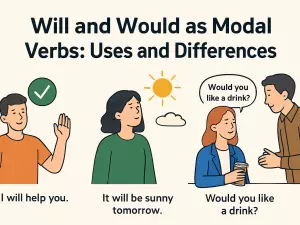
Use will when you decide something at the moment of speaking or when you state a clear intention about the future. It often sounds direct and definite, especially in everyday conversation, announcements, and promises.
1) Immediate decisions (made “right now”)
Will is common when the decision happens as you speak, often as a reaction to new information or a situation. These sentences frequently include context like “Okay,” “Wait,” “I think,” or “Don’t worry.”
- “The phone’s ringing.” → “I’ll answer it.”
- “We’re out of milk.” → “I’ll pick some up on the way home.”
- “I can’t open this file.” → “I’ll take a look.”
- “It’s getting cold in here.” → “I’ll close the window.”
- “We need one more chair.” → “I’ll bring one from the kitchen.”
- “I’m running late.” → “I’ll text them now.”
- “This box is heavy.” → “I’ll help you carry it.”
- “I don’t understand this part.” → “I’ll explain it again.”
- “Someone should call a taxi.” → “I’ll call one.”
- “The meeting starts in five minutes.” → “I’ll join right away.”
- ✅ “I’ll do it now.” / ❌ “I do it now.” (for a spontaneous decision)
2) Future intentions (promises, offers, and commitments)
Use will to show commitment: you’re promising, offering, or agreeing to do something later. This is especially common with verbs like help, call, send, pay, finish, and be.
- Promises: “I’ll call you tonight.” / “I’ll never tell anyone.”
- Offers: “I’ll carry that for you.” / “I’ll make some tea.”
- Agreements: “We’ll meet at 6.” / “I’ll take care of it.”
- Refusals (won’t): “I won’t share your password.” / “He won’t apologize.”
- Reassurance: “Don’t worry, it’ll be fine.” / “I’ll be there soon.”
- Firm plans stated as intention: “I’ll start the course next month.”
3) Useful patterns with will
These common structures help you form natural sentences for quick decisions and future commitments.
- Subject + will + base verb: “She’ll email the report.”
- Subject + won’t + base verb: “They won’t accept late entries.”
- Will + subject + base verb? (offer/request): “Will you open the door?”
- I’ll + verb (quick response): “I’ll check.” / “I’ll go.”
- We’ll see (uncertain decision): “We’ll see what happens.”
- I’ll let you know (future update): “I’ll let you know tomorrow.”
- That’ll be + noun/adjective (instant conclusion): “That’ll be $20.” / “That’ll be difficult.”
In many cases, will contrasts with “going to”: “going to” often suggests a prior plan, while “will” commonly signals a decision made on the spot or a straightforward commitment stated now.
How would introduces hypothetical or imagined situations
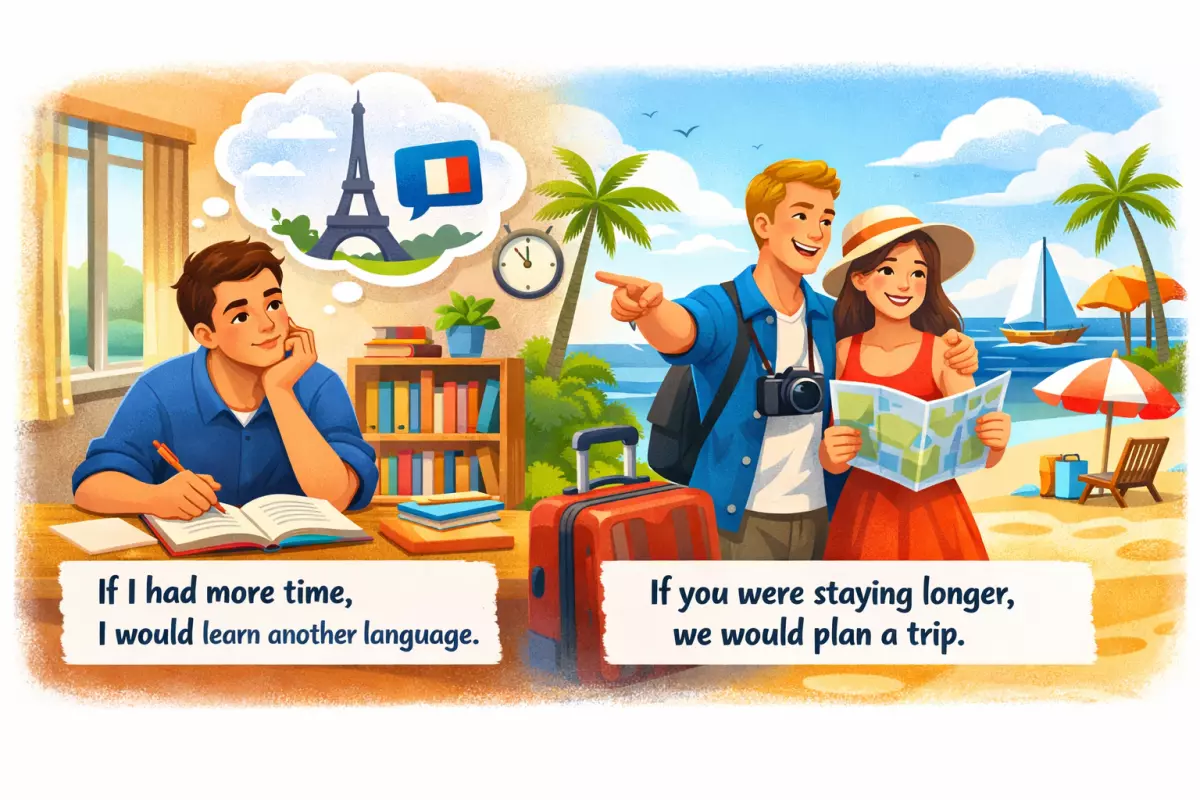
Use would when you are not talking about a certain future, but about an imagined outcome. It often appears with conditions, wishes, or “in your position” style advice, where the result depends on a situation that may not be real.
Common patterns that signal an unreal or uncertain situation
- If + past simple, would + base verb: If I had more time, I would learn another language.
- If + past continuous, would + base verb: If you were staying longer, we would plan a trip.
- If + past perfect, would have + past participle (past unreal): If they had left earlier, they would have caught the train.
- Would with unless: I wouldn’t go unless you came with me.
- Would with even if: Even if it rained, we would still play.
- Would after I wish (complaint or desire for change): I wish you would answer your phone.
- Would after If only: If only the neighbors would keep it down.
- Would for imagined preference: I would rather stay home tonight.
- Would in advice framed as a personal choice: I would talk to your manager first.
- Would in polite “what if” framing: What would happen if we changed the schedule?
- Would for hypothetical ability/behavior: She would do better with more practice.
- Would for a tentative guess about a situation: That would be the easiest solution.
Choosing the right time: present/future vs. past hypotheticals
- Imagined now or later: If I had a car, I would drive to work. (I don’t have a car.)
- Imagined past result: If I had had a car, I would have driven to work. (I didn’t have a car then.)
- Mixed time is possible: If I had studied medicine, I would be a doctor now.
Frequent learner issues (and clean fixes)
- ✅ If I were you, I would apologize. → Use were for a formal unreal “if” clause.
- ❌ If I would have time, I would help. → ✅ If I had time, I would help.
- ❌ If she would have called, I would have answered. → ✅ If she had called, I would have answered.
- ✅ I wish you would stop. → This is about wanting someone to change behavior, not about past facts.
- ✅ I would rather you didn’t tell anyone. → After would rather, the other clause often uses past simple for politeness/unreality.
In these structures, would marks the result as conditional, imagined, or dependent on a situation rather than guaranteed. That contrast is what separates it from will, which typically presents the future as more direct or decided.
Using will and would when making requests or offers
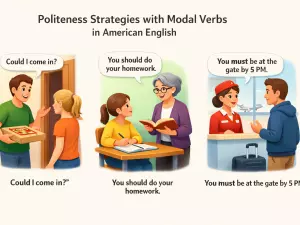
Will and would are both common in polite questions, offers, and invitations, but they signal different levels of directness. In general, will sounds more straightforward and immediate, while would usually sounds more tentative, more formal, or more “softened.” Context matters: tone, relationship, and setting can make either choice sound perfectly natural.
Typical patterns
- Request (direct):
Will you + base verb ...? - Request (more polite/soft):
Would you + base verb ...? - Offer:
Will I/shall I + base verb ...?(withwillcommon in everyday speech) - Offer (more tentative):
Would you like + noun/to-inf ...? - Invitation:
Will you + base verb ...?/Would you like to + base verb ...? - Willingness:
Will you ...?can mean “Are you willing to...?” - Conditional politeness:
Would you mind + -ing ...?(often used to soften a request)
When “will” is the better fit
- Use will for everyday requests when you want to sound clear and efficient:
Will you email me the file? - Use will when you are checking willingness or cooperation:
Will you help me carry this? - Use will for quick offers you can act on immediately:
Will I get you some water? - Use will when the situation is urgent or time-sensitive:
Will you call me as soon as you arrive? - Avoid over-softening when you need a firm commitment:
Will you be here at 9?
When “would” is the better fit
- Use would to sound more formal or respectful, especially with strangers or customers:
Would you sign here, please? - Use would when you are asking for a favor (something that may inconvenience the other person):
Would you cover my shift on Friday? - Use would to reduce pressure and leave room to decline:
Would you be able to join the meeting? - Use would for polite offers and invitations:
Would you like some coffee? - Use would when you want to sound less like you are giving an order:
Would you open the window?
Examples: requests, offers, and invitations
- Request (neutral):
Will you send me the address? - Request (softer):
Would you send me the address? - Request with “please”:
Will you please hold the line? - More formal phrasing:
Would you please hold the line? - Offer (immediate help):
Will I carry that for you? - Offer (polite choice):
Would you like me to carry that? - Invitation (direct):
Will you come to dinner on Saturday? - Invitation (gentler):
Would you like to come to dinner on Saturday? - Service setting:
Would you like a receipt? - Willingness check:
Will you speak to the team about this? - Big favor:
Would you speak to the team about this? - Scheduling:
Will you be available at 3? - Less pressure:
Would you be available at 3? - Offering options:
Would you like tea or coffee? - Quick check in a plan:
Will you meet us at the station?
Common pitfalls to avoid
- ✅
Would you mind closing the door?→ polite request
❌Would you mind to close the door?(use-ing, notto) - ✅
Would you like to sit down?
❌Would you like sit down?(useto+ verb) - ✅
Will you help me?(request)
✅Will you be helping me tomorrow?(future arrangement/expectation; different meaning) - In very formal writing,
wouldcan sound more appropriate thanwill, but in friendly conversationwillis often normal and not rude.
Conditional sentence patterns that require would
In many “if” structures, would is the standard choice in the result clause to show a hypothetical, imagined, or less-than-certain outcome. These patterns are especially common when the condition is unreal (not true now) or unlikely, or when the speaker is describing a past situation that did not happen.
Core patterns (form and meaning)
- Second conditional (unreal present/future):
→ If + past simple, would + base verb (imagined result now or later).
Example: If I had more time, I would travel more. - Third conditional (unreal past):
→ If + past perfect, would have + past participle (imagined past result).
Example: If they had left earlier, they would have caught the train. - Mixed conditional (past condition, present result):
→ If + past perfect, would + base verb (past cause, present effect).
Example: If I had studied medicine, I would work in a hospital now. - Mixed conditional (present condition, past result):
→ If + past simple, would have + past participle (present reality explains a past outcome).
Example: If I were more organized, I would have finished the project on time.
Common sentence patterns where “would” is expected
- Advice framed as a conditional: If I were you, I would talk to your manager.
- Polite suggestion with “if”: If you’d like, we would be happy to reschedule.
- “If it weren’t for … / If it hadn’t been for …”: If it weren’t for traffic, we would be there already. / If it hadn’t been for your help, I would have failed.
- “But for …” (formal alternative to “if it weren’t for”): But for your advice, I would be lost.
- “Suppose/Supposing …” (hypothetical setup): Suppose you lost your phone—what would you do?
- “What would happen if …?” questions: What would happen if the server went down?
- “If only …” (regret/wish-like conditional): If only I had saved more money, I would have moved sooner.
- “Even if …” with an unreal result: Even if I won the lottery, I would still work.
- “Unless …” with a hypothetical result: Unless we hired more staff, we would miss the deadline.
- “In case” is not used for hypotheticals like this: ❌ In case I had time, I would help. ✅ If I had time, I would help.
- Conditional with “were to” (more formal/remote): If the company were to relocate, we would need to move.
- Negative condition: If you didn’t interrupt so often, people would listen more.
- Result-first order (same grammar, different order): I would buy it if it were cheaper.
- Conditional with “otherwise”: Hurry up; otherwise, we would miss the start.
Accuracy notes: where “would” goes (and where it usually doesn’t)
- Use “would” in the result clause, not the “if” clause (standard rule):
✅ If I had the key, I would open the door.
❌ If I would have the key, I opened the door. - Use “would have” for unreal past results:
✅ If she had called, I would have answered.
❌ If she had called, I would answer. - Exception (acceptable in some contexts): “If you would …” can appear when it means willingness/politeness, not a hypothetical condition.
Example: If you would sign here, we can begin.
How tone changes when would replaces will in conversation
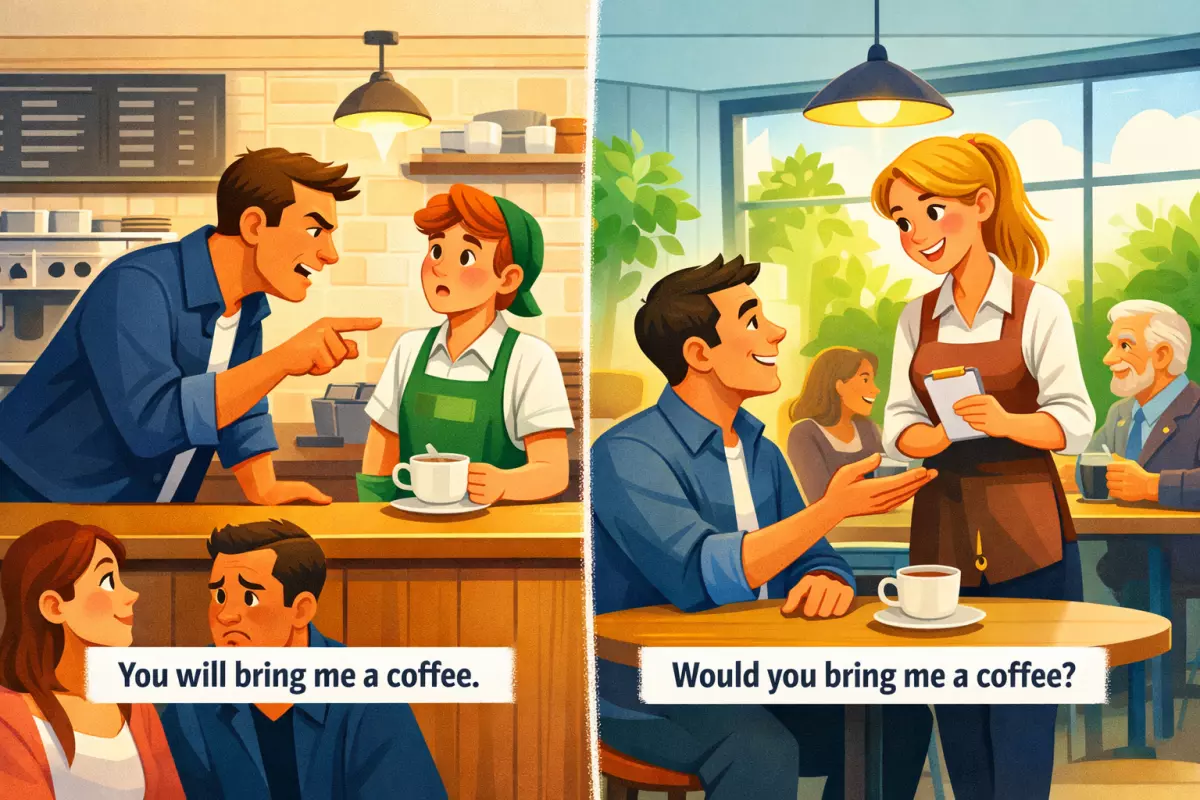
Swapping will for would often shifts a sentence from direct and definite to softer, more tentative, or more polite. The meaning may stay close, but the listener usually hears a change in attitude: less pressure, more distance, or more respect for the other person’s choice.
What listeners typically hear
- Less force: will can sound like a firm push; would reduces that push and feels less demanding.
- More politeness: would is a common marker of courteous requests and offers, especially with strangers or in professional settings.
- More tentativeness: would suggests the speaker is not assuming the answer is “yes.”
- More formality: would often sounds more formal than will, even when the words are otherwise identical.
- More emotional distance: would can create space, which can sound diplomatic, cautious, or less personal.
- Less certainty: will tends to signal confidence about the future; would can imply conditions or uncertainty.
- More “optional” feeling: would frames the action as a choice rather than an expectation.
Common conversation patterns (with examples)
- Requests: “Will you open the window?” (direct) → “Would you open the window?” (more polite)
- Asking for help: “Will you help me with this?” → “Would you help me with this?” (less pressure)
- Invitations: “Will you join us for dinner?” → “Would you like to join us for dinner?” (more courteous, less assuming)
- Offers: “Will you have some tea?” → “Would you like some tea?” (more standard for hosting)
- Permission/comfort checks: “Will it bother you if I sit here?” → “Would it bother you if I sat here?” (more tentative)
- Suggestions: “Will you try restarting it?” → “Would you try restarting it?” (softer guidance)
- Customer/service language: “Will you sign here?” → “Would you sign here, please?” (polite instruction)
- Negotiation: “Will you accept $200?” → “Would you accept $200?” (less confrontational)
- Feedback: “Will you tell me what you think?” → “Would you tell me what you think?” (more deferential)
- Plans framed as conditional: “I will go if I finish early.” → “I would go if I finished early.” (more hypothetical)
- Predictions: “That will be expensive.” (confident) → “That would be expensive.” (based on a condition/assumption)
- Refusals/limits: “I won’t do that.” (firm) → “I wouldn’t do that.” (often reads as advice or principle, less confrontational)
- Criticism softened: “That won’t work.” (blunt) → “That wouldn’t work.” (less absolute; invites discussion)
- Polite follow-up: “Will you send it today?” → “Would you be able to send it today?” (adds flexibility)
When the softer form can change the message too much
- Urgency and authority: In emergencies or clear instructions, will can be appropriate because it is direct: “Will you call 911?” Using would may sound less urgent.
- Commitments: “I will do it” communicates a firm promise; “I would do it” can sound like a hypothetical intention unless the context clearly supports it.
- Clarity in decisions: “We will start at 9” is a schedule; “We would start at 9” can sound like the plan is still negotiable or dependent on something.
Quick cues for choosing between them
- Use will when you want directness, certainty, or a clear commitment.
- Use would when you want politeness, reduced pressure, or a conditional/hypothetical frame.
- If you hear “Is this a request or a decision?”: requests often favor would; decisions and promises often favor will.
Situations where would softens a statement or opinion
Use would to make a message less direct and more tentative. It often signals “this is my view” rather than “this is a fact,” or it turns a strong demand into a polite preference. The effect is especially common in advice, criticism, disagreement, and workplace writing.
Common patterns that reduce directness
- I would + verb to present a choice, not an order: “I would recommend waiting.”
- I would say / I’d say to frame an opinion as a estimate: “I’d say this is the best option.”
- I would think / I’d think to soften certainty: “I’d think we need more data.”
- I would suggest for gentle advice: “I would suggest a shorter intro.”
- I would prefer for polite preferences: “I’d prefer to meet tomorrow.”
- I would be inclined to for cautious recommendations: “I’d be inclined to keep the current plan.”
- It would be better (to) to avoid sounding critical: “It would be better to add a source.”
- It would help if to request change indirectly: “It would help if you could send it today.”
- It would seem (that) for careful conclusions: “It would seem that sales are slowing.”
- That would be + adjective to express a reaction politely: “That would be great,” “That would be difficult.”
- Would you mind + -ing for especially polite requests: “Would you mind checking this?”
- Would it be possible to… for formal, low-pressure requests: “Would it be possible to reschedule?”
- I would appreciate it if… to sound courteous in writing: “I’d appreciate it if you could confirm.”
- I wouldn’t + verb to give gentle warnings: “I wouldn’t rush the decision.”
- I would rather / I’d rather to state a preference without confrontation: “I’d rather not discuss that now.”
Softening disagreement and criticism
- Use would to disagree without sounding blunt: “I would disagree with that conclusion.”
- Use I would question… to challenge an idea politely: “I would question whether this is necessary.”
- Use I would be careful about… to warn tactfully: “I would be careful about changing the scope.”
- Use It would be worth + -ing to suggest improvement without blame: “It would be worth adding a summary.”
- Use I would avoid + -ing to give gentle negative advice: “I would avoid mentioning prices here.”
- Use I would consider + -ing to propose an alternative: “I would consider moving this section earlier.”
Quick contrasts: direct vs. softened
| More direct | Softer with would |
|---|---|
| “This is wrong.” | “I would say this needs a revision.” |
| “Send it today.” | “Would you be able to send it today?” |
| “We need more evidence.” | “I would think we need more evidence.” |
| “Don’t do that.” | “I wouldn’t do that in this situation.” |
In many of these uses, would works like a “distance” marker: it creates space between the speaker and the claim. That distance makes the message sound less absolute, which is useful when you want cooperation, not conflict.
Typical learner confusion between will and would
Many mistakes come from mixing up three ideas: real future decisions, polite language, and unreal or “distance” meanings. The same verb form can look similar on the page, but the choice changes how certain, polite, or hypothetical the message sounds.
1) Treating would as a simple future tense
Would does not normally mean a straightforward future plan. It often signals a hypothetical situation, a polite request, or “future in the past” (reported future).
- ❌ “I would call you tomorrow.” (sounds conditional or like a plan viewed from the past)
- ✅ “I will call you tomorrow.” (simple future intention)
- ✅ “I would call you tomorrow if I had your number.” (conditional: depends on a condition)
- ✅ “He said he would call tomorrow.” (future in the past: reported speech)
2) Overusing will in requests (too direct)
In requests, will can sound firm or demanding, especially with strangers or in formal contexts. Would is the common choice to soften the request.
- ✅ “Would you open the window, please?” (polite)
- ✅ “Will you open the window, please?” (possible, but more direct)
- ✅ “Would you mind waiting a moment?” (standard polite pattern)
- ❌ “Will you mind waiting a moment?” (wrong pattern with “mind”)
3) Confusing “willingness” with “prediction”
Will can show willingness or refusal, not only future time. Learners sometimes interpret every will sentence as a prediction.
- ✅ “I’ll help you.” (willingness/offer)
- ✅ “He won’t answer my emails.” (refusal/behavior, not future time)
- ✅ “It will rain later.” (prediction)
- ✅ “My car won’t start.” (present problem; “refuses” to start)
4) Missing the “distance” meaning of would
Would often creates distance: it can make a statement less forceful, less certain, or less immediate. This is why it appears in polite language and cautious opinions.
- ✅ “I would like to ask a question.” (more formal/soft)
- ✅ “I’d say it’s a bad idea.” (gentler opinion)
- ✅ “That would be great.” (polite response, not a real condition)
- ✅ “Would it be possible to reschedule?” (soft, indirect request)
5) Mixing up conditional patterns (if + will / would)
In many conditional sentences, will and would follow different logic. A common error is using will in the if-clause when it is not about willingness or a real future condition.
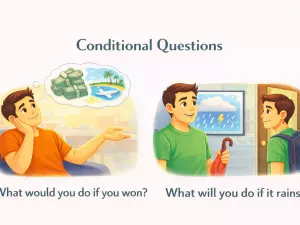
- ✅ “If it rains, we will stay home.” (real possibility → likely result)
- ✅ “If it rained, we would stay home.” (hypothetical → imagined result)
- ❌ “If it will rain, we will stay home.” (usually wrong; sounds unnatural)
- ✅ “If you will wait a moment, I’ll check.” (acceptable when meaning “if you are willing to wait”)
6) Confusion in reported speech (“future in the past”)
When reporting what someone said or thought, English often shifts will to would. Learners may keep will and accidentally change the time reference.
- ✅ Direct: “I will email you.” → Reported: “She said she would email me.”
- ✅ Direct: “We will arrive at 6.” → Reported: “They said they would arrive at 6.”
- ✅ Direct: “I won’t forget.” → Reported: “He promised he wouldn’t forget.”
7) Common fixed patterns learners mix up
- ✅ “Would you like…?” (offering/asking preference) vs ❌ “Will you like…?” (usually wrong)
- ✅ “Would you rather…?” (preference) vs ❌ “Will you rather…?”
- ✅ “I would like…” (polite) vs “I will like…” (means future liking; uncommon)
- ✅ “Would you mind + -ing…?” vs ❌ “Would you mind + to…”
- ✅ “Would have + past participle” (unreal past result) vs ❌ using it for a simple past event
Exercises and practice activities contrasting will and would
Use these activities to notice the main patterns: will for decisions, predictions, and firm willingness, and would for polite distance, imagined situations, and “future in the past.” Focus on the time reference (now/future vs. past viewpoint) and the level of certainty or politeness.
1) Quick choice: will or would?
- I think it ______ rain later, so take an umbrella.
- “The phone’s ringing.” “I ______ get it.”
- ______ you mind closing the window?
- When I was a child, I ______ visit my grandparents every summer.
- He said he ______ call me after the meeting.
- If I had more time, I ______ learn another language.
- ______ you like some tea or coffee?
- Don’t worry—she ______ help you with that.
- In those days, people ______ write letters instead of sending messages.
- I promised I ______ be there by 6.
- If you asked him nicely, he ______ probably agree.
- “Someone’s at the door.” “That ______ be the delivery driver.”
Show answers
- will
- will
- would
- would
- would
- would
- would
- will
- would
- would
- would
- will
2) Rewrite to change tone (direct → more polite)
- Will you send me the file?
- Will you wait here?
- Will you help me for a minute?
- Will you tell me your name?
- Will you open the door?
- Will you be quiet?
Show answers
- Would you send me the file?
- Would you wait here?
- Would you help me for a minute?
- Would you tell me your name?
- Would you open the door?
- Would you be quiet?
3) Rewrite to shift viewpoint (future → “future in the past”)
Change each sentence so it reports a past viewpoint (for example, in a story or reported speech). Keep the meaning as close as possible.
- I will call you tomorrow.
- We will meet at the station at 9.
- She will probably forget.
- They will not agree to that plan.
- Will you help me later?
Show answers
- I said I would call you the next day.
- We said we would meet at the station at 9.
- She thought she would probably forget.
- They said they would not agree to that plan.
- I asked if you would help me later.
4) Spot the mismatch (choose the better option)
Each item has two choices. Pick the one that fits the situation best.
- Polite request to a stranger: (A) Will you pass the salt? (B) Would you pass the salt?
- Instant decision: “I’m thirsty—(A) I’ll buy (B) I’d buy some water.”
- Imagined result: “If we left now, we (A) will (B) would arrive before dark.”
- Habit in the past: “Every winter, my uncle (A) will (B) would go skiing.”
- Confident prediction: “Don’t call at 8—she (A) will (B) would be asleep.”
- Reported promise: “He said he (A) will (B) would fix it.”
- Offer: “(A) Will (B) Would you like a seat?”
- Refusal/willingness: “I (A) won’t (B) wouldn’t sign the form.”
Show answers
- B
- A
- B
- B
- A
- B
- B
- A (refusal now/future); B can work for a past refusal or a hypothetical stance, but A fits best without extra context.
5) Build your own mini-dialogues (pattern practice)
- Predictions: Write 5 sentences about the next week using “I think … will …” and “That will probably …”.
- Instant decisions: Create 5 short responses to situations (phone ringing, someone knocks, you drop something) using “I’ll …”.
- Polite requests: Write 6 requests using “Would you…?” and 2 using “Would you mind + -ing…?”
- Hypotheticals: Write 6 “If …, I would …” sentences (unreal or unlikely situations).
- Future in the past: Write 4 reported-speech sentences with “said/thought/knew … would …”.
- Past habits: Write 4 sentences about repeated past actions with “would” (add a past time marker like “when I was in school”).
- Willingness vs. politeness: For the same request, write one version with “Will you…?” (more direct) and one with “Would you…?” (more softened).