Using Would and Could for Polite English Communication

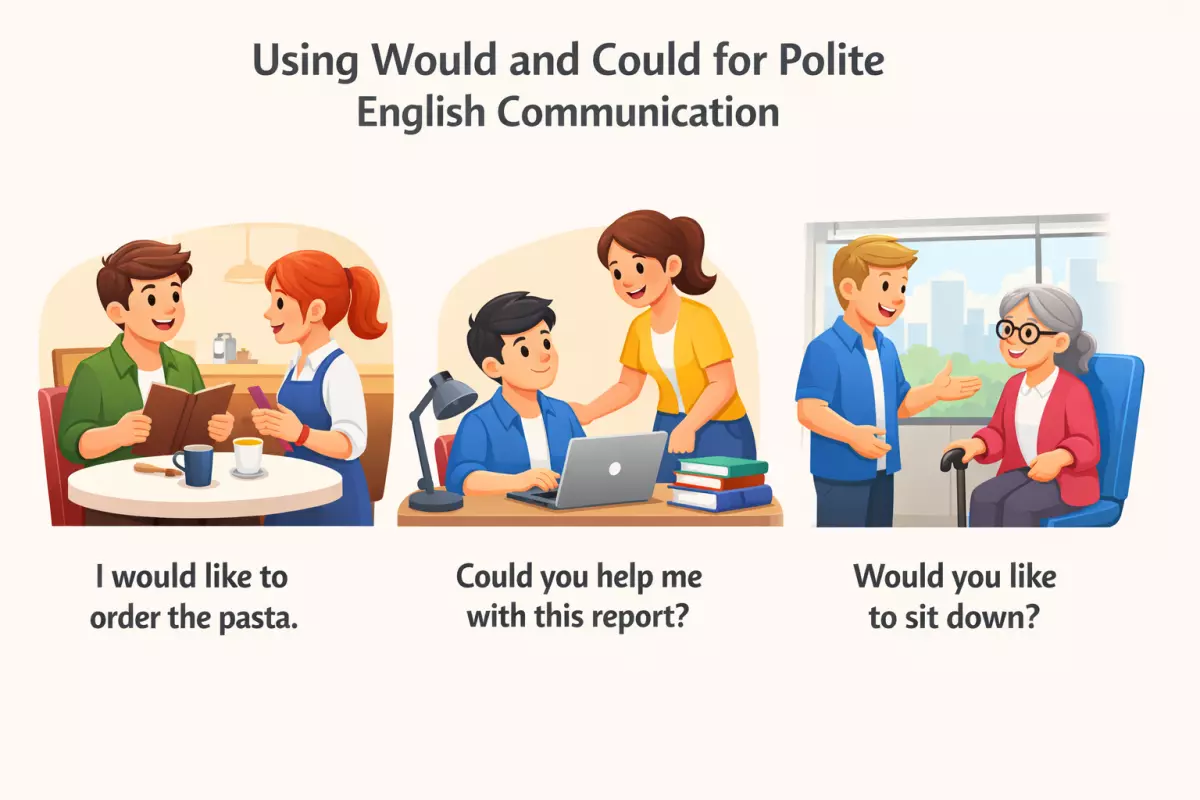 This article explains why English speakers use modal verbs to sound polite, how would and could change a request’s tone, and the difference between asking willingness vs ability. It covers common forms like would you/could you, real service and daily examples, softening tactics, plus practice exercises.
- Why English speakers rely on modal verbs to sound polite
- How would and could shape the tone of a request
- The difference between asking about willingness and asking about ability
- Common request structures such as would you and could you
- How polite requests appear in service situations and daily conversation
- How speakers soften requests to avoid sounding direct or demanding
- Exercises and practice activities using would and could in polite communication
In everyday conversations, choosing would or could can make your English sound more considerate and less demanding. These small modal verbs help you soften requests, offer options, and show respect, whether you are asking for help at work, speaking to a stranger, or replying to a friend. This guide explains when each one fits best so your meaning stays clear, polite, and kind.
Why English speakers rely on modal verbs to sound polite
In English, politeness often comes from sounding less direct. Modal verbs like would and could help speakers soften requests, suggestions, and questions by adding distance, choice, or uncertainty. This makes the listener feel less pressured, even when the speaker still wants a clear outcome.
What modal verbs do to the tone
- They reduce force: “Open the window” → “Could you open the window?”
- They add choice: “You need to…” → “Could you…?” / “Would you…?”
- They signal respect for time and effort: “Help me” → “Could you help me for a moment?”
- They create social distance when needed: useful with strangers, customers, managers, or formal emails.
- They make disagreement safer: “That’s wrong” → “That could be difficult because…”
- They allow indirect negotiation: “I want X” → “I would like X” / “Could we do X?”
Common politeness patterns with would and could
- Could you + base verb (polite request): “Could you send the file?”
- Would you + base verb (polite request, slightly more personal): “Would you check this?”
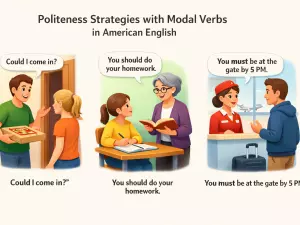
- Could I + base verb (asking permission): “Could I leave a bit early?”
- Would it be possible to + base verb (very formal): “Would it be possible to reschedule?”
- Would you mind + -ing (polite, careful): “Would you mind waiting a minute?”
- Could you possibly + base verb (extra softening, use sparingly): “Could you possibly review this today?”
- I was wondering if you could + base verb (indirect, common in email): “I was wondering if you could help.”
- I’d like to + base verb (polite statement of need): “I’d like to ask a question.”
- Would you be able to + base verb (focus on ability/availability): “Would you be able to join the call?”
- Could we + base verb (collaborative suggestion): “Could we look at another option?”
- Would it help if + past (supportive offer): “Would it help if I took notes?”
- Could you let me know + wh- / if (polite follow-up): “Could you let me know when it’s ready?”
- Would you prefer + noun / to-inf (giving options): “Would you prefer to meet tomorrow?”
- Could you clarify + noun/wh- (polite request for details): “Could you clarify the timeline?”
- Would you like me to + base verb (offer of help): “Would you like me to call them?”
Why past forms sound more polite
- “Could” and “would” often act as softeners, not true past time. They create psychological distance, which makes the request feel less demanding.
- They frame the action as optional. The listener can agree without feeling ordered.
- They fit English norms for indirectness. In many everyday contexts, direct imperatives can sound abrupt unless there is clear authority or urgency.
Direct vs. polite: typical shifts
- ❌ “Send me the report.” ✅ “Could you send me the report?”
- ❌ “Tell me your decision.” ✅ “Could you let me know your decision?”
- ❌ “I want a refund.” ✅ “I’d like a refund, please.”
- ❌ “Move our meeting.” ✅ “Would it be possible to move our meeting?”
- ❌ “Explain this.” ✅ “Could you explain this a bit more?”
These modal patterns are especially useful when the request costs time, interrupts someone, or involves a favor. They keep the message clear while matching the expectation that polite English often sounds slightly indirect.
How would and could shape the tone of a request
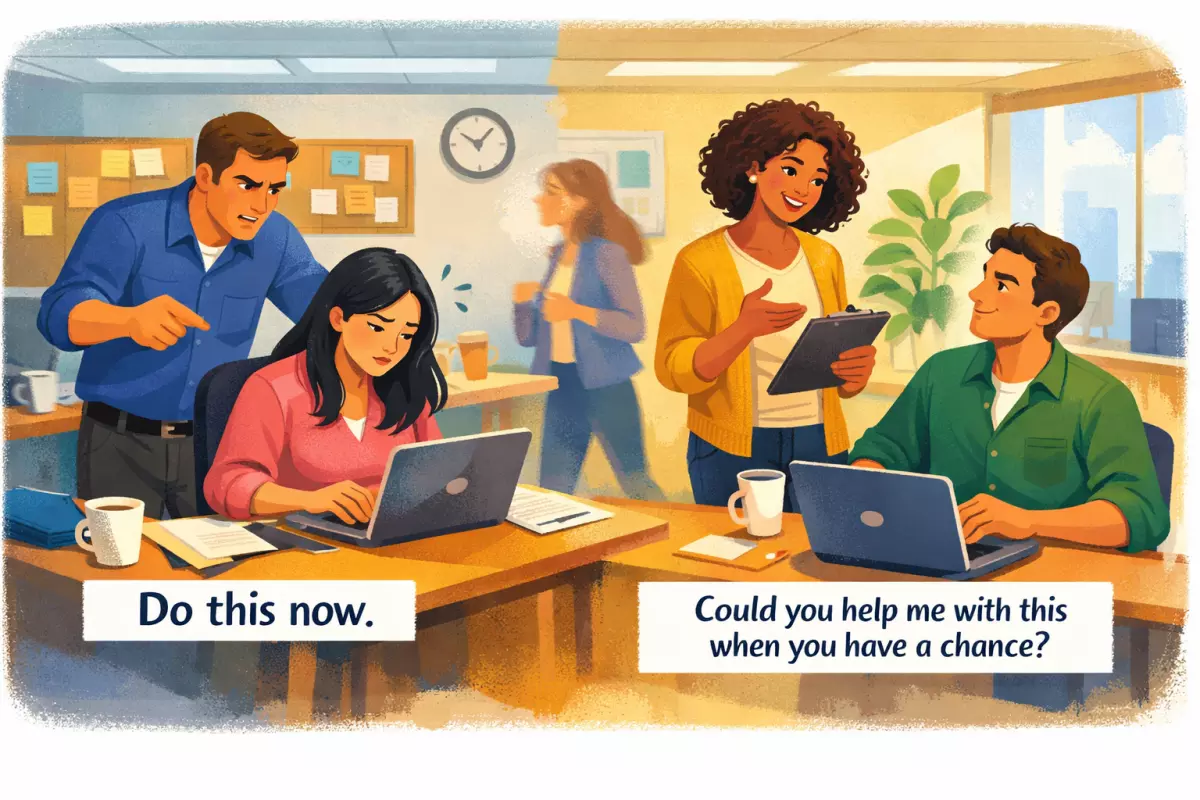
In requests, would and could soften the message by adding distance and choice. They help you sound less forceful than direct forms like “Do this” or “Can you…?” and they are especially useful in emails, customer service, and workplace conversations where you want cooperation rather than compliance.
What each modal tends to communicate
- Would often signals willingness, preference, or a polite “request frame.” It can feel like you’re asking what the other person is willing to do.
- Could often highlights possibility or ability. It can feel like you’re asking whether it’s feasible for the other person to do it.
- Both modals reduce pressure by implying “if it’s possible / if you’re willing,” even when you don’t say those words.
- Both are common in service and professional settings because they leave room for a “yes,” a “no,” or an alternative.
Common patterns that change the tone
- Would you + base verb…? “Would you send the updated file?” (polite, cooperative)
- Could you + base verb…? “Could you send the updated file?” (polite, feasibility-focused)
- Would you mind + -ing…? “Would you mind forwarding this?” (very polite; expects courtesy)
- Could you possibly + base verb…? “Could you possibly check the figures?” (extra soft; use sparingly)
- Would it be possible to + base verb…? “Would it be possible to reschedule?” (formal, indirect)
- Could I + base verb…? “Could I ask a quick question?” (polite self-request)
- Would it be okay if + clause…? “Would it be okay if I joined the call?” (permission, gentle)
- Could we + base verb…? “Could we meet at 3 instead?” (collaborative, suggests options)
- Would you be able to + base verb…? “Would you be able to review this today?” (polite, slightly formal)
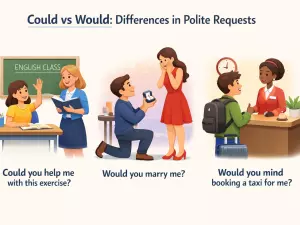
- Could you help me (with) + noun…? “Could you help me with the setup?” (requests assistance without sounding demanding)
Side-by-side examples: direct vs. softened
| More direct | Softer with would/could |
|---|---|
| Send me the report. | Could you send me the report? |
| Answer my question. | Would you answer a quick question? |
| Move the meeting to Friday. | Would it be possible to move the meeting to Friday? |
| Let me know today. | Could you let me know today if you can? |
Small additions that make requests sound more considerate
- Add a brief reason: “Could you resend it? I can’t open the attachment.”
- Use time phrases carefully: “Could you send it by 2 pm?” is clearer and often kinder than “Send it ASAP.”
- Offer an option: “Could you review this today, or tomorrow morning if that’s easier?”
- Use “please” naturally, not repeatedly: “Could you please confirm the address?”
- Keep the ask specific: “Could you approve the final version in the folder named ‘March’?”
Common mistakes to avoid
- ❌ “Would you can send it?” → ✅ “Could you send it?” or “Would you send it?”
- ❌ “Could you to send it?” → ✅ “Could you send it?”
- ❌ Over-softening until it’s unclear: “I was wondering if you could maybe possibly…” → keep it polite but direct.
- ❌ Using “would” to ask about ability: “Would you send it?” is fine, but if you mean feasibility, “Could you send it today?” is often clearer.
The difference between asking about willingness and asking about ability
In polite requests, would usually checks if someone is willing to do something, while could usually checks if something is possible or if the person has the ability, time, or permission to do it. Choosing the right modal helps your request sound clear instead of pushy or confusing.
Core meaning: choice vs. capability
- Would focuses on willingness or preference: “Are you open to doing this?”
- Could focuses on ability/possibility/permission: “Is this doable?”
- In many everyday requests, both sound polite, but they imply different reasons someone might say no.
- If you use would, a “no” can mean “I’d rather not” or “I’m not available.”
- If you use could, a “no” often means “I’m not able to” or “It isn’t possible right now.”
Common patterns and what they signal
- Would you + base verb (requesting action): “Would you email me the file?”
- Would you mind + -ing (very polite request): “Would you mind closing the window?”
- Could you + base verb (checking feasibility): “Could you send it by 3 p.m.?”
- Could you possibly + base verb (extra softening): “Could you possibly help me for a minute?”
- Could I + base verb (asking permission): “Could I leave a little early today?”
- Would it be possible to + base verb (indirect, formal): “Would it be possible to reschedule?”
Examples: when to choose which
- When you’re asking for a favor (willingness): “Would you cover my shift on Friday?”
- When you’re checking if someone has time/availability (ability in practice): “Could you meet this afternoon?”
- When you want to sound cooperative and not assume (willingness): “Would you take a look when you have a moment?”
- When there may be a practical constraint (possibility): “Could you print this in color?”
- When permission matters (permission): “Could I use your charger?”
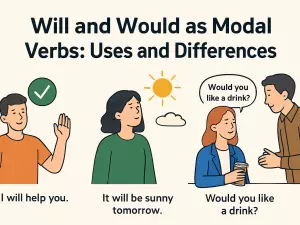
- When offering options (preference): “Would you like tea or coffee?”
- When asking for a small action in service situations (willingness): “Would you bring the check, please?”
- When the request depends on tools/skills (ability): “Could you open this file type?”
Clear contrasts (correct vs. confusing)
- ✅ “Would you help me with this?” (Are you willing?) → natural for favors.
- ✅ “Could you help me with this?” (Are you able right now?) → natural when timing/ability matters.
- ❌ “Could you like some coffee?” → preference needs would: “Would you like some coffee?”
- ❌ “Would I borrow your pen?” → permission needs could: “Could I borrow your pen?”
Quick rule for choosing
- If the main issue is someone’s choice, comfort, or preference, use would.
- If the main issue is feasibility (time, skill, resources) or permission, use could.
- If you’re unsure, could you is a safe default for polite requests, and would you like is the standard pattern for offers.
Common request structures such as would you and could you

Polite requests in English often follow a small set of reliable patterns. These structures let you ask for help, information, or permission without sounding too direct. The main choices depend on (1) how formal you want to be and (2) whether you are asking someone to do an action or asking about possibility/permission.
Core patterns for asking someone to do something
- Would you + base verb…? (polite, common)
Example: Would you open the window? - Could you + base verb…? (polite, slightly more tentative)
Example: Could you send me the file? - Would you mind + -ing…? (very polite; expects “No” to mean yes)
Example: Would you mind waiting a moment? - Could you possibly + base verb…? (extra softening; use when asking a bigger favor)
Example: Could you possibly cover my shift? - Would you be able to + base verb…? (focuses on ability/availability)
Example: Would you be able to join the call at 3? - Could you help me (with) + noun / by + -ing…? (adds clarity about the help needed)
Example: Could you help me by checking this report? - Would you please + base verb…? (polite but can sound firm in some contexts)
Example: Would you please keep your voice down?
Patterns for asking permission or making a request about your own action
- Could I + base verb…? (polite permission)
Example: Could I leave a little early today? - May I + base verb…? (more formal)
Example: May I ask a quick question? - Would it be okay if I + past tense…? (very polite; uses past for distance)
Example: Would it be okay if I sat here? - Could I possibly + base verb…? (extra tentative)
Example: Could I possibly reschedule our meeting?
Useful add-ons that make requests sound smoother
- …please (place it naturally, often near the end)
Example: Could you repeat that, please? - …for me (signals personal help)
Example: Would you check this for me? - …when you have a moment (reduces urgency)
Example: Could you call me when you have a moment? - …if you don’t mind (softens the request)
Example: Would you close the door if you don’t mind? - …if it’s not too much trouble (for bigger favors)
Example: Could you print this if it’s not too much trouble? - Quick question: (sets up a brief request)
Example: Quick question: could you confirm the address?
Common word order and grammar notes
- After would you and could you, use the base verb: ✅ Could you help me? ❌ Could you helping me?
- Use would you mind + -ing, not the base verb: ✅ Would you mind closing the window?
- With would it be okay if…, English often uses a past form to sound more polite: Would it be okay if I took a seat?
- Keep the request specific: add the object or detail (the file, the address, the time) to avoid sounding vague.
- In many situations, could you is about politeness, not real ability; it usually means “please do this,” not “are you capable?”
How polite requests appear in service situations and daily conversation
In everyday interactions, polite requests often use would and could to soften the tone and give the other person room to agree or refuse. These modal verbs commonly appear in questions, especially with “you,” and they pair well with simple action verbs like “help,” “bring,” “check,” and “tell.”
Common patterns you will hear
- Would you + base verb …? (polite, direct) → “Would you open the window?”
- Could you + base verb …? (polite, slightly more tentative) → “Could you speak a little slower?”
- Would you mind + -ing …? (very polite; expects “No” to mean yes) → “Would you mind waiting a moment?”
- Could I + base verb …? (asking permission) → “Could I use your phone?”
- Could we + base verb …? (group request/suggestion) → “Could we meet at 3?”
- Would it be possible to + base verb …? (formal, careful) → “Would it be possible to reschedule?”
- I was wondering if you could … (indirect, very soft) → “I was wondering if you could email the details.”
- Could you possibly …? (adds extra softness; use when asking more) → “Could you possibly check again?”
Service situations: typical request language
- “Could you bring the menu, please?”
- “Would you add no onions, please?”
- “Could we get the bill when you have a moment?”
- “Would you mind splitting the check?”
- “Could you tell me what time you close?”
- “Would you check if this comes in a larger size?”
- “Could I get a refund for this item?”
- “Could you print the receipt, please?”
- “Would it be possible to change my seat?”
- “Could you hold this package behind the counter for me?”
- “Would you call a taxi for me, please?”
- “Could you let me know when it’s ready?”
Daily conversation: small, polite asks
- “Could you pass the salt?”
- “Would you turn the music down a bit?”
- “Could I borrow your charger for a minute?”
- “Would you mind closing the door?”
- “Could you remind me tomorrow?”
- “Would you help me carry this?”
- “Could we talk later?”
- “Would it be okay if I left early?”
- “Could you send me the address?”
- “Would you take a look at this when you have time?”
Small usage notes that affect politeness
- Please usually goes at the end (“Could you help me, please?”) or after the subject (“Could you please help me?”). Both are natural.
- Could often sounds less like an order than a plain imperative: ✅ “Could you wait here?” ❌ “Wait here.”
- Would you mind…? is answered differently: ✅ “No, not at all.” (meaning “Sure, I can.”) ❌ “Yes, sure.” (can sound like you do mind).
- Adding a brief reason can make a request smoother: “Could you speak up a little? I can’t hear you well.”
- In busy service contexts, short forms are common but still polite: “Could I have a coffee, please?” / “Could we have two waters?”
How speakers soften requests to avoid sounding direct or demanding
Polite requests in English often sound less forceful when speakers add distance, choice, and appreciation. Instead of giving an instruction, they frame the request as a question, a possibility, or a small favor. Would and could are central to this because they naturally reduce pressure and invite cooperation.
Core patterns that make requests sound gentler
- Use a modal question instead of an imperative: ❌ “Send me the file.” ✅ “Could you send me the file?”
- Choose “could” to emphasize ability/possibility: “Could you check the numbers again?”
- Choose “would” to emphasize willingness/preference: “Would you help me for a minute?”
- Add “please” in a natural position: “Could you please email the receipt?” / “Could you email the receipt, please?”
- Use “Would you mind…?” for extra softening: “Would you mind closing the window?” (typically followed by an -ing form)
- Use “Could you possibly…?” to reduce urgency: “Could you possibly move your bag?”
- Use “Would it be possible to…?” for formal contexts: “Would it be possible to reschedule the meeting?”
- Use “Could I…?” / “Could we…?” to ask permission collaboratively: “Could I leave a bit early?” / “Could we start at 10?”
- Use “Would it be OK if…?” to give the listener control: “Would it be OK if I called you tomorrow?”
- Use “I was wondering if…” to create distance: “I was wondering if you could review this today.”
- Use “Do you think you could…?” to soften further: “Do you think you could lower your voice?”
- Use “If you could…” for gentle instructions: “If you could sign here, that would be great.”
- Use “when you have a moment” to reduce pressure: “Could you call me when you have a moment?”
- Use “at your convenience” for formal flexibility: “Could you reply at your convenience?”
- Use “just” carefully to make it feel small: “Could you just confirm the address?” (Avoid it if it sounds dismissive.)
Common request frames with ready-to-use examples
- Could you + base verb…? “Could you open the door?”
- Would you + base verb…? “Would you wait here for a moment?”
- Could I + base verb…? “Could I borrow your pen?”
- Would you mind + -ing…? “Would you mind speaking a little slower?”
- Would it be possible to + base verb…? “Would it be possible to extend the deadline?”
- I was wondering if + clause “I was wondering if you could send the updated version.”
- Do you think you could + base verb…? “Do you think you could take a quick look?”
- If you could + base verb…, that would help “If you could forward this to the team, that would help.”
- Could you please + base verb…? “Could you please confirm your availability?”
- Would you be able to + base verb…? “Would you be able to join the call?”
- Would you like to + base verb…? “Would you like to take a seat?” (polite offer that can function like a request)
- Could we + base verb…? “Could we discuss this after lunch?”
Small add-ons that reduce directness
- Give a brief reason: “Could you reply today, because we need to finalize the order?”
- Acknowledge effort: “Could you take a look when you get a chance? I know you’re busy.”
- Offer an easy option: “Could you send it today or tomorrow morning?”
- Use appreciation in advance: “Could you email the details? Thanks.”
- Use “a bit / a little” to soften adjustments: “Would you speak a little more slowly?”
- Use “whenever you can” for non-urgent tasks: “Could you update the document whenever you can?”
Common mistakes that sound more demanding
- Using an imperative with “please” only: “Please send it now.” (Often still feels like an order; “Could you send it now, please?” is softer.)
- Overusing “just”: “Just do this.” (Can sound impatient; use “just” only when it truly means “a small step.”)
- Stacking too many softeners: “I was wondering if you could possibly maybe…” (Can sound unnatural; choose one or two.)
- Using “Would you mind…?” with the wrong form: ❌ “Would you mind to help?” ✅ “Would you mind helping?”
Exercises and practice activities using would and could in polite communication
Use the activities below to build control over polite requests, offers, and permission questions. Focus on the patterns (subject + would/could + base verb) and on choosing the right level of softness for the situation.
1) Choose would or could (function-focused)
- _____ you open the window, please?
- _____ you mind waiting a moment?
- _____ I borrow your pen for a second?
- _____ you like some tea?
- _____ you possibly send that file today?
- _____ I ask a quick question?
- _____ you help me carry this box?
- _____ you prefer email or a phone call?
- _____ it be okay if I joined the meeting late?
- _____ you tell me where the restroom is?
Show answers
- Could
- Would
- Could
- Would
- Could
- Could
- Could
- Would
- Would
- Could
2) Rewrite to sound more polite (upgrade the tone)
Rewrite each sentence using would or could. Keep the meaning the same, but make it suitable for a workplace or a formal request.
- Send me the report today.
- Wait here.
- Give me your phone number.
- Move your bag.
- Tell me what happened.
- I want to ask something.
- Can I use your charger?
- Do you want to meet at 3?
Show answers
- Could you send me the report today, please?
- Would you mind waiting here for a moment?
- Could you share your phone number with me?
- Would you mind moving your bag?
- Could you tell me what happened?
- Could I ask something?
- Could I use your charger, please?
- Would you like to meet at 3?
3) Fix the pattern (common form mistakes)
Each item has a problem with grammar or politeness. Rewrite it correctly using standard polite structures.
- Would you to help me?
- Could you helping me with this?
- Would you mind to close the door?
- Could I to sit here?
- Would you like that you send it now?
- Could you please to repeat that?
Show answers
- Would you help me?
- Could you help me with this?
- Would you mind closing the door?
- Could I sit here?
- Would you like to send it now?
- Could you please repeat that?
4) Match the situation to the best sentence (register practice)
- You need a stranger to take a photo of you. (A) Would you like me to take a photo? (B) Could you take a photo of me, please?
- You are offering help to a colleague. (A) Could you help me? (B) Would you like me to help you with that?
- You want permission to leave early. (A) Could I leave a bit early today? (B) Would you like to leave early?
- You want someone to repeat information. (A) Could you repeat that, please? (B) Would you like to repeat that?
- You are politely asking someone to wait. (A) Would you mind waiting a moment? (B) Could you like waiting a moment?
Show answers
- B
- B
- A
- A
- A
5) Build your own polite phrases (pattern drill)
Use these building blocks to create complete sentences. Aim for natural, polite wording; add “please” only where it sounds normal.
- Could you + open / check / confirm / send / explain / show / remind / update / reschedule / clarify
- Would you + like to / prefer to / be able to + meet / call / wait / review / join / discuss
- Would you mind + -ing: waiting / closing / lowering / moving / repeating / signing / forwarding / sharing
- Could I + ask / borrow / take / use / join / leave / sit / speak / confirm / reschedule
- Would it be possible to + move / change / extend / start / finish / switch / add / remove / review / approve
- Would it be okay if I + joined late / called tomorrow / followed up / took notes / left early / used this seat
6) Mini role-play prompts (short, realistic practice)
- At a café: ask for a different table and request the bill.
- At work: ask a teammate to review a document and suggest a new deadline.
- On the phone: ask someone to speak more slowly and repeat a number.
- In a meeting: ask permission to add one more point and to share your screen.
- With a neighbor: ask them to lower the music and offer to help carry groceries.
Quick checklist while you practice
- Use the base verb after would/could: “Could you send…?” (not “to send”).
- Use -ing after “Would you mind”: “Would you mind waiting…?”
- Use “Could I…?” for permission and “Would you like…?” for offers/invitations.
- Soften further with: “possibly,” “a moment,” “when you have time,” and a friendly closing like “please.”