Modal Verbs for Advice and Suggestions in English

 Learn how English speakers give recommendations with modal verbs, comparing the tone of should, ought to, and could. See when advice gets stronger or softer, common sentence patterns, how context shifts meaning, everyday examples, plus exercises to practice.
- How English speakers give recommendations using modal verbs
- The difference in tone between should, ought to, and could
- Situations where advice becomes stronger or softer depending on the modal
- Sentence patterns commonly used when suggesting actions
- How advice changes meaning depending on context
- Examples of recommendations in everyday communication
- Exercises and practice activities with modal verbs for advice and suggestions
Advice in English often relies on small helper verbs that soften your message or make it stronger, so you sound helpful rather than bossy. In everyday situations with friends, coworkers, or a doctor, you can choose should, could, or might to show how certain you are and how polite you want to be. Noticing these differences helps your suggestions sound natural and confident.
How English speakers give recommendations using modal verbs
English recommendations often depend on two choices: how strong the advice should sound and how direct you want to be. Modal verbs help control that tone, from gentle suggestions to firm guidance, while keeping the grammar simple and predictable.
Core patterns that sound natural
- Modal + base verb: You should call them today.
- Modal + not + base verb (negative advice): You shouldn’t wait too long.
- Modal + be + adjective/noun phrase: It might be better to leave early.
- Modal + have + past participle (past advice/criticism): You should have checked the date.
- Modal + be + -ing (ongoing situation): You might be overthinking it.
- Question form for softer advice: Should I email or call?
- Conditional framing (less direct): If I were you, I’d talk to your manager.
Choosing the right modal for the level of pressure
- Should / shouldn’t for standard advice: You should back up your files. / You shouldn’t skip breakfast.
- Ought to for slightly formal, principle-based advice: You ought to apologize.
- Could for options and light suggestions: You could try restarting the app.
- Might for very gentle, tentative suggestions: You might want to ask for a receipt.
- Can for practical possibilities (often instructional): You can add a note at checkout.
- Must for strong necessity (use carefully in advice): You must wear a helmet here.
- Had better for urgent warnings or consequences: You’d better leave now, or you’ll miss the train.
Useful recommendation templates (with examples)
- You should + base verb → You should read the instructions first.
- You shouldn’t + base verb → You shouldn’t share that password.
- You could + base verb → You could take a short break and come back to it.
- You might + base verb → You might check the spam folder.
- You might want to + base verb → You might want to book in advance.
- It might be better to + base verb → It might be better to wait until tomorrow.
- If I were you, I would + base verb → If I were you, I’d ask for clarification.
- Why don’t you + base verb? → Why don’t you message them directly?
- Should we + base verb? → Should we reschedule the meeting?
- Could you + base verb? (polite recommendation as a request) → Could you send it as a PDF?
- You’d better + base verb → You’d better save your work before updating.
- You should have + past participle → You should have told them earlier.
Common form issues to avoid
- ✅ You should go now. ❌ You should to go now.
- ✅ You could try calling. ❌ You could to try calling.
- ✅ You shouldn’t say that. ❌ You don’t should say that.
- ✅ You should have checked. ❌ You should have check.
In practice, speakers often soften advice by using could and might, or by turning the recommendation into a question. Stronger forms like must and had better are typically reserved for rules, safety, or situations with clear consequences.
The difference in tone between should, ought to, and could

These three modals can all be used to give advice, but they don’t sound equally strong. The choice affects how direct you are, how much pressure you put on the listener, and whether you’re presenting something as a recommendation, a moral duty, or just one possible option.
| Modal | Core tone | Typical use | Example |
|---|---|---|---|
| should | Clear recommendation; fairly direct | Practical advice, expectations, “best idea” | You should back up your files before updating. |
| ought to | Similar to should, but a bit more “duty/rightness” | Moral/social responsibility; what’s proper | You ought to apologize for the misunderstanding. |
| could | Gentle suggestion; low pressure | Options, brainstorming, polite advice | You could try restarting the router first. |
| could (with “always/just”) | Even softer; sounds like an easy option | Making advice feel less demanding | You could always email them if calling is hard. |
How strong is the advice?
- Should often implies “this is the best course of action.” It can sound like the speaker expects the listener to follow it.
- Ought to adds a sense of obligation or correctness, especially with behavior and relationships. It can sound slightly more judgment-based than should in sensitive contexts.
- Could presents an idea without implying it’s the only sensible choice. It’s useful when you want to reduce pressure or keep the conversation collaborative.
Common patterns (and what they signal)
- should + base verb: recommendation based on logic or experience (You should check the schedule.)
- ought to + base verb: recommendation tied to responsibility or fairness (You ought to tell them the truth.)
- could + base verb: one possible action among several (You could take the earlier train.)
- should probably: softer, less absolute (You should probably leave a bit earlier.)
- shouldn’t: warning/advice against an action (You shouldn’t skip the instructions.)
- ought not to: formal-sounding negative; less common in everyday speech (You ought not to speak like that.)
- could try: gentle, practical suggestion (You could try updating the app.)
- could consider: more thoughtful, less pushy (You could consider talking to your manager.)
- could always: gives a fallback option (You could always reschedule if needed.)
- should have + past participle: advice/criticism about the past (You should have called.)
- ought to have + past participle: past duty/expectation; can sound more moralizing (You ought to have warned them.)
- could have + past participle: missed possibility, not exactly advice (You could have asked for help.)
Examples by situation
- Practical next step: You should restart your computer before installing the driver.
- Health suggestion: You should drink more water during the day.
- Polite option: You could book a table online to save time.
- Workplace tact: You could mention it in tomorrow’s meeting if it feels urgent.
- Social expectation: You ought to thank them for their help.
- Repairing a relationship: You ought to talk to them directly instead of texting.
- Reducing pressure: You could take a break and come back to it later.
- Direct warning: You shouldn’t share that password with anyone.
- Advice with uncertainty: You should probably get a second opinion.
- Gentle brainstorming: You could try a different title, or shorten the introduction.
- Past regret (stronger): You should have saved a copy before editing.
- Past regret (more “duty”): You ought to have told them you couldn’t attend.
In many everyday situations, should is the default for straightforward advice, could is the go-to for softer suggestions, and ought to fits best when the advice is connected to responsibility, ethics, or what is considered proper behavior.
Situations where advice becomes stronger or softer depending on the modal
Advice changes tone depending on how urgent, official, or personal the situation is. Choosing the right modal helps you match the level of pressure you want: gentle guidance (could/might), practical recommendation (should/ought to), or strong expectation (must/have to). The same basic idea can sound supportive or strict just by switching the modal.
1) Safety, rules, and non-negotiable situations (strongest)
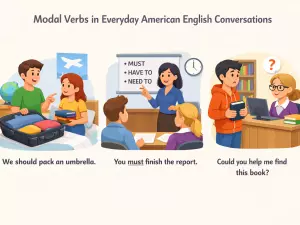
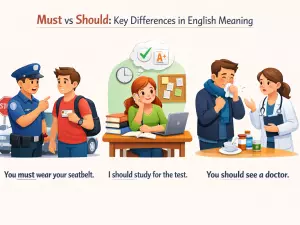
- Must for firm necessity, often connected to safety or rules: “You must wear a helmet.”
- Have to for external requirements (law, policy, schedule): “You have to show ID at reception.”
- Need to for strong practical necessity (can feel urgent but slightly less authoritarian than must): “You need to back up your files today.”
- Softening strategy: add a reason to reduce harshness: “You have to sign in because the building is secure.”
2) Professional recommendations and best practice (strong but not absolute)
- Should for standard advice in work/study contexts: “You should include a short summary at the top.”
- Ought to for a more formal or moral “should”: “You ought to inform the client about the delay.”
- Had better for a warning about consequences (often sounds like a serious push): “You’d better submit it before 5 p.m.”
- Pattern choice: “should” sounds collaborative; “had better” highlights risk if ignored.
3) Personal support and friendly suggestions (softer)
- Could for low-pressure options: “You could try taking a short walk after lunch.”
- Might for tentative, non-directive ideas: “You might want to talk to your manager first.”
- Can for suggesting a possible action without judging it: “You can ask for an extension if you need one.”
- Softening strategy: present more than one option: “You could email them, or you could call if it’s urgent.”
4) When you’re not sure (hedged advice)
- Use might or could to avoid sounding certain: “You might need to restart the router.”
- Combine with cautious phrases: “You might want to double-check the address.”
- Avoid overcommitting with “must” when the information is uncertain: ❌ “You must reset your password.” → ✅ “You may need to reset your password.”
5) When giving advice to someone senior or a customer (extra polite)
- Prefer could / might to reduce directness: “You might consider updating the settings.”
- Use question forms to soften further: “Could you try restarting the app?” (request) / “Could you try restarting the app?” (gentle suggestion, depending on context).
- Use should carefully; it can sound like a judgment if the listener has higher status: “You should…” may feel too direct in some workplaces.
6) When consequences are important (stronger without sounding like a command)
- Should + consequence: “You should save your work, or you could lose changes.”
- Had better when the outcome is negative and likely: “You’d better lock the door, or the alarm will trigger.”
- Need to when timing matters: “You need to reply today to keep the booking.”
7) When advice can sound like criticism (choose softer modals)
- If the listener may feel blamed, prefer could over should: “You could organize the files by date.”
- Use might to avoid implying “you did it wrong”: “You might want to label the folders more clearly.”
- Reserve must for true requirements; otherwise it can feel controlling: “You must be more careful” often sounds like a reprimand, not guidance.
8) Quick guide: choosing a modal by strength
- Very soft (options): might, could
- Neutral advice (recommendation): should, ought to
- Strong pressure (warning/likely consequence): had better
- Strongest (requirement/necessity): need to, have to, must
Sentence patterns commonly used when suggesting actions

When you give advice or propose a next step, English relies on a small set of reusable sentence frames. The modal (or modal-like) verb you choose signals how strong, polite, or tentative the suggestion is, and the grammar that follows is often predictable.
Core frames with modals and modal-like verbs
- Should + base verb: “You should back up your files.”
- Shouldn’t + base verb: “You shouldn’t skip breakfast.”
- Ought to + base verb: “You ought to tell them in advance.”
- Could + base verb (one option): “You could try restarting the router.”
- Might + base verb (very tentative): “You might want to email support.”
- May want to + base verb (formal/soft): “You may want to check the policy.”
- Can + base verb (practical suggestion): “You can use a template to save time.”
- Need to + base verb (strong necessity): “You need to update your password.”
- Don’t need to + base verb (removing pressure): “You don’t need to reply today.”
- Have to + base verb (external requirement): “You have to submit the form by Friday.”
- Must + base verb (very strong/urgent): “You must see a doctor if it gets worse.”
Suggestion questions (polite and collaborative)
- Should I/we + base verb?: “Should we call them now or wait?”
- Could you + base verb? (requesting action): “Could you send the updated file?”
- Could we + base verb? (team suggestion): “Could we move the meeting to Thursday?”
- Would you + base verb? (more formal/polite): “Would you double-check these numbers?”
- Would it help if + past simple?: “Would it help if I explained the steps?”
- Shall we + base verb? (common in UK English): “Shall we start with the easiest task?”
Fixed suggestion patterns that behave like modals
- Let’s + base verb: “Let’s take a short break.”
- Why don’t we/you + base verb?: “Why don’t you ask for an extension?”
- How about + noun/gerund (-ing)?: “How about meeting after lunch?”
- What about + noun/gerund (-ing)?: “What about trying a different approach?”
- I suggest (that) + subject + base verb: “I suggest you speak to your manager.”
- I recommend + noun/gerund (-ing): “I recommend using two-factor authentication.”
- It’s a good idea to + base verb: “It’s a good idea to save a copy.”
- If I were you, I’d + base verb: “If I were you, I’d leave earlier.”
Common grammar choices and frequent errors
- Use the base verb after most modals: ✅ “You should call.” ❌ “You should to call.”
- Use “to” after ought: ✅ “You ought to call.” ❌ “You ought call.”
- Use a gerund after “How about / What about”: ✅ “How about calling?” ❌ “How about call?”
- Use “not” for negative advice: “You should not share your password.” / “You shouldn’t share your password.”
- Choose strength carefully: “You could…” (optional) → “You should…” (recommended) → “You must…” (urgent/required).
How advice changes meaning depending on context
The same modal verb can sound like friendly guidance, a firm recommendation, or even a criticism depending on who is speaking, the relationship, and the situation. Paying attention to setting, urgency, and how direct the speaker is helps you choose a form that matches your intention.
Common context shifts that change the tone
- Power and roles (boss/employee, teacher/student, doctor/patient): In unequal roles, modals often feel stronger. “You should submit this by 5” can be heard as an instruction, not a suggestion.
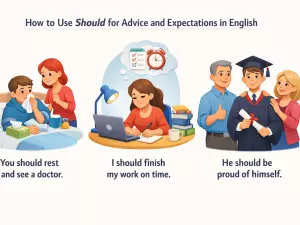
- Urgency and risk: Higher stakes make advice sound closer to a warning. “You should see a doctor” implies concern and possible danger, even though it’s grammatically “advice.”
- Relationship and closeness: With friends, direct forms can sound supportive; with strangers, the same words can sound intrusive. “You should try this” is warmer when rapport already exists.
- Certainty and evidence: When the speaker sounds sure, “should” can feel like a judgment. Softer phrasing (“might want to”) signals less certainty and less pressure.
- Timing (before vs. after a problem): After something goes wrong, “should have” often carries blame. “You should have called” may be interpreted as criticism, not help.
- Directness vs. indirectness: Indirect forms reduce the “telling you what to do” feeling. “Could you…?” and “You might want to…” usually sound less forceful than “You should…”
- Positive vs. negative framing: “You should do X” can feel more encouraging than “You shouldn’t do Y,” which can sound controlling or scolding in casual conversation.
- Added softeners: Words like “maybe,” “probably,” “if you want,” and “I think” lower intensity. Without them, a modal can sound sharper.
- Prosody and punctuation in writing: In messages, “You should…” plus an exclamation mark can look pushy. A question form often reads gentler.
- Cultural expectations: In some contexts, direct advice is normal; in others, it’s expected to be indirect. Choosing “might” or a question can avoid sounding abrupt.
Side-by-side examples: same modal, different meaning
| Form | Context | Likely meaning / tone | Example |
|---|---|---|---|
| You should… | Friend sharing a small problem | Supportive suggestion | You should try that new café near your office. |
| You should… | Manager speaking about deadlines | Near-instruction; expectation | You should send the report before lunch. |
| You should… | Health or safety situation | Warning / strong recommendation | You should back up your files before updating. |
| You shouldn’t… | Casual advice to a peer | Gentle caution | You shouldn’t skip breakfast if you get headaches. |
| You shouldn’t… | Argument or tense relationship | Criticism; “I disapprove” | You shouldn’t talk to people like that. |
| You should have… | After a mistake | Reproach or blame (often unintended) | You should have checked the address. |
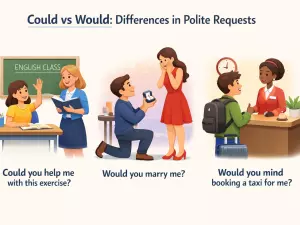
| Could you…? | Request framed as a question | Polite, less pressure | Could you try restarting it and see if that helps? |
| You could… | Offering options | One possible idea, not a push | You could email them first, then call tomorrow. |
| You might want to… | Advice to someone you don’t know well | Careful, non-imposing suggestion | You might want to double-check the meeting time. |
| Had better… | Consequences are likely | Strong warning; “or else” feeling | You’d better lock the door when you leave. |
Patterns that help you control strength
- To soften advice: use question forms (“Could you…?”), option language (“You could…”), or hedges (“Maybe you could…”).
- To make advice firmer: remove hedges and add clear reasons or consequences (“You should…, because…” / “You’d better…, or…”).
- To avoid sounding judgmental after the fact: replace “should have” with a forward-looking plan: ✅ “Next time, you could…” ❌ “You should have…”
- To keep it collaborative: use “we” or shared problem-solving: “We could try…” / “Should we…?”
- To show respect for choice: add permission language: “If you want, you could…” / “It might be worth…”
Examples of recommendations in everyday communication
In daily English, advice is often expressed with modal verbs plus a base verb (for example, “should + do”), or with a modal plus a passive form (“should be + past participle”). The choice of modal signals how strong, polite, or tentative the recommendation is.
Common situations and natural-sounding patterns
- Health (general advice): “You should drink more water during the day.”
- Health (gentle suggestion): “You might want to take a short break if you’re feeling dizzy.”
- Health (stronger recommendation): “You ought to see a doctor if the pain doesn’t stop.”
- Work (practical next step): “You should email the client before the meeting.”
- Work (softening the tone): “You could ask for clarification before you start the task.”
- Work (policy/expectation): “You should submit the report by Friday.”
- Study (effective habit): “You should review your notes right after class.”
- Study (optional strategy): “You could make flashcards for the key terms.”
- Study (tentative idea): “You might try studying in shorter sessions.”
- Travel (planning): “You should book tickets early in peak season.”
- Travel (choice/alternative): “You could take the train instead of driving.”
- Travel (warning-based advice): “You shouldn’t leave valuables in the car.”
- Food (casual suggestion): “You should try the soup—it’s really good.”
- Relationships (careful phrasing): “You might want to talk to them when you’re both calm.”
- Money (responsible guidance): “You should set a monthly budget and track spending.”
- Tech (simple fix): “You should restart your phone and update the app.”
Useful grammar notes you can copy
- Modal + base verb: “You should call.” / “You could wait.” (No “to” after most modals.)
- Negative advice: “You shouldn’t skip breakfast.” / “You might not want to mention that topic.”
- Passive recommendations: “It should be checked.” / “The form should be filled out today.”
- Making it less direct: “You could…” and “You might…” usually sound softer than “You should…”.
- Common error to avoid: ❌ “You should to call.” ✅ “You should call.”
Exercises and practice activities with modal verbs for advice and suggestions
Use the activities below to practice choosing the right modal (and the right strength) for giving recommendations, warnings, and gentle suggestions. Focus on common patterns such as modal + base verb (should try, could ask, might consider) and negatives for warnings (shouldn’t, might not want to).
1) Choose the best modal (should / could / might want to / had better)
- You look exhausted. You ______ go to bed earlier tonight.
- If you want a cheaper flight, you ______ check prices on Tuesday or Wednesday.
- It’s getting late and the buses stop soon. You ______ leave now.
- If you’re not sure, you ______ ask the teacher for clarification.
- You’ve been coughing for weeks. You ______ see a doctor.
- The meeting is in five minutes. We ______ hurry.
- If you want to improve pronunciation, you ______ record yourself and listen back.
- You’re driving in heavy rain. You ______ slow down.
- To avoid late fees, you ______ pay the bill before Friday.
- If that email feels too direct, you ______ soften the tone a little.
Show answers
- should
- could
- had better
- could
- should
- had better
- could
- should
- had better
- might want to
2) Rewrite to change the strength (gentle → strong)
Rewrite each sentence twice: (A) make it more tentative using could or might want to; (B) make it stronger using should or had better. Keep the meaning.
- You should back up your files.
- You shouldn’t share your password.
- You could talk to your manager.
- You might want to leave earlier.
- You had better read the instructions first.
Show answers
-
A: You could back up your files. / You might want to back up your files.
B: You should back up your files. / You had better back up your files.
-
A: You might not want to share your password. / You could avoid sharing your password.
B: You shouldn’t share your password. / You had better not share your password.
-
A: You might want to talk to your manager. / You could talk to your manager.
B: You should talk to your manager. / You had better talk to your manager.
-
A: You could leave earlier. / You might want to leave earlier.
B: You should leave earlier. / You had better leave earlier.
-
A: You might want to read the instructions first. / You could read the instructions first.
B: You should read the instructions first. / You had better read the instructions first.
3) Fix the form (modal patterns and common errors)
Correct each sentence. Pay attention to: modal + base verb, negatives (shouldn’t, had better not), and avoiding to after most modals (except ought to, have to, might want to).
- You should to drink more water.
- He could to call you later.
- You had better to not be late.
- We should going now.
- You might to try restarting the router.
- You ought see a dentist.
- You shouldn’t to skip breakfast.
- I could advice you to wait.
- You had better not to touch that wire.
- They should can fix it today.
Show answers
- You should drink more water.
- He could call you later.
- You had better not be late.
- We should go now.
- You might try restarting the router.
- You ought to see a dentist.
- You shouldn’t skip breakfast.
- I could advise you to wait.
- You had better not touch that wire.
- They should be able to fix it today.
4) Scenario prompts (produce your own advice)
Write 2–3 sentences for each situation. Use at least two different modals per scenario, and include one negative form where it fits.
- A friend is nervous about a job interview tomorrow.
- A classmate keeps missing assignment deadlines.
- Your roommate plays loud music late at night.
- Someone is planning to hike but the weather forecast looks dangerous.
- A colleague’s emails sound too blunt and cause misunderstandings.
- A tourist wants to avoid pickpockets in a crowded city.
5) Quick checklist for self-correction
- Form: use modal + base verb (should go, could try, might ask), not “should to go” or “should going.”
- Strength: choose could/might want to for softer suggestions; should for clear advice; had better for urgency or warning.
- Negatives: prefer shouldn’t for general advice; use had better not for strong warnings.
- Clarity: add a reason when needed (You should leave now because the last train is soon).
- Politeness: in sensitive contexts, soften with “maybe,” “I think,” or a question form (Could you…?).