Concrete vs Abstract Nouns: Easy Grammar Guide with Examples

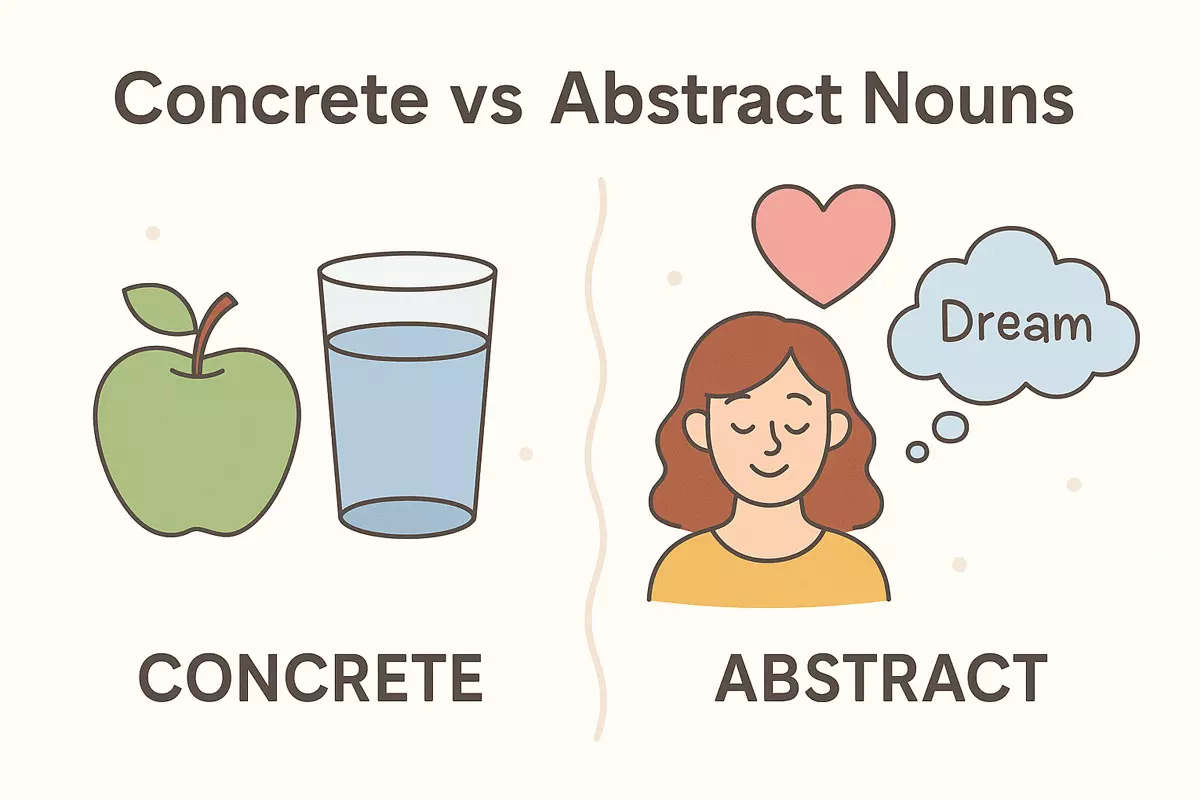 This article explains what concrete and abstract nouns are, how they differ, and their roles in daily language. It provides definitions, examples, common confusions, tips for remembering, and a practice section for classifying nouns.
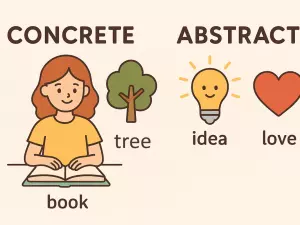
Have you ever wondered how words like happiness differ from table in English grammar? The key difference lies in their classification as nouns: table is a concrete noun because it refers to something tangible you can see and touch, while happiness is an abstract noun representing an idea or feeling that cannot be physically sensed. Recognizing whether a noun is concrete or abstract helps you use language more precisely and improves your overall understanding of English grammar.
Definition and Purpose
Understanding the distinction between concrete and abstract nouns helps make your writing and speech clearer and more precise. Both types of nouns play unique roles in language, allowing us to name not only physical objects but also ideas and qualities.
What Are Concrete Nouns?
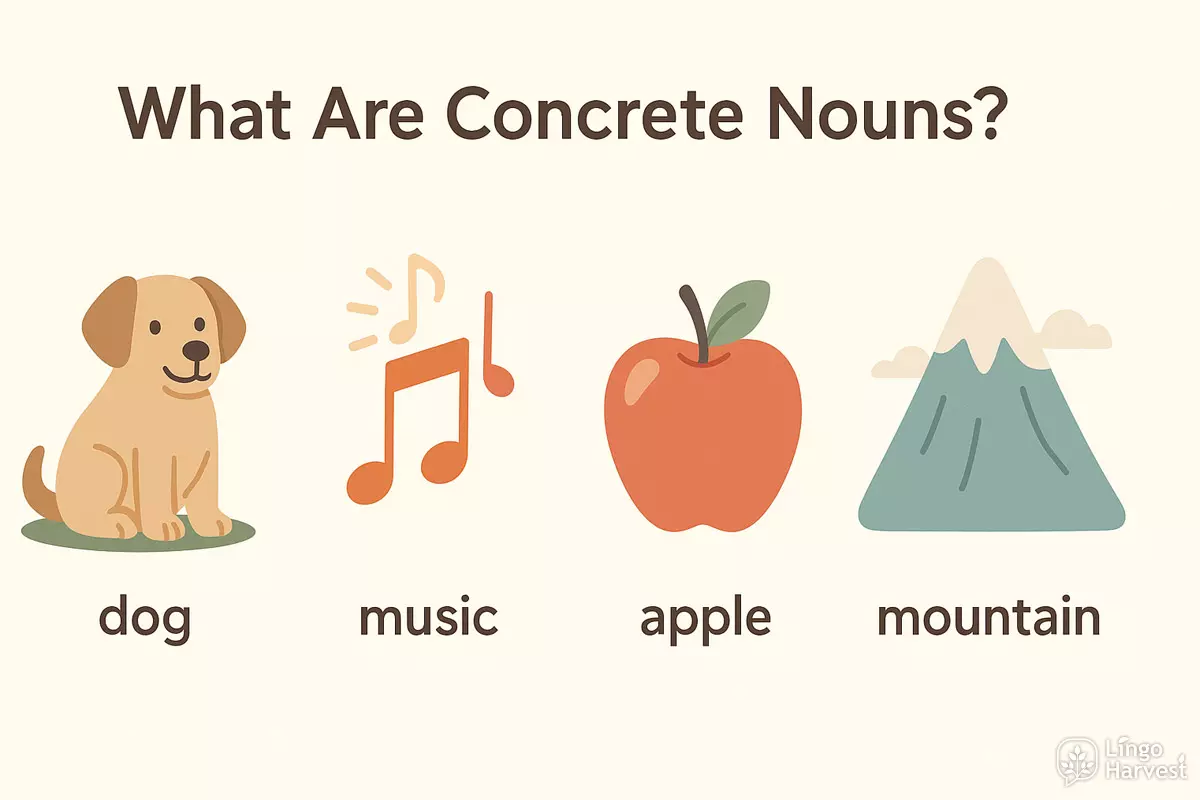
Concrete nouns refer to things that can be experienced through the five senses. If you can see, touch, taste, hear, or smell something, the word for it is likely a concrete noun. These words point to physical objects, people, or places in the real world.
- dog
- music
- apple
- mountain
- perfume
- car
- ocean
- tree
- pencil
- rain
What Are Abstract Nouns?
Abstract nouns, on the other hand, name things that cannot be observed directly with the senses. Instead, they describe concepts, feelings, qualities, or states—things you can think about or feel emotionally, but never physically touch or see.
- freedom
- happiness
- intelligence
- love
- honesty
- courage
- anger
- friendship
- wisdom
- justice
Why Distinguish Between These Noun Types?
Recognizing whether a word names something tangible or intangible allows you to choose words that fit your message and context. For example, using a concrete noun can make a description more vivid, while abstract nouns are often used to discuss emotions or general ideas.
| Concrete Noun (Tangible) |
Abstract Noun (Intangible) |
|---|---|
| Book | Knowledge |
| Child | Innocence |
| Cloud | Dream |
| Gift | Generosity |
| Voice | Opinion |
| Flower | Beauty |
In summary, concrete nouns help us label the physical world, while abstract nouns give us words for emotions, thoughts, and qualities. Both are essential for expressing ourselves fully in English.
Concrete Nouns in Daily Life
When we talk about everyday objects, places, or people, we’re using concrete nouns—words that refer to things we can see, touch, hear, taste, or smell. These nouns help us describe our surroundings and experiences in a clear, specific way. For example, when you mention a “book” or a “dog,” you’re referring to something tangible and real.
Common Examples You’ll Encounter
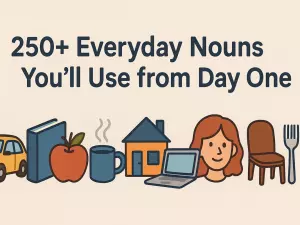
Concrete nouns appear in nearly every sentence we use. They make conversations about routines and environments possible. Here’s a list of items you might come across during a typical day:
- Table
- Chair
- Car
- Tree
- Phone
- Teacher
- Apple
- Backpack
- Street
- Window
- Dog
- Bus
- Pen
- Book
- Flower
- Computer
- Door
- Mountain
- River
- Building
How to Recognize Concrete Nouns
If you can use your senses to experience something, the word for it is probably a concrete noun. They answer questions like “What is it?” or “Who is that?” For instance, you can see a “cup,” hear a “bell,” smell a “rose,” taste “bread,” or touch a “blanket.”
Comparing Concrete and Abstract Nouns
Understanding how these nouns differ from abstract ones is useful for building sentences. Here’s a quick comparison to illustrate their distinct roles:
| Concrete Noun (Something you can sense) |
Abstract Noun (An idea or quality) |
|---|---|
| Cat | Happiness |
| Music | Freedom |
| Ice cream | Love |
| Rain | Bravery |
| Desk | Justice |
Knowing the difference makes your language more precise and helps you communicate everyday realities and intangible ideas alike.
Abstract Nouns and Ideas
Unlike objects you can touch or see, abstract nouns refer to things that exist as concepts, emotions, qualities, or states. These words capture feelings, ideals, and experiences that you can sense or think about, but not physically handle. They play a key role in expressing thoughts, beliefs, and values in both everyday conversation and academic writing.
What Makes a Noun Abstract?
Abstract nouns represent intangible things—ideas and feelings that are not connected to any material object. You can’t see or measure them with your senses. For example, you can experience happiness or freedom, but you can’t hold them in your hand. These words often answer questions like “What do you feel?” or “What do you believe in?”
Common Types of Abstract Nouns
- Emotions: love, anger, fear, joy, sadness
- Qualities: honesty, courage, patience, kindness, wisdom
- States: childhood, peace, chaos, health, poverty
- Ideas: justice, freedom, knowledge, truth, friendship
- Events: progress, failure, growth, change, improvement
Recognizing Abstract Nouns in Sentences
Some words can be tricky because they sometimes act as both concrete and abstract nouns, depending on context. For example, “youth” can mean a young person (concrete) or the period of being young (abstract). Pay attention to how the word is used in a sentence.
| Concrete Example | Abstract Example |
|---|---|
| a ring (object) | love (emotion) |
| a book (item) | knowledge (idea) |
| a child (person) | childhood (state) |
| a trophy (thing) | success (achievement) |
Forming Abstract Nouns
Many abstract nouns are created by adding suffixes to adjectives or verbs. Here are some common patterns:
- adjective + -ness: happy → happiness
- verb + -tion: inform → information
- adjective + -ity: curious → curiosity
- verb + -ment: develop → development
Abstract nouns help you talk about what you feel, think, or believe. Using them enriches your language and allows you to communicate more complex and subtle ideas beyond the physical world.
How to Tell the Difference
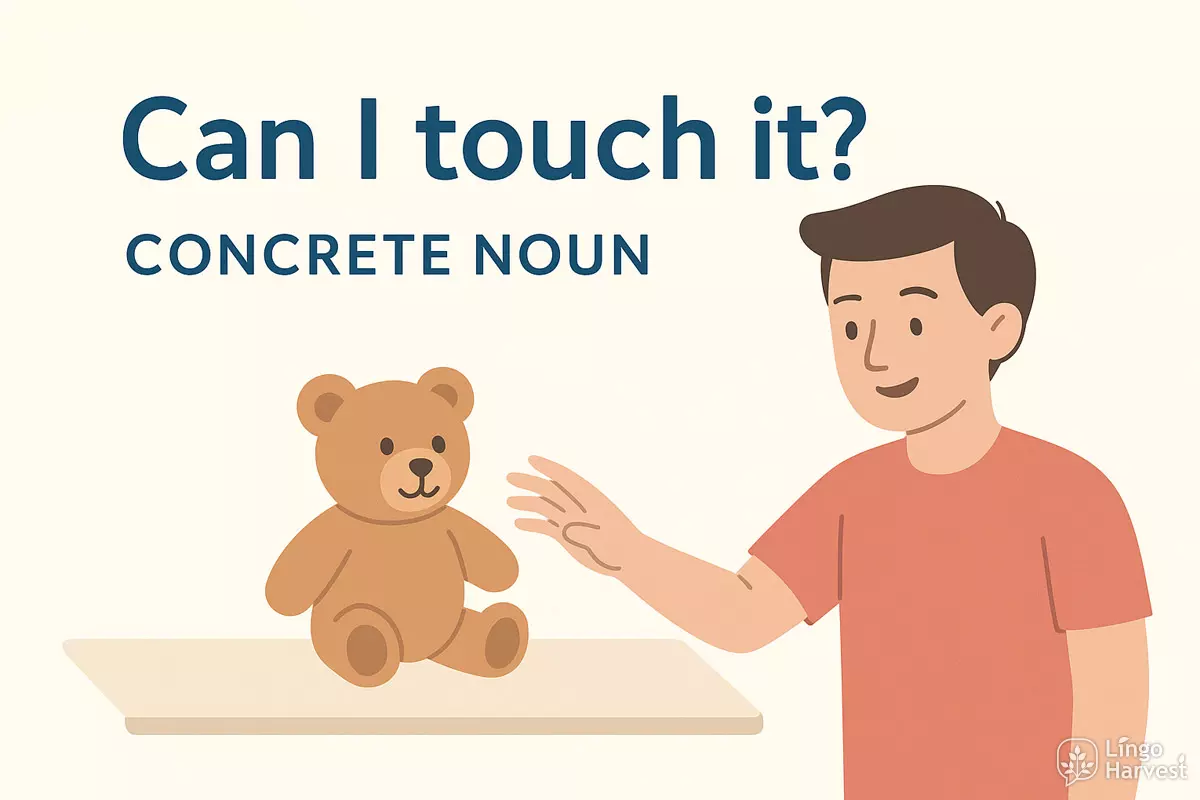
Recognizing whether a noun is concrete or abstract is mostly about considering what your senses can detect. Concrete nouns refer to things you can see, touch, taste, hear, or smell. Abstract nouns, on the other hand, are ideas, qualities, or concepts—things you can think about or feel emotionally, but not physically interact with.
Ask Yourself These Questions
- Can I touch it or see it? If yes, it’s likely concrete.
- Is it an idea, feeling, or quality? That points to abstract.
- Would I find it in a dictionary with a physical description? Usually concrete.
- Is it something you can measure directly with your senses? If not, it’s probably abstract.
Common Examples
Here’s a list to help clarify the distinction:
- Concrete: dog, apple, music, car, flower, chair, cake, snow, phone, river
- Abstract: love, freedom, happiness, intelligence, anger, honesty, courage, friendship, beauty, time
Side-by-Side Comparison
| Concrete Nouns (Tangible things) |
Abstract Nouns (Intangible ideas) |
|---|---|
| Book | Knowledge |
| Mountain | Strength |
| Child | Innocence |
| Rain | Sadness |
| Painting | Creativity |
| Food | Hunger |
| Voice | Hope |
| Gift | Gratitude |
Quick Tips
- If you can point to it or physically interact with it, it’s almost always concrete.
- If you can only discuss or imagine it, it’s probably abstract.
- Some words can be both, depending on context (e.g., “taste” as a flavor vs. “taste” as style preference).
Understanding these differences makes it easier to use nouns precisely and express your thoughts more clearly. If you’re ever unsure, try describing the noun with your five senses—if you can’t, it’s likely an abstract concept.
Common Confusions
Distinguishing between tangible and intangible nouns can trip up even experienced learners. Sometimes, words can be tricky to classify, especially when context blurs the line between the physical and the conceptual. Let's break down where mix-ups often happen and how to spot the difference.
Words That Seem Physical but Aren’t
Certain terms feel like they refer to concrete things, but actually represent ideas or feelings. Here are some examples that frequently cause uncertainty:
- Love – feels real, but you can’t touch it (abstract)
- Friendship – a relationship, not a physical object (abstract)
- Happiness – a state of mind (abstract)
- Information – data you can have, but not hold (abstract)
- Advice – you can give or receive it, but not see it (abstract)
Nouns That Can Be Both
Some words can act as either type, depending on how they're used. For example, "light" can refer to the physical brightness (concrete) or to a concept, like "seeing the light" (abstract).
| Noun | Concrete Example | Abstract Example |
|---|---|---|
| Memory | A photograph as a keepsake | Remembering a childhood event |
| Light | A lamp in the room | "He saw the light" (understood something) |
| Change | Coins in your pocket | A shift in attitude |
| Hope | A symbol, like a lit candle | Wishing for a better future |
Typical Mistakes
- Grouping emotions (like fear or anger) as if they’re physical items
- Assuming all “things you can talk about” are tangible
- Confusing names of activities (music, work) for objects
- Thinking all place names (school, city) are abstract, when most are concrete
When in doubt, ask: Can you see, touch, or measure it directly? If not, it’s probably abstract. Recognizing these subtle distinctions will help you use and understand nouns more accurately in any context.
Quick Tips to Remember
Distinguishing between types of nouns can be simple with a few helpful strategies. The most important thing is to focus on what the word represents—something you can experience with your senses, or something you can only think about.
How to Tell the Difference
- Concrete words are things you can see, touch, hear, smell, or taste. If you can hold it or sense it directly, it’s concrete.
- Abstract words are ideas, feelings, or qualities. If it’s something you can’t physically interact with, it’s abstract.
- Ask yourself: “Can I show this to someone?” If yes, it’s likely concrete. If not, it’s probably abstract.
- Many nouns ending in -ness, -ity, -tion, -ment, -ence are abstract (like “happiness” or “freedom”).
- Words for emotions (love, anger, fear) and concepts (justice, beauty, time) are usually abstract.
- Objects, animals, places, and people fall under concrete nouns.
Common Examples
| Concrete Nouns | Abstract Nouns |
|---|---|
| dog | happiness |
| apple | freedom |
| music | friendship |
| teacher | courage |
| city | honesty |
| water | anger |
| car | knowledge |
| flower | beauty |
| pizza | truth |
| rain | time |
Helpful Reminders
- ✅ If you can experience it with your five senses, it’s almost always a concrete noun.
- ❌ If it’s a feeling, an idea, or a quality, it’s abstract.
- → Words can sometimes be both, depending on context (e.g., “taste” as a physical sense vs. “taste” as a sense of style).
- When in doubt, try describing the noun. If your description uses abstract words, the noun itself is probably abstract.
With practice, you’ll quickly get better at spotting the difference. Reviewing lists and testing yourself with new words will help build your confidence in identifying each type.
Practice: Classify the Nouns
Ready to test your understanding of concrete and abstract nouns? Below, you’ll find a mix of sentences and word lists. Your task is to decide whether each highlighted word is a concrete noun (something you can experience with your senses) or an abstract noun (an idea, feeling, or concept).
Exercise 1: Identify the Type
Read the list below and determine which words refer to tangible things and which refer to ideas or qualities.
- Happiness
- Chair
- Freedom
- Music
- Friendship
- Apple
- Justice
- Dog
- Anger
- Book
- Love
- Car
- Childhood
- Pencil
- Bravery
- Mountain
- Truth
- River
Show answers
- Concrete nouns: Chair, Music, Apple, Dog, Book, Car, Pencil, Mountain, River
- Abstract nouns: Happiness, Freedom, Friendship, Justice, Anger, Love, Childhood, Bravery, Truth
Exercise 2: Spot the Nouns in Context
In each sentence, find the noun(s) and decide if they are concrete or abstract.
- The river flows through the valley.
- Patience is a valuable quality.
- The cat chased the light.
- She felt great relief after the exam.
- He won the medal for his courage.
Show answers
- River (concrete), valley (concrete)
- Patience (abstract)
- Cat (concrete), light (concrete)
- Relief (abstract)
- Medal (concrete), courage (abstract)
Common Nouns: Concrete vs Abstract Comparison
Some nouns have both concrete and abstract forms. See how they compare in the table below:
| Concrete Example | Abstract Example |
|---|---|
| Book (You can hold and read it) | Knowledge (What you gain from reading) |
| Gift (A physical present) | Generosity (The act of giving) |
| Speech (Words spoken aloud) | Inspiration (The feeling it gives you) |
| House (A building to live in) | Comfort (The feeling of being at home) |
| Music (Sounds you can hear) | Joy (The emotion it can create) |
Quick Challenge: Classify These Nouns
Decide if the following are concrete or abstract:
- Teamwork
- Perfume
- Wisdom
- Phone
- Fear
- Window
Show answers
- Teamwork – abstract
- Perfume – concrete
- Wisdom – abstract
- Phone – concrete
- Fear – abstract
- Window – concrete
Review these examples to sharpen your ability to distinguish between different types of nouns. Practice makes recognizing the difference much easier!