Singular vs Plural Nouns: Clear Rules and Common Confusions

 Here we the basics of singular and plural nouns, explains regular and irregular plural endings, spelling changes, and no-change plurals. It also shows their usage in sentences and provides practice on making plurals.
Selecting the correct form when naming one item or several can challenge even skilled writers, as distinguishing between singular and plural forms or choosing the proper word structure often results in errors. However, by learning the rules and principles that govern these choices, writers can improve their accuracy and confidence. Mastery of these concepts helps ensure clarity and effectiveness in communication, reducing the likelihood of mistakes and enhancing the quality of writing overall.
Singular vs Plural Basics
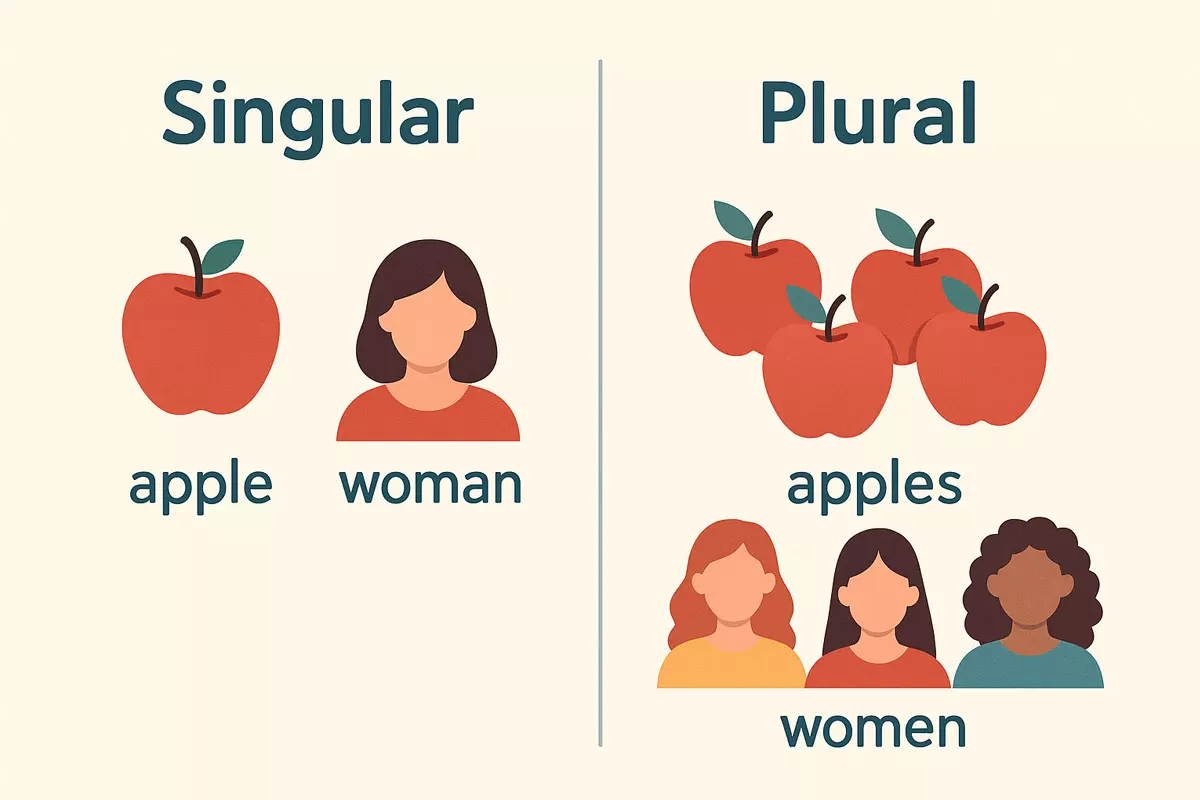
English nouns refer to either a single item (singular) or more than one (plural). Understanding this distinction helps avoid confusion in both writing and speech. A singular noun names one person, place, thing, or idea, while its plural form refers to two or more. The way nouns change from singular to plural depends on specific spelling rules, and there are several patterns as well as exceptions to remember.
How to Form Plurals: Common Rules
- Most nouns: Add -s (book → books, apple → apples).
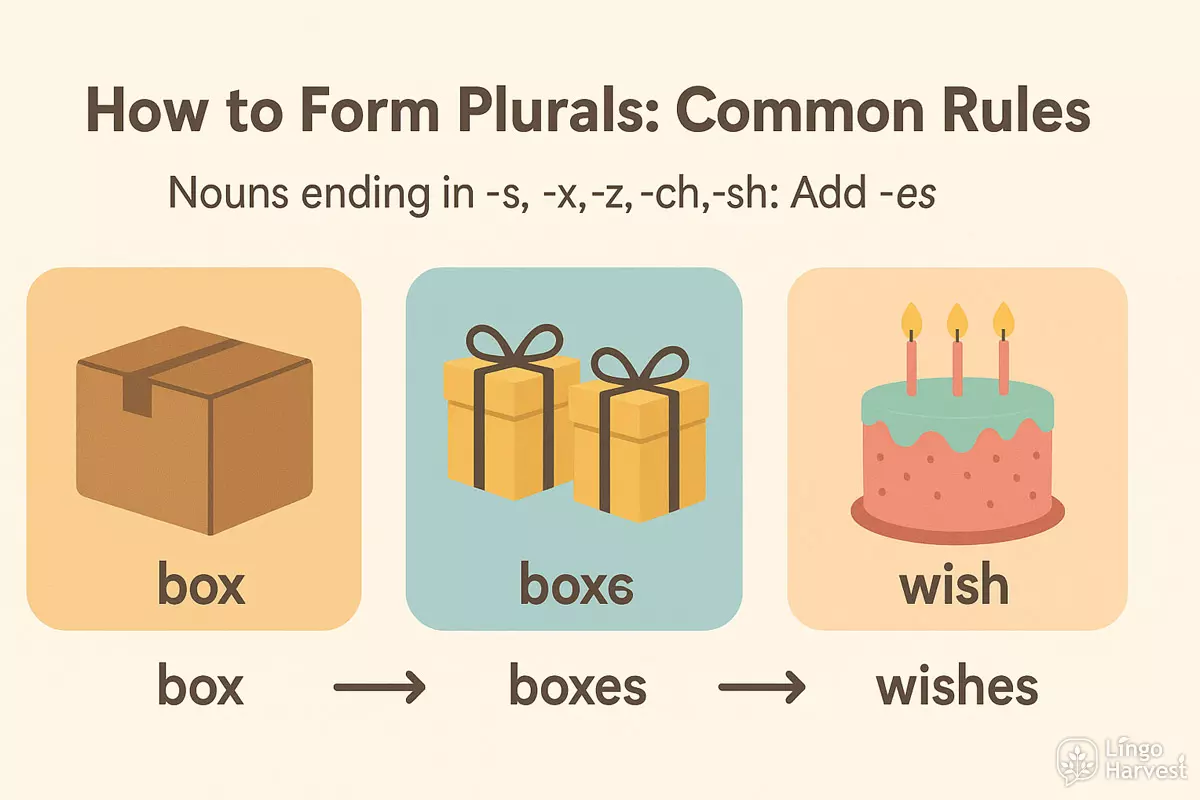
- Nouns ending in -s, -x, -z, -ch, -sh: Add -es (box → boxes, wish → wishes).
- Nouns ending in a consonant + y: Change y to i and add -es (city → cities).
- Nouns ending in a vowel + y: Just add -s (key → keys).
- Nouns ending in -f or -fe: Usually change to -ves (leaf → leaves, knife → knives).
- Irregular forms: Some nouns change completely (man → men, child → children).
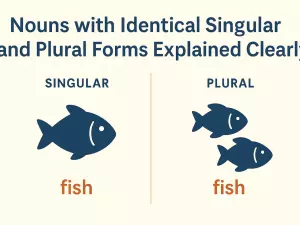
- No change: A few nouns have the same form in both (sheep, deer, species).
Comparison: Singular and Plural Forms
| Singular | Plural |
|---|---|
| cat | cats |
| bus | buses |
| baby | babies |
| wolf | wolves |
| child | children |
| mouse | mice |
| deer | deer |
| photo | photos |
| hero | heroes |
| foot | feet |
Key Points to Remember
- Always match verbs to the noun: The dog runs vs. The dogs run.
- Some nouns are always plural (scissors, trousers).
- Be careful with words that look plural but are singular (news, mathematics).
- Check for irregular forms—memorization is often required.
Getting comfortable with these patterns makes it much easier to write and speak accurately. Pluralization rules have exceptions, but most everyday words follow predictable changes.
Regular Plural Endings
For most English nouns, forming the plural is a matter of adding a standard ending to the base form. Typically, this involves appending -s or -es, but pronunciation and spelling can vary with the final letters of the word. Understanding these spelling patterns helps avoid common mistakes when switching between one and many.
Most Common Plural Suffixes
The vast majority of nouns simply take an -s ending. However, certain endings require -es for easier pronunciation or to maintain correct spelling. Here are the basic guidelines:
- Add -s to most nouns: cat → cats, book → books
- Add -es to words ending in -s, -ss, -sh, -ch, -x, -z: bus → buses, box → boxes, church → churches
- For nouns ending in a consonant + y, change y to i and add -es: city → cities, puppy → puppies
- If a noun ends in a vowel + y, just add -s: toy → toys, key → keys
- Nouns ending in -f or -fe sometimes change to -ves: wife → wives, leaf → leaves (though some just take -s: roof → roofs)
Examples by Pattern
Below is a structured comparison of common singular and plural forms for regular nouns:
| Singular | Plural | Rule Applied |
|---|---|---|
| dog | dogs | Add -s |
| dish | dishes | Add -es after -sh |
| baby | babies | y changes to ies |
| fox | foxes | Add -es after -x |
| roof | roofs | Add -s (exception to -ves rule) |
| wife | wives | -fe changes to -ves |
| key | keys | Add -s after vowel + y |
| bus | buses | Add -es after -s |
| box | boxes | Add -es after -x |
| church | churches | Add -es after -ch |
| city | cities | y changes to ies |
| toy | toys | Add -s after vowel + y |
Points to Remember
- Some words have more than one accepted plural form (e.g., hoof → hoofs/hooves).
- Regular patterns cover most cases, but always check for exceptions with unfamiliar words.
- Pronunciation may change even when the spelling is predictable, especially with endings like -es.
With these standard endings, forming plurals is generally straightforward, but attention to final letters and pronunciation rules is essential for accuracy.
Spelling Changes
English nouns often require specific modifications to their endings when moving between the singular and plural forms. These alterations depend on the final letters or sounds of the word, and certain patterns are especially common. Understanding these modifications helps avoid mistakes and clarifies why some plurals look unusual.
Common Endings and Their Modifications
Some nouns follow predictable patterns when forming their plurals, but others require more attention due to their spelling shifts. Here’s a breakdown of frequent changes:
- -y to -ies: If a noun ends in a consonant + y, change y to ies (e.g., city → cities, puppy → puppies).
- -f/-fe to -ves: Words ending in f or fe often switch to ves (e.g., wolf → wolves, life → lives).
- -o to -es: Sometimes, nouns ending in o take -es in the plural (e.g., tomato → tomatoes, hero → heroes), but many simply add -s (e.g., piano → pianos).
- -us to -i: Some words of Latin origin change -us to -i (e.g., cactus → cacti, focus → foci).
- -is to -es: Greek-derived nouns ending in -is become -es (e.g., analysis → analyses, crisis → crises).
- -on to -a: Some borrowings from Greek swap -on for -a (e.g., phenomenon → phenomena).
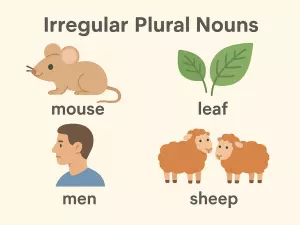
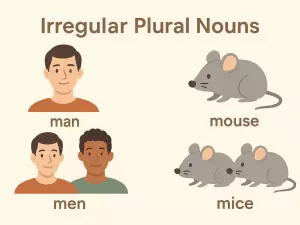
- Irregular changes: Some words change vowels or undergo other shifts (e.g., man → men, mouse → mice).
Overview of Pluralization Patterns
Below is a summary table showing how different spellings change from singular to plural form:
| Singular Ending | Plural Form Example |
|---|---|
| Consonant + y | party → parties |
| -f / -fe | knife → knives |
| -o | potato → potatoes; photo → photos |
| -us | radius → radii |
| -is | thesis → theses |
| -on | criterion → criteria |
| Irregular (vowel change) | goose → geese |
| No change | sheep → sheep |
Exceptions and Special Cases
Not all words follow these guidelines. For example, “roof” becomes “roofs,” not “rooves,” and “belief” becomes “beliefs.” A few nouns keep the same form for both singular and plural, such as “deer” and “species.” If in doubt, checking a dictionary or style guide can clarify the correct form.
Irregular Plural Highlights
While most English nouns form their plural simply by adding -s or -es, a significant group takes a different path. These exceptions often follow patterns rooted in Old English or borrowings from other languages. Recognizing these can help you avoid common mistakes when shifting between singular and plural forms.
Common Patterns Among Irregular Plurals
- Some nouns change vowels inside the word (e.g., man → men).
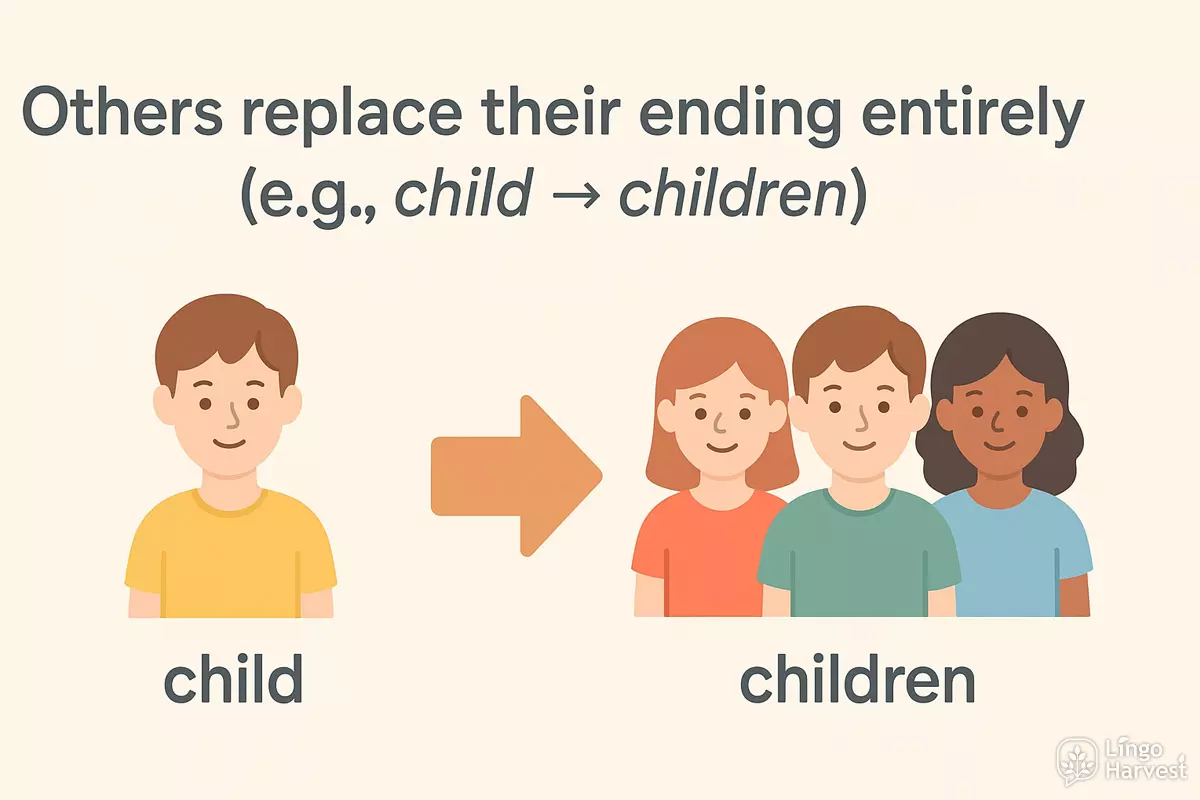
- Others replace their ending entirely (e.g., child → children).
- A few nouns keep the same form for both singular and plural (e.g., sheep).
- Certain words ending in -is (often from Greek or Latin) become -es (e.g., analysis → analyses).
- Some words ending in -us adopt an -i ending in the plural (e.g., cactus → cacti), though regular forms are also accepted.
Examples of Frequently Confused Irregular Forms
| Singular | Plural |
|---|---|
| child | children |
| foot | feet |
| goose | geese |
| mouse | mice |
| person | people |
| tooth | teeth |
| analysis | analyses |
| phenomenon | phenomena |
| cactus | cacti / cactuses |
| focus | foci / focuses |
| sheep | sheep |
| deer | deer |
| ox | oxen |
| criterion | criteria |
| leaf | leaves |
| loaf | loaves |
| woman | women |
| man | men |
| thesis | theses |
| datum | data |
Special Cases to Remember
Several nouns have more than one acceptable plural form (e.g., cactuses and cacti). In scientific or formal contexts, the Latin or Greek forms are often preferred. Also, some words appear unchanged in both singular and plural, so context is essential for clarity. Paying attention to these variations ensures accurate and natural use in both writing and speech.
No-change Plurals
Some English nouns use a single form for both singular and plural meanings. These words don’t add “-s” or change spelling, even when referring to more than one. This can be confusing for learners because the verb form or context is the only indicator of whether the noun is singular or plural.
Common Examples
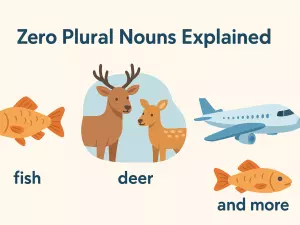
Many of these unchanged forms are names for animals, fish, or certain objects. Here’s a list of words that keep the same shape regardless of number:
- sheep
- deer
- fish
- moose
- salmon
- trout
- swine
- aircraft
- species
- series
- cod
- pike
- shrimp
- offspring
- hovercraft
- means
- bison
- reindeer
- quail
How Context Shows Number
The only way to know if these nouns are singular or plural is by looking at the surrounding words. For example:
- “A sheep is in the field.” (one animal)
- “Five sheep are in the field.” (many animals)
- “The aircraft was delayed.” (one plane)
- “Several aircraft were delayed.” (multiple planes)
Often, the verb changes, or a number/quantifier helps clarify meaning.
Comparison: Standard Plurals vs. Invariant Nouns
Some nouns follow regular plural rules, while others don’t change at all. Here’s a table to clearly show the difference:
| Regular Plural | Invariant Form |
|---|---|
| cats / cat | sheep / sheep |
| dogs / dog | deer / deer |
| boats / boat | fish / fish |
| planes / plane | aircraft / aircraft |
| students / student | species / species |
Extra Notes
While most of these unchanged plurals are animal names, a few, like “series” and “means,” refer to abstract ideas or objects. It’s important to remember that not all nouns ending in “-s” are plural—context is key. When in doubt, check a dictionary or listen for how native speakers use these terms.
Usage in Sentences
Understanding how to correctly insert singular and plural nouns into actual statements is crucial for clear communication. The form of a noun often determines the verb choice and can change the entire meaning of a sentence. Below, you'll find practical illustrations and common patterns that highlight these distinctions.
Basic Patterns with Singular and Plural Nouns
Singular nouns refer to one item or entity, while plural forms indicate more than one. The verb typically matches the number: singular subjects take singular verbs, and plural subjects take plural verbs.
- The cat sleeps on the mat. ✅
- The cats sleep on the mat. ✅
- That child is playing outside. ✅
- Those children are playing outside. ✅
- A book lies on the table. ✅
- Several books lie on the shelf. ✅
- My friend likes pizza. ✅
- My friends like pizza. ✅
- The bus arrives at noon. ✅
- The buses arrive at noon. ✅
- An apple is in the basket. ✅
- Apples are in the basket. ✅
Common Mistakes in Everyday Speech
Errors often occur when the noun and verb forms don't match, especially with irregular plurals or collective nouns.
- Incorrect: The dog bark at strangers. ❌
- Correct: The dog barks at strangers. ✅
- Incorrect: My family are happy. ❌ (in American English)
- Correct: My family is happy. ✅
- Incorrect: The children eats lunch. ❌
- Correct: The children eat lunch. ✅
Singular vs. Plural: Side-by-Side Examples
For a clearer comparison of how subject-verb agreement changes with noun number, see the following table:
| Singular Form | Plural Form |
|---|---|
| The student writes an essay. | The students write essays. |
| A leaf falls from the tree. | Leaves fall from the trees. |
| This mouse is small. | These mice are small. |
| That man works here. | Those men work here. |
| The child has a toy. | The children have toys. |
Tips for Natural Sentence Construction
- Always check if your noun is regular or irregular before forming the plural.
- Match the verb form to the noun’s number (singular/plural).
- Remember that some nouns look plural but are singular (e.g., news, mathematics).
- Collective nouns may take singular or plural verbs depending on context and dialect.
Practicing these sentence structures helps avoid the most common errors and builds confidence in using both forms accurately.
Practice: Make the Plural
Understanding how to form plurals in English helps avoid confusion and mistakes in writing and speaking. Below, you'll find a range of exercises and examples to test your skills in turning singular nouns into their plural forms. Some nouns follow regular rules, while others have irregular changes or unique patterns.
Regular Plurals
Most nouns simply add -s or -es to form the plural. Try changing the following words to their plural forms:
- cat
- dog
- box
- bus
- watch
- apple
- church
- flower
- desk
- glass
Show answers
- cats
- dogs
- boxes
- buses
- watches
- apples
- churches
- flowers
- desks
- glasses
Irregular Plurals
Some nouns don’t follow standard patterns and must be memorized. Try these:
- child
- man
- woman
- mouse
- tooth
- foot
- goose
- person
- ox
- louse
Show answers
- children
- men
- women
- mice
- teeth
- feet
- geese
- people
- oxen
- lice
Words Ending in -y, -f, and -o
Changing words ending in -y, -f, or -o often requires special rules. See if you can spot the pattern:
| Singular | Plural |
|---|---|
| baby | babies |
| city | cities |
| wife | wives |
| leaf | leaves |
| potato | potatoes |
| hero | heroes |
| piano | pianos |
| roof | roofs |
Unchanging and Foreign Plurals
Some nouns remain the same in both forms, while others use Latin or Greek endings. Try to recall these:
- sheep
- deer
- series
- phenomenon
- criterion
- cactus
- focus
- analysis
Show answers
- sheep
- deer
- series
- phenomena
- criteria
- cacti
- foci (or focuses)
- analyses
Reviewing these examples will help you recognize common patterns and exceptions when forming plurals. Mastery comes from practice and attention to tricky cases.