Plural Nouns: Basic Rules and Common Irregulars

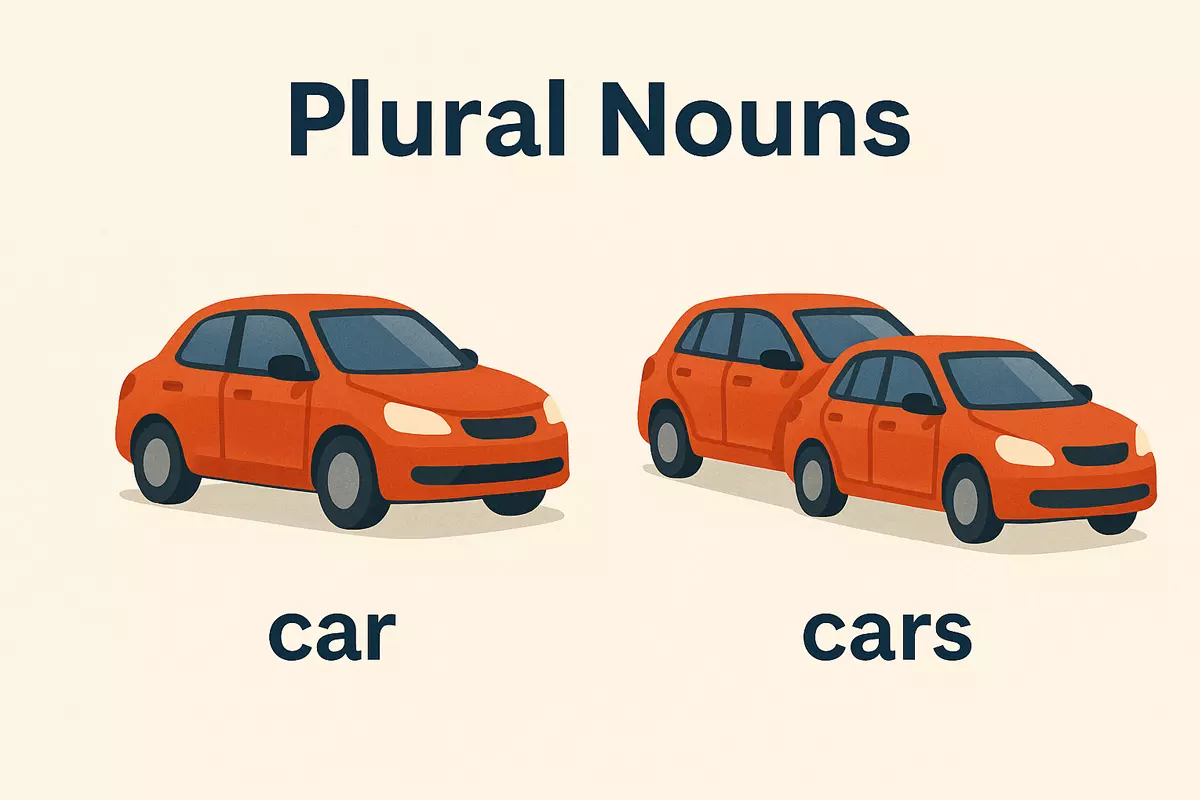 Explore plural nouns by learning the basic rules of adding -s or -es, handling words ending in y, f/fe, and tackling irregular forms like man to men. Understand singular/plural forms like fish and foreign-origin plurals like cactus to cacti.
- What Are Plural Nouns?
- The Basic Rule: Add -s
- Add -es After Certain Endings
- Words Ending in y → ies
- Words Ending in f / fe → ves
- Irregular Plurals (man → men, child → children, etc.)
- Same Form in Singular and Plural (fish, deer, sheep, etc.)
- Foreign-Origin Plurals (cactus → cacti, criteria → criterion/criteria)
- Common Mistakes Beginners Make
- Short Practice + Answers
Navigating the world of plural forms in English can be both straightforward and perplexing. While many nouns simply require an "s" for their plural versions, others deviate from this norm with unique and irregular endings. Some words change vowels, like "man" to "men," while others remain the same, such as "sheep." Certain words add "es," like "box" to "boxes," and others have entirely different forms, such as "child" to "children." Understanding these patterns can enhance your language skills, making communication more precise and effective, as it helps in choosing the correct form in various contexts.
What Are Plural Nouns?
Plural nouns are words that indicate more than one person, place, thing, or idea. In English, they are typically formed by adding an "s" or "es" to the singular form. For example, "cat" becomes "cats" and "bus" becomes "buses." These forms help us communicate about multiple items or groups effectively.
Regular Plural Forms
The most common way to create a plural noun is by simply adding an "s" to the end of the singular noun. This rule applies to most nouns, especially those that end in vowels or consonants other than "s," "x," "z," "ch," or "sh."
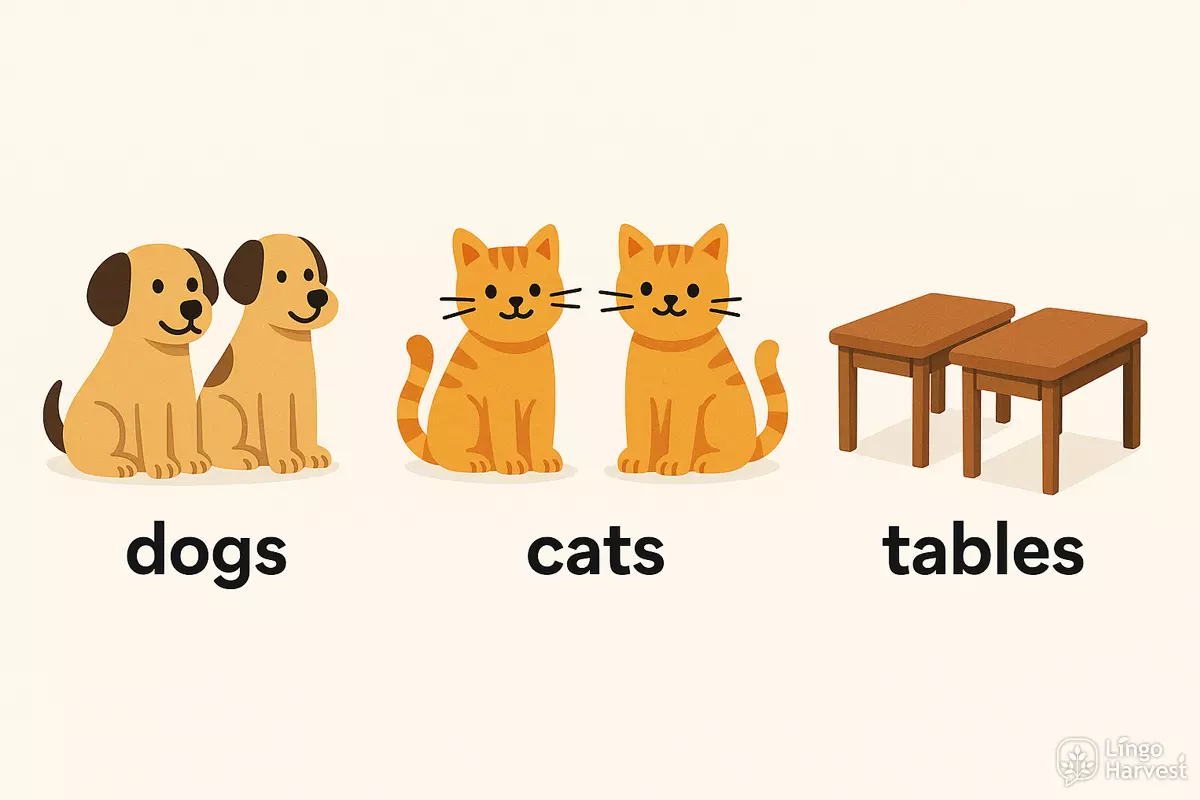
- dog → dogs
- car → cars
- house → houses
- book → books
- cat → cats
- computer → computers
- table → tables
- plane → planes
- window → windows
- tree → trees
- photo → photos
- teacher → teachers
Mini Practice
Write the correct plural form of each noun:
- pen → __________
- chair → __________
- bag → __________
- phone → __________
- cup → __________
- desk → __________
- lamp → __________
- shoe → __________
- door → __________
- garden → __________
Show answers
- pen → pens
- chair → chairs
- bag → bags
- phone → phones
- cup → cups
- desk → desks
- lamp → lamps
- shoe → shoes
- door → doors
- garden → gardens
Irregular Plural Forms
Some nouns do not follow the regular rule of adding "s" or "es." These irregular forms have unique plural versions that must be memorized. Here are some common examples:
| Singular | Plural |
|---|---|
| child | children |
| mouse | mice |
| tooth | teeth |
| goose | geese |
Special Cases
There are also special cases in forming plural nouns. For nouns ending in "y" preceded by a consonant, the "y" is changed to "i" and "es" is added. For instance:
- baby → babies
- city → cities
- country → countries
- party → parties
- story → stories
- library → libraries
- puppy → puppies
- lady → ladies
- family → families
- army → armies
Nouns ending in "f" or "fe" often change to "ves" in the plural form, such as:
- leaf → leaves
- wife → wives
- wolf → wolves
- knife → knives
- life → lives
- shelf → shelves
- half → halves
- loaf → loaves
- calf → calves
- thief → thieves
Understanding these rules and exceptions is crucial for proper grammar usage. By learning both regular and irregular forms, you can enhance your communication skills and express ideas more clearly.
The Basic Rule: Add -s
When it comes to forming plural nouns in English, the most straightforward method is to add an -s to the end of the singular noun. This rule applies to a vast majority of nouns, making it a fundamental aspect of English grammar. Whether you're talking about a single cat or multiple cats, the process remains simple and consistent.
Examples of Simple Plurals
- Dog → Dogs
- Book → Books
- Car → Cars
- Computer → Computers
It's important to note that this rule is primarily applicable to regular nouns, which form their plurals in a consistent manner. However, there are exceptions and variations based on the ending letters of certain words. Understanding these variations will help you navigate the complexities of pluralization in English.
Common Variations
While adding -s is the basic approach, some words require a slight modification based on their endings. For instance, nouns ending in -s, -x, -z, -ch, and -sh follow a different pattern, where you add -es instead of just -s. This ensures that the plural form is pronounced correctly.
| Singular | Plural |
|---|---|
| Bus | Buses |
| Box | Boxes |
| Buzz | Buzzes |
| Church | Churches |
| Brush | Brushes |
By understanding these fundamental rules and variations, you can master the art of pluralization in English. While the basic method involves simply adding -s, being aware of exceptions and patterns will enhance your grammatical accuracy and fluency.
Add -es After Certain Endings
In English, forming the plural of nouns typically involves adding -s. However, for nouns that end in specific letters, the plural form requires the addition of -es. This rule generally applies to words ending in -s, -sh, -ch, -x, or -z. The addition of -es helps maintain the correct pronunciation and flow of the word when spoken.
Examples of Nouns Requiring -es
Here are some common examples of nouns that follow this rule:
- Bus becomes buses
- Brush becomes brushes
- Church becomes churches
- Box becomes boxes
- Quiz becomes quizzes
Special Cases and Exceptions
While the rule is straightforward, there are a few special cases to consider. For nouns that end in -o, the plural can sometimes be formed by adding either -s or -es, depending on the word. For instance, 'potato' becomes 'potatoes,' but 'photo' becomes 'photos.' Additionally, some words ending in -f or -fe change to -ves in their plural forms, such as 'wolf' to 'wolves.' These exceptions can be memorized with practice.
Understanding the Rule
Knowing when to apply the -es ending is essential for proper spelling and communication. This rule ensures that words are not only spelled correctly but also pronounced with ease. For learners of English, mastering these patterns can significantly improve both written and spoken language skills.
| Singular | Plural |
|---|---|
| Class | Classes |
| Match | Matches |
| Fox | Foxes |
| Buzz | Buzzes |
Words Ending in y → ies
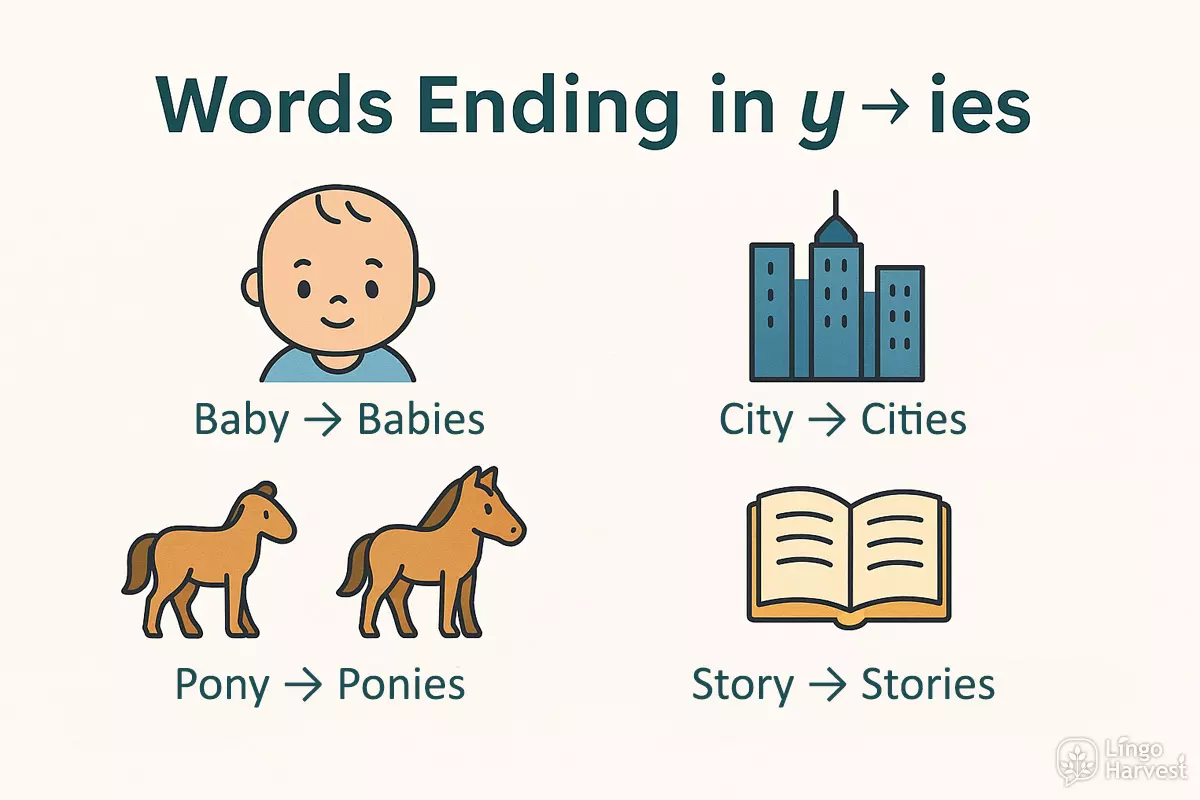
When it comes to forming plural nouns, one common rule involves changing the ending of words that end in "y." Specifically, if a noun ends with a consonant followed by "y," the "y" is typically replaced with "ies" in its plural form. This transformation is crucial in ensuring grammatical accuracy and clarity in both writing and speech.
Examples of Plural Nouns with "ies"
Here are some examples to illustrate this rule:
- Baby → Babies (The babies are sleeping.)
- City → Cities (They visited several cities on their trip.)
- Pony → Ponies (The ponies ran across the field.)
- Story → Stories (He told us two stories before bed.)
- Lady → Ladies (The ladies were having tea.)
- Family → Families (Three families live in the building.)
- Army → Armies (Two armies met at dawn.)
- Library → Libraries (The town has two libraries.)
- Puppy → Puppies (The puppies are playing in the yard.)
- Country → Countries (They traveled to three countries.)
Exceptions to the Rule
If the noun ends in "y" and the letter before it is a vowel, simply add "s" to form the plural. No spelling change is needed.
- Key → Keys (I lost my keys.)
- Day → Days (The days are getting longer.)
- Boy → Boys (The boys played soccer.)
- Journey → Journeys (Their journeys were long and difficult.)
- Monkey → Monkeys (We saw monkeys at the zoo.)
- Toy → Toys (The toys are in the box.)
- Valley → Valleys (The valleys were full of flowers.)
Recognizing these patterns will enhance your language skills and make your communication more effective. Whether you are writing or speaking, getting the plural forms right is a sign of proficiency and attention to detail.
Words Ending in f / fe → ves
When forming the plural of nouns that end in "f" or "fe," a common rule is to replace the "f" or "fe" with "ves." This transformation can be seen in many English words, where the singular form changes to accommodate the plural by modifying the ending. Understanding this rule is essential for proper grammar and spelling.
Common Examples
Here are some examples of nouns that follow this rule:
- Leaf → leaves (The trees drop their leaves in autumn.)
- Wolf → wolves (We heard wolves howling at night.)
- Knife → knives (Please put the knives in the drawer.)
- Life → lives (Their lives changed after the move.)
- Wife → wives (Their wives joined the celebration.)
- Thief → thieves (The police caught the thieves.)
- Calf → calves (Two calves were born this spring.)
- Shelf → shelves (The books are on the top shelves.)
- Half → halves (Cut the apples into halves.)
- Loaf → loaves (We bought two loaves of bread.)
Exceptions to the Rule
While many words ending in "f" or "fe" follow the "ves" pattern, there are notable exceptions. Some words simply add an "s" to form the plural, such as:
- Roof → roofs (The roofs were damaged by the storm.)
- Cliff → cliffs (We hiked along the sea cliffs.)
- Chief → chiefs (The village chiefs met to discuss the plan.)
- Belief → beliefs (People have different beliefs.)
- Chef → chefs (Two chefs prepared the menu.)
- Proof → proofs (The scientist showed several proofs.)
- Safe → safes (The bank keeps documents in safes.)
Understanding Context
Determining the correct plural form often requires understanding the context in which the word is used. For instance, the word "wharf" can become either "wharfs" or "wharves," with the latter often being preferred in British English.
Table of Singular and Plural Forms
| Singular Form | Plural Form |
|---|---|
| Calf | Calves |
| Shelf | Shelves |
| Thief | Thieves |
| Half | Halves |
| Self | Selves |
By familiarizing yourself with these rules and exceptions, you can improve your writing and communication skills. Remember that practice and exposure to different contexts will help solidify your understanding of these pluralization patterns.
Irregular Plurals (man → men, child → children, etc.)
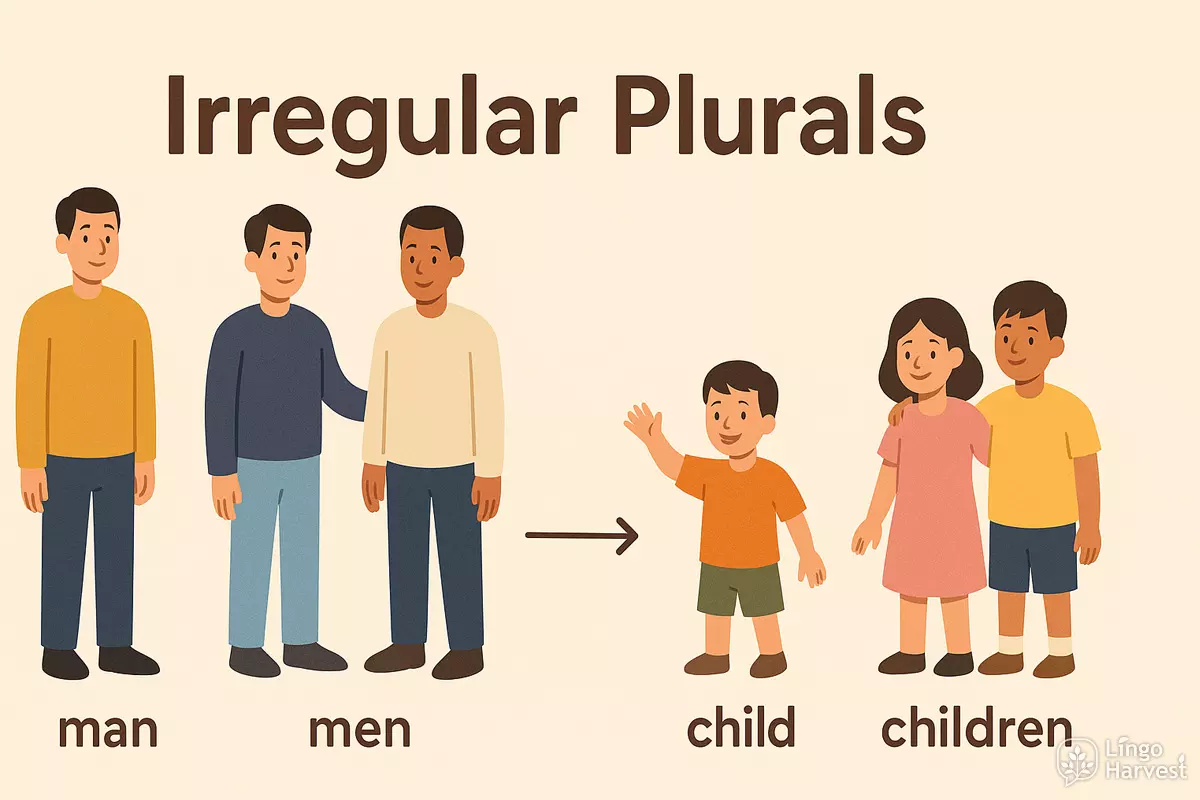
In the English language, not all plural forms are created by simply adding an "s" or "es" to the end of a word. Some nouns change completely when they become plural. These irregular plural forms can be tricky, but understanding them is essential for mastering English grammar.
Common Irregular Plural Nouns
Irregular plural nouns often involve a vowel change or an entirely different word form. Here are some of the most common examples:
- Man becomes men
- Woman becomes women
- Child becomes children
- Foot becomes feet
- Tooth becomes teeth
- Mouse becomes mice
- Louse becomes lice
Patterns and Exceptions
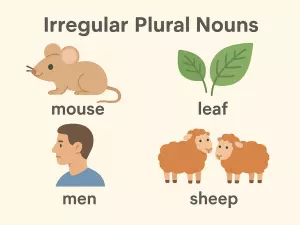
While many irregular plurals follow certain patterns, such as changing the vowel sound (man to men, foot to feet), others do not follow any specific rules. For instance, the plural of "person" is "people," which is an entirely different word. Understanding these exceptions requires memorization and practice, as they do not adhere to regular pluralization patterns.
Less Common Irregular Forms
Some irregular plurals are less frequently encountered but are still important to know. These include:
- Cactus becomes cacti or cactuses
- Focus becomes foci or focuses
- Datum becomes data
- Alumnus becomes alumni
Visual Guide to Irregular Plurals
Here is a table summarizing some of the irregular plural forms and their singular counterparts:
| Singular | Plural |
|---|---|
| Goose | Geese |
| Ox | Oxen |
| Analysis | Analyses |
| Thesis | Theses |
| Person | People |
| Child | Children |
| Mouse | Mice |
| Foot | Feet |
| Tooth | Teeth |
| Cactus | Cacti |
| Criterion | Criteria |
| Phenomenon | Phenomena |
| Syllabus | Syllabi / Syllabuses |
| Appendix | Appendices / Appendixes |
| Index | Indices / Indexes |
| Medium | Media |
| Datum | Data |
| Bacterium | Bacteria |
| Alumnus | Alumni |
| Alumna | Alumnae |
| Basis | Bases |
| Oasis | Oases |
Conclusion
Mastering irregular plurals requires both study and exposure to diverse reading materials. By familiarizing yourself with these unique forms, you'll enhance your language skills and improve your ability to communicate effectively in English.
Same Form in Singular and Plural (fish, deer, sheep, etc.)
In English, certain nouns maintain the same form whether they are singular or plural. This can sometimes lead to confusion, especially for language learners who are accustomed to more regular pluralization rules. These nouns are often related to animals, but there are exceptions.
Common Examples
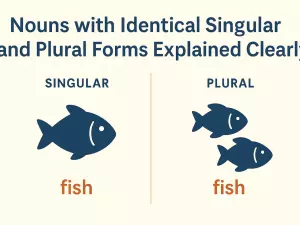
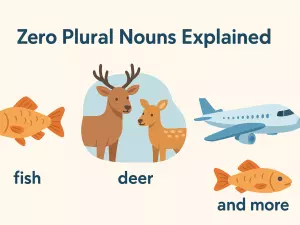
Some of the most frequently encountered nouns with identical singular and plural forms include "fish," "deer," and "sheep." These words are used the same way in both singular and plural contexts. For instance, you might say "I caught a fish" or "We caught five fish" without changing the word "fish."
Why Do Some Nouns Follow This Pattern?
The reasons for these exceptions often stem from the origins and historical usage of the words. Many of these terms come from Old English or other languages where pluralization rules were different. Over time, these words have retained their original forms, even as English evolved.
Additional Examples
Beyond the commonly known examples, there are other nouns that remain the same in both singular and plural forms:
- Moose (We saw one moose / We saw three moose.)
- Salmon (The salmon is fresh / The salmon are swimming upstream.)
- Bison (A herd of bison crossed the field.)
- Series (One series / Two series — same form.)
- Species (This species is rare / These species are protected.)
- Deer (One deer / Many deer.)
- Sheep (The sheep is grazing / The sheep are grazing.)
- Trout (The river is full of trout.)
- Cod (Fishermen caught a lot of cod.)
- Swine (Swine can spread diseases.)
- Aircraft (One aircraft / Many aircraft.)
- Spacecraft (Several spacecraft are in orbit.)
Mini Practice
Choose the correct plural form in each sentence:
- We saw three _____ in the forest.
a) mooses b) moose - The fisherman caught several _____.
a) salmons b) salmon - There are many _____ living in this region.
a) species b) specie - The _____ were eating grass in the field.
a) deer b) deers - Two _____ landed at the airport.
a) aircraft b) aircrafts
Show answers
- 1 → b) moose
- 2 → b) salmon
- 3 → a) species
- 4 → a) deer
- 5 → a) aircraft
Foreign-Origin Plurals (cactus → cacti, criteria → criterion/criteria)
Understanding the plural forms of nouns that originate from foreign languages can be a bit tricky, as they often don't follow the typical English rules of simply adding an "s" or "es". These nouns, borrowed from Latin, Greek, and other languages, retain their original pluralization rules, which can sometimes lead to confusion.
Latin-Origin Plurals
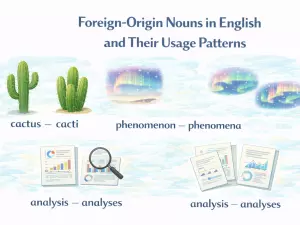
Many nouns from Latin have unique plural forms. For instance, the singular "cactus" transforms into "cacti" in its plural form. Similarly, the word "alumnus" becomes "alumni" when referring to multiple graduates. These transformations maintain the original Latin endings, adding a layer of richness to the English language.
Greek-Origin Plurals
Nouns with Greek origins also have distinct plural forms. A common example is the word "criterion," which becomes "criteria" when pluralized. Another example is "phenomenon," which changes to "phenomena." These forms reflect the Greek tradition, preserving the linguistic heritage within the English language.
Common Foreign-Origin Plurals
To help remember these unique plural forms, here is a list of some commonly used foreign-origin nouns and their plurals:

- Appendix → Appendices
- Analysis → Analyses
- Index → Indices
- Matrix → Matrices
- Bacterium → Bacteria
- Datum → Data
Understanding these foreign-origin plurals enhances your grasp of English and adds depth to your vocabulary. While they can be challenging at first, with practice, these forms become second nature. Recognizing the patterns in these transformations can also aid in learning other aspects of the language, making communication more precise and engaging.
Common Mistakes Beginners Make
When learning about plural nouns, beginners often encounter certain pitfalls that can hinder their understanding. These errors usually arise from irregularities in pluralization and assumptions based on regular patterns. Understanding these common issues can help learners avoid making similar errors in their language journey.
Confusing Regular and Irregular Plurals
One frequent error is the assumption that all nouns follow the regular pattern of simply adding 's' or 'es' to form plurals. While this rule applies to many nouns, irregular nouns do not adhere to this pattern, leading to mistakes. For example, the plural of "child" is not "childs" but "children." Recognizing and memorizing these exceptions is crucial.
Misapplying Foreign Plurals
Some nouns of foreign origin retain their original plural forms in English, which can confuse learners. Words like "cactus" become "cacti," not "cactuses," and "criterion" becomes "criteria," not "criterions." Beginners should familiarize themselves with these specific cases to use them correctly.
Overgeneralizing Plural Forms
Another common issue is overgeneralizing certain pluralization rules. For instance, learners might incorrectly apply the '-ves' ending of "leaf" (leaves) to other nouns like "roof," which actually becomes "roofs," not "rooves." Understanding the specific rules for each noun type is essential.
| Noun | Incorrect Plural | Correct Plural |
|---|---|---|
| Child | Childs | Children |
| Person | Persons | People |
| Cactus | Cactuses | Cacti |
| Foot | Foots | Feet |
Ignoring Contextual Pluralization
Context often dictates the correct plural form, which can be overlooked by beginners. For instance, "fish" can be both singular and plural, but when referring to different species, "fishes" is used. Similarly, "deer" remains the same in both singular and plural forms. Paying attention to context can prevent such errors.
By being aware of these common mistakes and understanding the nuances of plural nouns, learners can enhance their grammatical skills and communicate more effectively. Practice and exposure to varied examples will reinforce the correct usage of plurals over time.
Short Practice + Answers
Understanding plural nouns is crucial for mastering English grammar. This section offers a practical exercise to help reinforce your knowledge of both regular and irregular plural forms. Practice converting singular nouns to their plural counterparts, and check your answers to see how well you've done.
Exercise: Convert Singular to Plural
Below is a list of singular nouns. Try to convert each to its correct plural form.
- Child
- Goose
- Mouse
- Person
- Tooth
- Box
- Church
- Wife
Show answers
- Children
- Geese
- Mice
- People
- Teeth
- Boxes
- Churches
- Wives
| Singular | Plural |
|---|---|
| Foot | Feet |
| Man | Men |
| Woman | Women |
| Cactus | Cacti |
| Mouse | Mice |
| Tooth | Teeth |
| Goose | Geese |
| Child | Children |
| Person | People |
| Louse | Lice |
| Ox | Oxen |
| Analysis | Analyses |
| Thesis | Theses |
| Criterion | Criteria |
| Phenomenon | Phenomena |
| Medium | Media |
| Nucleus | Nuclei |
| Appendix | Appendices / Appendixes |
| Syllabus | Syllabi / Syllabuses |
| Index | Indices / Indexes |
Quick Practice: Irregular Plurals
Choose the correct plural form for each sentence.
- The scientist compared two ________ in the lab.
a) phenomenons b) phenomena - Three ________ ran across the field.
a) gooses b) geese - The dentist checked my ________.
a) teeth b) tooths - Two ________ were elected to the council.
a) people b) persons - The librarian updated several ________.
a) indexes b) indices (both can be correct; choose the more common for books) - We saw many ________ near the river.
a) mice b) mouses - The professor reviewed the students’ ________.
a) theses b) thesis - Two ________ pulled the heavy cart.
a) oxen b) oxes - The artist worked in different ________ (painting, film, etc.).
a) mediums b) media - The biologist classified several new ________.
a) species b) speci
Show answers
- 1 → b) phenomena
- 2 → b) geese
- 3 → a) teeth
- 4 → a) people
- 5 → a) indexes (for books); b) indices (math/finance/science)
- 6 → a) mice
- 7 → a) theses
- 8 → a) oxen
- 9 → b) media (as plural of “medium” in arts/mass comm.)
- 10 → a) species
By familiarizing yourself with these patterns, you can improve your proficiency in recognizing and using plural nouns correctly. Practice regularly to become more comfortable with these irregular forms.