Nouns with Identical Singular and Plural Forms Explained Clearly

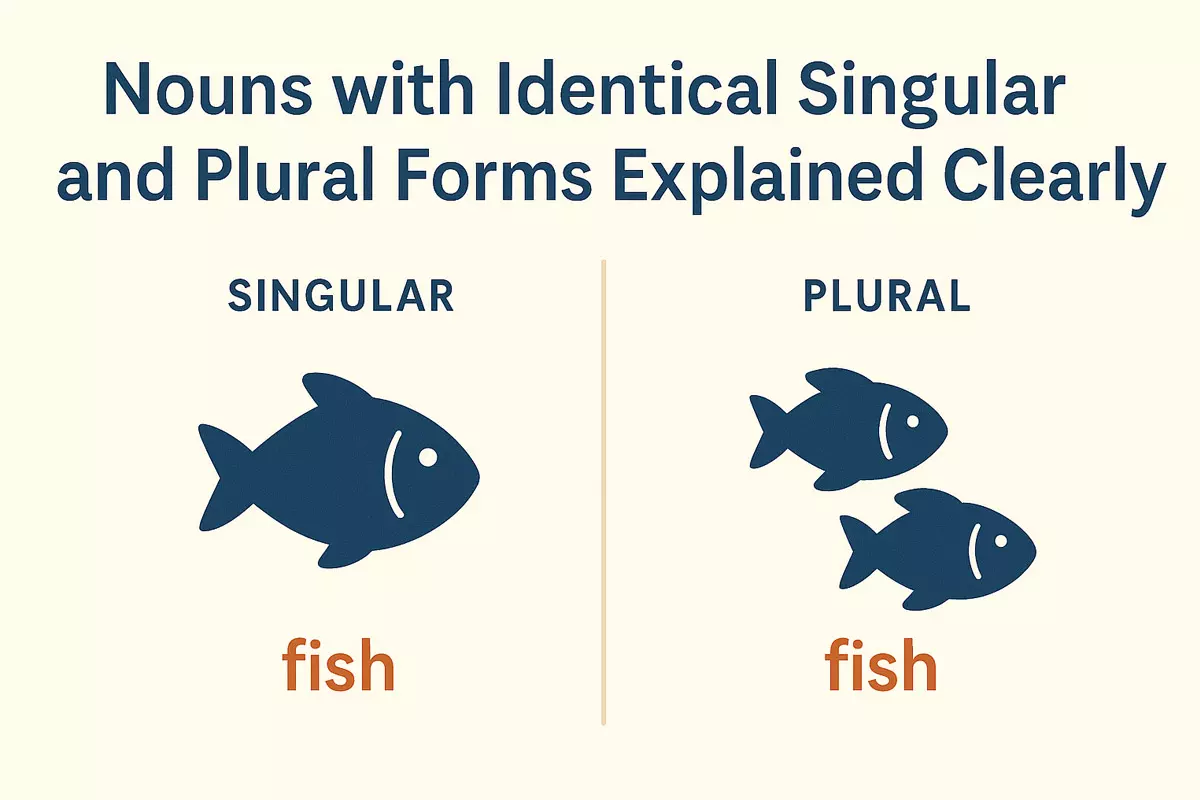 This article explains English nouns that have the same form in both singular and plural, like sheep, series, and aircraft. It covers how context and verbs indicate number, common mistakes with articles or numbers, and offers practice sentences.
- Overview of nouns that do not change in the plural
- Common examples like sheep, species, series, and aircraft
- How context shows singular vs plural meaning
- Verb agreement with same-form singular and plural nouns
- Differences from zero plural and plural-only nouns
- Typical mistakes with articles and numbers before them
- Practice: complete sentences using same-form nouns correctly
Some nouns in English remain the same in both their singular and plural forms, which can be confusing for learners. Words like sheep, deer, and species do not change whether you are referring to one or several. This happens because these words have origins in Old English or Latin, where pluralization followed different patterns. Understanding these exceptions helps you use English more accurately and appreciate the quirks that make the language unique.
Overview of nouns that do not change in the plural
Some English nouns keep the same form whether they are singular or plural. These words often come from older forms of English or are borrowed from other languages. They don’t follow the typical “add -s or -es” rule for making plurals. Instead, their singular and plural uses rely on context within a sentence.
Common Characteristics
Nouns with identical singular and plural forms are especially common among animals, measurements, and certain objects. This feature can sometimes cause confusion for learners since there’s no visual cue for the plural. Context clues and accompanying words such as numbers or quantifiers help clarify the intended meaning.
Examples of Unchanging Nouns
Here are some well-known nouns that look the same in both singular and plural forms:
- sheep → The sheep are grazing in the field.
- deer → Several deer crossed the road.
- fish (sometimes "fishes" is used for different species) → We saw many fish in the river.
- series → This series is very popular.
- species → This species lives only in this area.
- aircraft → The aircraft is ready for takeoff.
- salmon → Salmon is rich in protein.
- trout → Trout swim upstream every spring.
- moose → A moose appeared near the forest road.
- swine → Swine are kept on the farm.
- hovercraft → The hovercraft moved across the water.
- spacecraft → The spacecraft entered orbit successfully.
- offspring → The offspring stay close to their mother.
- means → This is the only means of transport here.
- cod → Cod is commonly used in this recipe.
- bison → Bison live in large herds.
- reindeer → Reindeer are adapted to cold climates.
- pike → Pike are common in freshwater lakes.
- shrimp → Shrimp cook very quickly.
- headquarters → The company’s headquarters is in Berlin.
Usage Patterns and Context
You’ll often see these words used with numbers or quantifiers, which help show whether the noun is singular or plural. For example: “There are five sheep in the field,” or “A salmon swims upstream.” Word order and context make the intended number clear, even though the word itself remains unchanged.
Singular vs. Plural: Comparison Table
| Noun | Example Sentences |
|---|---|
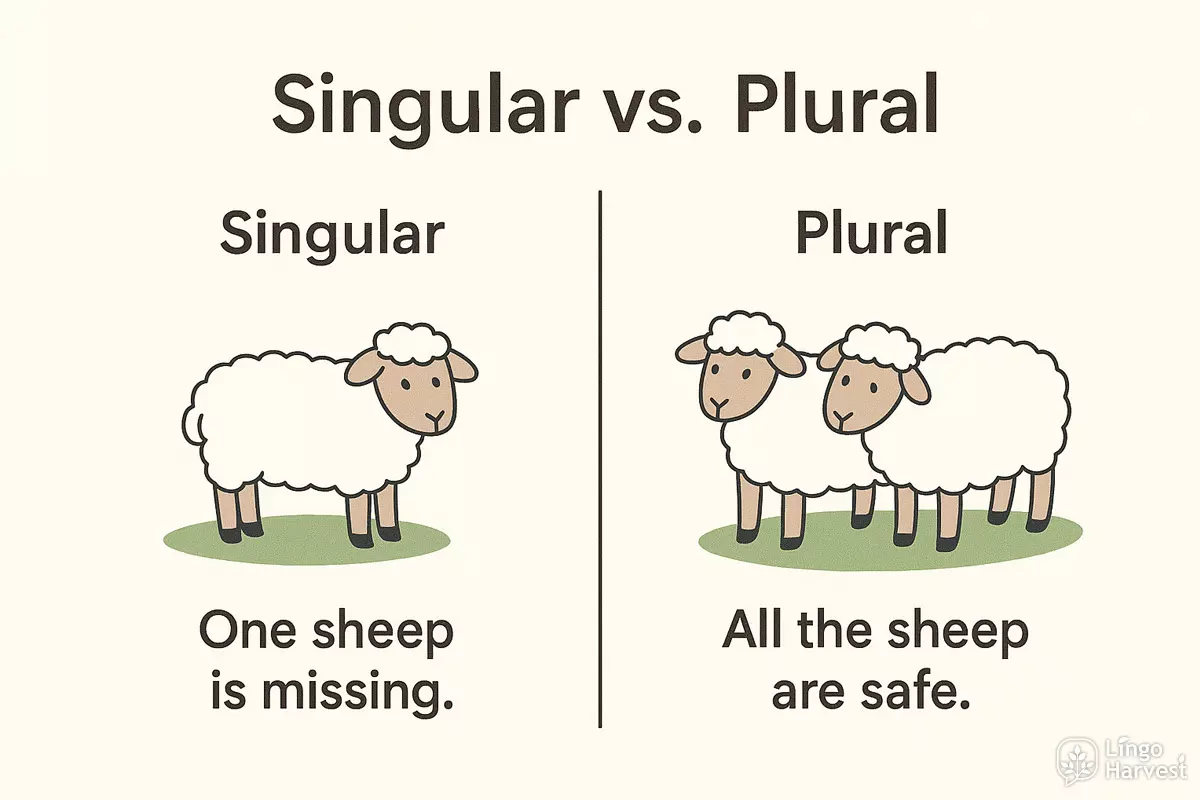
| sheep | One sheep is lost. → Ten sheep are grazing. |
| species | This species is rare. → Many species inhabit the rainforest. |
| aircraft | The aircraft is ready. → Several aircraft are on the runway. |
| fish | A fish swims by. → Dozens of fish gather here. |
| deer | A deer appeared. → Three deer crossed the road. |
| series | This series is popular. → Both series were renewed. |
| means | A means to an end. → Various means are available. |
| salmon | That salmon is fresh. → Wild salmon migrate yearly. |
Summary
Nouns that don’t change between singular and plural forms add a unique wrinkle to English grammar. Recognizing these words and understanding how context defines their number will help you read and write with greater confidence.
Common examples like sheep, species, series, and aircraft
Some English nouns keep exactly the same form whether you’re talking about one or many. Instead of adding -s or -es, these words remain unchanged in both singular and plural contexts. This can seem confusing at first, but with practice, these patterns become familiar.
Frequently Used Nouns With Identical Singular and Plural Forms
Here’s a list of widely used nouns that don’t change between singular and plural:
- sheep → The sheep are grazing in the field.
- deer → Several deer crossed the road.
- fish (sometimes "fishes" is used for different species) → We saw many fish in the river.
- series → This series is very popular.
- species → This species lives only in this area.
- aircraft → The aircraft is ready for takeoff.
- salmon → Salmon is rich in protein.
- trout → Trout swim upstream every spring.
- moose → A moose appeared near the forest road.
- swine → Swine are kept on the farm.
- hovercraft → The hovercraft moved across the water.
- spacecraft → The spacecraft entered orbit successfully.
- offspring → The offspring stay close to their mother.
- means → This is the only means of transport here.
- cod → Cod is commonly used in this recipe.
- bison → Bison live in large herds.
- reindeer → Reindeer are adapted to cold climates.
- pike → Pike are common in freshwater lakes.
- shrimp → Shrimp cook very quickly.
- headquarters → The company’s headquarters is in Berlin.
How These Nouns Work in Sentences
Notice how the context, not the spelling, shows whether these words are singular or plural:
- There is one sheep in the field. / There are ten sheep in the field.
- This species is endangered. / Many species are endangered.
- The series continues tomorrow. / Several series will be released this year.
- One aircraft landed safely. / Five aircraft landed safely.
Overview: Singular vs. Plural in Context
| Noun | Example (Singular & Plural Use) |
|---|---|
| sheep | One sheep is missing. / All the sheep are safe. |
| species | This species lives here. / These species live here. |
| series | A new series starts tonight. / Several series have won awards. |
| aircraft | An aircraft was spotted. / Several aircraft were spotted. |
| fish | He caught a fish. / They caught many fish. |
| deer | A deer crossed the road. / Three deer crossed the road. |
| means | What means do you use? / This is a means to an end. |
| headquarters | The company’s headquarters is in London. / Their headquarters are in several cities. |
Points to Remember
- Use the same word for both one and more than one.
- Rely on the rest of the sentence (verbs, numbers, articles) to show if the noun is singular or plural.
- Some words (like “fish” and “means”) can sometimes take regular plurals, but the unchanged form is standard in many contexts.
These patterns are common in scientific, technical, and everyday English, so recognizing them helps you sound more natural and confident.
How context shows singular vs plural meaning
English has several nouns that look the same whether you’re talking about one or more than one. Because their form doesn’t change, we rely on clues from the sentence to understand if a singular or plural meaning is intended. These clues can come from verbs, adjectives, numbers, or even the overall situation being described.
Clues from verbs and articles
Usually, the verb form helps us figure out if the word refers to a single item or multiple ones. For example, “The sheep is grazing” signals one animal, while “The sheep are grazing” clearly means more than one. Articles like “a” or “an” also give away the number: “a fish” must mean one, but “fish” alone could be either, depending on the context.
Numbers, quantifiers, and context words
Numbers and quantity words often remove any doubt. If you see a number before a noun with the same form for both singular and plural, the meaning is obvious. Similarly, words like “many,” “few,” or “several” always indicate more than one.
- “There are two deer in the field.” (plural)
- “A salmon swims upstream.” (singular)
- “Some shrimp were on the plate.” (plural)
- “That moose is huge!” (singular)
- “Several aircraft landed safely.” (plural)
- “No trout was caught today.” (singular, negative)
- “Many bison roam the prairie.” (plural)
- “This species is endangered.” (singular or plural; context needed)
- “Each series tells a different story.” (singular)
- “Three series have aired this year.” (plural)
- “Look at that cod.” (singular, with demonstrative)
- “Some cod are very large.” (plural, with quantifier)
- “The headquarters is nearby.” (singular, organization as a unit)
- “Their headquarters are in several cities.” (plural, multiple locations)
Comparison table: Context clues and meaning
| Example | How to tell if it's singular or plural |
|---|---|
| The sheep is lost. | Singular verb “is” shows only one sheep. |
| Five sheep were found. | Number “five” and plural verb “were” show more than one. |
| This series is famous. | Singular demonstrative “this” and verb “is” indicate one series. |
| Several species inhabit the island. | Quantifier “several” and context make it clear the meaning is plural. |
| The trout looks healthy. | Singular verb “looks” signals a single trout. |
| Many trout swim here. | Quantifier “many” and plural verb “swim” indicate plural. |
In summary, when a noun’s form doesn’t reveal if it’s one or many, the rest of the sentence provides the answer. Paying attention to verbs, numbers, and context words is the key to interpreting these words correctly in English.
Verb agreement with same-form singular and plural nouns
Understanding how to match verbs with nouns that look the same in both singular and plural is important for clear, correct sentences. Words like "sheep," "deer," and "species" don’t change form, but the verb you choose depends on whether you’re talking about one or many.
Recognizing context for correct verb choice
When a noun has a single form for both singular and plural, context is your main guide. If you mean one, use a singular verb; if you mean more than one, use a plural verb. The sentence’s subject (and sometimes a clue word like "a" or a number) will tell you how to match the verb.
- Singular: The sheep is grazing in the field. (One sheep)
- Plural: The sheep are grazing in the field. (More than one sheep)
- Singular: This species lives in cold climates.
- Plural: These species live in cold climates.
- Singular: One deer stands by the river.
- Plural: Several deer stand by the river.
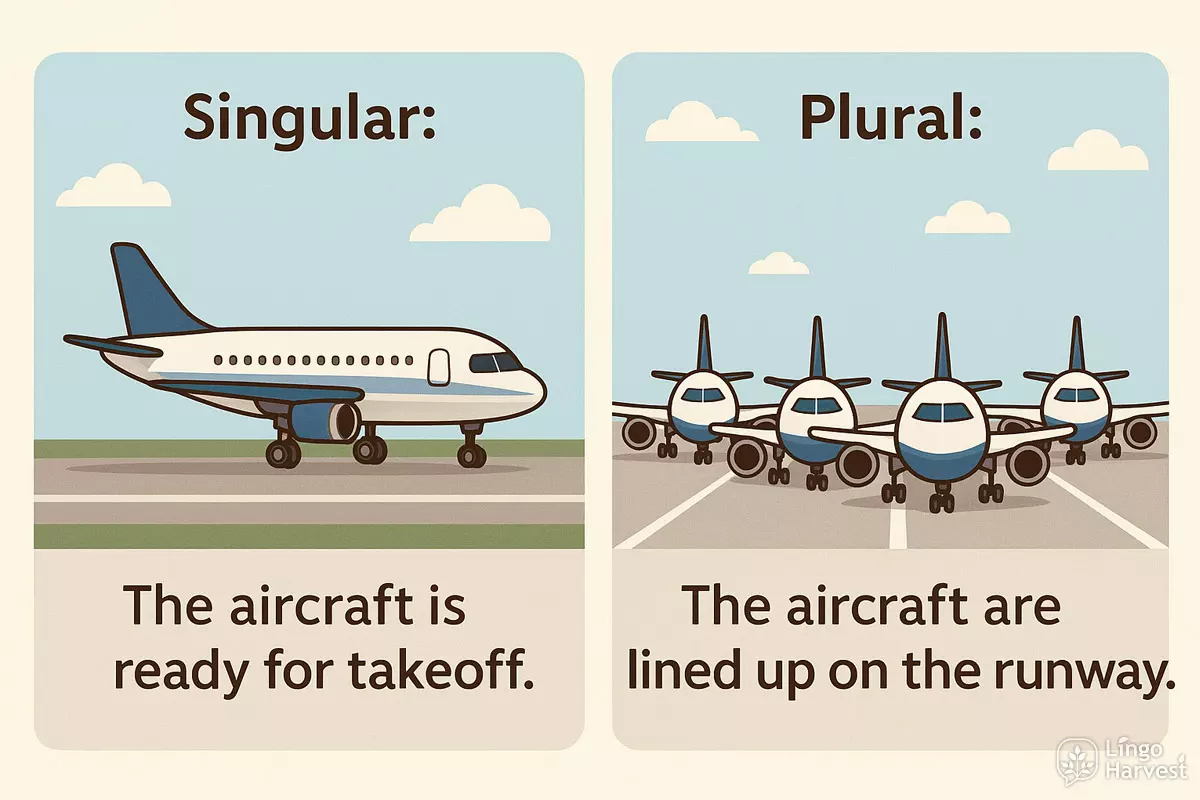
- Singular: The aircraft is ready for takeoff.
- Plural: The aircraft are lined up on the runway.
- Singular: A salmon swims upstream.
- Plural: Salmon swim upstream every year.
- Singular: One series was canceled.
- Plural: Both series were popular.
- Singular: That means the moose is in the forest.
- Plural: Many moose are seen in Alaska.
- Singular: The fish is colorful.
- Plural: The fish are swimming together.
- Singular: A spacecraft has launched.
- Plural: Several spacecraft have docked.
Common pitfalls and best practices
Writers sometimes mistakenly use a plural verb when referring to a singular subject, or vice versa, because the noun doesn’t change form. Pay attention to articles (a, an, the), quantifiers (one, several, many), or adjectives (each, every) to determine the intended number.
Quick reference: noun-verb patterns
Below is a handy table showing how verb forms change depending on whether the noun is singular or plural, even though the noun’s form stays the same.
| Same-form Noun | Singular Example | Plural Example |
|---|---|---|
| Sheep | The sheep is lost. | The sheep are grazing. |
| Deer | A deer stands nearby. | Deer run quickly. |
| Species | This species lives here. | These species live worldwide. |
| Aircraft | An aircraft is landing. | Several aircraft are arriving. |
| Fish | The fish was large. | The fish were swimming. |
By staying attentive to context and grammatical cues, you can confidently choose the right verb when dealing with nouns that look the same in both singular and plural forms.
Differences from zero plural and plural-only nouns
Understanding nouns that have the same form for both singular and plural is easier when you compare them with two other special noun types: zero plurals and plural-only nouns. Each group behaves differently in terms of form and usage, even though they can look similar at first glance.
Zero Plural Nouns vs. Identical Form Nouns
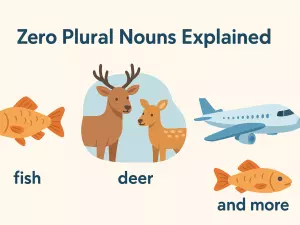
Zero plural nouns typically refer to animals or items that do not change form in the plural, but can take a regular plural if needed. For instance, "sheep" stays the same whether you're talking about one or many, but words like "fish" can sometimes become "fishes" in scientific contexts. In contrast, nouns with identical singular and plural forms never take an -s ending; their unchanging form is the standard in both cases.
- Sheep: one sheep, two sheep (never "sheeps")
- Deer: a deer, several deer
- Moose: one moose, many moose
- Aircraft: an aircraft, multiple aircraft
- Salmon: a salmon, many salmon
- Species: one species, several species
- Trout: a trout, five trout
- Series: this series, those series
- Means: a means, various means
- Offspring: an offspring, two offspring
Plural-Only Nouns: A Different Category
Plural-only nouns, sometimes called "pluralia tantum," exist only in the plural and never have a singular form. Examples include "scissors" and "pants." Unlike identical form nouns, these words require plural verb agreement and can't be used for a single item without a phrase like "a pair of." This distinction is important because nouns with the same form for both numbers can be singular or plural depending on context, but plural-only nouns are always grammatically plural.
- Scissors (always: "the scissors are")
- Pants ("these pants are")
- Glasses ("my glasses were")
- Trousers ("those trousers look")
- Binoculars ("binoculars are")
- Tongs ("the tongs were")
- Pliers ("pliers are")
- Alms ("alms are")
- Riches ("riches were")
- Suddenings (rare, but always plural)
Summary Table: Comparison of Forms
| Type | Singular Example | Plural Example | Notes |
|---|---|---|---|
| Identical Form | one sheep | two sheep | Form never changes; context shows number |
| Zero Plural | a salmon | five salmon | Usually same form; sometimes -s in technical use |
| Plural-Only | — (not used) | the scissors | Always plural; no singular form exists |
| Regular | a cat | cats | Standard -s pluralization |
To sum up, nouns with unchanging singular and plural forms stand apart from both zero plural and plural-only nouns by how they flexibly serve as either number without modification, while the other two types have stricter rules regarding their use and structure.
Typical mistakes with articles and numbers before them
When dealing with nouns that have the same form in both singular and plural (like “sheep,” “deer,” or “series”), learners often slip up with articles and quantifiers. These words can be tricky because the usual rules about “a/an,” “the,” and numbers don’t always apply as expected.
Misusing “a” or “an” with inherently plural nouns
Some nouns with identical singular and plural forms are rarely, if ever, used with the indefinite article. For example, saying “a sheep” is correct only when you mean one animal, but “a species” isn’t the same as “a species of birds”—context matters. With words like “fish,” “series,” or “aircraft,” using “a” can sound unnatural unless you’re clearly referring to a single item.
Confusing singular and plural meaning after numbers
After numbers, these nouns do not change form, which can cause errors. For example, people sometimes incorrectly add “s” after a number (“three deers” ❌) or use “a” where it doesn’t fit (“a cattle” ❌).
- Incorrect: three sheeps ❌ → Correct: three sheep ✅
- Incorrect: five fishs ❌ → Correct: five fish ✅
- Incorrect: two aircrafts ❌ → Correct: two aircraft ✅
- Incorrect: a cattle ❌ → Correct: some cattle ✅
- Incorrect: a series of event ❌ → Correct: a series of events ✅
- Incorrect: many salmons ❌ → Correct: many salmon ✅
- Incorrect: a species of bird ✅ (correct in context: one species)
- Incorrect: several specieses ❌ → Correct: several species ✅
- Incorrect: these deer are ✅ (correct; “deer” for both singular and plural)
- Incorrect: two means ✅ (correct: “means” is both singular and plural)
- Incorrect: a headquarters ✅ (sometimes correct; context needed)
- Incorrect: ten swine ✅ (correct: “swine” is both singular and plural)
Table of common mistakes and correct forms
| Mistaken Form | Correct Usage |
|---|---|
| There are five deers in the park. | There are five deer in the park. |
| He saw a fishs in the tank. | He saw fish in the tank. |
| She bought two aircrafts. | She bought two aircraft. |
| We have a cattle on the farm. | We have cattle on the farm. |
| There are many salmons in the river. | There are many salmon in the river. |
| Several specieses have been discovered. | Several species have been discovered. |
| That is a series of event. | That is a series of events. |
| He owns three headquarters. | He owns three headquarters (context-dependent). |
Tips for avoiding these errors
- Check if the noun’s form changes in the plural. If not, don’t add “s.”
- Be cautious with articles: “a/an” for a single item only when logical; otherwise, use “some” or no article.
- With numbers, use the unchanged form: “two fish,” “six deer.”
- Some nouns (like “cattle,” “police”) never take “a/an.”
- Always verify with a dictionary if you’re unsure about a noun’s plural.
Grasping these nuances will help you avoid common pitfalls and use these special nouns more naturally in both speech and writing.
Practice: complete sentences using same-form nouns correctly
Understanding nouns that keep the same form in both singular and plural can be tricky, especially when writing complete sentences. Practicing with real examples helps you remember when to use these words correctly, regardless of number. Below you’ll find exercises and activities to reinforce your understanding.
Fill in the blanks with the correct noun form
Use the words provided in parentheses to complete each sentence. Remember, these nouns do not change between singular and plural.
- There are many ________ swimming near the coral reef. (fish)
- During migration, thousands of ________ fly overhead. (geese/deer/moose — choose the correct one)
- After the heavy rain, several ________ crossed the road. (sheep)
- The ________ in this pond are very colorful. (trout)
- He caught only one ________ on his trip. (salmon)
- We saw a herd of ________ in the forest yesterday. (deer)
- Both the old and new ________ were on display at the museum. (aircraft)
- My uncle owns two ________ on his farm. (sheep)
- Several ________ were spotted in the Arctic this year. (polar bear/elk/caribou — choose the correct one)
- How many ________ did you see at the zoo? (bison)
Show answers
- fish
- geese
- sheep
- trout
- salmon
- deer
- aircraft
- sheep
- caribou
- bison
Choose the correct sentence
Decide which sentence in each pair uses the noun correctly.
- A. The deers are grazing in the field.
B. The deer are grazing in the field. - A. Three sheeps were lost during the storm.
B. Three sheep were lost during the storm. - A. I saw a bison at the reserve.
B. I saw a bisons at the reserve. - A. The scientist described a new species.
B. The scientist described a new specie. - A. This series are very popular.
B. This series is very popular. - A. Two aircrafts landed safely.
B. Two aircraft landed safely. - A. The fish was swimming near the rocks.
B. The fishes was swimming near the rocks. - A. Many salmon were caught this morning.
B. Many salmons were caught this morning. - A. Their headquarters is in London.
B. Their headquarter is in London. - A. Several shrimp were added to the soup.
B. Several shrimps were added to the soup.
Show answers
- B. The deer are grazing in the field.
- B. Three sheep were lost during the storm.
- A. I saw a bison at the reserve.
- A. The scientist described a new species.
- B. This series is very popular.
- B. Two aircraft landed safely.
- A. The fish was swimming near the rocks.
- A. Many salmon were caught this morning.
- A. Their headquarters is in London.
- A. Several shrimp were added to the soup.
Spot the error
Some sentences below use the same-form noun incorrectly. Identify which sentences have errors.
- The aircrafts landed safely despite the fog.
- He caught three trout in the river.
- There are many species of birds in this area.
- All the shrimps were fresh at the market.
- The deers were standing near the road.
- She saw several sheep on the hill.
- Two aircraft are ready for departure.
- The salmons were swimming upstream.
- The headquarters are located downtown.
- We observed a rare species during the trip.
Show answers
- Error: “The aircrafts landed safely despite the fog.”
Correct: “The aircraft landed safely despite the fog.” - Correct: “He caught three trout in the river.”
- Correct: “There are many species of birds in this area.”
- Error: “All the shrimps were fresh at the market.”
Correct: “All the shrimp were fresh at the market.” - Error: “The deers were standing near the road.”
Correct: “The deer were standing near the road.” - Correct: “She saw several sheep on the hill.”
- Correct: “Two aircraft are ready for departure.”
- Error: “The salmons were swimming upstream.”
Correct: “The salmon were swimming upstream.” - Correct: “The headquarters are located downtown.”
- Correct: “We observed a rare species during the trip.”
Continued practice with sentences and lists like these will help you use singular-plural-invariant nouns with confidence in both speech and writing.