Irregular Plural Nouns: Theoretical Guide

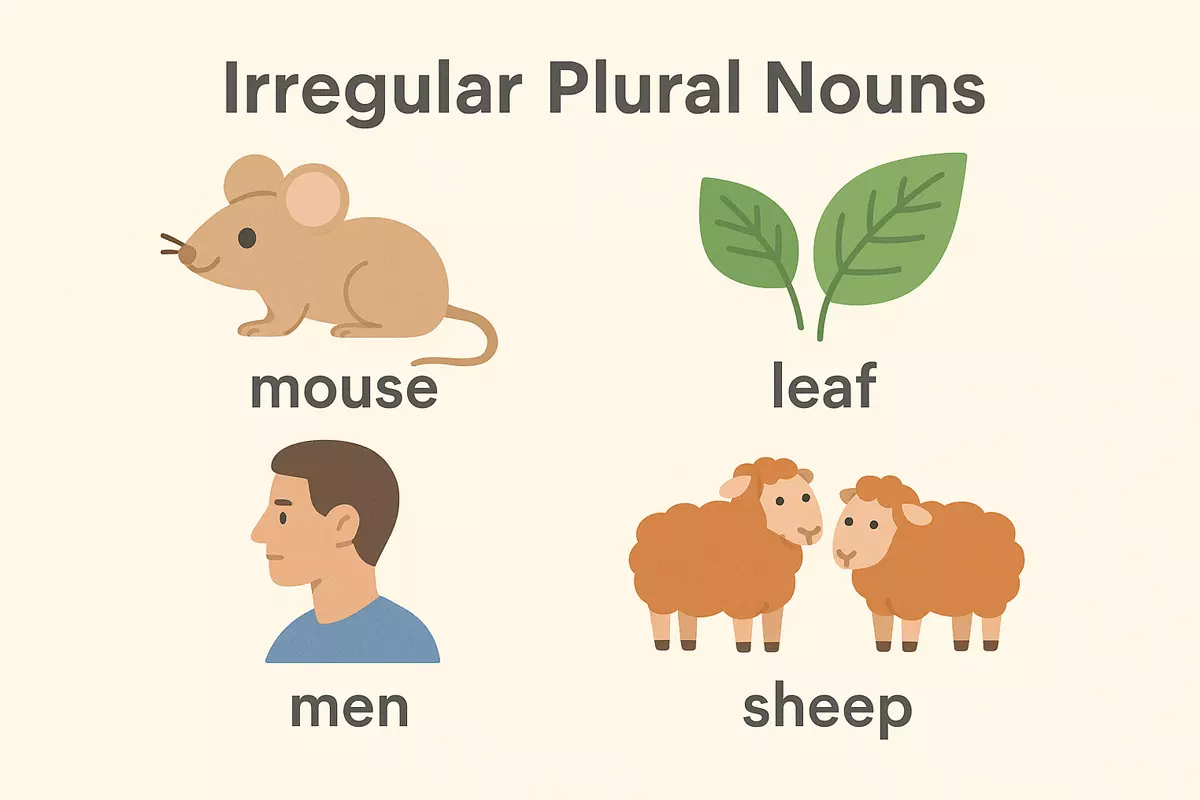 Here we what makes a plural irregular, outlines main patterns such as vowel changes and entirely new forms, examines Latin and Greek loanwords, lists common irregular plurals, addresses spelling and pronunciation issues, and includes a matching exercise.
Mastering English grammar involves tackling challenges like irregular plural forms, which often break standard rules and can confuse learners. Recognizing and understanding these exceptions, such as “children” instead of “childs” or “mice” instead of “mouses,” is crucial for effective communication. By familiarizing yourself with these unique word patterns, you’ll be better equipped to use English accurately and confidently, enhancing both your writing and speaking skills.
What Makes a Plural Irregular?
In English, most nouns form their plurals simply by adding -s or -es. However, some nouns break away from this predictable pattern. These exceptions are known as irregular plural forms. What sets them apart is that their plural versions do not follow the standard spelling or pronunciation rules. Instead, they might change vowels, use entirely different words, or retain older forms from historical stages of the language.
Common Patterns in Irregular Plurals
There are several ways that non-standard plurals appear. Some patterns are inherited from Old English, while others come from Latin or Greek. These patterns include:
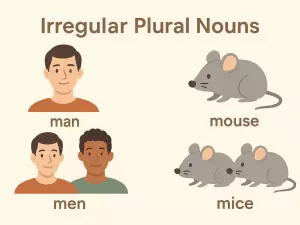
- Changing the internal vowel (e.g., man → men)
- Altering the ending (e.g., child → children)
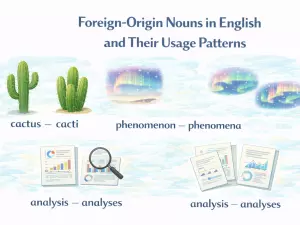
- Retaining foreign plurals (e.g., cactus → cacti)
- Having the same form for both singular and plural (e.g., sheep → sheep)
- Using entirely different words (e.g., person → people)
Why Do These Plural Forms Exist?
Irregular plurals often reflect the history and origins of the language. Many come from words borrowed from Latin, Greek, or other languages that brought their own pluralization rules. Others are relics from earlier forms of English that have simply persisted over time. Because these forms do not fit the usual -s or -es rule, they must be memorized rather than inferred.
Examples of Irregular Plural Noun Patterns
Below is a comparison of different irregular pluralization strategies. Notice how the changes do not always follow a single logic, making these forms unpredictable for learners.
| Singular | Plural | Pattern/Origin |
|---|---|---|
| man | men | Vowel change (Old English) |
| goose | geese | Vowel change (Old English) |
| mouse | mice | Vowel change (Old English) |
| child | children | Unique ending |
| person | people | Suppletive form |
| cactus | cacti | Latin plural |
| analysis | analyses | Greek plural |
| sheep | sheep | No change (zero plural) |
| deer | deer | No change (zero plural) |
| tooth | teeth | Vowel change (Old English) |
| ox | oxen | Old English ending |
| datum | data | Latin plural |
| focus | foci | Latin plural |
| foot | feet | Vowel change (Old English) |
| criterion | criteria | Greek plural |
| phenomenon | phenomena | Greek plural |
| leaf | leaves | Spelling change |
| loaf | loaves | Spelling change |
| radius | radii | Latin plural |
| thesis | theses | Greek plural |
Key Takeaways
Irregular plural nouns stand out because they defy the most common English rules and reveal the language’s complex history. Recognizing the most frequent patterns helps, but many forms still need to be learned by exposure and practice.
Main Patterns of Irregular Plurals
English features several characteristic ways in which plural forms deviate from the standard "add -s/-es" rule. Understanding these irregularities helps learners spot patterns and anticipate exceptions, even when the forms seem unpredictable at first glance.
Vowel Changes Within the Word
Some nouns form their plural by changing the vowel sound in the middle, rather than altering the ending. These patterns are inherited from older stages of English and remain common in frequently used words.
- man → men
- woman → women
- foot → feet
- tooth → teeth
- goose → geese
- mouse → mice
- louse → lice
Nouns Ending in -f or -fe
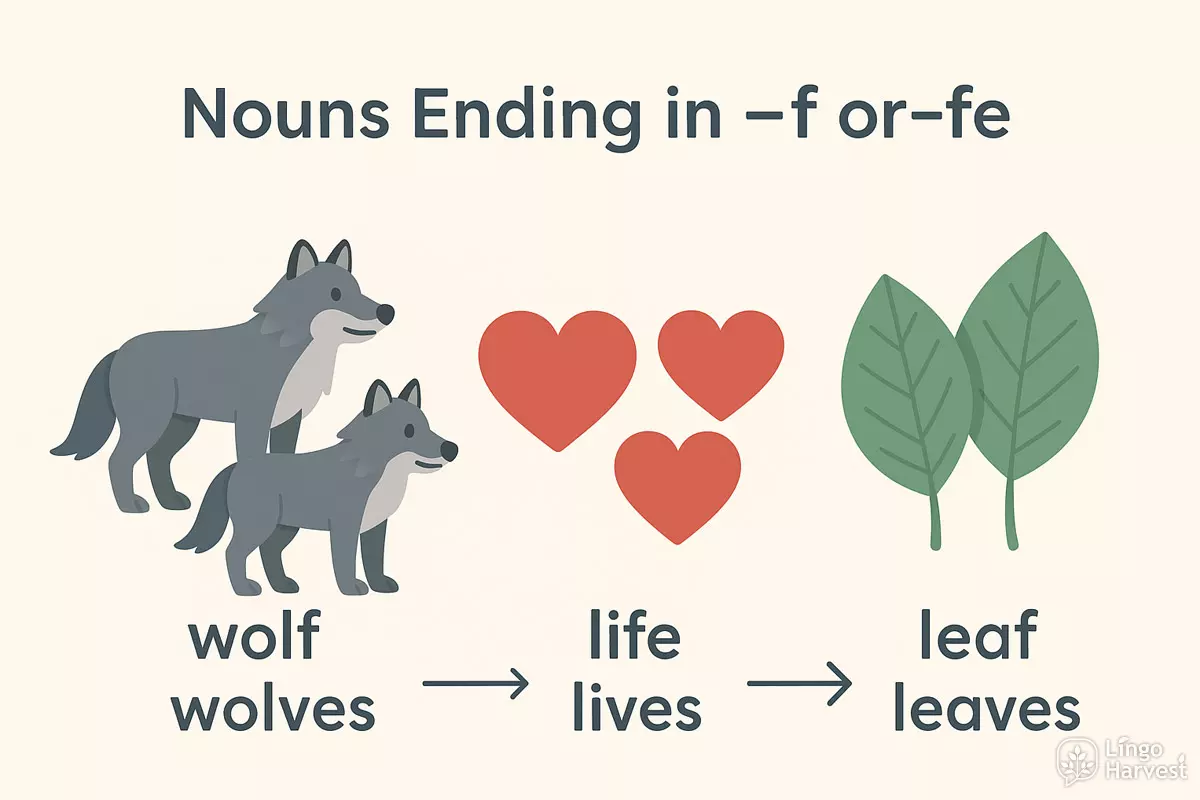
Another group forms the plural by changing -f or -fe to -ves. This pattern is not universal for all such nouns, but it’s common enough to recognize.
- wolf → wolves
- life → lives
- leaf → leaves
- calf → calves
- knife → knives
- loaf → loaves
- self → selves
Nouns Borrowed from Latin and Greek
Many academic and scientific terms retain their original pluralization from Latin or Greek. These forms may look unusual but follow their own rules.
| Singular | Plural | Origin |
|---|---|---|
| criterion | criteria | Greek |
| phenomenon | phenomena | Greek |
| bacterium | bacteria | Latin |
| analysis | analyses | Greek |
| radius | radii | Latin |
| cactus | cacti/cactuses | Latin |
| appendix | appendices/appendixes | Latin |
| thesis | theses | Greek |
| datum | data | Latin |
Same Form for Singular and Plural
A handful of nouns use the same word for both singular and plural. Context is the only clue.
- sheep
- deer
- fish (when referring to multiple of the same species)
- species
- aircraft
- series
Other Unique Forms
Some exceptions don’t fit any of the above rules. These are best memorized individually.
- child → children
- ox → oxen
- person → people
- die → dice (when referring to gaming objects)
While many nouns follow these established irregular patterns, a few are unique or have more than one accepted plural form. Context and usage often determine which is correct or most natural.
Internal Vowel Changes
Some plural forms in English are created by altering a vowel within the word, rather than simply adding an ending. This pattern, often called “ablaut” or “mutation,” is a legacy from earlier stages of the language and is especially common among nouns with ancient Germanic roots. Instead of relying on a visible suffix, these plural nouns shift their internal sounds to indicate number.
How Vowel Mutation Works
The singular and plural forms differ by a change in the main vowel sound, usually in the stressed syllable. This can make these forms less predictable for learners, as the shift doesn’t always follow a clear rule. Such changes are not productive—new words rarely adopt this pattern—but several high-frequency nouns still use it.
Common Examples
Here are some notable English nouns that show this type of vowel alternation when forming the plural:
- man → men
- woman → women
- foot → feet
- tooth → teeth
- goose → geese
- mouse → mice
- louse → lice
- die (as in dice) → dice
- ox → oxen (note: also uses the -en suffix)
- brother → brethren (rare, archaic or specialized use)
- penny → pence (in UK currency use)
- child → children (includes both vowel change and -en ending)
Comparing Forms
To see these alternations at a glance, here is a table summarizing some of the most common nouns that form their plurals through internal vowel shifts:
| Singular | Plural | Vowel Change |
|---|---|---|
| man | men | a → e |
| woman | women | o → e |
| goose | geese | oo → ee |
| tooth | teeth | oo → ee |
| foot | feet | oo → ee |
| mouse | mice | ou → i |
| louse | lice | ou → i |
Key Points to Remember
- Most nouns with this pattern are very common or have been in English for centuries.
- Some words, like “ox” and “child,” combine vowel change with an extra ending, but the vowel shift is still a crucial identifier.
- Irregular forms are often used in set expressions, idioms, or specific contexts, so exposure and practice help with mastery.
The presence of these unique plural forms adds variety to English and can be a challenge for non-native speakers. Recognizing them as exceptions, rather than trying to apply regular rules, is the best strategy for learning and using them correctly.
Words with Entirely New Plural Forms
Some English nouns transform so dramatically in the plural that their forms appear unrelated to their singular counterparts. These changes often reflect deep historical roots, tracing back to Old English, Latin, Greek, or other languages. Such nouns defy both the standard “-s” ending and typical irregular patterns, making them essential for anyone studying unpredictable pluralization.
Unique Plural Transformations
Rather than following a modification of the original word, these examples demonstrate complete shifts in form, challenging even seasoned language users. Here are several notable cases:
- Person → People
- Child → Children
- Ox → Oxen
- Mouse → Mice
- Goose → Geese
- Man → Men
- Woman → Women
- Louse → Lice
- Die (as in a single dice) → Dice
- Cow → Kine (archaic plural, rarely used today)
- Brother → Brethren (used in certain contexts)
- Fish → Fish / Fishes
- Sheep → Sheep
- Deer → Deer
- Salmon → Salmon
Comparing Singular and Plural Forms
Some of these pairings are so distinct that context is often necessary for comprehension. Their unpredictability makes them common stumbling blocks for learners.
| Singular Form | Plural Form |
|---|---|
| Person | People |
| Child | Children |
| Mouse | Mice |
| Goose | Geese |
| Man | Men |
| Woman | Women |
| Louse | Lice |
| Tooth | Teeth |
| Foot | Feet |
| Die | Dice |
Why Do These Plurals Exist?
Most of these forms are relics of older stages of English or borrowings from other languages, preserved due to frequent use or tradition. Recognizing them is a key step in mastering the unpredictable aspects of English noun formation. While some are archaic or only used in specific contexts, most remain common in everyday language.
Latin and Greek Loanword Plurals
Many English nouns trace their origins to Latin and Greek, and their plural forms often reflect the original languages’ grammar. Instead of simply adding “-s” or “-es,” these words may adopt endings like “-a,” “-i,” “-ae,” or “-ices.” Mastering these patterns helps in academic, scientific, and formal writing where such terms commonly appear.
Common Patterns for Latin-Derived Nouns
Several endings signal a Latin origin and determine how plurals are formed:
- -us → -i: alumnus → alumni, cactus → cacti
- -um → -a: datum → data, bacterium → bacteria
- -a → -ae: formula → formulae, antenna → antennae
- -ex/-ix → -ices: appendix → appendices, index → indices
Some terms, especially in non-technical use, have accepted regular English plurals (“cactuses,” “formulas”). However, traditional forms are preferred in scientific contexts.
Greek Pluralization Patterns
Greek-origin nouns also follow distinct rules, often depending on their endings:
- -on → -a: phenomenon → phenomena, criterion → criteria
- -is → -es: analysis → analyses, thesis → theses
- -ma → -mata: stigma → stigmata, schema → schemata
In everyday English, “phenomenons” and “criterions” are rare and often considered incorrect.
Representative Examples
Below is a comparison of singular and plural forms for some frequently encountered loanwords from Latin and Greek:
| Singular | Plural |
|---|---|
| alumnus | alumni |
| analysis | analyses |
| bacterium | bacteria |
| criterion | criteria |
| appendix | appendices |
| phenomenon | phenomena |
| thesis | theses |
| formula | formulae |
| cactus | cacti |
| antenna | antennae |
| stigma | stigmata |
| focus | foci |
| medium | media |
| index | indices |
Usage Tips and Exceptions
It’s worth noting that some of these plurals are more common in specialized fields, such as mathematics or biology, while everyday conversation might favor anglicized forms. Always consider your audience: using “bacteria” instead of “bacteriums” is universally correct, but “indexes” is widely accepted in publishing. When in doubt, consult a reputable dictionary or style guide.
Everyday Irregular Plurals to Know
Understanding the most common irregular plural forms is essential for clear and natural communication. Unlike standard plurals that simply add "-s" or "-es," these words change spelling, vowels, or even the entire word. Native speakers often use them without thinking, but they can be confusing for learners or anyone interested in the patterns of English grammar.
Frequent Examples in Daily Life
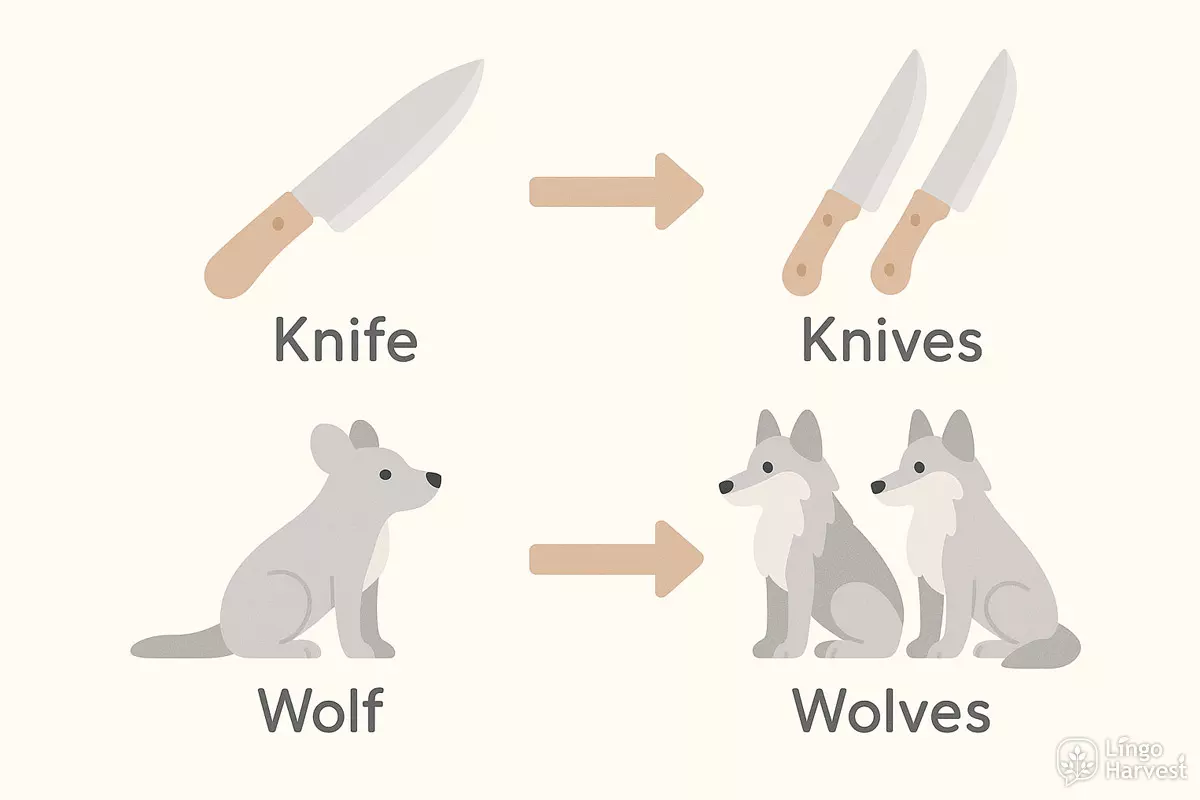
Many high-frequency nouns have unique plural forms. Here are some you’re likely to encounter in conversation, reading, and writing:
- Child → Children
- Man → Men
- Woman → Women
- Foot → Feet
- Tooth → Teeth
- Goose → Geese
- Mouse → Mice
- Person → People
- Leaf → Leaves
- Knife → Knives
- Wolf → Wolves
- Cactus → Cacti
- Focus → Foci
- Analysis → Analyses
- Criterion → Criteria
- Ox → Oxen
- Die (as in dice) → Dice
- Index → Indices
- Thief → Thieves
- Loaf → Loaves
Patterns and Origins
Some of these plurals come from Old English, while others are borrowed from Latin or Greek. For example, "cactus" becomes "cacti" (Latin pattern), while "foot" changes to "feet" due to a vowel shift from older forms of the language. Recognizing these patterns can make it easier to remember the correct forms.
| Singular | Plural | Origin/Pattern |
|---|---|---|
| Child | Children | Old English suffix |
| Mouse | Mice | Vowel change (umlaut) |
| Analysis | Analyses | Greek ending -is to -es |
| Cactus | Cacti | Latin ending -us to -i |
| Person | People | Suppletive (different root) |
| Goose | Geese | Vowel change (umlaut) |
| Wolf | Wolves | F to V + -es |
Why These Words Matter
Knowing these forms helps avoid misunderstandings and errors, especially in writing or formal contexts. While some irregular plurals are rare, those listed above appear often in everyday English—whether you’re reading the news, chatting with friends, or writing an email. Recognizing which nouns don’t follow the standard rules is a useful step in mastering English grammar.
Spelling vs Pronunciation Issues
English irregular plural nouns often create confusion because the written form and the way words are spoken do not always match expectations. Sometimes, the spelling changes in surprising ways, while the pronunciation remains similar to the singular. In other cases, the spoken form shifts, even if the letters look nearly unchanged. This mismatch can be challenging for learners and native speakers alike.
Common Mismatches Between Written and Spoken Forms
Some irregular plural forms involve silent letters, vowel shifts, or unique endings that are not always obvious from spelling alone. Consider these examples:
- Child → Children (pronounced /ˈtʃaɪld/ vs. /ˈtʃɪldrən/)
- Goose → Geese (the "oo" changes to "ee" in speech and writing)
- Woman → Women (spelling changes, but the vowel sound shifts: /ˈwʊmən/ vs. /ˈwɪmɪn/)
- Mouse → Mice (pronounced /maɪs/ but spelled "mice")
- Foot → Feet (vowel sound changes, as does the spelling)
- Tooth → Teeth (similar vowel shift, different ending)
- Man → Men (the vowel changes in both pronunciation and spelling)
- Person → People (completely different plural form, both visually and phonetically)
- Louse → Lice (different vowel and consonant sound)
- Cactus → Cacti (ending changes to "i," pronounced /ˈkæktaɪ/)
- Analysis → Analyses (ending changes to "-ses," pronounced /əˈnælɪsiːz/)
- Fungus → Fungi (ending changes to "i," pronounced /ˈfʌŋɡaɪ/ or /ˈfʌndʒiː/)
- Ox → Oxen (spelling adds "en," pronounced /ˈɒksən/)
- Die → Dice (different vowel and consonant sound)
Patterns and Pitfalls
Some irregular plurals follow patterns based on their etymology (origin), but pronunciation often diverges from what the spelling might suggest. For example, nouns of Latin or Greek origin may adopt endings like "-i" or "-es," but the way these are spoken varies.
| Singular | Plural (Spelling & Pronunciation) |
|---|---|
| Thesis /ˈθiːsɪs/ |
Theses /ˈθiːsiːz/ |
| Criterion /kraɪˈtɪəriən/ |
Criteria /kraɪˈtɪəriə/ |
| Appendix /əˈpɛndɪks/ |
Appendices /əˈpɛndɪsiːz/ |
| Phenomenon /fəˈnɒmɪnən/ |
Phenomena /fəˈnɒmɪnə/ |
| Stimulus /ˈstɪmjʊləs/ |
Stimuli /ˈstɪmjʊlaɪ/ |
Why the Differences Matter
These inconsistencies matter because they can lead to misunderstandings in both writing and conversation. Knowing the most common patterns—and their exceptions—helps avoid mistakes. When learning or teaching irregular plurals, pay special attention to both how the word looks and how it sounds. In many cases, memorization and regular practice are the most reliable strategies.
Practice: Match Singular and Plural Pairs
One effective way to master irregular plural forms is by directly pairing singular nouns with their corresponding plurals. This helps you recognize patterns and exceptions within English, especially since many irregular forms do not simply add -s or -es. Below, you'll find a matching activity and a structured table to reinforce your understanding of these unique noun pairs.
Exercise: Connect the Singular with Its Irregular Plural
Review the list below. For each singular noun, try to recall or deduce its correct irregular plural form. Some may look familiar, while others are classic exceptions in English.
- Child
- Foot
- Tooth
- Person
- Mouse
- Goose
- Man
- Woman
- Cactus
- Analysis
- Criterion
- Ox
- Die (as in a singular dice)
- Phenomenon
- Leaf
- Wolf
- Loaf
- Half
- Thief
- Focus
Show answers
- Child → Children
- Foot → Feet
- Tooth → Teeth
- Person → People
- Mouse → Mice
- Goose → Geese
- Man → Men
- Woman → Women
- Cactus → Cacti
- Analysis → Analyses
- Criterion → Criteria
- Ox → Oxen
- Die → Dice
- Phenomenon → Phenomena
- Leaf → Leaves
- Wolf → Wolves
- Loaf → Loaves
- Half → Halves
- Thief → Thieves
- Focus → Foci
Irregular Forms: Quick Reference Table
Some irregular noun forms are best understood when viewed side by side. The table below summarizes several common pairs, highlighting the differences between singular and plural spellings.
| Singular | Irregular Plural |
|---|---|
| Child | Children |
| Foot | Feet |
| Tooth | Teeth |
| Person | People |
| Mouse | Mice |
| Goose | Geese |
| Man | Men |
| Woman | Women |
| Cactus | Cacti |
| Analysis | Analyses |
| Criterion | Criteria |
| Ox | Oxen |
| Die | Dice |
| Phenomenon | Phenomena |
| Leaf | Leaves |
| Wolf | Wolves |
| Loaf | Loaves |
| Half | Halves |
| Thief | Thieves |
| Focus | Foci |
Self-Test: Which Plural Is Correct?
Choose the right plural for each singular noun below. Select from the options and check your answers after.
- Leaf: Leafs / Leaves
- Ox: Oxes / Oxen
- Criterion: Criteria / Criterions
- Goose: Gooses / Geese
- Person: People / Persons
Show answers
- Leaves
- Oxen
- Criteria
- Geese
- People
Building confidence with irregular forms comes from repeated exposure and practice. Keep reviewing these pairs and test yourself regularly to internalize the correct plural endings and forms.