Irregular Plural Nouns: Complete List and Easy Rules

 The article explains what makes a plural form irregular, lists common singular and plural pairs, covers vowel and ending changes, discusses Latin and Greek forms, highlights nouns with no plural, shares memory tips, and includes a matching practice.
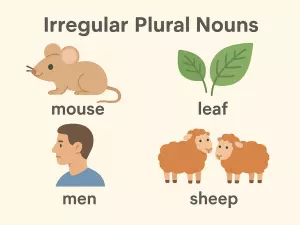
English word forms can be challenging, particularly with nouns that form their plurals in unexpected ways. While most nouns simply add an s or es, others change entirely, such as child to children or mouse to mice. These irregular plurals often have historical roots and do not follow the standard rules, which can make them confusing for learners. Understanding these exceptions and familiarizing yourself with the most common irregular forms can greatly improve both your writing and speaking skills.
What Makes a Plural Irregular
Most English nouns form their plural by simply adding -s or -es at the end. However, some words break this pattern and have unique ways of showing more than one. These are called irregular plurals because they do not follow the standard pluralization rules.
Irregular forms often come from Old English roots or borrowings from other languages, which is why their spelling and pronunciation may seem unpredictable. Sometimes, the entire word changes. Other times, the ending shifts or a vowel inside the word is replaced. Understanding these patterns helps make learning and remembering non-standard plurals easier.
Common Features of Irregular Plural Nouns
- Changing vowels inside the word (man → men, foot → feet)
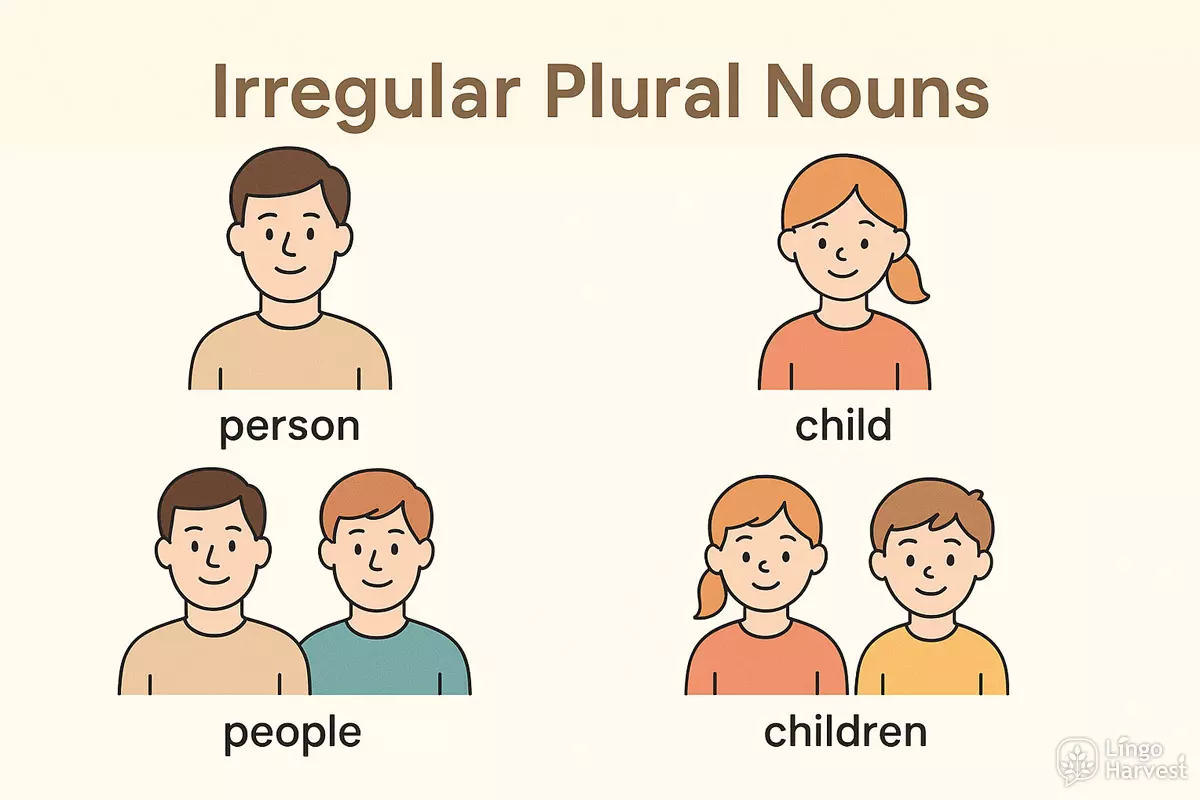
- Completely different word forms (person → people, child → children)
- Foreign endings kept from the original language (cactus → cacti, analysis → analyses)
- No change at all between singular and plural (sheep, deer, species)
Typical Patterns in Irregular Plurals
| Singular | Plural Form | Pattern/Origin |
|---|---|---|
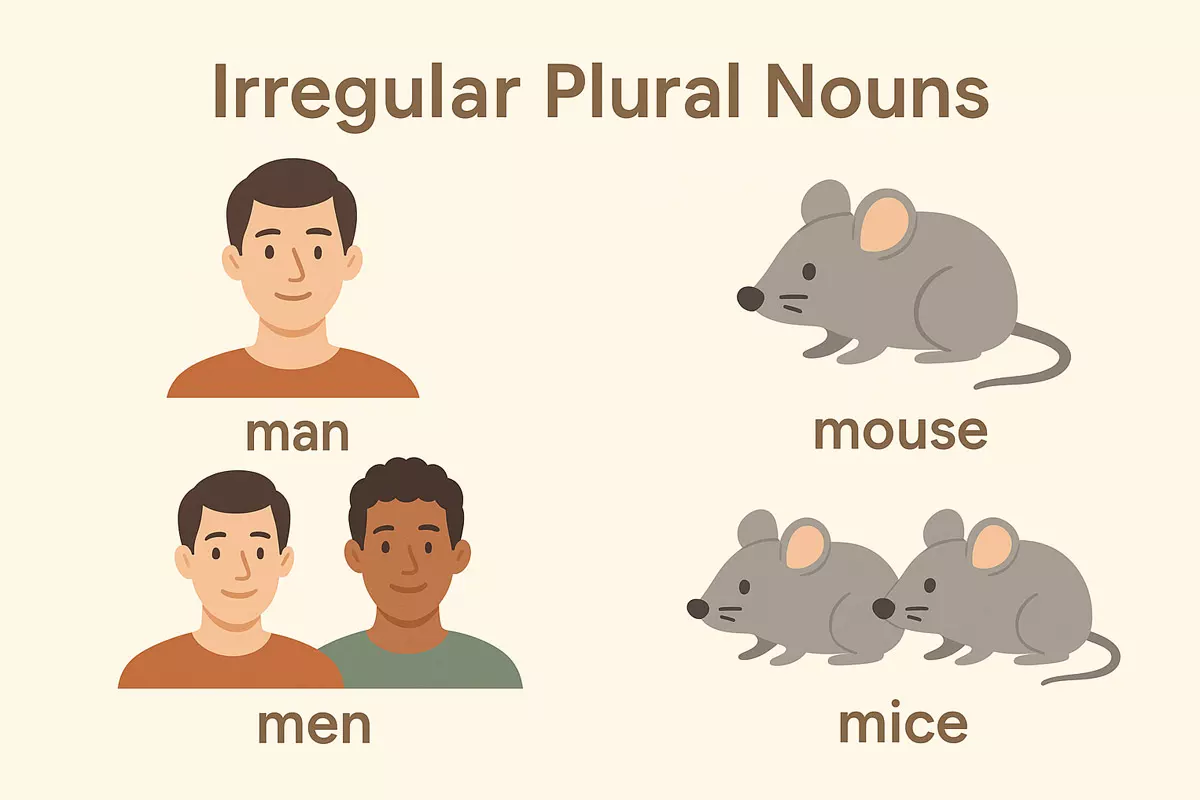
| man | men | Vowel change (a → e) |
| tooth | teeth | Vowel change (oo → ee) |
| mouse | mice | Vowel change (ou → i) |
| goose | geese | Vowel change (oo → ee) |
| child | children | Suffix addition (-ren) |
| cactus | cacti | Latin plural (-us → -i) |
| analysis | analyses | Greek plural (-is → -es) |
| sheep | sheep | No change |
| person | people | Different word |
| ox | oxen | Old English plural (-en) |
Why Do These Exceptions Exist?
Many of these unusual forms have survived due to history, language evolution, and borrowing. Some are leftovers from Old English, while others come from Latin or Greek, especially in scientific and academic vocabulary. There are also words that keep their original pluralization rules from the language they came from, which explains why English has such variety.
Learning these non-typical plurals is mostly a matter of memorization, but noticing the common patterns can make them easier to recognize and use correctly.
Most Common Pairs
Understanding which irregular plural forms appear most often helps learners focus their efforts. Some nouns with unusual plurals are encountered so frequently in English that they’re essential to recognize, both in reading and conversation. These word pairs don’t just break the regular "-s" or "-es" pattern—they often change spelling, vowel sounds, or even transform entirely.
Essential Irregular Plural Noun Examples
Below is a list of widely used irregular noun forms. Each pair shows the singular and its corresponding plural, emphasizing those you’re likely to see or use regularly:
- child → children
- man → men
- woman → women
- person → people
- mouse → mice
- goose → geese
- tooth → teeth
- foot → feet
- louse → lice
- cactus → cacti
- focus → foci
- analysis → analyses
- crisis → crises
- thesis → theses
- phenomenon → phenomena
- datum → data
- ox → oxen
- leaf → leaves
- wolf → wolves
- knife → knives
Irregular Patterns: Vowel Changes and Endings
Some irregular forms involve changing the middle vowel (like "man" to "men") or replacing an ending (such as "analysis" to "analyses"). Others come from Latin or Greek, keeping their original plural endings. These patterns aren’t always obvious, so memorizing the most frequent ones is helpful.
Comparison Table: Singular and Plural Forms
| Singular | Plural |
|---|---|
| child | children |
| man | men |
| woman | women |
| mouse | mice |
| goose | geese |
| tooth | teeth |
| foot | feet |
| person | people |
| louse | lice |
| cactus | cacti |
| analysis | analyses |
| phenomenon | phenomena |
| wolf | wolves |
| knife | knives |
| ox | oxen |
| datum | data |
| thesis | theses |
| crisis | crises |
| focus | foci |
| leaf | leaves |
These examples stand out because they appear frequently and are often used in both spoken and written English. Becoming comfortable with these forms makes it much easier to speak and write accurately, especially when dealing with everyday topics or academic writing.
Vowel Changes and Endings
Some irregular plural nouns form their plural by changing the vowel sound in the middle of the word, rather than simply adding -s or -es. This shift often seems unpredictable, but there are a few common patterns worth noting. Instead of relying on endings, these words transform internally, creating pairs that can look quite different from their singular forms.
Common Patterns of Vowel Change
Many familiar English words change their internal vowel to make the plural. Here are some of the most common examples:
- man → men
- woman → women
- foot → feet
- tooth → teeth
- goose → geese
- mouse → mice
- louse → lice
- die → dice
- ox → oxen (note: this one combines a vowel change with a unique ending)
- child → children (again, both a vowel change and a special ending)
Words with Unique Endings
Some nouns use special endings in addition to, or instead of, a vowel change. For example, certain words take -en, -ren, or other unusual suffixes. Here are a few key cases:
- ox → oxen
- child → children
- brother → brethren (rare, for certain religious contexts)
Comparison Table of Vowel Changes
| Singular | Plural |
|---|---|
| man | men |
| woman | women |
| foot | feet |
| tooth | teeth |
| goose | geese |
| mouse | mice |
| louse | lice |
| die | dice |
Why Do These Changes Happen?
Most of these forms come from Old English or other Germanic roots, where changing the vowel (a process called “ablaut”) was a regular way to indicate grammatical distinctions. Over time, most English nouns adopted regular -s or -es endings, but these older patterns remain in some of the most common words.
How to Remember Them
There isn’t a simple rule to predict all vowel-altering plurals, so memorization and practice are key. Focus on the most frequent examples first; these words appear often in everyday conversation and writing. When in doubt, check a dictionary for confirmation, as these forms are rarely intuitive for learners.
Latin and Greek Forms
Many English words with roots in classical languages have plural forms that don’t follow the typical “-s” or “-es” ending. Instead, these words often keep their original endings from Latin or Greek, which can seem unusual if you’re not familiar with the pattern. For Latin-derived nouns, the pluralization rules often depend on the original word’s ending. Some common transformations include “-us” to “-i,” “-um” to “-a,” and “-a” to “-ae.” Greek-origin words may use “-is” to “-es” or “-on” to “-a.” Understanding these patterns can help you recognize and use these forms correctly in both writing and speech.
Common Patterns and Examples
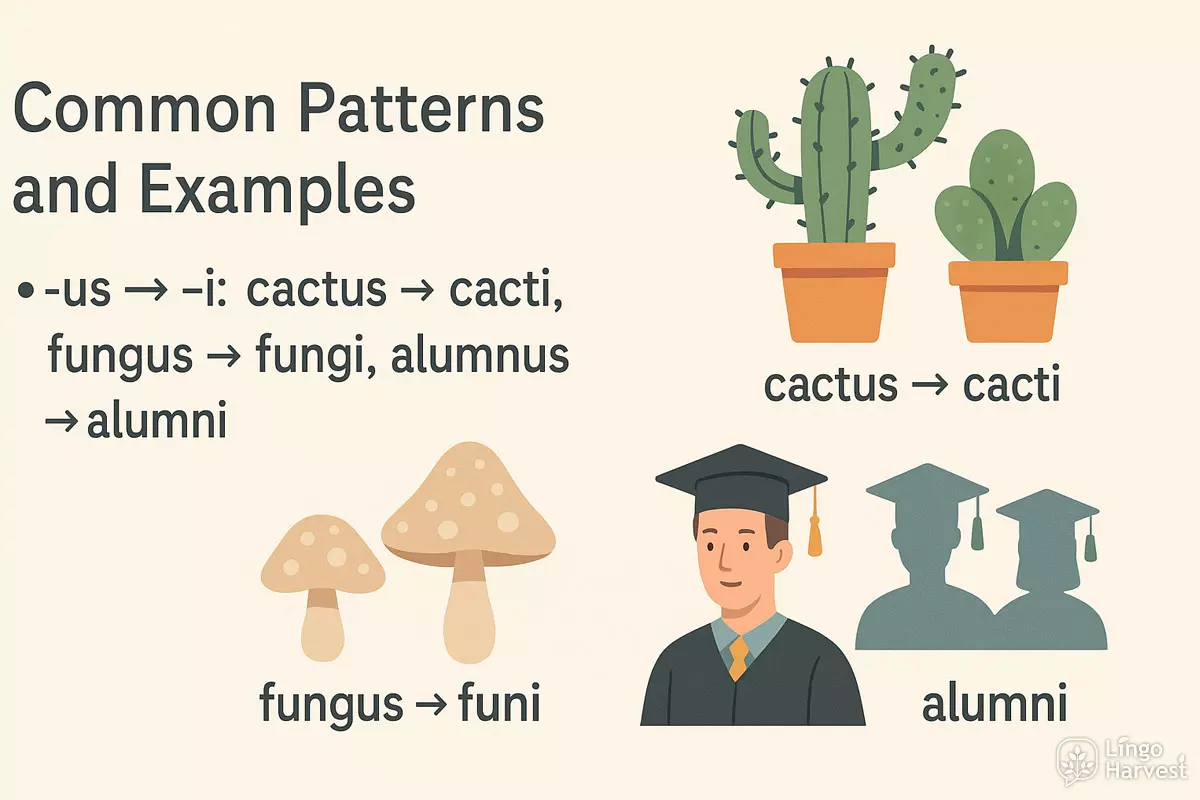
Below are some of the most frequent endings and their changes, along with examples for each type:
- -us → -i: cactus → cacti, fungus → fungi, alumnus → alumni
- -um → -a: bacterium → bacteria, curriculum → curricula, datum → data
- -a → -ae: formula → formulae, antenna → antennae, larva → larvae
- -is → -es: analysis → analyses, crisis → crises, thesis → theses
- -on → -a: phenomenon → phenomena, criterion → criteria, automaton → automata
- -ex/-ix → -ices: index → indices, appendix → appendices, matrix → matrices
Comparison Table: Singular and Plural Forms
| Singular Form | Plural Form |
|---|---|
| alumnus | alumni |
| fungus | fungi |
| appendix | appendices |
| criterion | criteria |
| phenomenon | phenomena |
| analysis | analyses |
| larva | larvae |
| datum | data |
| matrix | matrices |
| antenna | antennae |
Notes on Usage
While some classical plurals are standard in scientific or academic writing (like “bacteria” or “criteria”), everyday English often uses regularized forms. For example, “formulas” and “indexes” are common in general contexts. When in doubt, consider your audience and the formality of your writing.
No-plural or Same-form Nouns
Some English nouns don’t change form between singular and plural, or they simply don’t have a plural version at all. This can be confusing for learners, since most nouns add “-s” or “-es” in the plural. These exceptions are worth memorizing, as they appear frequently in both everyday speech and writing.
Words with Identical Singular and Plural Forms
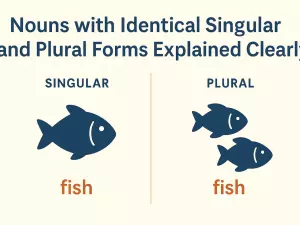
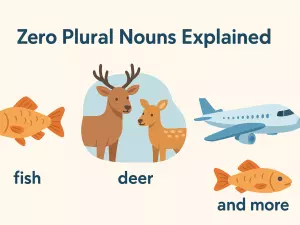
Certain nouns look exactly the same whether you’re talking about one or many. This is especially common with animals, fish, and words borrowed from other languages. Context usually tells you if the noun is singular or plural.
- sheep
- deer
- fish
- species
- aircraft
- salmon
- series
- moose
- trout
- swine
- spacecraft
- offspring
- bison
- means
- hovercraft
- cod
- shrimp
- reindeer
Nouns Used Only in the Singular or Plural
Some words exist only in the singular or only in the plural. These are called uncountable nouns (for those with no plural) or pluralia tantum (for those always plural).
- advice (no plural: advices ❌)
- news (always singular)
- scissors (always plural)
- pants (always plural)
- information (no plural)
- trousers (always plural)
- furniture (no plural)
- cattle (no singular)
- glasses (always plural)
Comparison Table: Singular = Plural Nouns
| Singular | Plural (Same Form) |
|---|---|
| sheep | sheep |
| deer | deer |
| species | species |
| aircraft | aircraft |
| fish | fish |
| salmon | salmon |
| trout | trout |
| moose | moose |
It’s important to remember that these nouns never take an “-s” in the plural. For example, you should say, “There are five deer in the field,” not “deers.” When in doubt, check a dictionary to confirm if a word keeps the same form or has no plural.
Memory Tricks
Remembering all the unpredictable plural forms in English can be tough, but there are some practical strategies to make them stick. Instead of rote memorization, focus on recognizing patterns and associating tricky words with familiar examples or stories.
Use Patterns and Categories
Many irregular plurals share endings or follow similar changes. Grouping these by their transformation type can help you recall them more easily. For instance, words ending in -f or -fe often become -ves in the plural.
- Leaf → Leaves
- Wolf → Wolves
- Knife → Knives
- Life → Lives
Visual Associations
Create mental images or mini-stories for especially odd forms. For example, imagine a goose meeting its twin—now you have “geese.” Or picture a child growing up, becoming “children.” These visual cues make unusual plurals more memorable.
Singular and Plural Side-by-Side
Seeing singular and plural forms together can highlight the change and reinforce the connection. Compare these pairs:
| Singular | Plural |
|---|---|
| man | men |
| tooth | teeth |
| mouse | mice |
| cactus | cacti |
| analysis | analyses |
| child | children |
| foot | feet |
| ox | oxen |
| person | people |
| goose | geese |
Mnemonic Devices
Short phrases or rhymes can cement unusual forms in your mind. For example:
- “One man, two men; one woman, two women.”
- “A mouse in the house, but mice in the attic.”
Practice in Context
Using new forms in sentences helps lock them into memory. Try making your own phrases, like “The children have clean teeth” or “Many feet ran across the field.” Mixing these approaches—grouping by pattern, using stories, and practicing in real situations—makes unfamiliar plurals much easier to remember.
Practice: Match Singular to Plural
Understanding how to change irregular nouns from singular to plural can be tricky, since these forms don’t always follow standard rules. Below you’ll find a set of exercises and examples to help you recognize and practice these unique word pairs. Try matching the singular forms in the left column to their correct plural equivalents on the right.
Irregular Noun Matching Exercise
Below is a list of singular nouns. For each, write down or select the correct plural form. Some words may look very different in their plural forms, so pay close attention!
- Child
- Foot
- Tooth
- Person
- Mouse
- Goose
- Man
- Woman
- Cactus
- Analysis
- Leaf
- Wolf
- Ox
- Die (as in dice)
- Alumnus
- Appendix
- Criterion
- Bacterium
- Thesis
- Index
Show answers
- Children
- Feet
- Teeth
- People
- Mice
- Geese
- Men
- Women
- Cacti
- Analyses
- Leaves
- Wolves
- Oxen
- Dice
- Alumni
- Appendices
- Criteria
- Bacteria
- Theses
- Indices
Common Irregular Singular and Plural Forms
Here’s a handy reference table of some of the most frequent irregular noun forms. Use it to check your answers or to study the patterns.
| Singular | Plural |
|---|---|
| Child | Children |
| Foot | Feet |
| Person | People |
| Goose | Geese |
| Mouse | Mice |
| Man | Men |
| Woman | Women |
| Cactus | Cacti |
| Analysis | Analyses |
| Leaf | Leaves |
| Wolf | Wolves |
| Ox | Oxen |
| Die | Dice |
| Alumnus | Alumni |
| Appendix | Appendices |
| Criterion | Criteria |
| Bacterium | Bacteria |
| Thesis | Theses |
| Index | Indices |
Take time to review these pairs, as memorizing them will help you avoid common mistakes in writing and conversation. Notice that some plurals are formed by changing the internal vowel, while others completely change the ending.
Quick Quiz: Choose the Correct Plural
Select the correct plural form for each word below:
- What is the plural of “goose”?
a) Gooses
b) Geese
c) Goosen - What is the plural of “analysis”?
a) Analysises
b) Analysis
c) Analyses - What is the plural of “leaf”?
a) Leafs
b) Leaves
c) Leavs - What is the plural of “criterion”?
a) Criterions
b) Criteria
c) Criterias
Show answers
- 1. b) Geese
- 2. c) Analyses
- 3. b) Leaves
- 4. b) Criteria
Irregular plural nouns are best learned through regular practice and exposure. Keep reviewing these examples and try to spot similar patterns in your reading and listening.