Plural Nouns Ending in -es: How to Spell Them Correctly

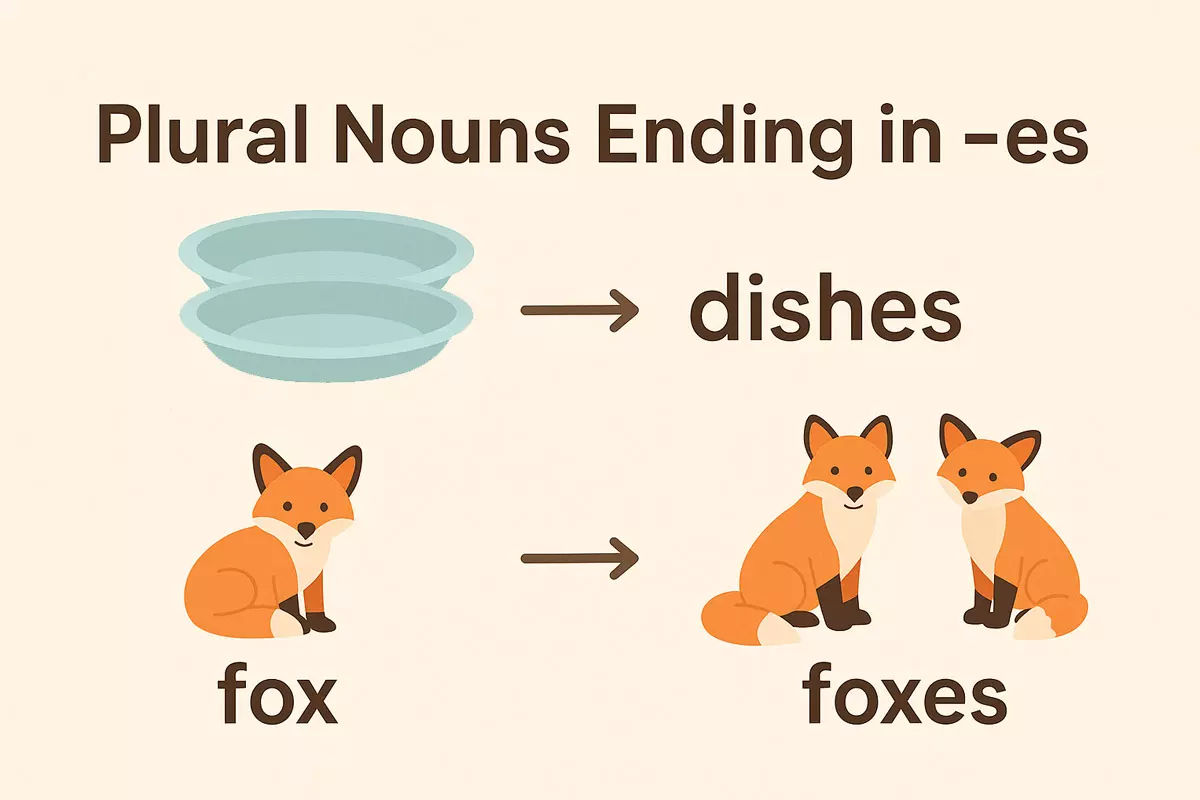 The article details when to use -es for plurals, focusing on nouns ending in s, sh, ch, x, or z, and exceptions like hero to heroes. It also gives pronunciation guidance, notes typical mistakes, and provides a brief quiz for practice.
Mastering the art of spelling words that need an extra syllable in their plural forms can be challenging, particularly when an -es ending is required. Understanding the rules for adding -es, such as with words ending in s, x, z, ch, or sh, helps you form correct plurals like boxes, churches, or wishes. By learning these patterns, you can avoid common mistakes and ensure your writing remains accurate and professional, making your communication clearer and more effective.
When -es Is Required
Certain English nouns demand the addition of -es instead of just -s when forming their plural. This usually happens because of pronunciation rules or spelling conventions that make the word easier to say and read.
Common Endings That Take -es
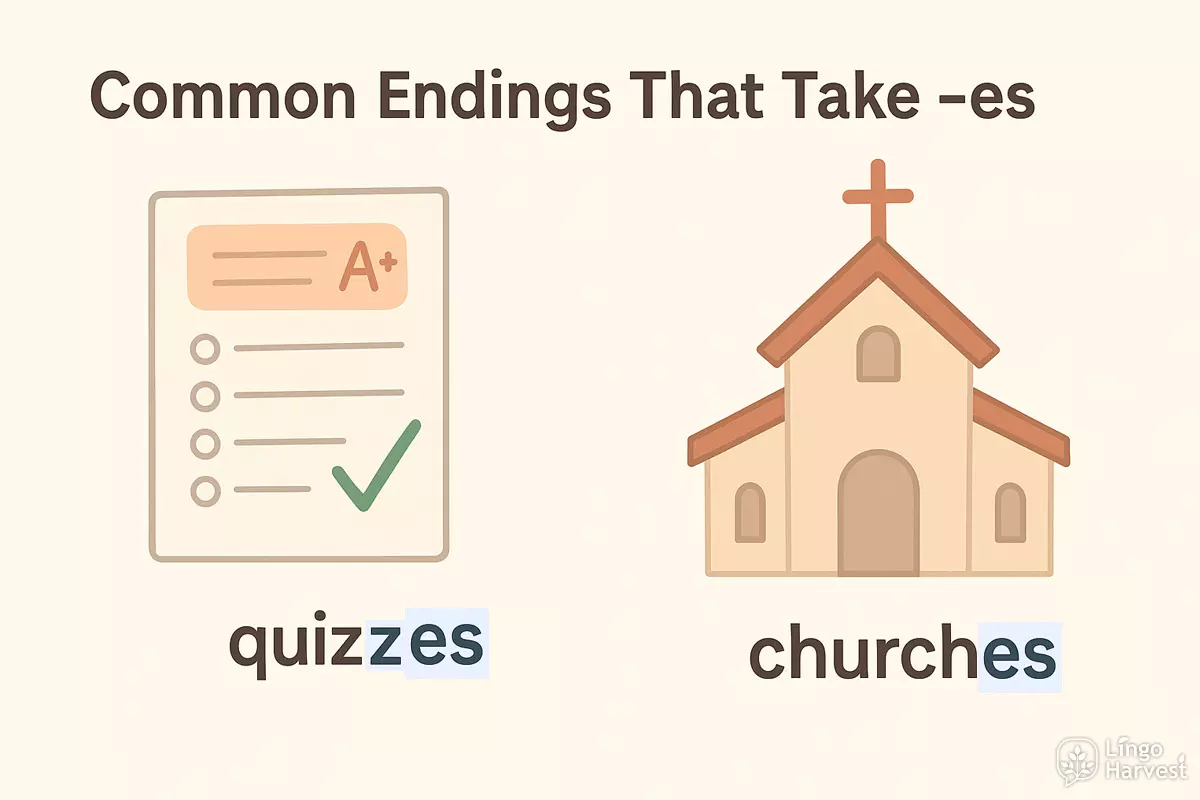
Words ending in -s, -ss, -sh, -ch, -x, or -z almost always take -es for their plural form. Without this ending, the plural would be awkward to pronounce. Here are some common examples:
- bus → buses
- box → boxes
- watch → watches
- glass → glasses
- dish → dishes
- quiz → quizzes
- church → churches
- fox → foxes
- brush → brushes
- match → matches
- kiss → kisses
- wish → wishes
- patch → patches
- buzz → buzzes
Special Cases and Spelling Adjustments
Some words ending in a single -z double the z before adding -es (e.g., quiz becomes quizzes). This helps preserve the correct pronunciation and spelling.
Summary Table: Endings That Take -es
| Singular Ending | Plural Example |
|---|---|
| -s | bus → buses |
| -sh | dish → dishes |
| -ch | church → churches |
| -x | fox → foxes |
| -z | quiz → quizzes |
| -ss | glass → glasses |
Why Add -es?
Adding -es creates an extra syllable, making the plural form easier to pronounce. This small change helps maintain the natural rhythm and sound of English words. If you’re unsure, check the word’s ending—if it has one of the patterns above, -es is almost always the right choice.
-s, -sh, -ch, -x, -z Endings
Most English nouns that finish with the sounds /s/, /sh/, /ch/, /x/, or /z/ require a special approach when forming plurals. Instead of simply adding an “-s,” you need to add “-es” to create the correct plural spelling. This adjustment makes pronunciation smoother and follows established spelling rules.
Why Add “-es”?
Adding only “-s” after these endings would create awkward clusters of consonants that are hard to pronounce. The “-es” ending introduces a vowel sound, making the plural form easier to say. This rule applies regardless of whether the ending is written as -s, -ss, -sh, -ch, -x, or -z.
Common Examples
Here’s a list of frequent nouns and their plural forms to illustrate the pattern:
- bus → buses
- box → boxes
- match → matches
- wish → wishes
- fox → foxes
- buzz → buzzes
- glass → glasses
- church → churches
- class → classes
- watch → watches
- kiss → kisses
- branch → branches
- box → boxes
- dish → dishes
- quiz → quizzes
- tax → taxes
- gas → gases
- brush → brushes
- lunch → lunches
- bus → buses
Overview Table: Plural Formation
| Singular Ending | Plural Example |
|---|---|
| -s / -ss | kiss → kisses |
| -sh | wish → wishes |
| -ch | match → matches |
| -x | box → boxes |
| -z | quiz → quizzes |
Notes on Spelling Variations
Some words ending in a single “z” double the “z” before adding “-es” (quiz → quizzes). Be careful not to omit this doubling, as the plural form may look incorrect otherwise. With “-x” and “-sh” endings, simply attach “-es” with no spelling change to the root word.
Summary
When you see a noun ending in the sibilant sounds /s/, /sh/, /ch/, /x/, or /z/, remember to use “-es” to form the plural. This pattern helps both with spelling accuracy and natural pronunciation.
Special Words (hero → heroes)
Some English nouns ending in -o need a special spelling rule when forming the plural. Instead of simply adding -s, you often add -es. This pattern is especially common with words where the -o follows a consonant, but not all such nouns follow this rule. Knowing which words require -es and which ones just take -s can help you avoid common mistakes. For instance, “hero” becomes “heroes” in the plural, not “heros.” This is similar for several other nouns, though there are exceptions. Here are some commonly used nouns that take -es for their plural forms:
- echo → echoes
- potato → potatoes
- tomato → tomatoes
- torpedo → torpedoes
- veto → vetoes
- cargo → cargoes
- mango → mangoes
- buffalo → buffaloes (though "buffalos" is also accepted)
- mosquito → mosquitoes
- volcano → volcanoes ("volcanos" is also seen, especially in US English)
- domino → dominoes
- negro → negroes
- torpedo → torpedoes
- grotto → grottoes
- embargo → embargoes
Exceptions and Irregularities
Not every noun ending in -o adds -es. Some simply take -s, especially those borrowed from other languages or more modern words. Examples include:
- photo → photos
- piano → pianos
- radio → radios
- memo → memos
- video → videos
Summary: -es or -s?
Most native English words ending in a consonant + o use -es for the plural, but many exceptions exist. When in doubt, check a dictionary or reliable reference, as usage can vary by region or even personal preference.
Quick Reference Table
| Singular | Plural (-es) | Plural (-s) |
|---|---|---|
| hero | heroes | ❌ |
| potato | potatoes | ❌ |
| echo | echoes | ❌ |
| piano | ❌ | pianos |
| photo | ❌ | photos |
| tomato | tomatoes | ❌ |
| radio | ❌ | radios |
| volcano | volcanoes | volcanos |
| buffalo | buffaloes | buffalos |
In summary, memorizing which nouns ending in -o take -es can save you from common spelling errors, especially in writing. When unsure, look up the word or consider the most widely accepted form.
Pronunciation Tips
Understanding how to say plural words ending in -es helps you sound more natural in English. These endings often appear after certain consonants, and the way -es is pronounced depends on the last sound of the singular form. Let's break down the main patterns so you can pronounce them with confidence.
When to Add an Extra Syllable
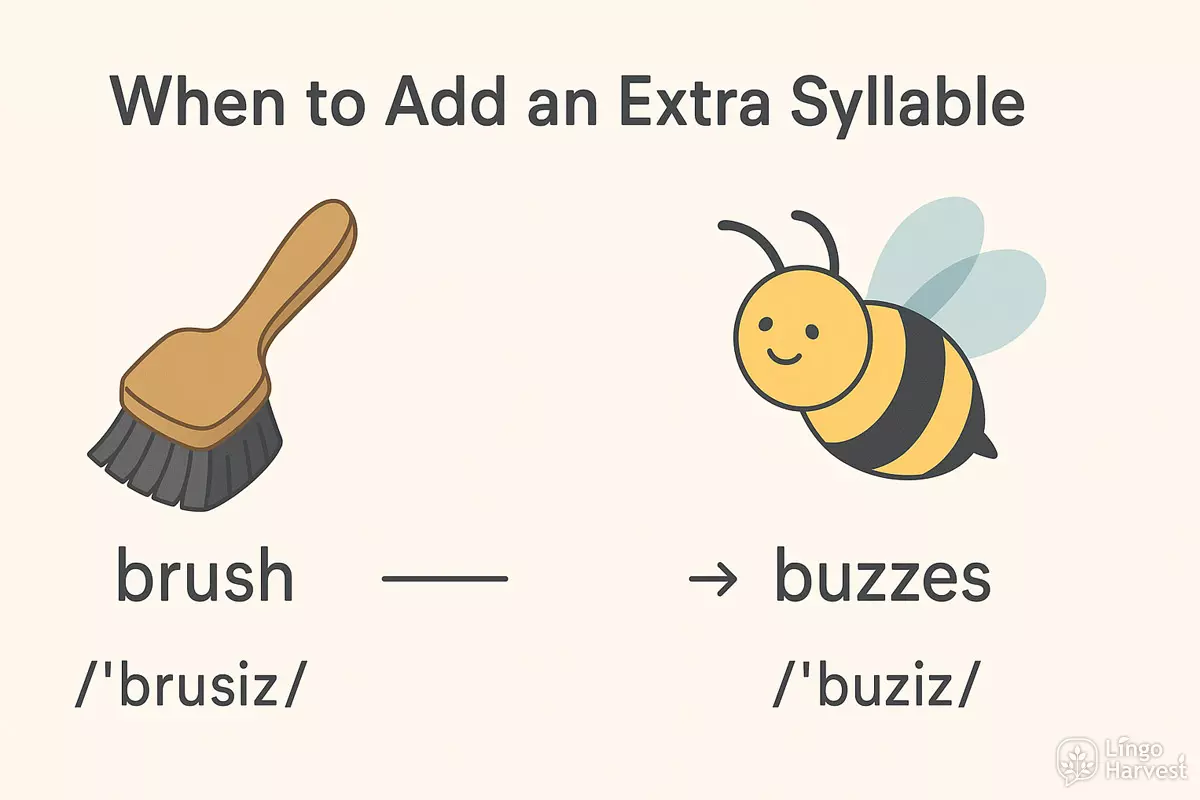
If a word ends in -s, -ss, -sh, -ch, -x, or -z, the plural -es is pronounced as a separate syllable: /ɪz/. This makes the plural a bit longer than the singular.
- bus → buses (/ˈbʌsɪz/)
- box → boxes (/ˈbɒksɪz/)
- wish → wishes (/ˈwɪʃɪz/)
- match → matches (/ˈmætʃɪz/)
- quiz → quizzes (/ˈkwɪzɪz/)
- glass → glasses (/ˈɡlɑːsɪz/)
- fox → foxes (/ˈfɒksɪz/)
- brush → brushes (/ˈbrʌʃɪz/)
- church → churches (/ˈtʃɜːtʃɪz/)
- buzz → buzzes (/ˈbʌzɪz/)
Quick Reference Table
| Ending Sound | Plural Suffix Pronunciation | Example Singular | Example Plural |
|---|---|---|---|
| -s, -ss, -sh, -ch, -x, -z | /ɪz/ (extra syllable) | box | boxes (/ˈbɒksɪz/) |
| Other consonants or vowels | /z/ or /s/ (no extra syllable) | cat | cats (/kæts/) |
| -o (sometimes) | /ɪz/ (extra syllable) | hero | heroes (/ˈhɪərəʊz/) |
| -o (other cases) | /z/ or /s/ (no extra syllable) | photo | photos (/ˈfəʊtəʊz/) |
Tips for Clear Pronunciation
- Say /ɪz/ for words ending in hissing or buzzing sounds: s, sh, ch, x, z.
- Practice stressing the first syllable of the base word, not the -es ending.
- Listen for the extra syllable in words like boxes and wishes—it’s subtle but important.
- Some words ending in -o also use -es and get an extra syllable, but not all: heroes vs photos.
- If unsure, say the base word, then add "iz" as a new beat at the end.
Mastering these patterns will help your speech sound smoother and make your writing more accurate. Practice with the list above, and listen to native speakers whenever possible to reinforce these pronunciation habits.
Typical Mistakes
Many learners struggle with the correct spelling of plural forms that require -es endings, often confusing which nouns actually need this extra syllable and which do not. Misplacing or omitting the -es can lead to awkward or incorrect sentences, especially with words ending in sibilant sounds.
Common Confusions with -es Plurals
Some nouns require -es to form their plural because of how they sound or are spelled. Mistakes often happen with these endings:
- Adding only -s instead of -es: boxs ❌ instead of boxes ✅
- Forgetting to change the y to i before adding -es: citys ❌ instead of cities ✅
- Adding -es to words that only need -s: catses ❌ instead of cats ✅
- Overgeneralizing rules: using -es for irregular plurals, e.g., childes ❌ instead of children ✅
- Incorrectly applying -es to nouns ending in -f or -fe: wifes ❌ instead of wives ✅
Words That Commonly Cause Trouble
Certain endings almost always take -es for the plural. Problems arise when this rule is overlooked. Here are several endings that require special attention:
- -s: buses
- -ss: kisses
- -sh: wishes
- -ch: churches
- -x: foxes
- -z: quizzes
- -o (sometimes): potatoes, tomatoes
- Words ending in consonant + y: puppies, cities
Comparison of Correct and Incorrect Forms
| Incorrect Spelling | Correct Plural Form |
|---|---|
| bus | buses |
| foxs | foxes |
| wishs | wishes |
| churchs | churches |
| citys | cities |
| puppys | puppies |
| tomatos | tomatoes |
| quizs | quizzes |
Tips to Avoid Spelling Errors
To prevent these common slip-ups, try the following strategies:
- Memorize groups of words that always take -es in the plural.
- Watch for words ending in s, x, z, sh, and ch—these typically add -es.
- Pay special attention to nouns ending in consonant + y; change the y to i, then add -es.
- Review and double-check words that seem irregular or unfamiliar.
- Practice with lists of both regular and irregular forms to reinforce the correct patterns.
By being mindful of these pitfalls, you can improve both your spelling and your confidence in using plural nouns correctly.
Mini Drill: Choose -s or -es
Correctly forming the plural of English nouns can be tricky, especially when deciding between -s and -es. The rule depends on the spelling and pronunciation of the word’s ending. Let’s practice by looking at some common nouns and thinking about which ending they take in the plural.
Quick Rules Recap
- Most nouns simply add -s (e.g., book → books).
- Nouns ending in -ch, -sh, -s, -x, -z, or -o usually add -es (e.g., box → boxes).
- If a noun ends in a consonant + y, change y to i and add -es (e.g., city → cities).
Practice: Which Ending?
Read each noun and decide if its plural form ends with -s or -es. Write your answer or say it aloud.
- bus
- apple
- box
- cat
- fox
- church
- toy
- wish
- photo
- glass
- book
- dress
- tree
- dish
- hero
- brush
- dog
- potato
- baby
- watch
Show answers
- bus → buses
- apple → apples
- box → boxes
- cat → cats
- fox → foxes
- church → churches
- toy → toys
- wish → wishes
- photo → photos
- glass → glasses
- book → books
- dress → dresses
- tree → trees
- dish → dishes
- hero → heroes
- brush → brushes
- dog → dogs
- potato → potatoes
- baby → babies
- watch → watches
Common Plural Patterns
Here are some more examples of nouns and their plural endings for comparison:
| Singular | Plural Ending | Plural Form |
|---|---|---|
| box | -es | boxes |
| glass | -es | glasses |
| cat | -s | cats |
| wish | -es | wishes |
| dog | -s | dogs |
| hero | -es | heroes |
| tree | -s | trees |
| fox | -es | foxes |
| toy | -s | toys |
| dish | -es | dishes |
Remember, paying attention to the last letter or sound of the noun will help you decide on the correct plural ending. Practice with new words as you encounter them to reinforce your understanding.