Advanced Collective Noun Agreement: audience are / audience is

 Here we what collective nouns are in English grammar, explains notional versus grammatical agreement, compares British and American usage, discusses verb and pronoun agreement patterns, and gives editing practice to help avoid typical errors.
- What collective nouns are in English grammar
- Notional vs grammatical agreement: idea vs form
- British vs American tendencies with group nouns
- Patterns with audience, team, government, family
- Pronoun and verb agreement after collective nouns
- When singular sounds better and when plural fits
- Typical learner errors with group-noun agreement
- Editing practice: choose are or is in context
Choosing between singular or plural verbs when referring to collective nouns, such as an audience, can be surprisingly challenging. Advanced grammar rules offer guidance based on both context and intended meaning. If the group is seen as a single unit acting together, a singular verb is appropriate; for example, the audience was silent. However, if the individuals within the group are acting separately, a plural verb may be used; for instance, the audience were finding their seats. Understanding these nuances improves clarity and precision in writing.
What collective nouns are in English grammar
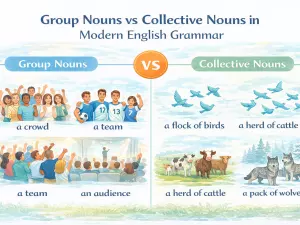
In English, collective nouns refer to words that describe a group of people, animals, or things considered as a single entity. These terms can represent collections or units, even though they may be made up of multiple members. For example, "team" stands for a group of players, while "flock" refers to a group of birds. The key feature is that the noun itself is singular in form but can take either singular or plural verbs depending on whether the group is seen as acting together or as individuals.
How collective nouns function
Collective nouns often cause confusion with subject-verb agreement. In British English, it's common to use plural verbs when the group members are acting individually ("The committee are discussing their opinions"), while American English tends to use singular verbs ("The committee is meeting today"). The context and intended meaning usually determine which verb form fits best.
Common examples of collective nouns
- Audience
- Team
- Family
- Government
- Group
- Staff
- Class
- Committee
- Jury
- Choir
- Band
- Herd
- Flock
- Pack
- Panel
- Board
- Army
- Public
- Police
- Company
Usage patterns and considerations
When using a collective noun, consider whether the group acts as a single unit or as individuals. For example, "The audience is enjoying the show" (as a unit) versus "The audience are taking their seats" (individual actions). This distinction affects verb and pronoun agreement and is especially important in formal writing or advanced grammar topics.
Notional vs grammatical agreement: idea vs form
Understanding why we say "the audience is" in some contexts and "the audience are" in others comes down to the difference between notional and grammatical agreement. Grammatical agreement focuses on the form: it matches verbs with the noun as it appears—singular or plural. Notional agreement, on the other hand, looks at the underlying meaning or sense of the noun—whether we think of the group as a single unit or as individuals acting separately.
How do these agreements influence verb choice?
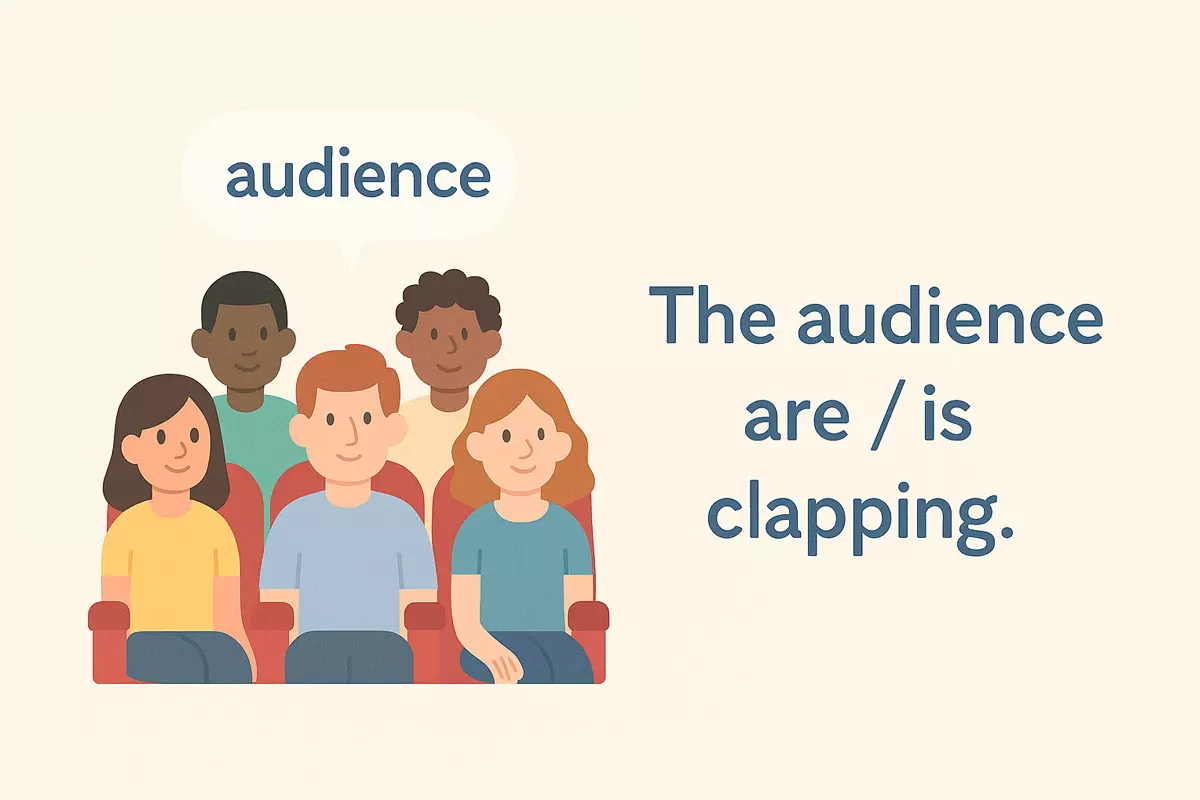
When a collective noun like "audience" is treated as a single entity, the verb is singular: "The audience is clapping." If the members are seen as acting individually, a plural verb might be used: "The audience are leaving their seats." This is especially common in British English, where notional agreement is more frequently applied.
Common collective nouns and their agreement patterns

Native speakers often switch between singular and plural verbs depending on context, especially with these group nouns:
- Team
- Staff
- Committee
- Family
- Government
- Police
- Choir
- Class
- Group
- Band
- Jury
- Company
- Club
- Board
- Public
- Audience
- Council
- Cast
- Squad
- Organization
Comparing the two types of agreement
| Agreement Type | How It Works |
|---|---|
| Grammatical | Verb matches the noun’s form (singular/plural) regardless of meaning. ✅ "The audience is large." |
| Notional | Verb matches the sense or idea—how the group is acting. ✅ "The audience are taking their seats." |
Regional variation and register
In American English, grammatical agreement is the default: collective nouns nearly always take singular verbs. British English, however, often uses notional agreement, especially in casual contexts. Formal writing tends to favor grammatical agreement, but spoken language and journalism may switch to notional patterns to highlight individual action within the group.
Choosing between these two types of agreement is not just a matter of rules—it’s about expressing whether you view a group as a single unit or as a collection of individuals. Consider your audience, the register, and the clarity of your meaning when deciding which pattern to use.
British vs American tendencies with group nouns
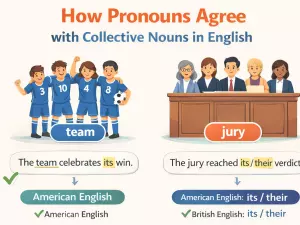
Usage patterns for collective nouns like audience, team, or government can differ noticeably between British and American English. The main distinction centers on whether these nouns are treated as singular or plural, especially when choosing between verbs like is or are. This choice influences both verb agreement and pronoun selection.
Plural vs Singular Agreement
In the UK, it’s common to see collective nouns paired with plural verbs, particularly when the group is viewed as individuals acting separately. In contrast, American English generally prefers singular verbs, treating the group as a single entity. Context and nuance can affect this, but the overall tendencies are distinct.
| Example Sentence | British English | American English |
|---|---|---|
| The audience is/are excited. | The audience are excited. | The audience is excited. |
| The team has/have won. | The team have won. | The team has won. |
| The government is/are considering new laws. | The government are considering new laws. | The government is considering new laws. |
| The staff is/are meeting today. | The staff are meeting today. | The staff is meeting today. |
| The class is/are taking their exam. | The class are taking their exam. | The class is taking its exam. |
| The jury is/are divided. | The jury are divided. | The jury is divided. |
| The family is/are on holiday. | The family are on holiday. | The family is on vacation. |
| The committee is/are debating the issue. | The committee are debating the issue. | The committee is debating the issue. |
| The band is/are playing tonight. | The band are playing tonight. | The band is playing tonight. |
| The company is/are releasing new products. | The company are releasing new products. | The company is releasing new products. |
Pronoun Choices
Pronoun agreement can shift as well. Brits often use plural pronouns (they, their) with groups, while Americans stick with singular forms (it, its). For example:
- UK: "The team have lost their way."
- US: "The team has lost its way."
Key Takeaways
- UK English is flexible: singular for unity, plural for individuality.
- US English is consistent: singular verbs and pronouns for most collective nouns.
- Context occasionally overrides these norms, especially in journalism or sports.
Understanding these patterns helps writers and speakers match their language to the intended audience, whether for clarity, formality, or regional accuracy.
Patterns with audience, team, government, family
When working with collective nouns like "audience," "team," "government," and "family," the verb form you choose (singular or plural) depends on whether you view the group as a single entity or as individuals acting separately. This distinction is especially noticeable in British and American English, leading to subtle but important differences in agreement patterns.
Choosing Between Singular and Plural Verbs
Generally, use a singular verb when the group acts as a unit, and a plural verb when you want to emphasize individual members acting separately. American English tends to favor singular verbs, while British English often allows both, depending on context.
- The audience is excited. (The group is acting as one.)
- The audience are taking their seats. (Focus on individual actions.)
- The team wins the championship. (The team as a single entity.)
- The team are arguing among themselves. (Individual players involved.)
- The government has announced its decision. (Official body as one.)
- The government are divided on this issue. (Members have different views.)
- The family is going on vacation. (One family unit.)
- The family are packing their bags. (Each member doing something.)
Common Patterns and Examples
Writers and speakers often choose verb agreement based on what feels most natural with the intended meaning. Here are further examples to illustrate the range of usage:
- The staff is friendly.
- The staff are working overtime.
- The committee meets every Thursday.
- The committee have not reached a consensus.
- My family loves pizza.
- My family are all coming to visit.
- The jury has delivered its verdict.
- The jury are still debating.
- The class is noisy today.
- The class are handing in their assignments.
Quick Reference: Singular vs. Plural Agreement
| Collective Noun Example | Typical Agreement |
|---|---|
| The audience is applauding. | Singular verb (group as a whole) |
| The audience are leaving their seats. | Plural verb (individuals in the group) |
| The team is practicing. | Singular verb |
| The team are putting on their uniforms. | Plural verb |
| The government is stable. | Singular verb |
| The government are quarreling internally. | Plural verb |
| The family is moving house. | Singular verb |
| The family are arguing over dinner. | Plural verb |
Usage Tips
For clarity, especially in formal writing, try to match pronouns and verbs consistently. If you use a plural verb, use plural pronouns (e.g., "The team are celebrating their win"). If you use a singular verb, use singular pronouns ("The team is celebrating its win"). Consistency helps avoid confusion for your readers.
Pronoun and verb agreement after collective nouns
Understanding how to match pronouns and verbs with collective nouns can be tricky, especially since usage can depend on whether you’re following British or American English conventions. Collective nouns like audience, team, or committee refer to groups but can take either singular or plural verbs and pronouns, depending on context and regional preference.
British vs. American English tendencies
In British English, collective nouns are often treated as plural when the group acts as individuals. For example, "The audience are taking their seats." In contrast, American English typically treats these nouns as singular, focusing on the group as a single entity: "The audience is taking its seat."
Choosing the right pronoun
When referring back to a collective noun, pronoun choice aligns with how you’ve treated the noun in the sentence. If you use a plural verb, use plural pronouns (they, their). For singular verbs, use singular pronouns (it, its).
- The team is celebrating its victory.
- The team are celebrating their victories.
- The staff is proud of its achievements.
- The staff are proud of their achievements.
- The audience is listening to its favorite speaker.
- The audience are finding their seats.
- The jury has reached its verdict.
- The jury have returned to their homes.
- My family is going on its annual trip.
- My family are arguing among themselves.
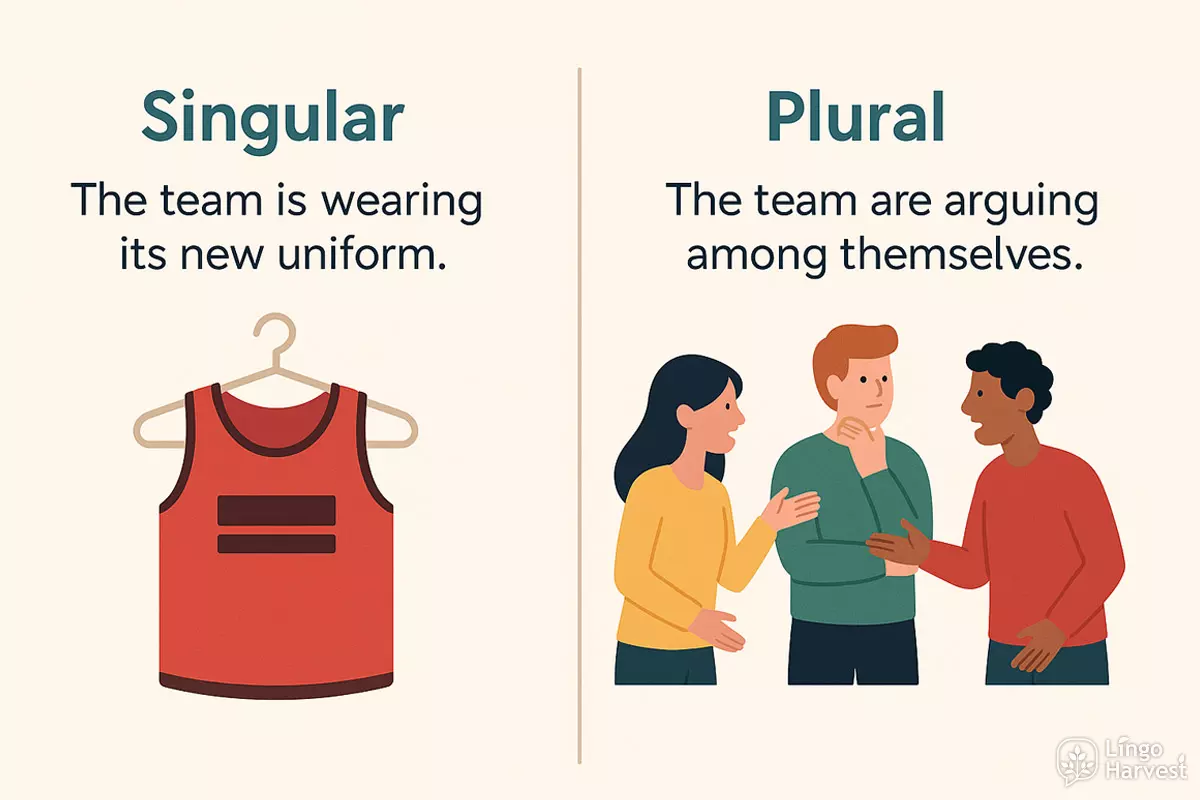
Quick comparison: singular vs. plural treatment
| Singular treatment | Plural treatment |
|---|---|
| The committee has made its decision. | The committee have voiced their opinions. |
| The audience is applauding its favorite band. | The audience are leaving their seats. |
| The team is wearing its new uniform. | The team are arguing among themselves. |
| The staff is proud of its work. | The staff are preparing their reports. |
When writing, consider whether the group is acting as a single unit or as individuals, and adjust your verbs and pronouns accordingly. Consistency is key: once you choose singular or plural agreement for a collective noun in a sentence or passage, stick with it throughout.
When singular sounds better and when plural fits
Choosing between singular and plural agreement for collective nouns like audience often depends on whether you’re thinking of the group as a single entity or as individuals acting separately. In British English, treating collectives as plural is much more common, while American English generally prefers singular verbs in formal writing. But context, intention, and even the surrounding words play a role.
Singular: Emphasizing unity or a single action
Use a singular verb when the group is acting as one unit, or when you want to stress the collective nature of the subject. This creates a sense that the group is a single, cohesive body.
- The audience is waiting for the show to begin.
- The team has reached a decision.
- The government announces new measures.
- The family enjoys hiking together.
- The staff is on holiday.
- The herd moves slowly.
Plural: Highlighting individuals or diverse actions
A plural verb works better when members of the group are acting independently, or when you want to highlight their differences. This is especially common in British English, but it can be used for clarity in any dialect.
- The audience are taking their seats at different times.
- The team have returned to their homes.
- The government have disagreed on the policy.
- The family are arguing among themselves.
- The staff have submitted their reports.
- The herd scatter across the field.
Quick Reference: Common Collective Nouns in Context
| Collective Noun | Typical Agreement (Singular/Plural) | Example Sentence |
|---|---|---|
| Audience | Singular or Plural (context) | The audience are applauding loudly. / The audience is silent. |
| Team | Singular (AmE), Plural (BrE) | The team is winning. / The team are wearing new uniforms. |
| Committee | Singular or Plural (context) | The committee has made its decision. / The committee are divided. |
| Staff | Often Plural | The staff have finished for the day. |
| Family | Singular or Plural (context) | The family is large. / The family are coming from different countries. |
| Government | Singular or Plural (BrE) | The government has passed a law. / The government are debating. |
Tips for Deciding
- Ask yourself: Is the group acting as one, or as individuals?
- If in doubt, use singular in American English, but check local style guides for British English.
- Switch to plural when you need to stress internal differences, disagreement, or separate actions.
- Maintain consistency within your text for clarity.
In summary, the choice between singular and plural verbs for collective nouns depends on both dialect and emphasis. Consider context and the message you want to convey for the most natural result.
Typical learner errors with group-noun agreement
Learners often struggle when deciding whether to use a singular or plural verb with collective nouns like "audience," "team," or "family." This confusion stems from differences between British and American English, as well as the way these nouns can refer to both a single entity and its individual members. As a result, mistakes frequently occur in both writing and speech.
Common Mistakes Learners Make
- Using a plural verb with a group noun in American English contexts (e.g., "The audience are enjoying the show.")
- Switching between singular and plural verbs inconsistently within the same text or conversation
- Forgetting that some collective nouns almost always take a singular verb in standard usage ("The news is bad.")
- Overgeneralizing rules from their native language or from one variety of English to another
- Incorrect agreement with pronouns: "The team have lost their match" (vs. "its match" in AmE)
- Using plural adjectives or determiners with collective nouns ("The committee are divided in their opinions.")
- Assuming all group nouns behave the same way regardless of context
- Misapplying the singular verb when talking about individual actions within the group
- Confusing uncountable nouns with collective nouns (e.g., "furniture are expensive")
- Using a plural verb with nouns that are always singular in English (e.g., "mathematics are difficult")
Patterns That Lead to Errors
Many learners default to the form that matches their first language or the English variety they are most exposed to. This often leads to inconsistent agreement, especially in writing longer texts. Another common issue is maintaining agreement when the collective noun is followed by a prepositional phrase (e.g., "A group of students is...")—learners may incorrectly focus on "students" and use a plural verb.
Examples of Incorrect and Correct Usage
| Incorrect Usage | Correct Usage |
|---|---|
| The audience are clapping loudly. | The audience is clapping loudly. (AmE) |
| The team have lost its chance. | The team has lost its chance. (AmE) |
| My family are going on holiday. (AmE) | My family is going on holiday. (AmE) |
| The staff is all here. (BrE, when emphasizing individuals) | The staff are all here. (BrE, when emphasizing individuals) |
| The group of musicians are playing. | The group of musicians is playing. |
Tips for Avoiding Agreement Errors
- Identify whether you are using British or American English, as this affects verb choice.
- Check if the noun refers to the group as a whole (singular) or to individuals (plural).
- Be aware of fixed expressions and exceptions (e.g., "police are" is always plural).
- Proofread your sentences for consistency, especially after editing or rewriting.
Mastering group-noun agreement requires attention to context, regional variation, and fixed usage patterns. Regular practice and focused correction can help reduce these typical learner mistakes.
Editing practice: choose are or is in context
Understanding when to use "are" or "is" with collective nouns like "audience" can be challenging, especially for advanced learners. In British English, plural agreement is often used when the group acts as individuals, while singular agreement is common when the group is seen as a single entity. American English typically favors the singular form. Let's look at how this works in context and practice making the right choice.
Common contexts for "audience is" vs. "audience are"
- Singular (is): When referring to the audience as one unit ("The audience is excited").
- Plural (are): When emphasizing individual members within the group ("The audience are taking their seats").
Practice: Choose the correct verb
Select the appropriate form ("is" or "are") for each sentence below. Consider whether the audience is acting as a single group or as individuals.
- The audience ____ waiting for the performance to begin.
- After the show, the audience ____ leaving the theater in small groups.
- This evening, the audience ____ unusually quiet.
- During the event, the audience ____ using their phones to vote.
- The audience ____ applauding the speaker enthusiastically.
- At the concert, the audience ____ singing along with the band.
- Sometimes, the audience ____ divided in their opinions.
- After the break, the audience ____ returning to their seats.
- The audience ____ mostly made up of students today.
- Each night, the audience ____ reacting differently to the play.
Show answers
- is
- are
- is
- are
- is
- are
- are
- are
- is
- is
Patterns with other collective nouns
Compare how other collective nouns follow similar agreement rules:
- The team is winning the match. (as a unit)
- The team are arguing among themselves. (individuals)
- The staff is on holiday. (entire group)
- The staff are working different shifts. (individual actions)
- The committee is meeting today.
- The committee are unable to agree on a decision.
- The family is moving next week.
- The family are packing their bags.
Summary table: Agreement with collective nouns
| Collective noun | Singular agreement (unit) | Plural agreement (individuals) |
|---|---|---|
| audience | The audience is enjoying the show. | The audience are finding their seats. |
| team | The team is practicing for the final. | The team are wearing different uniforms. |
| staff | The staff is efficient. | The staff are discussing their schedules. |
| committee | The committee is planning the event. | The committee are arguing over the details. |
Context and intent determine the correct verb form. Practice with various sentences and pay attention to whether the group acts collectively or as individuals.