Using Quantifiers with Collective Nouns Correctly

 This article explains what collective nouns mean in English, how they take singular or plural verbs, which quantifiers fit them, and how British and international usage differ. It also covers common errors and offers examples and practice.
- What collective nouns represent in English
- Singular vs plural interpretation of groups
- Quantifiers that match collective meaning
- Context-driven agreement choices
- Differences between British and international usage tendencies
- Common learner confusion with verb agreement
- Examples showing correct quantifier choice
- Practice: matching quantifiers with collective nouns
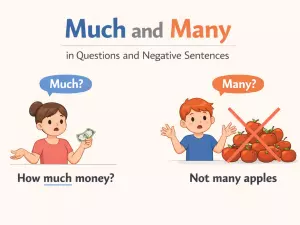
Pairing quantifiers such as "many," "much," or "a number of" with group nouns can be confusing for both English learners and fluent speakers. It's important to understand the subtle rules that govern which quantifiers match with which types of nouns. For example, "many" and "a number of" are used with countable nouns like "students" or "books," while "much" is reserved for uncountable nouns like "water" or "information." Mastering these distinctions helps ensure clear, accurate communication and prevents common grammatical mistakes.
What collective nouns represent in English
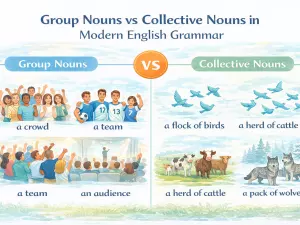
Collective nouns refer to groups of people, animals, or things considered as a single unit. In English, these terms allow us to describe multiple individuals or items with just one word, making sentences more concise and fluid. For example, instead of listing every member, you might refer to a "team" or a "flock." These words are especially useful when discussing groups that act together or share a common identity.
Understanding group terms
When you use a collective noun, you’re talking about the group as a whole. The word itself does not describe the individuals separately, but rather the collection as one entity. This can apply to people ("audience"), animals ("herd"), or objects ("fleet"). The meaning is tied to the concept of unity or collective action, even if the group contains many parts.
- Audience – a group of listeners or viewers
- Team – people working together, usually in sports or business
- Flock – a group of birds
- Swarm – a large number of insects, especially flying ones
- Pack – a group of wolves or dogs
- Herd – large animals, like cows or elephants
- Class – students learning together
- Committee – people chosen to make decisions or plans
- Fleet – a collection of ships or vehicles
- Choir – singers performing as one group
- Family – related individuals seen as a unit
- Staff – employees of an organization
- Panel – experts gathered for discussion
- Army – organized military group
- Orchestra – musicians playing together
Singular or plural meaning?

One of the unique features of collective nouns is that they sometimes take singular verbs and sometimes plural verbs, depending on whether the group is seen as a single entity or as individuals acting separately. This can cause confusion when choosing the right quantifier or verb form.
| Collective Noun | When Treated as Singular | When Treated as Plural |
|---|---|---|
| Team | The team is winning. ✅ | The team are arguing among themselves. ✅ |
| Family | My family lives here. ✅ | My family are all coming at different times. ✅ |
| Staff | The staff has a meeting. ✅ | The staff have submitted their reports. ✅ |
| Audience | The audience was silent. ✅ | The audience are leaving their seats. ✅ |
In summary, collective nouns let us efficiently refer to groups as unified wholes or as sets of individuals, depending on context. This flexibility is central to how English speakers use quantifiers and verbs with these special nouns.
Singular vs plural interpretation of groups
When working with collective nouns and quantifiers, one common challenge is deciding whether to treat the group as a single unit or as multiple members. This choice influences verb agreement, pronoun selection, and even the meaning of a sentence. English allows some flexibility, but the context and variety of English (British or American) can lead to different conventions.
Understanding Collective Nouns
Collective nouns like team, staff, committee, family, and audience refer to groups of people or things. Sometimes, we see the group as a whole (singular), and other times, we focus on the individuals within (plural). This affects both grammar and nuance.
Singular vs Plural Agreement
In American English, collective nouns are usually followed by singular verbs and pronouns when the group acts as one unit. In British English, plural forms are common if the members are acting individually. Consider these examples:
- Singular focus: The jury has reached its verdict. (Group as one entity)
- Plural focus: The jury have taken their seats. (Members considered individually; more common in British English)
Quantifiers and Collective Nouns
Quantifiers like all of, some of, none of, most of, and each of can further influence whether a group is viewed as singular or plural. The choice depends on whether the action is performed by the group as a whole or by its members separately.
| Collective Noun + Quantifier | Verb Agreement | Example Sentence |
|---|---|---|
| All of the team | Singular or Plural | All of the team is ready → group as a unit. All of the team are wearing their uniforms → individuals. |
| Some of the staff | Plural | Some of the staff have arrived early. |
| None of the committee | Singular or Plural | None of the committee has objected. None of the committee have objected. (Both possible; context matters.) |
| Most of the audience | Singular or Plural | Most of the audience is paying attention. Most of the audience are clapping. |
| Each of the family | Singular | Each of the family has a ticket. |
Key Patterns to Remember
- When the group acts as a single entity, use singular verbs and pronouns.
- When emphasizing individual actions within the group, use plural verbs and pronouns.
- British English is more likely to treat groups as plural than American English.
- Quantifiers can shift the focus from the whole group to individual members, impacting agreement.
- Some quantifiers (like each) typically require singular agreement.
Common Collective Nouns with Variable Agreement
- Team → The team is ready for the match.
- Staff → The staff are discussing the new schedule.
- Family → My family is planning a trip.
- Group → The group was silent during the presentation.
- Committee → The committee has made its decision.
- Audience → The audience were clapping loudly.
- Class → The class is learning about quantifiers.
- Government → The government has announced new rules.
- Public → The public are demanding answers.
- Crew → The crew is preparing the plane.
- Board → The board has approved the plan.
- Band → The band are rehearsing tonight.
- Company → The company is opening a new office.
- Choir → The choir is singing beautifully.
- Club → The club has many new members.
- Panel → The panel were divided in their opinions.
- Squad → The squad is training this morning.
- Party → The party were arguing about the proposal.
Mastering the distinction between treating a group as singular or plural is essential for clear and accurate communication, especially when quantifiers are involved. Always consider the context and your audience’s expectations—whether American or British usage prevails.
Quantifiers that match collective meaning
When working with collective nouns, it’s important to use quantifiers that refer to the group as a single entity rather than its individual members. This helps keep your meaning clear and avoids confusion about whether you’re talking about the group as a whole or the individuals in it. Some quantifiers naturally pair with collective nouns to express unity or totality.
Common quantifiers for unified groups
Certain words are especially suited to describing the entirety of a collective noun. These quantifiers reinforce the idea of the group acting together, not as a collection of separate individuals. Here are some of the most frequently used options:
- All of – All of the team is ready for the match.
- The whole – The whole committee agrees on the proposal.
- Most of – Most of the audience was captivated by the performance.
- None of – None of the staff was available this morning.
- Half of – Half of the class has submitted the assignment.
- Much of – Much of the crowd was silent during the speech.
- Little of – Little of the jury believes the story.
- Some of – Some of the orchestra is missing.
- Any of – Is any of the faculty attending?
- Majority of – The majority of the board favors the new policy.
- Part of – Part of the family is traveling abroad.
- Rest of – The rest of the crew is on break.
Choosing the right quantifier
The best quantifier depends on whether you want to highlight the group’s unity or focus on individuals. For a collective meaning, select words that emphasize the group as a whole. Using the wrong quantifier can accidentally shift the sense from collective to individual, which might change the meaning of your sentence.
| Quantifier | Example with Collective Noun |
|---|---|
| All of | All of the staff is present. |
| The whole | The whole class was dismissed early. |
| Most of | Most of the jury agrees. |
| None of | None of the audience was bored. |
| Half of | Half of the committee is here. |
| Much of | Much of the crowd was cheering. |
| Majority of | The majority of the team supports the decision. |
| Rest of | The rest of the group is outside. |
Tips for using quantifiers with collective nouns
- Pair singular verbs with quantifiers when the group acts as a unit: All of the group is excited.
- Use plural verbs only if you’re emphasizing individual group members: Some of the team are bringing their families.
- Context matters—consider your intended meaning before choosing a quantifier.
- When in doubt, rephrase to clarify whether you mean the group as one or its members separately.
Context-driven agreement choices
Whether to use singular or plural verbs and pronouns with collective nouns often depends on the specific meaning intended by the writer or speaker. Collective nouns—such as team, family, or group—can be paired with either form, but the choice is guided by context rather than a rigid rule. If the noun is seen as a single entity acting together, singular agreement is typical. If the focus is on the individuals within the group acting separately, plural agreement is preferred.
Factors that influence agreement
- Meaning in context: Is the group acting as one, or are members acting independently?
- Formality and regional differences: British English often prefers plural agreement; American English leans singular.
- Distance from verb: Longer sentences may make plural agreement sound more natural, especially in speech.
- Specific quantifiers: Words like all, none, or some can push agreement toward plural or singular, depending on what they refer to.
Examples: Singular vs. plural agreement
| Collective Noun + Quantifier | Typical Agreement | Example Sentence | Interpretation |
|---|---|---|---|
| The team (as a whole) | Singular | The team is winning. | Team seen as a single unit. |
| The team (members) | Plural | The team are arguing among themselves. | Focus on individuals within the team. |
| None of the group | Singular or Plural | None of the group has/have arrived. | Both forms possible; context matters. |
| All of the committee | Plural | All of the committee have signed the report. | Emphasizes multiple people. |
| Each of the staff | Singular | Each of the staff is responsible for their area. | Focus on individuals, but grammar is singular. |
| Most of the family | Plural | Most of the family are coming to dinner. | Refers to several family members. |
| The jury | Singular | The jury has reached a verdict. | The jury as a single body. |
| The jury (individuals) | Plural | The jury are still debating among themselves. | Focus on separate members. |
Common quantifier patterns with collective nouns
- Some of the class are missing. ✅
- Half of the company is remote. ✅
- A majority of the council have agreed. ✅
- Much of the audience is clapping. ✅
- Several of the crew are ill. ✅
- Part of the orchestra is tuning up. ✅
- Many of the staff are absent. ✅
- All of the board have resigned. ✅
- None of the band is available. ✅
- Each of the team has a task. ✅
Choosing between singular and plural with collective nouns plus quantifiers is rarely mechanical. Consider both the meaning you want to convey and conventions of the variety of English you’re using. When in doubt, rephrase for clarity or consult a style guide relevant to your audience.
Differences between British and international usage tendencies
English speakers from different regions often approach collective nouns and quantifiers in unique ways. British English, for example, frequently treats collective nouns as plural, especially when referring to groups acting as individuals. In contrast, American and other varieties of international English generally use the singular form for collective nouns, focusing on the group as a single entity. This distinction can affect both the choice of quantifiers and verb agreement.
Common Patterns in Usage
Below are some typical distinctions you might notice when using quantifiers with collective terms:
- In the UK, you might hear, “The team are preparing for their match,” while in the US, “The team is preparing for its match” is more common.
- British speakers often use quantifiers like "many," "few," or "a number of" with plural verbs after collective nouns.
- International English (especially North American) tends to use "much," "little," or "amount of" with singular verbs for the same nouns.
- Expressions such as "a couple of the staff are…" versus "a couple of the staff is…" can differ based on region.
- Pronoun agreement shifts: "All of the committee have given their opinions" (UK) vs. "All of the committee has given its opinion" (US/International).
Typical Collective Nouns and Quantifier Pairings
Here's a comparison of how quantifiers are paired with collective nouns in British and international English:
| Collective Noun Phrase | Typical British Usage | Typical International Usage |
|---|---|---|
| The team + quantifier | Many of the team are… | Much of the team is… |
| The staff + quantifier | A few of the staff have… | A few of the staff has… |
| The committee + quantifier | All of the committee were… | All of the committee was… |
| The audience + quantifier | Most of the audience are… | Most of the audience is… |
| The family + quantifier | Several of the family have… | Several of the family has… |
Key Takeaways
- British English is more flexible with plural agreement and plural quantifiers after collective nouns.
- International English (especially American) tends to treat collectives as singular, both in quantifiers and verbs.
- When writing for a global audience, consider which convention suits your context and readers best.
Awareness of these differences helps ensure your use of quantifiers with collective nouns is both accurate and appropriate for your intended audience.
Common learner confusion with verb agreement
Learners often find it tricky to choose the correct verb form when quantifiers appear with collective nouns. The core issue is deciding whether to treat the noun as singular or plural, especially since English allows for both, depending on context and regional usage. This uncertainty can lead to sentences that sound odd or even ungrammatical to native speakers.
Where confusion arises
The confusion often stems from the fact that collective nouns (like team, group, audience) can take either singular or plural verbs depending on whether the group is seen as a unit or as individuals. When quantifiers such as some, all, most, or none are added, the choice becomes even less clear.
- All of the team is winning. (viewing the team as a single entity)
- All of the team are celebrating. (emphasizing individual members)
- None of the group has arrived. (focusing on the group as a whole)
- None of the audience were paying attention. (highlighting individuals)
This flexibility means both options can be correct, but consistency and clarity are important. British and American English sometimes differ: British English more often permits plural verbs with collective nouns, while American English tends to prefer singular verbs.
Typical mistakes with quantifiers and collective nouns
Some frequent learner missteps involve:
- Using a singular verb when the focus is on individuals within the group
- Applying a plural verb when the collective noun is clearly acting as one unit
- Letting the nearest noun determine the verb rather than the true subject
- Switching between singular and plural verbs inconsistently in a text
- Forgetting that some quantifiers (like each and every) almost always require singular verbs
Comparing verb choices

| Sentence | Correct Verb Agreement |
|---|---|
| Some of the class is missing. | Singular – class as a whole |
| Some of the class are missing. | Plural – individual students |
| Most of the committee has agreed. | Singular – unified decision |
| Most of the committee have agreed. | Plural – individual agreement |
| None of the staff is available. | Singular – group as one |
| None of the staff are available. | Plural – individuals |
| All of the family was invited. | Singular – family as a unit |
| All of the family were invited. | Plural – separate people |
Key takeaways
- Decide if you mean the group as a whole (use singular) or individuals (use plural).
- Be consistent throughout your writing or speech.
- Check if your audience expects American or British usage, as preferences differ.
- Practice identifying the main subject to avoid letting nearby nouns distract you.
Understanding these patterns will help you avoid frequent errors and make your English sound more natural when using quantifiers with collective nouns.
Examples showing correct quantifier choice
Choosing the right quantifier for collective nouns depends on whether we focus on the group as a whole or on its individual members. Context, verb agreement, and the meaning we want to convey all play a role. Below, we look at a range of sample sentences and patterns that illustrate proper usage and clarify common confusions.
Common collective nouns with quantifiers
- All of the team is ready. (The group as a single unit is prepared.)
- Some of the committee are absent. (Refers to individual members, so the plural verb is used.)
- Most of the audience was silent. (The audience as a whole behaved in a certain way.)
- A few of the staff have arrived. (Emphasizes several individuals within the group.)
- None of the family are here yet. (Focuses on family members, not the unit.)
- Much of the jury was convinced. (Describes the jury as a collective entity.)
- Several of the class were late. (Highlights multiple individuals in the group.)
- Each of the crew is responsible for safety. (Each member individually.)
- Half of the orchestra are tuning their instruments. (Refers to a subset of individuals.)
- Part of the crowd was cheering. (Describes a section of the group acting together.)
- Many of the board disagree. (Plural verb for individual members.)
- Little of the group was informed. (The group as a whole lacked information.)
- Both of the team are talented. (Refers to two members within the group.)
- Plenty of the staff have experience. (Emphasizes multiple individuals.)
- None of the band is performing tonight. (The band as a single unit is not performing.)
- Either of the families is welcome. (Refers to one or the other group.)
- More of the class are participating this year. (Focuses on individuals within the collective.)
- Most of the group is here. (The group as a whole is present.)
Comparing singular and plural focus
| Singular Focus (Group as a Whole) | Plural Focus (Individuals in the Group) |
|---|---|
| The team is winning this season. | The team are arguing among themselves. |
| The staff has completed the project. | Some of the staff have called in sick. |
| The committee was formed last year. | Several of the committee are opposed to the plan. |
| The family is going on vacation. | None of the family are at home. |
Key points for choosing quantifiers
- Use singular verbs and quantifiers when treating the collective noun as a single unit.
- Use plural verbs and quantifiers when highlighting the actions or characteristics of individuals within the group.
- Words like all, some, several, a few, each, none, many can shift focus to individuals, so match the verb accordingly.
- Always consider the intended meaning: group unity vs. individual members.
These examples help clarify how quantifier choice affects verb agreement and the meaning of a sentence involving collective nouns.
Practice: matching quantifiers with collective nouns
Understanding how to pair quantifiers with collective nouns can make your writing more natural and precise. Collective nouns represent groups (like "team" or "audience"), and certain quantifiers work better with some groups than others. Below, you'll find practical exercises, a reference table, and examples to help you master these combinations.
Common Collective Nouns and Suitable Quantifiers
Some quantifiers naturally fit with certain collective nouns. Review the table to see which combinations sound natural in English.
| Collective Noun | Typical Quantifiers |
|---|---|
| team | many, most, a few, several, all, some |
| audience | most, much, a part of, the whole, some, none of |
| group | several, a few, most, all, some, none of |
| family | all, most, some, each, none of |
| class | the whole, most, a few, several, all, some |
| staff | all, most, some, none of, several |
| flock | the entire, a part of, most, some |
| committee | all, most, some, none of, each |
| crowd | most, all, some, none of |
| jury | all, most, some, none of, each |
Matching Quantifiers: Quick Practice
Try to choose the best quantifier for each sentence below. Consider whether the noun refers to a whole group or individual members.
- ________ of the team were present for the meeting.
- Only ________ of the audience applauded at the end.
- ________ of the committee agreed on the decision.
- ________ of the family could not attend the reunion.
- The teacher said that ________ of the class did well on the test.
- ________ of the staff supported the new policy.
- ________ of the group were ready to leave.
- ________ of the public trust the announcement.
- ________ of the board approved the budget.
- ________ of the crew were on duty last night.
Show answers
- Most of the team were present for the meeting.
- Some of the audience applauded at the end.
- All of the committee agreed on the decision.
- Some of the family could not attend the reunion.
- The teacher said that most of the class did well on the test.
- Some of the staff supported the new policy.
- Most of the group were ready to leave.
- Few of the public trust the announcement.
- Most of the board approved the budget.
- All of the crew were on duty last night.
Spot the Incorrect Combination
Identify which quantifier + collective noun pairing sounds unnatural or incorrect.
- A few of the flock flew away.
- Much of the team scored goals.
- Most of the jury agreed on the verdict.
- Several of the staff are on vacation.
- Many of the committee support the proposal.
- Little of the audience were paying attention.
- All of the crew were ready for departure.
- Much of the family are living abroad.
- Most of the class passed the exam.
- Few of the band were satisfied with the sound.
Show answers
- ✅ Correct as written.
- ❌ Awkward. Use “Most of the team scored goals.”
- ✅ Correct as written.
- ✅ Correct as written.
- ✅ Correct as written.
- ❌ Incorrect. Use “Few of the audience were paying attention.” or “Much of the audience was paying attention.”
- ✅ Correct as written.
- ❌ Awkward. Use “Many of the family are living abroad.” or “Most of the family is living abroad.”
- ✅ Correct as written.
- ✅ Correct as written.
Tips for Choosing the Right Quantifier
- Use most, all, and some for both whole groups and parts of groups.
- Much is rarely used with collective nouns referring to people; prefer many or most.
- When referring to individuals within collectives, use several, a few, or each.
- None of works with both singular and plural verbs, but check for subject-verb agreement.
Practicing these patterns will help you sound more fluent and avoid common pitfalls when combining quantifiers and collective nouns.