Article Errors with Nouns: A, An, The Explained Simply

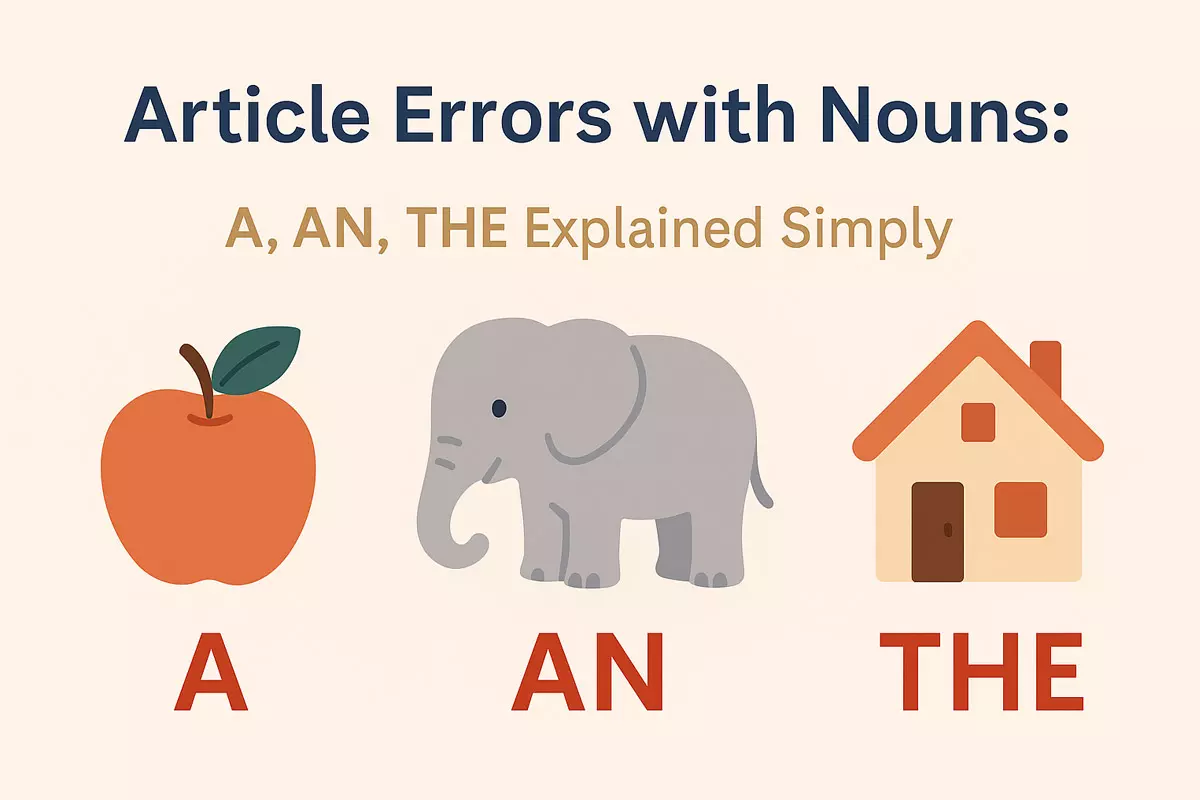 The article explains how to use articles like a, an, and the with English nouns, including when to leave them out. It also discusses common mistakes, differences between general and specific statements, and includes practice correcting errors.
- Basic role of articles with English nouns
- When to use a and an with singular nouns
- When to use the with specific reference
- Zero article with plural and uncountable nouns
- Typical learner mistakes with articles
- Article use in general vs specific statements
- Practice: correct article errors in short sentences
Many English learners find it challenging to know when to use a, an, or the with nouns, but mastering these articles is essential for clear and natural communication. Articles help specify whether you are talking about something specific or something in general, which can change the meaning of a sentence. By paying attention to the rules and practicing their use, you can improve your confidence and make your English sound more fluent and accurate in both writing and conversation.
Basic role of articles with English nouns
Articles help English speakers identify whether a noun is specific or general. They provide clarity about which person, place, or thing is being discussed. In English, there are two types of articles: definite (the) and indefinite (a, an). Each type signals something different about the noun it accompanies.
Definite and Indefinite Articles: What They Mean
The definite article, the, points to a particular noun that both the speaker and listener recognize. Indefinite articles, a and an, introduce a noun that is not specifically identified. Choosing the right article depends on how familiar the audience is with the noun in context.
When to Use Each Article
- a: Used before singular, countable nouns that begin with a consonant sound. Example: a car, a dog, a university (because "university" starts with a juː sound).
- an: Used before singular, countable nouns that begin with a vowel sound. Example: an apple, an hour, an umbrella.
- the: Used before singular or plural nouns when referring to something specific or previously mentioned. Example: the book on the table, the children in the park.
- No article: Used with most plural and uncountable nouns when speaking generally. Example: Books are useful. Water is essential.
Comparing Article Usage
| Type | Example | When to Use |
|---|---|---|
| Indefinite (a/an) | a cat, an orange | First mention, non-specific, singular countable nouns |
| Definite (the) | the cat, the oranges | Specific reference, previously mentioned or unique nouns |
| No article | Cats, oranges, water | General, plural or uncountable nouns |
Common Patterns and Examples
- a teacher → any teacher, not specific
- an idea → any idea, not yet known to listener
- the teacher → a particular teacher already mentioned or known
- the sun → unique noun, only one sun
- the apples → specific apples, perhaps already discussed
- water → general, uncountable, no article
- books → general reference to all books, no article
- a university → "u" pronounced as "yu", so "a" is used
- an hour → "h" is silent, so "an" is used
- the United Kingdom → specific name, "the" required
- an honest person → "h" is silent, vowel sound
- a European country → "Eu" sounds like "y", consonant sound
Understanding how articles interact with different nouns helps avoid common mistakes. Articles are small words, but their correct use is essential for clear, accurate communication in English.
When to use a and an with singular nouns
Choosing between a and an depends entirely on the sound that begins the next word, not just the spelling. Both are indefinite articles, used with singular countable nouns when the noun is mentioned for the first time or its identity is not specific. The goal is to make speech flow smoothly and naturally.
Basic rule: vowel vs. consonant sounds
Use a before words that start with a consonant sound, and an before words that start with a vowel sound (a, e, i, o, u). The crucial point is the sound, not always the first letter. For example, "a university" uses a because "university" starts with a yoo sound, not a vowel sound.
| Use a before | Use an before |
|---|---|
Words starting with a consonant sound:
|
Words starting with a vowel sound:
|
Abbreviations or acronyms with consonant sounds:
|
Abbreviations or acronyms with vowel sounds:
|
Common mistakes and tips
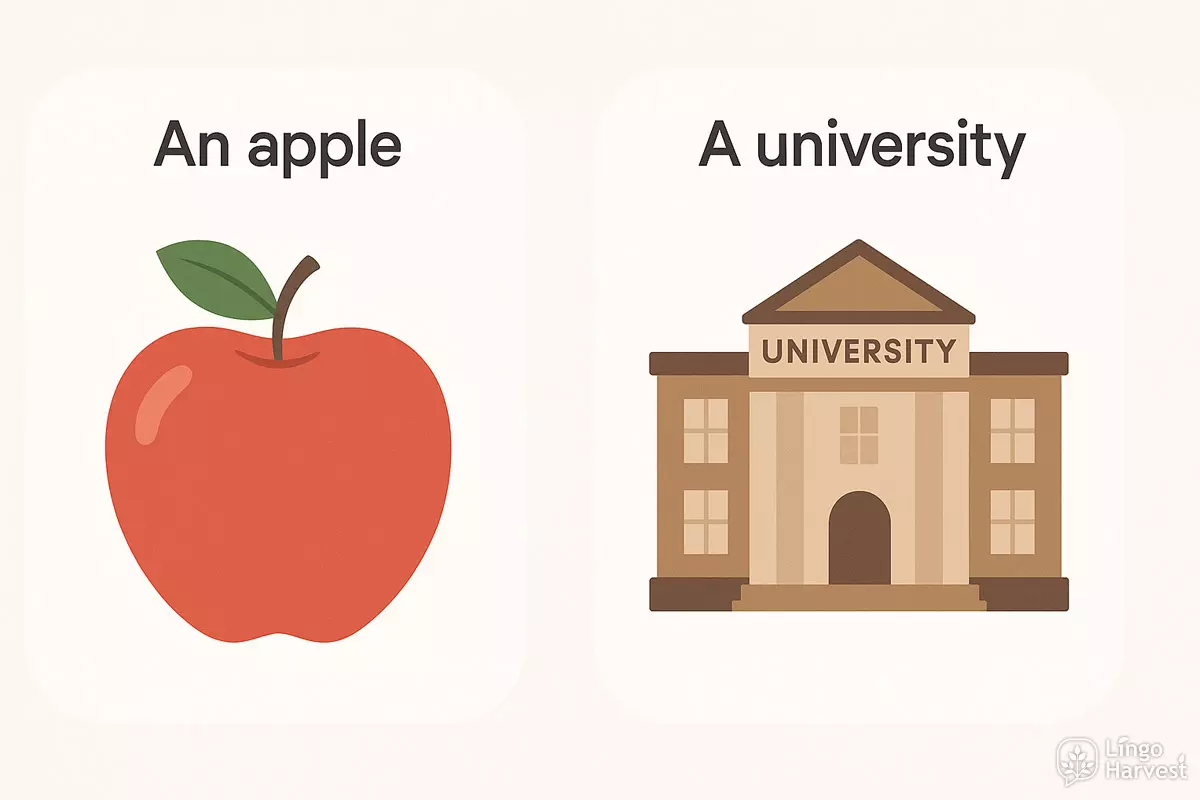
- ❌ a apple → ✅ an apple
- ❌ an university → ✅ a university
- Pay attention to silent letters: "an hour" (silent "h"), "a house" (pronounced "h")
- Use a before words like "European" ("yoo-ropean" sound)
- Some acronyms can be tricky—always say them aloud to check the first sound
In summary, the choice between these articles is all about pronunciation, not spelling. Remember to listen for the initial sound, especially with abbreviations and words borrowed from other languages. With practice, this becomes second nature.
When to use the with specific reference
Use the when you are referring to a particular person, place, or thing that is already known to your listener or reader. This definite article tells us that both the speaker and the listener understand which specific noun is meant. It is essential in making your meaning clear, especially when there could be confusion with similar or general items.
Common situations for using "the" to indicate specificity
- When the noun has been mentioned before: I saw a dog. The dog was barking.
- When there is only one of something in the context: She went to the moon.
- With superlatives and ordinal numbers: the best day, the first time
- With unique objects or places: the sun, the Eiffel Tower
- With phrases that specify which one: the car I bought, the person who called
- With groups as a whole: the elderly, the French
- With adjectives used as nouns: the rich, the poor
- When context makes the reference clear: Close the window.
- With names of rivers, seas, oceans, mountain ranges: the Nile, the Alps
- With musical instruments: play the piano
- With certain countries or geographical areas: the Netherlands, the Middle East
- With some organizations: the United Nations
- When referring to time periods or historical events: the 1990s, the Renaissance
Examples: Specific vs. General Reference
Notice how using the makes your meaning more precise. Compare these sentences:
| General Reference (No "the") | Specific Reference (with "the") |
|---|---|
| Cats are playful. | The cats next door are playful. |
| She wants book for her birthday. | She wants the book you recommended. |
| Mountains can be dangerous. | The mountains near our town can be dangerous. |
| I saw movie yesterday. | I saw the movie you told me about. |
| Children love stories. | The children in my class love stories. |
Remember, using the correctly helps you communicate exactly which noun you are talking about. Pay attention to context and whether your listener can identify the specific thing you mean.
Zero article with plural and uncountable nouns
In English, we often leave out articles entirely when speaking about things in general, especially with plural countable nouns and uncountable (mass) nouns. This means we do not use a, an, or the in these situations. Understanding when to omit articles is just as important as knowing when to use them.
General statements and categories
When you talk about a group or a substance in a general sense, no article is needed. This is common with plural nouns and nouns that cannot be counted. For example, we say, “Dogs are friendly,” not “The dogs are friendly” if we mean all dogs in general. The same goes for substances: “Water is essential for life,” not “The water is essential for life,” unless you mean specific water.
- Children like sweets.
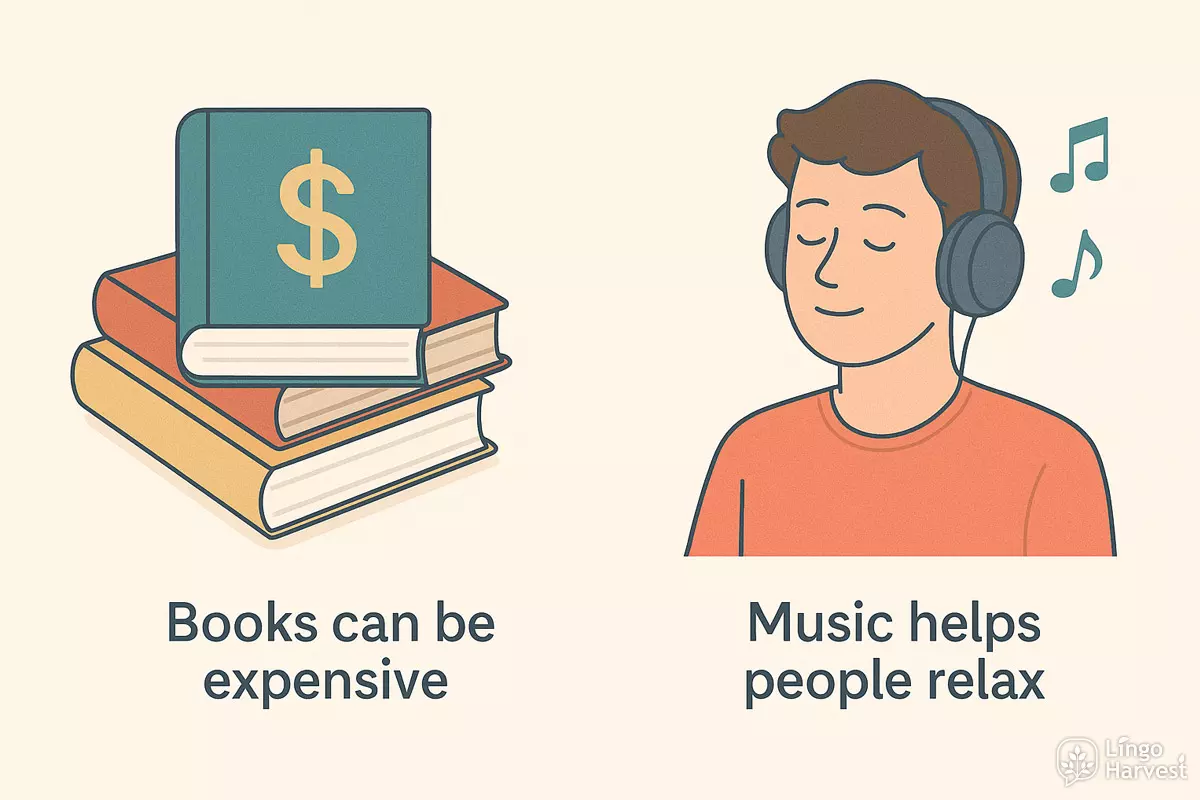
- Books can be expensive.
- Music helps people relax.
- Information is important.
- Cars pollute the air.
- Rice grows in Asia.
- Ideas shape our world.
- Teachers work hard.
- Milk contains calcium.
- Mountains are beautiful.
- Knowledge is power.
- Computers have changed society.
- Advice can be helpful.
- Stories inspire us.
- Money doesn’t buy happiness.
- Vegetables are healthy.
- Furniture can be expensive.
- Languages connect people.
Comparing article use: plural, uncountable, and singular nouns
It can help to see how the omission of an article compares to situations where articles are required. Notice how the meaning changes when you add the or a/an:
| Noun Type & Example | When to Use Zero Article |
|---|---|
| Plural countable (e.g. Cats) |
General meaning: Cats are independent. (all cats in general) |
| Uncountable (e.g. Sugar) |
General meaning: Sugar is sweet. (sugar as a substance) |
| Singular countable (e.g. Cat) |
Needs an article: A cat is on the roof. (one specific cat) |
| Specific reference (e.g. The cats/the sugar) |
Add the for specific things: The cats are hungry. The sugar on the table is brown. |
Common mistakes
A frequent error is using the with general plural or uncountable nouns, which makes your statement too specific. For example, “The people are friendly” refers to a known group, but “People are friendly” means people in general.
- ❌ The apples are good for you. → ✅ Apples are good for you.
- ❌ The music helps me study. → ✅ Music helps me study.
- ❌ The happiness is important. → ✅ Happiness is important.
Remember, leaving out articles with groups and substances makes your English sound more natural and accurate. Practice forming sentences about general categories and mass nouns without an article to build confidence.
Typical learner mistakes with articles
Many English learners run into trouble with articles because their native languages may not use them at all, or use them differently. This often leads to confusion and common patterns of error. Below, you’ll find some of the most frequent slip-ups, along with clear examples and explanations to help you recognize and avoid them.
Leaving out articles when they’re needed
Omitting “a,” “an,” or “the” is a widespread mistake, especially among speakers of article-less languages. For instance:
- “She is doctor.” ❌ (should be “a doctor”)
- “I went to store.” ❌ (should be “the store” or “a store”)
These errors make sentences sound incomplete or unnatural in English.
Using the wrong article
Learners often confuse “a/an” with “the.” Remember, “a/an” is for nonspecific or first mentions, and “the” is for specific or previously mentioned things.
- “I saw the movie yesterday.” (Which one? If the movie wasn’t mentioned before, it should be “a movie.”)
- “Pass me a salt, please.” (Should be “the salt” if both people know which salt is meant.)
Overusing articles with uncountable or plural nouns
Another pitfall is adding “a” or “an” before words that can’t take them, or using “the” unnecessarily with general plural nouns.
- “She gave me a advice.” ❌ (should be “some advice” or just “advice”)
- “The dogs are friendly animals.” (If talking about dogs in general, it should be “Dogs are friendly animals.”)
Mixing up “a” and “an”
This is a classic error, often caused by focusing on spelling instead of pronunciation.
- “An university” ❌ (should be “a university” because “university” starts with a “juː” sound)
- “A hour” ❌ (should be “an hour” because “hour” starts with a vowel sound)
Confusing zero article with “the”
Some nouns don’t need any article in general statements, but learners may add one out of habit.
- “The life is short.” ❌ (should be “Life is short.”)
- “The water is necessary for health.” (If speaking generally, use “Water is necessary for health.”)
Summary of frequent mistakes and correct forms
| Incorrect Example ❌ | Corrected Version✅ |
|---|---|
| She is teacher. | She is a teacher. |
| I have car. | I have a car. |
| He is in the hospital. (when not specific) | He is in hospital. (British English, general use) |
| I love the nature. | I love nature. |
| Can you give me an information? | Can you give me some information? |
| She is an honest person. (correct) | She is an honest person. |
| It is a hour away. | It is an hour away. |
| Children like the chocolate. | Children like chocolate. |
| I'm reading the book. (if not previously mentioned) | I'm reading a book. |
| She went to the school. (if not a specific one) | She went to school. |
Key points to remember
- Use “a/an” for single, non-specified countable nouns.
- Use “the” for specific or previously mentioned nouns.
- Don’t use articles with most general plural or uncountable nouns.
- “A” before consonant sounds, “an” before vowel sounds—listen to the pronunciation, not the spelling.
Developing awareness of these patterns can help learners sound more natural and accurate in English.
Article use in general vs specific statements
Choosing the correct article in English often depends on whether you are talking about things in a broad, general sense or referring to something particular. This distinction is essential for clear communication and is a common source of confusion for learners. Understanding when to use "a," "an," or "the" can help you sound more natural and avoid misunderstandings.
General statements: No article or "a/an"
When speaking generally about things as a category or concept, you will often use no article or the indefinite articles "a" or "an." This is common with plural and uncountable nouns when you mean all members of a group, or any example of a type.
- Cats are independent animals. (all cats in general)
- Water is essential for life. (water as a substance, generally)
- An apple a day keeps the doctor away. (any apple, not a specific one)
- A teacher should be patient. (any teacher, not a particular one)
- Books can be expensive. (all books in general)
- Music helps me relax. (music as a general concept)
- Dogs bark. (all dogs, not a particular dog)
- Reading is fun. (the activity in general)
- Honesty is important. (the quality in general)
- She wants to buy a car. (any car, not a specific one yet)
Specific statements: Use "the"
Use the definite article "the" when referring to something particular, already mentioned, or known to both the speaker and listener. This signals that you mean a unique or previously identified item, not just any example.
- The cat on the sofa is sleeping. (a particular cat)
- He drank the water you gave him. (specific water)
- The apple you brought is delicious. (a known apple)
- The teacher in room 5 is kind. (a specific teacher)
- The books on the desk are new. (particular books)
- The music at the party was loud. (specific music)
- The dog next door barks at night. (one known dog)
- The reading assignment is due tomorrow. (a particular reading)
- The honesty of that child impressed me. (specific instance)
- She bought the car she saw yesterday. (a particular car)
Quick comparison: General vs. specific
| General Statement | Specific Statement |
|---|---|
| Cats are playful. | The cat in my house is playful. |
| A student should study regularly. | The student in seat 3 is absent. |
| Books can teach us a lot. | The book you lent me is interesting. |
| Music soothes people. | The music from that movie is famous. |
In summary, using articles correctly depends on whether you are making a broad statement about a class or concept, or referring to a specific item. Practice identifying when you are speaking generally or specifically, and your article choices will become more accurate over time.
Practice: correct article errors in short sentences
Working with short sentences is a practical way to master the use of a, an, and the. Below, you'll find a variety of mini-exercises and examples to help you spot and fix common mistakes with articles. Pay attention to how articles change the meaning or correctness of each sentence.
Spot and Fix the Mistake
Read each sentence below. Decide if the article (a, an, the) is missing, unnecessary, or incorrect. Rewrite the sentence to fix the error.
- I have cat.
- She is engineer.
- He bought an umbrella and a apple.
- I saw the elephant at zoo.
- We visited London last summer.
- Please pass me salt.
- Yesterday, I watched movie.
- Do you have pen?
- Sun rises in east.
- She found a wallet on street.
- I want to buy new phone.
- They live in old house near river.
- He is best player on team.
- This is unique opportunity.
- Could you open window?
Show answers
- I have a cat.
- She is an engineer.
- He bought an umbrella and an apple.
- I saw an elephant at the zoo.
- We visited London last summer. (No article needed)
- Please pass me the salt.
- Yesterday, I watched a movie.
- Do you have a pen?
- The sun rises in the east.
- She found a wallet on the street.
- I want to buy a new phone.
- They live in an old house near the river.
- He is the best player on the team.
- This is a unique opportunity.
- Could you open the window?
Common Short Sentences: Correct Usage
Here is a list of simple sentences with correct article usage. Review these patterns to help internalize when to use a, an, or the.
- I need a drink.
- She saw an owl.
- Could you close the door?
- He is an honest man.
- We have a problem.
- Let's go to the park.
- She is a teacher.
- Is there a message for me?
- I found an old coin.
- The moon is bright tonight.
- He gave me an answer.
- We visited the museum.
- Would you like a cup of tea?
- He took an umbrella.
- The answer is correct.
- She bought a new car.
- He is the only child.
- I saw a shooting star.
- Close the window, please.
- Let's read an article.
Quick Self-Check: Which Article?
Choose the correct article (a, an, the, or none) for each blank:
- ____ orange is on the table.
- I have ____ idea.
- She is ____ most talented artist here.
- We went to ____ school yesterday.
- He is ____ honest person.
- ____ Mount Everest is the highest mountain.
- Could you hand me ____ pencil?
- They bought ____ house in the city.
- She adopted ____ cat from the shelter.
- We watched ____ movie last night.
- He wants to be ____ engineer.
- ____ sun was shining brightly.
- I need ____ umbrella; it’s raining.
- They visited ____ Louvre during the trip.
- She spoke to ____ manager about the issue.
Show answers
- An orange is on the table.
- I have an idea.
- She is the most talented artist here.
- We went to the school yesterday.
- He is an honest person.
- - Mount Everest is the highest mountain. (No article needed before most proper names)
- Could you hand me a pencil?
- They bought a house in the city.
- She adopted a cat from the shelter.
- We watched a movie last night.
- He wants to be an engineer.
- The sun was shining brightly.
- I need an umbrella; it’s raining.
- They visited the Louvre during the trip.
- She spoke to the manager about the issue.