Core Nouns for Daily Spoken English Communication Worldwide

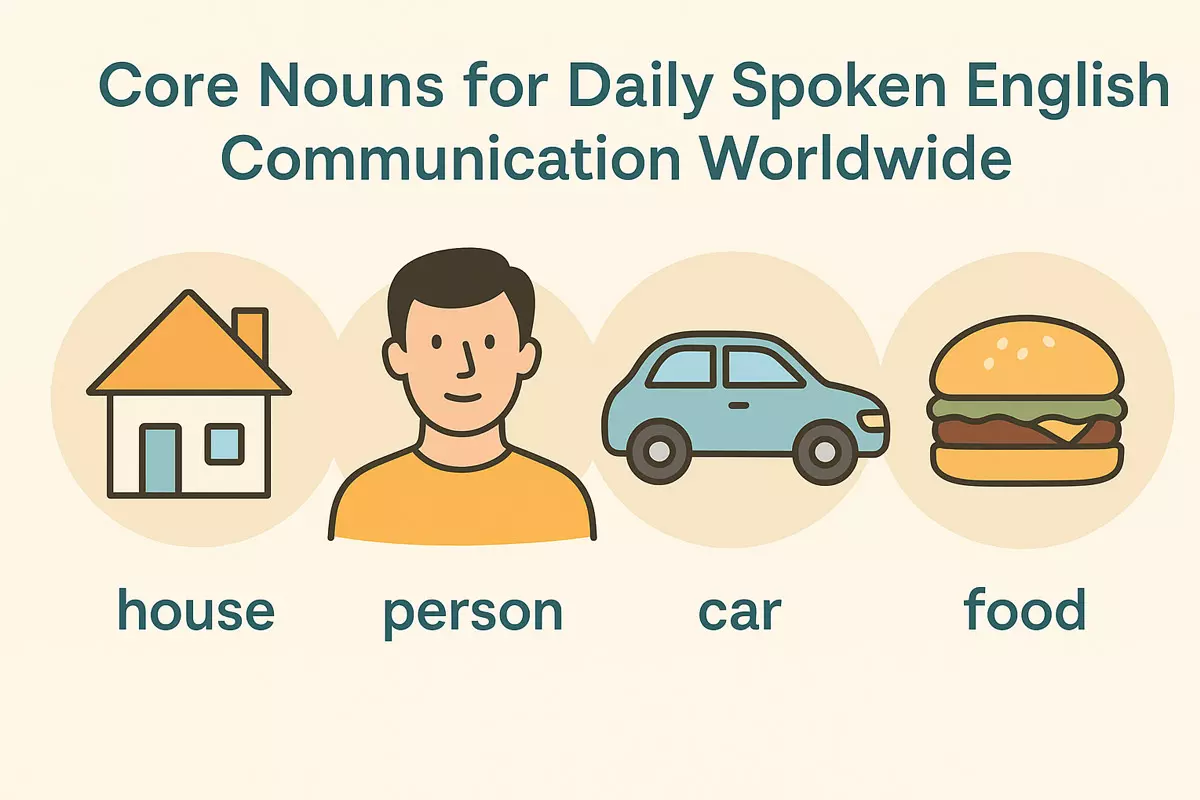 The article explains which core nouns are most common in daily English, including people, places, objects, and abstract terms. It covers their use in spoken patterns versus written forms and offers practice for making sentences in real situations.
- What core nouns are in everyday communication
- High-frequency people, place, and object nouns
- Core abstract nouns for daily conversation
- Using core nouns in common spoken patterns
- Differences between spoken and written core nouns
- Building basic sentences with high-frequency nouns
- Practice: create daily situations using core nouns
Learning the most important naming words commonly used in everyday conversation can greatly enhance your ability to connect with people from different backgrounds. By focusing on the terms that are most relevant and frequently used, you can express your thoughts more clearly and confidently in various real-life situations. This approach not only improves your communication skills but also boosts your confidence when interacting with others, making it easier to build relationships and engage in meaningful conversations wherever you go.
What core nouns are in everyday communication
Understanding the most frequently used nouns helps anyone build practical English skills for conversations at home, work, or while traveling. These essential nouns typically refer to people, common objects, places, and basic needs. They form the backbone of daily exchanges, helping speakers get their message across clearly in almost any situation.
Types of Essential Nouns Used Daily
Everyday speech relies on a set of foundational words that represent the world around us. These nouns often fall into a few broad categories:
- People and Relations: friend, mother, man, woman, child, teacher, neighbor
- Places: home, school, office, store, street, city, country, room
- Everyday Objects: phone, car, bag, key, table, chair, book, door
- Food and Drink: water, bread, rice, coffee, fruit, meal, lunch
- Time and Events: day, night, morning, weekend, birthday, meeting, holiday
- Body and Health: hand, head, eye, face, doctor, medicine
- Nature and Weather: sun, rain, wind, tree, flower, animal
- Money and Things: money, bill, card, ticket, gift, bag
- Work and Activities: job, task, project, call, lesson, sport
- Feelings and Qualities: love, help, idea, problem, answer
Common Noun Patterns in Daily Speech
Certain nouns appear so often because they’re used in helpful patterns and phrases. For example, people talk about their family at home, or ask for a glass of water. These core nouns are flexible and combine with simple verbs to create clear, useful sentences.

| Noun | Typical Daily Use |
|---|---|
| phone | “Can I use your phone?” |
| money | “How much money do you have?” |
| friend | “My friend is coming over.” |
| food | “What food do you like?” |
| car | “Where is your car?” |
| work | “I have work tomorrow.” |
| home | “I’ll go home soon.” |
| water | “Could I have some water?” |
| city | “The city is busy today.” |
| job | “Do you like your job?” |
Why These Words Matter
Focusing on these high-frequency nouns allows language learners to participate in most everyday conversations. Mastery of these words is a strong step toward confident, effective spoken English in any country or context.
High-frequency people, place, and object nouns
Everyday English relies heavily on a core set of nouns that refer to people, locations, and objects. These words are essential for clear daily communication, whether you’re describing your family, navigating a city, or talking about common items. Mastering these frequent nouns allows speakers to express needs, share experiences, and ask questions with confidence in most real-world situations.
Common nouns for people
Words describing individuals and relationships are used constantly. Here are some of the most frequently used nouns referring to people:
- friend → My friend helped me with the project.
- man / woman → The woman asked for directions.
- child / children → The children played in the yard.
- parent → Each parent attended the meeting.
- teacher → The teacher explained the lesson clearly.
- student → The student finished the assignment early.
- worker → The worker fixed the broken light.
- neighbor → My neighbor greeted me this morning.
- family → Her family visited over the weekend.
- customer → The customer asked for a refund.
These terms help identify roles, relationships, and social contexts in conversations.
Typical place nouns
Place names let us talk about where events happen or where things are found. Some of the most indispensable ones include:
- home → We stayed at home all evening.
- school → She walks to school every day.
- work → He left work early today.
- store → I bought milk at the store.
- city → The city is full of tall buildings.
- country → They moved to another country.
- hospital → She visited her friend in the hospital.
- park → They relaxed in the park after lunch.
- restaurant → We had dinner at a small restaurant.
- office → His office is on the second floor.
- room → The room was warm and bright.
Knowing these words helps with giving directions, making plans, and sharing experiences.
Frequent object nouns in daily speech
Items we use, see, or talk about every day also have a core vocabulary. Here is a selection of everyday object nouns:
- phone → My phone rang during the meeting.
- car → Her car broke down yesterday.
- bag → He forgot his bag at home.
- table → The table was covered with books.
- chair → She sat on the wooden chair.
- book → He read a book before bed.
- key → I lost my house key.
- door → She closed the door quietly.
- pen → He signed the form with a pen.
- money → She saved money for a trip.
- food → The food smelled delicious.
- water → He drank a glass of water.
These nouns are vital for requesting items, describing situations, or solving problems.
Sample usage patterns
Notice how these basic nouns appear in simple but useful phrases:
- Where is my phone?
- I am going to the store.
- Is your friend coming?
- Can I have some water?
- The teacher is in the classroom.
Overview: Sample core nouns by category
| People | Places | Objects |
|---|---|---|
| friend | home | phone |
| teacher | school | bag |
| worker | office | key |
| parent | restaurant | money |
Building a strong foundation in these high-utility nouns helps language learners and travelers communicate more efficiently and understand conversations in a variety of everyday contexts. Recognizing and practicing these words is a practical step toward fluency.
Core abstract nouns for daily conversation
Understanding and using abstract nouns is essential for expressing thoughts, feelings, and ideas in spoken English around the world. These words help us talk about concepts, qualities, and experiences that aren’t physical objects, making communication richer and more precise in everyday interactions.
Why abstract nouns matter in conversation
Abstract nouns let us discuss emotions, intentions, and general states. For example, when sharing opinions, talking about plans, or describing personal experiences, these terms allow for clear and effective exchanges. They are especially useful in situations where you need to describe something you can’t see or touch, like hope, trust, or difficulty.
Common abstract nouns in everyday English
Here are some of the most frequently used abstract nouns that appear in daily dialogue. These words cover a range of feelings, states, and general ideas:
- Advice → She gave me good advice before the interview.
- Agreement → They finally reached an agreement.
- Anger → His anger was impossible to hide.
- Belief → Her belief in success kept her motivated.
- Choice → He made the right choice in the end.
- Comfort → Music brings her comfort after a long day.
- Communication → Good communication improves teamwork.
- Confidence → She spoke with confidence during the presentation.
- Difficulty → He had difficulty solving the problem.
- Experience → The trip was a valuable experience.
- Freedom → They celebrated their freedom together.
- Friendship → Their friendship has lasted for years.
- Happiness → She felt happiness when she got the news.
- Hope → They never lost hope despite the situation.
- Idea → He shared an interesting idea with the group.
- Interest → She has a strong interest in languages.
- Knowledge → Knowledge grows when you keep learning.
- Love → Love can make people do amazing things.
- Patience → He showed great patience with the kids.
- Trust → They built trust over many years together.
Contextual use: Abstract nouns in real situations
These nouns often appear in questions or statements that help move conversations forward. For instance, “Do you have any advice?” or “I have a lot of confidence in her.” Mastering their use can make your speech more natural and relatable.
Comparing concrete and abstract nouns
It’s helpful to distinguish between concepts and tangible things. Here’s a quick comparison to clarify how abstract nouns differ from concrete ones in everyday English:
| Concrete Noun (Something you can touch) |
Abstract Noun (Something you feel or think) |
|---|---|
| Book | Knowledge |
| Gift | Generosity |
| Friend | Friendship |
| Smile | Happiness |
| Plan | Hope |
Building your vocabulary of abstract nouns can lead to more meaningful, nuanced conversations in English, no matter where you are in the world. These terms are the building blocks for sharing feelings, opinions, and experiences with clarity and depth.
Using core nouns in common spoken patterns
Mastering everyday conversation in English often means knowing how to fit the most essential nouns into phrases that people actually use. Whether you’re discussing plans, sharing information, or asking for help, the right noun in the right structure can make your speech clear and natural. These basic words—like “time,” “person,” “place,” “thing,” and “problem”—form the backbone of daily exchanges across cultures.
Frequent phrase structures with basic nouns
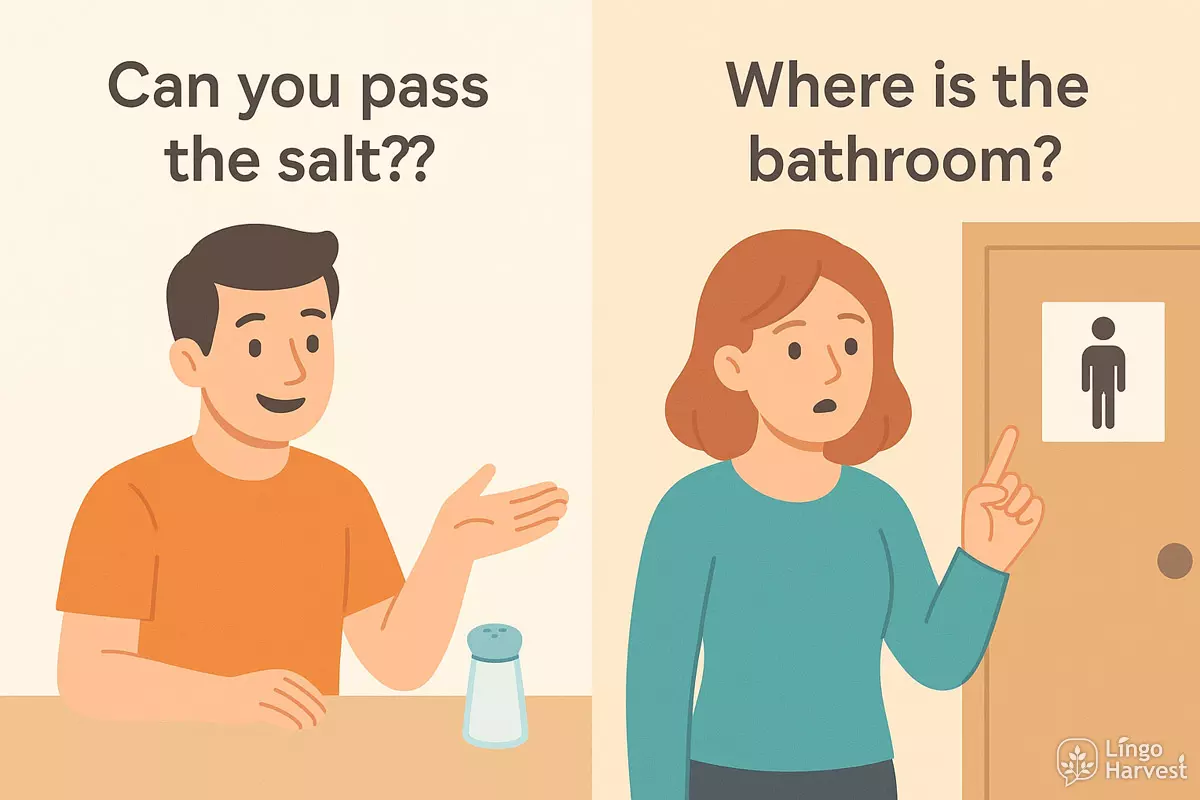
Certain sentence patterns appear again and again in spoken English. By recognizing these, you can quickly build your own sentences for work, travel, or casual chat. Here are some widely used templates:
- “Can you pass the salt?”
- “I have a question.”
- “What time is it?”
- “Where is the bathroom?”
- “Who is that person?”
- “I need some help.”
- “Let’s meet at the station.”
- “That’s a good idea.”
- “Could you open the window?”
- “Do you like this music?”
- “There’s a problem with my ticket.”
- “Is this your bag?”
- “How much does this cost?”
- “I don’t understand this word.”
- “She’s my friend.”
- “Please write your name here.”
- “What’s your favorite food?”
- “I lost my phone.”
- “Can I have a glass of water?”
- “The weather is nice today.”
Comparing core noun usage in questions and statements
Notice how the same noun can appear in different types of sentences, depending on the speaker’s intent. Here’s a quick comparison of how fundamental nouns work in both questions and statements:
| Statement | Question |
|---|---|
| I have a meeting. | Do you have a meeting? |
| This place is beautiful. | Where is this place? |
| He lost his key. | Did you find your key? |
| My friend is coming. | Who is your friend? |
| The bus is late. | Is the bus coming? |
Tips for flexible communication
To sound more fluent, try using these nouns in simple patterns, then add details for clarity. For instance, “I need help” can become “I need help with my homework.” Remember, the simplest structures are often the most effective, especially when speaking with people from different backgrounds or in international settings.
Finally, pay attention to local variations. For example, “restroom” (US) and “toilet” (UK) both refer to the same place but may be preferred in different regions. Adjusting your word choice can make conversations smoother and more comfortable.
Differences between spoken and written core nouns
Everyday conversation and formal writing often use nouns in distinct ways. In speech, people tend to prefer simpler, more concrete words that relate directly to daily life and shared experiences. Written language, especially in academic or professional contexts, frequently employs abstract nouns and more specialized vocabulary. This affects not only the types of nouns chosen, but also how they're used in sentences.
Common features of nouns in everyday speech
- Preference for high-frequency, familiar words (e.g., friend, car, food)
- Use of general terms instead of specific or technical ones (e.g., thing instead of apparatus)
- Frequent repetition of the same noun for clarity or emphasis
- Reliance on context to fill in missing information, leading to more pronoun use
- Inclusion of slang or regional variants
- Shorter noun phrases, often just one or two words
- Use of concrete objects and everyday relationships
- Direct address with names or titles (mom, boss)
- Ellipsis or omission of nouns when the meaning is clear from context
- Quick topic shifts, so nouns often refer to immediate needs or surroundings
How written contexts shape noun choice
- More frequent use of abstract nouns (information, development, analysis)
- Longer, more complex noun phrases with modifiers and qualifiers
- Greater variety and precision in vocabulary
- Consistent use of nouns to avoid ambiguity
- Less reliance on context, so repetition is reduced
- Use of formal or technical terms depending on the field
- Fewer contractions or slang expressions
- Attention to noun agreement and parallelism in lists
Typical noun differences: Spoken vs. written English
| Spoken English | Written English |
|---|---|
| Short, everyday nouns E.g. kids, job, house |
Abstract or technical nouns E.g. employment, residence, youth |
| Frequent use of pronouns and generic terms E.g. stuff, things, people |
More precise or specific nouns E.g. equipment, participants, colleagues |
| Repetition for clarity E.g. “Where’s the dog? The dog was here.” |
Variety to avoid repetition E.g. “The canine was present earlier.” |
| Context-driven, less explicit E.g. “Pass me that.” |
Self-contained, more explicit E.g. “Please hand me the document.” |
Overall, the core vocabulary for speech prioritizes shared understanding and ease, while written forms emphasize clarity, detail, and formality. Recognizing these contrasts helps language learners and communicators adapt their noun choices for the situation at hand.
Building basic sentences with high-frequency nouns
Using essential nouns in daily conversation makes it easier for learners to express themselves clearly and efficiently. These common words—like “time,” “people,” “place,” and “food”—serve as building blocks for simple and useful sentences in English. Focusing on these helps new speakers form practical questions, statements, and requests for everyday situations.
Simple sentence patterns with core nouns
To communicate basic ideas, start with straightforward sentence structures. Typically, these combine a subject, a verb, and a high-frequency noun. Here are some examples:
- I need water.
- She has a book.
- We want food.
- They like music.
- You see people.
- He visits school.
- We watch television.
- I buy clothes.
- She drinks coffee.
- He opens the door.
- They read news.
- You find money.
- We eat breakfast.
- I call my friend.
- She checks email.
- He writes a letter.
- They use phones.
- We play games.
- You learn English.
- I meet the teacher.
Common sentence types for daily use
Once you are comfortable with basic nouns, you can create various types of sentences for different everyday needs:
- Questions: Where is the bus? What time is it? Who is your friend?
- Requests: Please pass the salt. Can I have water?
- Statements: The shop is open. My phone is new.
- Negative sentences: I don’t have money. She isn’t at school.
Combining nouns with adjectives and verbs
Expanding your sentences is easy with descriptive words and action verbs. For example:
- The big house is quiet.
- I like fresh fruit.
- He needs new shoes.
- We see many people.
Sample sentence structure comparison
When working with common nouns, changing the verb or adding adjectives can quickly create new meanings. Here’s how a few nouns can fit into basic sentences:
| Noun | Example Sentence | Function |
|---|---|---|
| food | I want food. | Expressing need |
| money | She has money. | Describing possession |
| friend | He meets his friend. | Talking about people |
| time | What time is it? | Asking for information |
| place | This place is nice. | Giving opinions |
Mastering these patterns allows learners everywhere to express their needs, share information, and ask questions in English, making daily communication much smoother. By practicing with high-frequency nouns and simple structures, confidence and fluency will naturally grow over time.
Practice: create daily situations using core nouns
To make everyday English communication more natural, it helps to create real-life scenarios that rely on essential nouns. By focusing on practical situations, you can reinforce your vocabulary and improve fluency. Below, you'll find a variety of short dialogues, prompts, and mini-tasks using frequently used nouns. These exercises are designed to reflect common interactions at home, at work, and in public places.
Common Situations and Sample Sentences
- At home: "Where is the key?" / "Please put the book on the table."
- At a café: "Can I have a coffee and a sandwich?"
- Shopping: "How much is this shirt?" / "I need a bag."
- In the office: "I left the report on your desk."
- Travel: "Where is the bus station?"
- Family: "My mother is cooking dinner."
- Health: "I have a headache and need some medicine."
- Weather: "The rain is heavy today."
- Meeting friends: "Let’s meet at the park at 5."
- School: "The teacher gave us homework."
- Transport: "Is this seat free?"
- Emergencies: "Call the police!"
Quick Practice: Fill in the Core Noun
- Could you please pass me the _______? (object on a dining table)
- I forgot my _______ at home. (something for opening doors)
- Let’s take the _______ to the city center. (mode of public transport)
- My _______ is not working today. (device for communication)
- The _______ is full of people this morning. (place for shopping)
- Please turn on the _______. (source of light)
- I need a new _______ for my laptop. (computer accessory)
- She bought a _______ at the bookstore. (item for reading)
- He put the _______ in the fridge. (food item)
- We waited at the _______ for 20 minutes. (place for public transport)
Show answers
- salt
- key
- bus
- phone
- market
- lamp
- charger
- book
- milk
- bus stop
Mini-Dialogues Using Essential Nouns
- At the market:
A: "Do you have a bag?"
B: "Yes, here is a plastic one." - In a restaurant:
A: "Could I see the menu, please?"
B: "Of course. Here is the menu." - At the bus stop:
A: "When does the next bus arrive?"
B: "In five minutes." - At school:
A: "Where is my notebook?"
B: "It’s under your bag."
Structured Practice: Matching Situations to Core Nouns
| Situation | Key Noun |
|---|---|
| Paying for groceries | money |
| Sending a message | phone |
| Writing a letter | paper |
| Taking a rest outdoors | bench |
| Carrying books | bag |
| Starting your day | alarm |
Short Tasks: Create Your Own Sentences
Now, try to write simple sentences using these nouns: ticket, door, friend, coffee, chair. Imagine you are in a real situation and use each noun in context.
Show answers
- I lost my ticket for the concert.
- Please close the door behind you.
- My friend is waiting outside.
- Would you like some coffee?
- This chair is very comfortable.
By practicing these everyday scenarios, you will become more confident using core nouns in real conversations, making your spoken English more effective and natural.