Social Relationship Nouns Explained for Everyday Conversations

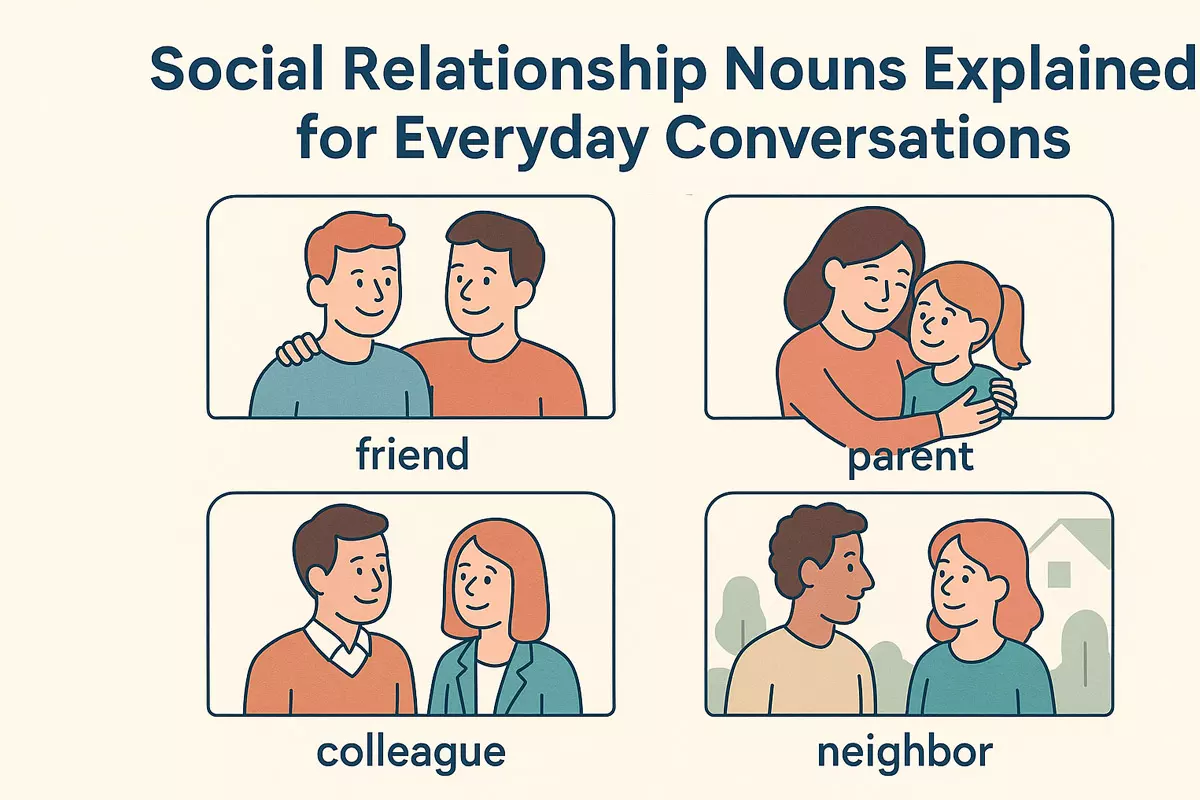 Here we key English nouns for family, work, and social relationships, explains formal and informal options, and discusses common learner mistakes. It also provides practice describing people and connections using correct relationship terms.
- What social relationship nouns refer to in English
- Family relationship nouns and casual alternatives
- Work and social role relationship nouns
- Formal vs informal relationship noun choices
- Relationship nouns in introductions and descriptions
- Common learner mistakes with relationship terms
- Practice: describe people and connections using correct nouns
Navigating daily conversations often involves mentioning the people around us, such as friends, relatives, colleagues, and acquaintances, but choosing the right word for each relationship can sometimes be confusing. Having a good understanding of these relationship terms not only helps us communicate more clearly but also allows us to express ourselves in a way that feels more personal and accurate. By using the appropriate words, we can avoid misunderstandings and make our interactions smoother and more meaningful.
What social relationship nouns refer to in English
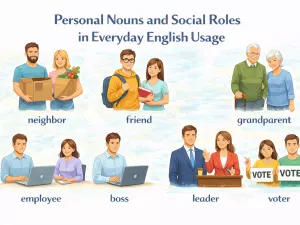
In English, nouns that describe personal connections help us talk about how people are linked to one another—by family, friendship, work, or community. These words label the roles and bonds between individuals, making it easier to identify who someone is in relation to ourselves or others. Understanding these terms is useful for clear everyday conversations, especially when introducing people or explaining relationships.
Categories of Relationship Nouns
Social relationship nouns generally fall into several groups. Here’s a breakdown of the most common types:
- Family roles: mother, father, son, daughter, cousin, aunt, uncle, niece, nephew, grandmother, grandfather, sibling, spouse
- Friendship and acquaintances: friend, best friend, acquaintance, classmate, roommate, neighbor, buddy, pal
- Professional connections: colleague, coworker, boss, supervisor, subordinate, partner, client, mentor, mentee
- Community and social groups: teammate, member, leader, volunteer, participant, organizer
- Romantic relationships: boyfriend, girlfriend, fiancé, fiancée, partner, spouse, husband, wife
How These Nouns Function in Conversation
When you use a relationship noun, you’re giving context about how people are linked. For example, saying “This is my colleague” tells listeners you work together, while “She’s my niece” reveals a family connection. These words make introductions smoother and help others understand group dynamics.
Comparing Relationship Nouns
Some nouns can have overlapping meanings, while others are more specific. Here’s a brief comparison of select terms to clarify their use:
| Term | Typical Use or Meaning |
|---|---|
| Acquaintance | Someone you know slightly, but not a close friend |
| Colleague | Person you work with, often in a professional setting |
| Partner | Can mean romantic companion or business associate; context matters |
| Siblings | Brothers and sisters; people who share one or both parents |
| Neighbor | Person who lives near you, usually in the same building or area |
Why These Words Matter
Knowing a variety of relationship nouns helps you express yourself more precisely and understand others better. Whether you’re at work, with family, or meeting new people, using the right term can make your communication clearer and more natural.
Family relationship nouns and casual alternatives
Talking about relatives in daily life often means switching between formal terms and more casual, affectionate words. In English, there’s a clear difference between textbook vocabulary and the way people actually talk about their families. Knowing when and how to use these alternatives can help conversations feel warmer and more natural.
Common formal family nouns
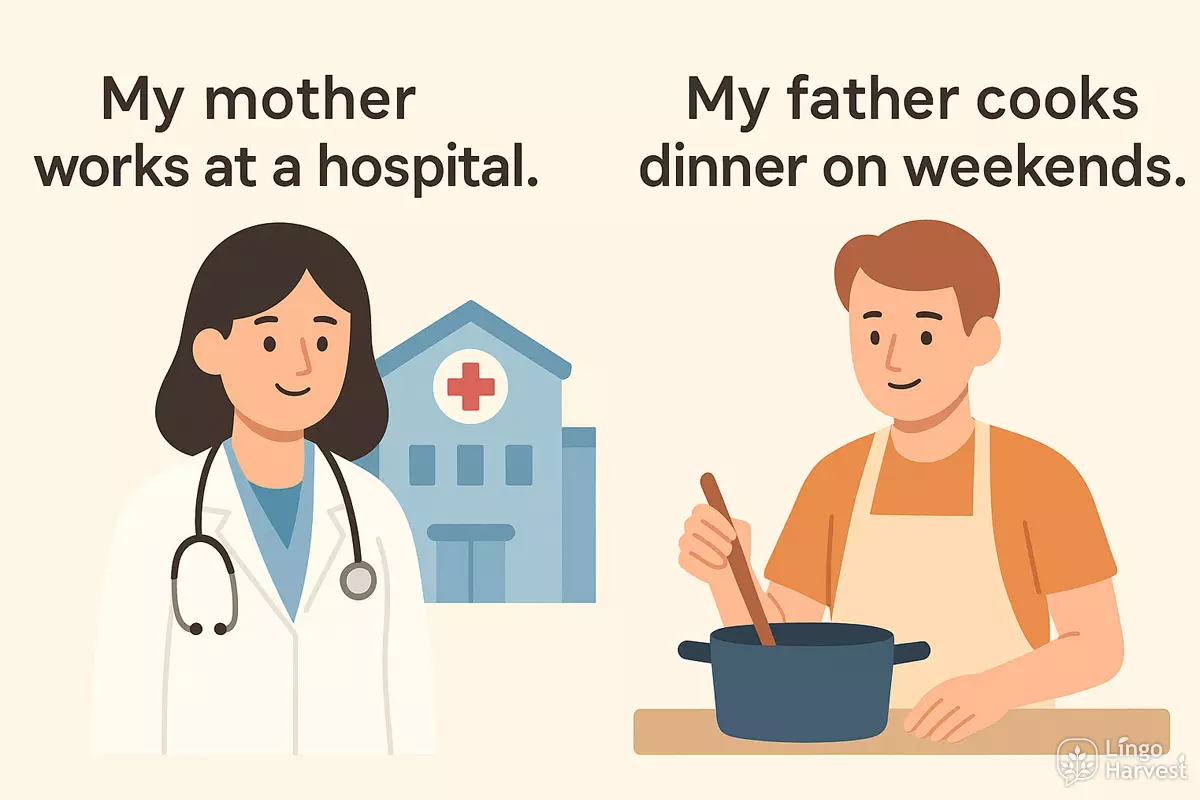
- Mother → My mother works at a hospital.
- Father → My father cooks dinner on weekends.
- Brother → My brother plays football.
- Sister → My sister is studying English.
- Grandmother → My grandmother bakes delicious pies.
- Grandfather → My grandfather tells great stories.
- Uncle → My uncle lives in another city.
- Aunt → My aunt is visiting us today.
- Cousin → My cousin is the same age as me.
- Niece → My niece loves drawing.
- Nephew → My nephew is learning to walk.
- Son → My son enjoys reading books.
- Daughter → My daughter plays the piano.
- Husband → My husband travels for work.
- Wife → My wife likes morning jogs.
Everyday alternatives and nicknames
In casual speech, people often use shortened forms or affectionate nicknames. These forms vary by region and family tradition, but some are widely recognized:
- Mom / Mum
- Dad / Pops / Papa
- Bro
- Sis
- Grandma / Granny / Nan
- Grandpa / Gramps / Pop-pop
- Auntie
- Unc / Uncle
- Little one / Kiddo (for younger siblings or children)
- Hubby (for husband)
- Wifey (for wife)
Comparing formal and casual terms
| Formal Term | Common Casual Alternative(s) |
|---|---|
| Mother | Mom, Mum, Mama |
| Father | Dad, Pops, Papa |
| Grandmother | Grandma, Nana, Granny |
| Grandfather | Grandpa, Gramps, Pop-pop |
| Brother | Bro |
| Sister | Sis |
| Aunt | Auntie |
| Uncle | Unc |
| Husband | Hubby |
| Wife | Wifey |
Tips for using family terms naturally
- Choose the form that fits the relationship—use nicknames for warmth, formals for clarity or respect.
- Listen for what others use, especially in new social contexts.
- Regional differences matter: “Mum” is common in the UK, “Mom” in the US.
- Some families invent unique names—these are part of personal connection.
Picking the right word for a family member can make conversations friendlier and show closeness. Being aware of both traditional and informal language gives you flexibility, whether you’re chatting with friends or introducing loved ones.
Work and social role relationship nouns
Understanding how we refer to people based on their professions, positions, or community involvement is key to clear and natural conversations. In English, nouns that describe these connections can reflect not just occupations but also status, responsibilities, and the way people interact in various settings. These terms are especially useful when introducing others, discussing group dynamics, or clarifying organizational roles.
Common nouns for workplace and social roles
You'll often hear specific titles used to define relationships in professional or organized contexts. Here’s a list of widely used examples:
- Boss – the person in charge of a team or company
- Colleague – someone you work with
- Manager – oversees a department or group
- Employee – works for an organization
- Partner – can mean a business co-owner or collaborator
- Mentor – gives advice and guidance, often more experienced
- Intern – someone gaining work experience, usually temporarily
- Client – a person or company that receives services
- Customer – someone who buys goods or services
- Supervisor – directly oversees others’ work
- Team member – someone in the same work group
- Volunteer – works without pay, often for a cause
- Chairperson – leads a meeting or committee
- Representative – speaks or acts for a group
- Coordinator – organizes people or events
- Advisor – gives expert recommendations
- Peer – an equal in status or age, often used in schools or workplaces
- Director – senior manager, often with wide responsibilities
- Assistant – supports another person’s tasks
- Chair – alternate term for chairperson
Comparing professional and social relationship nouns
Some nouns emphasize the nature of the connection—whether it’s formal, hierarchical, or based on cooperation. Here’s a quick comparison to highlight differences in meaning and usage:
| Noun | Relationship Description |
|---|---|
| Manager | Has authority over employees; responsible for decision-making. |
| Peer | Same level or status, often in a workplace or academic group. |
| Mentor | Guides and supports less experienced individuals. |
| Client | Receives services from professionals or companies. |
| Volunteer | Offers help freely, often in community or social projects. |
| Colleague | Works alongside you, usually in the same organization. |
| Supervisor | Directly oversees work, often involved in evaluation. |
| Partner | Shares ownership or responsibility in business or projects. |
Why these nouns matter in conversation
Choosing the right word for someone’s role helps clarify relationships and avoids confusion, especially in group settings or when introducing people. For example, calling someone a “colleague” instead of “friend” signals a professional connection, while “mentor” highlights a guiding relationship. Using these terms accurately shows respect for social dynamics and helps build rapport.
Formal vs informal relationship noun choices
Choosing the right noun for a social relationship can change the tone of your conversation. Some words sound official and distant, while others feel warm or casual. Understanding when to use each can help you communicate your intentions and emotions more clearly in everyday exchanges.
Common formal relationship nouns
In professional or respectful settings, people often select nouns that suggest distance or hierarchy. These options are useful in business, academic, or official contexts:
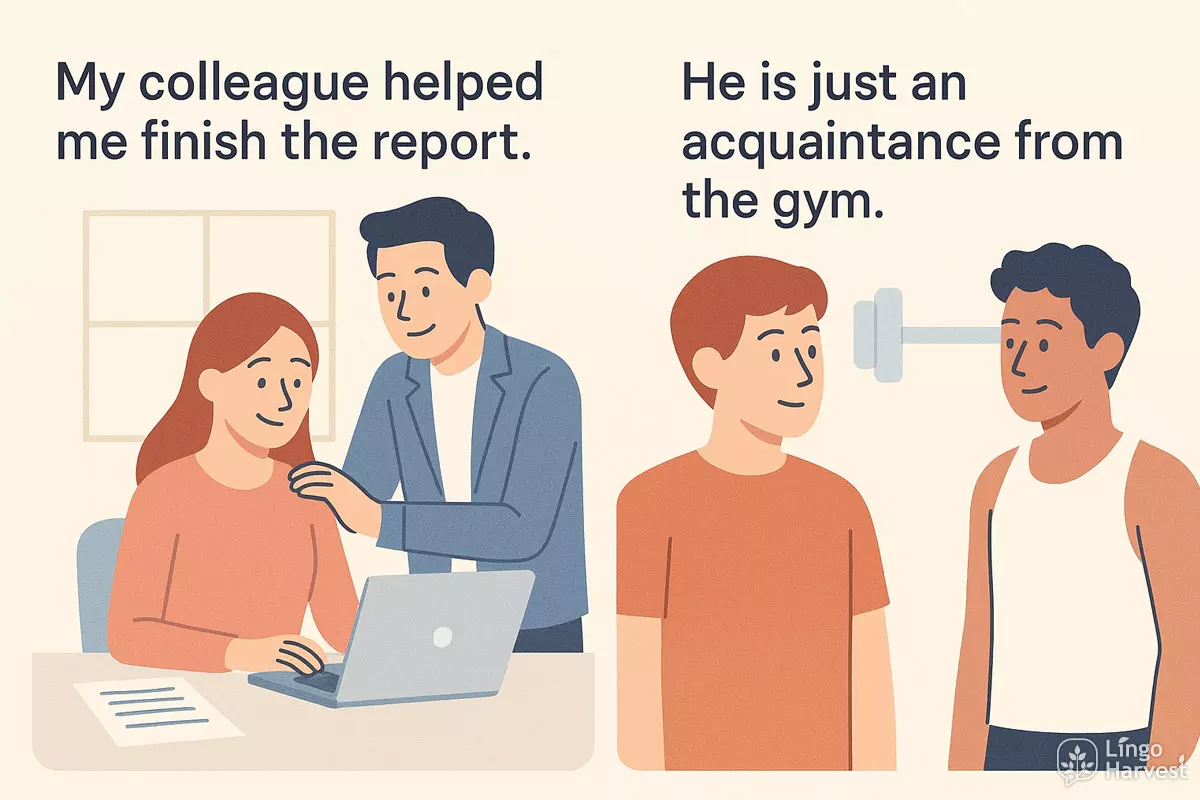
- colleague → My colleague helped me finish the report.
- acquaintance → He is just an acquaintance from the gym.
- supervisor → My supervisor approved the new plan.
- associate → She met with a business associate today.
- partner (in business) → Our business partner invested in the project.
- peer → I learned a lot from my academic peers.
- mentor → My mentor guided me through the process.
- subordinate → His subordinate completed the task quickly.
- companion → She was my travel companion last summer.
- confidant → He became my trusted confidant.
Informal relationship nouns for everyday use
In relaxed or personal situations, informal nouns help set a friendly tone. These words are common among friends, family, and close contacts:
- buddy → He’s my gym buddy.
- pal → We’ve been pals since childhood.
- mate → I met my mate at university.
- bestie → She’s my bestie forever.
- roomie → My roomie cooked dinner tonight.
- friend → My friend invited me to a party.
- sidekick → He’s my sidekick on every adventure.
- crush → I had a crush on him in high school.
- girlfriend/boyfriend → Her boyfriend sent her flowers.
- bro/sis → Hey bro, how’s it going?
- teammate → My teammate scored the winning goal.
- neighbor → My neighbor brought me fresh fruit.
- classmate → She was my classmate in math class.
- partner (romantic) → My partner supports my goals.
- cousin → My cousin visits every summer.
Comparing tone and context
The choice between formal and informal nouns often depends on the relationship’s context and your desired level of closeness. For example, calling someone a “colleague” keeps things professional, while “buddy” signals friendliness. The word “partner” can be either formal or informal, depending on whether it’s about business or romance.
| Formal Noun | Informal Equivalent |
|---|---|
| colleague | coworker, work buddy |
| acquaintance | friend, pal |
| supervisor | boss, team lead |
| mentor | coach, guide |
| companion | buddy, partner |
| associate | mate, friend |
| peer | classmate, teammate |
| confidant | bestie, close friend |
Tips for choosing the right word
- Consider your relationship: Use more formal nouns with people you don’t know well or in professional settings.
- Match the context: Informal nouns are best among friends, family, or peers.
- Watch for overlap: Some words (like “partner”) can be formal or informal based on context.
- When in doubt, follow the other person’s lead or choose a neutral option like “friend.”
Selecting the right noun helps you set the tone and build rapport, whether you’re at work or chatting with friends. Being aware of these choices makes your conversations smoother and more comfortable for everyone involved.
Relationship nouns in introductions and descriptions
When meeting new people or telling stories about others, we often use specific words to clarify how people are connected. These terms—like “friend,” “colleague,” or “neighbor”—immediately set the context and help listeners understand the roles each person plays in a conversation. Choosing the right noun can make your introductions clear and relatable, especially in everyday discussions.
Common social relationship nouns for introductions
Introducing someone often involves a quick label to explain your connection. Here are some of the most practical and frequently used nouns for this purpose:
- Friend → My friend called me this morning.
- Acquaintance → He is just an acquaintance from work.
- Colleague → My colleague helped me with the task.
- Boss → My boss approved the schedule.
- Teammate → My teammate scored the final point.
- Classmate → I studied math with my classmate.
- Neighbor → My neighbor brought fresh vegetables.
- Partner → My partner supports my decisions.
- Roommate → My roommate cleaned the kitchen.
- Cousin → My cousin is visiting tomorrow.
- Sibling → My sibling lives abroad.
- Spouse → My spouse prepared dinner.
- Mentor → My mentor guided me through the project.
- Client → The client requested a revision.
- Supervisor → My supervisor reviewed the report.
- Co-worker → My co-worker shared useful notes.
- Relative → That relative lives far away.
- Grandparent → My grandparent told a story.
- Parent → My parent helped me move.
- Child → My child drew a picture.
These terms are often used with possessives for clarity, such as “my neighbor” or “her colleague.”
Describing relationships in context
Beyond introductions, social relationship nouns help describe ongoing connections or provide background information. For example, you might say, “Anna is my old classmate from university,” or “He’s the manager at my workplace.” Notice how the noun clarifies the relationship and sets expectations for the rest of the story.
Comparing relationship terms
It’s common to wonder about the differences between similar nouns. Here’s a structured look at some pairs that often cause confusion:
| Term | Typical Use / Meaning |
|---|---|
| Friend | A person you know well and like, but who is not related to you |
| Acquaintance | Someone you know a little, but who is not a close friend |
| Colleague | Someone you work with, especially in a professional job |
| Co-worker | Anyone who works at the same place as you, regardless of position or closeness |
| Partner | Can refer to a romantic partner, business partner, or someone you share an activity with |
| Roommate | A person you share a living space with, not necessarily a friend |
| Mentor | Someone who guides or advises you, often in a work or academic setting |
| Supervisor | A person who oversees your work or studies |
Tips for using social relationship nouns
- Be specific: Instead of just “friend,” say “childhood friend” or “work friend” if relevant. - Use context: Sometimes a noun alone isn’t enough. Add details: “my neighbor from upstairs” or “a colleague from the sales team.” - Adjust formality: “Acquaintance” sounds more formal than “friend,” while “buddy” is very casual. - Avoid assumptions: If you’re unsure about the exact relationship, ask or use general terms like “connection” or “contact.” Choosing the right word for each situation helps conversations flow and avoids misunderstandings. With these examples and tips, you can introduce and describe people more naturally in everyday English.
Common learner mistakes with relationship terms
Accurately using words for social ties can be tricky for new speakers. Many people confuse English relationship nouns because similar-sounding words may have different meanings, or because their native language uses one word where English uses several. Misunderstandings can lead to awkward moments or unclear communication.
Mixing up family and non-family terms
One frequent issue is using family vocabulary for non-relatives or vice versa. For instance, “aunt,” “uncle,” and “cousin” are for blood relatives, while “friend,” “colleague,” or “acquaintance” refer to people outside the family. Calling a neighbor a “cousin” by mistake may cause confusion.
Using incorrect forms or pluralization
Learners sometimes struggle with irregular plural forms or misuse possessive structures. For example, people might say “childs” instead of “children,” or mix up “friend’s” (possessive) and “friends” (plural).
Confusing close and distant relationship words
It’s common to mix up words that show closeness. “Best friend” is much stronger than “acquaintance.” Similarly, “partner” can mean a romantic companion or a business associate, depending on context.
Commonly confused relationship nouns
Here are some relationship words that often get mixed up or misused, with quick notes for clarity:
- Cousin (child of your aunt/uncle) vs. nephew/niece (son/daughter of your sibling)
- Fiancé/fiancée (engaged person, masculine/feminine) vs. spouse (married partner)
- Boyfriend/girlfriend (romantic partner) vs. friend (platonic)
- Colleague (work associate) vs. classmate (school peer)
- Relative (general family member) vs. parent (mother/father)
- Stepbrother/stepsister (no blood relation, parent remarriage) vs. half-brother/half-sister (share one parent)
- Acquaintance (someone you know slightly) vs. friend (closer relationship)
- Partner (can mean romantic or business) vs. spouse (only married partner)
- In-law (relation by marriage) vs. relative (blood relation or by marriage)
- Grandparent (parent's parent) vs. ancestor (anyone in your family tree from previous generations)
- Siblings (brothers and/or sisters) vs. siblings-in-law (spouse’s siblings)
Comparing commonly confused terms
| Term | Typical Meaning/Usage |
|---|---|
| Fiancé / Fiancée | Engaged to be married; masculine (fiancé) or feminine (fiancée) |
| Spouse | Legally married partner, regardless of gender |
| Colleague | Person you work with (not necessarily a friend) |
| Acquaintance | Person you know slightly, but not close |
| Stepbrother / Stepsister | Child of a stepparent (no biological link) |
| Half-brother / Half-sister | Share one biological parent |
| In-law | Relative by marriage (e.g., mother-in-law, brother-in-law) |
| Partner | Can mean romantic partner or business partner, based on context |
Tips for avoiding confusion
- Check the context: Some nouns have more than one meaning.
- Ask if you’re not sure—native speakers can clarify.
- Review family trees or relationship charts to visualize connections.
- Practice with real-life examples or role-playing conversations.
Mastering these distinctions helps make conversations clearer and avoids misunderstandings when talking about friends, relatives, and other social connections.
Practice: describe people and connections using correct nouns
Understanding how to talk about people and their relationships is essential for clear, everyday conversation. Let’s work through some common ways to refer to individuals and their connections, focusing on the most accurate nouns for each context. This will help you confidently describe family, friendship, work, and other social ties.
Common Relationship Nouns
- Parent – a mother or father
- Sibling – a brother or sister
- Spouse – a husband or wife
- Cousin – the child of your aunt or uncle
- Colleague – a person you work with
- Acquaintance – someone you know, but not very well
- Neighbor – a person who lives near you
- Roommate – someone you share a living space with
- Partner – a person you are in a romantic relationship with (can be used for married or unmarried couples)
- Friend – someone you have a close, personal relationship with
- Classmate – a person in your class at school or university
- Boss – the person who manages you at work
- Mentor – a person who guides or advises you, especially professionally
- Teammate – someone on your sports or work team
- Ancestor – a relative from previous generations
- Descendant – someone who comes from a particular ancestor
Identifying Relationships in Sentences
Read the sentences below and choose the correct noun for each blank. Think about the type of relationship being described.
- Maria is my ________; we work in the same department.
- James is my father’s brother, so he is my ________.
- I live with Alex; he is my ________.
- Lisa and I grew up together; she is my best ________.
- My mother’s mother is my ________.
- We play on the same team, so he is my ________.
- Sarah lives next door; she is my ________.
- My father’s father is my ________.
- I study with Emma in the same class; she is my ________.
- My sister’s daughter is my ________.
Show answers
- Colleague
- Uncle
- Roommate
- Friend
- Grandmother
- Teammate
- Neighbor
- Grandfather
- Classmate
- Niece
Comparing Family and Social Nouns
Some nouns are closely related but have distinct meanings. Here’s a comparison to clarify their use:
| Term | Definition / Example |
|---|---|
| Sibling | Any brother or sister. Example: “I have two siblings: one brother and one sister.” |
| Cousin | A child of your aunt or uncle. Example: “My cousin and I are the same age.” |
| Acquaintance | Someone you know slightly, not a close friend. Example: “He’s more of an acquaintance than a friend.” |
| Colleague | A person you work with. Example: “My colleague helped me finish the project.” |
| Partner | Someone you are in a romantic relationship with, married or not. Example: “I’m going on vacation with my partner.” |
Quick Practice: Matching Pairs
Match each relationship description to the correct noun:
- a person who lives next door
- your father’s father
- someone in your sports group
- your mother’s sister
- a child of your uncle or aunt
- a person you study with in the same class
- a person you work with at the same office
- your brother or sister
- the man or woman you are married to
- your mother’s mother
Show answers
- Neighbor
- Grandfather
- Teammate
- Aunt
- Cousin
- Classmate
- Co-worker
- Sibling
- Spouse
- Grandmother
Accurately choosing the right word for each connection helps avoid confusion and makes your communication more precise. With these patterns, you’ll be able to describe people and social ties clearly in everyday life.