Nouns in Passive Voice Structures in Formal and Neutral Style

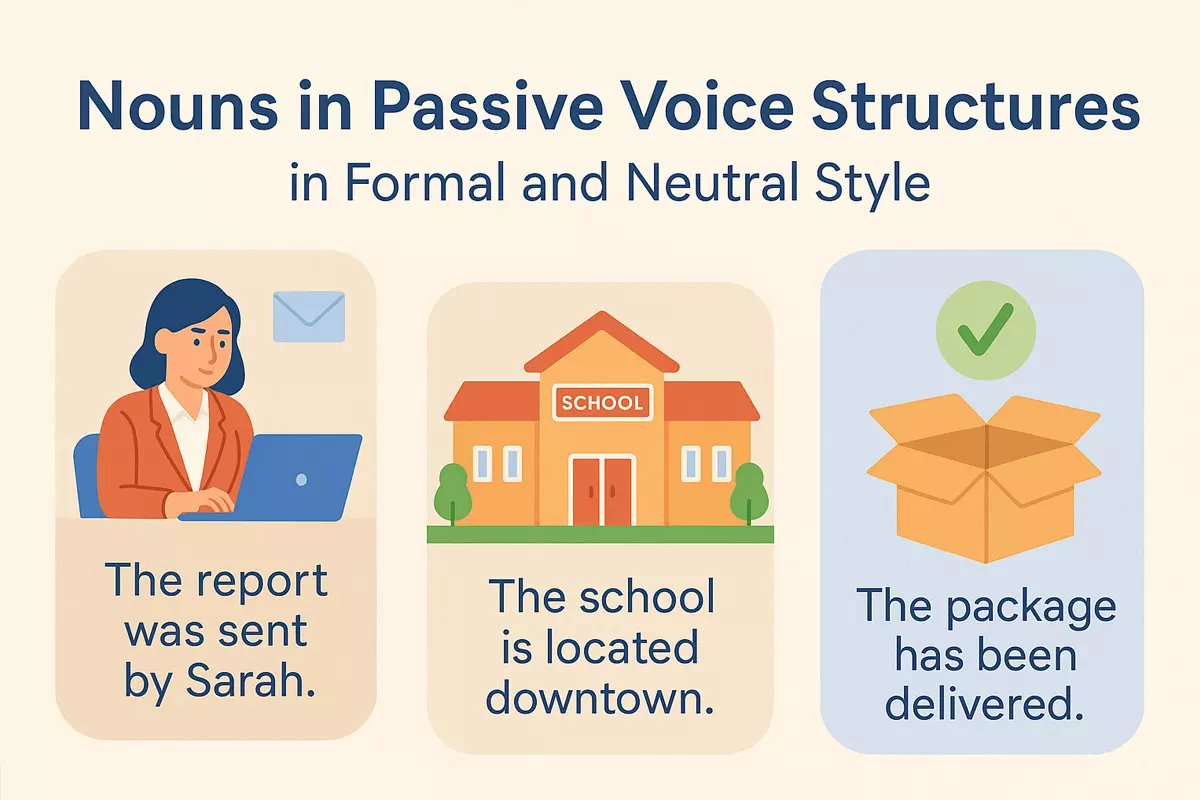 Here we how passive voice shifts focus between nouns by changing subjects and objects, explains agent nouns in by-phrases, details its formal uses, points out common mistakes, and provides practice rewriting active sentences into passive forms.
- How passive voice changes noun focus in sentences
- Subject and object shifts in passive constructions
- Use of agent nouns with by-phrases in passive voice
- Passive voice in formal and informational writing
- When passive voice with nouns improves clarity
- Common mistakes with passive noun structures
- Practice: rewrite active sentences into passive forms
Using naming words, or nouns, effectively within passive constructions is important for maintaining clarity and a suitable tone in formal or neutral writing. When passive voice is used, the focus shifts from the doer to the action or the receiver, which can help emphasize certain aspects of a sentence. Careful selection and placement of nouns in these structures ensure the message remains clear and professional. Mastering this approach allows writers to create polished and effective sentences that suit various formal communication needs.
How passive voice changes noun focus in sentences
When passive structures are used, the subject and object roles in a sentence shift, leading to a different focus on the nouns involved. In the active voice, the subject noun typically performs the action, but passives highlight the receiver of the action instead. This shift is especially useful in formal or neutral styles, where the doer may be unknown, unimportant, or intentionally omitted.
Shifting attention from agent to recipient
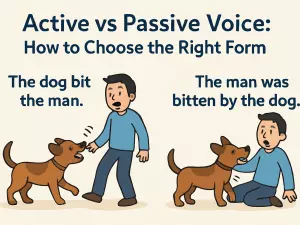
Passive constructions move the recipient noun (the object in the active) to the start of the sentence, making it the grammatical subject. This often places more importance on what happens to the noun, rather than who performs the action. For example:
- Active: The committee approved the proposal.
- Passive: The proposal was approved (by the committee).
Here, "the proposal" becomes the focus, and "the committee" can be omitted if unnecessary.
Examples of focus shifts with nouns
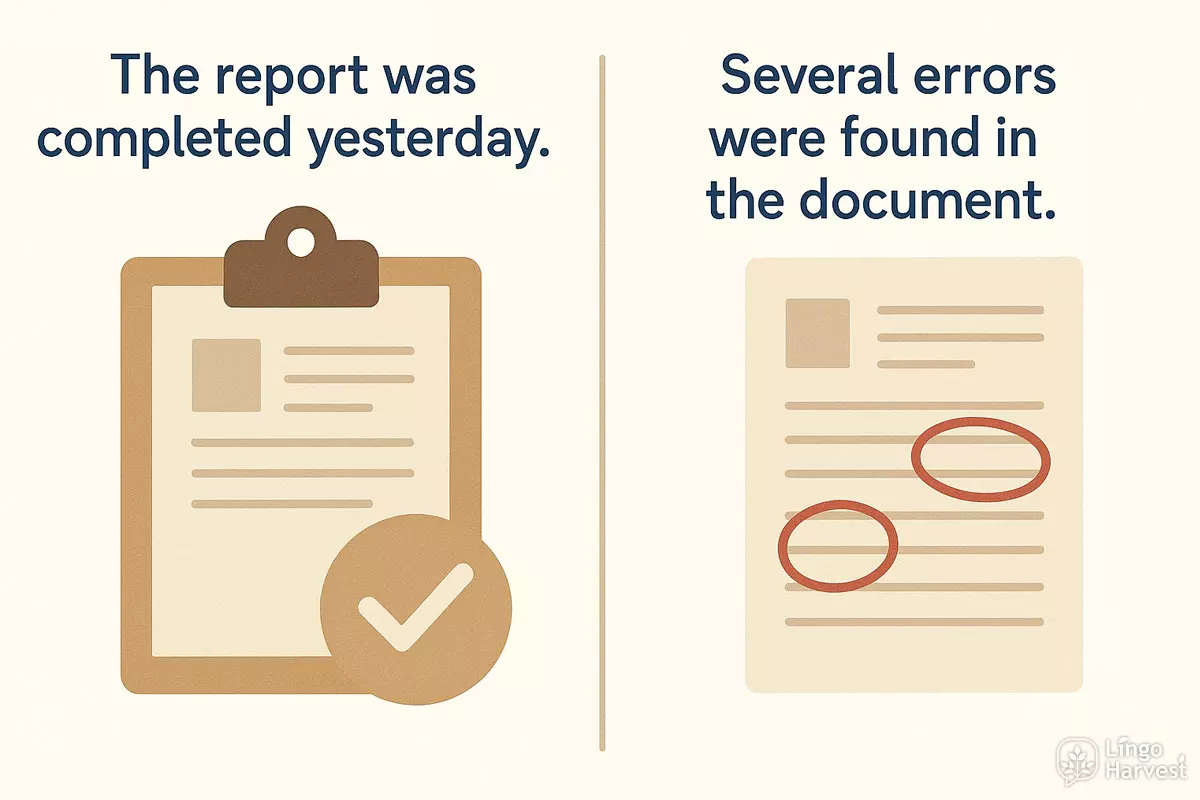
Below are more examples showing how noun focus changes with passive forms:
- The report was completed yesterday. (focus: report)
- Several errors were found in the document. (focus: errors)
- The results will be announced next week. (focus: results)
- The building is being renovated. (focus: building)
- All tickets have been sold. (focus: tickets)
- The instructions were misunderstood. (focus: instructions)
- Her suggestions were ignored. (focus: suggestions)
- The project was delayed due to weather. (focus: project)
- No details were provided. (focus: details)
- The manuscript is reviewed by experts. (focus: manuscript)
Comparing noun focus: Active vs. Passive
| Active Voice (Agent Focus) | Passive Voice (Recipient Focus) |
|---|---|
| The manager explained the policy. | The policy was explained (by the manager). |
| Researchers conducted the experiment. | The experiment was conducted (by researchers). |
| They published the results. | The results were published (by them). |
| People admire her achievements. | Her achievements are admired (by people). |
Why change noun focus?
Writers often use passive voice to emphasize the event or outcome rather than the doer, which is common in academic, scientific, and formal writing. This approach can also help maintain objectivity or depersonalize statements, especially when the agent is unknown, irrelevant, or deliberately left out.
Understanding how grammatical structures alter the prominence of nouns in a sentence allows for more precise and effective communication, particularly when clarity and neutrality are required.
Subject and object shifts in passive constructions
Passive voice structures often involve a reorganization of sentence elements, particularly nouns functioning as subjects and objects. In an active sentence, the subject typically performs the action, while the object receives it. When shifted to the passive, the original object moves to the subject position, and the agent (original subject) is either omitted or introduced with a prepositional phrase. This rearrangement affects both the grammatical roles and the prominence of nouns in formal and neutral registers.
How noun roles change in passive voice
In formal and neutral styles, the transformation from active to passive often highlights the recipient of the action. The noun that was once the object becomes the grammatical subject, which is especially useful in writing where the doer is unknown, unimportant, or should be de-emphasized. For example, in academic or technical writing, this structure shifts focus toward processes or results rather than agents.
Common patterns and examples
- Active: The committee approved the proposal. → Passive: The proposal was approved (by the committee).
- Active: Researchers conducted the experiment. → Passive: The experiment was conducted (by researchers).
- Active: The chef prepared the meal. → Passive: The meal was prepared (by the chef).
- Active: Many people use this software. → Passive: This software is used (by many people).
- Active: The manager announced the results. → Passive: The results were announced (by the manager).
- Active: The company released a new product. → Passive: A new product was released (by the company).
- Active: Students submitted their essays. → Passive: The essays were submitted (by students).
- Active: The artist painted the portrait. → Passive: The portrait was painted (by the artist).
- Active: The technician fixed the device. → Passive: The device was fixed (by the technician).
- Active: Authorities closed the road. → Passive: The road was closed (by authorities).
Summary of noun movement between active and passive
| Active Structure | Passive Structure |
|---|---|
| Subject + Verb + Object | Object (as new Subject) + be + Past Participle (+ by + original Subject) |
| The scientist discovered the gene. | The gene was discovered (by the scientist). |
| The editor reviews the article. | The article is reviewed (by the editor). |
| Designers create new trends. | New trends are created (by designers). |
The shift in noun roles is especially prominent in formal and neutral styles, where passives are frequently used to foreground results, processes, or objects rather than agents. Understanding these shifts helps writers choose the most effective focus for their sentences, depending on context and stylistic goals.
Use of agent nouns with by-phrases in passive voice
In passive constructions, it’s common to indicate who performed the action using an agent noun introduced by the preposition by. This pattern is especially frequent in formal and neutral registers when specifying the responsible party is important for clarity or emphasis. Agent nouns refer to the person, group, or entity carrying out the action, such as manager, committee, author, company, or government.
Role and Placement of Agent Nouns
The agent noun typically follows the verb phrase and is introduced by by:
- The report was prepared by the analyst.
- The decision was made by the board.
In many formal texts, the agent is omitted if it is unknown, unimportant, or obvious from context.
Common Agent Nouns in Formal and Neutral Writing
Writers often choose precise nouns to clarify agency in passive voice, especially in academic, business, and legal contexts. Here are some frequent agent nouns used with by:
- author → The author signed copies of her new book.
- committee → The committee meets once a month.
- editor → The editor corrected several mistakes in the article.
- company → The company announced a new product.
- government → The government introduced new regulations.
- team → The team won the championship.
- researcher → The researcher published the study last year.
- jury → The jury reached a unanimous decision.
- court → The court postponed the hearing.
- manager → The manager approved the budget.
- staff → The staff are trained every six months.
- student → The student passed the final exam.
- scientist → The scientist conducted a groundbreaking experiment.
- investigator → The investigator collected new evidence.
- supervisor → The supervisor reviewed the report.
- colleague → My colleague helped me finish the project.
- organization → The organization supports environmental projects.
- agency → The agency handles international cooperation.
- panel → The panel discussed the issue in detail.
- participant → Each participant received a certificate.
Comparing Passive Agent Use in Different Contexts
The choice to mention the agent, and the type of noun selected, often depends on the level of formality and the need to attribute responsibility. In scientific and technical writing, the agent is usually a group or institution, while in business documents it may be a specific role or department.
| Passive Example | Agent Noun with by-phrase |
|---|---|
| The experiment was conducted | by the research team |
| The proposal was rejected | by the committee |
| The document was signed | by the director |
| The error was detected | by the technician |
| The law was enacted | by the government |
| The article was reviewed | by the editor |
When to Omit the Agent
In formal writing, omitting the agent is common when the doer is unknown or irrelevant, or when the focus should remain on the action or result. However, including a clear agent noun can enhance transparency and accountability, especially in reports, legal documents, and academic publications. In summary, agent nouns used with by-phrases in passive voice help clarify who is responsible for an action and are a key feature of formal and neutral style. Their use should be determined by context, relevance, and the need for specificity.
Passive voice in formal and informational writing
Writers often choose the passive structure to focus on the action or result, rather than the agent performing it. This approach is especially common in academic, technical, and official texts where the process or outcome takes priority over the individual or group responsible. Using passive constructions can also help maintain an objective and impersonal tone, which is valued in formal and neutral styles.
When and why passive forms are preferred
Passive voice is frequently selected when:
- The agent is unknown or irrelevant ("The report was submitted on time.")
- The writer wants to avoid assigning blame ("Mistakes were made during the process.")
- The focus should be on the receiver of the action ("The data were analyzed using standard methods.")
- Impersonal tone is required for neutrality ("The decision has been approved.")
- Instructions or procedures are described ("The mixture is heated until it boils.")
Typical passive patterns and noun structures

In formal writing, certain nouns commonly appear as the grammatical subject of passive sentences. These nouns often relate to objects, results, or concepts rather than people. Consider the following examples:
- Application → She submitted her job application online.
- Method → This method helps students learn faster.
- System → The new system improves data security.
- Procedure → Follow the procedure carefully to avoid mistakes.
- Data → The data was collected during the experiment.
- Results → The results exceeded our expectations.
- Solution → We finally found a solution to the problem.
- Product → This product is made from recycled materials.
- Document → Please sign the document before sending it.
- Decision → The final decision will be announced tomorrow.
- Report → He wrote a detailed report on the findings.
- Hypothesis → The hypothesis was tested in the lab.
- Project → She is leading an international project.
- Policy → The company updated its privacy policy.
- Experiment → The experiment confirmed the theory.
- Plan → We need a clear plan before we start.
- Request → Your request has been approved.
- Proposal → They presented a proposal to the board.
- Agreement → Both sides signed the agreement.
- Task → Each student was given a specific task.
These nouns are frequently paired with passive verbs like was completed, is required, has been approved, or will be implemented to emphasize actions or states rather than actors.
Comparison: Active vs. Passive in formal contexts
| Active Construction | Passive Construction |
|---|---|
| The committee reviewed the proposal. | The proposal was reviewed (by the committee). |
| Researchers collected the data. | The data were collected (by researchers). |
| The manager approved the decision. | The decision was approved (by the manager). |
| Technicians installed the system. | The system was installed (by technicians). |
| They completed the report. | The report was completed. |
Notice that passive constructions often omit the agent entirely, placing the noun of interest at the beginning of the sentence. This shift in focus is a defining feature of formal and informational writing, where clarity and objectivity are prioritized over personal involvement.
When passive voice with nouns improves clarity
Using passive structures with nominal subjects can make formal or neutral writing clearer, especially when the focus should be on the result or process rather than the actor. In academic, technical, or official documents, this approach helps maintain objectivity and prevents unnecessary emphasis on the agent. By foregrounding the noun—often the receiver of the action—writers can avoid ambiguity and direct readers’ attention to what is most important in the context.
Situations where passive noun structures enhance understanding
- When the doer is unknown, irrelevant, or obvious from context.
- To keep the subject matter (often a noun) in focus for consistency across sentences or paragraphs.
- When summarizing findings or describing established procedures and regulations.
- To avoid awkward or wordy active constructions in formal reports.
- For processes or events where the action is more important than the performer.
- In scientific or technical writing, where the experiment or result is the main concern.
- To achieve a neutral tone, avoiding unnecessary personalization or assumption of responsibility.
- In legal or bureaucratic texts, where official actions or decisions often lack a clear agent.
- To highlight the recipient or affected party in discussions of policy or impact.
- When rewriting for parallel structure with other passive sentences in a text.
Examples: Passive noun phrases for clarity
- The proposal was approved by the committee. (Focus on the proposal, not the committee)
- The data were analyzed using the new method.
- All complaints must be submitted in writing.
- The building was designed to withstand earthquakes.
- Permission was granted after review.
- The results have been published in the journal.
- Access to the records is restricted by law.
- A decision will be made next week.
- The contract was signed on Friday.
- The equipment is maintained regularly.
- Instructions were given to all participants.
- The application was rejected due to errors.
Benefits of using passive noun structures
| Purpose | How Passive Noun Structures Help |
|---|---|
| Maintain focus on the subject matter | Keeps important nouns (topics, objects) at the start of the sentence |
| Increase objectivity | Removes unnecessary references to the agent, supporting a neutral tone |
| Clarify complex processes | Highlights steps or outcomes rather than who performed them |
| Simplify repetitive or formulaic statements | Allows for concise, standardized phrasing in reports and documentation |
In summary, opting for passive voice with nouns can prevent confusion, highlight essential details, and align with the conventions of formal or neutral prose. This strategy is especially effective when the agent is secondary to the action or result.
Common mistakes with passive noun structures
Misusing passive forms with nouns often leads to awkward phrasing, confusion, or unclear meaning, particularly in formal and neutral contexts. Understanding how these structures work is key to producing natural, precise English in writing and speech. Below are frequent errors and misconceptions, along with practical guidance to avoid them.
1. Confusing passive noun forms with active constructions
Writers sometimes use noun phrases that look passive but actually require an active form, or vice versa. For example, "the completion of the project by John" (passive) vs. "John's completion of the project" (active). Choosing the correct form depends on emphasis and clarity.
2. Omitting or misplacing the agent
In passive noun phrases, the agent (the "doer") is often introduced with "by." Forgetting this, or placing it incorrectly, can cause ambiguity. For instance, "the discovery of the vaccine by Dr. Lee" is clear, while "the discovery by Dr. Lee of the vaccine" is less common and can sound awkward.
3. Overusing passive nominalizations
Reliance on passive noun forms can make text unnecessarily complex or wordy. For example, "the implementation of the policy was achieved" is less direct than "the policy was implemented." Clarity often improves when passive noun structures are balanced with other forms.
4. Incorrect preposition use with passive nouns
Prepositions like "of," "by," and "to" are sometimes confused in these structures. For instance, "the assignment of tasks to the team" (correct) vs. "the assignment of tasks by the team" (different meaning).
5. Inconsistent article usage
Passive noun phrases often require "the" or "a/an" for specificity. Omitting the article can result in unnatural or unclear sentences: "assignment of report" (unclear) vs. "the assignment of the report" (clear).
Common pitfalls: Examples and corrections
- ❌ The approval of by the manager the proposal. → ✅ The approval of the proposal by the manager.
- ❌ The destruction by the fire of the documents. → ✅ The destruction of the documents by the fire.
- ❌ The decision was made by the committee of the plan. → ✅ The decision of the plan by the committee was made.
- ❌ The completion of project. → ✅ The completion of the project.
- ❌ Assignment to the team of the tasks. → ✅ The assignment of the tasks to the team.
- ❌ The analysis by the team the data. → ✅ The analysis of the data by the team.
- ❌ Implementation of policy was achieved. → ✅ The implementation of the policy was achieved.
- ❌ The recommendation by the committee to the manager. (missing object) → ✅ The recommendation of the new strategy by the committee to the manager.
- ❌ The examination of by the doctor the patient. → ✅ The examination of the patient by the doctor.
- ❌ The proposal by the manager was approval. → ✅ The proposal by the manager was approved.
Comparison of active vs. passive noun structures
| Active Noun Structure | Passive Noun Structure |
|---|---|
| John's completion of the project | The completion of the project by John |
| The manager's approval of the proposal | The approval of the proposal by the manager |
| The team's analysis of the data | The analysis of the data by the team |
| The committee's recommendation of the strategy | The recommendation of the strategy by the committee |
| Students' submission of assignments | The submission of assignments by students |
Tips to avoid errors
- Double-check preposition and article use in noun phrases.
- Decide if the agent is necessary or if it should be omitted for style or clarity.
- Balance passive noun forms with active alternatives for clearer communication.
- Read sentences aloud to test for awkward phrasing or ambiguity.
By being aware of these common traps, you can craft more effective and reader-friendly sentences in both formal and neutral English.
Practice: rewrite active sentences into passive forms
Understanding how to transform active constructions into passive ones is essential for achieving a formal or neutral tone, especially when focusing on the role of nouns as subjects or objects. Below you'll find exercises designed to help you practice this transformation, which is commonly required in academic or professional writing.
Task: Transform Active Sentences
Rewrite each of the following active sentences so that the object becomes the subject, and the verb is changed to the passive form. Make sure to adjust the verb tense as needed and include the agent (the original subject) only if it is necessary or adds clarity.
- The committee will announce the results tomorrow.
- Researchers conducted the experiment last week.
- The editor reviews all submissions carefully.
- Someone has solved the problem.
- The company is developing a new product.
- People speak English worldwide.
- The manager approved the budget yesterday.
- The artist painted the portrait in 2019.
- They have completed the project.
- The chef prepares meals daily.
Show answers
- The results will be announced by the committee tomorrow.
- The experiment was conducted by researchers last week.
- All submissions are reviewed carefully by the editor.
- The problem has been solved.
- A new product is being developed by the company.
- English is spoken worldwide.
- The budget was approved by the manager yesterday.
- The portrait was painted by the artist in 2019.
- The project has been completed.
- Meals are prepared daily by the chef.
Common Patterns in Passive Constructions
Below is a summary of common verb forms when using nouns in passive voice, highlighting tense and structure.
| Active Voice | Passive Voice |
|---|---|
| Researchers conduct the study. | The study is conducted (by researchers). |
| The team will complete the task. | The task will be completed (by the team). |
| The manager had signed the contract. | The contract had been signed (by the manager). |
| They are writing the report. | The report is being written (by them). |
| Someone has solved the issue. | The issue has been solved. |
Tips for Using Nouns in Passive Structures
- Use the passive when the doer is unknown or unimportant.
- In formal writing, passive constructions often emphasize the process or result.
- Remember to adjust verb tenses: "is done," "was done," "has been done," etc.
- Only include the agent ("by...") if it adds necessary information.
- Passive voice is common with nouns that refer to processes, results, or products.