Noun Phrase Structure: Head, Modifiers, and Complements

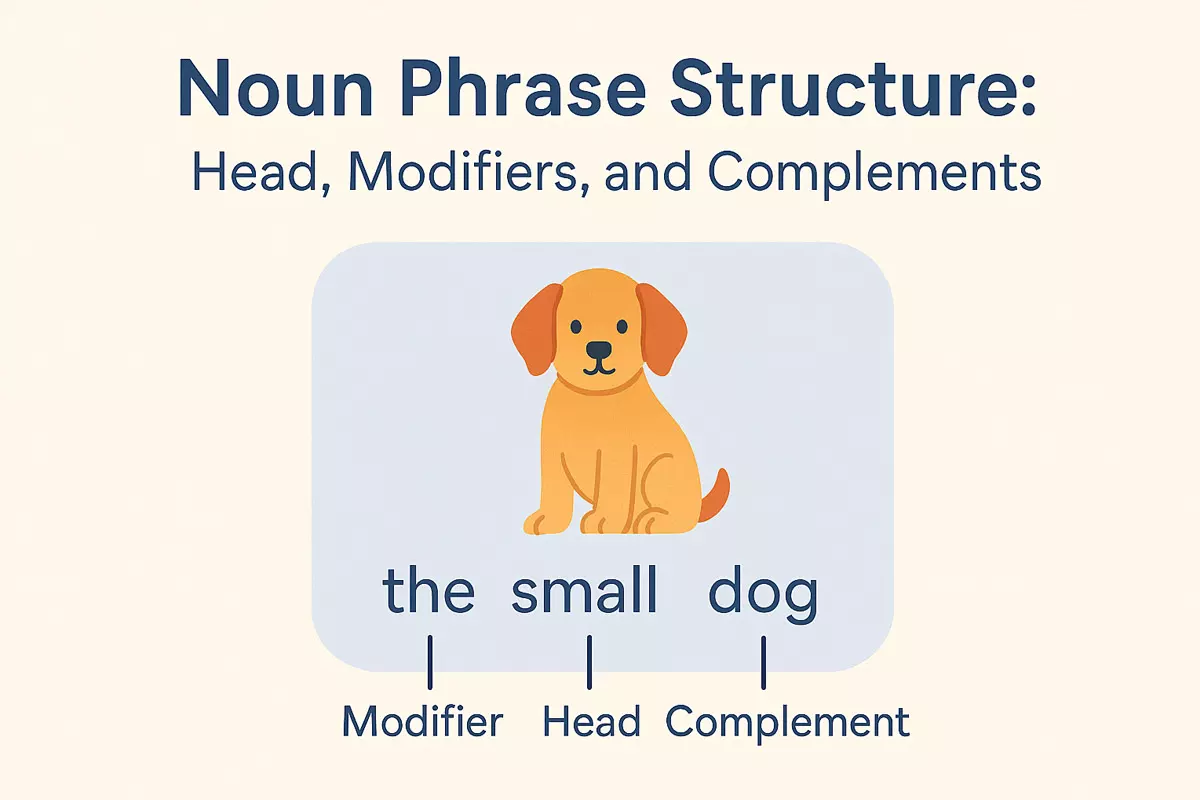 Here we what noun phrases are in English grammar, explains the role of the head noun, discusses modifiers and complements, compares simple and expanded structures, highlights common learner mistakes, and provides practice with building noun phrases.
- What a noun phrase is in English grammar
- The head noun and its central role in the phrase
- Pre-modifiers and post-modifiers in noun phrases
- Complements vs modifiers inside noun phrases
- Simple vs expanded noun phrase structures
- Typical learner mistakes in long noun phrases
- Practice: build noun phrases from given word groups
Understanding how groups of words form meaningful units is essential for mastering language, as it allows us to communicate more clearly and effectively. By examining how these clusters are organized, we can identify the core elements that convey the main idea, the words that add important details, and those that complete the overall thought. Each component serves a distinct purpose in constructing sentences, helping us express complex ideas and intentions with precision and clarity in both written and spoken communication.
What a noun phrase is in English grammar
A noun phrase is a group of words built around a noun that acts as a single unit within a sentence. At its core, it includes a noun, which is the main word, and it can also contain other words that describe or modify that noun. Noun phrases can be as short as a single noun, or much longer and more descriptive, depending on what information needs to be conveyed.
Basic structure and components
Every noun phrase contains a head noun, which is the central word. Around the head, you might find determiners (like articles or possessives), adjectives, and other modifiers. Sometimes, noun phrases also include complements that give extra information about the noun. These elements work together to form a meaningful phrase that can play different roles in a sentence.
- Head noun: the main word, e.g., dog in "the big dog"
- Determiner: words like the, a, my, some
- Modifiers: adjectives or other descriptive words, e.g., old, spotted
- Complements: phrases that complete the meaning, e.g., of chocolate in "a bar of chocolate"
Examples of noun phrases
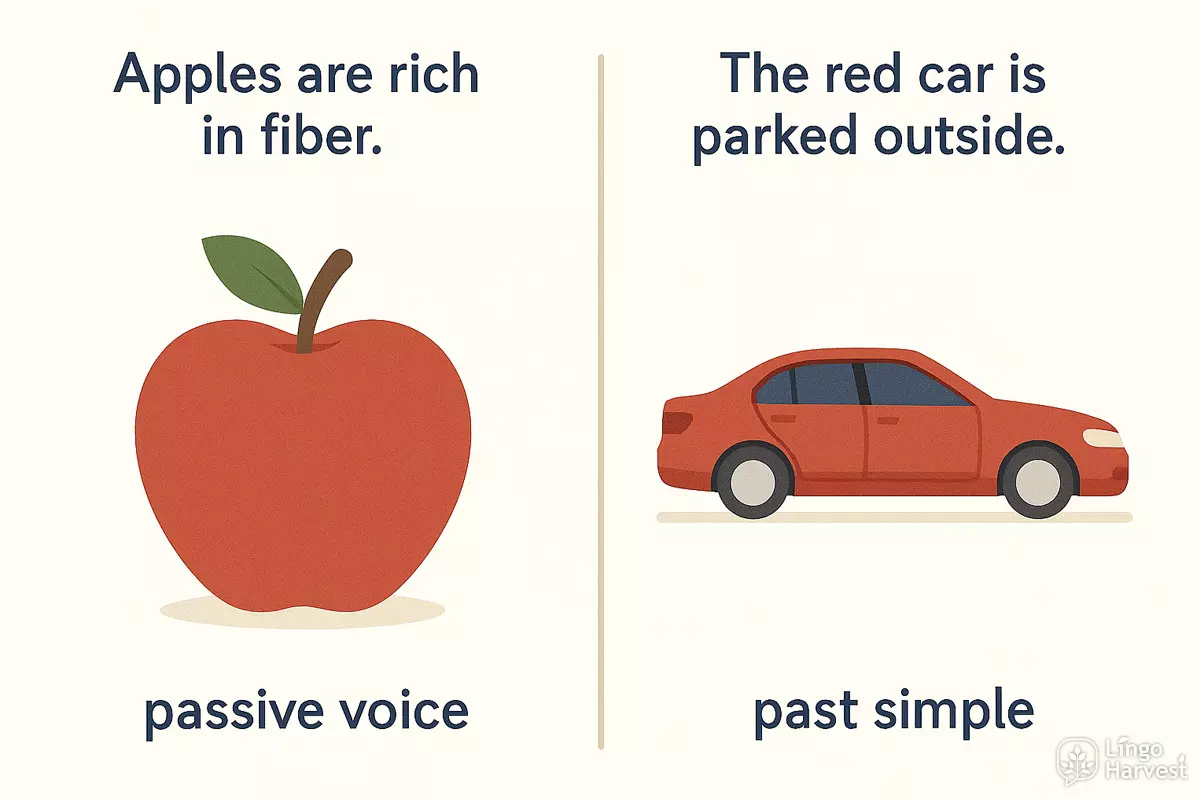
To see how flexible and varied these constructions can be, here are several noun phrase examples, ranging from simple to more complex:
- Apples → Apples are rich in fiber.
- The red car → The red car is parked outside.
- My best friend → My best friend lives nearby.
- Several interesting books → Several interesting books were on the table.
- A glass of water → A glass of water helps after a run.
- Those tall buildings → Those tall buildings look modern at night.
- The student with glasses → The student with glasses asked a question.
- Every single penny → Every single penny matters on a tight budget.
- Some old photographs → Some old photographs were found in a drawer.
- The youngest child in the class → The youngest child in the class smiled proudly.
- Three pieces of cake → Three pieces of cake disappeared quickly.
- Our new science teacher → Our new science teacher explained the lab rules.
- An exciting opportunity → An exciting opportunity came up this week.
- The sound of rain on the roof → The sound of rain on the roof was soothing.
- Many different solutions to the problem → Many different solutions to the problem were suggested.
How noun phrases function in sentences
Noun phrases can serve various grammatical roles. Most commonly, they function as subjects, objects, or complements. For example, in "The hungry cat slept," the phrase "The hungry cat" is the subject. In "She adopted a playful puppy," "a playful puppy" is the object. Their flexibility allows for richer detail and clearer communication in both written and spoken English.
The head noun and its central role in the phrase
In any noun phrase, one word stands at the core: the noun that determines the phrase’s main meaning, grammatical function, and agreement with verbs and modifiers. This word is called the head. Without it, the structure collapses—adjectives, determiners, and complements all depend on the presence and nature of the head noun to make sense.
What is a head noun?
The head noun is the essential element in a noun phrase. It tells us what the phrase is fundamentally about. For example, in “the old stone bridge,” “bridge” is the word that anchors the phrase; “the,” “old,” and “stone” all describe or specify it. If you remove “bridge,” the remaining words do not form a coherent noun phrase.
How the head governs the phrase
The head noun influences several aspects of phrase structure:
- Number: The head decides whether the phrase is singular or plural (“these books” vs. “this book”).
- Agreement: Verbs and pronouns outside the phrase often agree with the head in number and sometimes gender (“A dog barks,” “Three dogs bark”).
- Modifiers: Adjectives, determiners, and other modifiers must be compatible with the head’s meaning and grammatical features.
- Complements: Certain nouns require additional information, such as “the fear of spiders,” where “of spiders” complements the meaning of “fear.”
Examples of head nouns in context
Here is a selection of noun phrases, with the head word in each underlined for clarity:
- the cat → The cat is sleeping on the sofa.
- delicious cake → This cake tastes delicious.
- my new job → My new job starts on Monday.
- the tallest building downtown → The tallest building downtown has a rooftop garden.
- those students in the library → Those students in the library are studying for exams.
- a box of chocolates → She bought a box of chocolates for her friend.
- her idea about recycling → Her idea about recycling was easy to follow.
- the sound of rain → The sound of rain helps me relax.
- an invitation to dinner → I received an invitation to dinner.
- several books on the shelf → Several books on the shelf are about history.
- the famous artist from Spain → The famous artist from Spain visited the museum.
- our plans for the weekend → Our plans for the weekend include a short trip.
- this opportunity → Don’t miss this opportunity to learn something new.
- the group of friends → The group of friends met after work.
- a cup of tea → A cup of tea sounds perfect right now.
Head nouns vs. modifiers and complements
To clarify how the head differs from other elements, consider the following comparison:
| Component | Function in the Phrase |
|---|---|
| Head noun | Core meaning; determines agreement and structure |
| Modifier | Adds detail, limits, or describes the head (e.g., adjectives, determiners) |
| Complement | Completes the meaning of the head (e.g., “of water” in “a glass of water”) |
Why the head matters for meaning
When analyzing or constructing noun phrases, identifying the head allows us to understand the phrase’s primary reference and grammatical role in a sentence. Modifiers and complements provide extra information, but the head noun is indispensable for defining what the phrase actually represents. Whether you are parsing complex sentences or writing clearly, focusing on the head ensures grammatical accuracy and clarity.
Pre-modifiers and post-modifiers in noun phrases
When exploring noun phrase structure, it's useful to distinguish between elements that come before the noun and those that follow it. Words or groups of words that appear before the main noun (the “head”) help specify or describe it further and are called pre-modifiers. In contrast, elements that come after the noun and provide additional information are known as post-modifiers.
Pre-modifiers: What comes before the noun
Pre-modifiers typically include adjectives, determiners, and sometimes nouns themselves. These elements narrow down or qualify the meaning of the noun. Here are some common types:
- Determiners: a, the, some, every, my, those
- Adjectives: big, red, interesting, old
- Nouns (as modifiers): kitchen table, science journal
- Numbers: two, several, many, first
- Quantifiers: all, few, most
For example, in “those three old wooden chairs,” each word before “chairs” is a pre-modifier, building up layers of detail.
Post-modifiers: What follows the noun
Post-modifiers usually elaborate on or specify the noun in more detail. They often take the form of prepositional phrases, relative clauses, or participle phrases. Here are some frequent types:
- Prepositional phrases: the book on the table
- Relative clauses: the man who called yesterday
- Participle phrases: the car parked outside
- Infinitive phrases: the time to leave
- Appositive phrases: my friend, a talented musician
Comparison of pre-modifiers and post-modifiers
Below is a table summarizing the typical forms and positions of these modifiers in noun phrases:
| Modifier Type | Example |
|---|---|
| Adjective (Pre-modifier) | a beautiful painting |
| Noun (Pre-modifier) | garden tools |
| Prepositional Phrase (Post-modifier) | the keys in the drawer |
| Relative Clause (Post-modifier) | the students who arrived early |
| Participle Phrase (Post-modifier) | the book written by her |
| Infinitive Phrase (Post-modifier) | the right to vote |
Key points to remember
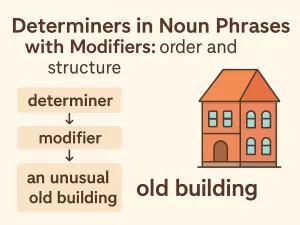
- Pre-modifiers stack up before the head noun and often appear in a set order (e.g., determiner + number + adjective + noun).
- Post-modifiers come after the noun and can be phrases or clauses that add extra detail or clarification.
- Complex noun phrases may combine multiple pre- and post-modifiers for rich, precise meaning.
- Recognizing the difference helps in both understanding and constructing clear, detailed sentences.
By mastering these patterns, you can express ideas with greater accuracy and variety in English.
Complements vs modifiers inside noun phrases
Within noun phrases, elements that expand or clarify the meaning of the head noun play different roles. The two main types are complements and modifiers. Understanding the distinction is crucial for analyzing how information is structured around nouns in English.
What are complements in noun phrases?
Complements are required to complete the meaning of the noun; they often answer questions like "what?" or "who?" after the noun. For example, in the idea that she left, the clause that she left is needed to specify what idea is meant. Complements usually follow the noun directly and are not optional.
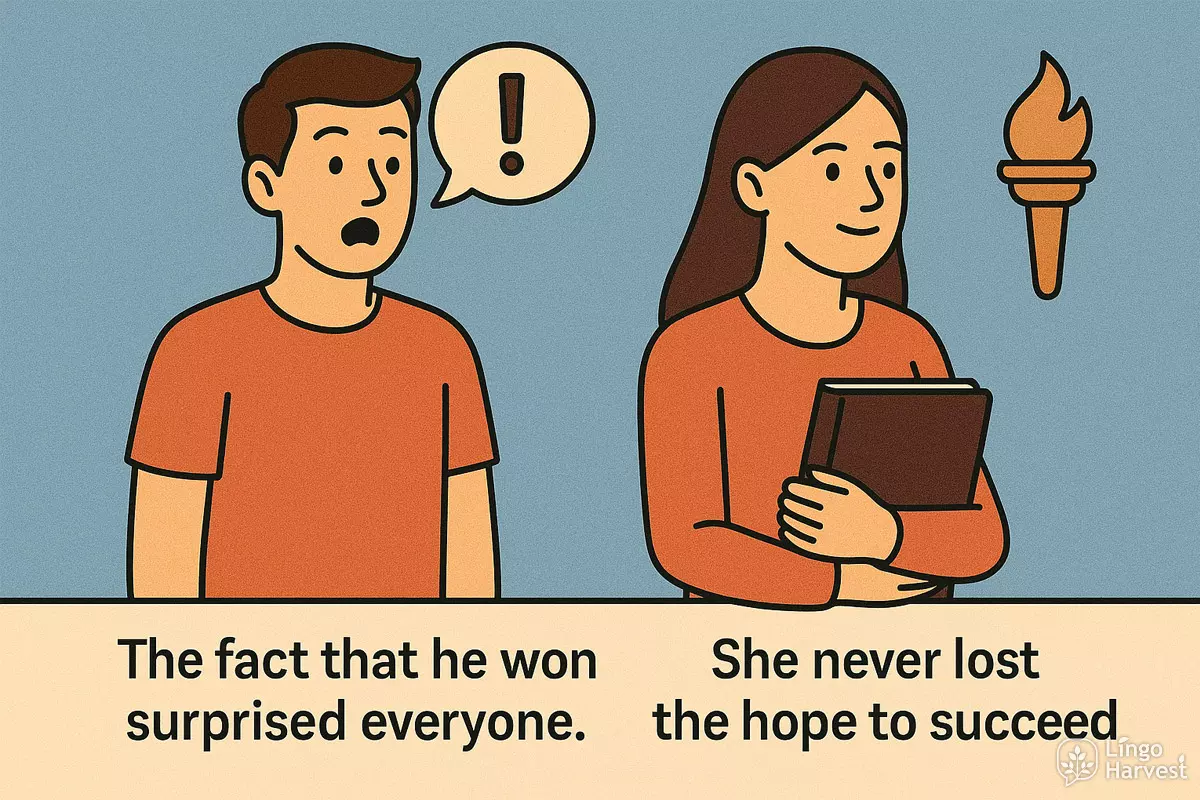
- the fact that he won → The fact that he won surprised everyone.
- the hope to succeed → She never lost the hope to succeed.
- the question whether it will rain → The question whether it will rain remains unanswered.
- the attempt to explain → His attempt to explain the issue failed.
- the need for caution → There is a clear need for caution in this situation.
- the decision to leave → The decision to leave was not easy.
- the demand for silence → The demand for silence was ignored.
- the offer to help → I appreciated the offer to help.
- the promise of support → They kept their promise of support.
- the belief that things will improve → Her belief that things will improve gives her strength.
How do modifiers function?
Modifiers add extra, but non-essential, information to a noun. They can be adjectives, prepositional phrases, participles, or relative clauses. Removing a modifier will not make the noun phrase ungrammatical, but will make it less specific or detailed. Modifiers can appear before or after the noun, depending on their type.
- the red car → The red car stopped at the traffic light.
- a broken window → A broken window needs to be fixed.
- the book on the table → The book on the table belongs to me.
- students in the class → Students in the class listened carefully.
- the girl who smiled → The girl who smiled greeted everyone.
- an interesting idea → She shared an interesting idea.
- the old house → The old house was recently renovated.
- a recently published report → A recently published report caused debate.
- the man with the hat → The man with the hat entered the room.
- the last bus → We caught the last bus home.
Key differences at a glance
| Feature | Complement | Modifier |
|---|---|---|
| Essential for meaning? | ✅ Usually required | ❌ Optional |
| Typical position | Follows the noun | Before or after the noun |
| Type of phrase | Clause, infinitive, prepositional phrase | Adjective, participle, prepositional phrase, relative clause |
| Example | the decision to leave | the old house |
Recognizing whether a phrase is a complement or a modifier helps clarify how it relates to the head noun. Complements are tied closely to the noun’s core meaning, while modifiers add descriptive or limiting information, shaping the phrase’s overall nuance.
Simple vs expanded noun phrase structures
Understanding how noun phrases can vary in complexity helps clarify their roles in sentences. At their most basic, noun phrases consist solely of a noun or pronoun, serving as the core subject or object. However, these basic forms can be extended with modifiers and complements, resulting in more detailed and informative expressions.
Simple noun phrase structure
A basic noun phrase contains only the main noun, sometimes with a determiner:
- Dog → Dog barks loudly at night.
- The book → The book is on the desk.
- She → She walks to work every day.
- Ideas → Ideas can change the world.
- An apple → An apple fell from the tree.
- Coffee → Coffee smells great in the morning.
- The teacher → The teacher arrived early.
- A message → A message appeared on my phone.
- We → We agree with the plan.
- Those keys → Those keys are mine.
- This problem → This problem needs a solution.
- Music → Music helps me focus.
These short forms are straightforward and provide the minimum information necessary to identify the person, place, thing, or idea.
Expanded noun phrase structure
When more information is needed, noun phrases can include adjectives, prepositional phrases, or relative clauses. This expansion allows for greater specificity and description. For example:
- The large brown dog
- A book on ancient history
- Those exciting new ideas
- The apple in the basket
- The girl who won the race
- Every single bright red balloon
- My brother's old guitar
- Several interesting articles about science
- The man with the blue hat
- Any solution that works
- Some freshly baked bread
- Her favorite cozy sweater
- The noisy children in the playground
- A decision made by the committee
- Each of the students in the class
| Simple Noun Phrase | Expanded Noun Phrase |
|---|---|
| Cat | The small black cat under the table |
| Car | My neighbor's old blue car with the dent |
| Children | The cheerful children playing in the park |
| Letter | A long letter from my friend in Spain |
| Teacher | The experienced math teacher who explained the lesson |
When to use simple or expanded forms
Writers and speakers choose between concise and detailed noun phrases based on context. Simple forms suit general statements or when the referent is clear. Expanded phrases add clarity, vividness, or necessary detail—especially in storytelling, descriptions, or technical writing. Modifiers and complements help tailor the meaning to fit the situation, making language both precise and expressive.
Typical learner mistakes in long noun phrases
Long noun groups often cause confusion for English learners, especially as more modifiers and complements are added. Learners tend to struggle with word order, unnecessary repetition, and incorrect use of prepositions or determiners. These issues can make sentences unclear or even change the intended meaning.
Common errors in multi-word noun groups
- Placing adjectives or determiners in the wrong order (e.g. the red big car instead of the big red car)
- Omitting necessary prepositions (e.g. the book my friend instead of the book of my friend)
- Repeating nouns unnecessarily (e.g. the manager's office manager instead of the manager's office)
- Confusing the head noun with modifiers (e.g. the chocolate cake birthday instead of the birthday chocolate cake)
- Misplacing possessives (e.g. the friend of John’s car instead of John’s friend’s car)
- Forgetting plural agreement (e.g. these kind of problems instead of these kinds of problems)
- Using too many or too few articles (e.g. a information or the informations)
- Overusing prepositions (e.g. the report of about pollution)
- Incorrectly stacking modifiers (e.g. the blue old wooden chair when the order should be the old blue wooden chair)
- Attaching modifiers to the wrong noun (e.g. a cake birthday party instead of a birthday cake party)
Comparison of correct and incorrect structures
| Incorrect Example | Corrected Version |
|---|---|
| the red big car | the big red car |
| the report of about pollution | the report about pollution |
| these kind of problems | these kinds of problems |
| a cake birthday party | a birthday cake party |
| a information | some information |
| the manager's office manager | the manager's office |
Tips to avoid pitfalls
Learners can reduce errors by practicing with authentic examples, checking the usual order of adjectives, and identifying the main noun (the head) in each group. Reading carefully and breaking long noun strings into smaller parts for analysis can also help. Remember, clarity comes from both correct structure and logical sequencing of information.
Practice: build noun phrases from given word groups
Exploring how to construct noun phrases helps solidify your understanding of heads, modifiers, and complements. Below, you’ll find exercises to transform basic word groups into full noun phrases, as well as guidance on identifying each element’s function.
Task 1: Expand Simple Nouns into Noun Phrases
Using the nouns below, add appropriate modifiers (such as adjectives, determiners, or prepositional phrases) to create more detailed noun phrases. Try to include at least two modifiers or complements in each phrase.
- book
- cat
- idea
- garden
- teacher
- car
- story
- painting
- decision
- city
Show answers
- the old leather-bound book on the shelf
- a small black cat with green eyes
- an interesting idea about language learning
- the beautiful flower garden behind the house
- my favorite English teacher from high school
- the red sports car in the parking lot
- an inspiring story of perseverance
- a famous painting by Van Gogh
- the difficult decision to move abroad
- a bustling city with ancient monuments
Task 2: Identify Heads, Modifiers, and Complements
For each noun phrase below, identify the head noun, any pre-modifiers (words before the noun), and any post-modifiers or complements (words or phrases after the noun).
- the tall man in the blue jacket
- some delicious homemade bread
- the loud noise from the street
- a small group of students
- the decision to cancel the event
Show answers
- the tall man in the blue jacket:
Head: man
Pre-modifiers: the, tall
Post-modifier: in the blue jacket - some delicious homemade bread:
Head: bread
Pre-modifiers: some, delicious, homemade
Post-modifiers: none - the loud noise from the street:
Head: noise
Pre-modifiers: the, loud
Post-modifier: from the street - a small group of students:
Head: group
Pre-modifiers: a, small
Post-modifier: of students - the decision to cancel the event:
Head: decision
Pre-modifiers: the
Post-modifier/complement: to cancel the event
Task 3: Combine Word Groups into Noun Phrases
Each set below contains words or phrases you can combine into a complex noun phrase. Rearrange and add determiners as needed.
- old / wooden / table / in the kitchen
- the / movie / exciting / about space travel
- students / hardworking / group / of
- painting / beautiful / French artist / by a
- small / black / dog / in the yard
- the / book / interesting / on history
- city / modern / center / of the
- idea / brilliant / her
- cake / chocolate / delicious / with cream
- the / house / old / at the corner
Show answers
- the old wooden table in the kitchen
- the exciting movie about space travel
- a group of hardworking students
- a beautiful painting by a French artist
- a small black dog in the yard
- the interesting book on history
- the modern city center
- her brilliant idea
- a delicious chocolate cake with cream
- the old house at the corner
Summary Table: Noun Phrase Elements
| Element | Examples |
|---|---|
| Head noun | book, cat, idea, garden |
| Pre-modifiers | the, old, beautiful, delicious |
| Post-modifiers / Complements | in the garden, by Van Gogh, to cancel the event |
| Full noun phrase | the old book on the shelf, a beautiful garden behind the house |
This practice reinforces how different components come together to form detailed and precise noun phrases, an essential skill for clear and expressive writing.