Long and Complex Noun Phrases in Academic English

 Here we what makes noun phrases long and complex, how multiple modifiers are layered, reading strategies for dense noun phrases, punctuation for clarity, patterns in academic texts, common learner errors, and practice simplifying them.
- What makes a noun phrase long and complex
- Layering multiple modifiers before and after a noun
- Reading strategies for understanding dense noun phrases
- Punctuation and clarity in complex noun structures
- Typical patterns in research and academic articles
- Common learner mistakes with overloaded noun phrases
- Practice: simplify and rebuild complex noun phrases
Academic writing frequently presents readers with complex clusters of descriptive words that precede a single noun, creating dense and sometimes challenging expressions. These tightly packed constructions are common in scholarly texts, where writers aim to convey multiple layers of meaning efficiently. By carefully unpacking and analyzing these elaborate phrases, readers can gain valuable insights into both the subject matter and the conventions of academic communication, making This more accessible and comprehensible.
What makes a noun phrase long and complex
In academic English, noun phrases often become lengthy and intricate due to the need for precision and detail. These extended groups of words usually combine multiple descriptive elements, modifiers, and embedded structures before or after the main noun. The result is a dense, information-rich phrase that conveys complex ideas efficiently.
Key features contributing to complexity
- Pre-modifiers: Words or phrases placed before the noun, such as adjectives, participles, or other nouns (e.g., "recently published empirical research articles").
- Post-modifiers: Elements that follow the noun, including prepositional phrases, relative clauses, or participial phrases (e.g., "studies in environmental linguistics," "data collected over a decade").
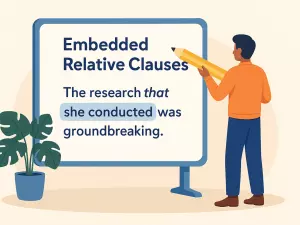
- Embedded clauses: Relative clauses or other subordinate clauses within the noun group (e.g., "the theories that have influenced modern pedagogy").
- Compound nouns: Multiple nouns combined to specify meaning (e.g., "teacher education program requirements").
- Nominalizations: Abstract nouns formed from verbs or adjectives, often used in academic writing (e.g., "measurement," "development," "implementation").
Typical building blocks in extended noun groups
Writers often stack several types of modifiers and descriptive elements, resulting in highly compressed information. Here are some common components:
- Determiners (the, a, this, those)
- Quantifiers (many, several, a number of)
- Adjectives (complex, large-scale, systematic)
- Participles (emerging, established, growing)
- Nouns as modifiers (policy analysis, student performance)
- Prepositional phrases (of the university, in recent years)
- Relative clauses (which were conducted in 2020)
- Appositive phrases (a crucial factor, the main variable)
- Infinitive phrases (to improve outcomes, to identify trends)
- Adverbials (recently, globally, widely)
- Numbers and measurements (ten-year study, 500-page report)
Examples of extended noun structures
To illustrate how these elements combine, consider the following examples from academic contexts:
- "The rapid expansion of digital communication technologies in educational settings"
- "A comprehensive review of recent climate change adaptation strategies implemented by urban planners"
- "Data from large-scale, longitudinal studies conducted across multiple continents"
- "The impact of government-funded teacher professional development programs on student achievement"
Complexity tends to increase with the number of modifiers and embedded structures. Mastering such constructions helps writers convey nuanced meanings and detailed relationships, which are essential in scholarly writing.
Layering multiple modifiers before and after a noun
Academic English often relies on intricate noun groups, with several descriptive elements stacked both before and after the main noun. This technique allows writers to compress dense information into a single phrase, making texts more concise but also more challenging to parse. Understanding how to organize and interpret these complex structures is essential for both reading and writing in scholarly contexts.
Types of modifiers frequently used

Modifiers can be adjectives, participles, noun adjuncts, prepositional phrases, or relative clauses. Their placement—either preceding or following the head noun—affects both meaning and emphasis. Here are some common types, each fulfilling a distinct role within a noun phrase:
- Adjectives: "innovative research methods"
- Noun adjuncts: "data analysis techniques"
- Participles (pre-noun): "emerging market economies"
- Prepositional phrases (post-noun): "the impact of climate change"
- Relative clauses: "the theory that explains the phenomenon"
- Appositive phrases: "the molecule, a complex compound"
- Infinitive phrases: "the ability to adapt quickly"
- Compound modifiers: "long-term strategic planning"
- Ordinal and quantitative modifiers: "the first three experimental groups"
- Possessive constructions: "students' performance"
- Adverbial modifiers: "recently developed algorithms"
- Past participle modifiers: "peer-reviewed journal articles"
- Present participle modifiers: "growing international concern"
- Embedded noun phrases: "the government policy reform proposal"
Patterns for stacking modifiers
Writers often layer multiple elements before the noun, then add more information after it. A typical structure might look like this:
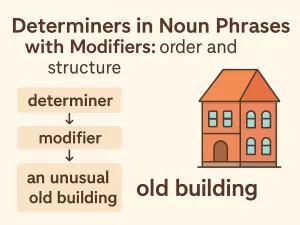
- Pre-modifiers: Determiners, adjectives, noun adjuncts, participles
- Head noun
- Post-modifiers: Prepositional phrases, relative clauses, appositives
Comparing simple vs. layered noun groups
The following table contrasts basic noun phrases with their more elaborate counterparts, highlighting how additional modifiers can pack more meaning into a phrase.
| Simple Noun Phrase | Expanded, Layered Version |
|---|---|
| the report | the recently published financial report on market volatility |
| the hypothesis | the widely accepted evolutionary hypothesis proposed by Darwin |
| the students | the highly motivated international students with research grants |
| the policy | the comprehensive environmental policy adopted by local authorities |
| the model | the sophisticated statistical model for predicting outcomes |
Guidelines for clarity
When constructing or analyzing complex noun phrases, keep the following in mind:
- Place descriptive elements in a logical, reader-friendly order.
- Avoid overloading a phrase with too many pre-modifiers; balance with post-modifiers for clarity.
- Use commas to separate non-essential information, such as appositives.
- Revise for ambiguity—ensure it’s clear which modifier refers to which noun.
Mastering these structures improves both comprehension and expression in academic settings, enabling precise communication of nuanced ideas.
Reading strategies for understanding dense noun phrases
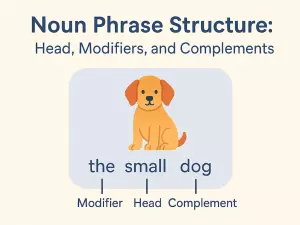
Academic texts often feature compact noun clusters packed with meaning, which can slow readers down or cause confusion. To decode these, it helps to break down the structure and identify how the words relate to each other. Start by locating the core noun (the “head noun”)—this is usually the word that the rest of the phrase describes or specifies.
Step-by-step approach to unpacking noun clusters
- Find the head noun: This is the main subject of the phrase.
- Work backwards: Identify which words modify or describe the head noun, moving from right to left.
- Group modifiers: Look for adjectives, participles, and other nouns that specify or limit the meaning of the head noun.
- Check for prepositional phrases: These often clarify relationships or sources.
- Paraphrase in simpler terms: Reword the phrase using a complete sentence to clarify meaning.
- Watch for embedded phrases: Sometimes, modifiers themselves are complex noun groups.
Common modifier types in academic noun phrases
- Adjectives (e.g., "recent," "significant")
- Participles (e.g., "emerging," "published")
- Nouns as modifiers (e.g., "data analysis methods")
- Prepositional phrases (e.g., "of high importance")
- Compound nouns (e.g., "research funding application")
- Numbers and quantifiers (e.g., "three-year study")
- Possessives (e.g., "students’ performance")
- Relative clauses (e.g., "the book that changed the field")
- Appositives (e.g., "the molecule, a protein inhibitor, ...")
- Comparatives and superlatives (e.g., "the largest data set")
Tips for tackling challenging noun constructions
When you encounter a particularly tangled noun phrase, pause and mentally insert connecting words like “that,” “which,” or “of” to clarify relationships. If the phrase still feels unclear, try mapping its parts visually or reading the sentence aloud. Sometimes, writing out the phrase in your own words can reveal its meaning more clearly.
Practice: Sample dense noun phrases and their breakdown
- “Urban air pollution monitoring techniques” → Techniques for monitoring air pollution in urban areas.
- “Post-war economic recovery policies” → Policies designed for economic recovery after a war.
- “Long-term climate change impact studies” → Studies on the impacts of climate change over the long term.
- “Student academic performance assessment tools” → Tools used to assess students’ academic performance.
Comparing strategies for parsing dense noun constructions
| Strategy | How it helps |
|---|---|
| Identify the head noun | Pinpoints the main concept, making it easier to interpret modifiers. |
| Break into chunks | Reduces complexity by processing small parts at a time. |
| Paraphrase the phrase | Restates the idea in simpler terms for easier understanding. |
| Visual mapping | Helps clarify relationships by diagramming components. |
With practice, these approaches become second nature and greatly improve comprehension of information-dense academic writing.
Punctuation and clarity in complex noun structures
In academic English, lengthy noun phrases often pack dense information into a single unit. While this can be efficient, it can also result in ambiguity if not handled carefully. Proper use of punctuation and a clear structural approach help readers navigate these intricate constructions and reduce misunderstanding.
Common punctuation strategies
Writers sometimes struggle to decide when and how to break up extended noun groups. Here are some effective punctuation and formatting options:
- Commas: Insert commas to separate parallel modifiers or to set off non-essential details.
- Hyphens: Use hyphens in compound adjectives before the noun (e.g., “peer-reviewed journal articles”).
- Parentheses: Enclose supplementary information to avoid overloading the main phrase.
- Colons: Introduce explanations or lists after a broad noun phrase.
- Prepositional phrases: Use to clarify relationships within the noun group, but avoid stacking too many.
- Relative clauses: Break up dense noun phrases by converting details into clauses (e.g., “the data that were collected in 2020”).
Recognizing potential ambiguity
Without careful punctuation, long noun sequences may confuse the reader. For instance, “recent environmental policy research findings” could refer to findings about recent research or to recent findings about environmental policy research. Rephrasing or strategic punctuation can clarify the intended meaning.
Examples of improved clarity

Consider these ways to enhance understanding:
- Original: “high school science teacher training program evaluation results”
- Clearer: “results from the evaluation of the high school science teacher training program”
- Original: “student performance data analysis methods”
- Clearer: “methods for analyzing student performance data”
Patterns for managing complexity
Writers can apply these techniques to keep complex noun groups readable:
- Break up long strings with prepositional phrases.
- Use hyphens for compound modifiers.
- Add commas to separate coordinate adjectives.
- Convert embedded nouns into relative clauses where possible.
- Rephrase to shift information into verbs or clauses, not just nouns.
Common punctuation marks in academic noun phrases
| Punctuation Mark | Usage Example |
|---|---|
| Hyphen (-) | “long-term research goals” |
| Comma (,) | “clear, concise writing style” |
| Parentheses ( ) | “results (see Table 2) indicate...” |
| Colon (:) | “The study covers three areas: methodology, results, and discussion.” |
Tips for clarity and flow
- Read sentences aloud to check for awkwardness.
- Ask a peer to paraphrase your noun phrase to test for clarity.
- Favor shorter noun groups when possible.
- Revise sentences to distribute information more evenly.
- Be attentive to where modifiers attach to avoid unintended meanings.
By applying these punctuation strategies and rephrasing techniques, academic writers can ensure their complex noun phrases remain precise and accessible.
Typical patterns in research and academic articles
Academic writing often relies on extended noun phrases to convey dense information efficiently. These complex structures help condense background, attribute, and process details into single units, supporting the precise, impersonal style typical of scholarly texts. Recognizing and understanding these forms can make reading and producing research articles much more manageable.
Common structures of long noun phrases
Writers frequently stack multiple modifiers before and after the head noun. Here are some patterns you’ll encounter:
- Pre-modification: Adjectives, nouns, participles, or even prepositional phrases preceding the main noun (e.g., “recent climate change mitigation efforts”).
- Post-modification: Relative clauses, prepositional phrases, or participial phrases following the noun (“the data collected in the longitudinal survey”).
- Multi-level embedding: Noun phrases nested within one another (“student learning outcome assessment criteria development”).
- Nominalization: Turning verbs or adjectives into nouns to create more compact expressions (“the implementation of new regulatory frameworks”).
Typical modifiers and their order
Modifiers in scholarly English tend to follow a predictable order. For example, quantity and determination come first, followed by descriptors, classifiers, and the main noun. Here are typical modifier types, with examples:
- Determiner: the, this, each
- Quantity: several, many, a number of
- Adjective: innovative, longitudinal, significant
- Noun as modifier: data analysis, policy development
- Participle: emerging, established, increasing
- Prepositional phrase (post-modifier): of the participants, in recent studies
- Relative clause (post-modifier): that were observed, which is shown below
Examples of extended noun phrases in academic writing
Writers use various combinations of these elements to pack meaning into succinct phrases. Here are some typical examples:
- Recent randomized controlled trial results
- International higher education policy reforms
- Multi-level governance structure analysis
- Evidence-based clinical practice guidelines
- Large-scale environmental impact assessment report
- Student-centered curriculum development process
- Socioeconomic status-related achievement gap studies
- Peer-reviewed journal article submission procedures
- Long-term cross-cultural comparative research projects
- Data-driven decision-making framework implementation
- Government-funded renewable energy innovation programs
- Teacher professional development needs assessment
- Postgraduate research student supervision models
- Standardized test score interpretation guidelines
- Health policy stakeholder consultation outcomes
Comparison of modifier types in extended noun phrases
| Modifier Type | Example in Academic English |
|---|---|
| Adjective + Noun | systematic literature review |
| Noun + Noun | teacher training program |
| Participle + Noun | emerging research trends |
| Prepositional Phrase (post-modifier) | analysis of variance results |
| Relative Clause (post-modifier) | studies that address this issue |
Mastering these structures not only aids comprehension but also empowers writers to present complex ideas with clarity and precision in scholarly contexts.
Common learner mistakes with overloaded noun phrases
Writing academic English often involves creating long noun groups, but these structures can cause confusion if not handled carefully. Many students try to pack too much information into a single phrase, leading to sentences that are hard to follow or even grammatically incorrect. Below, we explore frequent pitfalls and misunderstandings that arise when constructing extended noun strings, especially for non-native speakers.
Excessive Stacking of Modifiers
Learners sometimes stack several adjectives, nouns, or both before the main noun, hoping to be concise. However, without clear structure, the meaning can become ambiguous. For example:
- Incorrect: Climate change mitigation policy research funding allocation
- Better: Allocation of research funding for climate change mitigation policies
Misordering of Elements
Getting the order of adjectives, participles, and nouns wrong is a common problem. English has a preferred sequence (opinion, size, age, shape, color, origin, material, purpose, noun). Deviating from this can sound unnatural or confusing.
- ❌ Steel large bridge construction project
- ✅ Large steel bridge construction project
Ambiguity Due to Missing Prepositions
When learners omit necessary prepositions, the relationship between elements is unclear. Prepositions often clarify which word modifies which.
- ❌ Teacher training program evaluation
- ✅ Evaluation of teacher training programs
Unnecessary Repetition within the Phrase
Trying to be thorough, some writers repeat information, making the noun phrase redundant or awkward.
- ❌ Student learning outcomes achievement results
- ✅ Student learning achievement results
Overly Dense Noun Chains
Packing too many nouns together often leads to confusion, especially when the reader must guess the relationships.
| Problematic Noun Chain | Clearer Alternative |
|---|---|
| Urban water quality management strategy development | Development of strategies for managing urban water quality |
| Energy consumption reduction policy implementation | Implementation of policies to reduce energy consumption |
| Social media user privacy protection concerns | Concerns about protecting social media user privacy |
| Language acquisition theory application issues | Issues in applying language acquisition theories |
Other Typical Errors
- Using plural nouns as modifiers when singular is needed (e.g., informations system instead of information system).
- Forgetting to hyphenate compound modifiers (data driven approach vs. data-driven approach).
- Misusing possessives inside noun groups (students performance evaluation instead of student performance evaluation).
- Adding unnecessary articles (the research project proposal submission).
- Confusing gerunds and participles (the developing country policy vs. the policy for developing countries).
- Repeating words for emphasis, making the phrase awkward.
- Incorrectly grouping words, causing misinterpretation (e.g., old English teacher).
- Using abstract nouns that obscure meaning or reduce clarity.
- Neglecting parallel structure in lists within noun phrases.
- Including unnecessary technical jargon that complicates the phrase.
Mastering noun phrase construction requires practice and attention to clarity. By recognizing these common errors, learners can make their academic writing more precise and readable.
Practice: simplify and rebuild complex noun phrases
Understanding how to make intricate noun groups clearer is a key skill for academic writing. Complex noun phrases can make your sentences dense and hard to follow. Being able to identify, break down, and reconstruct these phrases increases clarity and helps readers focus on your main ideas.
Typical strategies for simplifying noun phrases
- Divide one long noun phrase into two shorter sentences.
- Add relative clauses to explain details that were packed into modifiers.
- Replace stacked nouns with prepositional phrases.
- Use more verbs instead of nominalizations (nouns made from verbs).
- Clarify implicit relationships between nouns.
- Reorder elements to make the head noun more prominent.
- Remove unnecessary descriptive words or repetition.
- Choose simpler synonyms for complex adjectives or nouns.
- Break lists of modifiers into bullet points if listing is helpful.
- Paraphrase using more common structures, especially for non-specialist audiences.
Examples: Before and After Simplification
Review the following complex noun phrases and their possible simplifications:
| Original Phrase | Possible Simplification |
|---|---|
| The rapid urban infrastructure development policy implementation process | The process of implementing policies for rapid urban infrastructure development |
| Student academic performance improvement strategies | Strategies to improve students' academic performance |
| Climate change mitigation technology adoption barriers | Barriers to adopting technologies that mitigate climate change |
| Government environmental policy decision-making framework | A framework for government decision-making on environmental policy |
| Employee job satisfaction survey results analysis | An analysis of results from the employee job satisfaction survey |
| Teacher professional development program evaluation report | A report evaluating the teacher professional development program |
| Long-term economic growth prediction models | Models that predict long-term economic growth |
| International trade agreement negotiation outcomes | Outcomes from negotiations on international trade agreements |
| Healthcare system patient data privacy concerns | Concerns about patient data privacy in the healthcare system |
| Urban air quality monitoring device deployment | Deployment of devices for monitoring urban air quality |
Try it yourself: Simplify the following noun phrases
- University research grant application procedures
- Renewable energy resource management strategies
- Online learning platform user engagement challenges
- Community health improvement initiative outcomes
- Data privacy regulations in social media companies
- Urban transportation infrastructure planning
- Workplace mental health support programs
- Water conservation policies in agriculture
- Cybersecurity risk assessment methods
- International student exchange program benefits
Show answers
- Procedures for applying for university research grants
- Strategies for managing renewable energy resources
- Challenges in engaging users on online learning platforms
- Outcomes of the community health improvement initiative
- Regulations governing data privacy on social media platforms
- Plans for improving urban transportation infrastructure
- Programs that support mental health in the workplace
- Policies for conserving water in agriculture
- Methods for assessing cybersecurity risks
- Benefits of international student exchange programs
Tips for rebuilding lengthy noun groups
When you encounter a dense noun phrase, pause and consider what information is essential and how best to express it. Often, splitting the idea across two sentences or adding verbs and prepositions will make your writing more readable. Aim for balance: academic writing values precision, but not at the expense of clarity.