Noun + Noun Patterns in Modern English Word Building

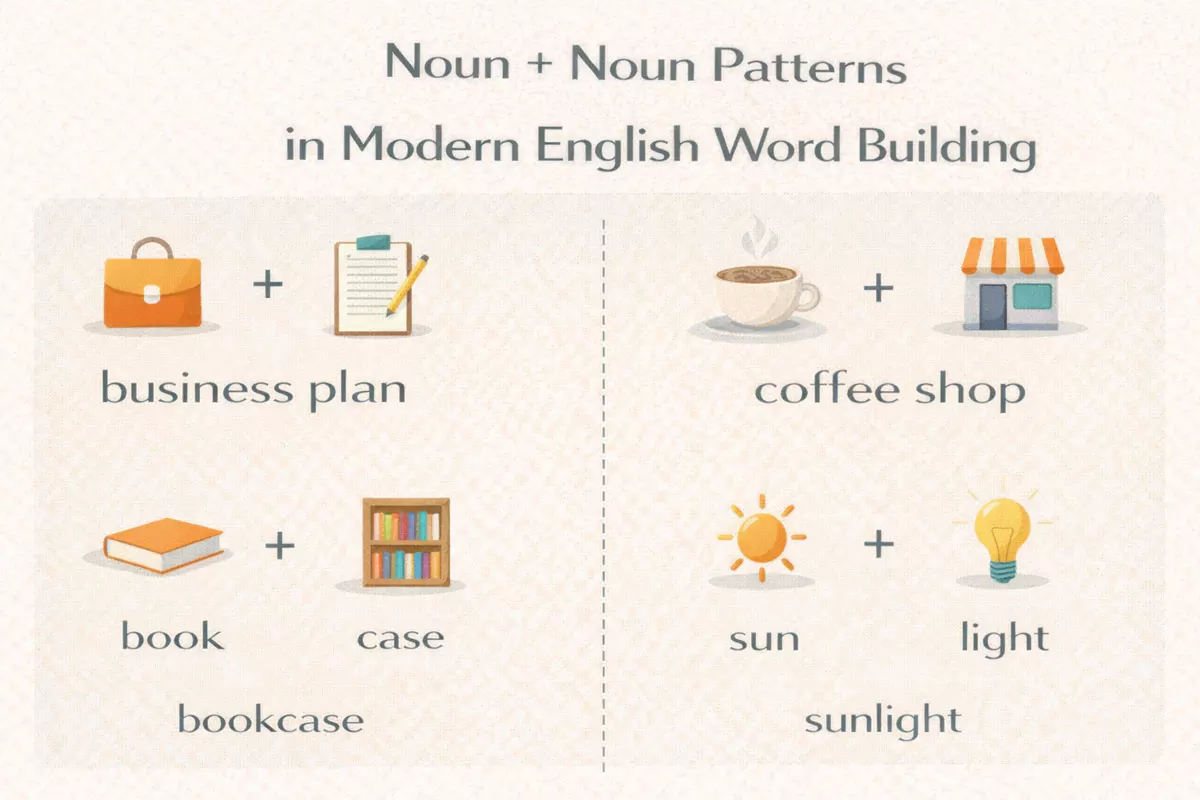 Here we how English uses noun plus noun combinations, explains meaning relationships, common patterns, and differences between compound nouns and free combinations. It also discusses pronunciation, frequent mistakes, and provides practice activities.
- What noun + noun combinations are in English
- Meaning relationships in noun + noun structures
- Common everyday noun + noun patterns and examples
- Differences between compound nouns and free combinations
- Stress and pronunciation in noun + noun patterns
- Frequent learner mistakes with plural and possessive forms
- Practice: create new noun + noun combinations from prompts
Examining how English merges two nouns to form new words highlights the language’s remarkable flexibility and creativity. This process, known as compounding, has produced many everyday expressions, from toothpaste to laptop, and remains a powerful tool for generating terms that capture emerging ideas and technologies. By combining familiar elements in novel ways, English speakers continually expand their vocabulary, demonstrating the language’s ongoing evolution and responsiveness to changing needs.
What noun + noun combinations are in English
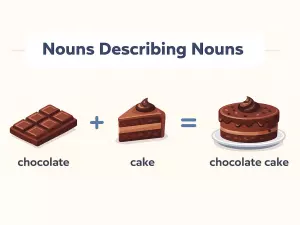
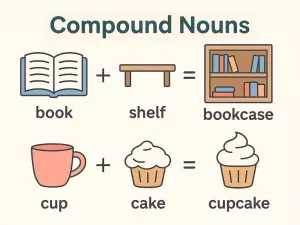
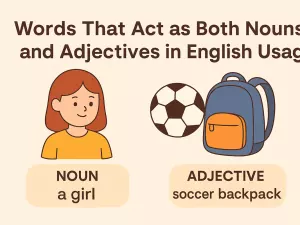
Noun + noun constructions are a frequent way to form new words in modern English. These combinations create compound nouns, where two nouns are placed together to express a specific meaning. The first noun usually acts as a descriptor and modifies the second, which is the main word. This pattern is productive and allows English speakers to name new objects, concepts, or professions efficiently.
Common Types of Noun + Noun Compounds
English offers a wide variety of these patterns, each serving a different function or expressing a unique relationship. Here are some typical categories:
- Material + Object: stone wall, paper bag, glass bottle
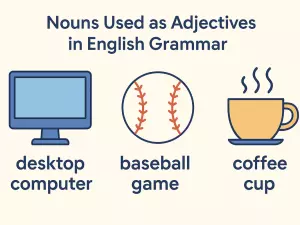
- Purpose or Function: coffee cup, shoe box, water bottle
- Container + Content: milk carton, tea bag, jam jar
- Location or Place: school bus, garden chair, kitchen table
- Time or Occasion: summer holiday, birthday party, morning routine
- Agent or User: bus driver, factory worker, shop assistant
- Part-Whole: engine room, tooth brush, head teacher
- Type or Kind: fiction book, sports car, horror film
- Measurement: mile marker, kilogram bag, hour hand
- Brand or Proper Name: Ford truck, Apple store, Amazon warehouse
How These Compounds Work
The meaning of a noun + noun unit is often more than the sum of its parts. For example, a "chicken soup" is not just any kind of soup—it specifically contains chicken. Similarly, a "computer mouse" is not a mouse that is a computer, but a device used with a computer.
| First Noun (Modifier) | Main Noun (Head) | Resulting Compound |
|---|---|---|
| chicken | soup | chicken soup |
| tooth | brush | toothbrush |
| garden | chair | garden chair |
| bus | driver | bus driver |
| milk | carton | milk carton |
Spelling and Usage Notes
Many such pairs are written as two words (e.g., "school bus"), but some compounds become one word over time (e.g., "toothbrush"). Others may use a hyphen, especially in newer or less established forms. When in doubt, consult a dictionary or style guide. Noun + noun patterns are a rich source of vocabulary expansion in English. They allow for concise, creative naming and are easily understood by native speakers. Mastering these combinations is key to understanding and producing natural English.
Meaning relationships in noun + noun structures
Understanding how two nouns combine in English reveals a variety of semantic relationships. These constructions often clarify what one noun does for, to, or with the other, or how they are otherwise connected. The meaning is not always transparent from the individual words, so context and usage play a crucial role.
Common Types of Noun + Noun Relationships
Some of the most frequent patterns in English involve the first noun modifying or specifying the second. Here are some typical relationships illustrated by common compound noun phrases:
- Material: gold ring (a ring made of gold)
- Purpose: coffee cup (a cup for coffee)
- Location: kitchen window (a window in the kitchen)
- Content: data file (a file containing data)
- Part-of: car door (a door belonging to a car)
- Time: summer holiday (a holiday during summer)
- Subject: history book (a book about history)
- Type: sports car (a car designed for sports)
- Producer/Origin: London bus (a bus from London)
- Measure: water bottle (a bottle for water)
- Agent: police dog (a dog used by the police)
- Cause: headache tablet (a tablet for headache)
- Recipient: student discount (a discount for students)
- Characteristic: silk scarf (a scarf made of silk; also describes its texture/quality)
- Instrument: laser printer (a printer using laser technology)
Ambiguity and Context
Sometimes, noun + noun combinations can be ambiguous without context. For example, chicken soup could mean soup made of chicken or soup intended for chickens (though the first is far more common). Context and convention usually resolve such ambiguities.
Summary Table of Relationship Types
| Relationship Type | Example & Explanation |
|---|---|
| Material | glass bottle → a bottle made of glass |
| Purpose | tea pot → a pot for making tea |
| Location | garden gate → a gate in the garden |
| Content | mailbox → a box for mail |
| Part-of | shoe lace → a lace that is part of a shoe |
| Subject | science journal → a journal about science |
| Agent | firefighter uniform → uniform worn by a firefighter |
| Recipient | child seat → a seat for a child |
Nuances and Productivity
English regularly forms new noun + noun compounds, and their interpretation depends on shared knowledge and evolving usage. While some follow well-established patterns, others become idiomatic or fixed over time, such as apple pie or bus stop. Recognizing these underlying relationships is key to both understanding and creating new combinations in modern English.
Common everyday noun + noun patterns and examples
Understanding how nouns combine to form compound nouns is a core part of English word-building. These pairings are everywhere in daily speech and writing, often describing objects, roles, places, or concepts in a concise way. The first noun typically modifies or specifies the second, creating a new meaning distinct from the individual words.
Typical patterns in daily English
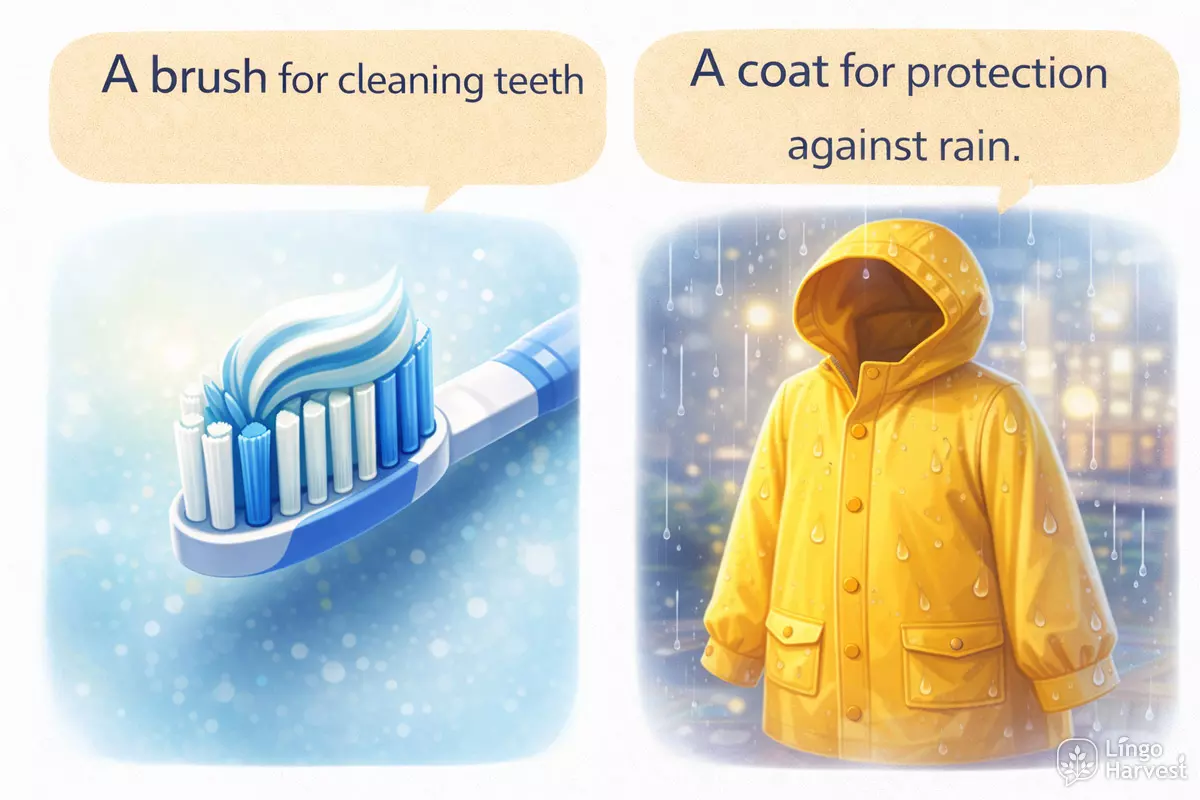
The most frequent combinations involve a descriptive noun followed by a main noun, such as “coffee cup” (a cup for coffee) or “school bus” (a bus for school transport). This pattern allows speakers to express ideas efficiently without lengthy explanations.
- toothbrush – a brush for cleaning teeth
- raincoat – a coat for protection against rain
- football – a ball used in the sport of football
- bedroom – a room used for sleeping
- bookshelf – a shelf for storing books
- newsroom – a room where news is gathered or written
- birthday card – a card given on someone’s birthday
- water bottle – a bottle for holding water
- snowman – a figure made of snow shaped like a human
- laptop bag – a bag for carrying a laptop
- kitchen table – a table used in the kitchen
- flower pot – a pot for planting flowers
- car door – a door belonging to a car
- bus stop – a place where buses stop for passengers
- dog owner – a person who owns a dog
- milk carton – a carton containing milk
- hairbrush – a brush for hair
- garden chair – a chair used in a garden
How meaning shifts in noun + noun compounds
The meaning of the first noun often narrows or specifies the second noun, rather than simply stacking two objects together. For example, a “chicken soup” isn’t a soup and a chicken placed side by side, but rather a soup made from chicken. Similarly, a “train station” isn't a train and a station as separate entities, but a station intended for trains. Below is a table showing how the relationship between the two nouns can vary:
| Compound Noun | Relationship/Explanation |
|---|---|
| coffee cup | a cup for holding coffee (purpose) |
| chicken soup | soup made with chicken (ingredient) |
| summer holiday | a holiday taken in summer (time) |
| office chair | a chair used in an office (location/use) |
Key takeaways for learners
Noun + noun combinations are highly productive and flexible in English. They help speakers name new concepts quickly, and their meanings are usually clear from context. By practicing and noticing these pairings in real-world use, you can expand your vocabulary and communicate with greater precision.
Differences between compound nouns and free combinations
Understanding how noun + noun patterns work in English means distinguishing between true compounds and looser, more flexible word groupings. While both involve two nouns together, their structure and meaning can be quite different.
Structural distinctions
Compound nouns are typically fixed expressions that form a single concept, such as toothbrush or football. They often appear as one word, hyphenated, or as closely linked pairs. In contrast, free combinations like car door or school teacher are more transparent and allow for more flexibility in word order or insertion of modifiers.
Semantic unity vs. compositional meaning
A key point is semantic unity. Compound nouns represent a new idea that is not always a straightforward sum of its parts. For example, a blackboard refers specifically to a classroom writing surface, not just any black board. In free combinations, the meaning is usually clear from the two nouns: a metal box is simply a box made of metal.
Stress patterns and pronunciation
In speech, compounds often have primary stress on the first element (GREENhouse), while free combinations tend to stress the second noun (green HOUSE). This difference can help listeners distinguish between the two in conversation.
Flexibility and Modifiability
Free combinations are more adaptable: adjectives or other modifiers can often be inserted between the nouns (car front door), while compounds resist such changes. Also, compounds usually do not allow pluralization of the first noun (teacups not teas cups), which is not a strict rule for free combinations.
| Compound Nouns | Free Combinations |
|---|---|
| Often written as one word or hyphenated (e.g. notebook, mother-in-law) |
Usually two separate words (e.g. student desk, city park) |
| Fixed order and less flexible (snowman, not man snow) |
Order can sometimes be changed or modified (old city park) |
| Primary stress on first element (POSTman) |
Stress on second element (post OFFICE) |
| Often expresses a single new concept (fireman = firefighter) |
Meaning is compositional (fire truck driver = driver of a fire truck) |
| First noun rarely pluralized (bookcases, not books cases) |
Pluralizing either noun is possible (history teachers, book boxes) |
Examples of each type
- Compound nouns: raincoat, bedroom, haircut, sunflower, laptop, newspaper, handbag, airport, armchair, playground
- Free combinations: office chair, kitchen table, chocolate cake, garden shed, bus stop, school project, computer screen, music teacher, coffee mug, book shelf
In summary, recognizing whether a noun + noun pattern forms a compound or a free combination depends on factors like spelling, stress, flexibility, and the overall meaning. This distinction is central to understanding how new words and phrases enter modern English.
Stress and pronunciation in noun + noun patterns
Understanding how stress works in English noun compounds is essential for both clear communication and accurate comprehension. In most two-noun combinations, the primary stress usually falls on the first element, while the second noun is pronounced with less emphasis. This pattern helps listeners distinguish between a true compound noun and a simple noun phrase.
Typical stress patterns in compounds
When two nouns are joined to create a new concept (for example, coffee table or toothbrush), the stress pattern typically follows these rules:
- The first noun (modifier) receives the main stress: ‘coffee table, ‘tooth brush.
- The second noun is pronounced with a weaker, unstressed syllable.
- This pattern contrasts with noun phrases, where the second noun is stressed: a French ‘teacher (a teacher from France), but a ‘French teacher (a teacher of French).
Common pronunciation pitfalls
Learners often misplace stress, leading to confusion or misinterpretation. For example, saying ‘greenhouse (a building for plants) vs. green ‘house (a house that is green in color) changes the meaning entirely.
Examples of noun + noun compounds with main stress on the first element

- football → We watched a football match last night.
- apple → She baked an apple pie for dessert.
- classroom → The classroom door was closed.
- bedroom → He opened the bedroom window.
- birthday → I bought her a birthday card.
- car → There is a car park near the mall.
- school → The child packed his school bag.
- rain → She put on a rain coat.
- hair → He needs a new hair brush.
- bus → We are waiting at the bus stop.
- dog → The dog slept in its dog house.
- water → She filled her water bottle.
- kitchen → The family sat at the kitchen table.
- garden → The garden gate was locked.
- news → He reads the news paper every morning.
Comparison: compound noun vs. noun phrase
| Compound (first-stress) | Noun phrase (second-stress) |
|---|---|
| ‘blackbird (a type of bird) |
black ‘bird (a bird that is black) |
| ‘greenhouse (plant building) |
green ‘house (house that is green) |
| ‘toyshop (shop selling toys) |
toy ‘shop (shop that is a toy, e.g. dollhouse) |
| ‘paper bag (bag made of paper) |
paper ‘bag (bag for carrying papers) |
Pronunciation tips
- Keep the main stress on the first word when the two nouns form a single idea.
- Reduce the vowel in the second noun if it is unstressed for natural rhythm.
- Practice with minimal pairs to develop an ear for the difference between compounds and phrases.
Correct use of stress in compound noun patterns can make your spoken English sound much more natural and help avoid misunderstandings. Paying attention to these pronunciation features is a key part of mastering English word formation.
Frequent learner mistakes with plural and possessive forms
Understanding how to correctly form plurals and possessives in noun + noun combinations can be tricky for English learners. These patterns are common in modern word building, but native-like usage requires careful attention to rules and exceptions. Below, we explore the most common pitfalls and how to avoid them.
Mixing up plurals and possessives in compound nouns
Learners often confuse when to use plural forms and when to use the possessive ('s) in combinations. For example, "teachers room" (incorrect) vs. "teachers' room" (correct if referring to a room for teachers). Sometimes, the structure does not require either form, as in "shoe store" (not "shoes store" or "shoe's store").
| Incorrect ❌ | Correct ✅ |
|---|---|
| childrens toys | children's toys |
| teachers lounge | teachers' lounge |
| books cover | book cover |
| shoe's shop | shoe shop |
| cars park | car park |
| students book | student book |
| mens room | men's room |
| womens club | women's club |
| children books | children's books |
| friends house | friend's house / friends' house |
When to use singular or plural in the first noun
A frequent challenge is deciding if the first noun should be singular or plural. In most noun + noun compounds, the first word is singular, even if it refers to multiple items: "apple pie," "shoe store," "car keys." However, some exceptions exist, especially with irregular plurals.
| Common Compound | Correct Form & Notes |
|---|---|
| Toothpaste | Not "teethpaste" – singular base noun is standard |
| Sports car | Plural form is used for certain compounds (sports car, arms race) |
| Children's books | Irregular plural + possessive ('s) for meaning |
| Mouse trap | Not "mice trap" – singular is correct in most compounds |
| Men's room | Irregular plural + possessive, not "man room" |
| Car park | Singular "car" for type or purpose |
| Clothes shop | Plural is correct here ("clothes" is always plural) |
Using apostrophes incorrectly
Apostrophes are often misplaced or omitted. In many noun + noun compounds, no apostrophe is needed. For instance, "student loan" (not "student's loan") refers to a loan for students in general, not one possessed by a specific student.
- Incorrect: students' loan ❌ Correct: student loan ✅
- Incorrect: drivers' license ❌ Correct: driver's license (for one driver) or driving license ✅
- Incorrect: mothers day ❌ Correct: Mother's Day ✅
- Incorrect: childrens hospital ❌ Correct: children's hospital ✅
- Incorrect: teacher's room (if for all teachers) ❌ Correct: teachers' room ✅
Summary tips
- Use singular for the first noun in most compounds: "shoe store," not "shoes store."
- Apply apostrophe-s only for real possession or when the compound traditionally requires it: "children's book," "men's room."
- Check established usage, as some combinations are exceptions: "sports car," "clothes shop."
- Remember irregular plurals and traditional forms may follow their own rules.
Becoming familiar with typical patterns and exceptions helps learners avoid the most frequent errors when building and understanding modern English noun + noun compounds.
Practice: create new noun + noun combinations from prompts
Working with noun + noun patterns is a practical way to develop your English word-building skills. In this exercise, you'll use prompts to invent new compound nouns and observe how modern English forms these combinations. This activity helps you understand the flexibility and creativity of English, where new terms are often coined to describe emerging concepts, products, or roles.
Task: Invent Compound Nouns from Prompts
Below are some prompts. For each, create a new noun + noun compound that could realistically exist in English. Be creative, but stay logical! If a prompt gives you two elements (e.g., "coffee" + "shop"), combine them to form a compound noun (e.g., "coffee shop"). Some prompts may be more abstract, encouraging you to imagine new objects, professions, or phenomena.
- robot + assistant
- cloud + storage
- garden + chair
- travel + journal
- energy + drink
- snow + storm
- data + breach
- window + cleaner
- music + festival
- flower + pot
- car + alarm
- sports + watch
- story + book
- sun + screen
- office + manager
- water + bottle
- time + capsule
- phone + case
- moon + landing
- train + station
Show answers
- robot assistant
- cloud storage
- garden chair
- travel journal
- energy drink
- snowstorm
- data breach
- window cleaner
- music festival
- flowerpot
- car alarm
- sports watch
- storybook
- sunscreen
- office manager
- water bottle
- time capsule
- phone case
- moon landing
- train station
Patterns and Variations in Modern Usage
Not all noun + noun combinations are written the same way. Some are joined (e.g., "storybook"), some are hyphenated, and others remain as two separate words. Here's a comparison of different forms and usage:
| Form | Example | Notes |
|---|---|---|
| Closed (single word) | notebook, flowerpot | Often seen with common, established compounds |
| Open (two words) | coffee shop, train station | Frequent with newer or less fixed terms |
| Hyphenated | mother-in-law, check-in | Used for clarity or to avoid ambiguity |
| Blended/Portmanteau | brunch (breakfast + lunch) | Less common, more creative or informal |
Try Your Own Combinations
Now, select any two nouns from your environment or interests and try forming your own compound noun. Think about how the meaning changes depending on the order (e.g., "paper cup" vs. "cup paper"). This is a valuable way to observe how English organizes ideas and objects through word formation.