Hyphenated Noun Modifiers in English Spelling and Meaning

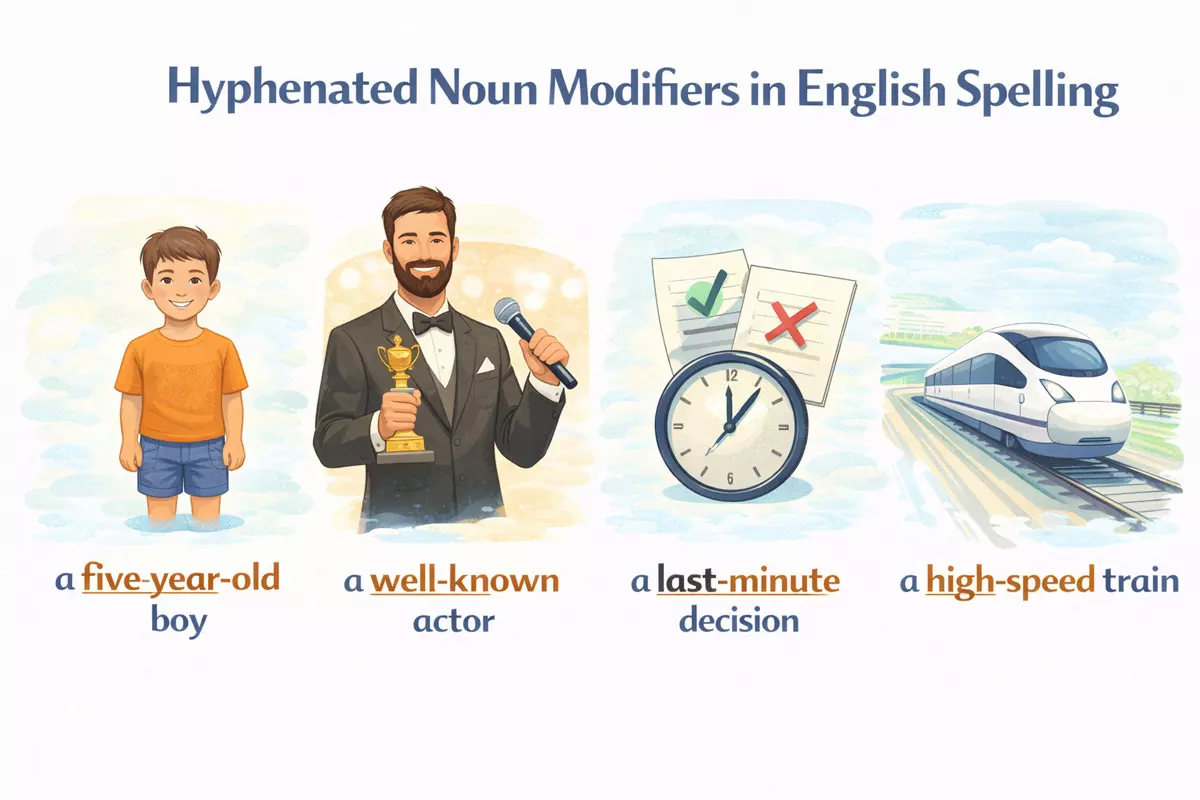 Here we what hyphenated noun modifiers are, when to use hyphens before a noun, common hyphen patterns, differences in meaning with or without hyphens, hyphens in numbers and measurements, common mistakes, and includes practice questions.
- What hyphenated noun modifiers are in English
- When hyphens are required before a noun
- Common adjective–noun and noun–noun hyphen patterns
- Meaning differences with and without hyphens
- Hyphen use in numbers and compound measurements
- Typical spelling mistakes with hyphenated modifiers
- Practice: choose correct hyphenated forms in sentences
Have you ever wondered why certain English phrases use dashes to connect words before a noun? These hyphenated adjective constructions help clarify meaning and prevent confusion by showing that the words work together to describe the noun. For example, in the phrase well-known author, the hyphen signals that well and known combine as a single idea modifying author. Despite their usefulness, the rules for spelling and using these hyphenated adjectives can be confusing, even for native speakers.
What hyphenated noun modifiers are in English
Hyphenated noun modifiers are combinations of two or more words, joined by a hyphen, that work together to describe a noun. These compound modifiers typically appear before the noun they modify and help clarify meaning, prevent ambiguity, or create concise descriptions. For example, in "well-known author," the hyphen links "well" and "known" to indicate they jointly describe the author.
Common Patterns and Usage
Writers use hyphenated noun modifiers to avoid confusion and make writing clearer. They often follow patterns such as adjective + noun, noun + noun, or adverb + participle. The hyphen signals that the words should be read as a single unit:
- high-speed train → The high-speed train reaches the capital in two hours.
- user-friendly interface → The app has a user-friendly interface.
- state-of-the-art equipment → The lab uses state-of-the-art equipment.
- full-length mirror → She checked her outfit in the full-length mirror.
- part-time job → He is looking for a part-time job.
- well-known scientist → A well-known scientist gave the lecture.
- free-standing structure → The sculpture is a free-standing structure.
- long-term solution → We need a long-term solution to this problem.
- one-way street → This road is a one-way street.
- blue-eyed cat → The blue-eyed cat slept on the sofa.
- old-fashioned recipe → She cooks using an old-fashioned recipe.
- award-winning film → The award-winning film impressed the audience.
- low-cost airline → They flew with a low-cost airline.
- fast-growing company → She works for a fast-growing company.
- four-door sedan → He drives a four-door sedan.
- first-class ticket → They booked a first-class ticket.
- middle-aged manager → The middle-aged manager led the meeting.
- open-minded colleague → I enjoy working with an open-minded colleague.
When to Use Hyphens in Compound Modifiers
The main reason to use a hyphen in these modifiers is to ensure clarity. For example, "small business owner" (no hyphen) could mean a business owner who is small, or someone who owns a small business. Adding a hyphen—"small-business owner"—makes the meaning clear. Generally, if the compound modifier comes before the noun, a hyphen is used; if it comes after, it usually isn’t needed.
Examples: Hyphen Use vs. No Hyphen
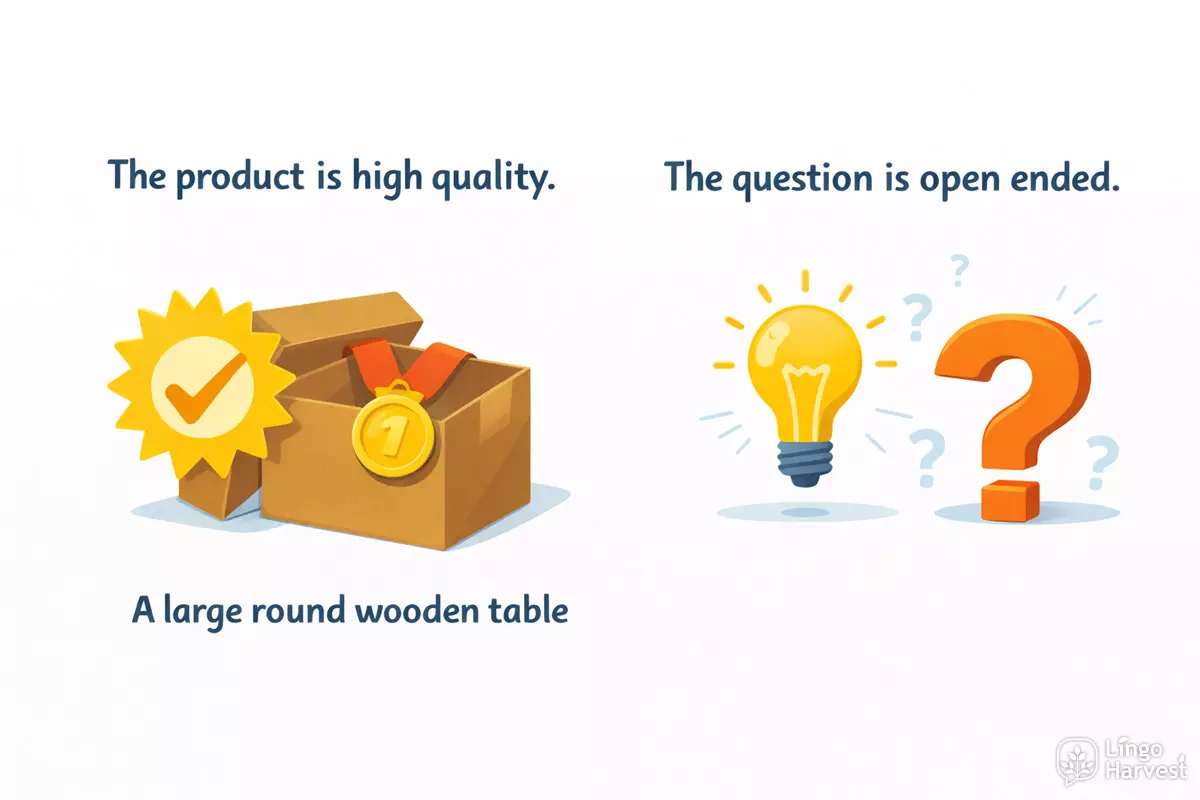
| Hyphenated Modifier (Before Noun) | No Hyphen (After Noun) |
|---|---|
| well-known artist | The artist is well known. |
| full-time employee | She works full time. |
| high-quality product | The product is high quality. |
| open-ended question | The question is open ended. |
Hyphenated noun modifiers are a practical feature of English spelling and meaning, helping writers and speakers convey information precisely and efficiently. Recognizing when and how to use them makes your writing clearer and more professional.
When hyphens are required before a noun
Writers often need to connect words to clarify meaning before a noun. Hyphens serve as a visual signal that two or more words work together as a single idea modifying the noun that follows. This helps readers avoid misreading or confusion, especially when the phrase could be interpreted in more than one way.
Common Situations for Hyphen Use in Compound Modifiers
Most commonly, hyphens join multiple words that together describe a noun, forming a compound adjective. Without the hyphen, the intended meaning can become unclear. For example, a "small-business owner" is someone who owns a small business, not a business owner who is small.
- Well-known author → She is a well-known author in her country.
- Long-term solution → We are looking for a long-term solution.
- High-quality product → This company sells high-quality products.
- Full-time job → He finally found a full-time job.
- Old-fashioned idea → That sounds like an old-fashioned idea.
- Part-time worker → She works as a part-time worker.
- State-of-the-art equipment → The hospital uses state-of-the-art equipment.
- Blue-eyed cat → The blue-eyed cat followed us home.
- Open-minded approach → We need an open-minded approach to the problem.
- Two-year contract → He signed a two-year contract.
- Fast-moving train → The fast-moving train passed the station.
- One-way street → This is a one-way street.
- Up-to-date information → The website provides up-to-date information.
- Well-read student → She is a well-read student.
- Low-cost airline → They chose a low-cost airline.
- Twenty-page report → I have to write a twenty-page report.
- Heavy-duty machinery → Heavy-duty machinery is used at the site.
- Right-handed batter → He is a right-handed batter.
Exceptions and Notes
Not every group of words before a noun needs a hyphen. For instance, when the first word ends in -ly (like "highly skilled worker"), or when the meaning is already clear without punctuation, hyphens are typically omitted. Also, if the phrase comes after the noun, hyphens are usually dropped: "The solution is long term."
Hyphens in Compound Numbers and Fractions
Numbers and fractions used as modifiers before a noun also require hyphens. For example, "a five-year plan" or "a two-thirds majority." This ensures clarity and prevents misinterpretation.
| Compound Modifier | Example Usage |
|---|---|
| Five-year | The committee proposed a five-year plan. |
| Two-thirds | A two-thirds majority is required to pass the law. |
| Ten-minute | We had a ten-minute break. |
| Three-step | This is a simple three-step process. |
| First-class | They bought first-class tickets. |
Hyphenation before a noun is about making meaning precise and readable. When in doubt, consider whether the words together make a single idea modifying the noun—if so, a hyphen is likely needed.
Common adjective–noun and noun–noun hyphen patterns
Writers often encounter hyphenation challenges when combining descriptive words or linking two nouns to form a single idea before another noun. These patterns are especially important for clarity, as they help avoid ambiguity and signal to the reader that words should be interpreted together. Below, we explore how these combinations typically appear, along with guidelines and examples to illustrate their usage.
Adjective–Noun Hyphenation
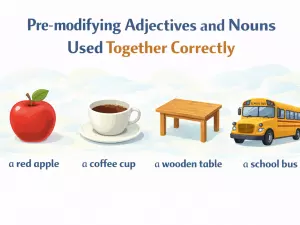
When an adjective and a noun join forces to modify another noun, a hyphen is usually added to prevent misreading. This pattern is common in compound adjectives, especially when the phrase comes before the noun it modifies. For example:
- full-length mirror → She checked her outfit in a full-length mirror.
- open-ended question → The teacher asked an open-ended question.
- short-term contract → He signed a short-term contract.
- single-parent family → She grew up in a single-parent family.
- high-risk investment → That startup was a high-risk investment.
- easy-going attitude → His easy-going attitude helps at work.
- user-friendly website → The company redesigned a user-friendly website.
- time-saving device → This app is a real time-saving device.
- energy-efficient appliance → They bought an energy-efficient appliance.
- well-balanced diet → A well-balanced diet improves health.
Notice that if these modifiers come after the noun, the hyphen is usually dropped (e.g., "The train is high speed").
Noun–Noun Hyphenation
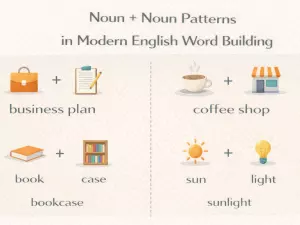
Some noun–noun compounds are hyphenated, especially when they function as a single modifier or when the combination would otherwise be confusing. The rules here are less rigid, and usage can change over time as compounds become more familiar.
- chicken-wire fence → The garden is protected by a chicken-wire fence.
- decision-making process → The decision-making process took several weeks.
- city-state government → Ancient Athens had a city-state government.
- award-winning author → The award-winning author signed books after the talk.
- data-driven approach → The company uses a data-driven approach.
- cost-benefit analysis → We need a cost-benefit analysis before investing.
- user-friendly interface → The software has a user-friendly interface.
- run-of-the-mill solution → That idea is just a run-of-the-mill solution.
- editor-in-chief position → She applied for the editor-in-chief position.
- mother-in-law suite → The house includes a mother-in-law suite.
Some noun compounds are always closed (e.g., "toothpaste") or open (e.g., "ice cream"), but hyphens are preferred when clarity is needed.
Comparing Patterns: Hyphen Use in Context
| Pattern Type | Example in a Sentence |
|---|---|
| Adjective–Noun Modifier | The high-speed train arrived early. |
| Noun–Noun Modifier | She used a decision-making framework. |
| Open Compound (no hyphen) | He loves ice cream on hot days. |
| Closed Compound (no hyphen) | She bought toothpaste at the store. |
Guidelines and Tips
- Hyphens are most often used when the compound modifier comes before the noun.
- If the meaning is clear without a hyphen, or if the compound is well established, the hyphen may be omitted.
- Always check for ambiguity—if in doubt, a hyphen can aid understanding.
- Consult a reputable dictionary for established compounds, as conventions can change.
Understanding these patterns helps ensure that writing is precise and easy to read, especially in complex or technical contexts.
Meaning differences with and without hyphens
Punctuation in noun modifiers can be the difference between clarity and confusion. English often uses hyphens to link words that work together as a single idea before a noun—omitting them may change the sense or even the grammatical function of the phrase. In some cases, the presence or absence of a hyphen completely alters the intended meaning.
When hyphens change the interpretation

Consider how these compound modifiers function: hyphens show that words act together, while the lack of one may make the phrase ambiguous or shift the meaning. Here are several examples where a small dash makes a big difference:
- small animal hospital (a hospital for small animals) → small-animal hospital
- man eating shark (a man is eating a shark) → man-eating shark (a shark that eats people)
- old furniture dealer (a dealer who is old and sells furniture) → old-furniture dealer (someone who sells antique furniture)
- fast acting medication (acting medication that is fast) → fast-acting medication (medication that works quickly)
- high school student (student at a high school) high-school student (same meaning; hyphen optional)
- recovery room nurse (a nurse in the recovery room) → recovery-room nurse (same meaning, but clearer)
- light blue dress (a dress that is light blue in color) light-blue dress (acceptable in some style guides but often not needed)
- late night snack (snack at night that is late) → late-night snack (snack eaten late at night)
- little used car (a car that is little and used) → little-used car (a car that has not been used much)
- free range chicken (a chicken that is free and in a range) → free-range chicken (chicken raised with access to the outdoors)
- red hot chili peppers (hot chili peppers that are red) red-hot chili peppers (very hot chili peppers; also a band name)
- old fashioned cocktail (a cocktail that is old and fashionable) → old-fashioned cocktail (a type of drink)
- second hand store (a hand store that is second in order) → second-hand store (a shop selling used goods)
- long term plan (a plan that is long and term) → long-term plan (a plan for the long term)
- full time job (a job that is full and time) → full-time job (employment for the whole working week)
- part time teacher (a teacher who is part and time) → part-time teacher (teaches for only part of the week)
- blue green algae (algae that is both blue and green) → blue-green algae (specific type of algae)
- well known author (author who is both well and known) → well-known author (famous author)
- heavy duty cleaner (a cleaner that is heavy and duty) → heavy-duty cleaner (a cleaner made for tough jobs)
- open minded person (a person who is open and minded) → open-minded person (someone receptive to new ideas)
Ambiguity and reader expectations
Without hyphens, readers may have to pause to figure out which words go together. For instance, "a little used car" could mean a small car that is used, or a car that has seen little use. The hyphen clarifies: "little-used car" is a car that hasn't been used much.
Summary table: Hyphen placement and meaning
| Without Hyphen | With Hyphen | Meaning Difference |
|---|---|---|
| man eating shark | man-eating shark | Man is eating a shark → Shark that eats people |
| little used car | little-used car | Small, used car → Car not used much |
| old furniture dealer | old-furniture dealer | Dealer who is old → Dealer in antique furniture |
| fast acting medication | fast-acting medication | Acting medication that is fast → Medication that acts quickly |
| free range chicken | free-range chicken | Chicken that is free and in a range → Chicken raised outdoors |
| second hand store | second-hand store | Hand store that is second → Store selling used goods |
| long term plan | long-term plan | Plan that is long and term → Plan for the long term |
| open minded person | open-minded person | Person who is open and minded → Person receptive to ideas |
Hyphenation in compound noun modifiers is not just a style preference—it is often essential for accurate communication. Using or omitting the dash can create two very different sentences, so careful punctuation helps your reader understand exactly what you mean.
Hyphen use in numbers and compound measurements
When numbers and measurements are used as modifiers before nouns, hyphens are often required to join the elements into a single, clear unit. This avoids ambiguity and ensures that readers immediately understand how the words relate. For example, "a ten-year-old child" uses hyphens to show the age is a compound adjective modifying "child." Without hyphens, the meaning can become unclear or require a double take.
Common patterns for hyphenating numeric modifiers
When combining numerals or number words with measurement units as descriptors, English typically hyphenates the words. This convention applies whether the number is spelled out or written as a digit, especially before a noun. Here are some standard forms:
- three-day weekend → We’re planning a trip over the three-day weekend.
- five-mile hike → They went on a five-mile hike in the mountains.
- 20-minute break → Let’s take a 20-minute break.
- two-year contract → She signed a two-year contract.
- six-foot-tall player → The team recruited a six-foot-tall player.
- seven-figure salary → He earns a seven-figure salary.
- four-leaf clover → She found a four-leaf clover in the field.
- one-way street → This road is a one-way street.
- 30-second advertisement → The brand aired a 30-second advertisement.
- ten-page essay → I have to write a ten-page essay.
- eight-hour shift → She works an eight-hour shift.
- 12-step program → He joined a 12-step program.
- nine-month process → The project was a nine-month process.
- four-door sedan → He drives a four-door sedan.
- single-digit temperatures → The region experienced single-digit temperatures.
- three-part series → The documentary is a three-part series.
- half-hour meeting → We had a half-hour meeting.
- five-star hotel → They stayed at a five-star hotel.
Plurality and hyphenation
Notice that the measurement unit remains singular in these compound adjectives. For instance, "a two-mile walk" (not "two-miles walk") and "a ten-dollar bill" (not "ten-dollars bill"). This rule holds even when the quantity is more than one because the entire phrase functions as a single descriptor.
Hyphens with fractions and mixed numbers
Fractions used as modifiers also take hyphens. For example, "a two-thirds majority" or "a one-half share." However, when fractions or numbers are not used as adjectives before a noun, hyphens are not needed: "The majority was two thirds."
Table: Comparison of Hyphen Use with Numeric Modifiers
| Correctly Hyphenated | Incorrect / Unhyphenated |
|---|---|
| three-day weekend | three day weekend |
| five-year plan | five year plan |
| two-thirds majority | two thirds majority |
| 20-minute break | 20 minute break |
| one-way street | one way street |
When hyphens are not needed
Hyphens are usually omitted when the numeric phrase comes after the noun it describes. For example, "The break lasted 20 minutes" or "The contract is for two years." In such cases, the words are not acting as a single adjective but instead serve as the predicate of the sentence. In summary, using hyphens in numerical and measurement-based noun modifiers clarifies meaning and prevents misreading. Remember to use them before nouns, keep measurement units singular, and avoid them when the phrase is not a direct modifier.
Typical spelling mistakes with hyphenated modifiers
Writers often run into trouble when deciding whether to use hyphens in compound noun modifiers. The rules can be confusing, especially when words change meaning depending on hyphenation. Many common errors stem from uncertainty about when these punctuation marks are needed, and inconsistencies can affect clarity or even change the intended message.
Omitting necessary hyphens
Leaving out a hyphen in a compound adjective before a noun is a frequent slip. This can make a phrase ambiguous or grammatically incorrect. For example, "small business owner" is correct, but "small-business owner" clarifies that the person owns a business that is small, not that they are a small owner.
- fast growing company → fast-growing company
- well known author → well-known author
- high quality service → high-quality service
- full time job → full-time job
- part time employee → part-time employee
- two year contract → two-year contract
- long term plan → long-term plan
- open ended question → open-ended question
- user friendly design → user-friendly design
- state of the art equipment → state-of-the-art equipment
Adding unnecessary hyphens
Some writers mistakenly insert hyphens where none are needed, especially after the noun or in standard expressions. This can look awkward or be incorrect.
- She is well-known. ❌ (Correct: She is well known.)
- The job is full-time. ✅
- Our team is part-time. ✅
- This approach is user-friendly. ✅
- He is a high-school teacher. ✅ (but: He teaches in high school. ❌)
Confusing placement and meaning
Hyphen placement can change meaning entirely. Compare:
| Without Hyphen | With Hyphen |
|---|---|
| old fashioned dress (a dress that is old and fashionable) | old-fashioned dress (a dress in an old style) |
| small animal hospital (an animal hospital that is small) | small-animal hospital (a hospital for small animals) |
| man eating shark (a man who is eating shark) | man-eating shark (a shark that eats people) |
| high school student (a student in high school) | high-school student (same meaning, but hyphen is optional in American English) |
Summary of pitfalls
Mix-ups with hyphens in noun modifiers can lead to confusion or even unintentional humor. The most reliable strategy is to hyphenate compound adjectives that come before a noun, but not after. Always check if hyphenation changes the meaning of the phrase, and consult style guides when in doubt.
Practice: choose correct hyphenated forms in sentences
Understanding how hyphens connect noun modifiers in English can prevent confusion and clarify meaning. Below you'll find a set of exercises designed to help you spot whether a hyphen is needed or not. Read each sentence and select the correct hyphenated form.
Choose the correct form
- She bought a well known / well-known author’s latest novel.
- The high quality / high-quality service impressed everyone.
- They live in a dog friendly / dog-friendly apartment.
- He is a part time / part-time worker during the summer.
- The full length / full-length mirror was mounted on the wall.
- We enjoyed a home cooked / home-cooked meal.
- There is a ten minute / ten-minute break between sessions.
- She wore a blue green / blue-green dress to the event.
- The user friendly / user-friendly interface made the app popular.
- He gave a last minute / last-minute presentation.
Compare: Hyphenated vs. Non-Hyphenated Forms
| Hyphenated Modifier | Non-Hyphenated (Incorrect or Different Meaning) |
|---|---|
| well-known artist | well known artist |
| high-quality product | high quality product |
| part-time job | part time job |
| dog-friendly hotel | dog friendly hotel |
| ten-minute wait | ten minute wait |
| full-length film | full length film |
| user-friendly design | user friendly design |
| last-minute decision | last minute decision |
| blue-green sea | blue green sea |
| home-cooked meal | home cooked meal |
When two or more words work together as a single idea before a noun, a hyphen often helps to prevent misreading. However, if the modifier comes after the noun or is a common expression, the hyphen may not be necessary. Pay attention to placement and meaning to determine when to use hyphens in noun modifiers.
Show answers
- well-known
- high-quality
- dog-friendly
- part-time
- full-length
- home-cooked
- ten-minute
- blue-green
- user-friendly
- last-minute