Nouns Without Gender Forms in Modern English Communication

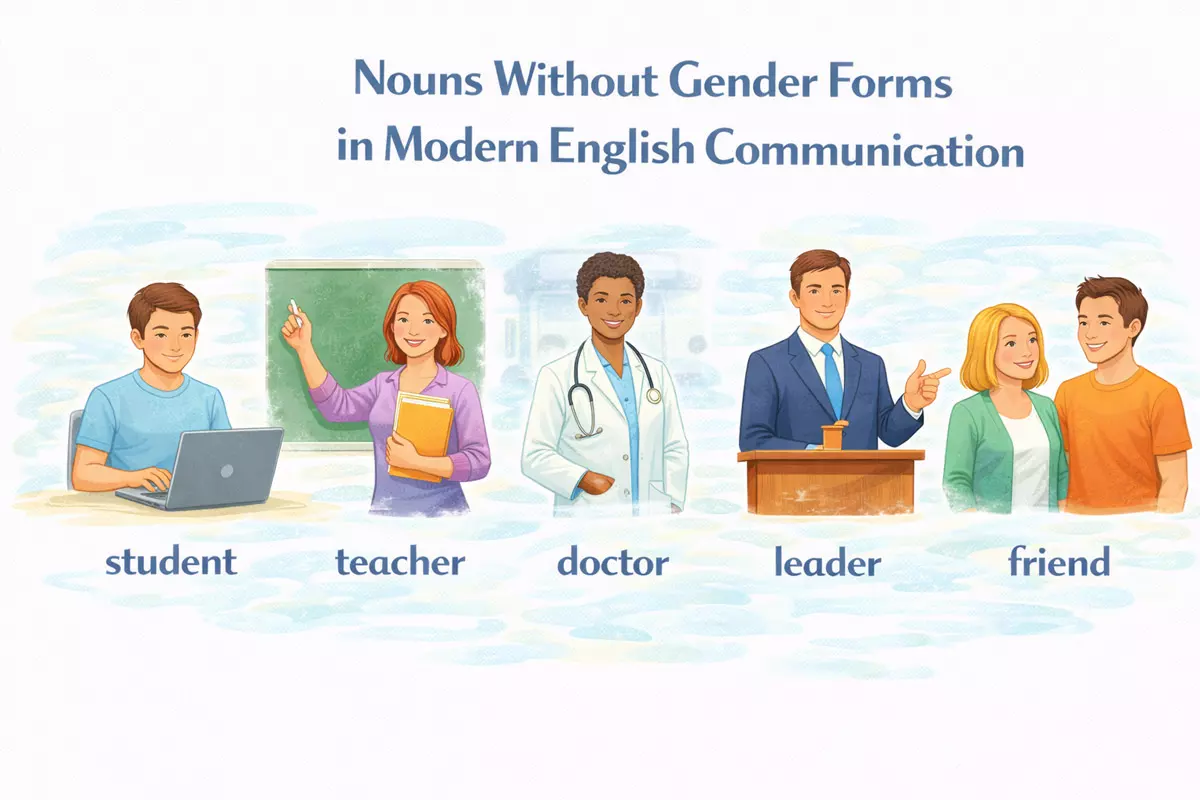 The article defines genderless nouns in English, lists common neutral personal and job terms, explains their use in professional writing, discusses errors learners make with assumed gender, and provides practice replacing gendered nouns with neutral alternatives.
- What genderless nouns are in English communication
- Common gender-neutral personal and social nouns
- Job titles without masculine or feminine forms
- Using genderless nouns in professional writing
- Avoiding unnecessary gender marking in communication
- Typical learner mistakes with assumed gender
- Practice: replace gendered nouns with neutral alternatives
Modern English conversations increasingly use words that are not defined by masculine or feminine distinctions, reflecting significant cultural shifts toward inclusivity and flexibility. As society evolves, language adapts to accommodate broader perspectives, allowing people to express themselves without being limited by traditional gender roles. This change not only makes communication more welcoming for everyone but also encourages a more open and accepting environment where individuals can identify themselves in ways that feel most authentic to them.
What genderless nouns are in English communication
In modern English, many nouns do not carry inherent gender, making them suitable for use regardless of the subject’s sex. This feature supports clarity and inclusivity in everyday conversation, professional writing, and academic contexts. Unlike some languages that assign masculine or feminine forms to most nouns, English typically uses neutral forms unless specifically referring to someone’s gender.
Common examples of gender-neutral nouns
Here are several frequently used nouns that do not specify gender. These words can refer to people of any sex, making them especially useful in situations where gender is unknown or irrelevant:
- Child → The child is playing in the park.
- Parent → Every parent worries about their child.
- Student → The student studied for the exam.
- Doctor → The doctor examined the patient.
- Teacher → The teacher explained the lesson.
- Friend → I met a friend after work.
- Leader → The leader inspired the team.
- Artist → The artist painted a landscape.
- Colleague → She discussed the idea with a colleague.
- Neighbor → Our neighbor helped us carry the boxes.
- Person → One person asked a question.
- Guest → We welcomed a guest from abroad.
- Driver → The driver stopped the car.
- Engineer → The engineer designed the bridge.
- Worker → The worker finished the task early.
- Client → The client approved the proposal.
- Manager → The manager scheduled a meeting.
- Partner → She runs the business with her partner.
- Candidate → The candidate answered all questions.
- Author → The author signed copies of the book.
How genderless nouns support inclusive communication
Using neutral terms helps avoid assumptions about gender and reduces the need for separate masculine or feminine forms. For instance, instead of “waiter” or “waitress,” the word “server” is now common in English-speaking workplaces. This shift reflects broader changes in language toward equity and respect for all identities.
Comparison: Gendered and Genderless Forms
Some traditional roles once had gender-specific names, but English now prefers a single neutral form. The table below highlights these differences:
| Traditional Gendered | Modern Genderless |
|---|---|
| Actor / Actress | Actor |
| Steward / Stewardess | Flight attendant |
| Policeman / Policewoman | Police officer |
| Chairman / Chairwoman | Chair (or Chairperson) |
| Businessman / Businesswoman | Businessperson |
| Fireman | Firefighter |
| Mailman | Mail carrier |
| Salesman / Saleswoman | Salesperson |
The widespread use of neutral nouns in English reflects the language’s adaptability and its alignment with modern values. Adopting these terms can help ensure everyone feels represented and respected in communication.
Common gender-neutral personal and social nouns
In everyday English, many terms used to describe people or their social roles do not indicate gender at all. These words help speakers refer to individuals or groups without specifying or assuming whether someone is male or female. This approach is especially important in modern communication, where inclusivity and clarity are valued.
Frequently used neutral terms for individuals and groups
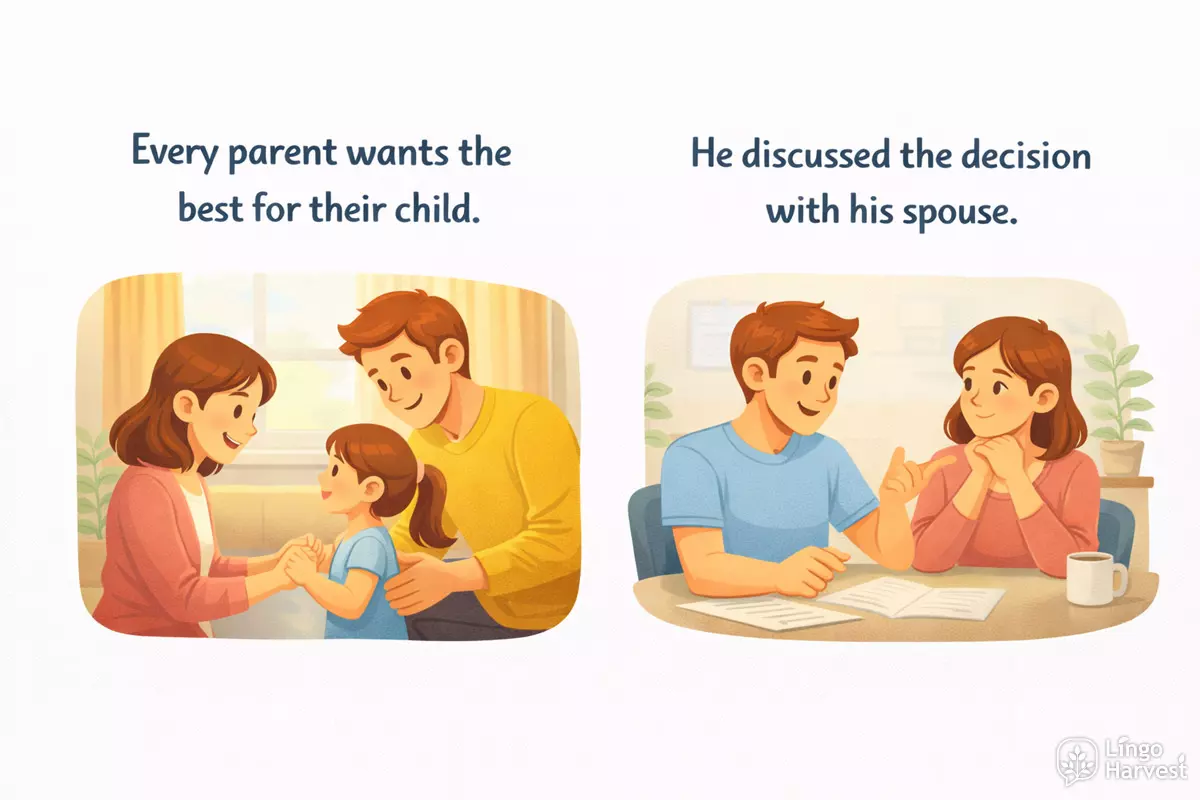
Words like person, individual, and child naturally avoid gender reference. These are useful in both formal and informal contexts. For describing relationships or roles, English offers many options that apply to anyone, regardless of gender identity.
- parent → Every parent wants the best for their child.
- sibling → She has one sibling.
- spouse → He discussed the decision with his spouse.
- partner → She runs the business with her partner.
- friend → I met a friend for lunch.
- colleague → I worked with a colleague on the project.
- student → The student asked an interesting question.
- teacher → The teacher explained the rule clearly.
- leader → The leader guided the team through the change.
- neighbor → Our neighbor helped us shovel snow.
- guest → The guest arrived early.
- worker → The worker completed the task.
- client → The client requested a revision.
- customer → The customer left a review.
- manager → The manager approved the budget.
- officer → The officer directed traffic.
- member → She is a member of the club.
- citizen → Every citizen must follow the law.
- resident → The resident reported the issue.
- volunteer → He works as a volunteer on weekends.
Comparing traditional and neutral word choices
Some English terms have replaced older gendered words for broader use. For example, flight attendant is now preferred over stewardess or steward. The table below highlights several such transitions and shows how neutral vocabulary supports inclusive communication.
| Traditional Gendered Term | Modern Gender-Neutral Equivalent |
|---|---|
| Chairman/Chairwoman | Chairperson / Chair |
| Policeman/Policewoman | Police officer |
| Fireman | Firefighter |
| Mailman | Mail carrier |
| Businessman/Businesswoman | Businessperson |
| Steward/Stewardess | Flight attendant |
| Actor/Actress | Actor (all genders) |
| Host/Hostess | Host |
Using these neutral options helps avoid assumptions and supports respectful interaction. As language evolves, more people choose terms that reflect equality and accuracy in social and professional settings.
Job titles without masculine or feminine forms
In contemporary English, many occupational terms are deliberately crafted to be gender-neutral. These words are used for any person in a given role, regardless of gender identity. This approach promotes inclusivity and avoids assumptions based on traditional gender roles. English has steadily moved away from explicitly gendered job names, especially in professional and public spheres.
- doctor → The doctor examined the patient.
- teacher → The teacher explained the lesson.
- engineer → The engineer designed the system.
- pilot → The pilot landed the plane safely.
- chef → The chef prepared a special dish.
- artist → The artist painted a mural.
- scientist → The scientist conducted an experiment.
- manager → The manager scheduled a meeting.
- student → The student studied for the test.
- author → The author signed books after the event.
- driver → The driver stopped at the traffic light.
- nurse → The nurse checked the patient’s temperature.
- editor → The editor reviewed the article.
- lawyer → The lawyer gave legal advice.
- firefighter → The firefighter rescued the family.
- officer → The officer directed traffic.
- designer → The designer created a new logo.
- director → The director approved the final cut.
- clerk → The clerk processed the documents.
- athlete → The athlete trained every day.
How gender-neutral titles replaced older forms
Historically, some positions had distinctly masculine or feminine forms (for example, "actor" vs. "actress" or "waiter" vs. "waitress"). Over time, the tendency has shifted toward using a single term for all genders. This change reflects a broader cultural move toward equality and respect in the workplace.
Common patterns in neutral job names
Several strategies help make these nouns inclusive:
- Using terms ending in -er or -or (e.g., "teacher," "editor")
- Adopting titles based on tasks, not gender (e.g., "driver," "manager")
- Replacing gendered suffixes like -man or -woman with neutral ones (e.g., "firefighter" instead of "fireman")
Comparing gendered and gender-neutral job titles
| Traditional (Gendered) | Modern (Gender-Neutral) |
|---|---|
| Policeman / Policewoman | Police officer |
| Steward / Stewardess | Flight attendant |
| Chairman / Chairwoman | Chair / Chairperson |
| Fireman | Firefighter |
| Businessman / Businesswoman | Businessperson |
Adopting these forms removes unnecessary gender markers, making communication more respectful and versatile. This trend continues to shape professional language, reflecting evolving attitudes in society.
Using genderless nouns in professional writing
Clarity and inclusivity are crucial in business, academic, and organizational communication. Choosing neutral terminology helps avoid assumptions about people’s identities and promotes fairness. Many traditional English nouns have gender-specific forms that may feel outdated or exclusive. Modern writers tend to favor alternatives that describe roles and professions without referencing gender, making documents more accessible and respectful.
Common examples of neutral alternatives

| Inclusive term | Instead of | Example sentence |
|---|---|---|
| Chairperson | chairman / chairwoman | The chairperson opened the meeting. |
| Firefighter | fireman | My cousin is a firefighter. |
| Police officer | policeman / policewoman | A police officer helped us find the address. |
| Flight attendant | steward / stewardess | The flight attendant brought me water. |
| Server | waiter / waitress | The server took our order. |
| Actor | actress | She is a talented actor. |
| Representative | spokesman / spokeswoman | A representative answered our questions. |
| Businessperson | businessman / businesswoman | The businessperson presented the plan. |
| Humankind | mankind | Humankind has made great progress in science. |
| Parent | mother / father | A parent must sign the form. |
| Supervisor | foreman | The supervisor checked the safety rules. |
| First-year student | freshman | She is a first-year student at the university. |
| Artificial | man-made | The lake is artificial. |
| Colleague / coworker | workman | A coworker helped me carry the boxes. |
| Ancestor | forefather | One ancestor came from Ireland. |
| Partner | husband / wife | She went to the event with her partner. |
| They / them | he / him (when gender is unknown) | If someone calls, tell them I’ll call back. |
| Chair | chairman / chairwoman | The chair asked everyone to vote. |
| Manager | manageress | The manager approved the request. |
| Member | committeeman / committeewoman | Each member of the committee voted. |
Why neutral terms matter in professional settings
Inclusive language reflects organizational values and can impact how individuals perceive belonging and respect in the workplace. Gender-neutral nouns help prevent bias and ensure that everyone feels addressed. They also align with modern HR policies and diversity initiatives, making documents and policies more widely applicable.
Shifting from gendered to neutral forms: a quick reference
| Gendered Noun | Recommended Neutral Noun |
|---|---|
| Chairman / Chairwoman | Chairperson / Chair |
| Fireman | Firefighter |
| Policeman / Policewoman | Police officer |
| Steward / Stewardess | Flight attendant |
| Waiter / Waitress | Server |
| Businessman / Businesswoman | Businessperson |
| Spokesman / Spokeswoman | Representative / Spokesperson |
| Mankind | Humankind |
| Forefather | Ancestor |
| Man-made | Artificial / Synthetic |
Practical tips for consistent usage
- Review templates and forms for outdated terms.
- Encourage teams to adopt neutral job titles in signatures and documents.
- Default to neutral pronouns when gender is unknown or irrelevant.
- Update HR policies to reflect inclusive language standards.
- Offer style guides or checklists for staff and writers.
Adopting gender-neutral language in business and academic writing is a straightforward way to foster respect and inclusivity. By making conscious choices about the words we use, communication becomes more effective and welcoming for everyone.
Avoiding unnecessary gender marking in communication
Modern English increasingly favors neutral language, especially when gender is irrelevant. Choosing words that do not imply gender helps foster inclusivity and avoids assumptions. This approach is especially important in professional, academic, and public settings, where the gender of a person or group often has no bearing on the subject matter.
Strategies for Neutral Communication
Writers and speakers can adopt several approaches to minimize gendered language:
- Use occupational terms that are not gender-specific (e.g., "firefighter" instead of "fireman").
- Replace gendered forms with neutral alternatives ("chairperson" or "chair" instead of "chairman" or "chairwoman").
- Apply plural forms or rephrase sentences to use "they/them" as singular pronouns.
- Refer to relationships or family roles in a neutral way when possible ("parent" instead of "mother" or "father" when gender is unknown or irrelevant).
- Omit unnecessary references to gender entirely when it does not contribute to meaning.
- Use names, titles, or roles rather than gendered nouns ("the doctor" instead of "he" or "she").
- Choose "person," "individual," or "staff member" over gendered equivalents.
- Select neutral collective nouns like "team" or "group" rather than "brotherhood" or "sisterhood."
- Adopt "spouse" or "partner" in place of "husband" or "wife" when referring generally.
- Opt for "actor" for all genders, as is increasingly common in the arts.
- Use "server" or "waitstaff" rather than "waiter" or "waitress."
- Refer to "flight attendant" instead of "stewardess" or "steward."
- Say "police officer" rather than "policeman" or "policewoman."
- Choose "humankind" or "people" instead of "mankind."
- Use "salesperson" or "representative" rather than "salesman."
- Write "host" for all genders, as is now common in many contexts.
- Refer to "students" collectively, not as "boys and girls."
- Employ "they" as a singular pronoun when a person's gender is unknown or irrelevant.
Common Pitfalls and How to Avoid Them
Even with good intentions, it’s easy to slip into old habits or use language that unintentionally singles out gender. Here are some common mistakes and suggested neutral alternatives:
| Gendered Term | Neutral Alternative |
|---|---|
| Businessman | Businessperson |
| Man-made | Artificial / Human-made |
| Mailman | Mail carrier / Postal worker |
| Manpower | Workforce / Staff |
| Chairman | Chair / Chairperson |
| Forefathers | Ancestors |
| Landlady/Landlord | Property owner |
| Stewardess | Flight attendant |
| Policeman | Police officer |
| Salesman | Salesperson |
By consciously selecting words that are free from gender implications, communicators ensure clarity and respect for all audiences. This practice not only aligns with modern values, but also avoids distracting or alienating readers and listeners with outdated or unnecessary references to gender.
Typical learner mistakes with assumed gender
Many English learners mistakenly assign a gender to nouns that have no inherent gender in modern English. This often happens because their native languages use grammatical gender, or because of outdated classroom habits. As a result, learners may use pronouns or forms that do not match the neutral or inclusive style expected in contemporary usage.
Common pitfalls with gender assumptions
One frequent issue is defaulting to masculine pronouns (like "he" or "his") when referring to people in general, even when the gender is unknown or irrelevant. Another challenge is using gendered job titles unnecessarily, such as "policeman" or "stewardess," instead of neutral alternatives.
- Referring to a doctor as "he" by default
- Assuming "nurse" means a woman and using "she"
- Using "businessman" instead of "businessperson"
- Writing "chairman" for any chairperson, regardless of gender
- Defaulting to "he" for authors, teachers, or engineers
- Confusing "actor" and "actress" when gender is not specified
- Calling a flight attendant "stewardess" or "steward"
- Referring to an unknown student as "he"
- Assuming "manager" is always male
- Using "salesman" instead of "salesperson" or "sales associate"
- Choosing "waiter" or "waitress" rather than "server"
- Referring to "mailman" instead of "mail carrier" or "postal worker"
- Assuming "parent" means "mother" and using "she"
- Using "fireman" instead of "firefighter"
- Defaulting to "he" for "client" or "customer"
- Calling a poet "poetess" when gender is not relevant
- Referring to "landlord" as male even if the landlord is female or unknown
- Assuming "friend" is male and using "he"
Why these mistakes happen
Learners often transfer habits from their first language, especially if it assigns gender to all nouns. Additionally, some textbooks and older materials still use gendered forms that are now outdated. Exposure to modern English—especially in professional or academic contexts—shows a clear preference for inclusive, gender-neutral language.
Impact on communication
Using gendered forms or pronouns where not appropriate can lead to misunderstandings, reinforce stereotypes, or even cause offense. More importantly, it may make communication less clear, especially in writing or formal situations. Being aware of neutral alternatives helps learners avoid these mistakes and communicate more naturally.
Practice: replace gendered nouns with neutral alternatives
Making language more inclusive often starts with choosing words that do not imply a specific gender unless it's relevant. In English, many traditional nouns have gendered forms, but contemporary communication favors neutral alternatives. Practicing this shift helps make your writing and speech more accessible and respectful.
Common Gendered Nouns and Their Neutral Equivalents
Below is a selection of frequently used gender-specific nouns, alongside their neutral options. Becoming familiar with these can help you adapt your vocabulary in everyday situations.
- Actor / Actress → Performer
- Chairman / Chairwoman → Chair
- Policeman / Policewoman → Police officer
- Fireman → Firefighter
- Steward / Stewardess → Flight attendant
- Businessman / Businesswoman → Businessperson
- Mailman → Mail carrier or Postal worker
- Salesman / Saleswoman → Salesperson or Sales associate
- Congressman / Congresswoman → Member of Congress
- Waiter / Waitress → Server
- Landlord / Landlady → Property owner or Landowner
- Manpower → Workforce or Staff
- Foreman → Supervisor
- Spokesman / Spokeswoman → Spokesperson
- Gentleman’s agreement → Handshake agreement or Informal agreement
- Man-made → Artificial or Human-made
- Brotherhood → Fellowship or Community
- Mothering / Fathering → Parenting
- Mankind → Humankind or Humanity
- Freshman → First-year student
Exercise: Transforming Sentences
Try replacing the gender-specific terms in the following sentences with neutral alternatives. Consider the context to select the most appropriate form.
- The chairman opened the meeting with a short speech.
- My uncle is a fireman in the city.
- The mailman delivered the package this morning.
- She’s a talented actress in local theater.
- He works as a foreman on the construction site.
- The policeman directed traffic during the storm.
- She applied for the job as a saleswoman.
- The spokesman answered questions from the press.
- He trained as a cameraman for television.
- The businessman announced a new project.
Show answers
- The chair opened the meeting with a short speech.
- My uncle is a firefighter in the city.
- The mail carrier delivered the package this morning.
- She’s a talented performer in local theater.
- He works as a supervisor on the construction site.
- The police officer directed traffic during the storm.
- She applied for the job as a sales associate.
- The spokesperson answered questions from the press.
- He trained as a camera operator for television.
- The businessperson announced a new project.
Tips for Everyday Use
- Pause and consider if a gendered noun is necessary. Most roles and professions can be described neutrally.
- When in doubt, use the job title or function (e.g., editor, leader, student).
- Stay updated: Some professions have shifted to neutral terms in official policies and job descriptions.
- Be mindful in both writing and speaking; habits change with conscious practice.
Quick Reference Table
| Gendered Noun | Neutral Alternative |
|---|---|
| Stewardess / Steward | Flight attendant |
| Businessman / Businesswoman | Businessperson |
| Waiter / Waitress | Server |
| Policeman / Policewoman | Police officer |
| Salesman / Saleswoman | Salesperson |
| Chairman / Chairwoman | Chair |
| Mailman | Mail carrier |
| Fireman | Firefighter |
By adopting gender-neutral nouns, your communication becomes more inclusive and representative of all people, regardless of gender identity. Regularly practicing these alternatives will help make them second nature.