Quantifying Nouns for Mass Objects in Everyday English

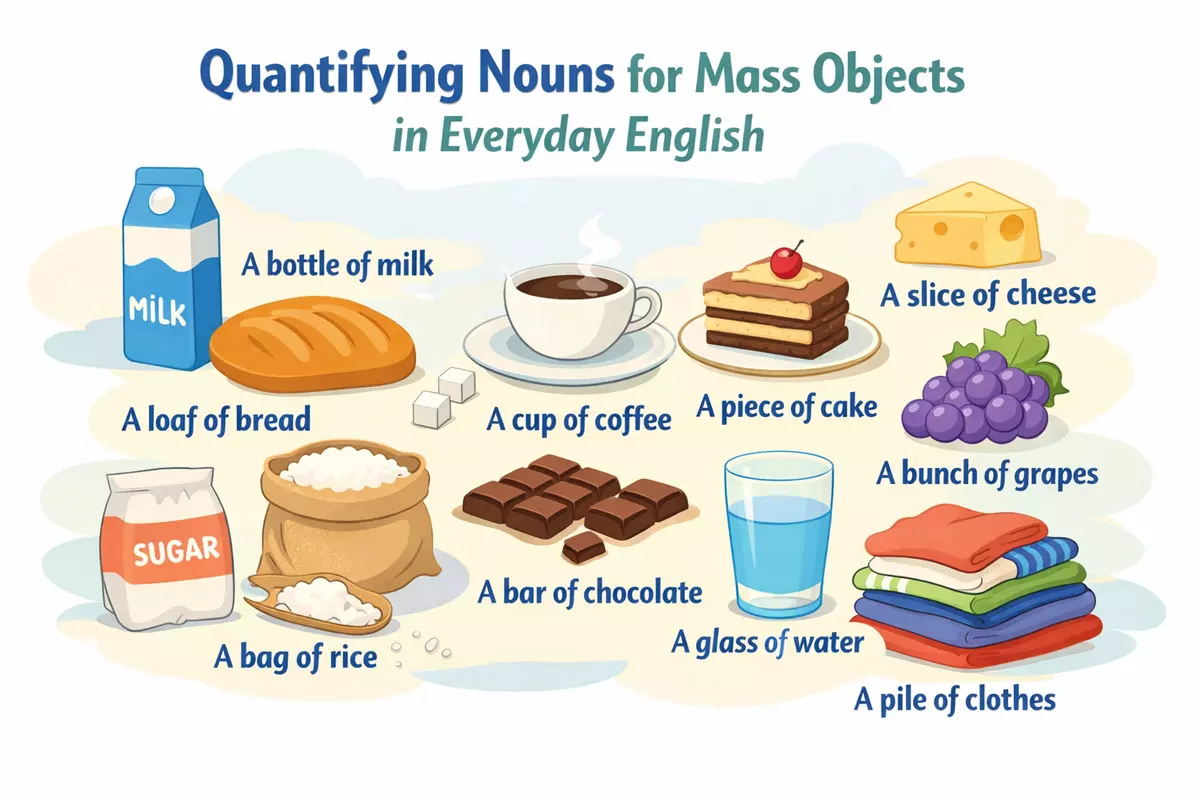 Here we how to express quantity with mass nouns in English, use measuring and quantifying nouns for liquids and materials, tell the difference between exact and approximate amounts, avoid common mistakes, and practice describing amounts in daily life.
- How mass nouns express quantity in English
- Using measuring nouns with liquids and materials
- Common quantifying nouns like amount, quantity, and load
- Difference between exact and approximate quantities
- Quantifying nouns in shopping and daily tasks
- Common mistakes with mass noun quantifiers
- Practice: describe amounts using correct quantifying nouns
Have you ever wondered how we describe amounts of things that can’t be easily counted, such as water, sand, or sugar, in daily conversation? In English, we often use special words and phrases to express quantities for these uncountable substances. For example, instead of saying "three sugars," we might say "three spoonfuls of sugar" or "a glass of water." These patterns help us communicate clearly when dealing with materials that do not have distinct, individual units, reflecting the flexibility and creativity of everyday language use.
How mass nouns express quantity in English
Understanding how to talk about amounts with mass nouns is essential for clear everyday communication. Unlike count nouns (like “apples” or “cars”), mass nouns—such as “rice,” “water,” or “music”—refer to substances or concepts that aren’t easily separated into individual units. To specify quantity, English speakers use a range of expressions and measure words that help make these nouns countable or more precise.
Common ways to indicate quantity with mass nouns
The English language relies on certain structures to show how much or how little of a mass object is being discussed. Here are some of the most frequent patterns and phrases:
- a piece of advice → She gave me a piece of advice.
- two cups of coffee → I drink two cups of coffee every morning.
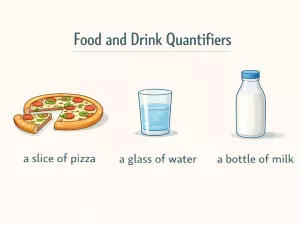
- a slice of bread → He ate a slice of bread with butter.
- three liters of water → She drinks three liters of water a day.
- a bit of luck → We need a bit of luck today.
- an ounce of gold → He bought an ounce of gold.
- a pinch of salt → Add a pinch of salt to the soup.
- a drop of oil → Put a drop of oil in the pan.
- a grain of sand → A grain of sand got in my shoe.
- several bags of rice → They ordered several bags of rice.
- a spoonful of sugar → She added a spoonful of sugar.
- a bar of chocolate → He ate a bar of chocolate.
- a sheet of paper → Write your name on a sheet of paper.
- a bottle of wine → We opened a bottle of wine.
- a handful of flour → Add a handful of flour.
- a scoop of ice cream → I want a scoop of ice cream.
- a bowl of soup → She had a bowl of soup.
- a chunk of cheese → He cut a chunk of cheese.
- a loaf of bread → She bought a loaf of bread.
- a tube of toothpaste → I need a new tube of toothpaste.
These combinations use a “unit noun” (like “cup” or “slice”) to quantify the otherwise uncountable substance, making it easier to specify how much is needed, wanted, or present.
Quantifiers and determiners for mass nouns
To further refine quantity, English uses quantifiers and determiners that work specifically with mass nouns. Some of the most common include:
- some (e.g., some sugar)
- much (e.g., much information)
- a little (e.g., a little patience)
- plenty of (e.g., plenty of water)
- enough (e.g., enough money)
- no (e.g., no time)
- any (e.g., any milk?)
- more (e.g., more sand)
- less (e.g., less noise)
These words help express vague or general amounts, especially when the exact number isn’t important or known.
Comparing mass and count noun quantifiers
The structures for expressing quantity with mass nouns differ from those used with count nouns. Here’s a side-by-side look at typical quantifiers for each:
| Mass Noun Example | Count Noun Example |
|---|---|
| much information | many facts |
| less water | fewer bottles |
| a little patience | a few minutes |
| some furniture | some chairs |
| no advice | no suggestions |
Key takeaways
Expressing quantity with mass nouns in English depends on using the right combination of unit words, measure phrases, and quantifiers. This approach allows speakers to describe amounts clearly, whether they’re talking about “a spoonful of honey” or “less noise.” Recognizing these patterns helps learners and native speakers alike communicate with more accuracy and nuance.
Using measuring nouns with liquids and materials
When talking about substances like water, milk, sand, or oil in English, we often need a way to specify quantity, since these are not naturally countable. To express amounts for these mass nouns, people commonly use measuring words or "containers" that help clarify how much of a substance is being discussed. These measuring nouns make communication more precise and practical in everyday situations.
Common measuring nouns for liquids

For liquids, English speakers rely on a variety of units and containers. Some are based on measurement, while others refer to everyday objects used to hold or serve the liquid. Here are some widely used examples:
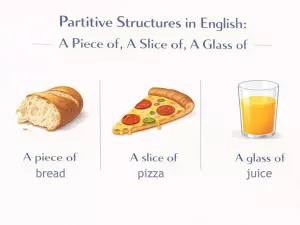
- a glass of juice → She drank a glass of juice.
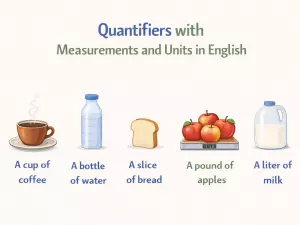
- a cup of tea → I made a cup of tea.
- a bottle of water → He bought a bottle of water.
- a pint of beer → They ordered a pint of beer.
- a liter of milk → She poured a liter of milk.
- a drop of oil → Add a drop of oil.
- a gallon of gasoline → The car needs a gallon of gasoline.
- a mug of coffee → He grabbed a mug of coffee.
- a shot of whiskey → He took a shot of whiskey.
- a jug of lemonade → We served a jug of lemonade.
- a can of soda → She opened a can of soda.
- a splash of vinegar → Add a splash of vinegar.
- a bucket of paint → He carried a bucket of paint.
Measuring nouns for granular and solid materials
Materials like rice, flour, or sand also require measuring expressions to indicate quantity. These often involve containers or standardized weights:
- a bag of sugar → She bought a bag of sugar.
- a cup of flour → Add a cup of flour.
- a sack of rice → They stored a sack of rice.
- a spoonful of salt → Use a spoonful of salt.
- a handful of sand → He picked up a handful of sand.
- a bar of soap → There is a bar of soap in the bathroom.
- a sheet of paper → Write it on a sheet of paper.
- a loaf of bread → She sliced a loaf of bread.
- a chunk of cheese → He cut a chunk of cheese.
- a piece of chocolate → She ate a piece of chocolate.
- a pile of dirt → There was a pile of dirt outside.
- a tube of toothpaste → I need a tube of toothpaste.
Comparing measuring nouns: containers vs. units
Measuring words can be grouped into two main types: those that refer to containers and those that indicate standard units. The table below illustrates some common distinctions:
| Container-based | Unit-based |
|---|---|
| a bottle of juice | a liter of juice |
| a cup of coffee | a gram of coffee |
| a bag of flour | a kilogram of flour |
| a can of soda | a milliliter of soda |
Choosing the appropriate measuring expression depends on context, precision, and the type of substance. For instance, in recipes, standard units like "cup" or "gram" are preferred, while in casual speech, containers such as "bottle" or "can" are more common. Understanding these patterns helps speakers communicate quantities of mass nouns clearly and naturally.
Common quantifying nouns like amount, quantity, and load
When talking about mass nouns—items you can’t count individually, like sugar, water, or information—English relies on specific quantifying nouns to express how much of something there is. These words help speakers be precise, whether discussing groceries, tasks, or abstract concepts. Let’s explore how these terms function and what makes each one unique.
How these quantifiers work
Words such as amount, quantity, and load are used to measure or refer to an unspecified or specific portion of a mass object. Each has its own nuance:
- Amount – Used for things you can’t count individually (e.g., "a small amount of rice").
- Quantity – Slightly more formal, often used in scientific or technical contexts (e.g., "a large quantity of data").
- Load – Informal, often refers to a large collection, especially in everyday speech ("a load of laundry").
Typical usage and examples
Some quantifying nouns are flexible, while others fit only certain contexts. Here’s a list of common options for mass nouns:
- amount → The amount of sugar is too high.
- quantity → A large quantity of food was wasted.
- load → He carried a heavy load of boxes.
- volume → The volume of water increased.
- mass → A large mass of people gathered.
- portion → She ate a small portion of cake.
- bit → I need a bit of help.
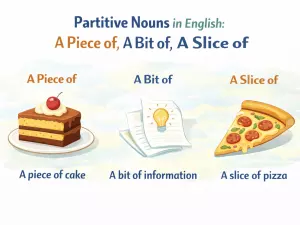
- piece → He broke off a piece of bread.
- drop → A drop of rain fell.
- slice → She cut a slice of cheese.
- dash → Add a dash of pepper.
- hint → There was a hint of fear in his voice.
- spoonful → Take a spoonful of honey.
- heap → There was a heap of clothes on the floor.
- bundle → She carried a bundle of sticks.
- touch → Add a touch of salt.
- handful → He grabbed a handful of coins.
- bucket → She filled a bucket with water.
- batch → This batch of cookies smells great.
- pile → A pile of books lay on the desk.
Notice how some (like “drop” or “dash”) relate to very small amounts, while others (“heap” or “batch”) suggest much larger or collective quantities.
Comparison of key quantifying nouns
Below is a comparison of three frequently used quantifiers, showing differences in meaning and context:
| Quantifier | Typical Use & Example | Formality/Context |
|---|---|---|
| Amount | “A small amount of sugar” | Neutral, everyday speech |
| Quantity | “A large quantity of water” | More formal, academic, or technical |
| Load | “A load of laundry” | Informal, conversational |
| Volume | “A high volume of traffic” | Technical, business, or scientific |
Tips for choosing the right quantifier
Pick the word that best matches your context and the mass noun you’re describing. For informal situations, “load” or “bit” work well; for science or data, “quantity” or “volume” is more precise. When in doubt, “amount” is a safe, general-purpose choice.
Difference between exact and approximate quantities
Understanding how English speakers express amounts with mass nouns is essential for clear communication. When talking about substances like water, rice, or sand, people often need to specify whether they're referring to a precise measurement or just a general idea of quantity. This distinction influences the choice of words and quantifiers in everyday language.
How English expresses exact quantities with mass nouns
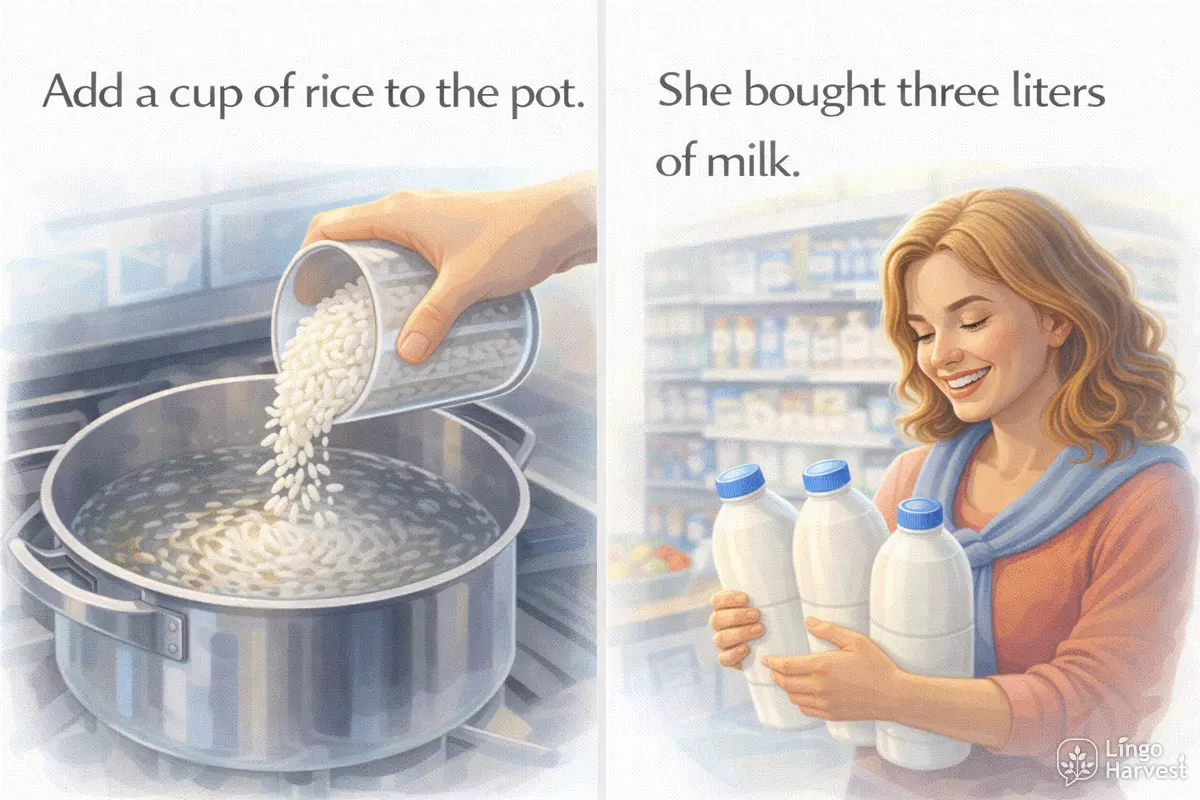
When someone wants to be specific, they use measure words or quantifiers that refer to a clearly defined amount. These often include units of measurement or container words. For example:
- a cup of rice → Add a cup of rice to the pot.
- three liters of milk → She bought three liters of milk.
- half a kilogram of sugar → Use half a kilogram of sugar.
- two slices of cheese → He ate two slices of cheese.
- one tablespoon of oil → Add one tablespoon of oil.
- 100 grams of flour → Measure 100 grams of flour.
- a bottle of water → He drank a bottle of water.
- five coins of gold → The box contained five coins of gold.
- an ounce of perfume → She bought an ounce of perfume.
- a packet of tea → I opened a packet of tea.
These expressions leave little room for interpretation. The listener knows exactly how much is being discussed.
Expressing approximate amounts
On the other hand, English often relies on vague or non-numerical quantifiers for mass nouns, especially in informal contexts or when the precise amount isn't important. Some common phrases include:
- a bit of (e.g., a bit of sugar)
- some (e.g., some water)
- a little (e.g., a little flour)
- a lot of (e.g., a lot of rice)
- plenty of (e.g., plenty of coffee)
- a handful of (e.g., a handful of sand)
- a pinch of (e.g., a pinch of salt)
- a dash of (e.g., a dash of vinegar)
- loads of (e.g., loads of butter)
- not much (e.g., not much ice cream)
- just enough (e.g., just enough oil)
- hardly any (e.g., hardly any sugar left)
These terms are flexible and open to interpretation, allowing for a more relaxed approach to quantity.
Comparison of exact and approximate quantity expressions
The following table highlights some typical ways English distinguishes between precise and vague quantification with mass nouns:
| Exact Quantity | Approximate Quantity |
|---|---|
| a liter of milk | some milk |
| two cups of rice | a bit of rice |
| 500 grams of flour | a little flour |
| three slices of cheese | plenty of cheese |
| one bottle of water | loads of water |
| a tablespoon of oil | just enough oil |
Why the distinction matters
Choosing between precise and approximate expressions can change the meaning of a sentence. For example, in recipes, using exact measures is crucial for consistent results, while in casual conversation, people might prefer rough estimates. Being aware of this nuance can help learners sound more natural and avoid confusion.
Quantifying nouns in shopping and daily tasks
Everyday English relies on a rich set of quantifiers to talk about mass nouns—things like food, liquids, and materials that cannot be counted individually. When shopping, cooking, or organizing chores, speakers use specific words and phrases to express amounts in a clear, practical way.
Common quantifiers for mass nouns
Instead of simple numbers, we use units, measures, and containers to convey quantity for these nouns. These quantifiers make communication precise and natural in daily routines.
- a piece of cheese → He cut a piece of cheese.
- a loaf of bread → She bought a loaf of bread.
- a bottle of milk → He poured a bottle of milk.
- a cup of flour → Add a cup of flour.
- a slice of ham → She ate a slice of ham.
- a bag of rice → They opened a bag of rice.
- a packet of sugar → I bought a packet of sugar.
- a bar of soap → There is a bar of soap in the sink.
- a can of soup → He heated a can of soup.
- a tube of toothpaste → I need a tube of toothpaste.
- a box of cereal → She opened a box of cereal.
- a glass of water → He drank a glass of water.
- a drop of oil → Add a drop of oil.
- a sheet of paper → Write it on a sheet of paper.
- a pile of laundry → There is a pile of laundry on the chair.
- a bowl of soup → She had a bowl of soup.
- a jar of honey → He opened a jar of honey.
- a stick of butter → Melt a stick of butter.
- a pinch of salt → Add a pinch of salt.
- a spoonful of sugar → She added a spoonful of sugar.
Quantifiers in action: Shopping and household tasks
When writing shopping lists, recipes, or giving instructions, quantifying mass nouns is essential. Compare these examples:
| Task | Example with Quantifier |
|---|---|
| Shopping list | two loaves of bread, a carton of eggs, three bottles of juice |
| Cooking | add a pinch of salt, pour half a cup of milk |
| Cleaning | use a drop of detergent, grab a sheet of paper towel |
| Organizing | sort a pile of clothes, recycle a bag of plastic |
Practice: Choose the correct quantifier
- Can you buy a __________ of toothpaste?
- Add a __________ of pepper to the soup.
- I drank two __________ of water after my run.
- Put the cookies in a __________.
- She opened a __________ of honey for her tea.
- Cut me a __________ of ham, please.
- He bought a __________ of bread at the bakery.
- Add a __________ of oil to the pan.
- Measure a __________ of flour for the recipe.
- She ate a __________ of cheese with crackers.
Show answers
- tube
- pinch
- glasses
- box
- jar
- slice
- loaf
- drop
- cup
- piece
Mastering these quantifiers helps you sound natural and be understood in shops, kitchens, and around the house. They are a key part of fluent, practical English for everyday life.
Common mistakes with mass noun quantifiers
Mixing up how to express amounts for uncountable nouns is a frequent source of confusion. Mass nouns—like “water,” “information,” or “rice”—don't take numbers directly, so choosing the right modifiers is essential for clarity and fluency. The following points highlight errors English speakers often make, along with tips on how to avoid them.
Confusing “much” and “many”
Using many with mass nouns is a common slip-up. Remember that much is used for things you can't count individually, while many is for countable items.
- ❌ How many rice do you have?
- ✅ How much rice do you have?
Adding “s” to mass nouns
Mass nouns typically do not have a plural form. Adding an “s” is incorrect, even if you mean large quantities.
- ❌ She bought three breads.
- ✅ She bought three loaves of bread.
Incorrect quantifier-noun combinations
Pairing the wrong quantifier with a mass noun can make a sentence sound odd or confusing. Some quantifiers only work with count nouns, others with both, but many are specific.
| Incorrect Pairing | Correct Usage |
|---|---|
| a few information | a little information |
| several furniture | some furniture / several pieces of furniture |
| many advice | much advice / a piece of advice |
| few water | little water |
Overusing “some” or “any”
While “some” and “any” work for both count and mass nouns, relying on them exclusively makes your English sound vague. Instead, try specific expressions like “a bit of,” “a piece of,” or “a glass of.”
Practice: describe amounts using correct quantifying nouns
Understanding how to describe the quantity of mass objects is essential for clarity in everyday English. Mass nouns—like water, rice, or advice—cannot be counted directly, so we use quantifying nouns (also called “measure words”). These help us specify amounts in a natural way. The following activities will help you recognize and apply these expressions in practical situations.
Matching exercise: choose the right quantifying noun
Match each mass noun to an appropriate quantifying noun from the list above:
- _____ of cheese
- _____ of coffee
- _____ of toothpaste
- _____ of sugar
- _____ of bread
- _____ of sand
- _____ of soup
- _____ of paper
Show answers
- a slice/piece of cheese
- a cup of coffee
- a tube of toothpaste
- a lump of sugar
- a loaf/slice of bread
- a grain of sand
- a bowl of soup
- a sheet of paper
Table: Quantifying nouns with different mass objects
| Mass Object | Common Quantifying Nouns |
|---|---|
| Milk | a bottle of, a glass of, a carton of |
| Bread | a loaf of, a slice of, a piece of |
| Sugar | a lump of, a spoonful of, a packet of |
| Water | a glass of, a bottle of, a drop of |
| Chocolate | a bar of, a piece of |
| Paper | a sheet of, a piece of |
| Advice | a piece of |
| Rice | a bowl of, a bag of |
| Oil | a bottle of, a drop of |
| Jam | a jar of |
Short practice: correct or incorrect?
For each sentence, decide if the quantifying noun is used correctly (✅) or incorrectly (❌):
- I bought a loaf of milk.
- She gave me a piece of advice.
- He poured a glass of water.
- We ate a bar of bread.
- I need a tube of toothpaste.
- She added a pinch of sugar.
- He drank a slice of juice.
- They opened a jar of honey.
- I wrote it on a grain of paper.
- She bought a bunch of soap.
Show answers
- ❌ (should be "a bottle / carton / glass of milk")
- ✅
- ✅
- ❌ (should be "a slice of bread" or "a loaf of bread")
- ✅
- ❌ (should be "a pinch of salt" or "a spoonful of sugar")
- ❌ (should be "a glass of juice")
- ✅
- ❌ (should be "a sheet of paper")
- ❌ (should be "a bar of soap")
With regular practice, you'll become more comfortable selecting the right quantifying nouns for different mass objects. Using these expressions accurately helps your English sound more natural and precise.