Nouns in News Headlines and Media Writing Style

 Here we why news headlines favor nouns, discussing how this choice compresses information, the use of abstract and agent nouns in reporting, common learner errors, and includes practice in converting sentences into noun-based headlines.
- Why nouns dominate news headlines
- Compression of information through headline nouns
- Abstract event nouns in media reporting
- Agent and actor nouns in breaking news
- Formal register and neutral noun choice
- Typical learner errors in headline-style writing
- Practice: convert full sentences into headline nouns
In journalism, capturing readers' attention often begins with the strategic choice of naming words, particularly in headlines that aim for both impact and clarity. These carefully selected terms not only frame the news but also guide the audience's initial impression, highlighting the most significant aspects of a story. By understanding how naming words shape reporting style, journalists can influence what readers focus on and how they interpret the information presented, ultimately affecting the overall effectiveness of news communication.
Why nouns dominate news headlines
Nouns tend to appear more frequently than other parts of speech in media headlines because they deliver the essential information quickly. Headlines are crafted to be concise, grabbing attention while summarizing the core of the story. Using nouns allows editors to highlight the main actors, objects, or events, giving readers an immediate sense of what the article is about without unnecessary detail.
Main functions of nouns in headlines
- Identify key subjects (people, organizations, places)
- Highlight major events or issues
- Convey outcomes or consequences (e.g., "Resignation," "Crash")
- Anchor the reader in context
Verbs and adjectives are often omitted or reduced to their most basic forms, since the headline’s goal is not to form a full sentence but to condense complex information. For example, instead of “The government has approved a new law,” a headline might read, “Government approval: new law.”
How headlines use nouns for impact
Noun-heavy headlines are easier to scan and process at a glance. This style also allows for greater flexibility in headline length, making it suitable for print and digital formats where space is limited. Additionally, nouns can be stacked or combined to create a sense of urgency or importance.
- Election Results → The election results were announced late at night.
- Storm Warning → A storm warning was issued for the coastal areas.
- Market Crash → The market crash caused widespread panic among investors.
- Policy Shift → The policy shift affected small businesses.
- Budget Cuts → Budget cuts led to staff reductions.
- Vaccine Rollout → The vaccine rollout began earlier than expected.
- CEO Resignation → The CEO resignation surprised employees.
- Trade Talks → Trade talks resumed after a short break.
- Travel Ban → The travel ban restricted international flights.
- Data Breach → The data breach exposed sensitive information.
- Job Growth → Job growth slowed during the quarter.
- Strike Action → Strike action disrupted public transport.
- Security Alert → A security alert was sent to all staff.
- Climate Report → The climate report highlighted rising temperatures.
- Merger Deal → The merger deal was approved by regulators.
- Inflation Surge → The inflation surge reduced purchasing power.
- School Closure → The school closure affected thousands of families.
- Internet Outage → The internet outage lasted several hours.
Comparing noun-focused and verb-focused headlines
| Noun-Focused Headline | Verb-Focused Headline |
|---|---|
| Budget Deficit | Government faces budget deficit |
| Vaccine Approval | Officials approve vaccine |
| Flood Warning | Meteorologists warn of floods |
| Market Volatility | Markets fluctuate wildly |
| Strike Threat | Workers threaten to strike |
In summary, the prominence of nouns in headline writing helps distill complex stories into digestible, recognizable concepts. This approach saves space, increases clarity, and aligns with readers’ expectations for quick, actionable information.
Compression of information through headline nouns
News headlines often rely on nouns to pack significant meaning into minimal space. By choosing precise and information-rich nouns, editors can communicate complex events, roles, or issues without lengthy explanations. This technique allows headlines to remain concise while still conveying the essential facts or themes of a story.
How nouns condense meaning in headlines
Instead of lengthy descriptions, headlines typically substitute entire phrases with a single noun, which acts as a shorthand for broader concepts. For example, rather than saying “the government’s latest economic initiative,” a headline might simply use “reform” or “stimulus.” This approach not only saves space but also delivers a punchier, more immediate impact on the reader.
Common patterns: From phrases to headline nouns
| Formal Description | Headline Noun | Example |
|---|---|---|
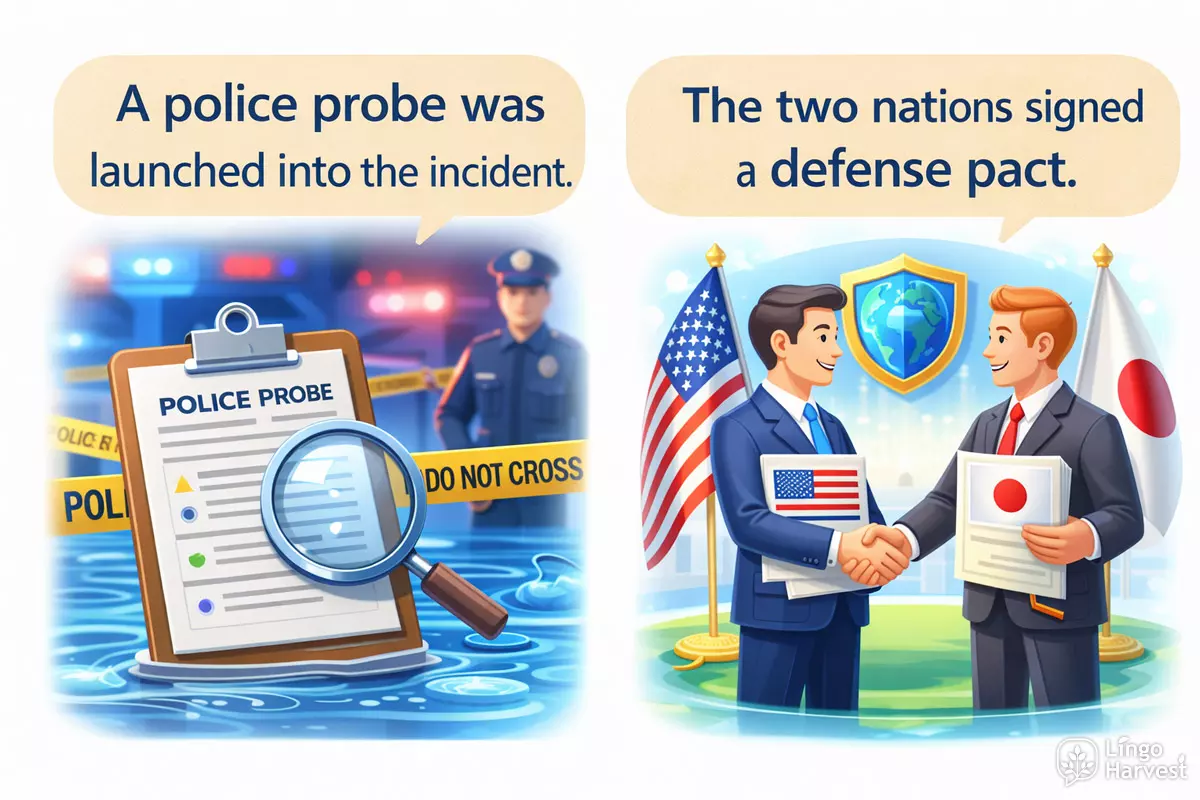
| Investigation | Probe | A police probe was launched into the incident. |
| Agreement between countries | Pact | The two nations signed a defense pact. |
| Financial assistance package | Bailout | The government approved a bank bailout. |
| Protest demonstration | Rally | Thousands joined the rally in the city center. |
| Political leader’s statement | Remark | His remark sparked public debate. |
| Natural disaster event | Quake / Flood | The quake caused widespread damage. |
| Legal process | Trial | The trial is scheduled for next month. |
| Medical discovery | Breakthrough | The treatment represents a major breakthrough. |
| Sports contest | Clash | The match was billed as a clash of rivals. |
| Government reduction plan | Cuts | Spending cuts were announced in the budget. |
| Corporate acquisition | Merger | The merger created a global company. |
| Public health threat | Outbreak | An outbreak was reported in the region. |
| Legislation proposal | Bill | The bill was introduced in parliament. |
| Celebrity controversy | Scandal | The actor was involved in a media scandal. |
| Market performance | Slump / Rally | Stocks entered a strong rally after the news. |
| Technological development | Innovation | This innovation could change the industry. |
| Military operation | Offensive | The army launched a major offensive. |
| Environmental concern | Spill | The oil spill polluted the coastline. |
Benefits and limitations of noun-based compression
Using compact nouns in headlines streamlines information delivery, enabling readers to grasp the news quickly. However, this strategy can sometimes oversimplify complex topics, leaving out context or nuance. Readers may need to refer to the full article for a complete understanding, as headline nouns often imply rather than explain.
Comparing full phrases and headline noun forms
| Full Phrase | Headline Noun |
|---|---|
| Government economic stimulus package | Stimulus |
| International peace agreement | Pact |
| Massive earthquake event | Quake |
| Company takeover deal | Merger |
| Medical scientific discovery | Breakthrough |
Headline nouns are a hallmark of journalistic brevity. Their use reflects the need to inform quickly, but also highlights the balance between clarity and conciseness that shapes media writing style.
Abstract event nouns in media reporting
Writers in news and journalism frequently use nouns that encapsulate complex happenings, trends, or developments without specifying physical actors or locations. These lexical choices, known as abstract event nouns, help summarize multifaceted stories and convey broader societal implications in a compact form. Rather than detailing every action or participant, reporters rely on these terms to generalize, categorize, and sometimes even dramatize events for their audience.
Common patterns and functions
Abstract event nouns often appear in headlines and leads to emphasize the significance or gravity of a situation. By transforming verbs or adjectives into nouns, journalists can shift focus from individual agents to the event or process itself. This technique aids in creating an impression of objectivity or inevitability, and can also facilitate brevity—a crucial factor for headline writing.
- election → The election was held amid high voter turnout.
- protest → A large protest filled the city square.
- crisis → The company faced a serious financial crisis.
- collapse → The bridge collapse caused major disruptions.
- investigation → An investigation was launched into the incident.
- agreement → The two sides reached an agreement after talks.
- shutdown → The factory shutdown affected hundreds of workers.
- expansion → The expansion created new jobs in the region.
- arrest → The arrest followed a lengthy search.
- merger → The merger formed one of the largest firms in the sector.
- outbreak → An outbreak was reported in several districts.
- announcement → The announcement surprised investors.
- strike → The strike disrupted public transportation.
- resignation → Her resignation took effect immediately.
- recovery → Economic recovery has been slow.
- dispute → The dispute was settled in court.
- launch → The launch of the product was delayed.
- transition → The transition to renewable energy is underway.
- attack → The attack caused widespread damage.
- settlement → The settlement ended the long-running case.
Comparing concrete and abstract event nouns
To illustrate the difference, consider how news headlines change when shifting from concrete to abstract expressions. Concrete event nouns typically refer to specific, tangible occurrences, while abstract event nouns generalize or conceptualize the action.
| Concrete Expression | Abstract Event Noun |
|---|---|
| Workers walk out | Strike |
| Leaders agree | Agreement |
| Virus spreads | Outbreak |
| Company buys rival | Merger |
| President steps down | Resignation |
Implications for media style
Using event nouns of this type allows journalists to maintain a neutral tone and prioritize the broader impact over individual agency. This can lend headlines a sense of authority and universality, but may also obscure responsibility or agency. Readers should be aware that such choices shape the narrative, influencing perceptions of causality and significance.
Agent and actor nouns in breaking news
News headlines often rely on agent and actor nouns to quickly identify who is involved in an event or action. These nouns serve as linguistic shortcuts, instantly pointing to individuals, groups, or entities responsible for actions. Using specific agent nouns—for example, "suspect," "official," or "rescue worker"—allows headlines to convey complex scenarios with remarkable brevity, which is essential in the fast-paced environment of breaking news.
Common types of agent and actor nouns in headlines
Writers choose these nouns based on clarity, impact, and the need to attribute responsibility or agency. Some commonly used categories include:
- Authorities: police, judge, inspector, mayor
- Perpetrators or suspects: attacker, hacker, burglar, arsonist
- Victims and affected parties: passenger, resident, protester, patient
- Professionals: doctor, firefighter, lawyer, teacher
- Officials and representatives: spokesperson, minister, diplomat, governor
- Participants: witness, volunteer, competitor, student
- Groups and organizations: union, committee, agency, council
- General roles: worker, driver, customer, voter
- Rescue and emergency roles: paramedic, rescuer, medic, crew
- Military and security: soldier, officer, guard, trooper
- Media and commentators: reporter, journalist, analyst, anchor
- Criminals or negative agents: thief, fraudster, smuggler, vandal
Patterns and effects in headline writing
Agent and actor nouns not only identify participants but also influence the tone and perceived objectivity of news. Choosing "official" versus "source," for instance, can imply different levels of authority or reliability. Similarly, generic nouns like "man" or "woman" are often used when specific details are unknown, while more precise terms are employed as information develops. This practice helps maintain both immediacy and accuracy in news delivery.
Comparison of agent noun usage in headlines

| Headline Example | Agent/Actor Noun | Implied Role |
|---|---|---|
| Mayor Approves New Housing Plan | Mayor | Authority |
| Rescuers Pull Survivors from Rubble | Rescuers | Emergency Response |
| Suspect Detained After Break-In | Suspect | Alleged Perpetrator |
| Witness Describes Crash Scene | Witness | Participant/Observer |
| Analyst Predicts Market Shift | Analyst | Commentator |
| Union Calls for Strike Action | Union | Organization |
The strategic choice of agent or actor nouns shapes readers’ understanding and expectations. In breaking stories, concise labels allow for rapid updates as new information emerges. Over time, the specific nouns used can subtly influence public perception of events and the people involved.
Formal register and neutral noun choice
News headlines and media writing often rely on a polished, objective style. This means journalists typically select nouns that are both neutral and precise, avoiding loaded or emotive terms that could reveal bias or sway the reader. The aim is to present information clearly, allowing audiences to draw their own conclusions from the facts provided. Writers in this context steer away from slang, jargon, or colloquial expressions. Instead, they favor nouns that carry authority and clarity. For example, instead of “kids,” headlines will use “children”; rather than “boss,” the term “manager” or “executive” appears. This choice supports credibility and universal understanding.
Common features of formal noun usage in journalism
- Preference for official titles (e.g., “president,” “minister,” “official”)
- Use of institution names over generic or casual references (e.g., “court” instead of “the judge”)
- Selection of profession-based nouns rather than descriptive labels (“scientist” over “lab worker”)
- Replacement of emotionally charged words with neutral descriptors (“incident” instead of “tragedy”)
- Clear reference to groups or entities (“government,” “company,” “community”)
- Use of collective nouns for groups or organizations (“staff,” “authorities”)
- Specificity in naming locations or events (“summit,” “conference,” “election”)
- General avoidance of brand names unless essential to the story
- Limiting the use of personal pronouns or subjective nouns
- Adoption of internationally recognized terms where possible
Examples: Neutral vs. emotive noun choices
Writers often swap out emotionally loaded nouns for more impartial alternatives. Here are some typical substitutions:
- “protesters” → “demonstrators”
- “boss” → “executive”
- “disaster” → “incident”
- “enemy” → “opponent”
- “fanatics” → “activists”
- “kids” → “children”
- “cop” → “officer”
- “killer” → “suspect” or “individual”
- “attack” → “event” or “incident”
- “victims” → “people affected”
- “bosses” → “managers”
- “slump” → “decline”
- “crisis” → “situation”
Comparing formal and informal noun choices
| Informal/Emotive Noun | Formal/Neutral Noun |
|---|---|
| boss | executive |
| kids | children |
| cop | officer |
| fanatics | activists |
| tragedy | incident |
| enemy | opponent |
| slump | decline |
| crisis | situation |
Selecting the appropriate level of formality and neutrality in nouns is integral to maintaining trust and impartiality in reporting. This practice helps ensure that headlines and articles are accessible and fair, supporting the role of media as a reliable source of information.
Typical learner errors in headline-style writing
Many new writers encounter difficulties when crafting news headlines, especially when it comes to using nouns and maintaining the concise, impactful style favored by media outlets. These challenges often result in headlines that sound awkward, are grammatically incorrect, or simply fail to capture attention.
Common pitfalls with nouns in headlines
Writers unfamiliar with journalistic conventions might misuse nouns in several ways. Some of the most frequent missteps include:
- Overusing articles ("a," "an," "the") where they are typically omitted in headlines
- Forgetting to use noun modifiers efficiently, leading to vague or unclear headlines
- Using plural nouns incorrectly—either when singular is required, or vice versa
- Relying on complex noun phrases that make the headline difficult to scan quickly
- Choosing abstract nouns that weaken the impact, instead of strong, concrete ones
- Failing to use compound nouns common in headline language (e.g., "budget talks," "policy shift")
- Mixing noun and verb forms in ways that break parallelism
Article omission and noun use: Examples
Writers often struggle with dropping articles and prepositions, a core feature of headline grammar. Compare the following examples:
- ❌ The government announces a new tax policy
- ✅ Government announces new tax policy
Confusing noun forms
A frequent mistake is choosing the wrong noun form, which can alter the meaning or make the headline harder to understand. Here are some examples of what to avoid:
- Using gerunds instead of nominal forms: Announcing new rules vs. Announcement of new rules
- Incorrect pluralization: Children safety concerns instead of Child safety concerns
- Misplaced noun modifiers: Health expert advice vs. Expert health advice
Headline noun usage: Error vs. Correction Comparison
| Incorrect | Preferred Headline Style |
|---|---|
| Police is investigating the robbery | Police probe robbery |
| A rise in the unemployment rates | Unemployment rates rise |
| The launch of a new smartphone by Apple | Apple launches new smartphone |
| Climate changes are threatening the crops | Climate change threatens crops |
| Researchers announce a discovery of a new species | Researchers discover new species |
Tips for mastering noun use in headlines
- Eliminate unnecessary words—aim for brevity and clarity
- Favor concrete, specific nouns over general or abstract terms
- Use noun modifiers for compactness (e.g., "policy debate" instead of "debate about policy")
- Practice reading published headlines for structure and noun placement
- Remember that headline style often bends standard grammar rules for effect
Understanding and avoiding these common errors will help you write more professional, readable headlines that reflect the conventions of media writing.
Practice: convert full sentences into headline nouns
Turning complete statements into concise headline-style nouns is a core skill in news writing. Headlines often remove verbs and articles, focusing on key nouns and nominal phrases to communicate information quickly. This section offers practical exercises and tips to help you master this transformation, making your writing sharper and more suitable for media contexts.
How to Identify the Core Noun
When condensing a sentence for a headline, start by pinpointing the main event or subject. Strip away auxiliary words, verbs, and unnecessary details, leaving only the essential nouns or noun phrases.
- Find the main topic or event in the sentence.
- Remove supporting verbs and articles.
- Condense supporting information into modifiers or compound nouns.
Common Transformations: Examples
Here are typical ways to convert full sentences into noun-based headline structures:
- The government has announced a tax increase. → Tax Hike Announcement
- Scientists discovered a new planet. → Planet Discovery
- A storm caused major flooding in the city. → City Flooding
- Police arrested three suspects after the robbery. → Robbery Arrests
- The company reported a drop in profits. → Profit Decline
- Schools closed due to snow. → School Closures
- Lawmakers debate healthcare reform. → Healthcare Reform Debate
- Fire damages historic library. → Library Fire Damage
- Experts warn of rising inflation. → Inflation Warning
- Local team wins championship. → Championship Win
- Residents protest new development. → Development Protest
- Airport delays flights after storm. → Flight Delays
- Artists open gallery downtown. → Gallery Opening
- Mayor announces budget cuts. → Budget Cut Announcement
- Tourism increases in summer. → Summer Tourism Surge
Exercise: Try It Yourself
Convert the following sentences into headline-style noun phrases. Focus on brevity and clarity.
- The city council approved a new housing plan.
- Doctors found a cure for a rare disease.
- Heavy rain caused traffic chaos downtown.
- The president vetoed the spending bill.
- Teachers demand higher salaries.
- Wildfires threaten rural communities.
- The company announced a major restructuring.
- Police arrested a suspect after the incident.
- Scientists reported a breakthrough in research.
- The airline canceled dozens of flights.
- Workers launched a nationwide strike.
- The government lifted travel restrictions.
Show answers
- Housing Plan Approval
- Disease Cure Discovery
- Downtown Traffic Chaos
- Spending Bill Veto
- Salary Demand
- Wildfire Threat
- Corporate Restructuring Announcement
- Suspect Arrest
- Research Breakthrough
- Flight Cancellations
- Nationwide Strike
- Travel Restriction Lift
Tips for Effective Noun Headlines
- Use compound nouns for clarity: “Election Results,” “Market Crash.”
- Omit unnecessary details unless they change the headline’s meaning.
- Keep the language neutral and factual.
- Add modifiers only if they add value (e.g., “Winter Storm Warning”).
Practicing this conversion helps you think like a journalist, focusing on the essence of each story. The more you practice, the more natural it becomes to identify and use strong, clear nouns in your own headlines.