Placeholder Nouns in Everyday English Conversation Usage

 The article defines placeholder nouns in spoken English, lists common examples like thing and stuff, explains when they fit casual conversation, notes risks of overuse, and offers precise alternatives with practice on replacing them for clear communication.
- What placeholder nouns are in spoken English
- Common placeholders like thing, stuff, and guy
- When placeholder nouns are appropriate in conversation
- Tone and informality created by placeholder nouns
- Risks of overusing placeholder nouns
- More precise alternatives for clear communication
- Practice: replace placeholder nouns with specific words
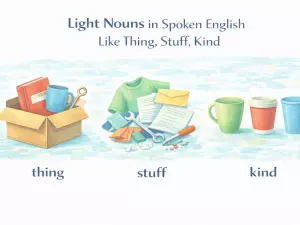
Have you ever found yourself in the middle of a conversation, unable to remember the precise name of an object, and ended up using words like thingy or whatchamacallit instead? These placeholder terms are common in everyday English and serve a useful purpose: they keep conversations moving smoothly when the exact word momentarily slips our minds. Rather than halting the discussion or getting frustrated, people rely on these vague expressions as a practical solution, showing how language adapts to real-life communication challenges.
What placeholder nouns are in spoken English
Placeholder nouns, often called “dummy nouns” or “fillers,” are words we use when we can’t recall the exact term, don’t want to be specific, or the name isn’t important. In casual conversation, these words keep the flow going when details are vague or irrelevant. They help speakers describe things, people, or ideas in a general way without pausing to search for precise vocabulary.
Common placeholder nouns you’ll hear in conversation
- Thingy – A catch-all for objects when the real name escapes you. (“Pass me that thingy over there.”)
- Whatchamacallit – Used for objects or concepts whose names are forgotten or unknown. (“Can you hand me the whatchamacallit?”)
- Thingamajig/Thingamabob – Playful alternatives to “thingy” for gadgets or tools. (“Where’s the thingamajig for the blender?”)
- Doohickey – Often refers to small mechanical parts or tools. (“I need that doohickey to fix this.”)
- Whatsit – Another informal option for objects or even people. (“Did you see the whatsit on the table?”)
- Widget – Used in technical or business contexts for generic products or items.
- Gizmo – Refers to gadgets, especially those with an unknown or complicated function.
- So-and-so – Used for people when the speaker doesn’t want to give or doesn’t remember a name. (“I saw so-and-so at the store.”)
- Whatshername/Whatshisname – For people whose names are forgotten. (“You know, whatshisname from accounting.”)
- Stuff – Used for a group or collection of things. (“Put your stuff away.”)
- Doodad – Refers to a small object, often decorative or technical.
- Doovalacky – A more regional or playful alternative, found in Australian and British English.
- Thing – Sometimes just the basic word is enough. (“Where’s my thing?”)
- Whatsitcalled – Blends “what’s it called” into a single, casual term.
- Deal – For objects or situations, especially in phrases like “big deal” or “little deal.”
- Object – Used in more formal or technical situations.
- Contraption – Refers to a device or machine, especially one that looks complicated or unusual.
- Bit – For a small part of something. (“Hand me that bit over there.”)
- Piece – Used when the exact item isn’t important. (“I need that piece from the box.”)
How placeholder nouns function in speech
These generic terms fill conversational gaps, especially when speakers are distracted, in a hurry, or discussing unfamiliar topics. They allow for smooth communication without requiring perfect recall or technical accuracy. Often, listeners can understand what’s meant from context, tone, or gestures.
Comparing placeholder nouns: nuance and usage
| Placeholder Noun | Typical Context / Nuance |
|---|---|
| Thingy | Casual, any object, very informal |
| Doohickey | Small tools, mechanical parts |
| So-and-so | People, often when avoiding names |
| Gizmo | Gadgets or devices, sometimes playful |
| Whatshername/Whatshisname | Forgotten names, informal |
| Stuff | General collection or group of things |
Overall, these terms are essential tools for everyday English, allowing speakers to sidestep forgotten words or unnecessary detail. They reflect the flexibility and adaptability of spoken language.
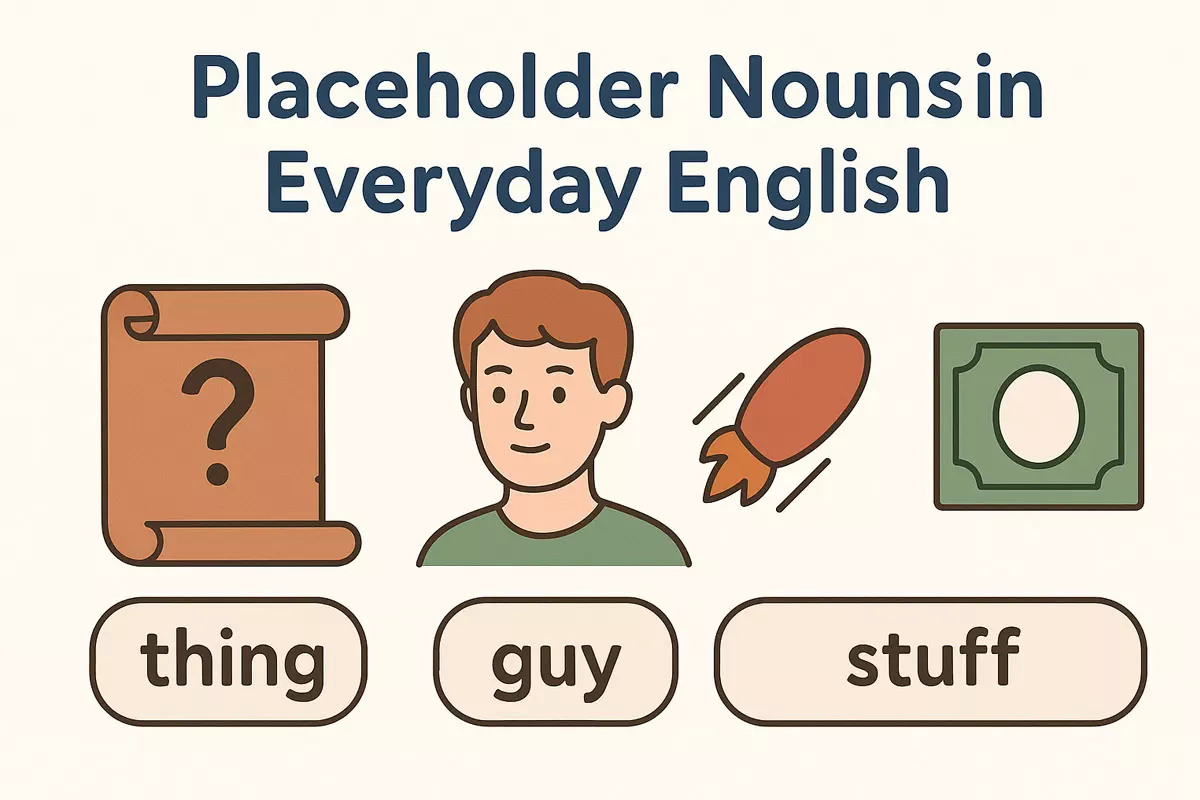
Common placeholders like thing, stuff, and guy
In everyday English conversations, people often reach for generic words when they can’t recall a specific term, want to be vague, or need to keep the topic light. Words like thing, stuff, and guy serve as convenient stand-ins for more precise nouns. These expressions help speakers communicate smoothly, even when details are missing or not important to the listener.
How these placeholders function in conversation
Placeholder nouns are especially useful for keeping speech informal or when the exact word isn’t necessary. For example, someone might say, “Can you hand me that thing over there?” instead of specifying “remote control.” Similarly, “stuff” can cover almost any collection of objects or tasks: “I’ve got a lot of stuff to do.” The word “guy” often stands in for a person whose name is unknown or irrelevant: “Some guy called for you earlier.”
Examples of placeholder use
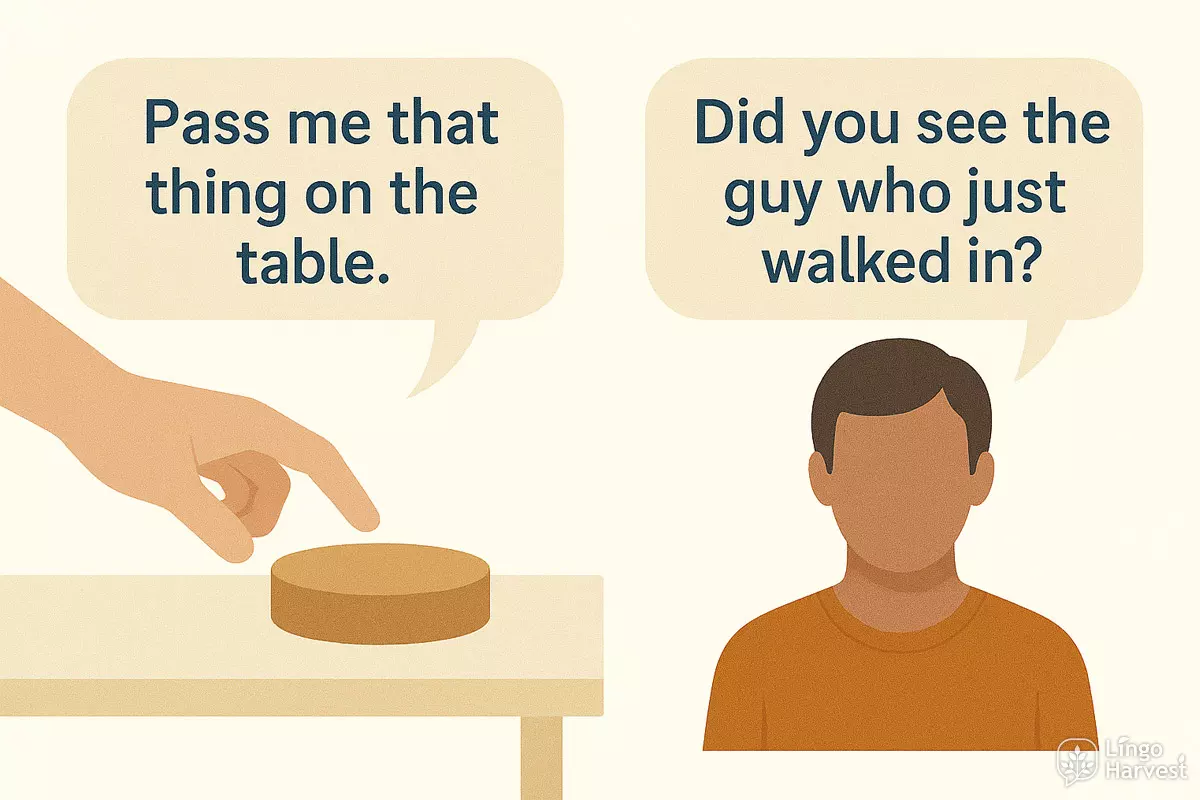
- Pass me that thing on the table.
- Did you see the guy who just walked in?
- I need to pack my stuff before we leave.
- What’s that thing called again?
- There’s this guy at work who always brings donuts.
- All my stuff is in the car.
- She bought a thing for her phone.
- Some guy left his umbrella here.
- Can you fix this thing for me?
- There’s a lot of stuff to clean up.
- I met a guy who knows your brother.
- Let’s grab our stuff and go.
- He’s the guy I told you about.
- Put that thing back where you found it.
- I saw a guy selling ice cream outside.
- This thing keeps breaking down.
- We’ll need that stuff for the project.
- Who’s the guy in the blue shirt?
- Can you move your stuff off the chair?
- That thing looks expensive.
Comparing usage: thing, stuff, guy
| Placeholder | Typical Meaning/Use | Example in Conversation |
|---|---|---|
| thing | Any object, device, or item (singular, unspecified) | “Can you grab that thing for me?” |
| stuff | Multiple items, tasks, or abstract collections (uncountable) | “I’ve got a lot of stuff to finish today.” |
| guy | Any person, usually male, whose identity isn’t important or is unknown | “Some guy was asking about you.” |
These placeholders can make speech more flexible and relatable. They’re especially common in informal chats, storytelling, or when speakers are thinking on their feet. While overusing such terms can lead to vagueness, their strategic use keeps communication flowing when details are unnecessary or forgotten.
When placeholder nouns are appropriate in conversation
Placeholder nouns like “thingy,” “whatchamacallit,” or “doohickey” are especially useful in spoken English when the exact name of an object, person, or concept is unknown, forgotten, or irrelevant. They help keep conversations flowing smoothly, allowing speakers to refer to items or ideas without pausing awkwardly to search for the precise term. Using these expressions can also make dialogue feel more informal, friendly, or relatable, especially among peers or in casual settings.
Typical situations for using placeholder nouns
- When you temporarily forget a specific word: “Can you pass me the… uh, the thingamajig?”
- Describing unfamiliar objects or concepts: “I bought one of those whatchamacallits for the kitchen.”
- Talking about something whose name isn’t important: “Just put it on that thingy over there.”
- Referring to items in technical or complex contexts, especially when not everyone knows the jargon: “The doohickey connects to the whatsit to make it work.”
- When speaking with children or non-native speakers to simplify language: “Grab the doodad from the shelf.”
- During storytelling or jokes, to maintain pace or comedic effect: “So this guy walks in with a big, shiny thingamabob…”
- In group discussions when you expect listeners to infer the meaning: “You know, the thing we used yesterday.”
- For placeholders in instructions: “Attach that whatsit to the side panel.”
- To avoid repetition of a word: “Take the box, the bag, and, uh, the other thingy.”
- When referencing generic people: “Ask that whatsisname over there.”
Benefits and limitations
Using substitute nouns can be helpful in casual talk, but overuse may cause confusion. They work best when context is clear and both speakers share enough background knowledge to interpret the reference. In formal or technical settings, relying on vague terms can lead to misunderstandings, so it’s usually better to clarify or specify when accuracy is important.
Common placeholder nouns in English
- thingy → Pass me that thingy on the table.
- thingamajig → This thingamajig doesn’t seem to work.
- thingamabob → He fixed the bike with a small thingamabob.
- whatchamacallit → Where did I put the whatchamacallit?
- doohickey → The doohickey fell off the machine.
- doodad → She collects little doodads from her trips.
- gizmo → This gizmo makes cooking easier.
- widget → The app includes a useful widget.
- whatsis / whatsit → Hand me the whatsit near the sink.
- whosit → I ran into that whosit from accounting.
- whositsname / whatsisname → Ask whatsisname to send the file.
- jobbie → Can you tighten that jobbie?
- doober → The doober connects the two parts.
- whatshername / whats-his-name → I spoke to whats-her-name yesterday.
- gubbins → There’s too much gubbins inside the box.
- contraption → He built a strange contraption in the garage.
Comparing context and clarity
| Situation | Appropriate Use of Placeholder | Potential Issue |
|---|---|---|
| Chatting with friends | “Hand me that thingy, please.” | ✅ Understood in context |
| Explaining a technical process | “Connect the doohickey to the whatsit.” | ❌ May cause confusion |
| Telling a casual story | “He brought some whatchamacallit.” | ✅ Adds humor or informality |
| Giving formal instructions | “Attach the thingamabob to the frame.” | ❌ Lacks precision |
In summary, using placeholder nouns can be quite effective in everyday English when the context is casual, the meaning is easily inferred, or the speaker needs to keep the conversation moving. However, they are best avoided in settings where precision, formality, or technical accuracy are important.
Tone and informality created by placeholder nouns
Using placeholder words like "thingamajig," "whatchamacallit," or "doohickey" instantly signals an easygoing, relaxed approach to conversation. These substitutes often appear when speakers can't recall a specific term or when the precise label doesn't seem important. Their use can foster a friendly, collaborative atmosphere—listeners are invited to fill in the blanks, guess the meaning, or simply share a laugh at the speaker’s momentary lapse.
How placeholder words shape everyday speech
Placeholder nouns keep conversations light and spontaneous. Instead of pausing awkwardly to search for the exact word, people reach for these flexible fillers. This habit reflects a focus on connection over precision, and it’s especially common in casual chats among friends, family, or colleagues.
- Reduces formality: Choosing "thingy" over a technical term softens the tone.
- Fosters inclusivity: Listeners don’t need specialized knowledge to follow along.
- Encourages participation: Others may chime in with the correct word or their own placeholders.
- Signals shared understanding: Frequent use often hints at a close relationship or shared context.
- Breaks tension: Lightens the mood when someone forgets a word.
- Supports storytelling: Lets speakers keep momentum without getting bogged down in details.
Common placeholder nouns in informal English
Here are some widely used English stand-ins you’ll hear in everyday conversation:
- gadget → This gadget is supposed to save time.
- thingamahoochie → He broke the thingamahoochie on the door.
- whatzit → Do you know how this whatzit works?
- whodunit → That movie felt like a classic whodunit.
- doofer → Pass me that doofer near the toolbox.
- doovalacky → The doovalacky came loose again.
- whatsis → I can’t remember the name of that whatsis.
- whatsomever → Take whatever, whatsomever you need.
- thingummybob → The thingummybob won’t fit properly.
- whosit → Ask that whosit from HR.
- whatsname → Whatsname called earlier today.
- gadgetry → He’s into modern gadgetry.
- doojigger → The doojigger controls the speed.
- what-have-you → We talked about work, travel, what-have-you.
- bits-and-bobs → The drawer is full of bits-and-bobs.
- contrivance → This contrivance looks complicated.
- thingo (regional) → Hand me that thingo over there.
Comparing tone: Placeholder nouns vs. specific language
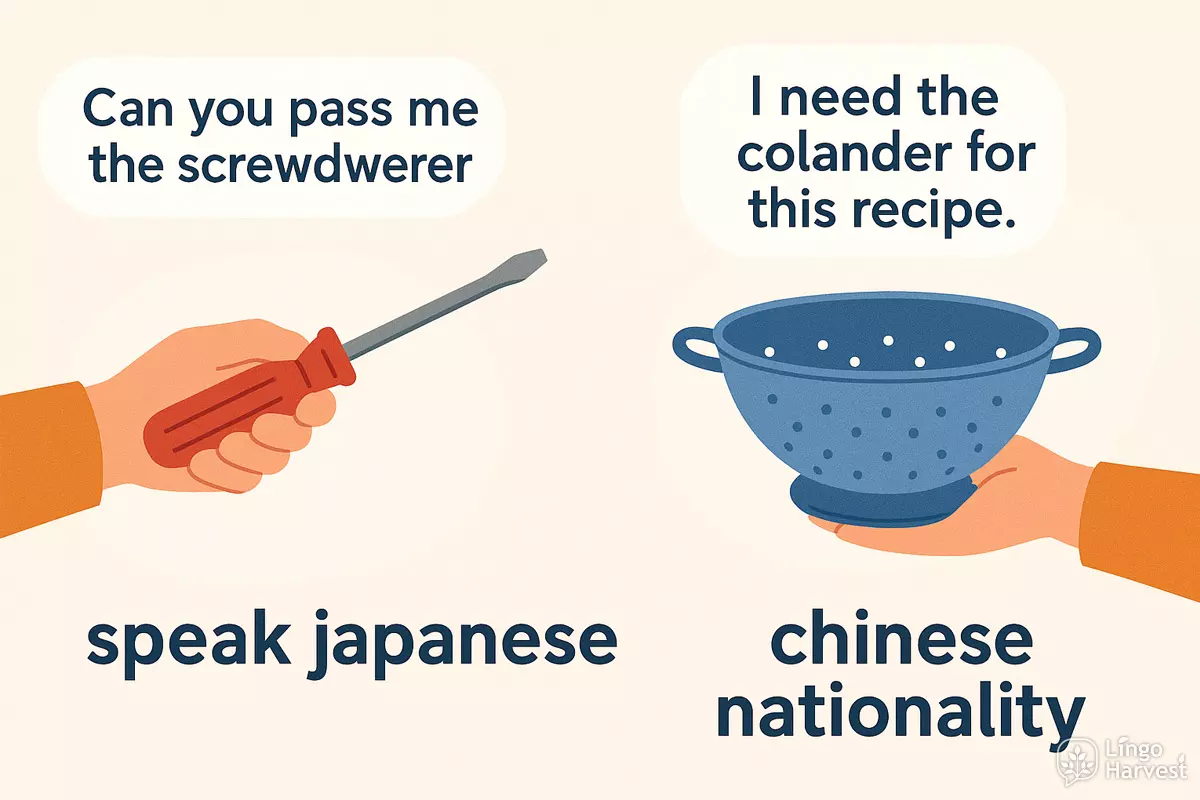
| Example with Placeholder Noun | Example with Specific Noun | Typical Tone |
|---|---|---|
| Can you pass me that thingamajig? | Can you pass me the screwdriver? | Casual, informal |
| I need the whatchamacallit for this recipe. | I need the colander for this recipe. | Relaxed, conversational |
| Where did you put the doohickey? | Where did you put the remote control? | Friendly, light-hearted |
| Ask whatshisname if he’s coming. | Ask John if he’s coming. | Playful, familiar |
Overall, these substitutes let speakers set an approachable tone, making exchanges feel more spontaneous and less formal. They’re a hallmark of conversational English, especially when the focus is on ease and connection rather than technical accuracy.
Risks of overusing placeholder nouns
Relying too heavily on words like "thing," "stuff," or "whatchamacallit" can make communication less clear. When listeners hear too many generic terms, they may struggle to understand exactly what is being referenced. This can lead to confusion, misunderstandings, and the need for follow-up questions.
Loss of Precision and Clarity
Using vague substitutes in place of specific vocabulary reduces the accuracy of information. For instance, saying "Can you pass me that thing?" instead of naming the object forces others to guess your meaning. Over time, this habit can erode effective communication, especially in group settings or professional contexts.
Impact on Listener Engagement
Repeated use of ambiguous referents may cause listeners to lose interest. People generally respond better to conversations that are direct and descriptive. If every object or concept is referred to in a nonspecific way, others may feel disconnected or even frustrated.
- Increased need for clarification (e.g., "Which thing do you mean?")
- Potential for miscommunication in instructions
- Weaker vocabulary development for language learners
- Reduced credibility in formal or academic situations
- Difficulty building rapport in new conversations
- Possible impression of forgetfulness or lack of knowledge
- Hindrance to effective storytelling or explanations
- Challenges when translating or interpreting
- Problems with written communication, such as emails or reports
- Complications during collaborative tasks or teamwork
When Is It Acceptable?
Placeholder terms can be useful for casual speech or when the exact word is unknown or irrelevant. However, overuse makes it harder for others to follow the conversation. Striking a balance between casual language and specificity ensures both comfort and clarity.
Comparison: Specific vs. Placeholder Language
| Specific Expression | Placeholder Substitute |
|---|---|
| Can you hand me the stapler? | Can you hand me that thing? |
| I need the USB cable for my laptop. | I need that stuff for my computer. |
| The instructions are on the whiteboard. | The instructions are on that thing over there. |
| Please email the spreadsheet to the team. | Please send that file to everyone. |
Overusing generic stand-ins can make even simple requests unnecessarily complicated. To communicate effectively, aim for a mix of clear, direct language and occasional placeholders when appropriate.
More precise alternatives for clear communication
Choosing specific nouns instead of generic placeholders greatly improves understanding and helps avoid confusion. While words like “thing,” “stuff,” or “place” are convenient, they can make it harder for listeners to know exactly what is meant. Substituting them with accurate terms clarifies meaning, especially in professional, technical, or educational settings.
Common placeholder nouns and their specific substitutes
- Thing → device, tool, object, item, gadget, component
- Stuff → materials, supplies, belongings, documents, ingredients
- Place → location, venue, restaurant, office, store, city
- Guy → man, colleague, friend, customer, neighbor
- Kid → child, student, teenager, toddler, youngster
- Thingy → button, lever, switch, handle, dial
- Whatchamacallit → adapter, connector, charger, fuse, part
- Doohickey → clip, fastener, bracket, latch, widget
- Somewhere → address, destination, hallway, park, region
- Anything → task, assignment, request, favor, issue
- Something → idea, proposal, topic, suggestion, solution
- People → guests, participants, clients, staff, visitors
- Thingamajig → remote, controller, sensor, knob, module
- Part → section, chapter, segment, division, portion
- Number → amount, total, figure, quantity, statistic
- Area → field, sector, department, zone, district
Benefits of using specific vocabulary
Replacing ambiguous terms with more descriptive words:
- Ensures your listener understands exactly what you mean
- Reduces the need for follow-up questions
- Makes instructions and requests clearer
- Improves professionalism in emails and meetings
- Helps build richer vocabulary over time
Quick reference: Placeholder vs. Specific Noun
| Vague Placeholder | Clearer Choice |
|---|---|
| thing | device, object, tool |
| stuff | materials, belongings, documents |
| place | office, restaurant, location |
| guy | colleague, client, neighbor |
| kid | child, student, teenager |
| thingy | button, lever, handle |
| whatchamacallit | connector, charger, adapter |
| doohickey | clip, latch, bracket |
| something | suggestion, idea, proposal |
| area | department, field, sector |
When you swap out broad terms for more targeted language, your communication becomes much easier to follow and more effective. This habit is particularly useful when clarity is essential, such as in instructions, work discussions, or academic writing.
Practice: replace placeholder nouns with specific words
Understanding how to swap out vague words like “thing,” “stuff,” or “something” for more precise language is a key skill in everyday English. This helps conversations become clearer, more descriptive, and easier for others to follow. Let’s look at how to identify these general nouns and practice replacing them with specific vocabulary.
Common Placeholder Nouns and Their Specific Alternatives
People often use placeholder terms when they can’t recall the exact word, or when speaking casually. Here are frequent examples and what you might use instead:
- Thing → phone, document, jacket, recipe, idea
- Stuff → groceries, homework, equipment, clothes, supplies
- Something → solution, answer, appointment, invitation, message
- Thingy → remote, charger, bookmark, adapter, switch
- Whatchamacallit → stapler, screwdriver, spatula, doorknob, faucet
- Whatsit → handle, lever, dial, lid, button
- Doodad → USB drive, ornament, magnet, clip, keychain
- Gadget → blender, smartwatch, camera, tablet, e-reader
- Device → laptop, thermostat, speaker, printer, router
- Object → sculpture, trophy, souvenir, package, tool
Exercise: Make Sentences More Specific
Try replacing the vague word in each sentence with a more precise noun. This will help you practice being clear and detailed in conversation.
- Can you pass me that thing on the table?
- I need to buy some stuff for dinner tonight.
- She left her thingy in the car again.
- Did you see the gadget he was using?
- There’s something in my bag for you.
- Where did I put that whatchamacallit?
- He keeps collecting random bits and pieces.
- We talked about work and all that jazz.
- There’s some kind of problem with the order.
- I forgot to bring the whatsit from the office.
Show answers
- Can you pass me that pen on the table?
- I need to buy some ingredients for dinner tonight.
- She left her umbrella in the car again.
- Did you see the tablet he was using?
- There’s a gift in my bag for you.
- Where did I put that charger?
- He keeps collecting random souvenirs.
- We talked about work and family plans.
- There’s a problem with the delivery address.
- I forgot to bring the contract from the office.
Practice: Choose the Best Replacement
Pick the most specific noun for each sentence below.
- Could you grab that stuff from the kitchen? (A) utensils (B) stuff (C) thing
- I forgot my thingy for charging my phone. (A) charger (B) key (C) book
- He invented a new gadget that helps you clean windows. (A) tool (B) gadget (C) window-cleaner
- There is some junk all over the desk. (A) furniture (B) papers (C) junk
- She bought a small gizmo for her laptop. (A) accessory (B) screen (C) table
- Can you fix this thing on the door? (A) handle (B) idea (C) sound
- He keeps all his stuff in one box. (A) belongings (B) box (C) shelf
- I lost that little doohickey again. (A) button (B) notebook (C) jacket
- She replaced the broken whatchamacallit. (A) cable (B) phone (C) wallet
- There’s some thing blocking the door. (A) object (B) idea (C) plan
Show answers
- A) utensils
- A) charger
- C) window-cleaner
- B) papers
- A) accessory
- A) handle
- A) belongings
- A) button
- A) cable
- A) object
Tips for Replacing Placeholder Nouns
- Think about the context—what is the function or category of the item?
- Use descriptive language: color, size, shape, or purpose can help.
- If you’re unsure, ask for clarification or describe the object until you find the right word.
With practice, you’ll find it easier to swap out generic terms for words that make your meaning clear and your conversations more engaging.