Pluralizing Compound Nouns in Everyday English Usage

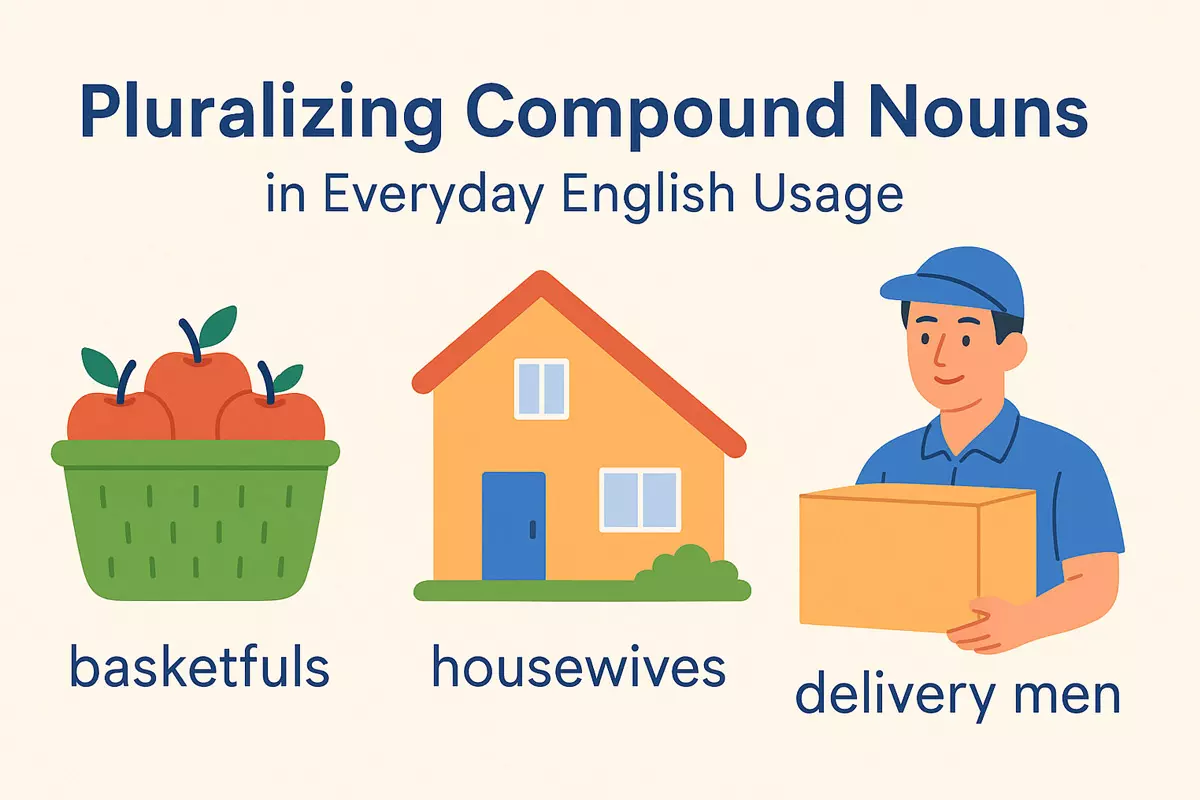 This article explains what compound nouns are, how to pluralize them based on their type—open, closed, or hyphenated—and which word takes the plural ending. It covers common and irregular forms, typical mistakes, and practice exercises.
- What compound nouns are in English
- Which part of a compound noun takes the plural ending
- Pluralizing open, closed, and hyphenated compounds
- Common plural compound nouns used in daily life
- Irregular plural forms inside compound nouns
- Typical learner mistakes with compound pluralization
- Practice: form correct plural compound nouns
Making multi-word nouns plural in English can be surprisingly challenging, as the correct form often depends on which part of the phrase is the main noun. For example, the plural of mother-in-law is mothers-in-law, and the plural of runner-up is runners-up. Learning these rules not only prevents common mistakes but also helps you express your ideas more accurately and confidently in both writing and conversation. Mastering this aspect of grammar can make your communication clearer and more professional.
What compound nouns are in English
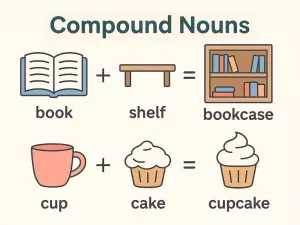
Compound nouns are words formed by joining two or more individual terms to create a single unit with a distinct meaning. These combinations often fuse together nouns, adjectives, verbs, or prepositions to express concepts that a single word cannot capture. In everyday English, such word pairings are everywhere, describing objects, people, jobs, places, and more. Recognizing these structures is key to understanding how they work, especially when it comes to their plural forms.
Common forms of compound nouns
There are several ways in which these blends appear in the language:
- Closed compounds: No space between words (e.g., toothpaste, notebook).
- Hyphenated compounds: Words joined by a hyphen (e.g., mother-in-law, check-in).
- Open compounds: Separate words used together (e.g., police officer, ice cream).
Examples of compound nouns in daily use

- bus stop → I’ll wait for you at the bus stop near the park.
- swimming pool → The hotel has a large swimming pool.
- firefighter → The firefighter rescued the child from the building.
- post office → She went to the post office to send a package.
- sunflower → A tall sunflower grew in the middle of the garden.
- baby-sitter → They hired a baby-sitter for the evening.
- water bottle → Don’t forget to bring a water bottle.
- passport → His passport expires next year.
- classroom → The classroom was empty after the lesson.
- birthday cake → She baked a chocolate birthday cake.
- bookcase → The bookcase is full of old novels.
- mother-in-law → His mother-in-law visits every Sunday.
- football → The kids are playing football outside.
- credit card → I paid for the tickets with my credit card.
- table tennis → We often play table tennis after work.
- snowman → The children built a snowman in the yard.
- full moon → The full moon lit up the entire beach.
- haircut → He got a haircut before the interview.
- living room → The guests are waiting in the living room.
How compound nouns are constructed
These word pairings typically follow certain patterns. Most often, the last word in the group identifies the main idea, while the words before it add detail or context. For example, in coffee table, the table is the main object, and coffee tells us what kind of table it is. Understanding this structure helps when learning how to change these terms to their plural forms.
| Type of Compound | Examples |
|---|---|
| Closed (one word) | notebook, sunflower, classroom, haircut |
| Hyphenated | mother-in-law, baby-sitter, check-in, runner-up |
| Open (two words) | bus stop, swimming pool, post office, credit card |
Grasping the variety and structure of compound nouns lays a solid foundation for understanding how to make them plural, which involves unique rules depending on their form and construction.
Which part of a compound noun takes the plural ending
Understanding where to add the plural ending in compound nouns can be confusing, since the rules depend on the structure and meaning of each noun. In English, not every compound is pluralized the same way—sometimes the first word changes, sometimes the last, and occasionally both or neither. The main factor is which part of the compound actually represents the core item being counted.
General Patterns for Pluralizing Compound Nouns
In most cases, the final element of a compound noun receives the plural ending, especially if it is the principal noun. For example, in "toothbrushes," the word "brush" is pluralized because it is the main object. However, there are many exceptions and special structures.
- Mother-in-law → Mothers-in-law (the main noun "mother" is pluralized)
- Passerby → Passersby (the noun "passer" is pluralized, not "by")
- Assistant manager → Assistant managers (last word is pluralized)
- Attorney-at-law → Attorneys-at-law (main noun "attorney" is pluralized)
- Runner-up → Runners-up
- Editor-in-chief → Editors-in-chief
- Son-in-law → Sons-in-law
- Commander-in-chief → Commanders-in-chief
- Handful → Handfuls (last word is pluralized)
- Stepchild → Stepchildren (irregular plural)
- Check-in → Check-ins
- Brother-in-law → Brothers-in-law
- Man-of-war → Men-of-war
- Major general → Major generals
- Breakthrough → Breakthroughs
- Passerby → Passersby
- Secretary-general → Secretaries-general
- Notary public → Notaries public
Rules Based on Structure
The position of the plural ending depends on how the compound is formed:
- If the compound is solid (one word), like snowman, the ending usually goes at the end: snowmen.
- If the compound is open (separate words) or hyphenated, and the first word is the main noun, pluralize the first word: sons-in-law.
- For compounds ending with a noun, the last word is usually pluralized: school buses.
- When the compound has irregular plurals, those irregularities apply: woman doctor becomes women doctors.
Summary Table: Pluralization Patterns in Compound Nouns
| Compound Type | Pluralization Rule & Example |
|---|---|
| Hyphenated (main noun first) | Mother-in-law → Mothers-in-law |
| Hyphenated (main noun last) | Passer-by → Passers-by |
| Solid compounds | Snowman → Snowmen |
| Open compounds | Attorney at law → Attorneys at law |
| End in noun (regular) | Assistant manager → Assistant managers |
| End in noun (irregular) | Stepchild → Stepchildren |
Key Takeaways
When deciding where to add the plural ending in compound nouns, always consider which word is the main noun and whether the phrase is solid, hyphenated, or open. There are exceptions, but these patterns will cover most everyday situations. If in doubt, check a dictionary for the preferred form.
Pluralizing open, closed, and hyphenated compounds
Understanding how to form plurals for different types of compound nouns is essential for clear communication in English. The method used depends on whether the compound is written as separate words (open), as a single word (closed), or with hyphens (hyphenated). Let’s break down how these forms work, using clear examples and practical guidance.
Open compounds
For compounds written as two or more separate words (like "bus stop" or "attorney general"), the plural typically falls on the main noun. This means you pluralize the most important word, not always the last one.
- attorney general → attorneys general
- mother-in-law → mothers-in-law
- assistant director → assistant directors
- post office → post offices
- court martial → courts martial
- notary public → notaries public
Closed compounds
When the compound is a single word without spaces or hyphens, simply add an s or es following regular pluralization rules. The ending of the word determines which is appropriate.
- toothbrush → toothbrushes
- notebook → notebooks
- sunflower → sunflowers
- blackboard → blackboards
- bookcase → bookcases
- snowman → snowmen
Hyphenated compounds
For compounds linked by hyphens, the main noun is usually pluralized, even if it’s not the first word. The structure of the compound determines where the s goes.
| Singular | Plural |
|---|---|
| mother-in-law | mothers-in-law |
| passer-by | passers-by |
| runner-up | runners-up |
| editor-in-chief | editors-in-chief |
| son-in-law | sons-in-law |
| commander-in-chief | commanders-in-chief |
Some hyphenated nouns, especially those ending in a noun, simply take the plural on the last word (e.g., "go-betweens"). Always check a reliable dictionary if unsure.
Quick tips for tricky cases
- For compounds where both words are nouns, usually pluralize the first word (e.g., "brothers-in-arms").
- If the compound ends in a preposition or adverb, pluralize the main noun (e.g., "mothers-to-be" not "mother-to-bes").
- Some words are exceptions and must be memorized (e.g., "manservant" → "menservants").
- When in doubt, consult a current dictionary for standard usage.
Mastering these patterns helps avoid common mistakes and ensures your writing is both precise and natural.
Common plural compound nouns used in daily life
Many English speakers encounter compound nouns regularly, especially when talking about everyday things. Pluralizing these can sometimes be tricky because the rules depend on which part of the compound actually takes the plural form. Typically, the main noun within the compound gets pluralized, while other parts remain unchanged.
Everyday Examples

Here are several familiar compound nouns with their plural forms. Notice how the pluralization often happens in the core noun, not at the end:
- toothbrush → toothbrushes
- mother-in-law → mothers-in-law
- passerby → passersby
- runner-up → runners-up
- son-in-law → sons-in-law
- postman → postmen
- court-martial → courts-martial
- editor-in-chief → editors-in-chief
- brother-in-law → brothers-in-law
- handful → handfuls
- check-in → check-ins
- passkey → passkeys
- desk lamp → desk lamps
- notebook → notebooks
- baby-sitter → baby-sitters
- pickpocket → pickpockets
- grown-up → grown-ups
- mailman → mailmen
- life jacket → life jackets
- washing machine → washing machines
Patterns for Pluralization
Understanding some common patterns can help:
- For open or spaced compounds, pluralize the main noun: attorney general → attorneys general.
- For hyphenated compounds, pluralize the key noun: father-in-law → fathers-in-law.
- For closed compounds, pluralize the end: notebook → notebooks.
Comparison of Plural Forms
Some compounds follow standard plural rules, while others are irregular or unique. Here’s a look at several types side by side:
| Singular | Plural |
|---|---|
| mother-in-law | mothers-in-law |
| passerby | passersby |
| runner-up | runners-up |
| check-in | check-ins |
| notebook | notebooks |
| court-martial | courts-martial |
For learners, recognizing which part of a compound noun to pluralize is essential. Exposure to real-life phrases and consistent practice makes it easier to use these terms naturally in conversation.
Irregular plural forms inside compound nouns
When forming plurals for compound nouns, things can get tricky if the root word itself has an irregular plural. Instead of simply adding "-s" to the end, the plural often appears in the central word of the compound, reflecting the unique pattern of the original noun.
How irregular plurals behave in compounds
Some English nouns have plurals that do not follow the standard "-s" or "-es" rule. When these nouns appear as the main element in a compound, their irregular plural form is typically used. This can make the correct pluralization less obvious, especially for learners.
- Passersby (not "passerbys")
- Attorneys general (not "attorney generals")
- Mothers-in-law (not "mother-in-laws")
- Menservants (not "mensservant" or "manservants")
- Children's books (not "childrens books" or "child book")
- Teeth marks (not "tooth marks")
- Feet first (not "foot first")
- Women doctors (not "woman doctors")
- Geese feathers (not "goose feathers")
- Oxen carts (not "ox carts")
- People movers (not "person movers")
- Lice combs (not "louse combs")
- Children's toys (not "child's toys")
- Alumni networks (not "alumnus networks")
- Brothers-in-arms (not "brother-in-arms")
- Dice games (not "die games")
Pattern overview
The general rule is to pluralize the core noun, especially if it is irregular, rather than adding "-s" at the end of the compound. However, some compounds are so well established that the plural may be accepted at the end (e.g., "cupfuls" instead of "cupsful"), but these are exceptions.
| Singular Compound | Irregular Plural Form |
|---|---|
| Attorney general | Attorneys general |
| Mother-in-law | Mothers-in-law |
| Passerby | Passersby |
| Manservant | Menservants |
| Child prodigy | Child prodigies / Children prodigies (rare) |
| Brother-in-arms | Brothers-in-arms |
| Goose feather | Geese feathers |
| Ox cart | Oxen carts |
When to watch out for exceptions
Not every compound with an irregular core gets pluralized in the middle. Usage can depend on how established the phrase is and whether the compound noun is treated as a single unit or as a combination of words. When in doubt, check a reputable dictionary or style guide. Understanding these patterns will help you avoid common pitfalls and use these expressions naturally in both writing and speech.
Typical learner mistakes with compound pluralization
Many English learners struggle with the plural forms of compound nouns, often applying standard plural rules incorrectly. Because compound nouns can be formed in several ways—sometimes as closed (e.g., “toothbrush”), hyphenated (e.g., “mother-in-law”), or open (e.g., “bus stop”)—it’s easy to make mistakes, especially when it’s unclear which part should be pluralized.
Common misunderstandings and confusion points
One frequent error is pluralizing the wrong word in a compound. Learners may assume that simply adding “-s” to the end is always correct, but this is not the case. For example, saying “runner-ups” instead of “runners-up” or “passer-bys” instead of “passers-by” is incorrect. Another pitfall is treating irregular plurals as regular, such as “mans-servant” instead of “men-servants.”
Examples of incorrect vs. correct pluralization
Paying attention to which element of the compound noun carries the main meaning usually helps. Here are some commonly confused forms:
- Correct: mothers-in-law ✅ / Incorrect: mother-in-laws ❌
- Correct: attorneys general ✅ / Incorrect: attorney generals ❌
- Correct: passers-by ✅ / Incorrect: passer-bys ❌
- Correct: runners-up ✅ / Incorrect: runner-ups ❌
- Correct: men-of-war ✅ / Incorrect: man-of-wars ❌
- Correct: editors-in-chief ✅ / Incorrect: editor-in-chiefs ❌
- Correct: courts-martial ✅ / Incorrect: court-martials ❌
- Correct: fathers-in-law ✅ / Incorrect: father-in-laws ❌
- Correct: notaries public ✅ / Incorrect: notary publics ❌
- Correct: sons-in-law ✅ / Incorrect: son-in-laws ❌
- Correct: lookers-on ✅ / Incorrect: looker-ons ❌
- Correct: commanders-in-chief ✅ / Incorrect: commander-in-chiefs ❌
Hyphenated and open compounds: special trouble spots
Hyphenated compounds and open phrases often confuse even advanced learners. For instance, the plural of “assistant director-general” is “assistant directors-general,” not “assistants director-general.” Likewise, open compounds like “bus stop” simply take the plural on the main noun (“bus stops”), but learners sometimes try “buses stop” or “buss stops,” which are incorrect.
| Incorrect Form | Correct Plural |
|---|---|
| mother-in-laws | mothers-in-law |
| attorney generals | attorneys general |
| passer-bys | passers-by |
| editor-in-chiefs | editors-in-chief |
| court-martials | courts-martial |
| runner-ups | runners-up |
| notary publics | notaries public |
| son-in-laws | sons-in-law |
| commander-in-chiefs | commanders-in-chief |
| looker-ons | lookers-on |
Key tips for avoiding mistakes
To avoid these typical errors, always identify the core noun in the compound and apply the plural to that element. For hyphenated or multi-word compounds, check a reputable dictionary if unsure. Practice with real-world examples helps internalize patterns, reducing confusion over time.
Practice: form correct plural compound nouns
Understanding how to make compound nouns plural can be tricky, since the rules depend on the structure of each word. Some compounds take the plural in the main noun, others at the end, and a few are irregular. Let’s put this knowledge to the test and explore common patterns and exceptions through hands-on exercises.
Quick Exercise: Choose the Correct Plural Form
For each compound below, write its correct plural form:
- mother-in-law
- toothbrush
- passerby
- runner-up
- notebook
- court-martial
- son-in-law
- attorney general
- spoonful
- postman
Show answers
- mothers-in-law
- toothbrushes
- passersby
- runners-up
- notebooks
- courts-martial
- sons-in-law
- attorneys general
- spoonfuls
- postmen
Common Patterns for Pluralizing Compound Nouns
Here are some of the most frequent structures and how their plurals are formed:
| Compound Structure | Pluralization Rule & Example |
|---|---|
| Noun + Noun | Add -s to the second noun. Example: toothbrush → toothbrushes |
| Noun + Preposition + Noun | Pluralize the main noun (usually the first). Example: mother-in-law → mothers-in-law |
| Noun + Adjective | Add -s to the noun. Example: passerby → passersby |
| Adjective + Noun | Add -s to the noun. Example: blackboard → blackboards |
| Irregular/Legal Terms | Pluralize the main noun, often at the start. Example: court-martial → courts-martial |
Spot the Mistake
Some of the following plurals are incorrect. Identify which ones and write the correct form:
- fathers-in-laws
- editors-in-chief
- cupfuls
- manservants
- runner-ups
- brother-in-laws
- mothers-in-laws
- passers-by
- attorneys-generals
- commanders-in-chiefs
Show answers
- fathers-in-law ✅ correct
- editors-in-chief ✅ correct
- cupfuls ✅ correct
- manservants ✅ correct
- runner-ups → correct: runners-up
- brother-in-laws → correct: brothers-in-law
- mothers-in-laws → correct: mothers-in-law
- passers-by ✅ correct
- attorneys-generals → correct: attorneys-general
- commanders-in-chiefs → correct: commanders-in-chief
Try It Yourself: Make These Compound Nouns Plural
- stepchild
- forget-me-not
- fireman
- bystander
- workman
- mother-to-be
- commander-in-chief
- hanger-on
Show answers
- stepchildren
- forget-me-nots
- firemen
- bystanders
- workmen
- mothers-to-be
- commanders-in-chief
- hangers-on
Practicing a variety of compound noun forms helps you internalize English’s sometimes unpredictable patterns. When unsure, look for the main noun in the compound—this is usually what you pluralize. Irregular forms and exceptions are best memorized through exposure and regular use.