Compound Nouns: How to Read and Use Them

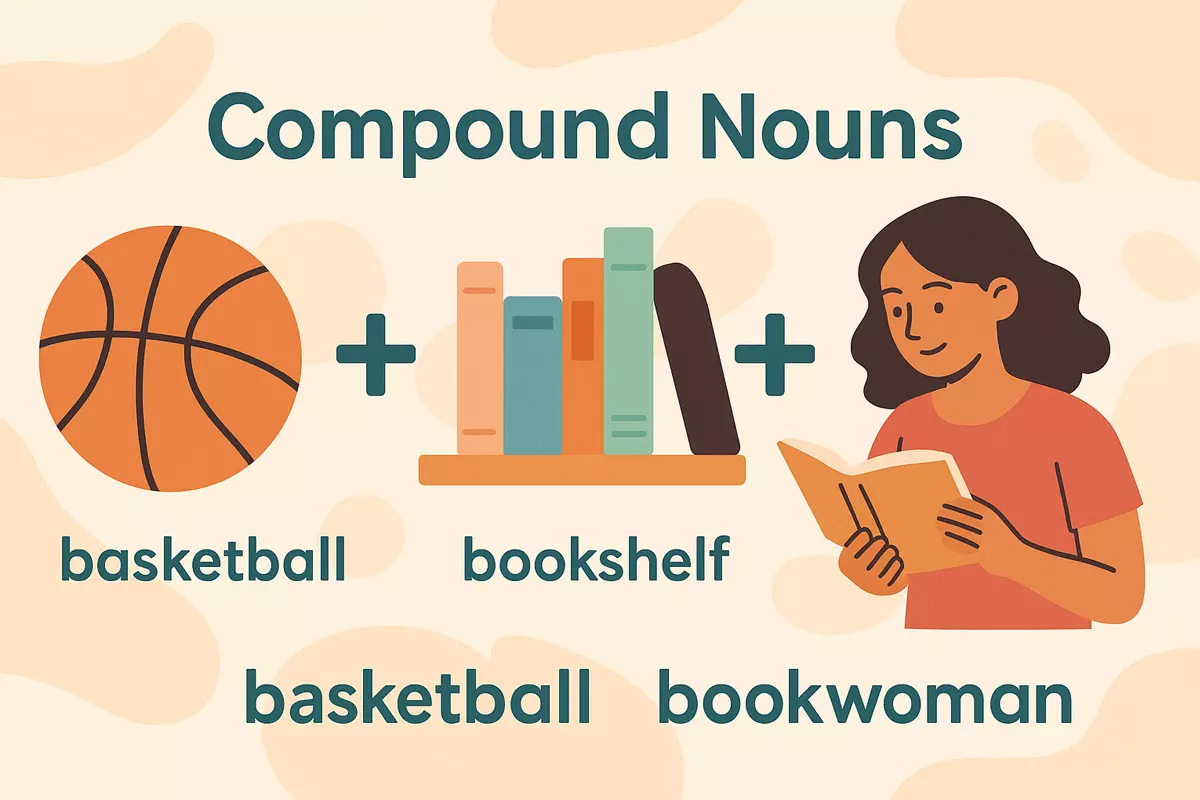 Here we compound nouns, detailing their types and spelling rules, including hyphenation. It discusses pronunciation and stress patterns, provides common examples, and offers practice in identifying and building compound nouns.
Navigating the intricacies of language often involves encountering compound nouns, intriguing pairings that merge to express a singular idea. These linguistic constructs can significantly enhance reading skills and communication effectiveness, thereby enriching our daily interactions. By understanding how to interpret and incorporate compound nouns, we can better convey complex concepts with clarity and precision. This not only aids in personal communication but also in professional settings, where clear and effective language is crucial. Mastering compound nouns allows us to articulate thoughts more efficiently, fostering improved understanding in various contexts.
What Are Compound Nouns?
Compound nouns are a fascinating aspect of language that combine two or more words to create a single noun with a unique meaning. These combinations can offer a more nuanced or specific description than single words alone. For example, the term "toothpaste" merges "tooth" and "paste" to describe a product specifically used for cleaning teeth.
Types of Compound Nouns
Compound nouns can be categorized based on how they are structured:
- Closed Form: In this type, the words are combined without spaces or hyphens. Examples include "notebook" and "football."
- Hyphenated Form: Here, the words are linked by a hyphen, such as in "mother-in-law" or "check-in."
- Open Form: These compound nouns consist of separate words that function together as a single noun, like "post office" or "real estate."
How to Identify Compound Nouns
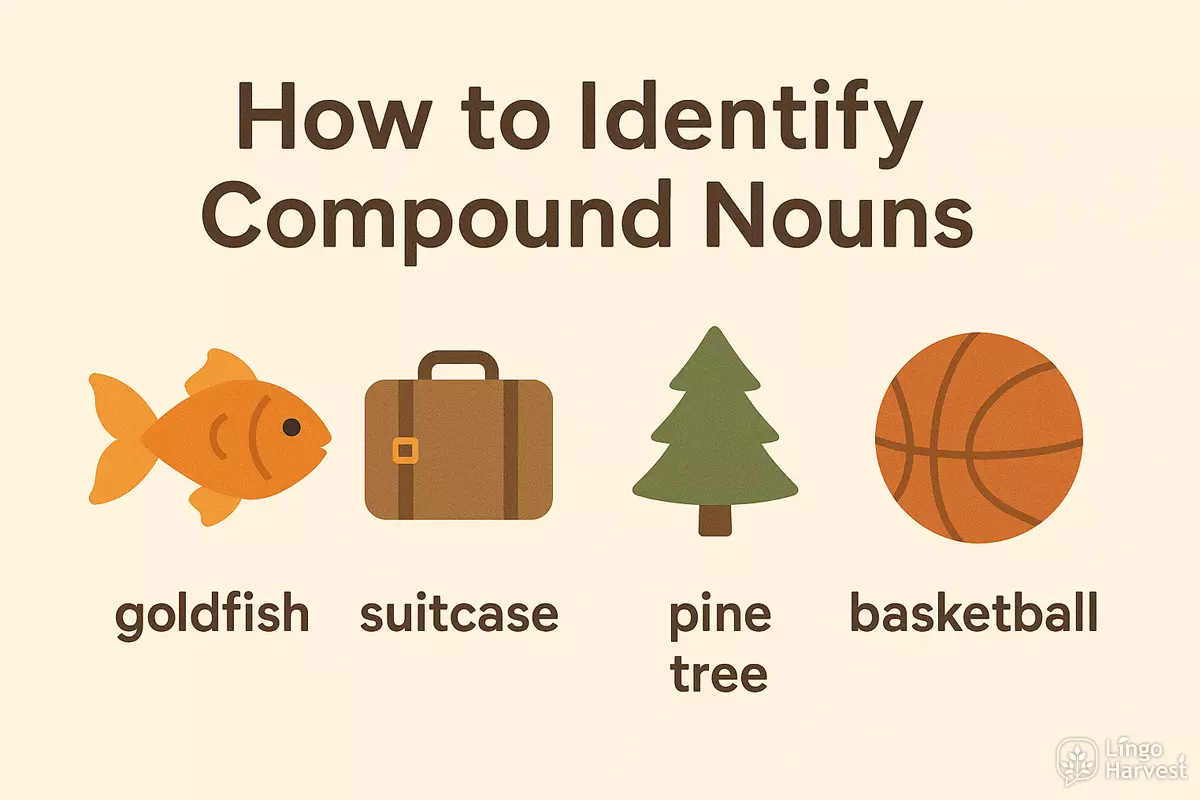
Recognizing compound nouns can enhance both reading comprehension and vocabulary. Look for combinations where two or more words work together to convey a specific idea that differs from their individual meanings. Context often helps in identifying them, as compound nouns typically refer to a particular entity or concept.
Common Examples
Here are some widely used compound nouns, demonstrating their diversity and utility:
| Compound Noun | Meaning |
|---|---|
| Sunflower | A type of plant known for its large, bright yellow flowers |
| Firefighter | An individual responsible for extinguishing fires |
| Ice cream | A frozen dessert made from cream or milk |
| Haircut | The style or act of cutting someone's hair |
Understanding compound nouns enriches language skills by allowing for more precise and vivid expression. Whether you're writing creatively or engaging in everyday conversation, these linguistic tools can help convey your thoughts more effectively.
Types of Compound Nouns
Compound nouns are an essential part of English vocabulary, formed by combining two or more words to create a single noun with a distinct meaning. Understanding the different types can enhance both comprehension and communication. Let's explore the primary categories and their unique characteristics.
Closed Form Compound Nouns
In closed form, the words are merged without spaces, forming a single, continuous word. This type is often used when the combination is familiar and widely accepted. Examples include:
- Notebook: a book for writing notes.
- Sunflower: a type of flower.
- Toothpaste: a paste used for cleaning teeth.
- Bedroom: a room for sleeping.
- Blackboard: a board for writing with chalk.
Hyphenated Compound Nouns
Hyphenated compounds use a hyphen to link the words, often when the combination might otherwise be unclear or when the noun is newly coined. These are frequently seen in temporary or evolving terms:
- Mother-in-law: a spouse's mother.
- Editor-in-chief: the head editor of a publication.
- Twenty-one: the number following twenty.
- Check-in: a process of registering upon arrival.
- Self-esteem: confidence in one's own worth.
Open Form Compound Nouns
Open form compounds are written as separate words but function as a single unit. This form is common when the concept is well understood, yet the words are not merged in standard writing:
- High school: a secondary school.
- Coffee table: a low table for the living room.
- Living room: a room for relaxing and socializing.
- Bus stop: a place where buses halt.
- Ice cream: a frozen dessert.
Understanding these types of compound nouns can significantly improve your grasp of English, enabling you to identify and use them correctly in both written and spoken contexts. Each form has its nuances, and recognizing these can aid in more precise and effective communication.
Spelling and Hyphen Rules
Understanding how to spell and hyphenate compound nouns can greatly impact the clarity of your writing. Compound nouns are formed by combining two or more words to create a single concept. The way these words are combined can vary, leading to different spelling and hyphenation conventions.
Types of Compound Nouns
Compound nouns can be categorized into three main types: closed, hyphenated, and open. Each type has distinct spelling rules:
- Closed Compounds: These are written as a single word without spaces or hyphens, such as "notebook" or "sunflower."
- Hyphenated Compounds: These use a hyphen to connect the words, as in "mother-in-law" or "check-in."
- Open Compounds: These consist of separate words that function together, like "ice cream" or "post office."
When to Use Hyphens
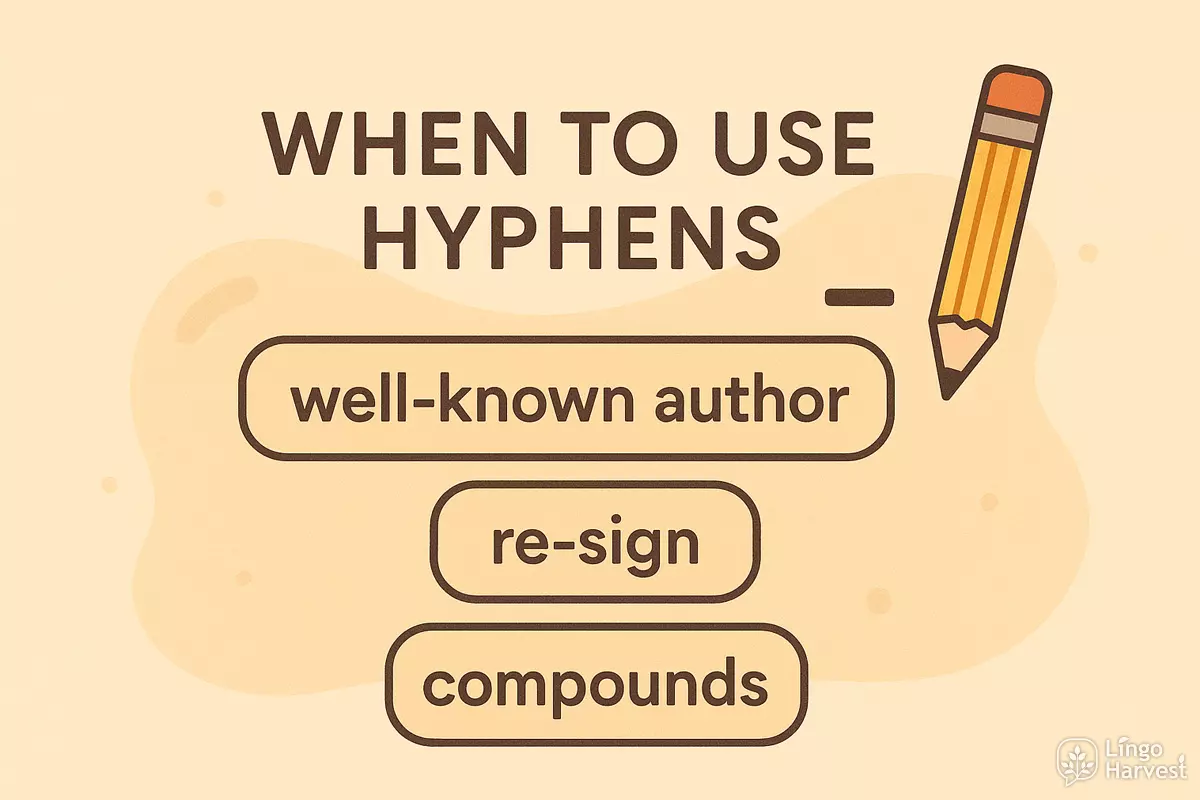
Hyphens are often used in compound nouns to avoid ambiguity and improve readability. Here are some guidelines for using hyphens:
- Use hyphens in compound adjectives when they precede a noun, such as "well-known author."
- Hyphenate compound words when they are used as a single unit and there's potential for misunderstanding without the hyphen, like "re-sign" versus "resign."
- Some compounds are hyphenated to maintain consistency, particularly in formal writing or when following style guides.
Common Exceptions and Variations
The rules for spelling and hyphenating compound nouns are not always straightforward, and there are exceptions. For instance, some compounds may evolve over time, starting as open compounds and becoming closed as they become more commonly used.
| Type | Example |
|---|---|
| Closed Compound | toothpaste |
| Hyphenated Compound | mother-in-law |
| Open Compound | real estate |
| Hyphenated Adjective | well-known |
In summary, mastering the spelling and hyphenation of compound nouns requires familiarity with the different types and their specific rules. By understanding these conventions, you can ensure your writing is both precise and easily understood.
Pronunciation and Stress Patterns
Understanding how to pronounce compound nouns correctly is essential for clear communication. In English, compound nouns typically have a primary stress on the first word, which distinguishes them from simple noun phrases. This stress pattern helps listeners identify the compound nature of the term, making it easier to grasp the meaning quickly.
Common Stress Patterns
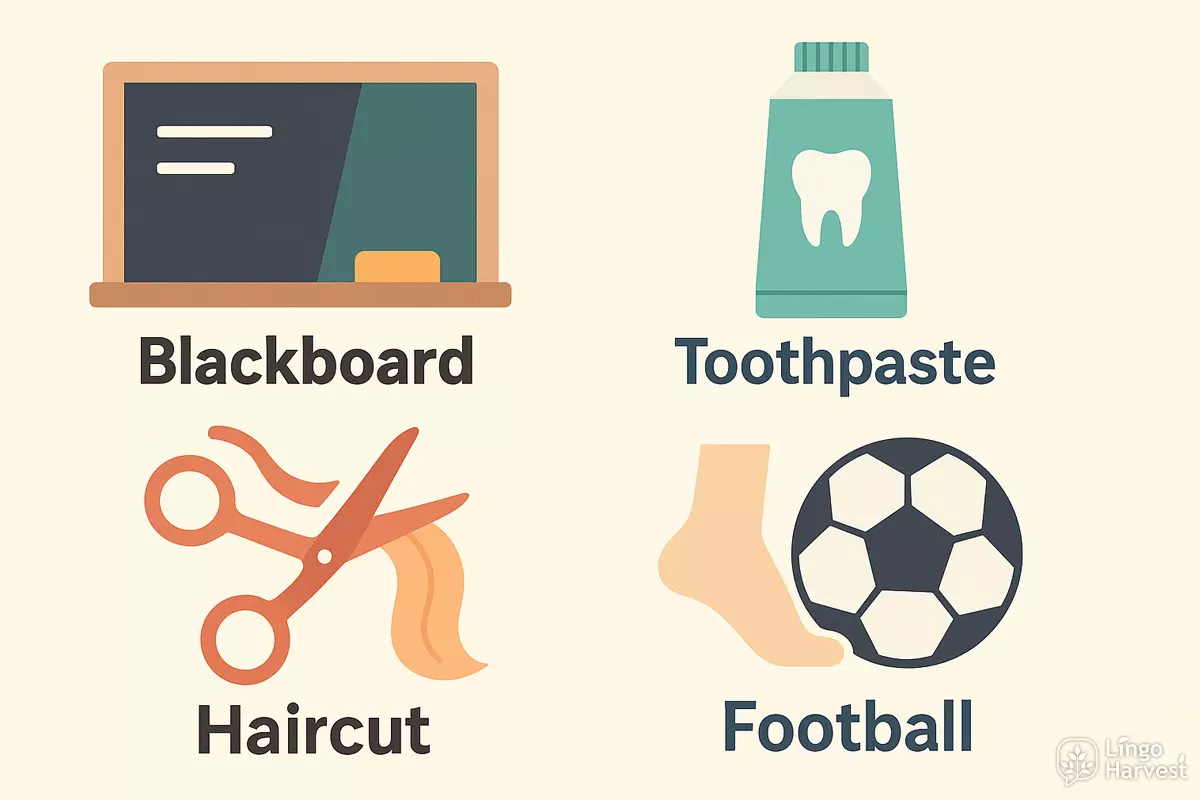
Compound nouns often follow predictable stress patterns. Here are some common examples to illustrate these patterns:
- Blackboard: The stress falls on "black," indicating it's a single concept, not just any board that happens to be black.
- Toothpaste: Emphasizing "tooth" distinguishes it from other types of paste.
- Haircut: Stress on "hair" shows it's a specific style or cut for hair.
- Football: The first word "foot" is stressed, highlighting the sport rather than a generic ball.
- Sunlight: The emphasis on "sun" differentiates it from other kinds of light.
- Notebook: "Note" is stressed, emphasizing its purpose as a book for notes.
- Bedroom: The stress on "bed" signifies a room designed for sleeping.
- Airport: "Air" is emphasized, indicating a port used for air travel.
- Background: Stress on "back" helps convey the idea of something behind the main focus.
- Waterfall: The first word "water" is stressed, clarifying it's a natural feature involving water.
Exceptions and Variations
While most compound nouns follow the stress-on-the-first-word rule, there are exceptions. Some compounds may have equal stress on both words, particularly in newer or less conventional terms. Additionally, in some dialects or contexts, the stress pattern might slightly vary. Understanding these patterns is crucial for learners and speakers to master pronunciation and convey meaning effectively. By focusing on the stress of the first word in compound nouns, you can improve both your comprehension and spoken clarity.
Common Everyday Examples
Understanding compound nouns can greatly enhance your ability to comprehend and use English effectively. These nouns, which combine two or more words to create a new meaning, are prevalent in everyday language. Below are some practical instances where compound nouns are frequently used.
Types of Compound Nouns
Compound nouns can be formed in various ways, including closed forms (single word), hyphenated forms, and open forms (separate words). Here are some examples of each:
- Closed Form: notebook, sunflower, toothpaste
- Hyphenated Form: mother-in-law, well-being, check-in
- Open Form: post office, real estate, ice cream
Common Examples in Everyday Life
To illustrate how compound nouns are integrated into daily communication, consider the following examples:
- Bedroom: a room for sleeping
- Bus stop: a designated place where buses halt
- Raincoat: a coat worn to protect from rain
- Firefighter: a person whose job is to extinguish fires
- Haircut: the act of cutting hair or the style in which hair is cut
- Toothbrush: a tool used for cleaning teeth
- Airport: a complex for the arrival and departure of aircraft
- Sunlight: the light from the sun
- Footprint: the mark left by a foot
- Water bottle: a container for holding water
- Keyboard: a set of keys for operating a computer or typewriter
- Blackboard: a board for writing on with chalk
- Washing machine: a machine for washing clothes
These examples demonstrate how compound nouns help us convey complex ideas succinctly and precisely. By understanding their structure and usage, you can improve both your comprehension and expression in English. Whether you're reading a novel, working on a project, or simply chatting with friends, recognizing and using compound nouns can make your communication clearer and more effective.
Practice: Identify and Build Compound Nouns
Understanding how to identify and construct compound nouns can greatly enhance your language skills. Compound nouns are combinations of two or more words that function as a single noun. They can be formed in several ways, each with its own rules and nuances. Let's explore these formations and practice identifying them.
Types of Compound Nouns
Compound nouns can be categorized based on how the words are combined. Here are the main types:
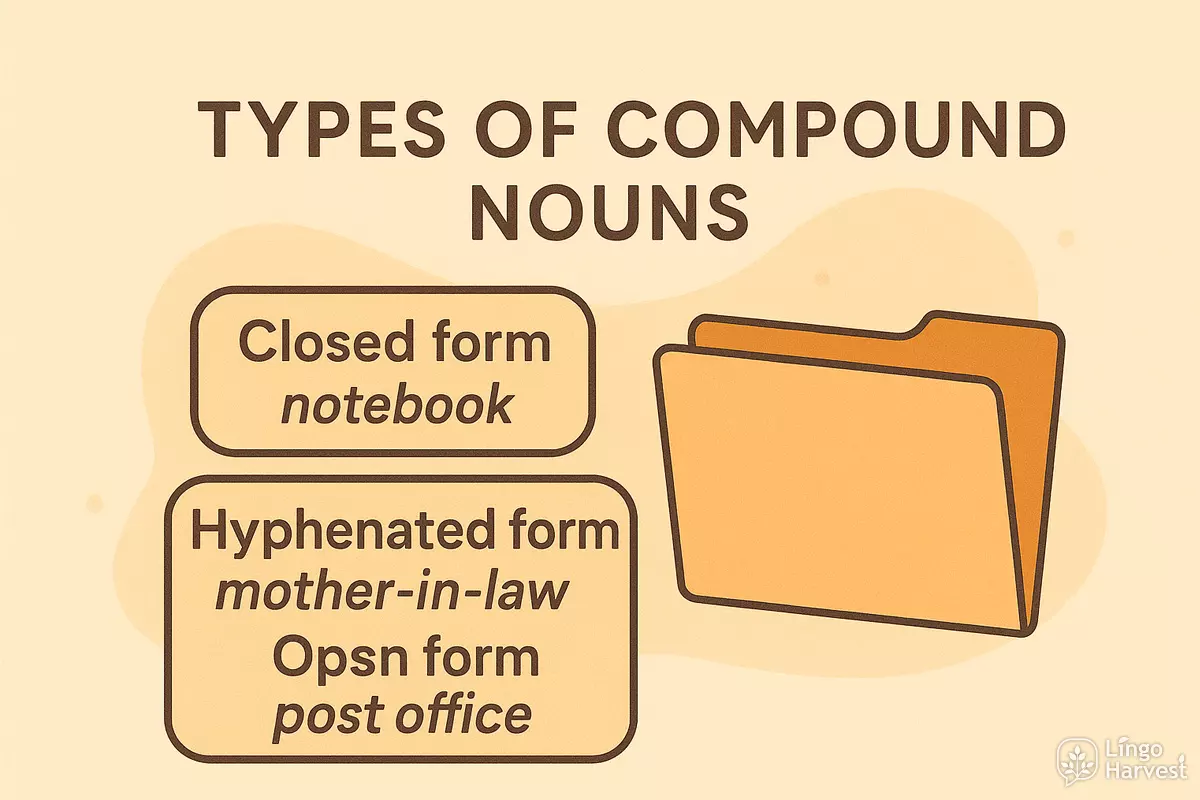
- Closed form: Words are joined together without spaces, such as "notebook" or "sunflower."
- Hyphenated form: Words are connected by hyphens, like "mother-in-law" or "check-in."
- Open form: Words remain separate but are understood as a single concept, such as "post office" or "real estate."
Practice Identifying Compound Nouns
Below are sentences containing compound nouns. Identify each compound noun (already bolded) and classify it as Closed, Open, or Hyphenated.
- The dentist said my toothpaste brand is fine.
- She went to the post office to send a parcel.
- He bought a gift for his mother-in-law.
- The basketball match was intense.
- We scheduled a check-up before the trip.
- I wrote notes in my new notebook.
- There’s a long line at the bus stop today.
- Please put the dishes in the dishwasher.
- The kids are playing in the playground.
- We need a bigger dining room table.
- The haircut looks great on you.
- She paid with her credit card.
- They walked through the greenhouse together.
- The restaurant has a drive-through window.
- He’s working part-time this semester.
Show answers
- toothpaste — Closed
- post office — Open
- mother-in-law — Hyphenated
- basketball — Closed
- check-up — Hyphenated (also seen as closed “checkup” in modern usage)
- notebook — Closed
- bus stop — Open
- dishwasher — Closed
- playground — Closed
- dining room — Open
- haircut — Closed
- credit card — Open
- greenhouse — Closed
- drive-through — Hyphenated
- part-time — Hyphenated (as an adjective/adverb)
Building Your Own Compound Nouns
Create new compound nouns by combining a core idea with a fitting modifier. Decide whether the best form is Closed, Open, or Hyphenated.
- Identify the core idea: what object/concept do you need to name?
- Choose a precise modifier: what adds meaning or function?
- Pick the form: closed (smartphone), open (coffee shop), hyphenated (mother-in-law).
Try building compound nouns from these themes (write your own first, then check samples):
- Technology: smartphone, voice assistant, data-center
- Business places: coffee shop, bookstore, co-working space
- Clothing: raincoat, t-shirt, swim suit / swimsuit
- Home & rooms: bedroom, washing machine, living room
- Travel: boarding pass, check-in, carry-on
- Food & kitchen: dish rack, stir-fry, cookbook
- School: homework, classroom, study group
- People & family: sister-in-law, babysitter (also older: baby-sitter), roommate
Show sample answers
- Technology → smartphone (Closed), voice assistant (Open), data-center (Hyphenated)
- Business → bookstore (Closed), coffee shop (Open), co-working space (Hyphenated + Open)
- Clothing → raincoat (Closed), t-shirt (Hyphenated), swimsuit (Closed)
- Home → bedroom (Closed), washing machine (Open), living room (Open)
- Travel → boarding pass (Open), check-in (Hyphenated noun), carry-on (Hyphenated noun)
- Food → cookbook (Closed), stir-fry (Hyphenated), dish rack (Open)
- School → homework (Closed), classroom (Closed), study group (Open)
- People → sister-in-law (Hyphenated), babysitter (Closed), roommate (Closed)
By practicing these exercises, you'll become more adept at recognizing and constructing compound nouns, enriching your vocabulary and enhancing your writing skills.