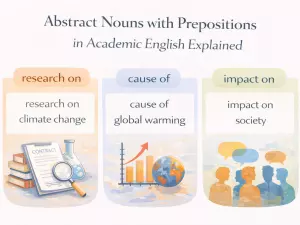
High-Frequency Academic Nouns List for Advanced Learners

 The article defines high-frequency academic nouns, outlines core noun families common across disciplines, covers typical collocations, examines differences in spoken and written use, shows their role in arguments, notes common learner errors, and provides practice.
- What high-frequency academic nouns are
- Core academic noun families used across disciplines
- Collocations built around frequent academic nouns
- Spoken vs written frequency distribution
- Using academic nouns for argument structure
- Common learner misuse of high-frequency academic nouns
- Practice: integrate key academic nouns into sample sentences
Developing a strong command of advanced vocabulary is essential for anyone seeking to succeed in academic settings. This guide presents a selection of important advanced nouns commonly found in scholarly materials, enabling learners to enhance their academic language skills and communicate more effectively in educational contexts. By focusing on these key terms, students can expand their vocabulary, improve their reading comprehension, and express complex ideas with greater clarity and precision, all of which are vital for academic achievement.
What high-frequency academic nouns are
High-frequency academic nouns are words that appear often in academic texts across a wide range of disciplines. These nouns are essential for advanced learners because they form the backbone of scholarly writing and enable clear communication of complex ideas. Unlike subject-specific vocabulary, such words are common in essays, journal articles, research papers, and lectures, regardless of the field.
Characteristics of Common Academic Nouns
- They typically represent abstract concepts, processes, or entities (e.g., analysis, approach, evidence).
- These nouns are not limited to a single discipline; they are widely used in humanities, sciences, and social sciences.
- They help structure arguments, describe relationships, and present findings in academic writing.
- Mastery of these terms supports reading comprehension and effective written expression.
Examples of High-Frequency Academic Nouns

To illustrate, here is a selection of commonly encountered academic nouns that advanced learners will find useful:
- analysis → The analysis revealed a strong relationship between income and education.
- approach → This approach combines qualitative interviews with quantitative surveys.
- area → The study focuses on an area of particular concern to policymakers.
- assessment → The assessment of student progress was carried out every semester.
- concept → The concept of sustainability is central to this discussion.
- context → In the context of climate change, these results are especially important.
- data → The data were collected from three different universities.
- definition → The definition of key terms is provided in the introduction.
- environment → The learning environment plays a crucial role in student motivation.
- evidence → The evidence supports the claim that early intervention is effective.
- factor → One important factor influencing the outcome was class size.
- function → The main function of this device is to measure air quality.
- interpretation → The interpretation of these findings remains open to debate.
- method → The method used in this research follows established guidelines.
- period → During the study period, levels of satisfaction gradually increased.
- process → The decision-making process involves several stages of review.
- research → Recent research highlights the impact of social media on wellbeing.
- role → Technology plays an increasingly important role in modern education.
- section → This section of the article describes the sampling procedure.
- source → The article uses government reports as its main source of statistics.
Academic vs. Everyday Nouns
Academic nouns differ from everyday vocabulary in both meaning and usage. While daily speech often relies on concrete nouns like car or friend, academic English favors abstract or technical terms that convey nuanced ideas. The table below highlights some key differences:
| Everyday Noun | Academic Noun Equivalent |
|---|---|
| Thing | Factor |
| Change | Adjustment |
| Job | Role |
| Idea | Concept |
| Place | Environment |
Understanding and using these high-utility nouns helps advanced learners interpret academic materials more efficiently, participate in scholarly discussions, and produce well-structured writing. Building a strong foundation in this core vocabulary is a practical step toward academic fluency.
Core academic noun families used across disciplines
Academic writing often relies on recurring groups of related nouns—sometimes called word families—that appear frequently in research, essays, and scholarly discussions. These noun groups are central because they allow learners to express concepts, processes, and relationships found in a wide range of subjects, from science and technology to social sciences and humanities.
What are noun families and why do they matter?
Noun families are sets of words built from a common root, often including related verbs, adjectives, and adverbs. In academic contexts, mastering these noun forms is especially valuable, as they help convey abstract ideas like analysis, development, or significance. Recognizing and using these families empowers advanced learners to build more precise and varied arguments.
Examples of high-frequency academic noun families
Below are several major noun groups that surface across different disciplines. These examples illustrate how a single root can generate multiple related terms:
- Analysis (analyze, analytical, analyst)
- Concept (conceive, conceptual, conception)
- Significance (signify, significant, significantly)
- Process (proceed, procedural, procedure)
- Structure (structural, structurally, restructure)
- Factor (factorial, factorize)
- Function (functional, functionally, dysfunction)
- Role (role-playing, role-specific)
- Approach (approach, approachable, approaching)
- Impact (impactful, impacted)
- Theory (theorize, theoretical, theoretically)
- Source (resource, sourcing, sourced)
- Environment (environmental, environmentally)
- Assessment (assess, assessor, assessment)
- Policy (policy-making, policymaker)
- Method (methodology, methodological, methodical)
- Context (contextual, contextualize, contextually)
- Period (periodic, periodically, periodical)
- Variable (variation, variability, variable)
- Outcome (outcomes, outcome-based)
Comparing noun family usage in different fields
While many of these word groups are common to all academic writing, their frequency and nuance can differ by subject. For example, "variable" is crucial in scientific research, while "policy" is more prevalent in political science and public administration.
| Noun Family | Typical Disciplines |
|---|---|
| Analysis | Science, Literature, Business, Psychology |
| Policy | Political Science, Law, Public Health, Education |
| Structure | Architecture, Biology, Linguistics, Engineering |
| Variable | Mathematics, Statistics, Experimental Sciences |
| Method | Research, Education, Social Sciences, Medicine |
| Context | History, Linguistics, Sociology, Literary Studies |
| Function | Biology, Mathematics, Computer Science, Sociology |
| Impact | Environmental Science, Economics, Social Policy |
Understanding and applying these core noun groups not only improves academic vocabulary but also strengthens the clarity and sophistication of scholarly communication. For advanced learners, focusing on these foundational word families is a practical strategy for mastering academic English across diverse fields.
Collocations built around frequent academic nouns
Understanding how high-frequency academic nouns combine with other words can significantly enhance both writing and reading skills at advanced levels. These word partnerships, or collocations, help learners produce more natural academic English and better comprehend complex texts. Below you’ll find examples, organized by type and usage, to illustrate the most common and useful ways these nouns appear in academic contexts.
Common Collocational Patterns
Academic nouns frequently form strong partnerships with certain verbs, adjectives, and prepositions. Recognizing these patterns helps in constructing precise and idiomatic sentences. Some typical examples include:
- Conduct research → Students are required to conduct research on current environmental issues.
- Reach a conclusion → After reviewing the data, the team was able to reach a conclusion.
- Establish a framework → The article aims to establish a framework for future studies.
- Present evidence → The authors present evidence to support their main claim.
- Make an assessment → Teachers must make an assessment of each student’s progress.
- Propose a solution → The report proposes a solution to reduce traffic congestion.
- Raise an issue → The study raises an issue that has been overlooked in previous research.
- Address a concern → The policy was revised to address a concern about privacy.
- Provide data → The survey provides data on household income and expenditure.
- Develop a theory → Researchers developed a theory to explain the observed behaviour.
- Support an argument → These results support an argument for earlier intervention.
- Challenge an assumption → The findings challenge an assumption that many experts accepted.
- Draw a distinction → The article draws a distinction between correlation and causation.
- Offer an explanation → The authors offer an explanation for the unexpected results.
- Identify a factor → The analysis identifies a factor that strongly influences performance.
- Implement a policy → The government decided to implement a policy on renewable energy.
- Observe a phenomenon → Scientists observed a phenomenon that had not been reported before.
- Present a case → The paper presents a case for increasing funding in public health.
- Analyze a trend → The researchers analyze a trend in online learning participation.
- Summarize findings → The final section summarizes findings and suggests future directions.
Adjective + Noun Collocations
Pairing academic nouns with adjectives can add precision and nuance. Here are some frequent pairings:
- Significant impact → The new policy had a significant impact on energy consumption.
- Primary objective → The primary objective of the study is to improve student outcomes.
- Potential outcome → One potential outcome is a reduction in hospital admissions.
- Global perspective → The authors adopt a global perspective on climate change.
- Key concept → Motivation is a key concept in educational psychology.
- Major factor → Cost remains a major factor in consumer decision-making.
- Central issue → Access to healthcare is the central issue in the debate.
- Critical analysis → The article provides a critical analysis of existing theories.
- Relevant data → Only the most relevant data were included in the final model.
- Underlying assumption → The argument is based on an underlying assumption of equal access.
Verb + Noun + Preposition Patterns
Some academic nouns frequently appear in more complex structures, especially with prepositions. For advanced learners, mastering these patterns is crucial:
- Attribute success to (e.g., attribute success to hard work) → Many athletes attribute success to consistent practice.
- Base conclusions on (e.g., base conclusions on evidence) → Researchers base conclusions on carefully collected data.
- Contribute to development → Early reading habits can contribute to development of language skills.
- Respond to criticism → The authors respond to criticism in a separate follow-up article.
- Result in failure → Poor planning can result in failure to meet project deadlines.
- Lead to improvement → Regular feedback often leads to improvement in student writing.
- Benefit from experience → New employees benefit from experience shared by senior staff.
- Distinguish between factors → It is important to distinguish between factors that cause change and those that simply correlate with it.
Examples of Collocations in Context
To demonstrate how these combinations work in real academic sentences, compare the following examples:
| Collocation | Sample Sentence |
|---|---|
| Draw a conclusion | The author draws a conclusion based on extensive data analysis. |
| Present evidence | The researchers present evidence to support their claim. |
| Critical analysis | A critical analysis of the results revealed several limitations. |
| Implement a policy | The university decided to implement a new policy regarding attendance. |
| Raise an issue | The report raises an issue concerning data privacy. |
Grasping these typical combinations allows advanced learners to express complex ideas more fluently and understand academic texts with greater depth. Notice how the choice of verb, adjective, or preposition can subtly change the meaning or emphasis of the noun in context.
Spoken vs written frequency distribution
Understanding how high-frequency academic nouns appear in speech versus formal texts can help advanced learners prioritize their study. Many academic nouns occur much more often in writing than in conversation, especially in research articles, textbooks, and essays. In contrast, spoken academic English—such as lectures, presentations, or seminars—tends to use a smaller subset of these nouns, often favoring more general or concrete vocabulary.
Key Differences in Usage
Academic nouns commonly found in written language often express abstract concepts, processes, or fields of study. In spoken academic contexts, speakers may simplify or paraphrase these terms, or use them less frequently for clarity and engagement. Here are some patterns:
- Written texts use nouns like analysis, hypothesis, and framework more densely.
- Spoken language features nouns such as idea, result, and problem more frequently.
- Longer, Latinate nouns (e.g., significance, distribution) are more typical in academic writing.
- Everyday synonyms or simpler nouns may substitute complex terms in speech.
Typical Frequency Patterns

To illustrate these contrasts, here is a comparison of select academic nouns and their frequency in spoken versus written academic English:
| Academic Noun | More frequent in written English | More frequent in spoken English | Typical example |
|---|---|---|---|
| analysis | ✅ | ❌ | The analysis reveals three main themes. |
| approach | ✅ | ❌ | This approach is widely used in recent studies. |
| issue | ✅ | ✅ | The main issue is a lack of reliable data. |
| evidence | ✅ | ❌ | There is strong evidence to support this claim. |
| result | ✅ | ✅ | The result confirms the original hypothesis. |
| factor | ✅ | ❌ | Cost was a key factor in their decision. |
| context | ✅ | ❌ | These findings must be understood in context. |
| concept | ✅ | ❌ | The concept is central to modern sociology. |
| problem | ✅ | ✅ | The problem affects both students and teachers. |
| method | ✅ | ❌ | The method was tested in several pilot studies. |
✅ = commonly used in this register; ❌ = less typical or less frequent in this register.
Implications for Learners
Learners aiming to master academic English should be aware that many nouns on high-frequency lists may not be equally useful in all contexts. For effective communication, it helps to recognize which terms are prevalent in academic texts and which are more likely to come up in academic discussions or lectures. This awareness can guide vocabulary study and active usage, making language learning more efficient and context-appropriate.
Using academic nouns for argument structure
Academic writing relies heavily on precise nouns to convey complex ideas and organize arguments logically. Advanced learners benefit from mastering these nouns, as they help clarify the relationships between concepts, evidence, and claims. Strategic use of high-frequency academic nouns can transform a simple statement into a well-structured, persuasive argument.
Key roles of academic nouns in argumentation
Academic nouns serve several essential functions in constructing arguments:
- Stating claims: Nouns such as assertion, assumption, or proposition introduce main points or hypotheses.
- Describing evidence: Terms like data, evidence, and statistics help specify the support provided for an argument.
- Showing relationships: Nouns such as correlation, contrast, implication, and consequence clarify connections between ideas.
- Framing discussion: Words like perspective, framework, context, and dimension set boundaries for analysis.
Common high-frequency nouns for structuring arguments
For advanced learners, familiarity with a broad range of academic nouns is invaluable. Here are some widely used nouns that frequently appear in academic argumentation:
- analysis → The analysis shows a clear link between diet and mood.
- approach → This approach allows researchers to compare results across studies.
- assumption → The model is based on the assumption that prices remain stable.
- claim → The authors make the claim that language shapes perception.
- component → Collaboration is a vital component of successful project work.
- conclusion → The conclusion supports earlier findings on the topic.
- concept → The concept of resilience is central to psychological research.
- consequence → One consequence of the policy is higher operational costs.
- context → These results are significant only within the context of urban schools.
- correlation → The study found a strong correlation between sleep and focus.
- criterion → The main criterion for selection was academic performance.
- dimension → Creativity adds a new dimension to problem solving.
- evidence → There is solid evidence that exercise improves mental health.
- framework → The framework outlines the steps required for implementation.
- implication → The implication is that earlier support could prevent failure.
- interpretation → This interpretation differs from traditional viewpoints.
- issue → The issue raised in the survey concerns unequal access.
- justification → The study offers clear justification for further investment.
- perspective → The article presents a global perspective on migration.
- proposition → The proposition that language affects memory remains controversial.
Patterns for integrating academic nouns
Writers often use certain patterns to embed these nouns naturally into their arguments. Consider these structures:
- The main assumption underlying this argument is that early intervention can change long-term outcomes.
- This evidence supports the conclusion that smaller class sizes improve student performance.
- One important dimension of the issue is the unequal access to digital resources.
- The framework adopted in this study allows for comparison between different age groups.
- A key implication of this finding is that existing policies may need to be revised.
Comparing academic nouns: function and usage
Below is a table that highlights how different academic nouns fulfill distinct roles within argument structures:
| Noun | Typical role in argument |
|---|---|
| Assumption | States an underlying belief or premise that supports a claim |
| Evidence | Provides factual support for an argument or hypothesis |
| Implication | Indicates the potential effect or result of a claim |
| Framework | Outlines the theoretical structure for organizing analysis |
| Criterion | Specifies a standard by which something is judged or evaluated |
| Perspective | Presents a particular viewpoint or angle on an issue |
| Component | Identifies a part or element of a larger concept or argument |
| Correlation | Describes a relationship between two or more variables |
Mastering the use of such nouns allows advanced learners to construct clearer, more logical arguments and to engage more effectively in academic discourse.
Common learner misuse of high-frequency academic nouns
Misusing academic nouns can make writing sound unnatural or even confusing, especially for advanced learners aiming for precision. Many students overgeneralize meanings, apply inappropriate collocations, or confuse countable and uncountable forms. These errors often reduce clarity and weaken arguments in essays, reports, and presentations.
Typical mistakes with academic nouns
Learners frequently struggle with the following issues:
- Using the wrong noun form (singular vs. plural, countable vs. uncountable)
- Selecting incorrect prepositions after nouns
- Mixing up similar-sounding nouns with different meanings
- Applying informal or spoken language patterns in formal writing
- Omitting necessary articles or determiners
- Confusing noun collocations (e.g., "make an improvement" vs. "do an improvement")
- Using nouns where verbs or adjectives are required, or vice versa
- Repeating the same noun excessively instead of using synonyms or pronouns
- Incorrect word order in noun phrases
- Translating directly from the first language, resulting in awkward noun usage
Frequent confusions and example corrections
Learners often mix up key academic nouns that look or sound similar, but have distinct meanings or uses. Here are some common pairs and their correct usage:
| Confused Nouns | Correct Usage Example |
|---|---|
| effect / affect | The effect of climate change is significant. (noun) |
| evidence / evidences | There is no evidence to support the claim. (uncountable) |
| research / researches | Her research focuses on linguistics. (uncountable) |
| information / informations | All the information is relevant. (uncountable) |
| advice / advices | He gave useful advice. (uncountable) |
| experience / experiences | She has a lot of work experience. (uncountable: knowledge) |
| process / procession | The hiring process was rigorous. (procedure, not a parade) |
| principle / principal | The principle of equality is important. (rule, not a person) |
| basis / base | Decisions are made on the basis of evidence. (foundation) |
| subject / object | The subject of the study is motivation. (topic, not a thing) |
Tips to avoid frequent errors
- Check if a noun is countable or uncountable before using articles or plural forms.
- Learn typical collocations for each noun, such as “make progress” or “provide evidence.”
- Review example sentences from academic sources to see nouns in context.
- Be cautious of direct translation from your first language, which may not match English usage.
- Ask for feedback on your writing to spot repeated issues.
By paying attention to these common pitfalls and reviewing authentic examples, advanced learners can significantly improve their command of academic vocabulary.
Practice: integrate key academic nouns into sample sentences
Applying advanced vocabulary in context is essential for academic mastery. Below, you'll find practical exercises that use high-frequency academic nouns in real-world sentence structures. This kind of targeted practice not only improves your understanding but also enhances your ability to use these terms accurately in essays, presentations, and discussions.
Sample Sentences Using High-Frequency Academic Nouns
- The analysis of the data revealed unexpected trends.
- Her approach to the problem was both creative and effective.
- The concept of sustainability is central to modern environmental science.
- We must consider the impact of new technologies on society.
- The interpretation of the results differed among researchers.
- His assessment was based on multiple reliable sources.
- The significance of this discovery cannot be overstated.
- Students debated the implications of the policy changes.
- The structure of the essay helped clarify the main argument.
- The function of mitochondria is crucial in cellular respiration.
- Their response to criticism was measured and thoughtful.
- The role of government in regulating the market is often contested.
- His theory challenged existing paradigms in psychology.
- The context of the event shaped its interpretation.
- Research on the process of language acquisition is ongoing.
- Her contribution to the project was invaluable.
- The requirement for graduation includes a written thesis.
- The source of the information was carefully verified.
- They examined the relationship between stress and academic performance.
- The method used in the experiment was clearly described.
Fill-in-the-Blank Exercise
Insert the correct academic noun from the list below into each sentence.
- analysis, concept, context, function, method, process, response, role, significance, theory
- The __________ of the immune system is to protect the body from pathogens.
- His __________ to the survey was both detailed and insightful.
- Understanding the __________ in which a word is used is crucial for interpretation.
- The new __________ explains the unexpected results of the experiment.
- The __________ of gravity was first formulated by Newton.
- The research team used a new statistical __________ to evaluate the results.
- The __________ of this finding lies in its potential medical applications.
- The recycling __________ helps reduce waste in urban areas.
- The study highlights the important __________ teachers play in student motivation.
- A detailed __________ of the data revealed three major trends.
- The experiment followed a strict laboratory __________ to ensure accuracy.
- The historical __________ helps us understand how these events unfolded.
Show answers
- function
- response
- context
- theory
- concept
- method
- significance
- process
- role
- analysis
- method
- context
Comparing Academic Nouns in Context
Some nouns are closely related but used in different contexts. Review the table below to see distinctions in usage:
| Noun | Example Sentence & Typical Context |
|---|---|
| assessment | The final assessment will determine your course grade. (evaluation or grading) |
| analysis | The analysis of the survey data took several weeks. (detailed examination) |
| approach | Her approach to solving the issue was innovative. (method or strategy) |
| method | The scientific method involves forming a hypothesis and testing it. (systematic process) |
| process | The process of photosynthesis is essential for plant life. (series of actions) |
Short Writing Task
Write 2–3 sentences about a recent academic project, using at least three nouns from this section. Try to demonstrate your understanding of their meanings and appropriate contexts.
Show answers
Example: In my recent research project, the analysis of the data highlighted the significance of early intervention. The method I used was a combination of qualitative and quantitative approaches.