Noun Choice for Clear and Bias-Free Writing in English

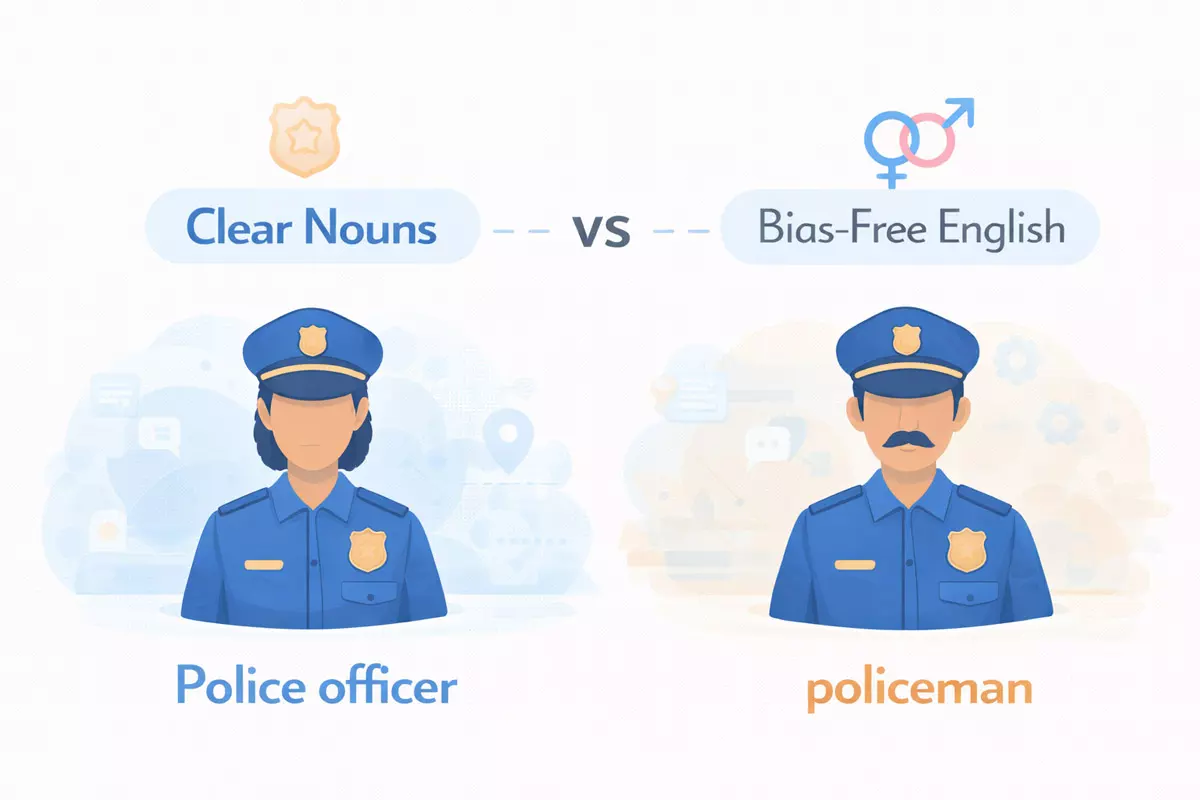 Here we how noun choices shape neutrality and perception, examines bias from loaded or exclusionary nouns in various contexts, and gives practical guidance and exercises for selecting neutral, precise nouns in professional and academic writing.
- How nouns influence neutrality and perception
- Bias created through loaded or exclusionary nouns
- Choosing neutral alternatives in professional writing
- Noun choice in media, policy, and academic contexts
- Avoiding stereotypes through precise noun selection
- Common learner mistakes with biased noun usage
- Practice: revise sentences for neutral and precise noun choice
Choosing the right nouns is crucial for writing that is clear and unbiased, as our word choices influence how readers perceive our message and can either enhance understanding or subtly introduce bias. Being thoughtful about the language we use helps maintain fairness and clarity, ensuring that our communication is both accessible and impartial to a wide audience. Careful selection of nouns supports effective writing by reducing ambiguity and preventing unintended interpretations.
How nouns influence neutrality and perception
Word choice, especially when it comes to naming people, groups, or concepts, can subtly shape a reader's understanding and emotional response. Selecting a noun is rarely neutral: it often carries social, cultural, or emotional baggage. For example, calling someone a "protester" versus a "rioter" immediately frames the subject in a particular light.
Connotations and Implicit Bias
Nouns can suggest approval, disapproval, or neutrality. Even synonyms may differ in formality, familiarity, or implied judgment. The difference between "child" and "kid," or "immigrant" and "foreigner," demonstrates how word choice can shift the tone from objective to loaded.
- Leader vs. Boss vs. Manager
- Consumer vs. Customer vs. Shopper
- Victim vs. Survivor
- Employee vs. Worker
- Colleague vs. Coworker
- Activist vs. Agitator
- Refugee vs. Migrant
- Patient vs. Sufferer
- Senior vs. Elderly
- Prisoner vs. Inmate
Levels of Specificity and Abstraction
How general or specific a noun is can also affect how readers interpret information. Abstract nouns ("freedom," "justice") can universalize concepts, while concrete nouns ("law," "policy") ground them in reality. Group nouns ("people," "community") may obscure individual experiences, whereas singular nouns highlight personal stories.
Comparing Neutral and Biased Nouns
Choosing a neutral term helps avoid unintended bias. The table below shows how different nouns can alter meaning and perception:
| Neutral Noun | Biased/Loaded Noun |
|---|---|
| Undocumented immigrant | Illegal alien |
| Person with a disability | Handicapped |
| Older adult | Geezer |
| Reporter | Tabloid hack |
| Demonstrator | Mob |
Summary
Selecting the right noun is a crucial step in producing clear, objective writing. Awareness of connotations, specificity, and social implications helps writers avoid unintentional bias and makes communication more inclusive and precise.
Bias created through loaded or exclusionary nouns
Choosing nouns carefully is essential for writing that is fair and inclusive. Sometimes, the words we select carry assumptions or reinforce stereotypes, even if unintentionally. Loaded nouns can express judgment or emotion, while exclusionary nouns may leave out or marginalize certain groups. Both can skew meaning and impact how a message is received.
What are loaded nouns?
Loaded nouns are terms that imply a value judgment or emotional weight beyond their basic definition. They can color the reader’s perception, sometimes leading to misunderstanding or bias. For example, calling someone a “criminal” versus a “person accused of a crime” can influence opinions before all facts are known.
Exclusion through noun choice
Using nouns that exclude certain individuals or groups can make writing less accessible and respectful. Traditional nouns may only refer to a specific gender, age, or background, unintentionally alienating others. Consider how “chairman” excludes women, while “chairperson” or “chair” is neutral.
Common examples of loaded or exclusionary nouns
- Manpower → workforce, staff
- Policeman → police officer
- Housewife → homemaker
- Forefathers → ancestors
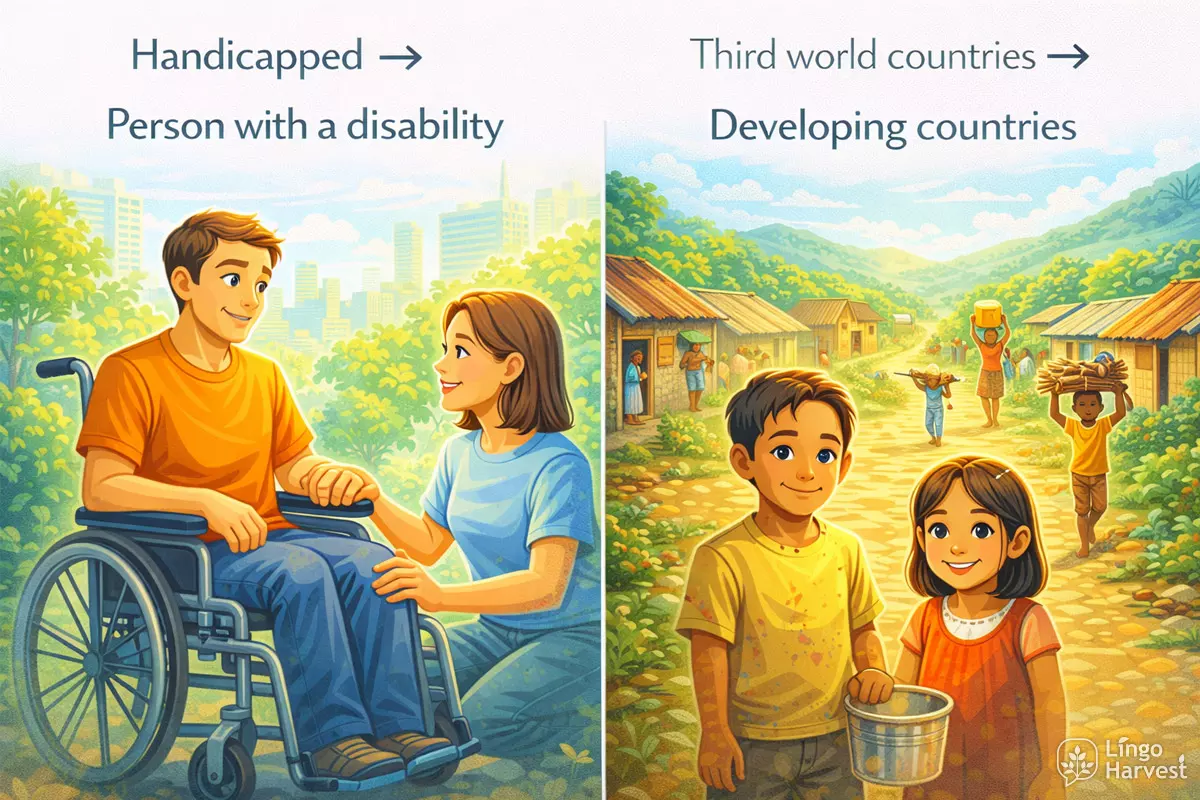
- Handicapped → person with a disability
- Third world countries → developing countries
- Illegal alien → undocumented immigrant
- Old people → older adults, seniors
- Ghetto → under-resourced neighborhood
- Mentally ill → person living with mental illness
- Native (for Indigenous people) → Indigenous person, First Nations member
- Slave → enslaved person
- Victim (in some contexts) → person affected by, survivor
- Normal people → people without disabilities
- Transsexual → transgender person
- Chairman → chair, chairperson
- Mothering (as verb) → parenting, caregiving
- Crazy (informal, pejorative) → person experiencing mental health challenges
Impact of noun choice
Word selection matters because it shapes perceptions. Loaded terms can reinforce negative stereotypes or stigma, while exclusionary nouns may make some readers feel invisible or unwelcome. Using precise, neutral, and inclusive language helps ensure that writing is both clear and respectful.
Comparing biased and neutral noun choices
| Biased/Loaded Noun | Neutral/Inclusive Alternative |
|---|---|
| Manpower | Workforce, staff |
| Chairman | Chair, chairperson |
| Handicapped | Person with a disability |
| Forefathers | Ancestors |
| Illegal alien | Undocumented immigrant |
| Housewife | Homemaker |
| Policeman | Police officer |
| Third world countries | Developing countries |
Guidelines for avoiding bias in noun choice
- Favor person-first language (e.g., “person with diabetes” instead of “diabetic”).
- Use gender-neutral terms when possible.
- Avoid nouns that imply judgment or stereotype.
- Be specific and accurate, especially with groups or identities.
- Regularly review writing for unintended bias.
Choosing nouns thoughtfully can help make your writing more accurate, inclusive, and fair for all readers.
Choosing neutral alternatives in professional writing
Clarity and inclusivity often depend on the nouns we choose. Opting for neutral vocabulary helps avoid unintended bias and makes documents accessible to a wider audience. In business, academic, and technical environments, using impartial terms also maintains professionalism and avoids alienating readers.
Why favor neutral nouns?
Loaded or gendered language can distract from your message or even offend. Neutral choices allow your writing to focus on the subject matter, not on assumptions about gender, background, or beliefs. This is especially important in global or diverse workplaces, where readers may have different perspectives.
Common biased nouns and their neutral replacements
- Spokesman → Spokesperson → The spokesman confirmed the news to reporters.
- Craftsman → Artisan or Craftsperson → The craftsman carved the table by hand.
- Foreman → Supervisor → The foreman instructed the workers to stop for safety checks.
- Gentleman’s agreement → Informal agreement → They reached a gentleman’s agreement over the phone.
- Mothering → Caring or Nurturing → She showed mothering instincts toward the new puppy.
- Man-hours → Person-hours → The project required over 300 man-hours to complete.
- Old wives’ tale → Folklore or Traditional saying → Many people still believe that old wives’ tale.
- Manchild → Immature adult → He acted like a manchild during the discussion.
- Housewife → Homemaker → The housewife managed several daily tasks efficiently.
- Batsman → Batter → The batsman scored a record number of runs.
- Freshman → First-year student → The freshman struggled in their first semester.
- Manhole → Utility hole → The workers opened the manhole for maintenance.
- Manpower planning → Workforce planning → The company improved its manpower planning methods.
- Mannequin (gendered origin) → Display figure → The store dressed each mannequin in new clothing.
- Anchorman → News anchor → The anchorman delivered the breaking story live.
- Middleman → Intermediary → The middleman negotiated the contract terms.
- Showman → Entertainer → The showman delighted the audience with jokes.
- Statesman → Political leader → The statesman was respected worldwide.
- Handyman → Maintenance worker → The handyman fixed the broken cabinet.
- Man-eater → Predatory animal (context dependent) → The story described a tiger as a man-eater.
Strategies for identifying and replacing bias
To ensure your documents remain neutral, consider the following:
- Scan for gendered suffixes like “-man” or “-woman” and replace them with role-based terms.
- Be mindful of nouns tied to culture, race, or age unless contextually necessary.
- Choose job titles or collective nouns that describe function, not identity.
- Review industry-specific jargon for outdated or exclusive terms.
- Ask: Would this word exclude or misrepresent any group?
Quick reference: Biased vs. neutral noun choices
| Biased Term | Neutral Alternative | Example Sentence (with biased term) |
|---|---|---|
| Fireman | Firefighter | The fireman rescued three people from the burning house. |
| Salesman | Salesperson / Sales representative | The salesman offered us a discount on the car. |
| Layman | Layperson / Non-expert | The concept was explained in terms a layman could understand. |
| Mailman | Mail carrier / Postal worker | The mailman delivers letters every afternoon. |
| Forefathers | Ancestors | Our forefathers built this town centuries ago. |
| Brotherhood | Community / Fellowship | The idea of brotherhood influenced the organisation’s culture. |
| Man-made | Artificial / Human-made | The island was formed from man-made land structures. |
| Stewardess | Flight attendant | The stewardess asked everyone to fasten their seatbelts. |
| Policeman | Police officer | The policeman directed traffic during the event. |
| Businessman | Businessperson / Entrepreneur | The businessman invested in several tech companies. |
By routinely opting for these alternatives, you can foster a more inclusive environment and ensure your writing is both clear and respectful to all audiences.
Noun choice in media, policy, and academic contexts
How we select nouns can shape understanding and influence perceptions across journalism, official documents, and scholarly writing. The words chosen to name people, groups, or concepts often carry connotations that affect neutrality, clarity, and inclusivity. This is especially important when addressing sensitive topics or diverse audiences.
Media: Framing and Impartiality
Journalists and editors must balance accuracy with fairness. The use of loaded or neutral nouns can subtly sway readers. For example, calling a group "protesters" versus "rioters" changes the tone and perceived legitimacy of actions. Similarly, references to "undocumented immigrants" instead of "illegal aliens" avoid dehumanizing implications.
- Activist vs. advocate
- Victim vs. survivor
- Refugee vs. migrant
- Suspect vs. perpetrator
- Allegation vs. accusation
- Community vs. population
- Incident vs. attack
- Authorities vs. officials
- Demonstration vs. riot
- Leader vs. spokesperson
Policy: Precision and Inclusivity
In government and organizational documents, noun selection is critical for both legal clarity and respect. Policies often avoid outdated or exclusionary terms. For example, "persons with disabilities" is now preferred over "the disabled," emphasizing person-first language. Similarly, "spouse" is more inclusive than "husband" or "wife" alone.

| Traditional/Problematic | Recommended/Inclusive | Example with traditional term |
|---|---|---|
| Chairman | Chair / Chairperson | The chairman opened the meeting with a short speech. |
| Manpower | Workforce / Personnel | The project will require additional manpower to finish on time. |
| The elderly | Older adults / Seniors | The city built new facilities for the elderly. |
| Mentally ill | People with mental health conditions | The report focuses on services for the mentally ill. |
| Foreigner | International visitor / Non-citizen | Each foreigner must register at the local office. |
| Homeless | People experiencing homelessness | The charity offers meals to the homeless every evening. |
| Minority | Underrepresented group | The programme aims to support students from a minority. |
| Handicapped | Person with a disability | The building is difficult for handicapped people to access. |
Academic: Objectivity and Consistency
Scholarly writing demands precise, unbiased nouns to avoid misinterpretation. Researchers opt for terms like "participants" instead of "subjects," and "findings" instead of "proofs," to maintain rigor and neutrality. Using established, discipline-specific vocabulary also ensures clarity for international and interdisciplinary audiences. Noun selection across these fields is not only about grammar, but about fostering respect, accuracy, and understanding. By choosing words thoughtfully, writers help readers engage with content more fairly and effectively.
Avoiding stereotypes through precise noun selection
Choosing the right nouns helps writers steer clear of reinforcing stereotypes and generalizations. Being specific and thoughtful about noun use ensures that descriptions do not unintentionally perpetuate bias or reduce individuals to a single characteristic. This approach is especially important in professional and academic contexts, where clarity and fairness matter.
Common pitfalls with imprecise nouns
Writers sometimes use broad or loaded terms without realizing these words can carry unintended connotations. For example, using a group label instead of individual roles or identities can obscure diversity and reinforce clichés. Consider the difference between “the elderly” and “older adults” or between “the disabled” and “people with disabilities.” The first phrase in each pair generalizes, while the second recognizes individual humanity.
Examples of precise vs. stereotyped nouns
- “Housekeeper” instead of “maid”
- “Firefighter” instead of “fireman”
- “Chairperson” or “chair” instead of “chairman”
- “Police officer” instead of “policeman/policewoman”
- “Person experiencing homelessness” instead of “the homeless”
- “People who use wheelchairs” instead of “the wheelchair-bound”
- “International student” instead of “foreigner”
- “Stay-at-home parent” instead of “housewife”
- “People from developing countries” instead of “third world citizens”
- “Child” or “young person” instead of “juvenile”
- “Older adult” instead of “senior citizen”
- “People with mental health conditions” instead of “the mentally ill”
- “Team member” instead of “manpower”
- “Partner” instead of “husband/wife” (when gender is irrelevant)
- “Cleaner” instead of “cleaning lady”
- “Parent” instead of “mother/father” (when gender is irrelevant)
- “Indigenous people” instead of “natives”
- “People in custody” instead of “prisoners” (when context allows)
Comparing imprecise and precise noun use
| Generalized or Stereotyped Noun | More Accurate, Respectful Alternative |
|---|---|
| The handicapped | People with disabilities |
| Manpower | Workforce / Staff / Team members |
| The poor | People living in poverty |
| Chairman | Chair / Chairperson |
| Foreigner | International visitor / Non-native resident |
| Housewife | Stay-at-home parent |
| The elderly | Older adults / Seniors |
| Third world countries | Developing countries |
| Cleaning lady | Cleaner / Cleaning staff |
| Policeman | Police officer |
Tips for selecting unbiased nouns
- Focus on the person first, not the label (e.g., “person with diabetes” instead of “diabetic”).
- When in doubt, use job titles or roles that are gender-neutral and specific.
- Use nouns that reflect current, widely accepted terminology within the relevant community.
- Be cautious with collective nouns; clarify who is included when possible.
- Regularly update vocabulary as language evolves to avoid outdated expressions.
Using precise nouns not only improves clarity, but also shows respect for individual identities and experiences. Thoughtful word choice is a key step toward more inclusive and effective English writing.
Common learner mistakes with biased noun usage
Many English learners unintentionally choose nouns that carry gender, cultural, or social bias. This can lead to misunderstandings or even offend readers. Recognizing these pitfalls is the first step toward writing that is both clear and inclusive.
Overlooking Gender-Neutral Alternatives
One frequent issue is sticking with traditional gendered terms when neutral options exist. For example, using "fireman" instead of "firefighter" or "stewardess" instead of "flight attendant" can make writing less inclusive.
- Waitress/Waiter → Server → The waitress took our order and brought the drinks.
- Congressman → Member of Congress or Legislator → The congressman spoke about climate policy.
- Actress → Actor → The actress won an award for her performance.
- Fisherman → Fisher or Fishing worker → The fisherman left the harbour early in the morning.
- Weatherman → Weather presenter or Meteorologist → The weatherman predicted heavy rain for the weekend.
- Cameraman → Camera operator or Videographer → The cameraman followed the speaker across the stage.
- Workman → Worker or Labourer → The workman repaired the broken steps.
- Barman/Barmaid → Bartender → The barman recommended a non-alcoholic drink.
- Cleaning lady → Cleaner or Housekeeper → The cleaning lady arrived early to prepare the office.
- Hostess → Host → The hostess greeted each guest at the door.
Assuming Roles and Relationships
Writers sometimes use nouns that assume a person’s gender, relationship, or background, which can be misleading. For instance, referring to all nurses as "she" or all engineers as "he" perpetuates stereotypes.
Using Outdated or Culturally Loaded Terms
Certain words have fallen out of favor because they reflect outdated views or cultural insensitivity. It’s best to avoid these and use modern, respectful nouns.
- Handicapped → Person with a disability
- Oriental → Asian or the specific country/region
- Man-made → Artificial or Human-made
- Eskimo → Inuit or specific group name
- Indian (for Indigenous Americans) → Native American or Indigenous person
Generalizing Groups and Making Assumptions
Bias can creep in when nouns generalize groups, such as "the poor," "the elderly," or "the disabled." These forms can dehumanize or stereotype.
- Instead of "the homeless," use "people experiencing homelessness"
- Instead of "the blind," use "people who are blind" or "people with visual impairments"
- Instead of "the elderly," use "older adults" or "seniors"
Comparison of Biased and Unbiased Noun Usage
| Biased Noun | Inclusive Alternative | Example with biased term |
|---|---|---|
| Oriental | Asian / Specific nationality | The restaurant is decorated with so-called Oriental designs. |
| Gypsy | Roma person / Romani person | The story describes a Gypsy travelling from town to town. |
| Eskimo | Inuit / Specific Indigenous group | The old textbook still uses the term Eskimo for Arctic peoples. |
| Illegal alien | Undocumented immigrant / Migrant | The newspaper once referred to workers as illegal aliens. |
| Third World countries | Developing countries / Low-income countries | The report focuses on education in so-called Third World countries. |
| The disabled | People with disabilities | The city built new ramps for the disabled. |
| The blind | People who are blind / Blind people | The museum offers audio guides for the blind. |
| The deaf | Deaf people / People who are deaf | The theatre provides sign-language interpreters for the deaf. |
Tips for Avoiding Bias in Noun Selection
- Choose gender-neutral nouns whenever possible.
- Refer to people first, not their group or condition.
- Use specific, up-to-date terms for cultural and social identities.
- Double-check group labels to ensure they are respectful and current.
Being mindful of noun choices helps writers communicate respectfully and accurately with all audiences.
Practice: revise sentences for neutral and precise noun choice
Choosing the right nouns makes your writing clearer and more objective. This section provides practical exercises to help you spot and correct nouns that could be vague, biased, or imprecise. You’ll also find strategies for replacing loaded or outdated terms with neutral alternatives.
Identify and Improve: Noun Precision and Neutrality
Below are sentences containing nouns that may carry unintended bias, imprecision, or lack of neutrality. Try to spot the problematic nouns and suggest better options. Consider if a noun can be replaced by a more specific or unbiased term.
- The chairman will review the application tomorrow.
- Every man must submit his report by Friday.
- The handicapped often need extra assistance.
- The suspect was described as a foreigner.
- The salesman provided excellent service.
- The natives were friendly to the explorers.
- The addict was admitted to the hospital.
- The elderly struggle with technology.
- The company is looking for a young, dynamic individual.
- The criminal was caught by the authorities.
- The secretary will handle your request.
- The girls in the office organized the event.
Show answers
- Replace "chairman" with chairperson or chair.
- Change "Every man" to Everyone or All employees.
- Use people with disabilities instead of "the handicapped".
- Replace "foreigner" with person from another country or international visitor.
- Use sales representative or salesperson instead of "salesman".
- Replace "natives" with local residents or indigenous people.
- Use person with substance use disorder rather than "addict".
- Change "the elderly" to older adults or senior citizens.
- Instead of "young, dynamic individual", use qualified candidate (avoid age bias).
- Use person who committed the crime or suspect rather than "criminal" (unless convicted).
- Replace "secretary" with administrative assistant (if appropriate for the role).
- Instead of "girls in the office", use staff members or colleagues.
Regularly reviewing your noun choices can help you communicate with greater accuracy and respect. Practice revising your own sentences to foster inclusive and precise writing.