What Are Parts of Speech? Complete Overview

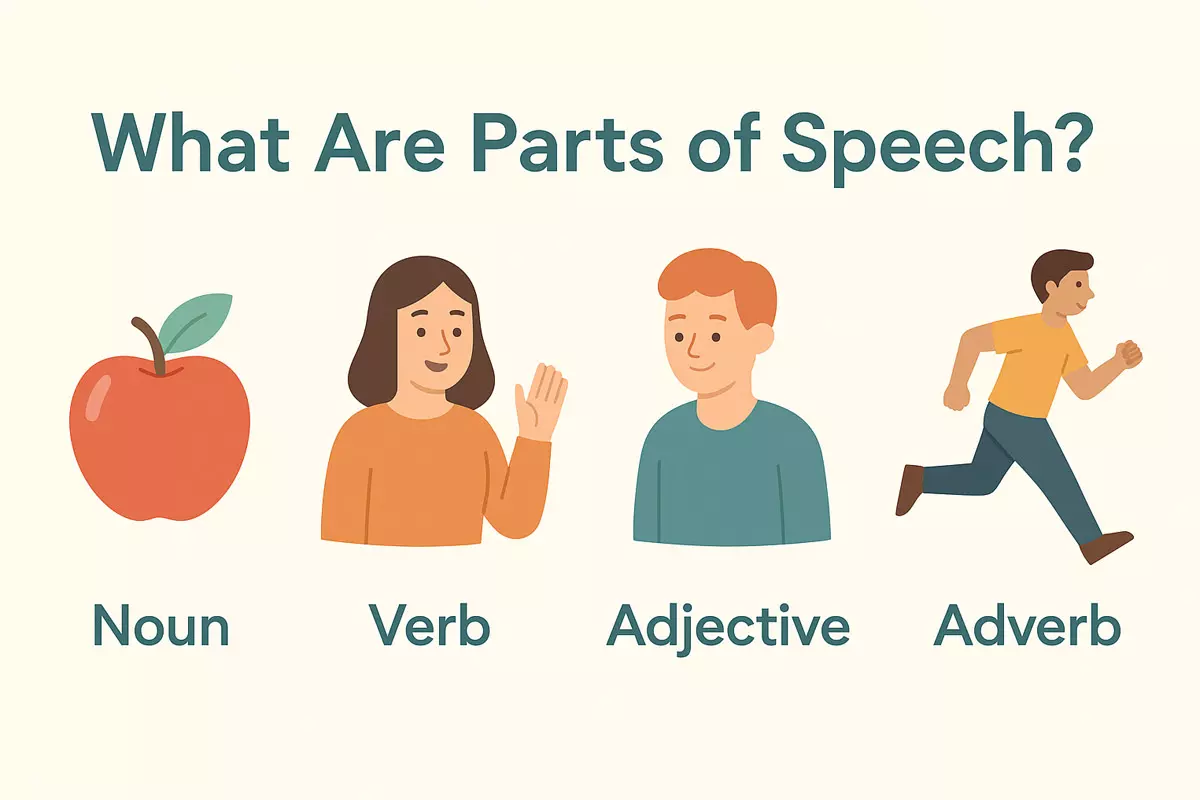 This article explains what parts of speech are, outlines the main word categories, and discusses their importance. It shows how to identify word classes, provides examples, highlights common mistakes, and includes a short practice exercise.
Every sentence consists of various types of words, each serving a specific purpose in conveying meaning. By recognizing these essential building blocks, you can improve your ability to express ideas clearly and understand others more effectively. Mastering the roles that different word types play—such as nouns, verbs, adjectives, and adverbs—enables you to construct sentences that are both precise and engaging. Developing this understanding is key to enhancing your overall communication skills in both writing and speaking.
Definition of Parts of Speech
When discussing how language works, it’s helpful to organize words into categories according to their function in a sentence. These categories are called parts of speech. Each type plays a specific role, whether showing action, describing qualities, connecting ideas, or naming things. Understanding these groups can make grammar rules clearer and help with both writing and comprehension.
Major Categories Explained
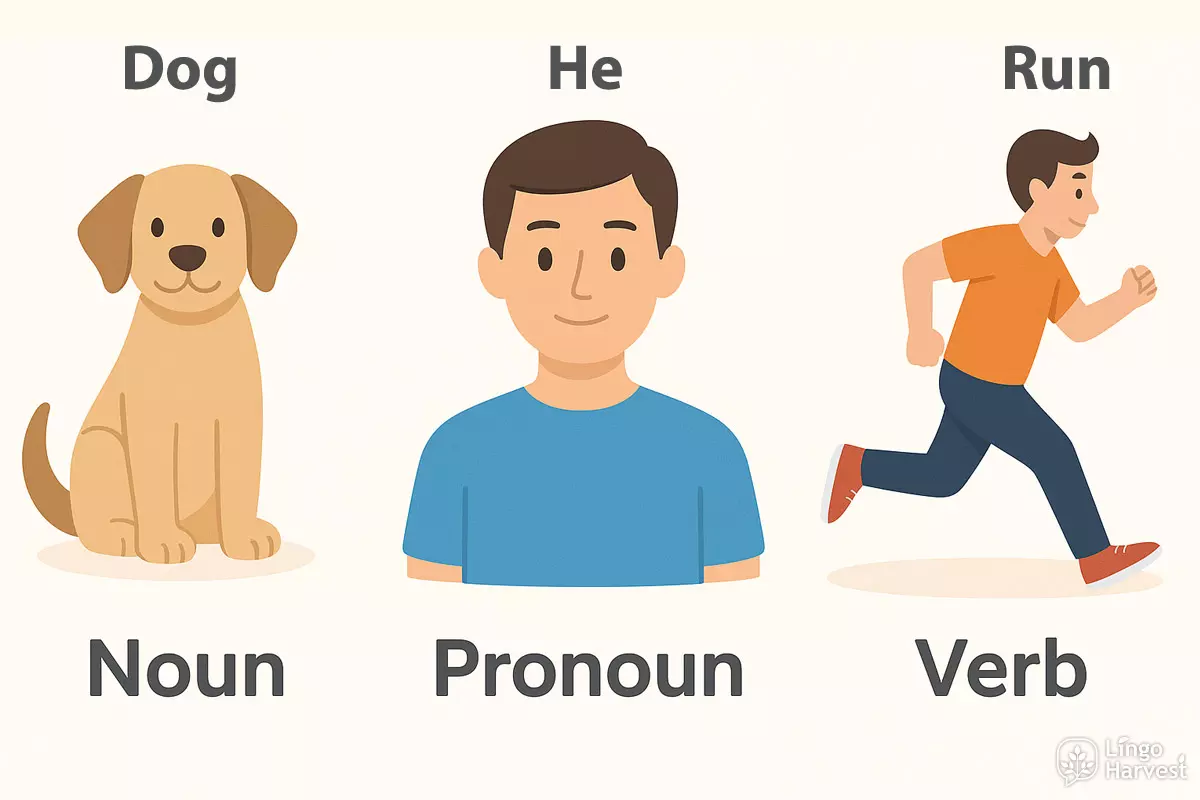
In English, words are commonly sorted into eight traditional groups. Here’s a brief look at what each one does:
- Noun – names of people, places, things, or ideas (e.g., dog, happiness).
- Pronoun – words that replace nouns (e.g., he, they).
- Verb – shows action or state of being (e.g., run, is).
- Adjective – describes or modifies nouns (e.g., blue, quick).
- Adverb – modifies verbs, adjectives, or other adverbs (e.g., quickly, very).
- Preposition – shows relationships in time, place, or direction (e.g., on, before).
- Conjunction – connects words, phrases, or clauses (e.g., and, but).
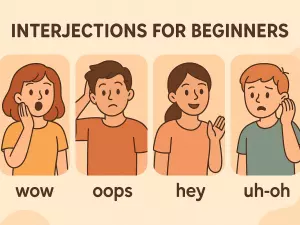
- Interjection – expresses emotion or sudden feeling (e.g., Wow!, Oops!).
Functions and Examples
Each word in a sentence fits into one of these roles. Here are more examples to illustrate the typical use of each type:
- Noun: teacher, Paris, freedom
- Pronoun: she, it, ourselves
- Verb: think, become, swim
- Adjective: happy, tall, ancient
- Adverb: silently, almost, well
- Preposition: under, during, with
- Conjunction: or, so, although
- Interjection: Hey! Alas! Phew!
Quick Comparison of Core Groups
| Part of Speech | Main Function | Sample Words |
|---|---|---|
| Noun | Names a person, place, thing, or idea | cat, city, joy |
| Verb | Expresses action or state | jump, think, is |
| Adjective | Describes a noun | bright, old, tiny |
| Adverb | Modifies verbs, adjectives, or adverbs | quickly, very, well |
| Pronoun | Replaces a noun | he, this, theirs |
| Preposition | Shows relationship | in, above, between |
| Conjunction | Links words or groups | and, but, because |
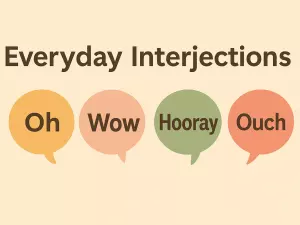
| Interjection | Expresses emotion | oh, wow, ouch |
While some words can change their role depending on the context, these categories provide a useful map for understanding sentence structure. Becoming familiar with these groups makes it easier to analyze, edit, and create clear communication.
Main Word Categories
Understanding the essential groups of words in English helps clarify how sentences are built and meaning is conveyed. Each group has its own role in communication, from naming things to showing relationships or expressing actions.
Nouns
Nouns serve as the names of people, places, things, or ideas. They can be concrete (like "dog" or "city") or abstract (like "freedom" or "happiness"). Proper nouns refer to specific individuals or entities, while common nouns are general names.
Verbs
Verbs express actions, occurrences, or states of being. They are the core of predicates and are essential for forming statements, questions, and commands. Examples include "run," "is," "think," and "become."
Adjectives
Adjectives modify nouns or pronouns, giving more detail about qualities or quantities. For instance, in "red apple" or "three cars," the words "red" and "three" are adjectives.
Adverbs
Adverbs describe or modify verbs, adjectives, or other adverbs. They often answer questions like how, when, where, or to what extent. Common adverbs include "quickly," "very," "yesterday," and "here."
Pronouns
Pronouns stand in for nouns, making language less repetitive. They include words like "he," "she," "it," "they," "this," and "who." Pronouns vary depending on number, gender, and case.
Prepositions
Prepositions show relationships in time, space, direction, and more between nouns or pronouns and other words. Examples are "in," "on," "at," "between," and "with."
Conjunctions
Conjunctions connect words, phrases, or clauses. Coordinating conjunctions (like "and," "but," "or") join elements of equal rank, while subordinating conjunctions (such as "because," "although," "since") link dependent clauses to main ones.
Interjections
Interjections are words or phrases that express strong emotion or sudden exclamations. They stand alone and are often followed by an exclamation mark. Examples include "Wow!", "Oops!", "Hey!", and "Alas!"
Summary Table: Core Parts of Speech
| Category | Function | Examples |
|---|---|---|
| Noun | Names a person, place, thing, or idea | cat, London, friendship, book |
| Verb | Expresses action or state | run, eat, is, become |
| Adjective | Describes a noun or pronoun | happy, blue, tall, several |
| Adverb | Modifies a verb, adjective, or adverb | quickly, very, often, almost |
| Pronoun | Replaces a noun | she, them, ours, who |
| Preposition | Shows relationship or position | under, during, with, by |
| Conjunction | Connects words or groups of words | and, or, but, although |
| Interjection | Expresses emotion or reaction | Oh!, Ouch!, Wow!, Hurray! |
Quick Reference: Examples for Each Group
- Nouns: teacher, mountain, bicycle, courage, river
- Verbs: jump, feel, decide, write, sleep
- Adjectives: bright, old, narrow, silent, enormous
- Adverbs: slowly, always, below, never, easily
- Pronouns: I, you, it, those, someone
- Prepositions: beside, after, without, across, into
- Conjunctions: nor, yet, unless, so, because
- Interjections: Bravo!, Yikes!, Phew!, Aha!
These categories form the backbone of English grammar, providing structure and meaning to sentences. Recognizing the differences between each group makes it easier to analyze and construct clear, effective communication.
Why Parts of Speech Matter
Understanding how words function in sentences is essential for clear communication. Each class of word plays a specific role, helping us build meaning and structure in both spoken and written language. When you recognize the function of a noun, verb, or adjective, for example, it becomes much easier to construct sentences that make sense and convey your intended message.
Clarity in Communication
Knowing word categories helps prevent misunderstandings. For instance, confusing an adverb for an adjective can change the meaning of a statement, or even make it grammatically incorrect. Recognizing these differences supports accurate expression, whether you’re writing an essay or having a conversation.
Building Stronger Sentences
Writers and speakers rely on proper word usage to create sentences that are not only correct, but also engaging. By understanding the distinctions between, say, prepositions and conjunctions, you can avoid common errors and produce more sophisticated writing.
Language Learning and Analysis
For language learners, identifying word types is a foundation for mastering grammar and expanding vocabulary. Teachers and linguists also use these categories to analyze sentence structure, explain rules, and highlight patterns in language development.
Examples: How Word Categories Shape Meaning
- Noun: cat, happiness, city
- Verb: run, think, create
- Adjective: blue, quick, tall
- Adverb: quickly, silently, very
- Pronoun: she, they, it
- Preposition: under, between, with
- Conjunction: and, but, although
- Interjection: wow, ouch, hey
- Article: the, a, an
- Determiner: some, every, this
Comparing Roles Across Different Classes
| Word Type | Main Function in a Sentence |
|---|---|
| Noun | Names a person, place, thing, or idea |
| Verb | Shows action or state of being |
| Adjective | Describes a noun or pronoun |
| Adverb | Modifies a verb, adjective, or other adverb |
| Pronoun | Replaces a noun to avoid repetition |
| Preposition | Shows relationship between words (often location, time, direction) |
| Conjunction | Connects words, phrases, or clauses |
| Interjection | Expresses emotion or reaction |
Grasping these categories allows you to parse and produce sentences with greater confidence. Whether you’re learning a new language or refining your writing skills, a solid grasp of word functions is a practical tool in everyday communication.
How to Identify Word Classes
Understanding which group a word belongs to is essential for accurate communication and grammar. Word classes—also called parts of speech—can often be recognized by their function, form, and position in a sentence. Here’s how you can distinguish them using a combination of clues and patterns.
Look at the Word’s Function
A word’s job within a sentence often reveals its class. For example, words that name things (like “dog” or “happiness”) function as nouns, while words that describe actions (such as “run” or “think”) are verbs. Adjectives modify nouns, and adverbs modify verbs, adjectives, or other adverbs.
Check for Typical Endings and Forms
Certain suffixes and prefixes can hint at a word’s category. Here are some common markers:
- -ness, -ment, -tion (usually nouns: darkness, agreement, action)
- -ly (often adverbs: quickly, softly)
- -able, -ous, -ful (often adjectives: comfortable, gracious, helpful)
- -ing, -ed (verb forms: singing, walked)
- Unchanged forms (many prepositions and conjunctions: in, on, but, and)
Position in a Sentence
The placement of a word can reveal its type. For instance, determiners and adjectives usually come before nouns (“the red car”), while verbs typically follow the subject (“She runs”).
Common Clues and Examples
Below is a list of clues and sample words to help you spot different categories in context:
- Nouns: Can often be made plural or possessive (cats, teacher’s)
- Verbs: Change form for tense or subject (walk, walks, walked)
- Adjectives: Answer “what kind?” or “which one?” (happy, blue, tall)
- Adverbs: Often answer “how?”, “when?”, “where?” (quickly, yesterday, here)
- Pronouns: Stand in for nouns (he, she, it, they)
- Prepositions: Show relationships (under, between, during)
- Conjunctions: Link words or clauses (and, but, because)
- Determiners: Specify which noun (the, some, each)
- Interjections: Express emotion or reaction (Wow! Oh no!)
Comparing Word Class Features
| Word Class | Typical Clues | Examples |
|---|---|---|
| Noun | Names a thing, person, or idea; can be pluralized | apple, friendship, city |
| Verb | Shows action or state; changes for tense | run, think, is |
| Adjective | Describes a noun; often ends in -ous, -ful, -able | happy, careful, dangerous |
| Adverb | Describes verbs/adjectives; often ends in -ly | slowly, very, yesterday |
| Preposition | Shows relationship; usually before a noun | on, between, during |
| Pronoun | Replaces a noun | she, it, ours |
| Conjunction | Connects words or groups | and, but, or |
| Interjection | Expresses emotion; stands alone | Wow!, Ouch! |
Practice and Observation
Reading and listening to language in context will sharpen your ability to spot different word groups. Try identifying the role of unfamiliar words based on how they’re used. Over time, you’ll notice patterns that make this process much more intuitive.
Examples of Core Word Types
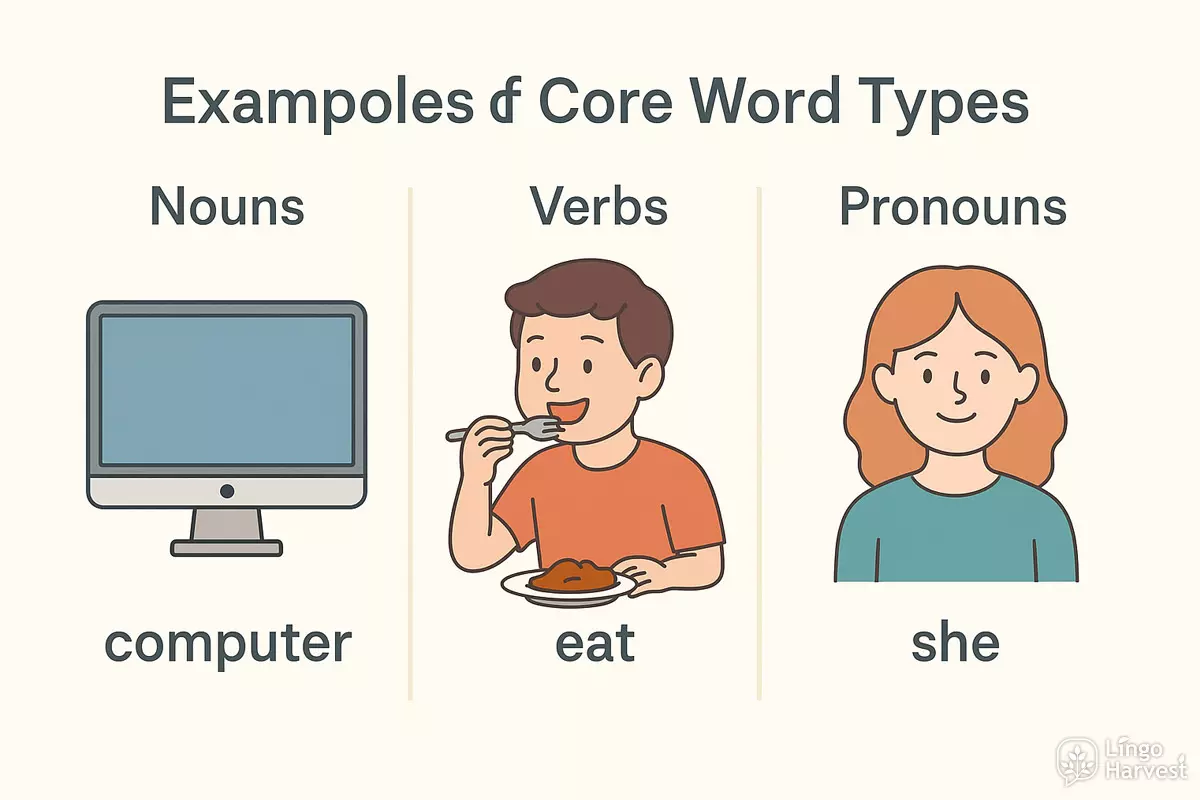
Understanding how different categories of words function in sentences is crucial for grasping the structure of English. Each main group plays a unique role, from naming things to describing actions or qualities. Here’s a closer look at the most essential categories and how they show up in everyday language.
Nouns
Nouns identify people, places, things, or ideas. They often serve as the subject or object in a sentence. Some common examples include:
- dog
- city
- happiness
- computer
- teacher
- ocean
- friendship
- book
- music
- freedom
Verbs
Verbs express actions, occurrences, or states of being. They are essential for forming predicates and showing what the subject does or experiences. Typical examples are:
- run
- think
- is
- grow
- eat
- feel
- write
- believe
- sing
- become
Adjectives and Adverbs: A Quick Comparison
Adjectives and adverbs both modify other words, but they do so in different ways. Adjectives describe nouns, while adverbs modify verbs, adjectives, or other adverbs.
| Type | Function | Examples |
|---|---|---|
| Adjective | Describes a noun | blue, noisy, quick, happy, ancient |
| Adverb | Modifies a verb, adjective, or adverb | quickly, very, silently, well, always |
Pronouns
Pronouns replace nouns to avoid repetition and simplify sentences. Examples include:
- he
- she
- it
- they
- we
- you
- who
- which
- someone
- none
Prepositions, Conjunctions, and Interjections
These word groups link ideas, show relationships, or express emotion.
- Prepositions: in, on, at, by, with, under, through
- Conjunctions: and, but, or, because, although, while, so
- Interjections: oh, wow, hey, ouch, alas, hmm, bravo
By recognizing how these fundamental word types function and interact, you can build clearer and more effective sentences. This foundation supports everything from basic writing to advanced grammar analysis.
Common Beginner Mistakes
Mixing up the categories of words is a frequent stumbling block for those just starting to learn about language structure. Confusing verbs with adjectives, or mistaking adverbs for adjectives, can lead to awkward sentences and unclear meaning. Understanding the distinct role each part of speech plays is essential for building accurate and effective communication.
Confusing Similar Parts of Speech
Learners often mistake adjectives for adverbs and vice versa, especially because many adverbs are formed by adding -ly to an adjective. For example, “She runs quick” instead of the correct “She runs quickly.” Similarly, nouns and verbs can sometimes look alike—such as “paint” (noun: the substance; verb: the action)—leading to errors in usage.
- Using an adjective instead of an adverb (“He sings beautiful” ❌ instead of “He sings beautifully” ✅)
- Relying on context clues alone to determine word class, which can backfire with homonyms (“watch” as a noun vs. verb)
- Adding unnecessary articles to proper nouns (“The London” ❌ instead of “London” ✅)
- Using the wrong pronoun form (“Me and him went” ❌ instead of “He and I went” ✅)
- Confusing prepositions (“I’m good in tennis” ❌ instead of “I’m good at tennis” ✅)
- Overusing conjunctions or stringing sentences together with “and” or “but” without proper punctuation
- Omitting determiners where required (“She has car” ❌ instead of “She has a car” ✅)
- Using verbs in the wrong tense or form (“She go to school” ❌ instead of “She goes to school” ✅)
- Placing adjectives after the noun in English (“A car red” ❌ instead of “A red car” ✅)
- Misplacing modifiers so that the meaning becomes unclear (“She almost drove her kids to school every day” can be confusing)
Misidentifying Parts of Speech in Sentences
When analyzing sentences, beginners sometimes incorrectly label words, especially when words can fit multiple categories depending on context. For instance, “fast” can be an adjective (“a fast car”) or an adverb (“run fast”), so context matters.
Summary Table: Easily Confused Word Types
| Word | Possible Parts of Speech & Example |
|---|---|
| Light | Noun (“Turn on the light”), Verb (“Light the candle”), Adjective (“light color”) |
| Fast | Adjective (“a fast train”), Adverb (“drive fast”) |
| Well | Adverb (“She sings well”), Noun (“a water well”), Adjective (“I am well”) |
| Watch | Verb (“watch TV”), Noun (“a wrist watch”) |
Recognizing these patterns and paying close attention to context can help learners avoid the most frequent pitfalls. Regular practice with real sentence examples and thoughtful review of word function will steadily improve accuracy and confidence with the various parts of speech.
Parts of Speech in Basic Sentences
Understanding how different word categories function together is key to constructing clear, correct statements. Each word in a sentence serves a specific grammatical role, and these roles are grouped into what we call parts of speech. When we look at an ordinary sentence, you can usually spot a mix of several types, each contributing to the sentence’s meaning and structure.
Main Parts of Speech Used in Simple Sentences
Let’s break down the most common groups and how they appear in straightforward sentences:
- Noun: Names a person, place, thing, or idea (e.g., cat, happiness).
- Verb: Shows an action or state of being (e.g., run, is).
- Pronoun: Replaces a noun (e.g., she, they).
- Adjective: Describes a noun or pronoun (e.g., blue, happy).
- Adverb: Modifies a verb, adjective, or other adverb (e.g., quickly, very).
- Preposition: Shows the relationship between a noun (or pronoun) and another word (e.g., in, on).
- Conjunction: Connects words, phrases, or clauses (e.g., and, but).
- Interjection: Expresses emotion or reaction (e.g., Wow!, Oh!).
How These Categories Work Together
A basic sentence in English typically contains at least a subject and a predicate. The subject is usually a noun or pronoun, while the predicate almost always includes a verb. Modifiers like adjectives and adverbs add detail, while prepositions and conjunctions help link ideas or clarify relationships.
| Part of Speech | Example in a Simple Sentence |
|---|---|
| Noun | The dog barked. |
| Verb | The dog barked. |
| Adjective | The black cat slept. |
| Adverb | She ran quickly. |
| Pronoun | They arrived early. |
| Preposition | The book is on the table. |
| Conjunction | I want tea and coffee. |
| Interjection | Wow! That’s amazing. |
Common Sentence Patterns
Here are some simple patterns to show how these elements combine in everyday language:
- Noun + Verb: Birds sing.
- Pronoun + Verb: He laughs.
- Noun + Verb + Noun: Children read books.
- Adjective + Noun + Verb: Red apples fell.
- Noun + Verb + Adverb: She dances gracefully.
- Noun + Verb + Prepositional Phrase: The cat sleeps on the sofa.
- Interjection + Sentence: Oh! I forgot.
- Noun + Conjunction + Noun + Verb: Jack and Jill climbed.
- Pronoun + Verb + Adjective: It seems easy.
- Adverb + Verb: Quickly run.
Grasping these patterns makes it easier to both understand and build your own sentences. As you get familiar with how the different word types interact, expressing ideas clearly becomes much more straightforward.
Mini Practice: Identify the Word Class
Test your understanding of English word classes by examining the sentences below. For each highlighted word, decide what part of speech it is. Think about how the word functions in the sentence—does it show action, name something, describe, or connect ideas?
Exercise 1: Single-Word Identification
Read each sentence. Identify the word class (part of speech) for the word in bold.
- The cat slept on the sofa.
- She quickly finished her homework.
- We walked to the park.
- He is a brilliant musician.
- They laughed at the joke.
- Can you help me?
- The blue car is mine.
- We arrived after midnight.
- Wow! That was amazing.
- Sarah and Tom are friends.
Show answers
- cat – noun
- quickly – adverb
- to – preposition
- brilliant – adjective
- laughed – verb
- help – verb
- blue – adjective
- after – preposition
- wow – interjection
- are – verb
Exercise 2: Mixed Sentences
Identify the function of each underlined word. This time, consider if it might fit more than one category and focus on context.
- I will call you later.
- He ran fast.
- We bought a new book.
- The dog barked loudly.
Show answers
- call – verb
- fast – adverb
- new – adjective
- loudly – adverb
Common Word Class Examples
Here are more examples of different word classes you may encounter. Notice how their roles differ in sentences:
- Nouns: teacher, city, happiness, book, water
- Verbs: run, think, eat, become, sing
- Adjectives: tall, green, interesting, old, cold
- Adverbs: softly, always, very, never, tomorrow
- Prepositions: in, on, under, between, with
- Conjunctions: and, but, because, or, although
- Interjections: oh, hey, ouch, alas, wow
- Pronouns: he, she, it, they, them
- Determiners: the, a, some, this, every
Practice regularly with real sentences to become more confident in recognizing each type of word. Context is key: sometimes, the same word can serve different purposes depending on how it's used.