Speak Like in Real Life: 20 Interjections You'll Hear Every Day

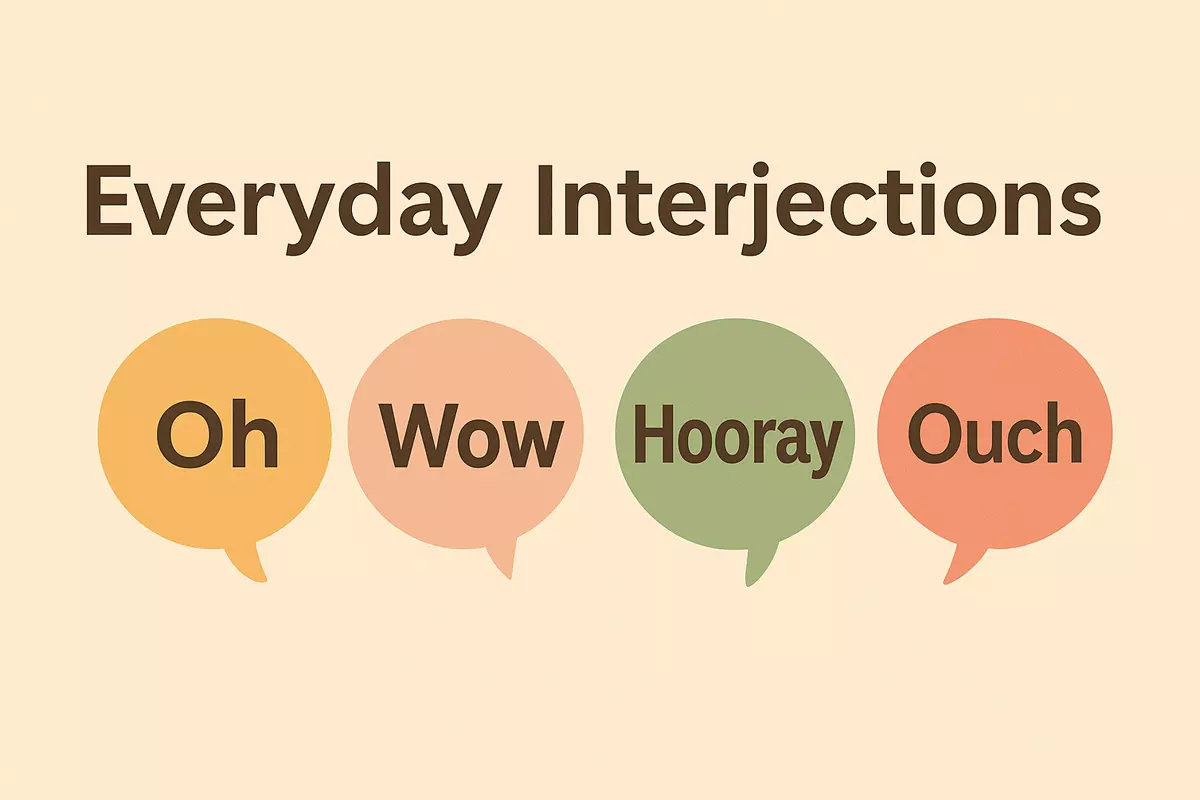 Here we why interjections are key for fluency, lists the top 20 with meanings, explains pronunciation, provides mini-dialogues, highlights context warnings, suggests alternatives by tone, and offers self-check quizzes and practice drills.
If you want to sound more natural when speaking English, it's important to use the small exclamations and reactions that native speakers include in everyday conversations. Words and phrases like wow, really, oh no, or hmm help you express surprise, excitement, hesitation, and other emotions, making your speech more lively and genuine. By learning and practicing these common expressions, you can make your English sound more authentic and connect better with others in daily interactions.
Why Interjections Matter for Fluency
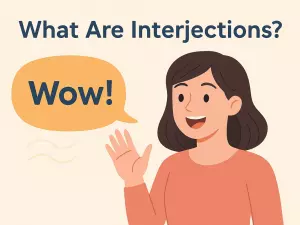
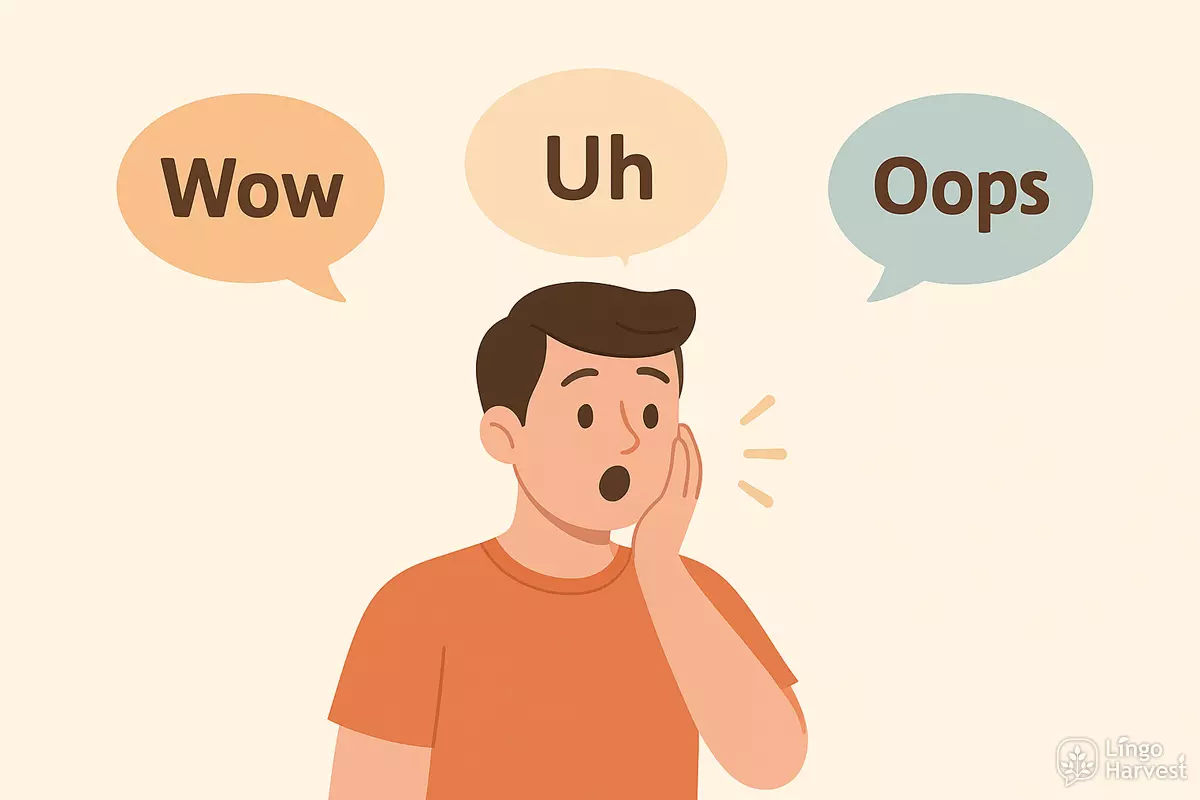
Interjections are those little words and sounds—like “wow,” “uh,” and “oops”—that make speech feel alive and authentic. Native speakers use them constantly, not just to express emotions, but also to buy time, show surprise, or react instantly. If you want your spoken English to sound natural, not robotic, mastering these expressions is essential.
How Interjections Shape Real Conversations
In everyday dialogue, interjections signal reactions and help listeners follow the speaker’s feelings or intentions. For example, “oh” might show sudden understanding, while “ugh” hints at annoyance. Without these, conversations can feel stiff or awkward, and you may miss subtle social cues.
Key Benefits for Learners
- Express Emotions Instantly: Words like “yay,” “ouch,” and “ew” let you react naturally.
- Bridge Pauses: Fillers such as “uh” or “um” give you a moment to think without breaking the flow.
- Sound More Native: Using the right interjection at the right moment helps you blend in during casual chats.
- Show Engagement: Short responses like “huh?” or “wow” keep conversations dynamic and interactive.
Common Interjections You’ll Hear All the Time
- Oh
- Wow
- Oops
- Uh-oh
- Yay
- Ugh
- Eh
- Hmm
- Eh?
- Ouch
- Yikes
- Phew
- Geez
- Huh
- Aha
- Eh
- Whoa
- Yuck
- Shh
- Bravo
Comparing Interjection Usage
| Interjection | Typical Use/Meaning |
|---|---|
| Wow | Expresses surprise or admiration |
| Uh | Filler for hesitation or thinking |
| Oops | Signals a small mistake or accident |
| Yikes | Shows fear, shock, or concern |
| Phew | Relief after stress or danger |
| Geez | Annoyance, disbelief, or impatience |
| Huh? | Asks for repetition or clarification |
Learning when and how to use these short words can make your English feel much more spontaneous and real, helping you participate smoothly in everyday conversations. They’re not just “extra”—they’re a core part of sounding fluent and being understood.
Top 20 with Meanings and Notes
Everyday English speech is full of short, expressive words—interjections—that add emotion, reaction, or quick feedback. These little outbursts make conversations sound natural and lively. Below, you'll find a list of 20 common interjections, each with a brief meaning and usage note to help you sound more like a native speaker.
Common Interjections and How They're Used
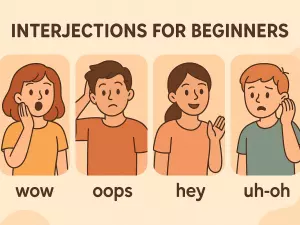
- Oh – Surprise, realization, or a minor reaction. ("Oh, I see!")
- Wow – Amazement or admiration. ("Wow, that's amazing!")
- Oops – A small mistake or accident. ("Oops, I dropped it!")
- Hey – Attracting attention or greeting. ("Hey, over here!")
- Uh-oh – Warning or noticing something’s wrong. ("Uh-oh, we’re late!")
- Yikes – Alarm or mild fear. ("Yikes, that’s a big spider!")
- Phew – Relief after stress or effort. ("Phew, that was close!")
- Hmm – Thinking or hesitating. ("Hmm, let me think…")
- Ah – Realization, understanding, or satisfaction. ("Ah, now I get it!")
- Uh – Pausing or buying time. ("Uh, I’m not sure…")
- Huh – Confusion or asking for repetition. ("Huh? What did you say?")
- Ouch – Physical or emotional pain. ("Ouch, that hurt!")
- Yay – Happiness or celebration. ("Yay, we did it!")
- Ugh – Disgust or frustration. ("Ugh, that’s gross.")
- Geez – Exasperation or annoyance. ("Geez, calm down!")
- Aha – Sudden understanding or discovery. ("Aha, I found it!")
- Bravo – Approval or applause. ("Bravo, great job!")
- Whoa – Surprise or calling for a pause. ("Whoa, slow down!")
- Eh – Indifference or seeking agreement (often Canadian). ("It’s fine, eh?")
- Shh – Requesting silence. ("Shh, the movie’s starting.")
Quick Reference Table: Tone and Typical Contexts
| Interjection | Emotion/Function | Typical Context |
|---|---|---|
| Wow | Astonishment, admiration | Reacting to good news or something impressive |
| Oops | Minor mistake, accident | Dropping something, making an error |
| Phew | Relief | After overcoming a challenge or escaping danger |
| Yikes | Alarm, mild fear | Seeing something scary or surprising |
| Huh | Confusion, question | When you didn’t hear or understand |
| Yay | Joy, celebration | Winning, good results, happy moments |
| Ugh | Disgust, frustration | Reacting to something unpleasant |
| Shh | Request for silence | When quiet is needed, e.g., in a library |
Notes on Usage
Some interjections are very casual, while others can be used in more formal situations. For instance, “Bravo” works on stage or in polite company, but “Geez” is more relaxed and sometimes expresses irritation. Tone and context matter—using “Oops” in a serious setting might sound unprofessional, while “Ah” or “Hmm” are generally safe in most conversations.
Pronunciation and Stress Highlights
Mastering the way interjections sound in everyday speech can make your English much more natural. These words often stand alone, so their pronunciation and intonation are key to expressing real emotion or reaction. When spoken, interjections usually carry a strong, clear stress—sometimes even more than the words around them. This section explores how to say common interjections authentically and highlights which syllables or sounds to emphasize.
How Stress Gives Interjections Their Impact
The emotional punch of an interjection often comes from which syllable is stressed and the pitch of your voice. Many of these words are short, but they can be stretched out or clipped for effect, depending on the feeling you want to convey. For example, a long, drawn-out "Wowww!" signals amazement, while a quick "Eh?" shows confusion or a request for repetition.
Examples: Real-Life Interjection Stress Patterns
- Wow – The whole word is stressed: /waʊ/. Can be elongated for emphasis.
- Oops – Stressed on the single syllable: /uːps/, often higher pitch.
- Uh-oh – Primary stress on the first syllable: /ˈʌʔ.oʊ/.
- Hey – One syllable, sharp and clear: /heɪ/.
- Yikes – Stressed throughout: /jaɪks/, often with rising intonation.
- Whoa – Drawn out: /woʊ/, sometimes with a falling tone.
- Hmm – Hummed sound, can be short or prolonged: /mː/.
- Uh-huh – Stress on the second part: /ʌˈhʌ/ (affirmative).
- Uh-uh – Stress on the first part: /ˈʌʔ.ʌ/ (negative).
- Whoa – Drawn out for surprise, shorter for warning.
- Gosh – One syllable, slightly drawn out: /ɡɑʃ/.
- Ah – Can be short (realization) or long (relief): /ɑː/.
- Oops – Short and sharp to show a mistake.
- Eh – Rising intonation, especially when questioning: /eɪ/.
- Whoa – Elongated for emphasis, especially in surprise situations.
- Yay – High pitch, often with a rising intonation: /jeɪ/.
- Ugh – Low, drawn out, expressing disgust: /ʌɡ/.
- Huh – Rising pitch for questions: /hʌ/.
- Phew – Falling intonation, showing relief: /fjuː/.
- Shh – Prolonged 'sh' sound: /ʃː/.
Quick Tips for Natural Pronunciation
- Keep interjections punchy and clear—don’t let them get lost in your sentence.
- Use pitch changes (higher or lower voice) to match the emotion you want to show.
- Don’t be afraid to exaggerate the sound, especially in casual conversation.
- Pay attention to native speakers; mimic the rhythm and emphasis you hear.
| Interjection | Stress & Typical Emotion | Sample Pronunciation |
|---|---|---|
| Wow | Full word, strong; amazement | /waʊ/ |
| Uh-oh | First syllable; alarm, worry | /ˈʌʔ.oʊ/ |
| Yay | High pitch; excitement | /jeɪ/ |
| Ugh | Drawn out; disgust | /ʌɡ/ |
| Shh | Prolonged 'sh'; request for quiet | /ʃː/ |
Getting comfortable with these sound patterns will help you react naturally in conversation. Remember, the way you say these words can completely change their meaning—so practice saying them out loud, experimenting with pitch and length. This is the shortcut to sounding more like a native speaker in everyday exchanges.
Mini Dialogues for Each Item
Everyday speech is full of short, expressive words that convey emotion or reaction. To help you use these natural interjections, here are sample exchanges showing how they fit into real conversations. Each snippet is designed to reflect authentic situations, offering context for understanding and practice.
Common Interjections in Real Situations
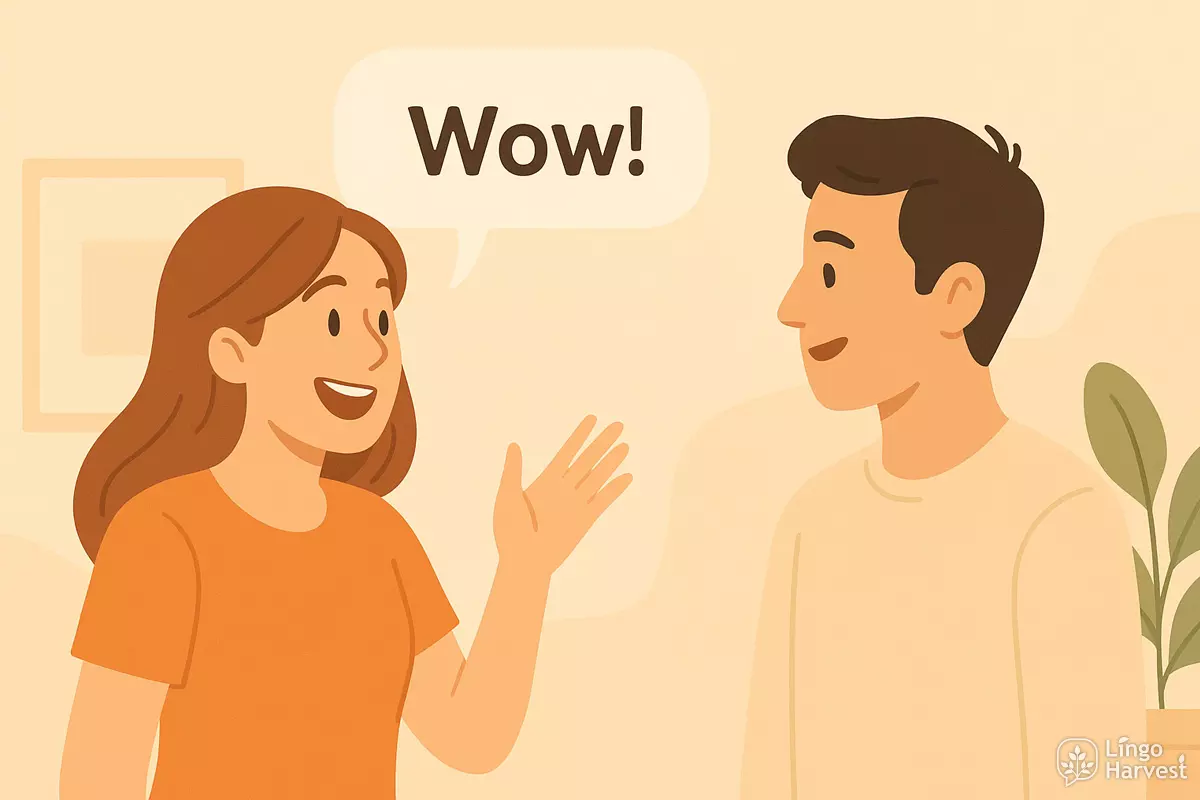
- Wow!
A: I just got tickets to the concert!
B: Wow! That’s amazing! - Oops!
A: Oops! I dropped my coffee.
B: Don’t worry, I’ll grab some napkins. - Uh-oh
A: Uh-oh, my phone’s not turning on.
B: Did the battery die? - Yikes!
A: Yikes! That spider is huge.
B: Let’s move it outside. - Oh!
A: Oh! I didn’t see you there.
B: Sorry, didn’t mean to startle you. - Aha!
A: Aha! So that’s where I left my keys.
B: Mystery solved! - Ugh
A: Ugh, this traffic is terrible.
B: Tell me about it. We’ll be late. - Phew
A: Phew, I finished the project just in time.
B: That was close! - Eh
A: Do you want to watch that movie?
B: Eh, I’m not really interested. - Hmm
A: Hmm, I wonder if it’ll rain today.
B: The sky looks pretty cloudy. - Yay!
A: Yay! We’re finally on vacation.
B: Time to relax! - Whoa!
A: Whoa! Did you see that skateboard trick?
B: That was awesome! - Ouch!
A: Ouch! I stubbed my toe.
B: Are you okay? - Hmmph
A: Hmmph, I guess they forgot to invite me.
B: Maybe it was a mistake. - Eh?
A: Eh? What did you say?
B: I asked if you want some tea. - Yup
A: Are you ready to go?
B: Yup, let’s head out. - Uh-huh
A: Did you finish your homework?
B: Uh-huh, all done. - Geez!
A: Geez! That was a loud bang.
B: I think something fell upstairs. - Whoa
A: Whoa, slow down!
B: Sorry, I got excited. - Hmm...
A: Hmm... I’m not sure about this plan.
B: Let’s think it through together.
Quick Reference: Interjection Use in Context
| Interjection | Typical Situation |
|---|---|
| Wow! | Expressing surprise or admiration |
| Oops! | Noticing a small mistake |
| Ugh | Reacting to something unpleasant |
| Eh | Showing indifference or doubt |
| Yay! | Celebrating a positive event |
| Hmm | Thinking or hesitating |
Using these scenarios, you can better understand how interjections sound in day-to-day conversation, making your English feel more natural and relatable. Try practicing these short exchanges aloud or adapting them to moments in your own life.
Register and Context Warnings
Everyday interjections can sound casual, friendly, or even rude, depending on how and where you use them. Some exclamations fit perfectly in relaxed conversations with friends but might feel out of place in a business meeting or formal setting. Knowing when and with whom to use these expressions makes your speech sound more natural—and keeps you from making awkward mistakes.
Situational Differences: When Interjections Fit (or Don’t)
- Informal settings: Most interjections (“Wow!”, “Oops!”, “Yikes!”) are common in chats, texts, or casual talks.
- Formal contexts: Avoid slangy or emotional exclamations. Replace “Uh-oh” with “That could be a problem.”
- Professional environments: Use neutral phrases. “Great!” is usually safe, but “OMG!” might seem unprofessional.
- With strangers or elders: Choose milder, polite expressions; strong words (“Damn!” or “Ugh!”) may offend.
Common Register Levels for Interjections
| Interjection | Typical Register | Context Example |
|---|---|---|
| Hey! | Informal | Greeting a friend: “Hey! Long time no see!” |
| Oops! | Informal | Spilled coffee: “Oops, sorry!” |
| Indeed | Formal | Agreement in a meeting: “Indeed, that’s a good point.” |
| Wow! | Informal | Reacting to news: “Wow! That’s amazing!” |
| Alas | Formal/Literary | Expressing regret: “Alas, we cannot attend.” |
| Ugh! | Very Casual | Disgusted: “Ugh! That’s gross.” |
| Bravo! | Formal/Performance | Applauding: “Bravo! Well done!” |
| OMG! | Slang | Surprised online: “OMG! No way!” |
| Phew! | Informal | Relieved: “Phew! That was close.” |
| Yikes! | Informal | Reacting to bad news: “Yikes! That’s rough.” |
Tips for Using Interjections Appropriately
- Match the tone to your relationship with the listener.
- If unsure, choose neutral or less emotional exclamations.
- Listen to how native speakers use these words in different situations.
- Remember that some phrases (“Geez!”, “Damn!”) can sound rude or offensive to some people.
- Adjust your language if you notice confusion or discomfort.
Swap-In Alternatives by Tone
Everyday language is full of interjections, but their effect often depends on your mood or the situation. Choosing the right exclamation can help you sound more natural and match the feeling you want to express. Below, you’ll find common interjections grouped by the tone they best convey—whether you’re surprised, annoyed, excited, or just filling a pause.
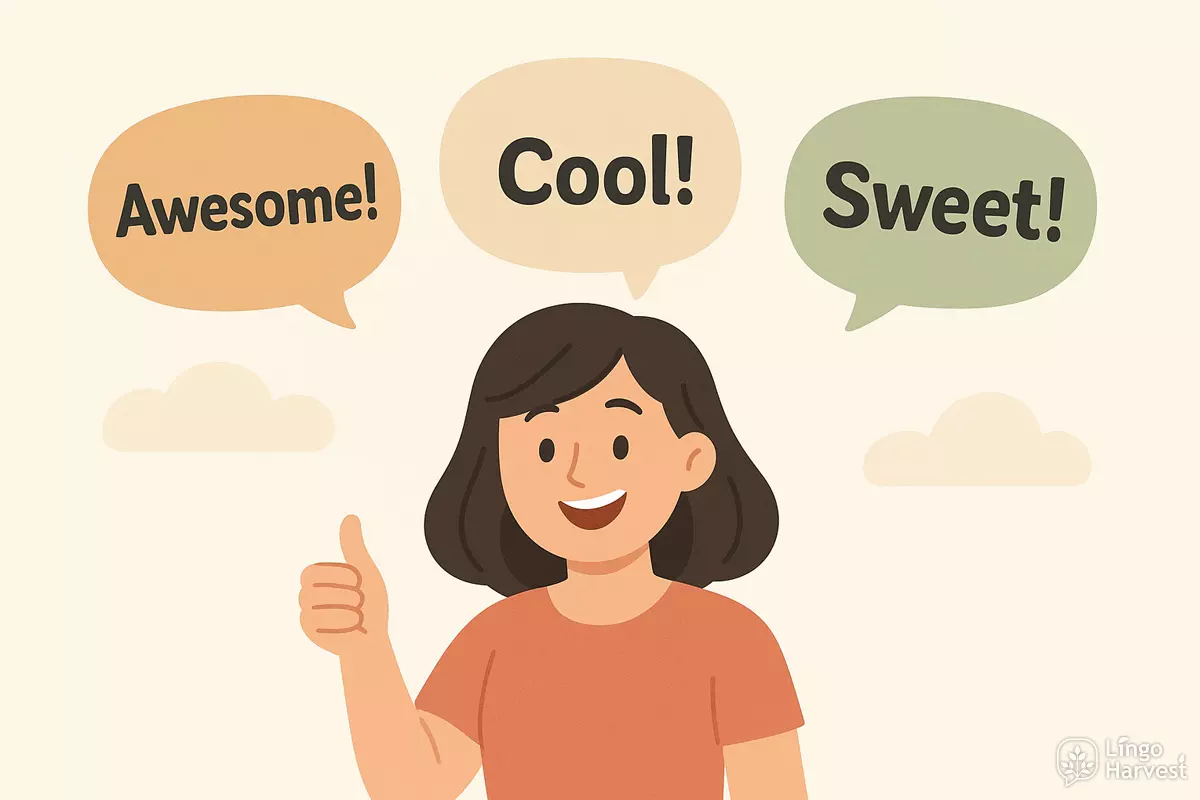
Positive & Friendly
- Wow! — amazement or admiration
- Yay! — happiness or celebration
- Awesome! — enthusiastic approval
- Cool! — relaxed approval or acknowledgment
- Sweet! — delight, usually about a good outcome
Surprise & Shock
- Oh! — general surprise
- Whoa! — startled or impressed
- Geez! — mild shock, sometimes annoyance
- No way! — disbelief
- What?! — astonishment or confusion
Annoyance & Frustration
- Ugh! — disgust or irritation
- Sheesh! — exasperation
- Dang! — mild disappointment or irritation
- Seriously? — disbelief, sometimes frustration
- Come on! — impatience or disbelief
Uncertainty & Thinking
- Hmm... — considering or hesitating
- Er... — searching for words
- Uh... — hesitation
- Well... — pausing to think or soften a response
- So... — leading into a new point or topic
Comparison Table: Interjections by Tone
| Tone | Sample Interjections |
|---|---|
| Positive | Yay, Awesome, Cool, Sweet, Woohoo |
| Surprised | Oh, Whoa, No way, What, Wow |
| Frustrated/Annoyed | Ugh, Sheesh, Dang, Seriously, Come on |
| Uncertain/Thinking | Hmm, Uh, Er, Well, So |
Mixing up these expressions helps your speech sound more lively and real. Pay attention to how native speakers swap between these exclamations depending on the context, and don’t be afraid to try out new ones to better match your feelings or reactions.
Self-Check Quiz and Drills
Practicing interjections in context helps you sound more natural in everyday English. Below you'll find exercises and interactive drills to reinforce your recognition and usage of common exclamations. Use these activities to check your understanding and boost your confidence.
Quick Recognition Drill
Match the interjection to its typical emotion or situation:
- Wow
- Oops
- Ugh
- Yay
- Eh
- Hmm
- Uh-oh
- Oh no
- Whoa
- Huh
- Surprise or admiration
- Small mistake or accident
- Disgust or frustration
- Celebration or happiness
- Indifference or lack of enthusiasm
- Thinking or hesitation
- Trouble or warning
- Regret or sympathy
- Shock or telling someone to stop
- Confusion or asking for repetition
Show answers
- Wow → 1
- Oops → 2
- Ugh → 3
- Yay → 4
- Eh → 5
- Hmm → 6
- Uh-oh → 7
- Oh no → 8
- Whoa → 9
- Huh → 10
Fill-in-the-Blank Practice
Choose the best interjection for each situation:
- ______! I dropped my phone!
- ______! Is that really you?
- ______... I'm not sure that's the right answer.
- ______! We won the game!
- ______? I didn't hear what you said.
Show answers
- Oops
- Wow
- Hmm
- Yay
- Huh
Spot the Odd One Out
For each group, pick the word that is not an interjection:
-
- Whoa
- Dog
- Oh
- Yikes
-
- Yup
- Eh
- Hey
- Walk
Show answers
- Dog
- Walk
Common Interjections: Usage Table
| Interjection | Typical Use |
|---|---|
| Oops | After a minor mistake or accident |
| Yay | Expressing happiness or excitement |
| Uh-oh | When something might go wrong |
| Ugh | Showing disgust or frustration |
| Whoa | Reacting to surprise or warning |
| Hmm | Thinking, considering, or hesitating |
| Huh | Asking for clarification or repetition |
| Oh no | Expressing regret or sympathy |
Short Conversation Drill
Try inserting an interjection in each blank to make the dialogue more natural:
A: ______, that was close!
B: ______, I thought we were going to crash.
A: ______, we're safe now.
Show answers
- A: Whoa
- B: Oh no
- A: Whew
Use these drills regularly to build confidence and ensure your spoken English sounds authentic and spontaneous.
Practice: Record and Compare
Speaking naturally means using real-life reactions, not just textbook phrases. To get comfortable with interjections, it helps to actually say them out loud, listen, and compare your voice to native speakers. Here’s how you can make your practice more effective.
Step 1: Choose and Record
Pick several interjections from the list below. Say each one aloud, trying different emotions or intonations. Use your phone or a recorder so you can listen back.
- Wow!
- Uh-oh!
- Yikes!
- Hmm...
- Oops!
- Hey!
- Ugh.
- Huh?
- Oh!
- Phew!
- Yay!
- Eh.
- Whoa!
- Aha!
- Ew!
- Shh!
- Ouch!
- Uh-huh.
- Nah.
- Geez!
Step 2: Listen and Compare
Find short audio or video clips with native speakers using these interjections. Listen closely: pay attention to pitch, speed, and emotion. Compare your recording with the original. Notice where your pronunciation or intonation is different, and try again until you’re closer to a natural sound.
Common Interjections in Context
For deeper practice, try saying these interjections as you would in real conversations. Below is a comparison table to help you see how their tone and meaning can shift depending on the situation:
| Interjection | Example & Typical Emotion |
|---|---|
| Wow! | “Wow! That’s amazing!” (surprise, admiration) |
| Oops! | “Oops, I dropped it.” (small mistake, embarrassment) |
| Yikes! | “Yikes! That’s a big spider.” (fear, alarm) |
| Hmm... | “Hmm... I’m not sure.” (thinking, hesitation) |
| Ugh. | “Ugh. I hate Mondays.” (disgust, annoyance) |
| Hey! | “Hey! Over here!” (calling, attracting attention) |
| Oh! | “Oh! I didn’t see you there.” (realization, surprise) |
| Phew! | “Phew! That was close.” (relief) |
| Ouch! | “Ouch! That hurt.” (pain) |
| Uh-oh! | “Uh-oh, we’re in trouble.” (worry, trouble ahead) |
Mini Quiz: Choose the Best Interjection
Pick the most natural interjection for each situation:
- You see something impressive.
- You realize you made a small mistake.
- You’re surprised by a sudden noise.
- You’re relieved after a stressful moment.
- You’re calling a friend across the street.
Show answers
- Wow!
- Oops!
- Oh!
- Phew!
- Hey!
Tips for Practicing Out Loud
- Focus on your tone—most interjections change meaning with pitch or emotion.
- Don’t be afraid to exaggerate at first; it helps you learn the emotion behind the word.
- Practice in front of a mirror to watch your facial expressions.
- If possible, ask a friend or teacher to give feedback on your pronunciation.
Using these steps regularly will help you sound more natural and confident when reacting in English conversations.