Interjections for Beginners: Wow, Oops, Hey, Uh-oh

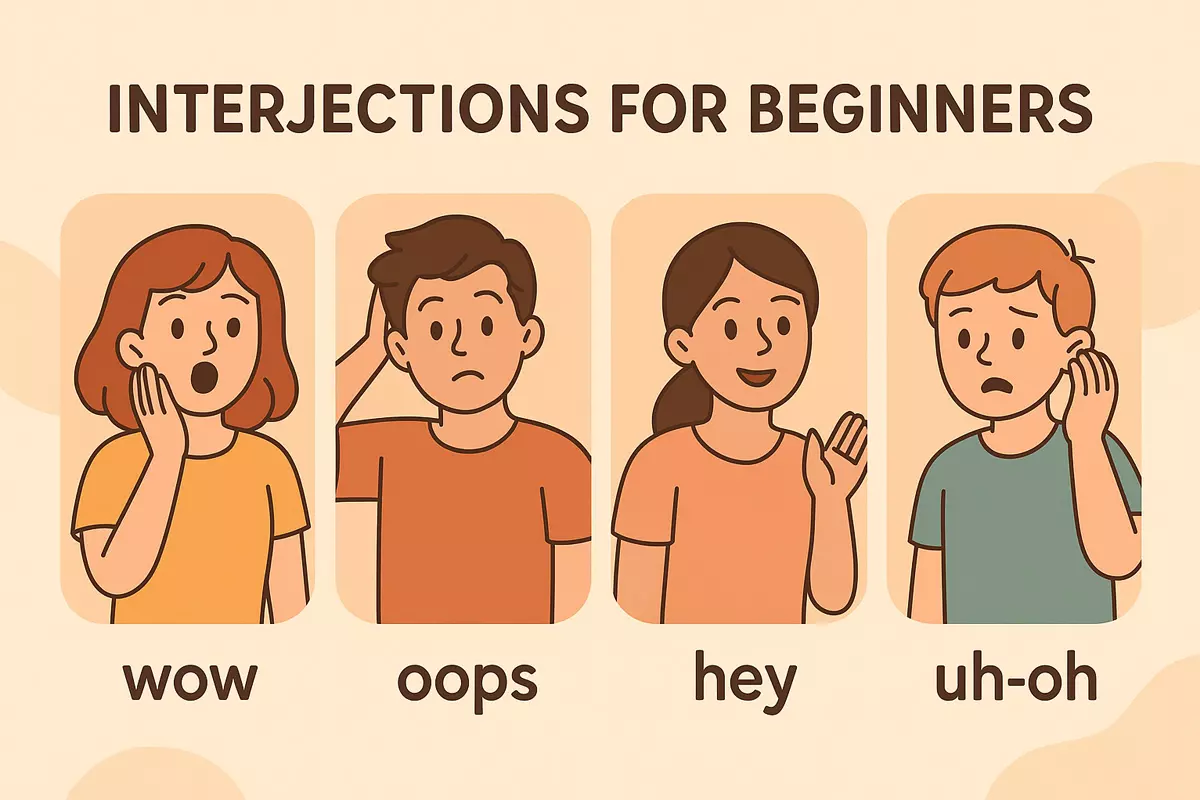 This article explains how interjections like wow and oops show surprise, joy, or concern in speech. It covers spelling, punctuation, tone, politeness, register, mistakes, and includes mini-dialogues plus practice suggestions for natural use.
Lively exclamations such as wow, oops, hey, and uh-oh play an important role in everyday conversation by allowing us to express surprise, draw attention, or react quickly in various situations. These brief but expressive words help convey emotion and add energy to our interactions, making communication not only clearer but also more engaging and relatable. By using these exclamations, we can make our conversations feel more natural and dynamic, connecting more effectively with others.
What Interjections Do in Speech
Interjections play a unique role in everyday conversation. Rather than forming complete sentences, they act as quick expressions of emotion, reaction, or attention. People use them to show feelings instantly—surprise, frustration, excitement, or hesitation—without needing to explain in detail. This makes interactions feel more natural and spontaneous.
How Interjections Shape Communication
These brief words or sounds add color and personality to speech. By using interjections, speakers can:
- Express immediate emotions (like surprise or relief)
- Draw attention or signal a pause
- React to others’ statements or events
- Soften or strengthen the tone of a message
- Show agreement, disagreement, or doubt instantly
Common Situations for Interjections
Interjections are especially common in these moments:
- Reacting to news: “No way!” or “Really?”
- Making mistakes: “Uh-oh,” “Oops”
- Calling for attention: “Hey!” or “Listen!”
- Expressing pain or joy: “Ouch!” or “Yay!”
- Showing hesitation: “Um,” “Er”
- Responding to surprises: “Whoa!” or “Gosh!”
- Agreeing or disagreeing: “Yeah!” or “Nah”
- Reacting to disappointment: “Aw,” “Oh no!”
- Expressing relief: “Phew!”
- Cheering or celebrating: “Bravo!” or “Hooray!”
Types of Meaning Interjections Convey
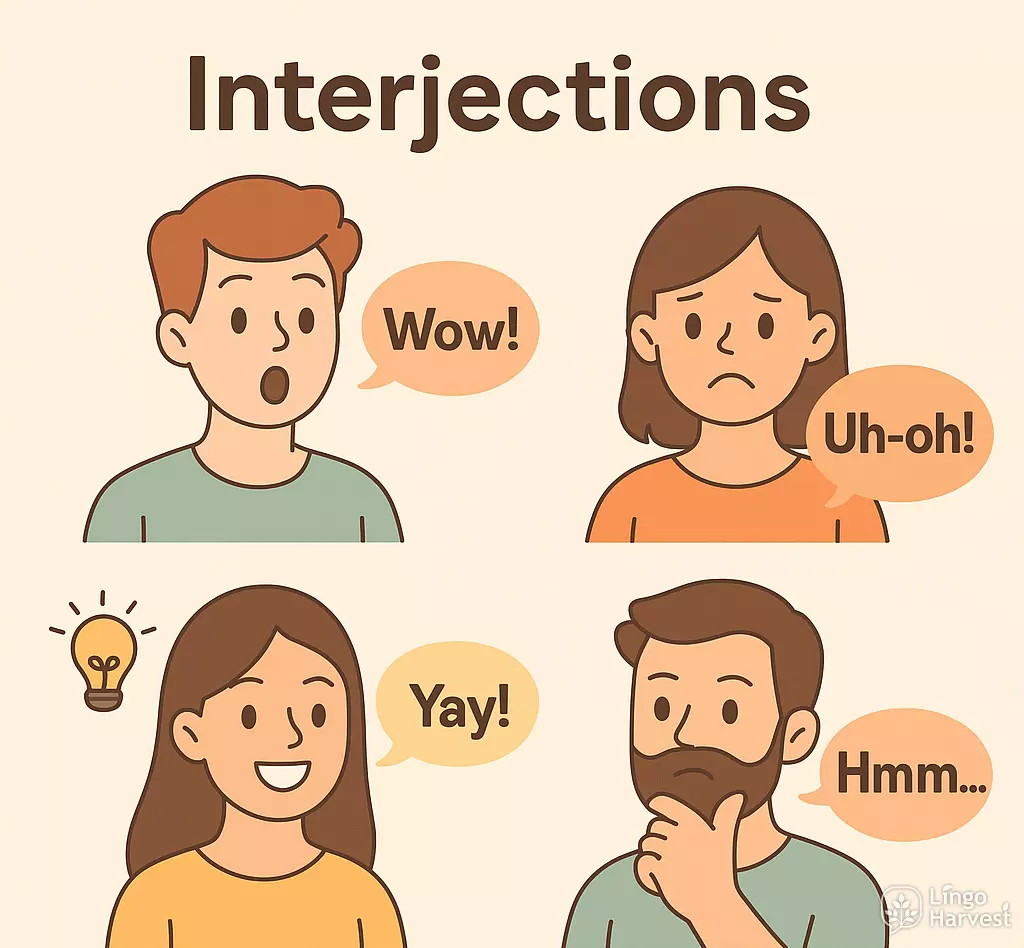
The meaning behind an interjection depends on its context and tone. For instance, “Hey!” might be friendly or urgent, depending on how it’s said. Some interjections are positive (like “Yay!”), some negative (“Ugh!”), and others neutral (“Hmm…”).
| Interjection | Common Purpose | Example Use |
|---|---|---|
| Wow | Expresses surprise or admiration | “Wow, that’s amazing!” |
| Oops | Admits a small mistake | “Oops, I dropped it.” |
| Hey | Gets someone’s attention | “Hey, are you listening?” |
| Uh-oh | Signals concern or warning | “Uh-oh, look at the sky!” |
| Yay | Shows joy or approval | “Yay, we won!” |
| Ugh | Expresses disgust or annoyance | “Ugh, that smells bad.” |
| Hmm | Indicates thinking or hesitation | “Hmm, I’m not sure.” |
| Oops | Admits a small mistake | “Oops, I forgot.” |
| Ouch | Signals pain | “Ouch, that hurt!” |
| Phew | Expresses relief | “Phew, made it on time!” |
Why They Matter
Short words like these help conversations flow and make spoken language feel more alive. They break up speech, signal emotions, and help listeners understand the speaker’s state of mind. In short, interjections are essential for making communication feel real and engaging.
Emotion Types: Surprise, Joy, Concern
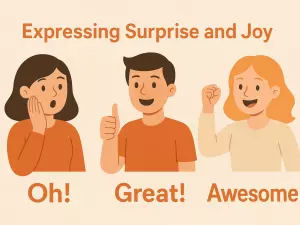
When we use interjections like “Wow”, “Oops”, “Hey”, or “Uh-oh”, we’re expressing quick, strong feelings. These words let us show surprise, happiness, or worry in a single syllable. Understanding which interjection fits which emotion helps both in speaking and in recognizing what others mean.
Interjections Expressing Surprise
Surprise often bursts out in sudden exclamations. Here are some common ways English speakers react to unexpected events:
- Wow! – amazement, admiration, or astonishment
- Whoa! – shock or being taken aback
- Oh! – realization or mild surprise
- What?! – disbelief or incredulity
- Gee! – mild surprise, often old-fashioned
- Gosh! – polite way to express astonishment
Words for Joy and Delight
Showing happiness is easy with just a quick sound. Here are some typical interjections for positive emotions:
- Yay! – joy, celebration, or encouragement
- Hooray! – group excitement, victory, or approval
- Yippee! – playful, childlike happiness
- Whee! – thrill or fun, often while moving
- Bravo! – cheering for someone’s achievement
Concern and Worry in Interjections
When something goes wrong or we feel uneasy, interjections help us show it fast. Some typical choices include:
- Oops! – a small mistake or accident
- Uh-oh! – anticipating trouble or recognizing a problem
- Oh no! – stronger concern or disappointment
- Yikes! – alarm, usually about something scary or risky
- Ouch! – sudden pain or empathy
Comparing Interjections by Emotion
| Interjection | Primary Feeling | Example Situation |
|---|---|---|
| Wow | Surprise | Seeing an amazing sunset |
| Oops | Concern | Dropping your keys |
| Hey | Attention/Surprise | Calling out to a friend |
| Uh-oh | Worry/Concern | Realizing you forgot your wallet |
| Yay | Joy | Winning a small prize |
| Oh no | Strong Concern | Hearing bad news |
| Bravo | Joy/Appreciation | Applauding a performance |
| Whoa | Surprise/Shock | Seeing a sudden accident |
Interjections are powerful tools in daily conversation. They help us quickly and clearly show our reactions without long explanations. Whether you’re happy, startled, or worried, there’s a short word that fits the moment. Practicing these can make your spoken English sound more natural and expressive.
Spelling, Hyphens, and Punctuation
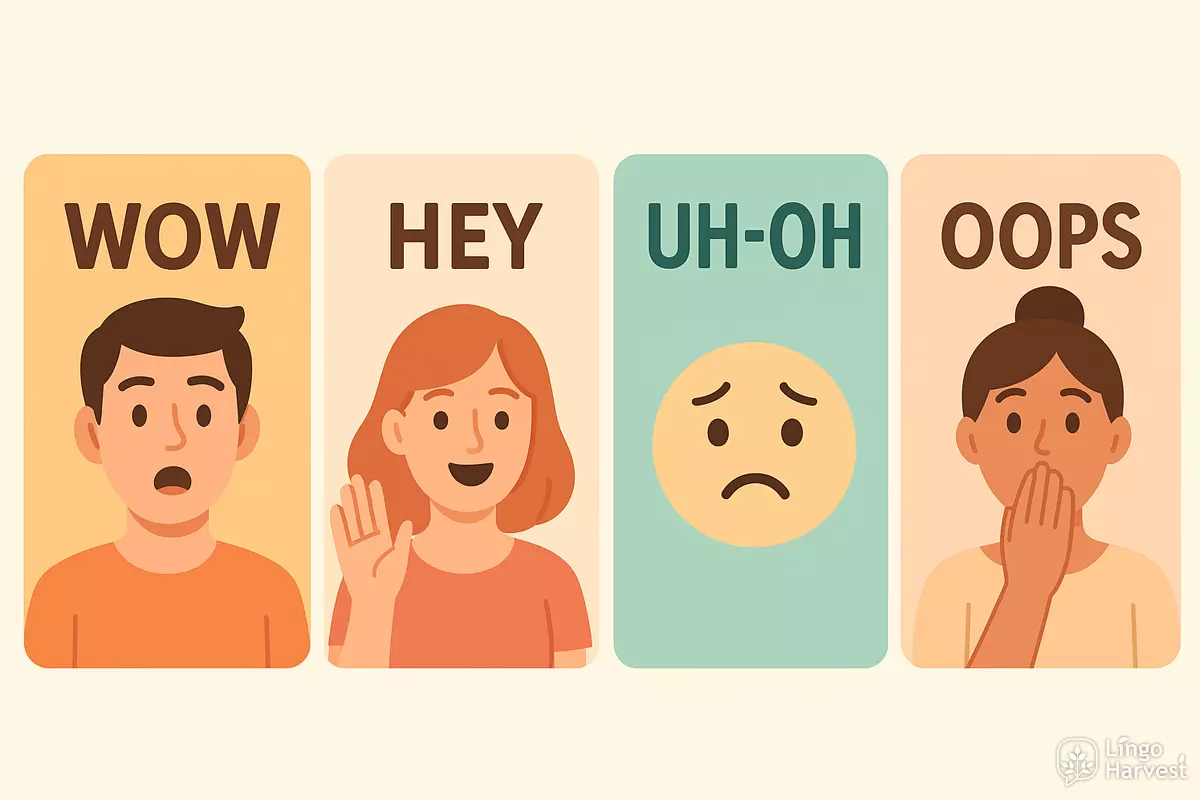
Interjections often have non-standard spelling and punctuation compared to other parts of speech. Many are short, simple words, but others use creative spelling to mimic sounds or emotions. For example, “wow” and “hey” are spelled as they sound, while “uh-oh” and “oops” try to capture the feeling or surprise in their written form.
Common Spelling Patterns
- Single-syllable interjections: Most are spelled simply, like wow, hey, or oh.
- Compound forms: Some, such as uh-oh or woo-hoo, combine two sounds with a hyphen.
- Creative or extended forms: Doubling letters for emphasis is common (e.g., yesss, wowww).
- Sound-based spelling: Words like ugh or phew are spelled to imitate the sound you make.
When to Use Hyphens
Hyphens appear in interjections that combine two separate sounds or syllables, often to show a pause or shift. For instance, “uh-oh” indicates a moment of realization or trouble, while “ha-ha” represents laughter. These hyphens are not optional; writing “uhoh” or “haha” changes the tone or makes the word harder to read.
Punctuation Rules for Interjections
Punctuation is key to showing the emotion or intent behind each exclamation. Most interjections use specific marks to convey their force:
- Exclamation mark (!): Used for strong feelings or surprise (e.g., Wow!, Oops!, Hey!).
- Comma (,): Used when the interjection is mild or part of a sentence (e.g., Hey, can you help?).
- Period (.): Rare, but possible for very gentle interjections (e.g., oh.).
- Question mark (?): Sometimes appears when the interjection is a question (e.g., Huh?).
Examples: Correct Forms and Punctuation
- Wow! That’s amazing.
- Oops, I dropped it.
- Hey! Watch out!
- Uh-oh, something’s wrong.
- Yikes! That was close.
- Ah, I see now.
- Hmm, I’m not sure.
- Oh! You scared me.
- Phew! We made it.
- Uh, can you repeat that?
- Hooray! We won.
- Oops! My mistake.
- Ah-ha! I found it.
- Ugh, that’s gross.
- Yay! It’s Friday.
- Shh! Be quiet.
- Brr, it’s cold.
- Whoa! Slow down.
Quick Reference: Hyphens and Punctuation
| Interjection | Hyphen Needed? | Common Punctuation |
|---|---|---|
| uh-oh | ✅ (Yes) | Comma or exclamation mark |
| wow | ❌ (No) | Exclamation mark |
| hey | ❌ (No) | Comma or exclamation mark |
| woo-hoo | ✅ (Yes) | Exclamation mark |
| ha-ha | ✅ (Yes) | Exclamation mark |
| oops | ❌ (No) | Comma or exclamation mark |
Mastering these conventions helps your writing sound more natural and clearly communicates the emotion behind each interjection. Remember, how you spell and punctuate these words can completely change their meaning or effect.
Tone and Politeness in Context
When using interjections like "wow," "oops," "hey," or "uh-oh," the impression you give depends heavily on the situation and your delivery. Context, relationship with the listener, and even body language can affect how your words are received. Some exclamations can sound friendly or excited, while others might come off as abrupt or even rude if not used thoughtfully.
How Interjections Affect Communication
Interjections often express feelings instantly and directly. Because they’re short and spontaneous, they can set the mood for the whole conversation. For example, "wow" usually signals enthusiasm or surprise, which can encourage the other person. On the other hand, "hey" can be friendly or, if said sharply, may seem like a warning. "Oops" and "uh-oh" both show mistakes or problems, but "oops" is typically lighter and less serious.
Politeness and Social Nuances
Choosing the right interjection depends on how formal or informal the conversation is. In professional situations, using "uh-oh" or "oops" might sound too casual. With friends, these words can help make light of minor errors and show humility. Pay attention to tone, as a cheerful "hey!" is very different from a stern "hey."
- Wow: Expresses amazement. Can be genuine or sarcastic, depending on tone.
- Oops: Admits a small mistake, often softening the impact.
- Hey: Gets attention; polite if friendly, but abrupt if used sharply.
- Uh-oh: Signals a bigger or more serious problem than "oops."
Comparing Interjections by Tone and Use
| Interjection | Common Tone | Typical Use | Politeness Level |
|---|---|---|---|
| Wow | Surprised, enthusiastic | Reacting to good news or achievements | Generally polite |
| Oops | Apologetic, light-hearted | Admitting a minor mistake | Polite, self-deprecating |
| Hey | Friendly or abrupt | Getting attention | Depends on tone/context |
| Uh-oh | Worried, concerned | Reacting to trouble or mistakes | Usually neutral |
Tips for Using Interjections Politely
- Match your exclamation to the situation’s seriousness.
- Be aware of your volume and facial expression.
- In formal settings, use interjections sparingly.
- Apologize if an interjection comes off as rude: “Oops, sorry!”
- Listen to how native speakers use these words in real conversations.
Register: Formal vs Informal Choices
Understanding when and how to use interjections like "wow," "oops," "hey," and "uh-oh" depends a lot on the situation and the people you’re talking to. Some interjections feel casual or emotional, while others are rare or even inappropriate in serious contexts. Interjections often express surprise, emotion, or a quick reaction, but their tone can make them sound either friendly or out of place.
When Are Interjections Appropriate?
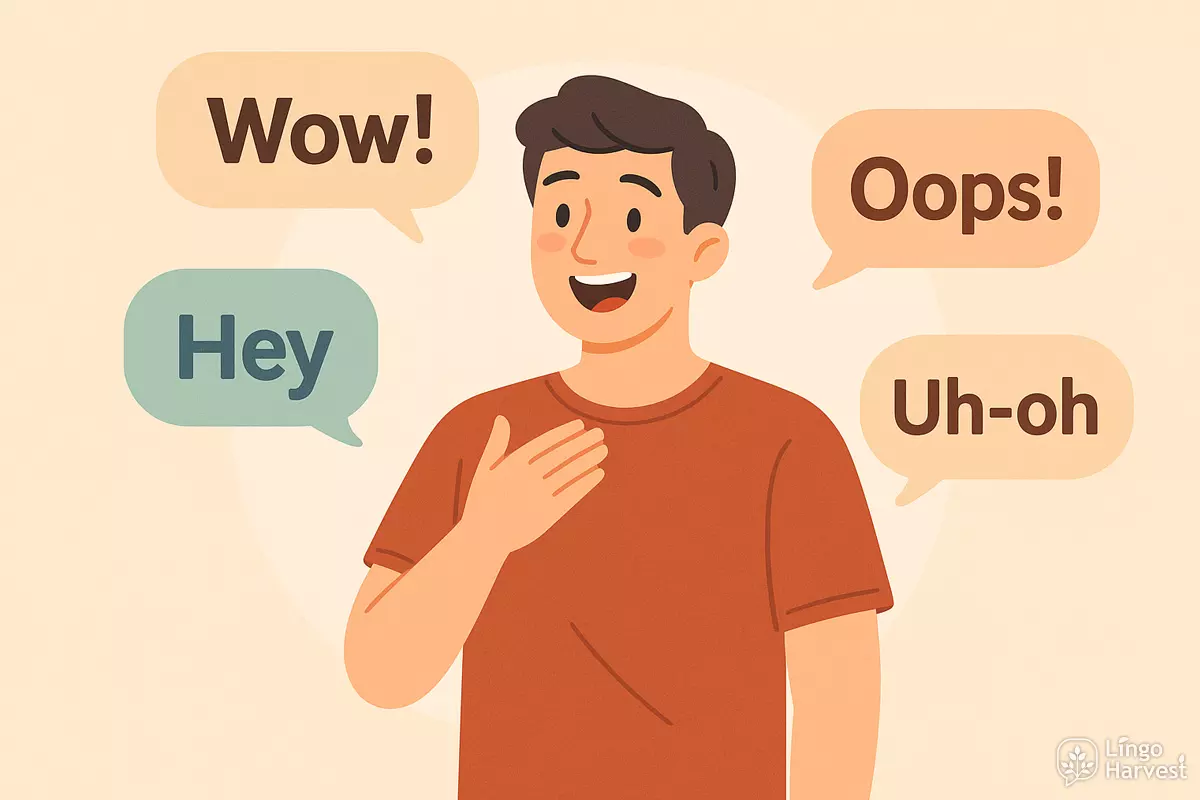
In formal writing or professional meetings, it’s best to minimize these words. For example, in a business report or academic paper, shouting "Wow!" or "Oops!" would be distracting. However, these expressions are perfectly natural in conversations with friends, in messaging apps, or even in informal emails.
- Wow: Enthusiastic, informal; great for chatting with friends or reacting to good news.
- Oops: Casual and apologetic; used when you make a small mistake, especially among peers.
- Hey: Friendly or attention-getting; informal greeting or to call out to someone.
- Uh-oh: Expresses worry or noticing something wrong; usually informal.
Common Interjections by Register
Let’s look at more examples that fit different situations. Some are more suited to relaxed environments, while a few can be toned down for polite company.
- Yikes
- Bravo
- Phew
- Alas
- Geez
- Oh no
- Well
- Aha
- Hmm
- Yay
- Oopsie
- Whoa
- Gosh
- Oops-a-daisy
- Wowza
- Hurray
- Darn
- Oops
- Oops!
Choosing the Right Interjection
Picking the right word depends on who you’re talking to and how you want to sound. Using "wow" in a job interview might seem unprofessional, but in a text to a friend, it’s perfectly fine. On the other hand, "alas" can sound formal or even old-fashioned. Here’s a quick comparison to help:
| Interjection | Typical Context | Formality | Example Use |
|---|---|---|---|
| Wow | Casual conversation, messages | Informal | Wow, that’s amazing! |
| Oops | Everyday mistakes | Informal | Oops, I dropped it. |
| Alas | Literature, formal speech | Formal/Old-fashioned | Alas, we have failed. |
| Bravo | Applauding achievements | Neutral/Formal | Bravo, well done! |
| Hey | Greeting, getting attention | Informal | Hey, over here! |
| Uh-oh | Spotting a problem | Informal | Uh-oh, the milk spilled. |
| Yikes | Reacting to bad news | Informal | Yikes, that’s expensive. |
| Phew | Relief | Informal | Phew, that was close! |
| Gosh | Mild surprise | Informal/Polite | Gosh, I didn’t expect that. |
| Hurray | Celebration | Informal | Hurray, we won! |
Summary
Interjections add color and emotion, but their suitability depends on your audience and setting. In general, stick to neutral or more reserved expressions in formal situations, and feel free to use livelier words in relaxed conversations. Noticing the context will help you sound both natural and appropriate.
Mini-Dialogues with Natural Timing
Understanding how interjections fit into real conversations is key to using them naturally. Rather than just memorizing words like "wow" or "oops," it's helpful to see how they appear in context, reacting to events or emotions as they unfold. Below, you'll find bite-sized dialogues showing these expressions in action, capturing the spontaneity that makes interjections so useful.
Everyday Scenarios
- Wow:
A: I got the job!
B: Wow, that's awesome! - Oops:
A: Did you just drop your phone?
B: Oops, yeah, I did. - Hey:
A: Hey, are you coming to the party tonight?
B: Not sure yet, but thanks for inviting me! - Uh-oh:
A: Uh-oh, I think we missed the last bus.
B: Oh no, what do we do now? - Wow (surprise):
A: You finished that huge project already?
B: Wow, you work fast! - Oops (apology):
A: You stepped on my foot.
B: Oops, sorry! - Hey (attention):
A: Hey, wait for me!
B: Hurry up! - Uh-oh (warning):
A: Uh-oh, the teacher’s coming.
B: Hide your phone! - Wow (admiration):
A: Look at that sunset.
B: Wow, it’s beautiful. - Oops (mistake):
A: I sent the email to the wrong person.
B: Oops, can you undo it?
Timing and Reaction Patterns
Interjections often come at the very start of a response, showing immediate emotion or reaction. Notice how they set the mood or signal a shift in the conversation. Here’s a quick comparison of their use:
| Interjection | Typical Timing in Dialogue |
|---|---|
| Wow | At the start of a reply when surprised or impressed. Example: "Wow, really? I didn’t expect that." |
| Oops | Immediately after a small mistake or accident. Example: "Oops, I dropped it." |
| Hey | To get attention before a statement or question. Example: "Hey, can I ask you something?" |
| Uh-oh | Right away when noticing a problem or warning. Example: "Uh-oh, that doesn’t look good." |
Practicing with these short exchanges helps you pick up the rhythm of real conversation. Try creating your own examples using different emotions or situations—this will make your use of interjections sound more natural and fluent.
Common Mistakes and Overuse
Jumping into interjections can be fun, but it’s easy to make errors when you’re just starting out. Many beginners use these expressive words too often, or in the wrong situations, which can make their speech sound unnatural. Below, we’ll explore frequent pitfalls and give tips on how to avoid them.
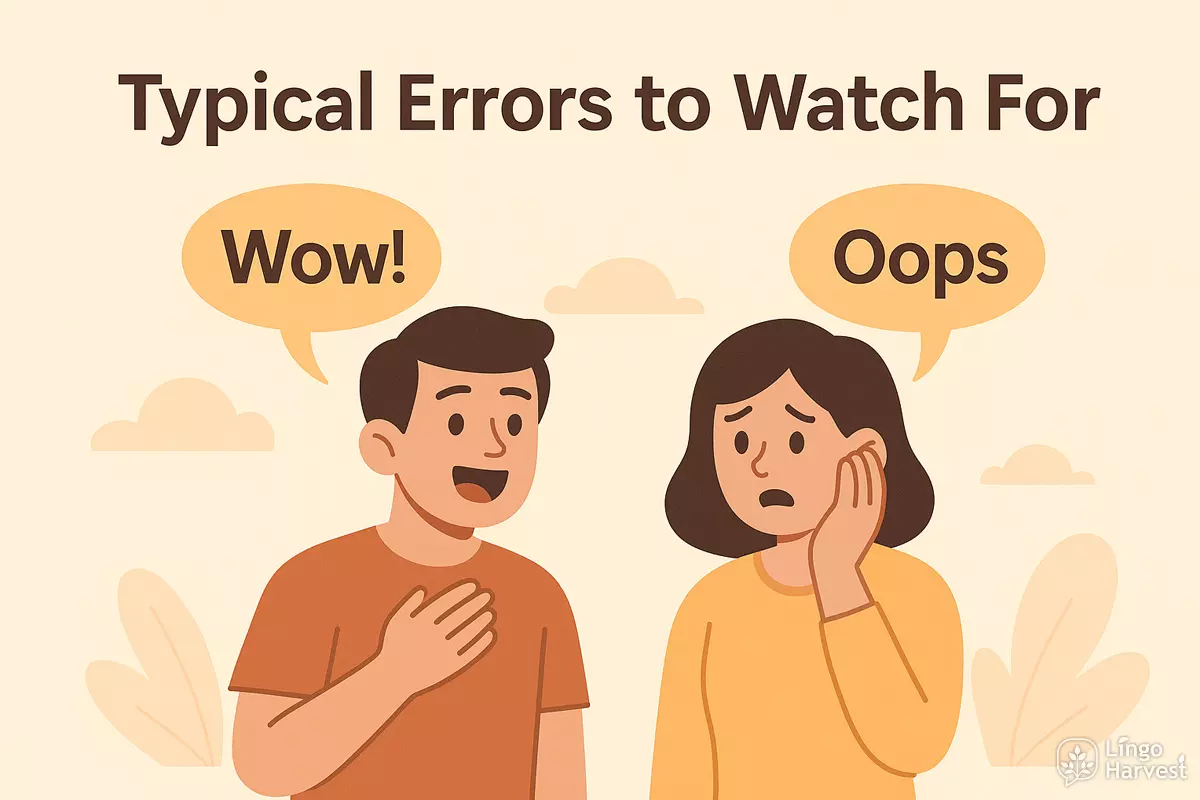
Typical Errors to Watch For
- Overusing interjections: Adding “wow” or “oops” to every sentence can make conversation feel exaggerated or childish.
- Using the wrong tone: Some exclamations, like “uh-oh,” may sound too informal in a serious context.
- Mixing up meanings: Confusing “oops” (a small mistake) with “uh-oh” (a bigger problem) changes the message.
- Forgetting punctuation: Interjections are usually followed by an exclamation mark or comma, but beginners often forget this.
- Repeating the same word: Relying only on “hey” for greeting or attention can get boring and lose impact.
Examples of Overuse and Misuse
It helps to see how these mistakes look in real sentences:
- “Wow, I finished my homework. Wow, I’m hungry. Wow, it’s raining.” ❌ (Sounds repetitive)
- “Oops! I broke the vase.” (Correct for a small accident) ✅
- “Uh-oh! I forgot my passport.” (Correct for a bigger problem) ✅
- “Hey! Sit down. Hey, can you pass the salt? Hey, are you coming?” ❌ (Too much “hey”)
Guidelines for Natural Use
Moderation is key. Try these strategies to keep your language lively but natural:
- Limit interjections to moments that truly need extra emotion.
- Match the interjection to the situation and your relationship with the listener.
- Vary your expressions to avoid sounding repetitive.
- Use punctuation correctly: exclamation marks for strong feelings, commas for milder ones.
- Listen to native speakers or watch shows to notice when and how these words are used.
Quick Reference: Common Interjection Mistakes
| Mistake | How to Fix |
|---|---|
| Using “wow” too often | Save it for genuinely surprising or impressive moments |
| Confusing “oops” and “uh-oh” | Use “oops” for small slips, “uh-oh” for bigger problems |
| Forgetting punctuation | Add an exclamation mark or comma after the interjection |
| Using informal interjections in formal settings | Choose more neutral language for professional or serious situations |
Remember, interjections add color to your speech, but too much can be distracting. With practice and attention, you’ll learn to use them smoothly and effectively.
Practice: Replace & Act Out
Understanding interjections means getting comfortable using them in real conversations. To build your skills, try swapping out bland words for lively exclamations, or act out situations using expressive sounds. These activities help you recognize where "Wow," "Oops," "Hey," and "Uh-oh" naturally fit.
Swap the Interjection
Read the sentences below and choose the best word to replace the underlined part. Imagine you’re really reacting in the moment!
- Oh no, I dropped my phone!
- Excuse me, can you help me with this?
- Amazing, you finished the puzzle so quickly!
- Sorry, I bumped into you.
- Look out, there’s a step!
- Oh my, that’s a big dog!
- Oops, I forgot your name.
- Congratulations, you passed the test!
Show answers
- Uh-oh
- Hey
- Wow
- Oops
- Hey
- Wow
- Oops
- Wow
Act It Out: Everyday Scenarios
Try saying the following interjections out loud in different moods: surprised, happy, worried, or annoyed. Notice how your tone changes the meaning!
- Wow!
- Oops!
- Hey!
- Uh-oh!
Now, imagine these situations and choose which exclamation fits best. Practice with a partner if possible:
- You see a beautiful sunset: ________
- Your friend spills coffee: ________
- You need someone’s attention: ________
- Your keys are missing: ________
Show answers
- Wow
- Oops
- Hey
- Uh-oh
Where Does It Fit?
For more practice, try matching each interjection to the situation below:
| Situation | Best Interjection |
|---|---|
| You break a glass by accident | Oops |
| Your team wins the game | Wow |
| You notice someone about to step in a puddle | Hey |
| You realize you forgot your homework | Uh-oh |
| You see an amazing magic trick | Wow |
| Your friend drops their wallet | Oops |
| You want to get someone’s attention in a crowd | Hey |
| You hear a strange noise at night | Uh-oh |
Practicing these short, expressive words in context will help you sound more natural and confident. Try using them in your daily speech for a quick boost in fluency!