How English Word Classes Work

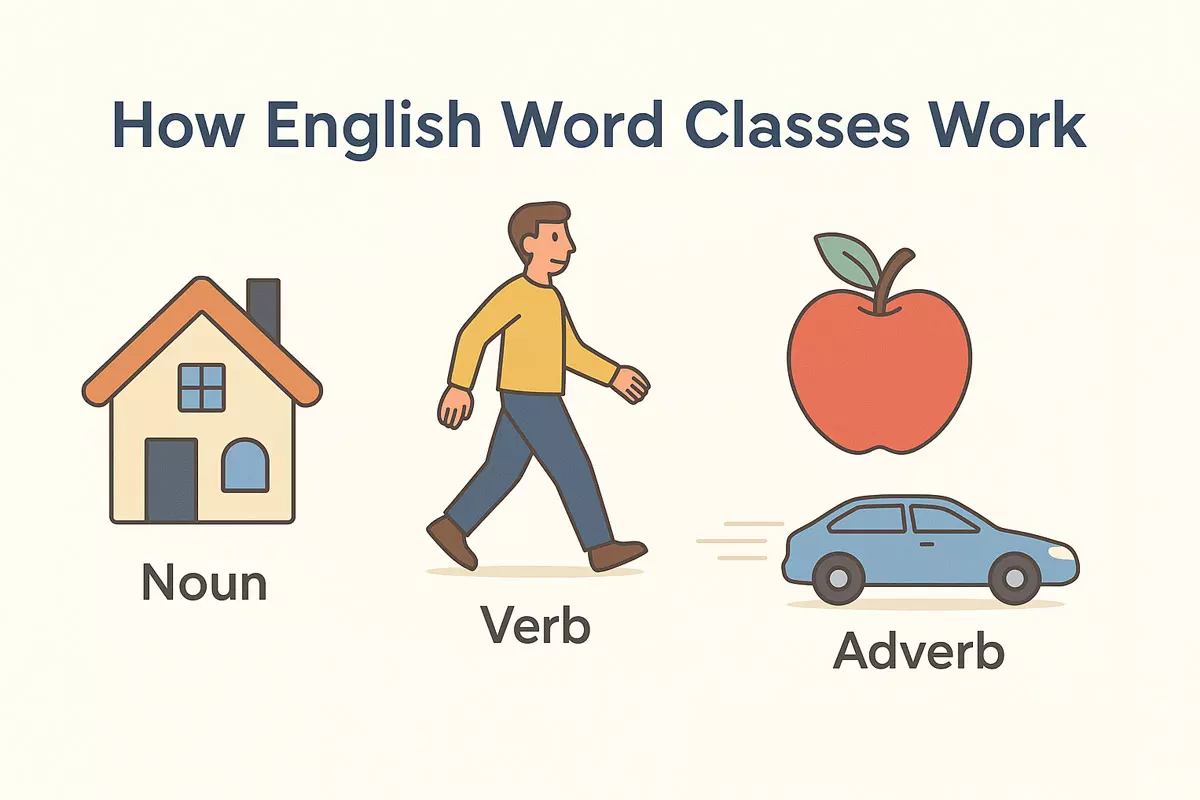 This article explains what word classes are, highlights the main groups, and shows how they function in sentences. It covers recognizing word roles, common confusions, learning tips, and includes simple examples and a practice activity.
Understanding the unique roles of different types of English words is essential for effective communication. By learning how these word categories interact and function within sentences, we can express our ideas more clearly and creatively. This knowledge allows us to choose the right words for each situation, making our speech and writing more precise and engaging. Ultimately, mastering the use of various word types enhances both our comprehension and our ability to convey messages accurately.
What Are Word Classes?
In English grammar, words are sorted into groups based on their roles in sentences. These categories are known as parts of speech or grammatical categories. Each group shares a set of functions and patterns, helping us understand how words behave and how they connect to each other.
Most sentences combine several of these types, with each class contributing a different function. For example, some words name things, others describe actions, and some link ideas together. Recognizing these categories makes reading, writing, and learning new vocabulary much easier.
Main Types of Word Classes in English
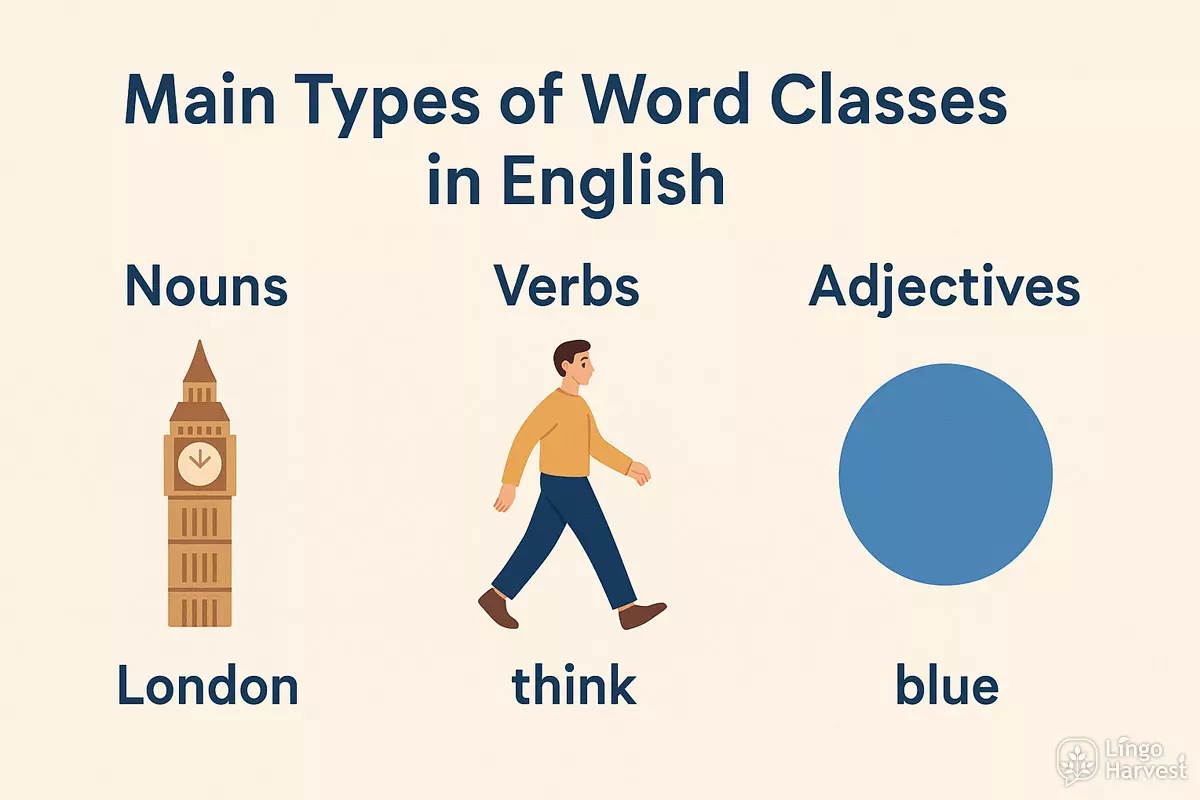
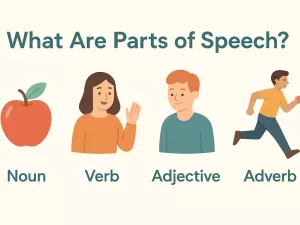
- Nouns – names for people, places, things, or ideas (dog, London, happiness)
- Verbs – words that show actions or states (run, think, is)
- Adjectives – words that describe nouns (blue, quick, tall)
- Adverbs – modify verbs, adjectives, or other adverbs (quickly, very, well)
- Pronouns – stand in for nouns (she, they, it)
- Prepositions – show relationships between words (in, on, under)
- Conjunctions – connect words or groups of words (and, but, although)
- Determiners – introduce nouns and specify them (a, the, my, some)
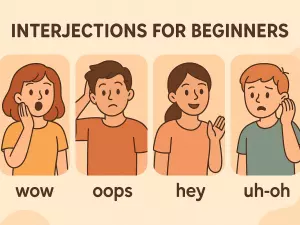
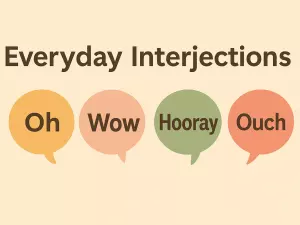
- Interjections – express emotions or reactions (oh, wow, ouch)
Open and Closed Classes
English word types are also divided into open and closed categories. Open classes (like nouns, verbs, adjectives, adverbs) easily accept new members, including slang or borrowed words. Closed classes (such as pronouns and conjunctions) rarely change, and new words are rarely added.
Examples of Word Classes at Work
To see how these categories function, look at the following sentence:
"The happy dog quickly ran under the table, but it barked loudly."
- Nouns: dog, table
- Adjectives: happy
- Verbs: ran, barked
- Adverbs: quickly, loudly
- Prepositions: under
- Determiners: the
- Conjunctions: but
- Pronouns: it
Common English Word Classes: Quick Comparison
| Class | Typical Function | Sample Words |
|---|---|---|
| Noun | Names a person, place, or thing | cat, city, love |
| Verb | Describes an action or state | eat, sleep, become |
| Adjective | Describes a noun | red, tall, old |
| Adverb | Modifies verbs, adjectives, or other adverbs | slowly, very, always |
| Pronoun | Replaces a noun | he, them, who |
| Preposition | Shows relationship/location | at, by, between |
| Conjunction | Links words or clauses | and, or, because |
| Determiner | Introduces/specifies a noun | this, an, some |
| Interjection | Expresses emotion | hey, ouch, wow |
Learning to recognize these groupings can help you build sentences more confidently, understand grammar explanations, and expand your vocabulary more effectively. Each group has its own rules and exceptions, but knowing the basics gives you a strong foundation for exploring the structure of English.
Key Word Class Groups
Understanding how English organizes words into categories helps you grasp grammar and build sentences effectively. Words are grouped according to the roles they play in communication, such as naming, describing, or connecting ideas. These groupings, often called parts of speech, allow us to structure language logically and flexibly.
Main Categories in English
English traditionally divides words into eight primary types. Each group serves a distinct function:
- Nouns: People, places, things, or ideas (e.g., cat, London, liberty).
- Verbs: Actions or states (e.g., run, think, is).
- Adjectives: Describe or modify nouns (e.g., blue, tall, exciting).
- Adverbs: Modify verbs, adjectives, or other adverbs (e.g., quickly, very, well).
- Pronouns: Stand in for nouns (e.g., she, them, who).
- Prepositions: Show relationships in space, time, or logic (e.g., in, after, with).
- Conjunctions: Connect words, phrases, or clauses (e.g., and, but, although).
- Interjections: Express strong emotion or sudden feeling (e.g., oh!, wow!, alas!).
Open vs. Closed Classes
Linguists often separate these groups into "open" and "closed" sets. Open classes, like nouns and verbs, regularly gain new members as language evolves. Closed sets, such as pronouns or conjunctions, rarely change.
| Open Classes | Closed Classes |
|---|---|
| Nouns | Pronouns |
| Verbs | Prepositions |
| Adjectives | Conjunctions |
| Adverbs | Interjections |
Examples Across Word Types
To illustrate the diversity of these categories, here are sample words from each group:
- Noun: river
- Verb: discover
- Adjective: ancient
- Adverb: silently
- Pronoun: theirs
- Preposition: beneath
- Conjunction: unless
- Interjection: oops!
- Noun: friendship
- Verb: imagine
- Adjective: cheerful
- Adverb: rarely
Why These Groups Matter
Recognizing the category a word belongs to helps you use it correctly in sentences and understand its possible forms. For example, knowing a word is a verb suggests it can be used in different tenses, while adjectives can compare qualities (big, bigger, biggest). This classification is the backbone of clear and effective communication in English.
How Word Classes Function
English words are grouped by their roles in sentences, which helps us understand how language structures ideas. Each category, such as nouns, verbs, adjectives, and adverbs, has a distinct purpose and follows certain grammatical patterns. Recognizing these categories allows speakers and writers to form clear, meaningful sentences and avoid confusion.
Roles in Sentence Structure
The main types of words—often called parts of speech—work together to create meaning. Nouns typically act as the subject or object, verbs express actions or states, adjectives describe qualities, and adverbs modify actions or other descriptors. Prepositions, conjunctions, and pronouns add connections and clarity. The way these elements interact determines how information is conveyed.
- Noun: names a person, place, thing, or idea (e.g., cat, London, friendship).
- Verb: shows action or state (e.g., run, think, is).
- Adjective: describes a noun (e.g., quick, blue, tall).
- Adverb: modifies verbs, adjectives, or other adverbs (e.g., quickly, very, well).
- Pronoun: replaces a noun (e.g., he, she, it, they).
- Preposition: shows relationships (e.g., in, on, after).
- Conjunction: connects words or clauses (e.g., and, but, although).
- Interjection: expresses emotion (e.g., oh!, wow!, ouch!).
Position and Agreement
Word order and agreement rules ensure that messages are clear. For example, adjectives usually appear before the noun they modify (green tree), and verbs must agree with their subjects in number and tense (She walks vs. They walk). Mistakes in placement or agreement can confuse readers or listeners.
Changing Form and Function
Some English words can switch categories depending on their use. For instance, run is a verb in “They run fast” but a noun in “He went for a run.” This flexibility is a key feature of English and allows for creative expression.
| Word Class | Typical Function | Example in a Sentence |
|---|---|---|
| Noun | Subject/Object | The dog barked loudly. |
| Verb | Action/State | They swim every morning. |
| Adjective | Describes Noun | A bright light filled the room. |
| Adverb | Modifies Verb/Adjective | She sings beautifully. |
| Preposition | Shows Relationship | The cat is under the table. |
| Conjunction | Connects Words/Clauses | He was tired but happy. |
| Pronoun | Replaces Noun | They arrived early. |
| Interjection | Expresses Emotion | Wow! That’s amazing. |
Summary: Why Classification Matters
Understanding these categories makes it easier to learn new vocabulary, construct sentences, and spot mistakes. Word groups provide a framework for both native speakers and learners to organize thoughts, add nuance, and communicate efficiently.
Recognizing Word Roles
Understanding how individual words function in English sentences is essential for grasping grammar and meaning. Each word can fall into a specific category, or class, based on its job within a sentence. To identify these functions, it helps to pay attention to position, form, and the words around them.
Common Clues for Identifying Word Classes
There are several reliable signals that reveal a word’s grammatical job. Consider these tips when figuring out if a word acts as a noun, verb, adjective, or another type:
- Position in the sentence: Nouns often follow articles, while verbs usually come after the subject.
- Word endings: Suffixes like -ness, -ment, or -ly can suggest a word’s class.
- Surrounding words: Words before and after can help: adjectives come before nouns, adverbs often follow verbs.
- Function or meaning: Ask what the word is doing—naming, describing, acting, connecting, etc.
- Flexibility: Some words can belong to more than one class depending on use (e.g., "run" as a noun or verb).
Examples of Word Roles in Sentences
Below is a list of sentences where the same word appears in different roles. This helps show how context determines a word’s class:
- Light (noun): The light was bright.
- Light (adjective): She wore a light jacket.
- Light (verb): Please light the candle.
- Play (noun): We saw a play last night.
- Play (verb): The children play outside.
- Fast (adjective): He drives a fast car.
- Fast (adverb): She runs fast.
- Back (noun): He hurt his back.
- Back (verb): Please back up the files.
- Back (adverb): I’ll be back soon.
- Down (preposition): The ball rolled down the hill.
- Down (adverb): Sit down.
- Down (noun): The down on the duckling is soft.
- Clean (adjective): The desk is clean.
- Clean (verb): Please clean your room.
- Round (adjective): A round table.
- Round (noun): The next round starts soon.
- Round (preposition): We walked round the park.
Quick Reference: Common Word Class Markers
Many English words give clues to their category through their form. Here’s a handy overview of common markers:
| Word Ending / Clue | Likely Word Class | Example |
|---|---|---|
| -ness, -ment, -ion | Noun | happiness, agreement, action |
| -ed, -ing, base form | Verb | walked, singing, play |
| -ly | Adverb | quickly, slowly |
| -ous, -ful, -ive | Adjective | joyful, creative, famous |
| Precedes a noun | Determiner/Adjective | the book, this apple, green grass |
| Links clauses | Conjunction | and, but, although |
By watching for patterns in form and placement, it becomes much easier to identify how each word operates within a sentence. This awareness is the foundation for mastering English grammar and understanding how word classes interact to create meaning.
Examples in Simple Sentences
To illustrate how different word classes function in English, let’s look at some straightforward sentences. Each part of speech has a specific role, making it easier to identify and understand in context. Here are simple examples showing how nouns, verbs, adjectives, adverbs, pronouns, prepositions, conjunctions, and interjections appear in everyday language.
Nouns and Verbs in Action
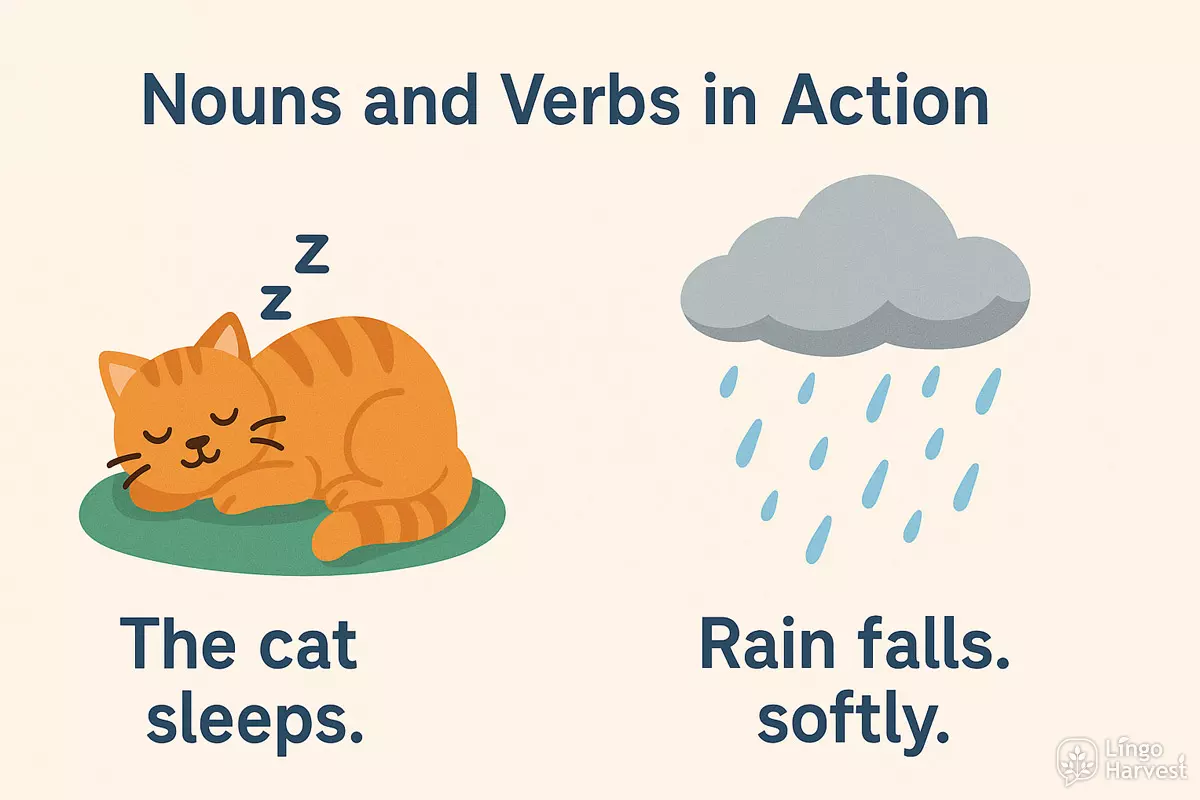
- The cat sleeps.
- Children play outside.
- Rain falls softly.
- She writes letters.
Adjectives and Adverbs
- The red car moves quickly.
- He is a talented musician.
- They answered politely.
- It was an exciting game.
Other Word Classes in Context
- She gave him a gift. (pronouns)
- The dog sat on the mat. (preposition)
- I wanted pizza, but he chose salad. (conjunction)
- Wow! That was amazing. (interjection)
Comparing Word Classes in Sentences
| Word Class | Sample Sentence |
|---|---|
| Noun | The dog barked loudly. |
| Verb | They run every morning. |
| Adjective | It is a sunny day. |
| Adverb | She speaks slowly. |
| Pronoun | He forgot his keys. |
| Preposition | The book is under the table. |
| Conjunction | I will go if it stops raining. |
| Interjection | Oops! I dropped it. |
By seeing these parts of speech in short, clear sentences, it becomes much easier to recognize how each word class works. This foundation is key for building up to more complex grammar and usage.
Common Confusions
Many learners stumble when trying to distinguish between certain English word categories, especially since some words can shift roles depending on context. These overlaps and ambiguities can make it tricky to identify whether a word is functioning as a noun, verb, adjective, or something else in a sentence.
Words That Change Class
Some terms in English can serve as more than one type of word, depending on their use. For example:
- Run (I run every morning. / I went for a run.)
- Light (The room needs more light. / Please light the candle.)
- Clean (Please clean your room. / Your room is clean.)
- Fast (He runs fast. / He is a fast runner.)
- Watch (I watch TV. / I bought a new watch.)
- Play (They play soccer. / We saw a play at the theater.)
- Open (Open the window. / The shop is open.)
- Present (She will present the award. / I got a present.)
- Close (Please close the door. / The store is close to my house.)
- Right (Take a right turn. / You are right.)
This flexibility is a key reason for misunderstandings, especially for those learning English as a second language.
Adjectives vs. Adverbs
Distinguishing between adjectives and adverbs can be particularly challenging, since many adverbs are formed by simply adding -ly to an adjective. However, not all adverbs end this way, and some adjectives and adverbs share the same form. Consider:
- Hard: He works hard (adverb). / It is a hard job (adjective).
- Late: She arrived late (adverb). / The late train (adjective).
- Fast: He drives fast (adverb). / A fast car (adjective).
- Early: I woke up early (adverb). / The early bird (adjective).
Misplacing adverbs and adjectives can lead to sentences that sound odd or convey the wrong meaning.
Prepositions and Conjunctions
Prepositions and conjunctions are sometimes confused, especially when words like "before," "after," and "since" can function as either, depending on the sentence. Here’s a look at how context matters:
| Word | Preposition Usage | Conjunction Usage |
|---|---|---|
| Before | I left before noon. | We waited before we left. |
| After | Let's meet after lunch. | Call me after you arrive. |
| Since | I've lived here since 2010. | I haven't seen her since she moved. |
| While | He slept while on the train. | Stay here while I check. |
Pronouns: Reflexive vs. Emphatic
Another issue is telling apart reflexive and emphatic pronouns, which often look identical but serve different purposes:
- Reflexive: She taught herself to swim. (The subject and object are the same person.)
- Emphatic: The manager herself approved the plan. (Adds emphasis to the noun.)
Summary Tips for Avoiding Mix-Ups
- Pay attention to sentence structure and how a word functions within it.
- Look for clues such as word endings (-ly for adverbs, -ness for nouns, etc.).
- Remember that context often determines category, especially for words with multiple roles.
- Practice by identifying the word class of each word in sample sentences.
Understanding these distinctions helps clarify meaning and builds confidence in using English accurately.
Tips for Learning Word Classes
Understanding the different categories of English words can feel overwhelming, but breaking things down into manageable steps helps a lot. Start by noticing the role each word plays in simple sentences. For instance, try identifying which words are acting as names (nouns), actions (verbs), or descriptors (adjectives). This awareness is a foundation for recognizing patterns in English sentences.
Focus on One Category at a Time
Rather than tackling every type at once, it’s helpful to concentrate on one group before moving to the next. You might spend a week exploring how nouns behave, then shift your attention to verbs and their forms. This gradual approach prevents confusion and builds confidence.
Practice with Real Examples
Seeing word classes in context makes them easier to remember. Here are some sample sentences to analyze:
- The cat slept on the warm mat.
- She quickly finished her homework.
- They are happy today.
- John runs every morning.
Try to identify which words are nouns, verbs, adjectives, adverbs, etc.
Use Contrast to Spot Differences
Comparing similar words can clarify their functions. For example, see how the role changes between “run” (verb) and “runner” (noun) or “quick” (adjective) and “quickly” (adverb).
| Word | Word Class | Example in a Sentence |
|---|---|---|
| run | Verb | I run every day. |
| runner | Noun | The runner won the race. |
| quick | Adjective | She gave a quick answer. |
| quickly | Adverb | He responded quickly. |
Make Use of Mnemonics and Visuals
Memory aids can be a big help. For instance, remember that adjectives “add” description (both start with “a”), or draw charts that link examples to each class. Color-coding words in texts is another effective trick.
Common English Word Classes to Recognize
Familiarizing yourself with the main categories and their typical endings or positions in a sentence is practical. Here’s a list of major types and clues for recognizing them:
- Nouns: People, places, things; often after “a/an/the” or possessives.
- Verbs: Actions or states; look for “-ed”, “-ing”, or after subjects.
- Adjectives: Describe nouns; often before nouns or after “be”.
- Adverbs: Describe verbs/adjectives; many end in “-ly”.
- Pronouns: Replace nouns (he, she, it, they, etc.).
- Prepositions: Show relationships (in, on, at, under, etc.).
- Conjunctions: Connect words/phrases (and, but, or, because).
- Interjections: Express emotion (wow, oh, ouch).
Check Yourself Regularly
Quiz yourself by labeling words in sentences or matching terms to their categories. Frequent, small reviews are more effective than long, infrequent study sessions.
Summary
Learning how words are grouped and used in English is a process. Use real sentences, compare similar forms, and review consistently. Over time, these strategies will make recognizing and using different word classes much more natural.
Quick Practice Activity
Try your hand at identifying and using different types of English words. This exercise lets you check your understanding of how nouns, verbs, adjectives, adverbs, and other categories function in real sentences. Read each task carefully, and when you're ready, reveal the answers below each practice set.
1. Identify the Word Class
Look at the following words. For each, decide which type it is (noun, verb, adjective, adverb, pronoun, preposition, conjunction, or interjection):
- quickly
- between
- cat
- they
- however
- beautiful
- jump
- ouch
- with
- run
- and
- she
- always
- under
- delicious
Show answers
- quickly – adverb
- between – preposition
- cat – noun
- they – pronoun
- however – conjunction
- beautiful – adjective
- jump – verb
- ouch – interjection
- with – preposition
- run – verb
- and – conjunction
- she – pronoun
- always – adverb
- under – preposition
- delicious – adjective
2. Fill in the Blanks
Complete each sentence by choosing a word of the correct type as indicated. Use your own ideas or select from the list above.
- The _______ (noun) slept on the sofa.
- He will _______ (verb) to the store after school.
- It was a very _______ (adjective) morning.
- She finished her homework _______ (adverb).
- _______ (pronoun) is my favorite color.
- We went _______ (preposition) the park and the library.
- _______ (interjection)! That really hurt!
Show answers
- The cat slept on the sofa.
- He will run to the store after school.
- It was a very beautiful morning.
- She finished her homework quickly.
- Blue is my favorite color. (or "It" if using a pronoun for something mentioned earlier)
- We went between the park and the library.
- Ouch! That really hurt!
3. Compare Word Classes in Context
Notice how the same word can have different roles depending on its use. Examine these sentences and decide which word class the highlighted word belongs to:
| Sentence | Word Class of the Highlighted Word |
|---|---|
| I can run very fast. | Verb |
| He went for a run in the morning. | Noun |
| We had a light lunch. | Adjective |
| They light the candles at dusk. | Verb |
| She spoke light and clear. | Adverb |
4. Challenge: Spot the Odd One Out
In each group, which word does not belong with the others, based on word class?
- run, jump, quickly, swim
- between, under, cat, with
- he, they, beautiful, she
- and, but, however, delicious
Show answers
- quickly (it's an adverb; the others are verbs)
- cat (it's a noun; the others are prepositions)
- beautiful (it's an adjective; the others are pronouns)
- delicious (it's an adjective; the others are conjunctions)
Working through these tasks helps you see how English words are organized and how their roles shift depending on context. Try making your own examples for extra practice!