Common and Proper Nouns: Key Differences

 This article explains common and proper nouns, their definitions, spelling, and capitalization rules. It includes examples, comparison lists, cases when common nouns act as names, common learner mistakes, and practice exercises to label each type.
Recognizing the difference between general naming words, such as common nouns, and specific titles, like proper nouns, is crucial for communicating clearly and effectively. By understanding how and when to use each type, you can express your ideas with greater accuracy and prevent common writing mistakes, such as improper capitalization or ambiguity. This awareness not only enhances your writing but also ensures that your message is understood as intended by your audience.
What Are Common Nouns?
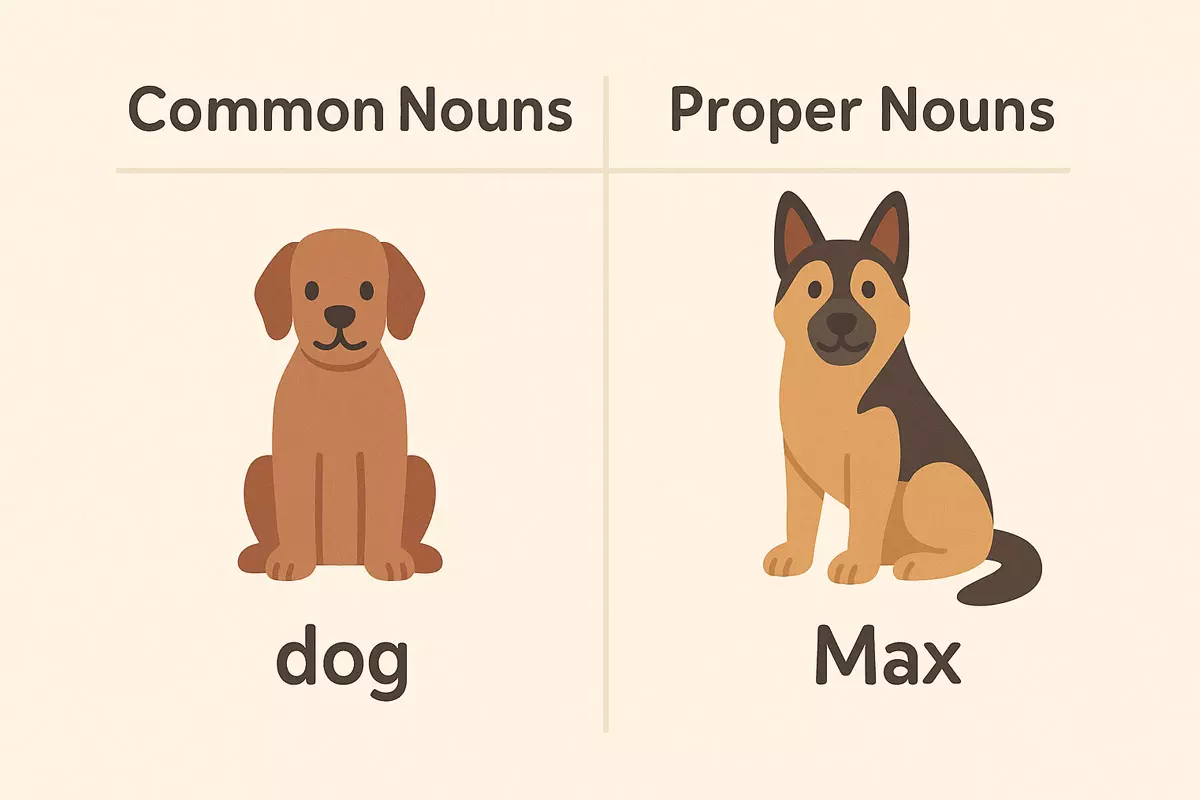
Common nouns are words that refer to general items, people, places, or concepts rather than unique or specific ones. Unlike names or titles, these words are not capitalized unless they start a sentence. For example, "city," "dog," and "happiness" all fall into this category—they describe types or categories, not one-of-a-kind entities.
Key Characteristics
- Refer to general categories or classes, not individuals
- Written in lowercase unless at the beginning of a sentence
- Can be singular or plural
- Often used with articles (a, an, the) or quantifiers (some, many, few)
These nouns are everywhere in daily communication because they help us talk about things in a broad, non-specific way. For instance, instead of naming a particular mountain like "Everest," you might just say "mountain" to mean any such landform.
Examples of Common Nouns
- book
- teacher
- river
- car
- country
- cat
- city
- friend
- music
- family
- food
- language
- tree
- school
- idea
- season
- phone
- ocean
- story
- team
It's important to remember that these words do not point to a specific person or place. For example, "city" could mean any urban area, while "Paris" (a proper noun) refers to one particular city. This distinction helps us communicate clearly whether we mean something in general or something unique.
How to Identify Them in Sentences
Look for words that describe a group or type rather than a unique name. If you can add "a" or "the" before the word and it still makes sense, it's likely a common noun. For example: "a dog," "the school," "some water."
What Are Proper Nouns?
Names for specific people, places, or things are called proper nouns. Unlike general terms, these words identify one unique entity—think of them as labels that set something apart from the rest. For example, while "city" could refer to any city, "Paris" points to one particular place. In writing, these special names always begin with a capital letter, no matter where they appear in a sentence.
How Proper Nouns Differ from Common Nouns
The main distinction lies in specificity. Common nouns refer to general categories or classes, such as "river" or "book." In contrast, a proper noun names a unique item, like "Amazon River" or "War and Peace." This difference is crucial for clarity and precision in communication. Proper nouns are not usually preceded by articles ("the," "a," or "an") unless used in certain contexts.
Examples of Proper Nouns
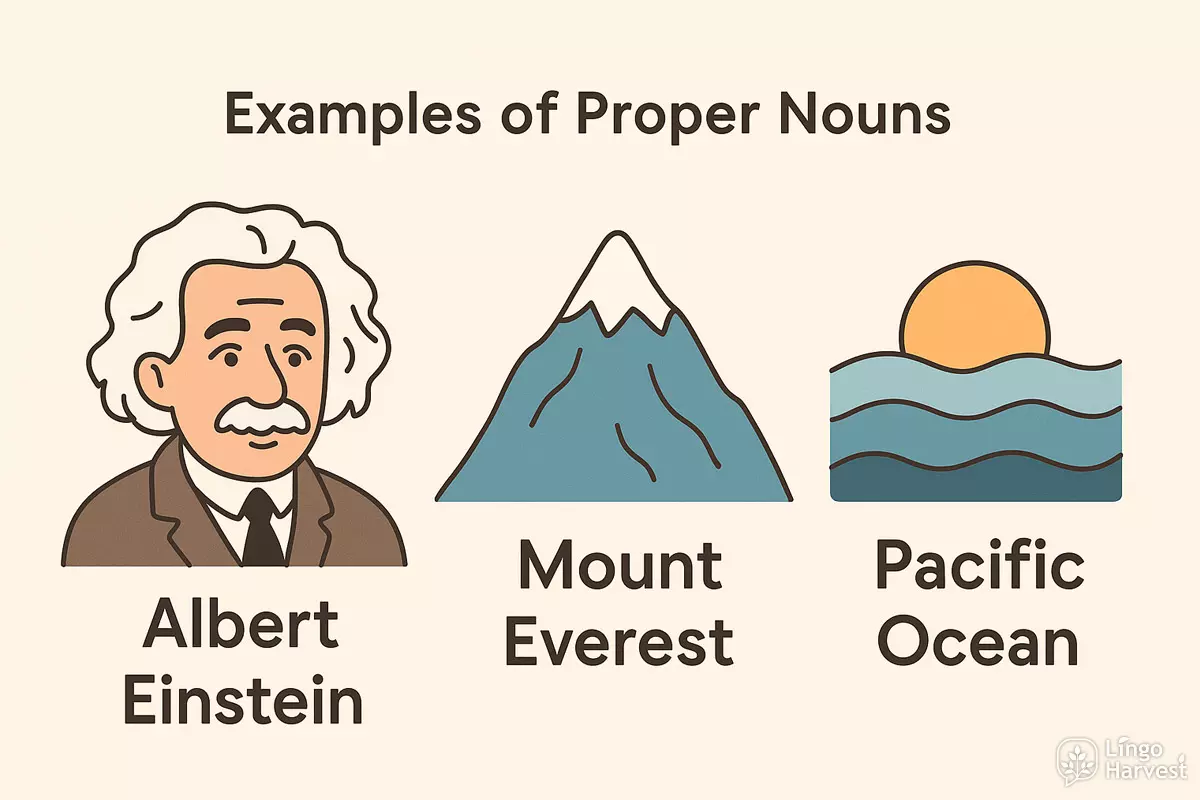
- Albert Einstein
- Mount Everest
- January
- English
- Pacific Ocean
- Statue of Liberty
- Harvard University
- Thanksgiving
- Venus
- Microsoft
- Shakespeare
- Asia
- Friday
- Coca-Cola
- Monet
- iPhone
- Great Wall of China
Capitalization Rules
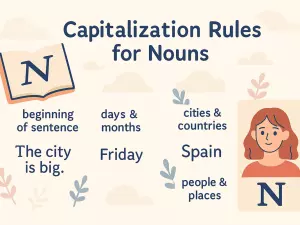
One defining feature is that they are always capitalized. This rule applies even if the word is in the middle or at the end of a sentence. Titles, brand names, holidays, and geographical locations all follow this guideline. However, be careful with words like "president" or "university"—these are only capitalized if they are part of a specific name, such as "President Lincoln" or "Yale University."
Types of Proper Nouns
These names can refer to a wide range of unique entities. Here are some categories:
- People: Emily Dickinson, Leonardo da Vinci
- Geographical locations: Africa, Niagara Falls
- Organizations: United Nations, BBC
- Brands and products: Tesla, PlayStation
- Works of art/literature: The Mona Lisa, Moby Dick
- Events and holidays: Christmas, World Cup
- Languages and nationalities: Japanese, Italian
- Days and months: Monday, August
Spelling and Capitalization Rules
Understanding how to write common and proper nouns correctly helps your sentences look polished and clear. The main distinction lies in whether a noun is general or specific, which affects how it should be capitalized and spelled in different contexts.
General Guidelines for Common Nouns
Common nouns refer to general items, categories, or groups. They are not capitalized unless they begin a sentence or appear in a title. Examples include "city," "teacher," and "museum." Here are some basic principles to remember:
- Do not use a capital letter unless the word is the first in a sentence.
- Plural forms usually follow standard English rules (e.g., "cats," "books").
- Modifiers like "the," "a," or "some" often accompany them.
- Examples: dog, school, river, country, month.
How Proper Nouns Differ
Proper nouns name specific people, places, or things. These always start with a capital letter, no matter where they appear in a sentence. This rule applies to names of people, geographic locations, days of the week, months, institutions, and brand names.
| Type | Capitalization Example | Common Noun Example | Proper Noun Example |
|---|---|---|---|
| Person | Always capitalized | man, woman, child | Emily, Mr. Smith, Dr. Lee |
| Place | Always capitalized | city, river, country | London, Nile, Canada |
| Organization | Always capitalized | company, university | Google, Harvard University |
| Time | Always capitalized | month, day | March, Friday |
| Brand/Product | Always capitalized | car, phone | Toyota, iPhone |
Additional Tips and Examples
When writing, remember these common pitfalls:
- ❌ Do not capitalize seasons (spring, summer, autumn, winter).
- → Capitalize languages and nationalities: French, Spanish, Japanese.
- ✅ Holidays and historical events are proper: Christmas, World War II.
- Titles (books, films) capitalize major words: The Great Gatsby, Finding Nemo.
- Days and months are always capitalized: Monday, December.
- Academic subjects are lowercase unless they are languages: history, math, English.
- Geographical features are capitalized when part of a name: the Amazon River, but not in "the river flows."
- Family titles are capitalized when used as names: Grandma, Uncle Bob, but not in "my uncle."
- Capitalize brand names, but not the product type: Nike shoes.
- Capitalize specific buildings, monuments, and landmarks: Eiffel Tower, Empire State Building.
By keeping these patterns in mind, your writing will follow the correct conventions for both general and specific nouns.
Examples of Each Type
When it comes to understanding the distinction between general and specific naming words, seeing practical illustrations can be very helpful. The following sections break down each group with sample words and scenarios, making the differences clear.
Common Nouns in Everyday Language
General naming words refer to people, places, things, or ideas in a broad sense. They are not capitalized unless they begin a sentence. Here are some frequently used examples:
- dog
- city
- teacher
- river
- book
- country
- car
- mountain
- school
- friend
- language
- holiday
- computer
- song
- restaurant
These terms could refer to any member of a group, rather than one specific example.
Proper Nouns: Specific Names
Specific naming words identify unique entities and always start with a capital letter. They point to one particular person, place, or thing. Some examples include:
- London
- Mr. Smith
- Amazon River
- Harry Potter
- France
- Toyota
- Mount Everest
- Harvard University
- Emma
- English
- Christmas
- Microsoft
- Imagine (song)
- Starbucks
Each word here refers to a single, identifiable entity, setting them apart from more general terms.
Side-by-Side Comparison
To make the differences even clearer, here’s a comparison of general and unique naming words in pairs:
| Common Noun | Proper Noun |
|---|---|
| city | Paris |
| river | Nile |
| book | The Hobbit |
| company | |
| mountain | Kilimanjaro |
| holiday | Thanksgiving |
| language | Spanish |
| school | Lincoln High School |
| planet | Mars |
| movie | Inception |
These samples show how general names can be contrasted with their unique counterparts. Recognizing which type of word to use and when to capitalize is an essential part of clear communication.
Mixed Lists to Compare
Seeing different types of nouns side by side helps clarify how they function in sentences. Common nouns refer to general items or categories, while proper nouns name specific individuals, places, or organizations. When reviewing examples together, notice the capitalization and the level of specificity each word provides.
Sample Pairs: General vs. Specific
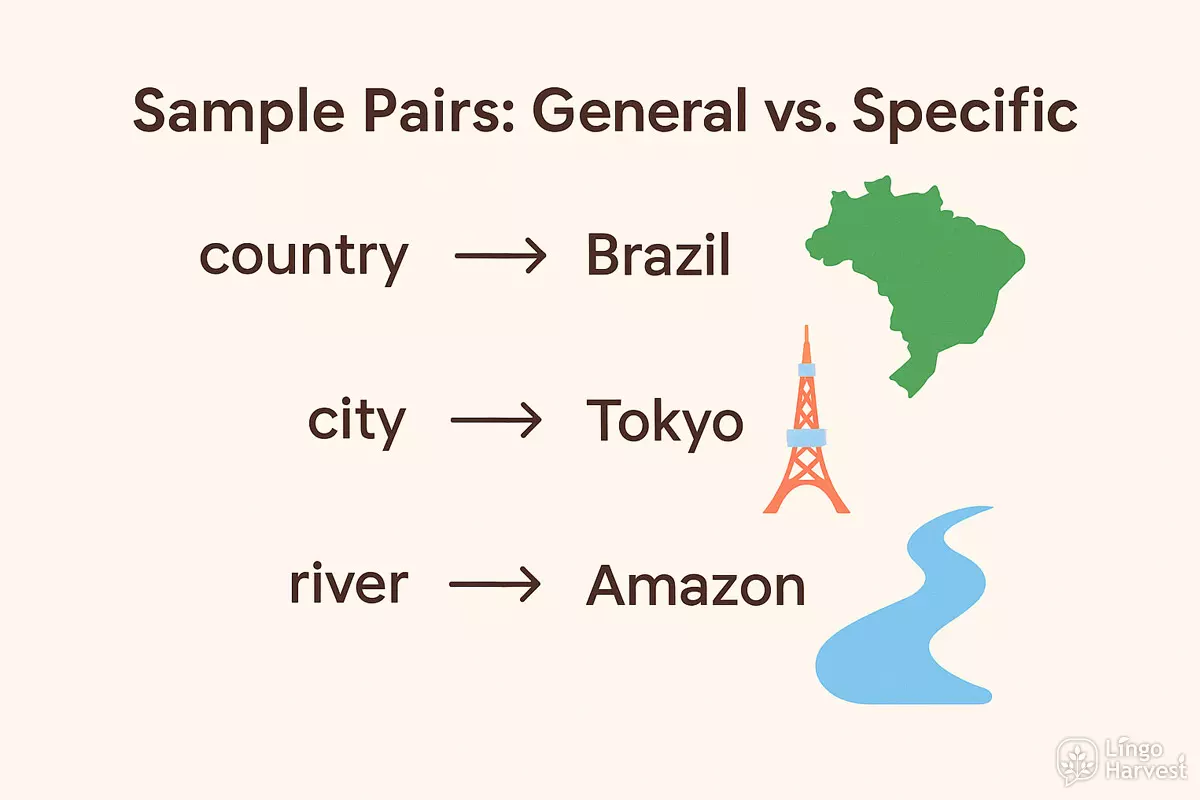
- country → Brazil
- city → Tokyo
- river → Amazon
- book → The Hobbit
- company → Google
- mountain → Mount Everest
- car → Tesla
- holiday → Christmas
- planet → Mars
- museum → Louvre
- language → Spanish
- ocean → Pacific Ocean
- newspaper → The Times
- university → Harvard
- bridge → Golden Gate Bridge
- person → Albert Einstein
- movie → Inception
- store → Walmart
Quick Reference Table: Types Compared
| General Noun (Common) | Specific Example (Proper) |
|---|---|
| monument | Statue of Liberty |
| author | Jane Austen |
| continent | Africa |
| festival | Diwali |
| magazine | National Geographic |
Looking at these side-by-side, you can spot a pattern: proper nouns are always capitalized and refer to one particular example, while common nouns are more general. This distinction is crucial for clear communication and correct grammar. When writing, consider whether you are referring to a specific entity or a general category to choose the right noun type.
When Common Nouns Act Like Names
Sometimes, a word that is usually a general term can take on the role of a specific name. This happens when a common noun is used to refer to one unique person, place, or thing in a given context. When this shift occurs, the word is treated as a proper noun and is capitalized, even though its original use is not as a name.
Examples of Common Nouns Used as Names
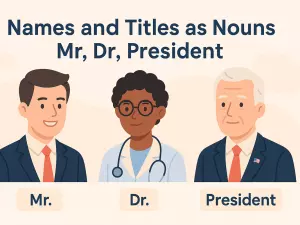
Consider how in families, workplaces, or stories, people might use words like "Mom" or "President" as if they are the person's actual name. The meaning narrows from any mother or president to one particular individual.
- Mom (when referring to your own mother: "Can I go with you, Mom?")
- Grandpa ("Grandpa took me fishing.")
- Coach ("Coach said practice is at 5.")
- Doctor ("Doctor will see you now.")
- President ("President is giving a speech.")
- Judge ("Judge, may I approach the bench?")
- Captain ("Captain, we're ready to set sail.")
- Dad ("Dad made breakfast.")
- Principal ("Principal wants to see you.")
- Manager ("Manager approved the budget.")
- Nurse ("Nurse will be here soon.")
- Teacher ("Teacher gave us homework.")
- Uncle ("Uncle is visiting this weekend.")
- Queen ("Queen addressed the nation.")
- Officer ("Officer, may I ask a question?")
How Context Changes Capitalization
The key to deciding whether to capitalize is understanding the context. If you are using the word as a title or as a substitute for a person's actual name, it gets a capital letter. If you use it generically, it stays lowercase.
| Generic Use (Common Noun) | Specific Use (Acts Like a Name) |
|---|---|
| My mom is a great cook. | I asked Mom for advice. |
| The president of the club is new. | President will attend the meeting. |
| The coach gave a speech. | Coach called a timeout. |
| A judge makes decisions in court. | Judge, may I speak? |
| Talk to your teacher about the homework. | Teacher said the test is tomorrow. |
Why It Matters
Recognizing when to treat a term as a proper noun helps keep your writing clear and correct. It shows respect and clarity when addressing or referring to specific individuals. This practice is especially important in formal writing, dialogue, and titles.
Frequent Learner Errors
Learners often mix up the rules for common and proper nouns, leading to mistakes in both writing and speaking. These issues can affect clarity, especially when capitalizing names or using articles. Below, you’ll find typical misunderstandings, practical examples, and guidance to help avoid these pitfalls.
Mixing Up Capitalization Rules
Forgetting to capitalize proper nouns or incorrectly capitalizing common ones is a widespread issue. Names of people, cities, and specific brands should always start with a capital letter, while generic items or categories do not.
- ❌ i visited paris last summer. → I visited Paris last summer.
- ❌ The Amazon river is long. → The Amazon River is long.
- ❌ My favorite Book is exciting. → My favorite book is exciting.
Incorrect Article Usage
Confusion often arises about when to use "the," "a," or no article at all. Proper nouns generally do not require an article unless they refer to unique entities (e.g., the United States), while common nouns often do.
- ❌ I visited the London. → I visited London.
- ❌ Mount Everest is the highest mountain. (Correct: no "the" before Mount Everest)
- ❌ She is a Mary. → She is Mary.
Confusing Categories and Specific Names
Students sometimes use a proper noun as a general term, or vice versa, blurring the distinction between specific and generic references.
| Common Noun Example | Proper Noun Example | Typical Error |
|---|---|---|
| city | Tokyo | He lives in city. → He lives in the city / Tokyo. |
| river | Nile | The nile is a river. → The Nile is a river. |
| car | Toyota | I bought toyota. → I bought a Toyota. |
| country | Brazil | Brazil is a country. (Correct) / The Brazil is big. → Brazil is big. |
Pluralization Errors
Learners sometimes make proper names plural or misapply plural forms. For instance, adding "s" to a proper noun is rarely correct unless referring to families or groups.
- ❌ I have visited many Parises. (Incorrect unless referring to places named Paris)
- ❌ The Smiths are coming. (Correct: refers to the Smith family)
- ❌ There are many Johns in my class. (Correct: refers to several people named John)
Overusing Proper Nouns
Beginners may use a specific name when a general term is needed, making sentences awkward or unclear.
- ❌ I like to eat Oreo. (when referring to cookies in general; should use "cookies")
- ❌ Can you hand me the iPhone? (if there are multiple phones, "a phone" is better)
Summary of Common Pitfalls
- Forgetting to capitalize names and places
- Using "the" with names when not needed
- Using a general term when a specific name is required
- Pluralizing names incorrectly
- Not distinguishing between types of nouns in context
- Writing generic words with capital letters by mistake
By being mindful of these typical errors, learners can communicate more clearly and accurately when distinguishing between general and specific nouns.
Practice: Label Common or Proper
Understanding the difference between general and specific nouns is essential in mastering English grammar. Below, you'll find a series of exercises to help you distinguish between the two types. Try to decide if each word is a general term (referring to any member of a group) or a specific name (referring to a unique individual, place, or thing).
Identify the Type: Noun List
For each word below, indicate whether it is a general term or a specific name.
- teacher
- Mount Everest
- city
- January
- dog
- Amazon
- holiday
- France
- book
- Shakespeare
- river
- Star Wars
- computer
- Microsoft
- museum
- Statue of Liberty
- planet
- Venus
Show answers
- teacher – common
- Mount Everest – proper
- city – common
- January – proper
- dog – common
- Amazon – proper
- holiday – common
- France – proper
- book – common
- Shakespeare – proper
- river – common
- Star Wars – proper
- computer – common
- Microsoft – proper
- museum – common
- Statue of Liberty – proper
- planet – common
- Venus – proper
Spot the Specific Name
Below are several pairs. In each pair, one word names a general category and the other names a unique individual, place, or thing. Identify which is the specific name.
| General Term | Specific Name |
|---|---|
| country | Japan |
| movie | Titanic |
| mountain | Kilimanjaro |
| author | J.K. Rowling |
| car | Toyota |
| building | Eiffel Tower |
| university | Harvard |
| river | Nile |
| holiday | Christmas |
| newspaper | The Times |
Show answers
- Japan, Titanic, Kilimanjaro, J.K. Rowling, Toyota, Eiffel Tower, Harvard, Nile, Christmas, The Times (all proper nouns)
Quick Practice Sentences
Read each sentence and underline the specific names. If a noun is general, leave it as is.
- Maria visited the museum last Saturday.
- The dog chased the ball in Central Park.
- We read The Hobbit in school.
- My uncle lives in Australia.
- He bought a new phone from Samsung.
Show answers
- Maria, Saturday
- Central Park
- The Hobbit
- Australia
- Samsung
Practicing with real examples helps you confidently distinguish between general terms and unique names in any context. Review your answers and revisit the explanations as needed to reinforce your understanding.