Singular and Plural Nouns: General Rules

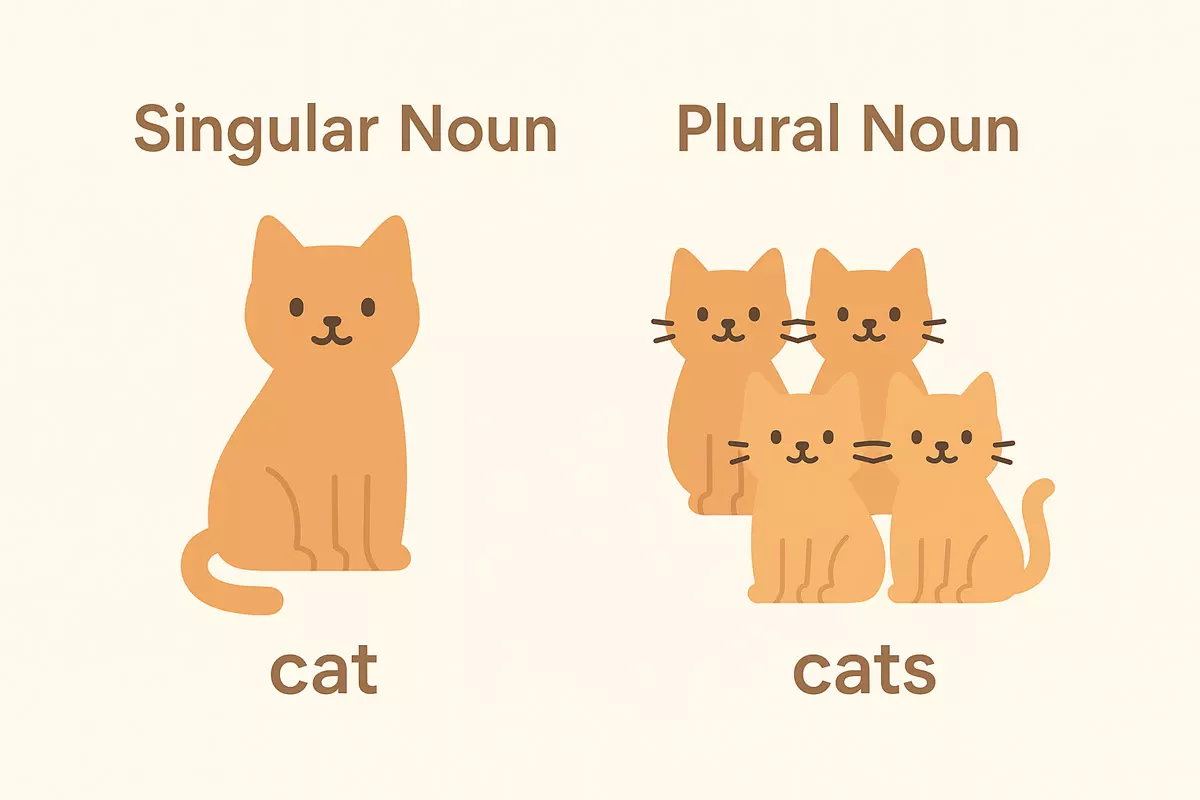 Here we how to use singular and plural nouns, including regular endings, spelling and pronunciation changes, and nouns that do not change or are always plural. It also addresses common mistakes and offers practice with pluralizing nouns.
Recognizing the difference between singular and plural words is essential for clear communication in English. Singular words refer to just one item, while plural words indicate more than one. Most nouns form their plural by adding an s or es, but there are many exceptions with irregular forms, such as child becoming children or mouse becoming mice. Mastering these patterns helps avoid confusion and ensures that your meaning is accurately conveyed in both speaking and writing.
Singular Nouns: One Item
A singular noun refers to just a single person, place, thing, or idea. In English, this is the basic form of a noun, without any plural endings. When you talk about one book, one cat, or a single country, you’re using this form. Understanding how to identify and use singular nouns correctly is important for clear communication.
Common Features of Singular Nouns
- Usually do not end with -s (unless the word itself ends with an -s as part of its base form, like "bus").
- Often used with the articles a or an for countable items (e.g., "a dog", "an apple").
- Can be proper nouns (names like "Alice" or "London") or common nouns ("child," "tree").
- Work with singular verbs (e.g., "The cat sleeps on the sofa.").
Examples of Singular Nouns
Here are some words that represent just one entity:
- table
- apple
- child
- city
- idea
- car
- dog
- book
- student
- river
- computer
- teacher
- flower
- mountain
- phone
- house
- bus
- song
When to Use the Singular Form
Use the singular version when you are talking about one item, person, or concept. For example, say "a pencil" if you have only one, or "my friend" when referring to a single individual. This also applies to uncountable nouns, which always stay in this form (like "milk," "information," or "music"), even though they don’t refer to a specific number.
Countable vs. Uncountable Singular Nouns
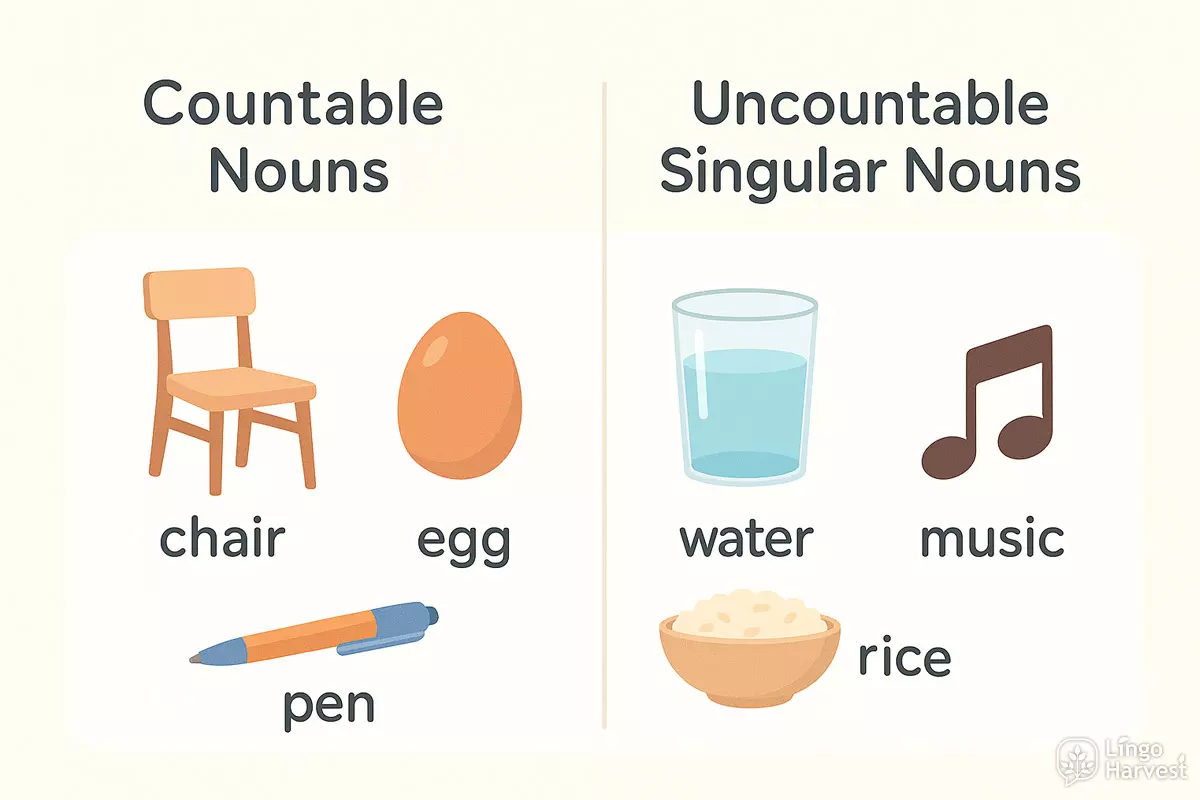
| Countable Singular | Uncountable (Always Singular) |
|---|---|
| chair | water |
| student | advice |
| egg | rice |
| movie | furniture |
| pen | music |
Remember, using the correct form helps your sentences make sense and tells your reader exactly how many things you’re describing. If you’re talking about just one, stick with the singular.
Regular Plural Endings
Most English nouns follow predictable patterns when changing from the singular to the plural form. These changes typically involve adding specific letters to the end of a word, depending on how the word ends in its singular form. Understanding these patterns makes it easier to use nouns correctly in sentences.
Adding -s to Most Nouns
For the majority of nouns, forming the plural is as simple as attaching -s at the end. This applies to words ending in most consonants or vowels (except those detailed below).
- book → books
- cat → cats
- apple → apples
- car → cars
- table → tables
Adding -es for Certain Endings
Nouns ending in -s, -ss, -sh, -ch, -x, or -z require -es to make the plural. This extra syllable helps with pronunciation.
- bus → buses
- box → boxes
- church → churches
- dish → dishes
- quiz → quizzes
Changing -y to -ies
When a noun ends with a consonant plus -y, the -y is replaced by -ies. If the -y follows a vowel, just add -s.
| Singular Ending | Plural Form |
|---|---|
| city | cities |
| baby | babies |
| boy | boys |
| day | days |
Adding -es to Nouns Ending in -o
Some nouns ending in -o also take -es, especially if a consonant comes before the -o. However, there are exceptions.
- tomato → tomatoes
- potato → potatoes
- hero → heroes
- photo → photos (exception)
- piano → pianos (exception)
These conventions cover the most common ways to form plurals in English. While there are exceptions and irregular forms, mastering these rules will help you pluralize most nouns correctly.
Spelling Changes in Plural Forms
Some English nouns adjust their spelling when shifting from singular to plural. These spelling modifications often follow specific patterns, though there are also exceptions and irregularities. Understanding these adjustments can help avoid common mistakes and improve writing accuracy.
Nouns Ending in -y
When a noun ends with a consonant followed by -y, the -y changes to -i and -es is added. However, nouns ending in a vowel plus -y simply take an -s.
- city → cities
- baby → babies
- party → parties
- toy → toys
- day → days
Nouns Ending in -f or -fe
Many nouns ending in -f or -fe form their plural by changing -f or -fe to -ves. Not all nouns follow this rule, so it’s useful to memorize the common ones.
- wife → wives
- leaf → leaves
- wolf → wolves
- life → lives
- knife → knives
- roof → roofs (exception)
Nouns Ending in -o
For nouns ending in -o, the plural is sometimes formed by adding -es, especially if a consonant precedes the -o. However, some simply take -s.
- tomato → tomatoes
- potato → potatoes
- hero → heroes
- photo → photos
- piano → pianos
Nouns Ending in -s, -sh, -ch, -x, or -z
For words ending in these sounds, add -es to form the plural. This helps preserve pronunciation.
- bus → buses
- box → boxes
- watch → watches
- dish → dishes
- quiz → quizzes
Irregular Spelling Patterns
Some words change their internal spelling when forming the plural, rather than simply adding a suffix.
| Singular | Plural |
|---|---|
| man | men |
| woman | women |
| tooth | teeth |
| foot | feet |
| mouse | mice |
| child | children |
| goose | geese |
| person | people |
Some nouns completely change form, while others simply add -s or -es. Recognizing these alterations is key for accurate usage. Overall, paying attention to these spelling shifts makes pluralization much less confusing.
Pronunciation of Plural Endings
Understanding how to say the endings of plural nouns in English can help you sound more natural and be better understood. There are three main ways to pronounce the -s or -es ending at the end of regular plural nouns. The correct sound depends on the final sound of the singular noun.
Three Common Sounds for Plural Endings
The -s or -es ending is pronounced as one of these three sounds: /s/, /z/, or /ɪz/ (sometimes written as /əz/). The choice depends on the last sound of the word before the plural ending is added.
| Plural Ending Sound | When to Use | Example Words |
|---|---|---|
| /s/ | After voiceless consonant sounds: p, t, k, f, θ |
|
| /z/ | After voiced sounds (except sibilants): b, d, g, v, ð, m, n, ŋ, l, r, vowels |
|
| /ɪz/ | After sibilant sounds: s, z, ʃ (sh), ʒ (as in "garage"), tʃ (ch), dʒ (j) |
|
Quick Tips for Remembering the Patterns
- Listen to the final sound, not the final letter, of the singular noun.
- Voiceless sounds (like "t" in "cat") take the /s/ sound: "cats" = /kæts/.
- Voiced sounds (like "g" in "dog") take the /z/ sound: "dogs" = /dɒgz/.
- Sibilant sounds (like "sh" in "wish") require an extra syllable: "wishes" = /ˈwɪʃɪz/.
Why Does This Matter?
Accurate pronunciation of plural endings helps avoid misunderstandings and makes speech smoother. English listeners expect these sounds, and using the correct one makes your language sound more fluent. Practice with common nouns and pay attention to how native speakers blend these endings into everyday speech.
Nouns with the Same Form in Plural
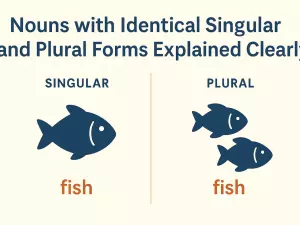
Some English nouns remain unchanged whether they refer to one thing or many. This means that their singular and plural forms are identical, which can be confusing for learners used to adding -s or -es to make plurals. These words often refer to animals, objects, or types of people, and sometimes their unchanged form depends on context.
Common Examples
Here are several English nouns that do not change in the plural:
- sheep
- fish
- deer
- species
- aircraft
- series
- salmon
- trout
- moose
- swine
- barracks
- offspring
- means
- hovercraft
- cod
- pike
- reindeer
- crossroads
Usage Patterns
The unchanged form is used with both singular and plural verbs, depending on the context:
- There is a sheep in the field. / There are five sheep in the field.
- This aircraft is new. / These aircraft are new.
Pay attention to surrounding words for clues, such as numbers or articles, to determine if the noun is singular or plural.
Comparison Table: Unchanging Nouns
| Singular | Plural |
|---|---|
| one deer | ten deer |
| a salmon | three salmon |
| this species | many species |
| an aircraft | several aircraft |
| a series | two series |
| the means | various means |
Exceptions and Notes
Some words like "fish" can have regular plurals ("fishes") when referring to different species, but often the unchanged form is preferred in general use. Always check context, as meaning and grammar can shift with usage. Understanding these patterns will help you avoid common mistakes and use these nouns naturally in both writing and conversation.
Nouns Used Only in Plural
Some English words never appear in the singular form and always refer to more than one thing. You might notice that these terms describe items made of two parts, abstract concepts, or collective activities. Even when talking about just one item, these nouns keep their plural spelling and agreement.
Common Examples and Usage
These expressions can be tricky for learners, since they pair with plural verbs and quantifiers. You wouldn’t say “a scissor” or “this pant,” for example. Here are some frequent cases:
- Scissors
- Pants
- Glasses (for eyewear)
- Binoculars
- Jeans
- Shorts
- Trousers
- Pyjamas
- Pliers
- Tongs
- Goods
- Stairs
- Annals
- Riches
- Surroundings
- Premises (as in buildings or land)
- Congratulations
- Thanks
- Customs (border control)
How to Use These Nouns Correctly
When using these terms, always treat them as plural. For example:
- My trousers are in the closet. ✅
- These scissors cut well. ✅
- This trouser is new. ❌ (incorrect)
Grouped by Category
Some of these plurals group together naturally by what they describe:
| Category | Examples |
|---|---|
| Tools & Instruments | Scissors, pliers, tongs, binoculars, glasses |
| Clothing | Pants, jeans, shorts, trousers, pyjamas |
| Abstract/Collective | Riches, annals, surroundings, premises, goods, thanks |
| Other | Stairs, customs, congratulations |
Special Notes
Some words, like “news” or “mathematics,” look plural but are actually singular in meaning and usage. Be aware of the difference: true plural-only nouns never take “a” or “an” and always need plural verbs. When you want to refer to just one item, phrases like “a pair of” are used: “a pair of glasses,” “a pair of trousers.” This helps avoid confusion and keeps your grammar accurate.
Common Mistakes with Plurals
Many learners struggle with regular and irregular noun forms, especially when English doesn’t follow its own rules. Some words look plural but act singular, while others change spelling in unpredictable ways. Let’s look at some classic errors and how to avoid them.
Adding “-s” Where It Doesn’t Belong
It’s tempting to just tack “-s” onto every noun, but that leads to mistakes. Words like “child” or “man” don’t follow this pattern. For example:
- Incorrect: childs, mans, womans
- Correct: children, men, women
Forgetting Irregular Plural Forms
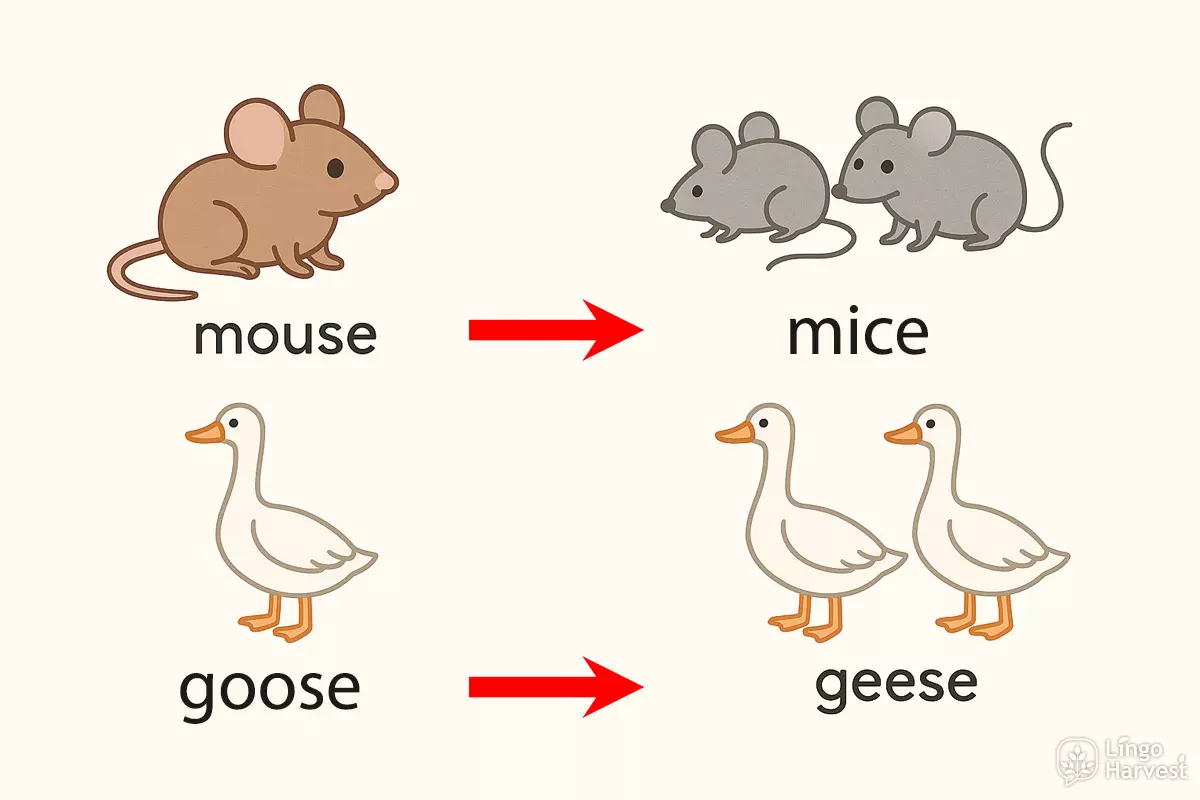
Some nouns change spelling entirely, and it’s easy to forget which ones. Here are some tricky examples:
- mouse → mice
- tooth → teeth
- goose → geese
- foot → feet
- louse → lice
- cactus → cacti
- analysis → analyses
- criterion → criteria
- phenomenon → phenomena
- datum → data
Words That Look Plural But Aren’t
Some nouns end in “-s” but are singular. Common examples include:
- news
- mathematics
- physics
- measles
- economics
These words take a singular verb: The news is interesting.
Confusing Countable and Uncountable Nouns
Some words never take a plural form, even if they refer to more than one thing. For example:
- information (not “informations”)
- advice (not “advices”)
- furniture (not “furnitures”)
- luggage (not “luggages”)
Nouns With Identical Singular and Plural Forms
A few nouns don’t change at all between singular and plural. This can cause confusion:
- sheep
- deer
- fish (but “fishes” is also possible in some contexts)
- species
- series
Summary Table: Regular vs. Irregular Plural Forms
| Singular | Plural | Type |
|---|---|---|
| book | books | Regular |
| child | children | Irregular |
| foot | feet | Irregular |
| sheep | sheep | No change |
| analysis | analyses | Irregular |
Final Tips
When in doubt, check a dictionary for the correct plural form. Practice helps you internalize the oddities of English nouns—over time, you’ll spot mistakes more easily. Mistakes are common, but with attention to patterns and exceptions, you can master pluralization.
Practice: Make Each Noun Plural
Understanding how to form plurals in English helps you communicate more accurately. Below, you'll find a variety of singular nouns. Your task is to write the correct plural form for each word, following standard spelling rules. Pay attention to endings such as -s, -es, and irregular changes.
Change the Following Singular Nouns to Their Plural Forms
- box
- child
- city
- leaf
- man
- bus
- potato
- foot
- lady
- wolf
- mouse
- church
- baby
- tooth
- knife
Show answers
- boxes
- children
- cities
- leaves
- men
- buses
- potatoes
- feet
- ladies
- wolves
- mice
- churches
- babies
- teeth
- knives
Common Patterns for Forming Plurals
Most nouns follow predictable pluralization rules, but some require special attention. Review the table below for a quick reference to several common types.
| Singular Ending | Plural Rule & Example |
|---|---|
| Most nouns (no special ending) | Add -s: book → books |
| -s, -sh, -ch, -x, -z | Add -es: box → boxes |
| Ends in consonant + y | Change y to i and add -es: city → cities |
| Ends in -f or -fe | Change f to v and add -es: wolf → wolves |
| Irregular | Change word form: man → men, mouse → mice |
More Practice: Odd Plurals
Some nouns do not follow standard rules. Try these challenging examples:
- goose
- cactus
- analysis
- person
Show answers
- geese
- cacti
- analyses
- people